Today · Apr 23, 2026
Hyatt's Sending the CFO to Calm Wall Street. Here's What They're Really Presenting.

Hyatt's Sending the CFO to Calm Wall Street. Here's What They're Really Presenting.

Three days after their billionaire chairman resigned over connections to convicted sex offenders, Hyatt announced its CFO would present at two major investor conferences. This isn't an investor relations calendar update. This is damage control in a blazer.

Let's start with what the press release wants you to think. Hyatt Hotels announced that CFO Joan Bottarini and SVP of Investor Relations Adam Rohman will present at the Raymond James Institutional Investors Conference on March 3 in Orlando and the J.P. Morgan Access Forum on March 11 in Las Vegas. Routine stuff. Companies do this all the time. Nothing to see here. Except... everything to see here. Because on February 16, roughly 72 hours before this announcement went out, Executive Chairman Thomas J. Pritzker resigned effective immediately after unredacted DOJ documents revealed he maintained communications with Jeffrey Epstein and Ghislaine Maxwell through 2019. The man who had been chairman since 2004, whose family name is literally synonymous with the brand, walked out the door with a statement about "terrible judgment." And now Hyatt is sending its finance team to face institutional investors like this is a normal March. It is not a normal March.

Here's what's actually being presented at those conferences, whether it's on the slides or not. Can Hyatt maintain its governance credibility with Mark Hoplamazian now holding both the Chairman and CEO titles? That consolidation of power happened overnight, not through a succession plan, not through a board-led transition... through crisis. Every institutional investor in those rooms knows the difference between planned consolidation and emergency consolidation, and they will ask about independent board oversight. They will ask about the Pritzker family's continued economic interest in the company. And Joan Bottarini, who is very good at her job, will have to answer those questions while simultaneously making the case that Hyatt's asset-light strategy and 1,500-plus properties across 83 countries are humming along just fine. That is an extraordinarily difficult needle to thread, and she has about ten days to prepare for it.

I've sat in brand presentations the morning after a crisis. I was brand-side for fifteen years, and I can tell you exactly what happens. The deck doesn't change. The talking points get an addendum. Someone from legal sits in the back of the room. And the presenter smiles wider than usual because the unspoken instruction is "project confidence, deflect quickly, pivot to growth." The problem is that institutional investors aren't franchise owners at a regional conference. They don't get distracted by pipeline numbers and loyalty program metrics. They will sit in those chairs in Orlando and Las Vegas and they will want to know one thing: is this company's brand worth less today than it was on February 15? And the honest answer is... it depends on what happens next. Analysts are projecting roughly 39.6% annual earnings growth for Hyatt. That's a high bar under normal circumstances. Under these circumstances, it's a tightrope over a canyon.

Now let's talk about what this means at property level, because that's where I live. If you're a Hyatt-flagged owner, your franchise agreement doesn't have a "chairman scandal" clause. Your fees don't go down. Your PIP doesn't get deferred. Your loyalty contribution doesn't automatically suffer (yet). But here's what does happen... your sales team starts fielding questions from corporate accounts. Your group business contacts start Googling. Your meeting planners, especially the ones booking for government agencies, universities, and nonprofits with reputational sensitivity, start having internal conversations about whether they need to diversify their hotel program. I watched a different brand go through a leadership scandal years ago, and the first thing that moved wasn't leisure transient. It was corporate and group. It was the accounts that have procurement committees and PR departments and someone whose job it is to flag reputational risk in vendor relationships. That business doesn't disappear overnight. It erodes quietly, over quarters, in ways that are very hard to attribute directly to any single cause. Which makes it very hard to quantify. Which makes it very easy for a brand to pretend it isn't happening.

The real question nobody at those investor conferences will ask (because it's impolite, and Wall Street is nothing if not polite when the cameras are on) is this: what is the actual reputational cost to a global hospitality brand when its founding family's name becomes associated with the worst scandal in modern memory? Hyatt operates in 83 countries. Some of those markets, particularly in the Middle East and Asia-Pacific, are extraordinarily reputation-sensitive. Development partners in those regions didn't sign up for this. Neither did the owners in Tulsa or Tampa or anywhere else. And the people who will bear the cost of whatever brand erosion occurs won't be the Pritzker family. It will be the owners, the operators, and the 130,000-plus people who work at Hyatt properties worldwide and had absolutely nothing to do with any of this. That's the part that makes me angry, honestly. The people who built the brand at property level, who deliver the promise every single day, are the ones who absorb the consequences of decisions made in boardrooms they'll never enter. My dad spent his whole career delivering on promises brands made. He never got to sit in the room where the promises were designed... or where they fell apart.

Operator's Take

If you're a Hyatt-flagged owner, don't wait for your management company to bring this up... you bring it up. Ask for a written assessment of group and corporate account exposure at your property. Get ahead of any RFP cycles where procurement committees might flag brand risk. And watch your loyalty contribution numbers like a hawk over the next two quarters, because if there's erosion, that's where you'll see it first. The brand will tell you everything's fine. Your numbers will tell you the truth.


— Mike Storm, Founder & Editor
Read full analysis → ← Show less
Source: Google News: Hyatt
Swansea's Delta Marriott Sale Is a Textbook Exit Before the Supply Wave Hits

Swansea's Delta Marriott Sale Is a Textbook Exit Before the Supply Wave Hits

A 121-key Delta Hotels by Marriott in South Wales hits the market after a freshly completed refurb and a convenient switch from corporate management to franchise. The timing tells a more interesting story than the listing.

The long leasehold on the 121-key Delta Hotels by Marriott Swansea is on the market through Christie & Co at an undisclosed price. The property completed a multi-million-pound renovation in 2023 and transitioned from Marriott-managed to a franchise agreement in May 2025. Those two facts, in that order, are the entire story.

Let's decompose what's actually happening. An owner (or leaseholder) spent capital on a full refurb, then decoupled the management relationship from Marriott corporate, converting to a franchise structure that makes the asset dramatically easier to trade. Franchise agreements transfer. Management contracts don't... not cleanly, not cheaply. Stripping the management layer and selling a franchised leasehold with fresh soft goods is how you maximize exit value. This is a packaged sale. The 2023 refurb reduces the buyer's near-term CapEx risk. The 2025 franchise conversion reduces the buyer's structural complexity. Both de-risk the acquisition, which means the seller can price accordingly.

The timing is worth more attention than the listing itself. Swansea Council is actively marketing two new hotel sites... one adjacent to the Civic Centre, one next to the Swansea Arena (150 keys, rooftop bar, the whole pitch). Neither has broken ground. A 132-key Premier Inn nearby just traded in early February backed by a £9.6M loan from ASK Partners, which establishes comparable investor appetite. Selling now, with proven demand and zero new competitive supply, is a calculated exit window. Selling in 18 months, with construction cranes visible from the property and pre-opening rate pressure from two new competitors, is a different conversation entirely.

The broker is framing this around regional economic growth and demand for "high quality hotel accommodation." That's the sell-side narrative. The buy-side math needs to account for what 271 potential new keys (the Premier Inn already traded, plus two council-backed developments) do to a market where a 121-key branded asset is currently well-positioned. RevPAR compression in secondary UK coastal markets after supply additions is well-documented. An owner I spoke with last year described buying into a "regeneration story" as "paying full price for tomorrow's market with today's money." He wasn't wrong.

The real number nobody's quoting is the per-key price on this leasehold. Until that's disclosed, the cap rate assumption embedded in the ask is unknowable. But the structure tells you what to watch. A post-refurb, franchise-converted leasehold in a market about to absorb new supply... the buyer is pricing in continued rate growth in a submarket where Marks & Spencer just closed its city center store (92 jobs, announced days before this listing). Hospitality and retail don't always move together. But when the retail anchor across the street goes dark, the "regeneration premium" in your underwriting deserves a stress test.

Operator's Take

Look... if you're an owner sitting on a recently renovated, branded asset in a secondary market where new supply is coming, pay attention to this seller's playbook. Convert from management to franchise, clean up the P&L, and go to market BEFORE the cranes show up. That exit window closes faster than you think. I've seen operators wait 12 months too long because they wanted "one more good year" of trailing numbers... and by then the comp set has changed and your buyer's underwriting just got a lot more conservative. If you're the buyer on this one, run the numbers with 250+ new keys in the market. If the deal only works at current occupancy, the deal doesn't work.

— Mike Storm, Founder & Editor
Read full analysis → ← Show less
Source: Google News: Marriott
Marriott's Holi Dinner Is Cute. The Real Story Is F&B as a Brand Weapon in India.

Marriott's Holi Dinner Is Cute. The Real Story Is F&B as a Brand Weapon in India.

A single festive buffet at a Whitefield property isn't news. But when F&B accounts for up to half of total hotel revenue in India and Holi is projected to drive $9.6 billion in spending, the question isn't whether to throw a party... it's whether your brand strategy treats food as a line item or a positioning engine.

Let me tell you what I see when I read about a Holi-themed dinner buffet at a Marriott in Bengaluru. I don't see a press release. I see the tip of something much bigger, and I see a lot of hotel brands who are about to get this either very right or spectacularly wrong.

Here's the setup. Holi 2026 is projected to generate over ₹80,000 crore... roughly $9.6 billion... across India, up 25% from last year. Hotels and restaurants are nearly fully booked for celebrations. F&B in Indian hotels now contributes 35% to 50% of total revenue, which is a number that would make most American select-service operators fall out of their chairs. And Marriott just debuted "Series by Marriott" in India with 26 hotels, explicitly targeting domestic travelers with regional character. So when a Marriott property in Whitefield puts together a Holi night with regional North and South Indian specials, live interactive counters, live music, and a pet-friendly policy (yes, really), that's not just a dinner. That's a brand positioning move disguised as a buffet. And the question every owner in India should be asking is: does my brand give me the framework to do this, or does my brand get in the way?

I sat in a brand review once where an owner in a secondary Indian market wanted to run a Diwali festival package... local sweets, cultural programming, the works. The brand's regional team loved it. The global standards team flagged three violations in the proposed menu presentation alone. By the time the concept cleared compliance, Diwali was over. The owner ran the event anyway, off-brand, and it was his highest-revenue F&B night of the year. That tension... between brand consistency and local cultural relevance... is the real story here, and it's one that plays out in every market where festivals drive spending. Marriott's "Future of Food 2026" report talks about "casual luxury" and "dining rooted in local flavors." Beautiful language. The Deliverable Test question is whether the brand apparatus actually lets a property-level team execute that vision fast enough to capture a cultural moment that arrives on a specific date and doesn't wait for approval chains.

The math underneath is what matters. Festive F&B initiatives in India are showing 15-20% uplifts in overall revenue, with themed events seeing 40-50% more covers than a normal weekend. At roughly ₹2,500 per couple (about $30 USD) for a dinner at this particular café, you're not talking about fine dining margins. You're talking about volume, atmosphere, and repeat-visit loyalty. The real return isn't the one-night revenue... it's the guest who comes back three Saturdays later because they remember the experience. That's where F&B becomes a brand weapon instead of a cost center. But here's the part the press release leaves out: the labor, the training, the sourcing for regional specialties, the live music booking, the setup and teardown. If your F&B team is already stretched (and in India's current hospitality labor market, they are), a festive event isn't a revenue gift. It's a staffing puzzle wrapped in a P&L question. The properties that win are the ones where the GM and the F&B director have enough operational freedom... and enough brand support... to build these moments without drowning in either red tape or labor costs.

And this is where I get pointed. Marriott is pushing hard into India. International RevPAR grew 6.1% last year. The Series by Marriott launch signals they want the domestic travel segment badly. F&B is the differentiator... not the room, not the loyalty app, the FOOD. If you're an owner operating under a Marriott flag in India (or any full-service flag, frankly), your brand should be handing you a playbook for cultural programming that's pre-approved, locally sourced, and operationally realistic. Not a press release about one property's Holi dinner. A repeatable framework. Because every market in India has its own festival calendar, its own culinary identity, and its own version of the guest who will spend money on an experience that feels authentic. The brands that build the infrastructure for that... not the concept, the infrastructure... are the ones that will own Indian hospitality's next decade. The ones that just let individual properties figure it out and then take credit in the earnings call? You already know how that ends.

Operator's Take

If you're running a branded hotel in India... or honestly, any market with a strong cultural calendar... don't wait for your brand to hand you a festival playbook. Build one yourself. Map every major local festival to an F&B concept, cost it out (labor, sourcing, marketing, the whole thing), and present it to your brand team as a done deal, not a request. The properties making real money on cultural programming aren't asking permission. They're asking forgiveness. And their owners are too happy counting the revenue to complain.

— Mike Storm, Founder & Editor
Read full analysis → ← Show less
Source: Google News: Marriott
The "Own Your Hotels" Crowd Is Back. Here's What They're Not Telling You.

The "Own Your Hotels" Crowd Is Back. Here's What They're Not Telling You.

A panel of European hotel executives just made the case that owning your real estate beats the asset-light model. They're not wrong about the control. They're dangerously incomplete about the risk.

Every few years, the ownership pendulum swings back, and a group of executives who happen to own a lot of hotels stand on a stage and explain why owning hotels is the smartest strategy in the business. This week it was a panel of European operators... Whitbread, Fattal, Essendi, Aethos... making the case that being "asset-heavy" gives you control, speed, and freedom from brand mandates. And you know what? They're right about all of that. They're also telling you about the weather on a sunny day and leaving out the part about hurricane season.

Let me be specific about what they said, because some of it is genuinely compelling. Whitbread owns roughly 540 of its nearly 900 hotels and can close a £50 million London acquisition in 10 days. That's real. That speed matters. Essendi owns 96% of its approximately 500 European properties and talks about "doing the right thing for the asset" on their own timeline. Also real. When you own the building, nobody sends you a PIP mandate that makes zero sense for your market. You don't pay 15% of revenue back to a franchisor for the privilege of using a name that may or may not be driving bookings. I grew up watching my dad operate branded hotels, and I can tell you... the freedom to make decisions without a brand committee is worth something. It's worth a lot, actually.

But here's the part the panel conveniently glossed over, and it's the part that matters most if you're an owner (or thinking about becoming one): the same control that lets you move fast in a rising market is the same exposure that crushes you in a falling one. Hotel real estate has appreciated 20-25% over the last five to six years, according to JLL's global hotel research head. Beautiful. Wonderful. Now stress-test that against a revenue decline of 15-20%. When you're asset-light, a downturn means your fee income drops. When you're asset-heavy, a downturn means your debt service stays exactly the same while your NOI collapses. I watched a family lose a hotel because projections assumed the good times would keep rolling (the projected loyalty contribution was 35-40%, the actual was 22%, and the math broke so completely that three generations of ownership disappeared in 18 months). Nobody on that panel mentioned what happens to their "control" and "speed" when the cycle turns. Because it doesn't sound as good from a stage.

The asset-light model exists for a reason, and it's not because Marriott was feeling lazy in 1993. It's because capital-intensive hospitality businesses are inherently cyclical, and separating the brand from the real estate risk is one of the most effective financial innovations this industry has produced. Hyatt is over 80% asset-light and has realized more than $5.6 billion in disposition proceeds, which funded a doubling of luxury rooms and a quintupling of lifestyle rooms globally. You can debate whether Hyatt's brands are good (I have opinions), but you can't debate that their balance sheet flexibility let them grow through periods that would have strangled an asset-heavy competitor. The real question isn't ownership versus asset-light. It's which risks you want to hold and which ones you want to transfer. And anyone who tells you the answer is simple is selling you something... probably a hotel.

So what should you actually take from this? If you're a well-capitalized operator in a market you know intimately, with access to favorable debt and a genuine operational edge, owning can absolutely be the right call. But "ownership is better" as a blanket philosophy? That's not strategy. That's a panel of people who already own hotels telling you they made the right decision. (I've been to enough of these panels to know the champagne is always the same and the conviction is always strongest right before the cycle peaks.) The Deliverable Test here isn't whether ownership works in year three of an expansion. It's whether your capital structure survives year one of a contraction. If you can't answer that question with a specific number... not a feeling, a number... you're not ready to own.

Operator's Take

Here's the deal. If you're an owner sitting on appreciated assets and someone's whispering "why are you paying brand fees when you could go independent?"... run the math both ways. Not the sunny-day math. The ugly math. What happens to your debt coverage at 70% occupancy? At 60%? If the numbers still work, God bless... go for it. If the answer is "we'll figure it out," that's not a plan. That's a prayer. I've seen this movie before. The ownership play feels brilliant right up until the moment it doesn't, and by then your options are someone else's leverage.

— Mike Storm, Founder & Editor
Read full analysis → ← Show less
Source: Google News: CoStar Hotels
Your Hotel Lender Is About to Get a Lot More Interested in Your Phone Calls

Your Hotel Lender Is About to Get a Lot More Interested in Your Phone Calls

PNC just posted a quarter that has Wall Street drooling, and they're projecting a return to commercial real estate lending growth in 2026. If you've been sitting on a refi, a renovation, or a new deal, the window just cracked open... but it won't stay open forever.

I sat across from a banker once... mid-2023, maybe early 2024... trying to get a construction draw released on a property that was already 60% complete. The guy looked at me like I'd asked him to co-sign a timeshare. "We're just not doing hotel right now," he said. Not "we can't make the numbers work." Not "the deal structure needs adjustment." Just... not doing hotel. Full stop. That's been the lending environment for the better part of two years. Banks treating hospitality like it was radioactive.

So when PNC drops a quarter with $6.07 billion in revenue (beating estimates by $170 million), posts $4.88 EPS against a $4.23 consensus, and then tells the market they expect 8% loan growth and an 11% revenue increase in 2026... you should be paying attention. Not because PNC's stock price matters to you. It doesn't. What matters is what's underneath those numbers: a major commercial real estate lender signaling that the deep freeze is thawing. They're projecting CRE lending growth starting early this year. They just closed the FirstBank acquisition, which plants them deeper into Colorado and Arizona... two markets where hotel development has been stuck in neutral waiting for capital to show up. They're opening 50-60 new branches in 2026 and spending $700 million on AI and technology infrastructure. This is a bank that's leaning in, not pulling back.

Here's what nobody's telling you about why this matters right now. The spread between what banks want to lend at and what hotel deals can actually support has been brutal. Cap rates compressed during the pandemic recovery, construction costs stayed elevated, and interest rates made the math ugly on anything that wasn't a Class A asset in a top-10 market. But PNC is projecting their net interest margin above 3% in the back half of 2026, which means they're expecting to make money at rates that are actually serviceable for borrowers. M&T Bank is already talking about hotel lending "on a case-by-case basis." KeyCorp and First Horizon are making similar noises. When multiple regional banks start saying the same thing within the same quarter, that's not coincidence. That's a market turning.

But let me be direct about something. A thawing lending market doesn't mean easy money. If you're an owner or a developer who's been waiting for "rates to come down" before you move on that refi or that renovation... stop waiting for perfect. Perfect isn't coming. What IS coming is a six-to-twelve month window where banks are competing for deals again, where your existing lender relationship actually means something, and where the guy across the table from you isn't treating your hotel like a four-letter word. PNC alone is planning $700 million in quarterly share repurchases, which tells you they have capital to deploy and confidence to deploy it. That confidence flows downstream to their lending officers.

The question you should be asking isn't whether banks are lending on hotels again. They are. The question is whether YOUR deal is ready when your banker calls. Because they're going to call. I've seen this cycle three times now. The freeze. The thaw. The window. The scramble. We're entering the window phase. If your trailing 12 NOI is clean, your PIP is scoped and priced, and your market story makes sense... you're about to have a conversation you haven't been able to have in two years. If your financials are a mess and your deferred maintenance list is longer than your revenue forecast, this window closes on you before it ever really opens.

Operator's Take

If you're an owner sitting on a maturing loan or a deferred renovation, pick up the phone Monday morning and call your relationship banker. Not next month. Monday. Ask specifically about their 2026 CRE appetite for hospitality. If you're with a regional bank that's been dodging your calls, this is your moment to get a real answer... and if the answer is still no, start shopping. The lending market is about to get competitive again, and the owners who move first get the best terms. I've seen this movie before. The ones who wait for "better rates" end up refinancing at worse terms six months later because all the good capital got allocated to the people who showed up early.

Read full analysis → ← Show less
Source: Google News: Apple Hospitality REIT
Host's $1.1B Four Seasons Exit Looks Smart. The 2026 Guide Tells a Different Story.

Host's $1.1B Four Seasons Exit Looks Smart. The 2026 Guide Tells a Different Story.

Host Hotels just posted a 4.6% EBITDAre gain and flipped two Four Seasons properties for a $500M taxable gain. The real number worth watching is buried in their CapEx guide.

$1.1 billion for two Four Seasons properties acquired at $925 million. That's a 19% gross return before you back out hold costs, CapEx during ownership, and the tax hit on that $500M gain. Not bad for a three-to-four-year hold. Not spectacular either.

Let's decompose what Host actually reported. Full-year 2025 Adjusted EBITDAre of $1.757 billion, up 4.6%. Adjusted FFO per share of $2.07, up 3.5%. Comparable hotel Total RevPAR growth of 4.2% for the year, with Q4 accelerating to 5.4%. That Q4 number outpaced upper-tier industry RevPAR by roughly 200 basis points. The portfolio is performing. The question is what "performing" costs to sustain. Host's 2026 CapEx guidance is $525 million to $625 million, with $250 million to $300 million earmarked for redevelopment and repositioning. That midpoint of $575 million against projected EBITDAre of $1.77 billion means roughly 32 cents of every dollar of operating cash flow is going back into the buildings. For a company returning $860 million to shareholders in 2025 (including a $0.15 special dividend and $205 million in buybacks at an average of $15.68 per share), that CapEx number tells you where the real tension lives.

The capital recycling math is clean on the surface. Sell the Four Seasons Orlando and Jackson Hole at a combined $1.1 billion, exit the St. Regis Houston at $51 million, move the Sheraton Parsippany at $15 million. Redeploy into higher-ADR coastal and resort assets. This is the luxury-concentration thesis that every lodging REIT is running right now... fewer keys, higher rate, more ancillary revenue per occupied room. I've analyzed this exact strategy at three different REITs over the past five years. It works until the luxury traveler pulls back, and then you're holding high-fixed-cost assets with limited ability to compress rate without destroying brand positioning. Host's 2.6x leverage ratio and $2.4 billion in liquidity give them cushion. But cushion is not immunity.

The 2026 guide is where it gets interesting. RevPAR growth projected at 2.5% to 4.0%. Wage inflation expected around 5%. That's a margin compression setup unless rate growth outpaces the cost side, and the midpoint of that RevPAR range (3.25%) does not outpace 5% wage growth. Flow-through will tell the story by Q2. Analysts are projecting a consensus price target around $19.85 with a range of $14 to $22... that spread alone tells you the street isn't unified on whether the luxury-concentration bet pays in a decelerating RevPAR environment. Host's stock ticked up 1.78% premarket after earnings. The revision referenced in the headline is the market recalibrating the growth trajectory, not the current performance.

The real number here is 32%. That's the share of operating cash flow going back into the portfolio. For REIT investors evaluating Host against peers, the question isn't whether the 2025 results were strong (they were). The question is whether a company spending a third of its EBITDAre on CapEx while simultaneously returning $860 million to shareholders can sustain both without the balance sheet telling a different story in 18 months. At 2.6x leverage, there's room. But room shrinks fast when RevPAR decelerates and renovation costs don't.

Operator's Take

Here's what nobody's telling you... Host spending $575M in CapEx while chasing luxury concentration means their managed properties are about to feel it. If you're a GM at a Host-managed upper-upscale, expect tighter operating budgets to protect owner returns while the capital goes to resort repositioning. Your labor line is about to get squeezed between 5% wage inflation and an ownership structure that just promised shareholders $860M. Know your numbers. Know your flow-through. And when the asset manager calls about "efficiency opportunities"... that's code for doing more with less. Again.

— Mike Storm, Founder & Editor
Read full analysis → ← Show less
Source: Google News: Host Hotels & Resorts
Circleville Gets a TownePlace Suites, and the Real Story Is What It Says About Where Marriott Is Betting

Circleville Gets a TownePlace Suites, and the Real Story Is What It Says About Where Marriott Is Betting

A groundbreaking in small-town Ohio isn't just a local news story... it's Marriott doubling down on secondary markets with extended-stay product while their own RevPAR forecast says the domestic outlook is cooling. So which is it?

Let me tell you what I love about a groundbreaking ceremony in a town of 14,000 people. Nobody's there for the champagne. The local officials show up because they need the tax base. The developer shows up because they've already committed the capital and they need the photo for their lender. And Marriott shows up because TownePlace Suites is the workhorse brand that nobody writes breathless trend pieces about but that keeps quietly filling gaps in markets where "lifestyle" would be a punchline. Circleville, Ohio, sitting along U.S. Route 23 with manufacturing, construction, and warehouse logistics driving its labor force, is exactly the kind of market TownePlace was built for. And that's precisely what makes this worth talking about.

Here's the thing the press release won't unpack for you. Marriott just told Wall Street that 2026 RevPAR growth in the U.S. and Canada is going to land somewhere between 1.5% and 2.5%, which is... fine. It's fine the way a C+ is fine. They're citing softer spending from low- and middle-income travelers, which is corporate-speak for "the consumer who stays at our select-service and extended-stay brands is tightening up." And yet their global pipeline expanded to nearly 610,000 rooms by the end of 2025, up 6% year-over-year, with extended-stay as one of the loudest growth engines. So Marriott is simultaneously saying "demand is softening" and "we're opening more hotels than ever." If you're the owner who just broke ground in Circleville, you need to sit with that tension for a minute, because both things can be true, and both things will show up on your P&L.

The extended-stay math, in the abstract, still works. The segment is projected to grow from roughly $61 billion to nearly $66 billion globally this year, and North America is the biggest piece of that pie. There are over 2,000 extended-stay properties in the U.S. development pipeline right now, representing more than 212,000 rooms. The demand drivers are real... corporate relocations, project-based labor (hello, Circleville's warehouse and manufacturing corridor), medical stays, insurance displacement. These aren't discretionary travelers deciding between your hotel and a beach vacation. They need a room for three weeks because the job site is 40 miles from home. That's sticky demand. But here's where I start asking the uncomfortable questions. TownePlace typically requires a minimum investment north of $12 million. In a secondary market where your rate ceiling is real and your comp set might be a Hampton Inn and a local independent, your path to breakeven depends heavily on what that Marriott flag actually delivers in terms of loyalty contribution and channel production. And I have a filing cabinet full of franchise disclosure documents that would tell you the projected numbers and the actual numbers are not always in the same zip code. (They're sometimes not in the same area code.)

I sat across from an ownership group once... a small family operation, three partners who'd pooled everything... and they showed me the franchise sales deck they'd been handed for an extended-stay conversion. The projections had loyalty contribution at 38%. I asked them to call three existing franchisees in comparable markets and ask what they were actually seeing. They came back with numbers in the low twenties. The brand wasn't lying, exactly. They were projecting optimistically, which is what franchise sales teams do, because that's how franchise sales teams eat. But the gap between that projection and reality was the difference between a viable investment and a decade of stress. The Circleville developer may have done this homework. I hope they have. But if you're an owner being pitched a similar deal in a similar market right now, you do the homework yourself, because nobody else has as much to lose as you do.

What I'll be watching is whether Marriott's aggressive extended-stay pipeline in secondary and tertiary markets actually gets matched with the operational support and loyalty delivery these properties need to survive. Columbus proper hit 70% occupancy through October 2025 with 5% RevPAR expansion... but Circleville isn't Columbus. It's 30 miles south and a world apart in terms of demand generators. The brand promise has to travel that distance, and "TownePlace Suites by Marriott" on the sign has to translate into heads in beds at a rate that covers a $12-million-plus investment. If it does, this is smart development in an underserved market. If it doesn't, this is another family learning the hard way that a flag is not a guarantee. I've watched that lesson get taught too many times to be casual about it.

Operator's Take

If you're an owner or developer being pitched an extended-stay flag in a secondary market right now, do not rely on the franchise sales projections. Call five existing franchisees in markets that look like yours... same ADR range, same demand drivers, same distance from a major metro... and ask them what loyalty contribution actually looks like. Then run your pro forma on the worst number they give you. If the deal still works at 20-22% loyalty contribution instead of the 35-40% in the sales deck, you've got something. If it doesn't, you've got a pretty building and a long road to breakeven.

— Mike Storm, Founder & Editor
Read full analysis → ← Show less
Source: Google News: Marriott
Amar Lalvani Just Sold Nearly All His Hyatt Stock. Let's Talk About That.

Amar Lalvani Just Sold Nearly All His Hyatt Stock. Let's Talk About That.

The man Hyatt brought in to lead its entire lifestyle strategy just dumped all but 185 shares of his company stock. And nobody at headquarters wants you to notice.

So the guy running Hyatt's lifestyle division... the creative visionary they acquired along with Standard International for $335 million... just sold 739 shares at $163.63 each, pocketing about $121K, and now holds exactly 185 shares of the company he's supposed to be building the future of. One hundred and eighty-five shares. In a company with a $15.3 billion market cap. That's not an investment position. That's a rounding error. And if you're an owner who just signed a lifestyle flag with Hyatt because of what Lalvani represents, you should be asking some very pointed questions right now.

Let me put this in perspective, because the raw number matters less than the pattern. Across all of Hyatt, insiders have sold 2.55 million shares over the past 18 months with zero purchases. Zero. Not one insider buying. Twenty-seven insider sells in the past year alone. Now, I've sat in enough franchise development presentations to know that when a brand executive tells you they're "fully committed to the long-term vision," you check whether they're putting their own money where their mouth is. Lalvani isn't. He's doing the opposite. He's walking his position down to essentially nothing while simultaneously leading a division that's supposed to be Hyatt's big differentiator in the lifestyle space. The brand promise is "creative freedom meets global infrastructure." The insider activity says something else entirely.

And this is happening during a week where Hyatt is making huge strategic noise... fivefold hotel growth in India by 2031, Thomas Pritzker stepping down as Executive Chairman (after some very uncomfortable Epstein-adjacent disclosures), Hoplamazian consolidating power as Chairman and CEO, and a loyalty program overhaul expanding redemption tiers. That's a LOT of narrative being generated. You know what narrative does really well? It distracts. I once watched a brand roll out three simultaneous "exciting initiatives" the same quarter their development VP quietly left. The press releases were loud. The departure was a whisper. Same energy here.

Here's what I keep coming back to. Hyatt paid $335 million for Standard International, with $185 million earmarked for additional properties. That deal was supposed to cement Hyatt's position in lifestyle hospitality, which is genuinely the hottest segment right now (I'll give them that... the demand is real). Lalvani was the centerpiece of that acquisition. He was supposed to be the creative engine. And look, maybe this is a routine liquidity event. Maybe his financial advisor told him to diversify. People sell stock for a thousand boring reasons. But when the head of your lifestyle division holds fewer shares than some mid-level brand managers probably received in their signing packages? When the entire insider transaction history is sell, sell, sell with not a single buy? That's not one data point. That's a trend line. And trend lines tell stories that press releases don't.

If you're an owner being pitched a lifestyle conversion under Hyatt's umbrella right now... whether it's a Standard flag, a Caption, or anything in that portfolio... do not let the energy of the sales presentation override the math. Pull the FDD. Compare the projected loyalty contribution against actual delivery at existing lifestyle properties (I have those numbers in my filing cabinet, and the variance will make your stomach hurt). Ask specifically what Lalvani's role means for YOUR property's creative direction and whether that direction survives if he decides the grass is greener somewhere else. Because a $121K stock sale from a guy who built a company worth $335 million to Hyatt is not someone planting roots. That's someone keeping their options very, very open.

Operator's Take

Look... if you're an owner in conversation with Hyatt's lifestyle team right now, here's what you do. You ask your franchise development contact one question: "What is Amar Lalvani's contractual commitment to Hyatt, and what happens to my brand's creative strategy if he leaves?" Watch their face. If they start talking about "the team" and "the platform," that tells you everything. The person is not the strategy... except when the entire acquisition was built around the person. Get the answer in writing before you sign anything.

— Mike Storm, Founder & Editor
Read full analysis → ← Show less
Source: Google News: Hyatt
Sunstone Beat Q4 Estimates by a Mile. The Stock Dropped Anyway.

Sunstone Beat Q4 Estimates by a Mile. The Stock Dropped Anyway.

Sunstone posted $0.20 adjusted FFO per share against a consensus expecting a loss, grew RevPAR 9.6%, and the market sold it off 3.5%. The disconnect between the quarter they reported and the price they got tells you everything about where REIT investors' heads are right now.

$0.20 per diluted share against a consensus estimate of negative $0.015. That's not a beat. That's a different zip code. Sunstone's Q4 revenue came in at $237 million versus the $228 million analysts expected, RevPAR jumped 9.6% to $220.12, and Adjusted EBITDAre grew 17.6% to $56.6 million. By every backward-looking metric, this was an excellent quarter. The stock dropped 3.5% in pre-market.

Let's decompose why. The 2026 guidance range tells the story the Q4 numbers don't. Sunstone is projecting $0.81 to $0.94 in adjusted FFO per share, which at the midpoint is $0.875... barely above the $0.86 they just reported for 2025. RevPAR guidance of 4.0% to 7.0% growth sounds healthy until you remember Q4 alone delivered 9.6%. The market is reading a deceleration narrative into a beat quarter, and honestly, the math supports that read. A 14-hotel portfolio generating $930 million in debt against $185.7 million in cash has a net leverage position that demands growth, not maintenance. The guidance suggests maintenance.

The Tarsadia situation is the number behind the number here. A 3.4% holder publicly called for a full company sale or liquidation in September 2025. CEO Giglia defended the current strategy. The board responded by reauthorizing a $500 million buyback program and adding a new director. That sequence... activist pressure, management defense, capital return acceleration... is a playbook I've seen at half a dozen REITs. The buyback authorization is twice the company's current annual FFO run rate. That's not a capital return program. That's a defensive posture dressed as shareholder friendliness.

The portfolio moves make financial sense in isolation. The Hilton New Orleans disposition at $47 million funded share repurchases. The Andaz Miami Beach conversion (opened May 2025) drove the Q4 outperformance. But a 14-hotel, 7,000-room portfolio is concentrated enough that one or two properties moving the wrong direction changes the whole story. Baird downgraded from Outperform to Neutral in January, and the institutional holder data shows 139 funds decreasing positions against 112 increasing. When the smart money is net reducing exposure after a beat quarter, the quarter isn't what they're trading.

The real number: Sunstone trades at roughly a 20-25% discount to consensus NAV. The $500 million buyback authorization signals management agrees the stock is cheap. Tarsadia thinks the assets are worth more in someone else's hands. The market thinks forward growth doesn't justify the current price. Three different parties, three different conclusions from the same data. If you're an asset manager evaluating lodging REIT exposure, the question isn't whether Q4 was good (it was). The question is whether a 14-property portfolio with decelerating growth guidance and an activist on the register is a value trap or a value opportunity. The 2026 actuals will answer that. The guidance range is wide enough ($0.81 to $0.94 is a 16% spread) to suggest management isn't sure either.

Operator's Take

Look... if you're an asset manager or owner watching the lodging REIT space, Sunstone's Q4 is a case study in why you read past the headline. A massive earnings beat followed by a stock decline means the market is pricing forward risk, not backward performance. If you hold SHO, understand that the Tarsadia pressure isn't going away... that $500M buyback authorization is management trying to buy time. And if you're evaluating your own portfolio's disposition strategy, watch what Sunstone gets for assets in 2026 versus what they got for New Orleans in 2025. That spread will tell you where the transaction market actually is.

— Mike Storm, Founder & Editor
Read full analysis → ← Show less
Source: Google News: Sunstone Hotel
RLJ Calls 2025 "Highly Productive" While Every Number Went Backwards. Let's Talk About That.

RLJ Calls 2025 "Highly Productive" While Every Number Went Backwards. Let's Talk About That.

RLJ Lodging Trust's full-year RevPAR dropped 1.7%, net income cratered 58%, and EBITDA fell 7.5%... but they're calling it a highly productive year. The math is interesting. So is the strategy behind it.

I've seen this movie before. A REIT posts declining numbers across every major operating metric, then hops on the earnings call and tells Wall Street it was a "highly productive year." And you know what? Sometimes they're not wrong. Sometimes the story isn't in the topline numbers. Sometimes it's in what happened underneath them. But you have to squint pretty hard at RLJ's 2025 to find the productivity, and I want to walk through where it actually lives... and where it doesn't.

Let's start with what they're hanging their hat on. RevPAR down 1.7% to $143.49. ADR down 30 basis points. Occupancy dropped 1.4 points to 71.6%. Net income fell from $68.2 million to $28.6 million... that's a 58% decline. EBITDA off 7.5% to $334.6 million. On a $1.35 billion revenue base, those aren't catastrophic numbers, but "highly productive" is doing a LOT of heavy lifting in that press release. Where the story gets interesting is the capital recycling. They sold three hotels for $73.7 million at a 17.7x EBITDA multiple (which is a solid exit in this environment), took that money and bought back 3.3 million shares at $28.6 million, and completed renovations at two properties that are now posting 10%+ RevPAR gains. They also refinanced everything in sight, pushing all debt maturities to 2028 or beyond and lining up to retire $500 million in notes coming due this July. That's not operating productivity. That's balance sheet productivity. And there's a difference.

I knew an asset manager years ago who used to tell ownership groups, "Don't confuse activity with progress." He was talking about GMs who kept shuffling the org chart instead of fixing the service problem. But it applies at the REIT level too. RLJ made smart capital moves... genuinely smart. Selling assets at 17.7x in a market where buyers are scarce takes skill. The refinancing buys runway. The share repurchase at under $9 a share (the stock's sitting at $7.95 today, down nearly 16% year-over-year) tells you management thinks the market is undervaluing them. Maybe they're right. But capital allocation isn't the same thing as operating performance, and if you're a GM at one of their 95 hotels, the question you should be asking is: what does the 2026 capex budget of $80-90 million mean for MY property? Because that money is going somewhere, and most of it isn't coming to you.

Here's what nobody's talking about. Their 2026 guidance is 0.5% to 3% RevPAR growth with EBITDA projected between $312 million and $342 million. The midpoint of that EBITDA range is $327 million... which is BELOW what they just posted in 2025. So after a "highly productive" year, they're guiding to potentially lower earnings. They're banking on FIFA World Cup markets (they have hotels in nine host cities), the 250th anniversary bump, and lower interest rates. Those are real tailwinds. But they're also the same tailwinds every lodging REIT in America is citing right now, which means the rising tide theory better hold because there's no alpha in a thesis everyone shares. The non-room revenue growth of 7.2% in Q4 is actually the most operationally interesting number in the whole report. That tells me somebody at property level is executing on ancillary spend... F&B, parking, resort fees, whatever the mix is. That's the kind of thing that moves GOP margin even when RevPAR is flat.

Look... I don't think Leslie Hale is wrong to frame 2025 as productive. She made real moves. The debt maturity wall is gone. The worst-performing assets got sold at acceptable multiples. The renovated properties are ramping. But if you're running one of these hotels day-to-day, you need to separate the Wall Street narrative from the operational reality. Your property didn't have a "highly productive" year if RevPAR went backwards and your PIP is still pending. The REIT had a productive year. Your hotel might not have. And the 2026 plan depends on macroeconomic tailwinds that nobody at property level can control. What you CAN control is that non-room revenue number. That 7.2% growth didn't happen by accident. Somebody pushed it. If it wasn't you, figure out who it was and what they did.

Operator's Take

If you're a GM inside the RLJ portfolio, your owner just told Wall Street that 2026 RevPAR is growing and margins are expanding. That means your budget targets are going up, period. Get ahead of it. Pull your non-room revenue breakdown from last year and find the gaps... F&B capture rate, parking monetization, meeting space yield on off-peak days. That 7.2% Q4 growth in non-room revenue is the number corporate is going to want replicated across the portfolio. If you're at a property in a FIFA World Cup host market, start building your group and transient pricing strategy NOW. June will be here before your revenue manager finishes the comp set analysis.

Read full analysis → ← Show less
Source: Google News: CoStar Hotels
A Resort Lost Its Beach, Dropped "Beach" From Its Name, and Now Wants Both Back

A Resort Lost Its Beach, Dropped "Beach" From Its Name, and Now Wants Both Back

The Grand Cayman Marriott is betting nearly $1 million in waived permits and 8,000 cubic yards of sand that it can reverse five years of erosion and 40% business losses... and every coastal resort owner should be watching what happens next.

There's something almost poetic about a beach resort that had to take "Beach" out of its name. The Grand Cayman Marriott did exactly that in 2023, because the sand was gone, and you can only market a "beach experience" for so long when your guests are staring at exposed rock and seawall. Now the resort says the beach could be back by September, with construction starting in May, 8,000 cubic yards of fresh sand across a 60-foot stretch, two 135-foot rock groynes to hold it in place, and a government that waived close to $1 million in permit fees to make it happen. The GM has gone on record saying the property lost 40% of its business over the last four to five years because of this erosion. Forty percent. Let that number sit with you for a second, because that's not a dip... that's a near-death experience for any hotel's P&L.

And here's where the brand story gets interesting (and where my years brand-side start tingling). Marriott International just reported Q4 2025 earnings with global RevPAR up 2% for the full year and leisure RevPAR climbing over 3%. The company is leaning hard into luxury and leisure positioning. So you've got a flagship leisure property in one of the Caribbean's most iconic destinations hemorrhaging business because the physical product... the actual beach... doesn't exist anymore. The brand promise and the brand delivery aren't just misaligned. One of them literally washed away. I've sat in brand reviews where the gap between what's on the website and what the guest experiences at arrival is embarrassing. This is the most extreme version of that I've ever seen. You cannot Photoshop a beach in real life (though I'm sure someone in marketing considered it).

What nobody's talking about is the precedent problem. The Cayman Islands' Department of Environment flagged this project as "precedent-setting" and warned against "piecemeal solutions" that could shift erosion to neighboring properties. They're not wrong. Rock groynes don't create sand... they trap it. Which means the sand that accumulates in front of the Marriott might be sand that would have naturally replenished someone else's shoreline. I've watched three different coastal repositioning projects promise they were the fix, and in every case, the conversation five years later was about who got hurt downstream. The government had previously approved CI$21 million for a broader beach restoration initiative that stalled. So instead of a coordinated plan, you've got one property doing its own thing because it couldn't wait any longer. Understandable from the owner's perspective. Potentially catastrophic from a destination-planning perspective.

For owners and operators at coastal properties... and this is the part that should keep you up tonight... this is a preview of what climate risk looks like when it hits your top line. Not gradually. Not theoretically. A 40% revenue decline because the amenity your entire positioning depends on disappeared. The global beach hotel market is valued at $142 billion and projected to nearly double by 2034, but that growth assumes the beaches are still there. If you own or manage a coastal resort and you don't have a climate risk line item in your capital planning, you are building a budget on sand (and I wish that were only a metaphor). The Marriott's projected 150 new jobs post-restoration tells you everything about how much operational capacity they've already shed. That's not just beach erosion. That's organizational erosion.

Here's what I want every brand executive and franchise development officer to understand about this story. The Grand Cayman Marriott didn't lose 40% of its business because of bad management, or a weak loyalty program, or insufficient brand standards. It lost it because the ocean moved. And no amount of brand theater... no lobby renovation, no F&B concept refresh, no "elevated arrival experience"... fixes that. Sometimes the Deliverable Test isn't about staffing or training or design. Sometimes it's about whether the planet cooperates with your brand promise. That's a test none of us are prepared to fail, and we're all going to face it sooner than the ten-year capital plan assumes. The Marriott is spending a fortune to buy back what nature took. The question every coastal owner should be asking right now isn't whether this project works. It's what their plan is when the same thing happens to them.

Operator's Take

If you're running a coastal property anywhere... Caribbean, Gulf Coast, Southeast... pull your insurance policy and your franchise agreement this week. Look at what's covered for "natural erosion" versus "storm damage" (spoiler: the gap will make you nauseous). Then start a conversation with your ownership group about a dedicated climate reserve in the FF&E budget. The Grand Cayman Marriott waited until it lost 40% of its business and had to rename itself. Don't be the GM who has to explain that timeline to an owner. Get ahead of it now. The ocean doesn't negotiate.

— Mike Storm, Founder & Editor
Read full analysis → ← Show less
Source: Google News: Marriott
Apple Hospitality's 7.8% Yield Looks Generous Until You Check the Margin Compression

Apple Hospitality's 7.8% Yield Looks Generous Until You Check the Margin Compression

APLE beat Q4 earnings estimates while RevPAR declined 2.6% and hotel EBITDA margins contracted 230 basis points year-over-year. The updated investor presentation tells a story of disciplined capital allocation, but the operating fundamentals underneath deserve a harder look.

Apple Hospitality REIT posted $1.4 billion in 2025 revenue across 217 hotels, with comparable RevPAR of $118, down 1.6% for the year. The real number here is the adjusted hotel EBITDA margin: 34.3%, down from roughly 36.6% implied by 2024's figures. That's a $474 million EBITDA on declining revenue, which means expenses didn't decline with it. Revenue fell. Margins fell faster. That's a cost problem wearing a demand problem's clothes.

Let's decompose the Q4 numbers. RevPAR dropped 2.6% to $107. ADR slipped 0.9% to $152. Occupancy fell 1.7 percentage points to 70%. The EBITDA margin hit 31.1%, down from roughly 33.5% in Q4 2024. When occupancy drops and you can't flex your cost structure proportionally, you get exactly this result. The company beat analyst EPS estimates ($0.13 versus $0.11 expected) and revenue estimates ($326.4 million versus $322.7 million projected), which is why the stock ticked up 0.66% in premarket. But beating a lowered bar is not the same as performing well. Check again.

The capital allocation story is more interesting than the operating story. APLE sold seven hotels at a blended 6.5% cap rate, bought two for $117 million (including a newly constructed Motto by Hilton), and repurchased 4.6 million shares for $58 million. At $12.35 per share, the implied discount to private market values makes buybacks arithmetically rational. The disposition cap rate tells you what the private market thinks these assets are worth. The public market price tells you something different. Management is arbitraging the gap. That's textbook REIT capital allocation, and it's the right call when your stock trades below NAV.

The 2026 guidance is where I'd focus. RevPAR change guided at negative 1% to positive 1%, midpoint flat. EBITDA margin guided at 32.4% to 33.4%, which is below 2025's already compressed 34.3%. Net income guided at $133 million to $160 million, down from $175.4 million. CapEx of $80 million to $90 million across 21 hotel renovations. So the company is telling you: revenue stays flat, margins compress further, earnings decline, and we're spending more on the physical plant. That's not a growth story. That's a preservation story. The FIFA World Cup upside they're hinting at is real for specific markets but it's not a portfolio thesis for 217 hotels across 37 states.

The transition of 13 Marriott-managed hotels to franchise agreements is the buried lede. That's a structural move that drops management fees, gives the REIT operational flexibility, and positions those assets for disposition without the complication of terminating a management contract. I've seen this exact playbook at three different REITs... you franchise, you optimize, you sell. If APLE accelerates dispositions in 2026 at cap rates anywhere near 6.5%, the portfolio gets smaller and cleaner. For investors, the question is whether the per-share economics improve faster than the portfolio shrinks. For the people working at those 13 hotels, the question is simpler and less comfortable.

Operator's Take

Here's the thing about APLE's margin compression... if you're a GM at one of those 217 select-service properties, your ownership is looking at 31% EBITDA margins in Q4 and asking where the fix is. It's in your labor model. Period. APLE guided margins DOWN for 2026, which means they're not expecting you to solve it either. But if you can hold your cost per occupied room flat while RevPAR bounces around zero, you're the GM who gets the call when they're deciding which 21 hotels get the renovation dollars... and which ones get the "for sale" sign. Know which list you're on.

— Mike Storm, Founder & Editor
Read full analysis → ← Show less
Source: Google News: Hotel REIT
Hilton's Loyalty Math Just Changed. Most Owners Haven't Done the New Numbers Yet.

Hilton's Loyalty Math Just Changed. Most Owners Haven't Done the New Numbers Yet.

A travel blogger just squeezed 1.3 cents per point out of Hilton Honors... more than double the standard valuation. That's great for the guest. Now let's talk about what Hilton's 2026 loyalty overhaul actually costs the person who owns the building.

So someone figured out how to double their Hilton Honors point value on a hotel room booking, and The Points Guy ran a whole piece about it like they'd discovered fire. Good for them. Genuinely. But here's what caught my attention, and it wasn't the redemption hack... it was the architecture underneath it. Because when a guest redeems 45,000 points for a room and gets 1.3 cents per point in value instead of the program's baseline 0.5 cents, somebody is subsidizing that spread. And that somebody is the owner. Every single time.

Let's back up to January 1, 2026, because that's when Hilton flipped the loyalty switch and most owners I talk to are still catching up. New top tier (Diamond Reserve, requiring 80 nights AND $18,000 in spend). Lower thresholds for Gold and Diamond (Gold dropped from 40 nights to 25, Diamond from 60 to 50). Points earning slashed at Homewood Suites and Spark from 10 points per dollar to 5. Night rollover? Gone. And Hilton's projecting this whole package will generate "$500 million in incremental annual revenue" across the system. That is a very specific number. I'd love to see the model behind it, because in my experience, when a brand throws out a system-wide revenue projection that clean and that round, it means someone in corporate finance reverse-engineered the number they needed for the board presentation and then built assumptions to match. (I've sat in those rooms. The champagne is always the same.)

Here's what the press release framing misses. Lowering elite thresholds doesn't create new demand... it redistributes existing demand and increases the cost of servicing it. You now have more Gold members expecting the Gold experience. More Diamond members expecting upgrades, late checkouts, executive lounge access. Diamond Reserve members get confirmable suite upgrades at booking... AT BOOKING... which means your revenue manager just lost control of that inventory before the guest even arrives. If you're running a 250-key full-service and 15% of your arrivals on a Tuesday are now Diamond or above expecting complimentary upgrades, your ability to sell those room types at rack just got squeezed. The brand calls this "loyalty-driven occupancy." The owner calls it "rate compression I can't control." Both are accurate. Only one of them shows up in the franchise sales pitch.

And about those points redemptions... the reimbursement math is where owners really need to pay attention. When a guest books on points, the hotel gets reimbursed at a rate that is almost always below what that room would have sold for on a paid booking. The gap between what the brand reimburses and what the room was worth is the owner's contribution to Hilton's loyalty marketing. It's not listed as a fee. It doesn't appear as a line item labeled "loyalty subsidy." But it's real, and it compounds, especially at properties in markets where loyalty contribution is high (which is, of course, the exact scenario the brand uses to SELL you the flag). I watched a family lose their hotel because the loyalty contribution projections in their franchise agreement were fantasy. Twenty-two percent actual versus thirty-five projected. The math broke. They couldn't recover. That was a different brand, a different year, but the structure is identical. The brand projects high. The owner invests based on the projection. And when actual performance lands fifteen points below forecast, nobody from corporate shows up to sit across the table from the family.

Hilton has 243 million loyalty members. That's not a typo. Loyalty program costs industry-wide have risen 53.6% since 2022, outpacing revenue growth. So the system is getting more expensive to operate for owners while simultaneously making it harder to capture full rate on a growing percentage of room nights. If you're an owner being pitched a Hilton conversion right now and the development rep is leading with "access to 243 million Honors members," ask the follow-up question: what does it cost me to service those members, and what's the actual reimbursement rate on points stays versus my ADR? Then pull the FDD, find the performance data from properties in your comp set, and compare projected loyalty contribution to actual. The variance will tell you everything the sales pitch won't. And if the rep can't answer those questions with specifics? You already know what that silence means.

Operator's Take

Here's the move. If you're a branded Hilton owner, pull your last 90 days of loyalty reimbursement data and calculate the gap between what you received per redeemed room night and what that room would have sold for. That's your real loyalty cost... not the fee on the franchise agreement, the actual economic impact. Then look at your Diamond-and-above mix before and after January 1. If your complimentary upgrade rate is climbing and your ADR on those room types is softening, you've got a math problem that's going to show up in your GOP by Q2. Don't wait for the brand to quantify it for you. They won't.

— Mike Storm, Founder & Editor
Read full analysis → ← Show less
Source: Google News: Hilton
Ashford Is Selling Everything That Isn't Nailed Down. Here's Why You Should Pay Attention.

Ashford Is Selling Everything That Isn't Nailed Down. Here's Why You Should Pay Attention.

When a REIT with $2.6 billion in floating-rate debt starts dumping hotels at a 3.9% trailing cap rate, that's not a strategy. That's a fire sale with a press release.

Available Analysis

I've seen this movie before. More than once, actually. A leveraged hotel company starts talking about "opportunistic dispositions" and "deleveraging the balance sheet" and "maximizing shareholder value," and what they're really saying is: we borrowed too much, at the wrong rates, at the wrong time, and now we're selling assets to keep the lights on. Ashford Hospitality Trust is putting 18 more hotels on the block after already offloading six properties for $145 million over the past year. They've got another $194.5 million in deals pending. And they're framing this as strategy. Let me be direct... when you're sitting on $2.6 billion in debt at 7.7% blended and 95% of it is floating rate, selling hotels isn't a strategy. It's triage.

Here's what the press release doesn't tell you. Those six hotels they already sold? 3.9% trailing cap rate. Think about that number for a second. In a market where cost of capital is north of 7%, they're selling assets that yield under 4%. That means one of two things: either those hotels were underperforming so badly that buyers were getting them at a discount, or the NOI on those properties was already in decline and the trailing numbers were the best the story was ever going to look. Either way, the buyer is getting a deal and Ashford is taking the haircut. The company reported a net loss of $215 million last year. Negative AFFO of $5.66 per share. The stock is down 64% in a year. There's a $325 million mortgage loan in maturity default. This is not a company making strategic portfolio decisions from a position of strength.

I knew an asset manager years ago who had a saying I've never forgotten. He'd look at a disposition list and say, "Tell me which ones you're keeping, and I'll tell you if you have a company or a countdown." That's the question for Ashford right now. They started this year with 68 hotels. They're actively marketing 18 more for sale on top of the deals already in progress. At some point you're not pruning a portfolio... you're liquidating one. The Special Committee they formed in December to "evaluate strategic alternatives" is the corporate governance equivalent of calling the estate planner. Everyone knows what that means.

Now here's why this matters if you don't own a single share of AHT stock. If you're a GM at one of those 68 properties, or at one of the 18 being marketed, your world is about to get very uncertain. New ownership means new management (that's what happened at every disposition I've ever been involved with... the buyer brings their own team). It means capital plans change. It means brand relationships get renegotiated. And it means the people who've been running those hotels, some of them for years, are going to find out their fate in a phone call that starts with "we appreciate everything you've done." If you're at a property that's on the block and you haven't updated your resume... you're behind. That's not pessimism. That's pattern recognition from 40 years of watching ownership transitions play out.

The broader signal here is one that should concern every hotel owner carrying significant debt. Ashford went all-in on floating rate during a period when rates were near zero. Smart at the time. Catastrophic when the Fed didn't cut as fast or as far as everyone expected. That $2.6 billion at 7.7%? That's roughly $200 million a year in interest expense on a portfolio generating $221 million in Adjusted EBITDAre. Do the math. That leaves almost nothing for CapEx, FF&E reserves, or... you know... actually returning money to shareholders. The CEO says he's frustrated by the gap between asset values and stock price. I'd be frustrated too. But the gap exists because the market can do arithmetic. When your debt service eats your EBITDA, your equity is worth what someone's willing to bet on the workout. And right now, that bet is priced at $2.90 a share.

Operator's Take

If you're a GM at an Ashford property, or at any hotel owned by a highly leveraged REIT, here's what you do this week: find out where your property sits on the disposition list. Ask your management company directly. If they won't tell you, that's your answer. Start documenting your property's performance... your RevPAR index, your guest satisfaction scores, your team's wins. When new ownership shows up (and they will), the GMs who survive the transition are the ones who can hand the new boss a one-page summary of why this hotel works and why they're the reason. Don't wait for the phone call. Control the narrative before someone else does.

Read full analysis → ← Show less
Source: Google News: CoStar Hotels
Marriott's Ritz-Carlton Bet in Hyderabad Is a $107M Signal You Should Be Reading

Marriott's Ritz-Carlton Bet in Hyderabad Is a $107M Signal You Should Be Reading

Chalet Hotels just committed roughly $107 million to build a 330-key Ritz-Carlton in one of India's hottest markets. The per-key math, the deal structure, and what it tells you about where luxury development money is actually flowing right now... that's the story worth unpacking.

Let me tell you what caught my eye about this deal. It's not the Ritz-Carlton name. It's not Hyderabad. It's the structure.

Chalet Hotels is putting up roughly INR 630 crore (call it $73 million) for interiors and operational infrastructure. Mindspace Business Parks REIT... which, not coincidentally, shares a parent company in K Raheja Corp... is kicking in another INR 300 crore for the building itself under a warm-shell lease arrangement. Total project: somewhere around $107 million for 330 keys. That's roughly $310,000 per key for a ground-up Ritz-Carlton. In the U.S., you'd be lucky to get a Courtyard built for that number in a secondary market. In Hyderabad, you're getting an ultra-luxury asset with 36,000 square feet of commercial and retail space thrown in. The math alone should make every owner who's been staring at a PIP estimate for a domestic renovation want to throw something.

I've seen this movie before, though. Not this exact deal, but the playbook. A well-capitalized operator with a strong relationship to the brand gets favorable terms nobody else would get. They pick a market that's running hot (Hyderabad was the RevPAR growth leader in India in Q2 2024). They structure the deal so the real estate risk gets split with a related-party REIT. And they announce it during a quarter where their financials look great (Chalet just posted 27% revenue growth and 28.5% net profit increase in Q3). This is textbook timing. You announce the big swing when the numbers make everyone feel good about you.

Here's the question nobody's asking. Marriott wants 50,000 rooms in India. They signed 99 hotels and over 12,000 rooms across the broader Asia Pacific region in 2025 alone. Radisson just inked a deal for 50 luxury hotels across India over the next decade. Everyone's rushing into the same thesis: India's luxury travel demand is exploding, the supply is thin, and first movers win. And that thesis is probably right... for the next three to four years. But this Ritz-Carlton won't open until 2029. That's 36 months of construction, during which every other major brand is also pouring rooms into these same markets. The supply picture in 2029 is going to look nothing like the supply picture today. I worked with an owner once who greenlit a luxury build based on three years of trailing data and opened into a market that had added 1,200 competitive keys during construction. His projections were perfect... for the year he approved them. Not for the year the doors opened.

What makes this deal interesting for operators outside India is the structure, not the geography. The warm-shell lease with a related-party REIT, the split capital stack, the brand relationship that apparently delivered "favorable terms" (Chalet's MD said it publicly)... this is a template. If you're an owner exploring luxury or upper-upscale development and you haven't looked at creative capital structures that separate the real estate from the operating investment, you're leaving money on the table. The days of one entity funding the whole thing from dirt to doorman are increasingly behind us, even in emerging markets.

The other thing worth noting. $310,000 per key for a Ritz-Carlton tells you something about where development costs are headed globally. When you can build ultra-luxury in a Tier 1 Indian city for what it costs to renovate a full-service property in a mid-tier U.S. market, capital follows. It just does. If you're competing for investment dollars against projects like this one... and if you're a U.S. owner pitching a deal to anyone with a global lens, you are... your return story has to be ironclad. Because the alternative just got a lot more attractive.

Operator's Take

If you're an owner or asset manager sitting on a domestic luxury or upper-upscale development pitch, pull this deal apart before your next capital committee meeting. The structure matters more than the headline. Look at how Chalet split the risk with a REIT partner, and ask your team whether a similar creative capital stack could change your project economics. And if you're competing for institutional capital, understand that deals like this... $310K per key for a Ritz-Carlton... are what your investors are comparing you against. Your pro forma better have an answer for that.

Read full analysis → ← Show less
Source: Google News: Marriott
Marriott's City Express Just Landed in D.C. And the Real Story Isn't the Sign Change.

Marriott's City Express Just Landed in D.C. And the Real Story Isn't the Sign Change.

A 125-room independent near Capitol Hill is swapping its boutique identity for Marriott's midscale conversion play... and what it tells you about where the brand war is actually heading is more interesting than the press release suggests.

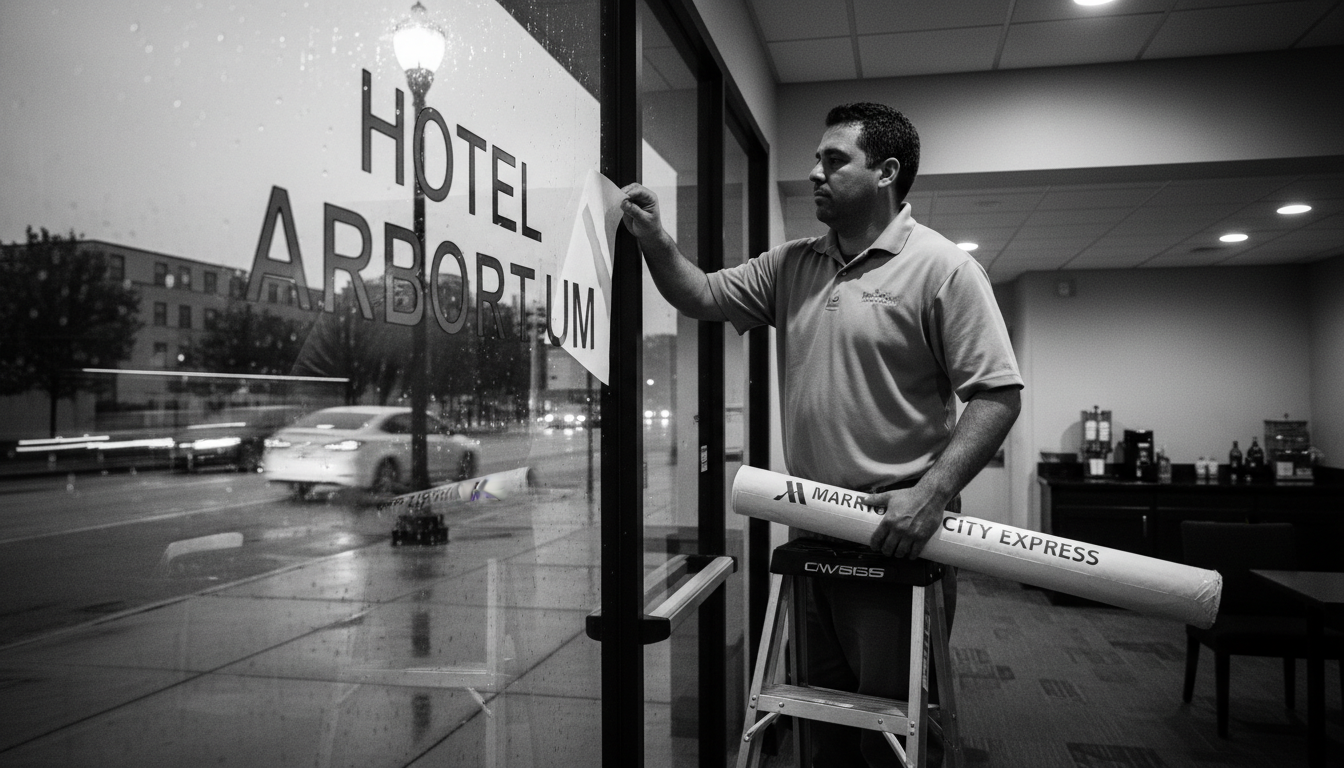
Let me tell you what I see when I read this headline, because it's not what Marriott wants you to see. PM Hotel Group just moved a 125-room property near Union Station in Washington, D.C.... the Hotel Arboretum... under Marriott's City Express flag. And if you're reading that as a routine conversion announcement, you're missing the chess move. This is Marriott planting its midscale conversion brand in the nation's capital, a market driven by government contracts and group business, on a property owned by Rocks Hospitality and managed by a Top-15 management company. That's not a test. That's a statement. Marriott hit 100 signed City Express agreements in the U.S. and Canada by December 2025, opened six properties last year, and is now pushing the brand into Asia Pacific. They are not experimenting anymore. They are executing.

And here's where my brand brain starts buzzing (and not in a good way). City Express was born in Latin America. Marriott bought the portfolio in 2023 for $100 million... roughly 17,000 rooms across Mexico, Costa Rica, Colombia, and Chile. The DNA of this brand is affordable midscale transient. Modern rooms, free breakfast, fast WiFi, get in, get out, no fuss. That works beautifully in markets where Marriott had almost no midscale presence. But Washington, D.C.? A market already saturated with select-service flags from every major company, where the guest mix skews heavily toward government per diem rates and association groups? The question isn't whether City Express can exist here. The question is whether the brand promise means anything different from the Courtyard three blocks away... or the Hilton Garden Inn around the corner... or the 47 other options a government travel booker is scrolling through on FedRooms. "Affordable midscale transient" is not a differentiator in D.C. It's the default setting.

Now, I want to be fair to the ownership group here, because the conversion math can absolutely work even when the brand positioning is muddy. If you're Rocks Hospitality, you're looking at a 125-key independent that probably needed a loyalty pipeline boost, especially for that government and group business. Marriott Bonvoy is the biggest loyalty engine in the industry. Plugging into it could genuinely move your occupancy needle. But... and this is the part the press release skips entirely... at what cost? Total brand cost for a Marriott flag isn't just the franchise fee. It's loyalty assessments, reservation system fees, marketing contributions, brand-mandated vendor requirements, and whatever PIP capital they negotiated. For many owners I've worked with, that total cost lands somewhere between 15% and 20% of revenue. So the real question for Rocks Hospitality isn't "will we get more bookings?" It's "will the incremental revenue exceed the total cost of being in the Marriott system?" And if the answer depends on projections rather than actuals... well, I have a filing cabinet full of franchise projections that aged very poorly. I sat across from an ownership group once... multi-generational family, beautiful property, trusted the brand's revenue projections completely. Actual loyalty contribution came in 13 points below what was promised. Thirteen points. The math broke so badly they couldn't service their PIP debt. That's not a spreadsheet problem. That's a family's future.

Here's what really interests me about this move, though. PM Hotel Group's president said at ALIS three weeks ago that their priority is organic growth, and he openly acknowledged how saturated the U.S. market is with Marriott and Hilton operating north of 60 brands between them. Sixty brands. Let that number sit with you for a second. And now one of those 60-plus brands is City Express, competing in the "affordable midscale" space alongside Marriott's own Four Points Flex, Fairfield, and the new StudioRes concept. Meanwhile Hilton is pushing Spark into the same segment. So if you're an owner being pitched City Express today, the first thing you should ask is: "How does Marriott plan to differentiate THIS flag from its own portfolio, let alone the competition?" Because "conversion-friendly" is an operational convenience, not a guest-facing brand promise. And guests don't book based on how easy your conversion was. They book based on what the stay feels like. If it feels like a Fairfield with a different sign... you've spent conversion capital to be interchangeable. That's not brand strategy. That's brand theater.

The bigger signal here is actually about where the industry is heading. The midscale conversion war is now fully engaged... Marriott, Hilton, Wyndham, Choice, everyone fighting for the same pool of independent and underperforming branded properties. If you're an independent owner, you've never had more suitors. That's the good news. The bad news is that more options doesn't mean better options. It means more sales teams with more projections and more pressure to sign before you've done the math. So do the math. Pull the actual performance data on City Express properties that opened in 2025. Not the projections... the actuals. Ask for the loyalty contribution percentage at comparable properties after 12 months of operation. Ask what happens to your rate positioning when the Courtyard down the street runs a Bonvoy promotion that undercuts you. And for the love of everything, stress-test the downside. What does your P&L look like if loyalty contribution comes in at 22% instead of the 35% they're projecting? Because I've seen that movie, and the ending is not the one in the franchise sales deck.

Operator's Take

If you're an independent owner getting pitched City Express (or any midscale conversion flag right now), do one thing before your next meeting: ask for actual loyalty contribution data from properties that have been open 12+ months, not projections. If they can't provide it or won't... that tells you everything. And if you're a management company running a newly converted property, build your budget on the low end of that loyalty range, not the midpoint. I've seen too many owners get upside down on PIP debt because the pro forma used the best-case number. The math doesn't lie... but the sales deck might.

— Mike Storm, Founder & Editor
Read full analysis → ← Show less
Source: Google News: Marriott
What a 19-Month Bar Renovation in Tokyo Should Teach Every Hotel Operator

What a 19-Month Bar Renovation in Tokyo Should Teach Every Hotel Operator

Park Hyatt Tokyo just spent 19 months and untold millions renovating a 30-year-old property... and the smartest thing they did was decide what NOT to change. There's a lesson in that for every GM staring down a PIP or a renovation budget.

Let me tell you what caught my eye about this Park Hyatt Tokyo story. It's not the 52nd-floor bar. It's not the "Lost in Translation" nostalgia. It's one line from the designer: "Ninety-nine percent is brand new, but the DNA is the same."

That's the hardest thing in hospitality. And almost nobody gets it right.

I've watched hotels gut-renovate themselves into oblivion. Spent 40 years watching it. A property builds something special over a decade or two... a vibe, a reputation, a reason guests come back... and then somebody decides it's time for a refresh. The brand consultants fly in. The designers show up with renderings that look nothing like the hotel guests fell in love with. And when the dust settles, you've got a property that's shiny, modern, and completely soulless. The regulars stop coming. The reviews say "it used to have character." The RevPAR bump from the renovation lasts 18 months and then you're back where you started, except now you're carrying the debt.

I knew a GM once who fought his ownership group for six months over a lobby renovation. They wanted to rip out the original stone fireplace and replace it with a gas feature wall. He pulled guest comment cards going back five years. Every winter, guests mentioned that fireplace. It was the property's identity. He won the argument, barely, and the renovation worked precisely because they kept the thing that mattered. Park Hyatt Tokyo did that at scale. They took 171 rooms (down from 177, by the way... they actually reduced inventory to improve the product, which tells you everything about their pricing strategy), rebuilt essentially everything, and preserved the DNA. The New York Bar still has live jazz. The views are still the views. The feeling is still the feeling. That takes more discipline than tearing it all down and starting over. Starting over is easy. Knowing what to keep is the hard part.

Here's the operational reality that matters for you. Tokyo's luxury hotel market is approaching $7.3 billion and growing at nearly 4% annually. Average daily rates for five-star properties are pushing €800. The Japanese government wants 60 million international visitors by 2030. Supply is constrained... Tokyo has fewer luxury rooms than most comparable global capitals. So Park Hyatt's ownership group (Tokyo Gas, which has held this asset for 30 years) made a calculated bet: take the property offline for 19 months, absorb the revenue loss, invest in a renovation that preserves what works, and reopen into a market with rising rates and limited competition. That's patient capital. That's an ownership group that thinks in decades, not quarters. And that's the exact opposite of how most hotel renovations happen in the U.S., where the timeline is driven by the debt maturity date and the PIP deadline, not by what's actually right for the asset.

The cover charge at the New York Bar is 3,300 yen (roughly $22) for non-hotel guests. Hotel guests walk in free. That's not a revenue play... that's a loyalty play. That's telling your in-house guest "you belong here" while creating exclusivity that makes outsiders want to book a room next time. It's the simplest, cheapest guest differentiation strategy I've ever seen, and it works because it's authentic. They're not manufacturing scarcity. They have a 52nd-floor bar with limited seats and a jazz trio. The scarcity is real. The question for every operator reading this isn't "how do I build a rooftop bar." It's "what do I already have that I'm not protecting?"

Look... most of us aren't running luxury towers in Shinjuku. I get that. But the principle scales down to every segment. What is the thing about your property that guests actually remember? The thing that shows up in reviews unprompted? The thing your staff talks about with pride? That's your DNA. And the next time someone hands you a renovation plan or a brand standard that wants to erase it, fight for it. Because once it's gone, no amount of capital spending brings it back.

Operator's Take

If you're staring at a renovation or a PIP in the next 12 months, do this before you approve a single design rendering: pull your top 50 guest reviews from the last three years and highlight every specific thing guests mention about the physical property. That's your DNA list. Anything on that list gets preserved or you need a damn good reason why not. The most expensive mistake in a renovation isn't what you spend... it's what you destroy that you can never rebuild.

Read full analysis → ← Show less
Source: Google News: Hyatt
Harlem's George Hotel Is the Tapestry Collection Test Case Every Brand Strategist Should Be Watching

Harlem's George Hotel Is the Tapestry Collection Test Case Every Brand Strategist Should Be Watching

Hilton planted a flag in Harlem with a culturally immersive soft brand... and the early execution is either a masterclass in authentic positioning or a really expensive mood board. The answer depends on whether the promise survives past the press cycle.

Let me tell you what caught my eye about this property, and it's not the cabaret show or the Black History Month panel (though those are smart). It's that someone at Hilton looked at Harlem... a neighborhood with no existing Hilton presence, a complicated relationship with gentrification, and a community board that apparently wasn't even contacted about the opening... and said "yes, this is where we're going to test whether Tapestry Collection can be more than a conversion flag for tired independents." That's either brave or reckless, and I genuinely haven't decided yet. The George Manhattan is 139 keys, which is the right size for this kind of concept. It's named after a Harlem swing dancer (George "Shorty George" Snowden, for the culture nerds) AND King George II, which is the kind of layered storytelling that works beautifully in a brand deck and means absolutely nothing if the front desk team can't tell you who either George is when a guest asks. The restaurants aren't open yet. The pool isn't open yet. The hotel launched in October 2025, and we're four months in with the F&B and amenity story still unwritten. So right now, what we're actually evaluating is a lobby bar, a fitness center, 2,000 square feet of meeting space, and a promise. I've seen this before... a property that leads with cultural narrative and programming before the physical product is complete. Sometimes it works. Sometimes you're asking guests to pay upscale rates for a construction timeline wrapped in a storytelling bow.

Here's what's interesting from a brand architecture standpoint. Tapestry Collection exists to do exactly this... collect independent-feeling properties under the Hilton umbrella so owners get the distribution engine and loyalty contribution without the cookie-cutter standards. And culturally specific positioning is genuinely a smart play for a soft brand. The global theme hotel market hit $15.29 billion in 2024 and is projected to reach nearly $22 billion by 2033. Guests want stories. They want to feel like they're somewhere, not just anywhere with a Hilton Honors sign. But (and you knew there was a but) the Deliverable Test is brutal here. Can The George deliver a culturally immersive experience that feels authentic and not performative, seven days a week, 365 days a year, with whatever staffing reality New York City hands them? A NYFW panel during Black History Month is an event. An art exhibit with a cabaret show is programming. Those are moments. What happens on a random Wednesday in July when there's no programming and a guest from Des Moines wants to understand why this hotel costs $50 more than the Hampton Inn downtown? The experience has to live in the DAILY operation, not the Instagram-worthy activations.

The Columbia University branding controversy is a red flag I want to talk about because it tells you something about execution discipline. Columbia publicly stated it has no partnership with this property. When a major university has to issue a denial about an implied association with your hotel... that's a journey leak, and it's the kind that erodes credibility fast. You're building a brand on authenticity and cultural respect, and then you're getting called out for a branding implication that wasn't earned? That's exactly the kind of thing that makes community boards (the same ones who weren't contacted about the opening, by the way) go from neutral to hostile. Sam Martinez, the GM, is a Harlem native, and that's genuinely meaningful. A GM who IS the community rather than studying the community from a brand playbook is a significant asset. I sat in a franchise review once where an owner told me his biggest competitive advantage was that his GM had coached Little League with half the local business owners. That kind of embedded credibility can't be manufactured. It can only be hired. If Hilton is smart, they'll build the entire guest experience around what Martinez knows about this neighborhood and stop trying to borrow credibility from institutions that don't want to lend it.

The real question for the owners behind this property (and for anyone watching the Tapestry Collection pipeline, which now includes upcoming openings in Costa Rica and Argentina) is whether the economics justify the cultural ambition. A 139-key upscale hotel in Harlem is competing in a market where the Renaissance New York Harlem opened in 2023 and Marriott has already been testing these waters. Total brand cost for a Tapestry property... franchise fees, loyalty assessments, reservation system fees, marketing contributions... typically runs 10-14% of revenue once you add it all up. The owner's bet is that Hilton Honors drives enough demand to justify that cost versus going truly independent. In a neighborhood where the demand generators are cultural (Apollo Theater, Studio Museum, the restaurant scene), the question is whether Hilton's loyalty base overlaps with the guest who actively CHOOSES Harlem. Because the guest who books this hotel through Hilton Honors for the points might have a very different expectation than the guest who books it because they want a culturally immersive Harlem experience. Serving both of those guests authentically, in the same 139 rooms, without diluting the promise to either... that's the tightrope. And it's the tightrope every Tapestry property walks. Most of them just don't have the cultural stakes this high.

I want this to work. I really do. A hotel that takes its neighborhood seriously, hires from the community, names itself after a swing dancer, and tries to make cultural storytelling the actual product rather than a lobby mural... that's the version of hospitality I got into this industry for. But wanting it to work and believing the execution will hold are two different things, and I learned the hard way that potential is not a strategy. The restaurants need to open. The pool needs to open. The community board needs to be brought into the conversation (yesterday, not tomorrow). And the daily guest experience... not the panels, not the exhibits, the DAILY experience... needs to deliver on a promise that is extraordinarily ambitious for a 139-key property still finishing its amenity buildout. Watch this property at month twelve, not month four. That's when the brand either proves itself or becomes another beautiful lobby with a story nobody's telling anymore.

Operator's Take

If you're an independent owner being pitched Tapestry or any soft brand collection right now... pull The George's trajectory over the next year and study it. This is the test case for whether culturally specific positioning can survive inside a loyalty-driven distribution system without becoming wallpaper. And if you're already IN a soft brand collection, take a hard look at whether your "unique story" is actually showing up in guest reviews or just in the brand deck. The story has to live at the front desk at midnight, not just in the marketing materials. If your team can't tell the story without a script, you don't have a brand... you have a brochure.

— Mike Storm, Founder & Editor
Read full analysis → ← Show less
Source: Google News: Hilton
Hotel Deal Flow Says Buyers Are Getting Pickier, Not Quieter

Hotel Deal Flow Says Buyers Are Getting Pickier, Not Quieter

A two-week snapshot of hotel transactions reveals a market where capital is abundant but discipline is tightening... and the per-key math tells a more interesting story than the headlines.

Highline Hospitality Partners just closed its 17th acquisition, a 298-key Marriott-flagged property in Pittsburgh, built in 2003. The price wasn't disclosed. That's the first interesting data point. When buyers don't announce the number, I start doing the math backward.

A 2003-vintage, 298-key full-service Marriott in a secondary market with planned guestroom renovations... you're likely looking at a per-key price somewhere in the $80K-$130K range depending on trailing NOI and PIP scope. Highline is a Birmingham-based shop on acquisition number 17, handing management to Avion Hospitality (which has scaled to 40 hotels across 15 states since launching in 2022... that's aggressive growth worth watching). The play here is textbook: buy an institutionally owned asset in a market with diversified demand generators, renovate the rooms, push rate. The question is whether Pittsburgh North's demand profile supports the basis plus renovation spend at today's cost of capital. I'd want to see the trailing RevPAR index before I got comfortable.

The same two-week window produced three other deals that decompose differently. AWH Partners paid $38M for a 122-key property in Healdsburg, California... that's $311K per key for a wine country boutique, which prices in a significant rate premium assumption. A French asset manager grabbed a 120-room property in Parma, Italy at €135,800 per room with a reported 7% net yield (a number I'd love to verify against actual operating statements, but at face value, that's a real return in a European market where 5% is considered healthy). And an Indian conglomerate acquired three Accor-branded hotels in the UK totaling 478 rooms. Four deals, four completely different risk profiles, four different bets on where NOI growth lives.

The pattern underneath matters more than any single transaction. PwC's 2026 deals outlook confirms what I've been seeing in the data: average deal size is shrinking, strategic buyers are leading (private equity's share of disclosed deal value dropped from roughly 60% in 2024 to about 35%), and everyone is underwriting with more discipline. Translation: there's capital. There's appetite. But buyers are stress-testing downside scenarios harder than they were 18 months ago. That's healthy. US RevPAR just turned positive for the first time since March of last year, which gives buyers a base-case tailwind... but the smart money is pricing in what happens if that tailwind stalls.

The real number to watch isn't deal volume. It's the gap between what sellers want and what buyers will pay after accounting for renovation costs, brand PIPs, elevated insurance, and debt service at current rates. That gap is why deal sizes are smaller and why disclosed prices are becoming rarer. An owner told me once, "I'm making money for everyone except myself." He wasn't wrong. At today's fee loads and capital costs, the buyer's actual return after management fees, franchise fees, FF&E reserves, and debt service can look very different from the NOI that made the deal look attractive on a one-page summary. If you're evaluating an acquisition right now, decompose past the cap rate. The cap rate is the story they want you to see. The owner's cash-on-cash after all charges is the story that matters.

Operator's Take

If you're an owner being approached by buyers right now... and some of you are... know that the market is real but disciplined. Buyers are doing deeper diligence on trailing NOI quality, not just top-line RevPAR. Get your operating statements clean, know your PIP exposure, and for the love of everything, have your capital plan documented before the first LOI shows up. The days of "we'll figure it out in diligence" pricing are over. Buyers are backing into their number from day one, and if your books aren't telling a clear story, you're leaving money on the table or killing the deal entirely.

— Mike Storm, Founder & Editor
Read full analysis → ← Show less
Source: Google News: Marriott
DiamondRock's Q4 Beat Hides the Number That Actually Matters

DiamondRock's Q4 Beat Hides the Number That Actually Matters

DRH topped revenue estimates by $1.1M and posted a 273% net income jump. The 2026 guidance tells a different story than the headline.

$274.5M in Q4 revenue against a $273.4M consensus. That's a $1.1M beat, or roughly 0.4%. The market yawned... shares slipped 0.72% after hours. The market was right to yawn.

The real number here is the 2026 AFFO guidance range: $1.09 to $1.16 per share. Midpoint is $1.125. Against a 2025 actual of $1.08, that's 4.2% growth at the midpoint. For a company that just posted 273% net income growth in Q4 (a figure inflated by a low Q4 2024 comp and the timing of a government shutdown recovery), 4.2% forward AFFO growth is the company telling you the sugar rush is over. Strip out the one-time dynamics... the preferred stock redemption that eliminated $9.9M in annual preferred dividends, the transient demand snapback from a federal shutdown... and you're looking at a portfolio grinding out low-single-digit growth. That's not a criticism. That's the math.

Let's decompose the capital structure move. DRH redeemed all 4.76M shares of its 8.25% Series A preferred in December for $121.5M. That's smart. Eliminating an 8.25% cost of capital when your total debt is $1.1B on a freshly refinanced $1.5B credit facility (completed July 2025) is textbook balance sheet optimization. But it also means $121.5M of cash that didn't go into acquisitions or buybacks. The quarterly common dividend drops to $0.09 from the $0.12 stub-inclusive Q4 payout. At $0.36 annualized against a stock price around $10, that's a 3.6% yield. Adequate. Not compelling. An owner of DRH shares is being asked to believe in NAV appreciation, not income.

The portfolio story is more interesting than the earnings story. Comparable total RevPAR grew 1.2% for full year 2025, but the mix matters: room revenue was essentially flat while out-of-room revenues grew 2.6%. That's a margin question I'd want to see answered. Out-of-room revenue at resort-weighted portfolios tends to carry lower flow-through than room revenue (F&B labor, spa operations, activity programming all eat into that top line). A REIT I worked at years ago had a similar dynamic... headline RevPAR growth masking a GOP margin that was actually compressing because the growth was coming from the expensive-to-deliver revenue streams. Check the flow-through before you celebrate.

The 2026 catalyst list (FIFA World Cup in key markets, favorable holiday calendar, renovation benefits) is management doing what management does... framing the narrative around upside scenarios. The analyst community is pricing in "more of the same fundamentally" across lodging, and the consensus target of $9.91 against a current price near $10 tells you the Street agrees this is a hold, not a buy. Deutsche Bank and Truist upgraded to buy in January, but their targets ($12 and $11 respectively) require RevPAR acceleration that the company's own guidance doesn't support. The math works if you believe FIFA drives meaningful incremental demand to DRH's specific markets. I'd want to see which properties are actually in World Cup host cities before I underwrote that thesis.

Operator's Take

Here's the thing about DRH's quarter... the headline numbers are a distraction. If you're an asset manager benchmarking your portfolio against public REIT comps, focus on that 1.2% comparable total RevPAR growth for full year 2025. That's the real pace of the market right now for upper-upscale resort and urban portfolios. If your properties are outperforming that, you're doing something right. If they're not, don't blame the market... dig into your out-of-room revenue strategy and figure out where the flow-through is leaking. The money's in the margin, not the top line.

— Mike Storm, Founder & Editor
Read full analysis → ← Show less
Source: Google News: DiamondRock Hospitality
End of Stories