Today · Apr 7, 2026
A $100 Easter Brunch Won't Fix Bali's RevPAR Problem

A $100 Easter Brunch Won't Fix Bali's RevPAR Problem

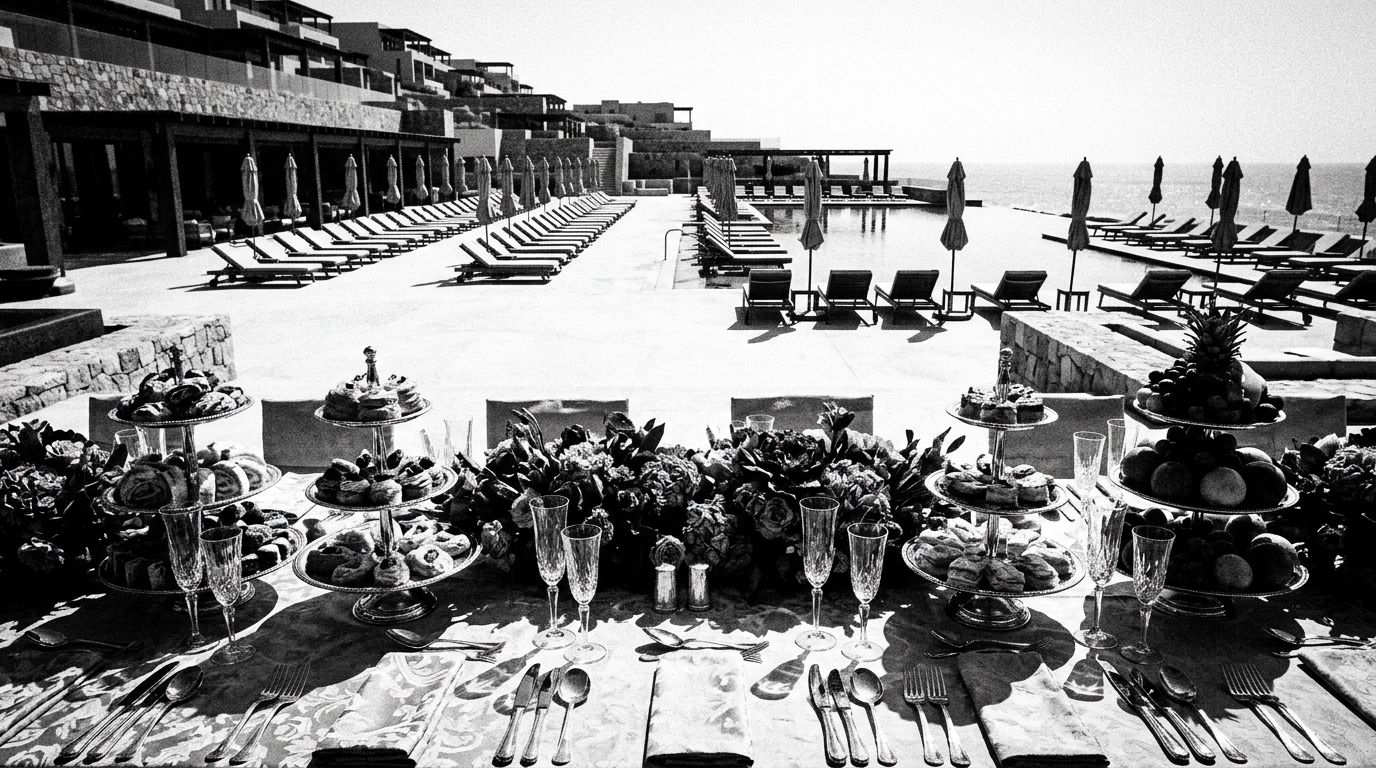
The Ritz-Carlton Bali is promoting a $100-per-person Easter brunch while the island's luxury RevPAR just dropped nearly 9%. When the press release is about the holiday buffet and the STR data tells a different story, you should be reading the STR data.

I worked with an F&B director once who had a gift for turning every holiday into a production. Easter brunch, Mother's Day prix fixe, New Year's Eve gala... the guy could build a menu and a marketing plan that looked gorgeous on paper. And the events always sold well. The problem was that we were running 58% occupancy during those same weekends, and the brunch revenue was a rounding error against the rooms we weren't selling. He wasn't wrong about the brunch. He was solving the wrong problem.

That's what I think about when I see a luxury resort in Bali putting out a press release about Easter egg hunts and oceanfront dining at 1.5 million rupiah a head (roughly $95-100 per person before tax and service). It's fine. It's what Ritz-Carlton properties do. It's what every luxury resort does during holidays... create a moment, charge a premium, fill seats, get some social media content out of it. Nothing wrong with any of that.

But here's what the press release doesn't mention. Bali's island-wide RevPAR dropped 8.7% year-over-year in February 2026. That's not a blip. Luxury ADR is softening, which tells you the competitive discounting pressure is real. When the top of the market starts cutting rate (even quietly, even through packages and "value adds"), that compression rolls downhill fast. Marriott's luxury segment globally saw 6% RevPAR growth in 2025, which means Bali is moving in the opposite direction of the portfolio. If you're an owner of a luxury asset in that market, the holiday brunch isn't what's keeping you up at night. The question is whether the demand environment that justified your basis still exists, or whether you're watching a market correct in real time while the management company sends you photos of the chocolate fountain.

The bigger pattern here is one I've seen play out at resorts for decades. When the top-line softens, the instinct is to lean into programming. More events. More packages. More "experiences." And some of that works... it protects rate by wrapping value around the price point instead of cutting it. That's smart revenue management dressed up as F&B. But it only works if the core demand engine is functioning. If occupancy is compressing and ADR is slipping simultaneously, no amount of curated Easter brunch is going to change the trajectory. You're decorating the room while the foundation shifts.

Bali is targeting 6.63 million international arrivals in 2026 with a stated focus on "higher-quality visitors." That's government-speak for "we want to move upmarket." Every resort destination in the world says that. Very few actually execute it, because moving upmarket requires infrastructure investment, airlift, and (this is the part nobody wants to talk about) saying no to the volume segment that's been paying the bills. You can't court the $500-a-night guest and the $80-a-night guest simultaneously without confusing both of them. Bali's been trying to thread that needle for years. The February RevPAR numbers suggest they haven't figured it out yet.

Operator's Take

If you're running a luxury or upper-upscale resort in a leisure destination... anywhere, not just Bali... don't let holiday programming become a substitute for confronting your demand story. Pull your trailing 90-day RevPAR index against your comp set right now. If you're losing share, figure out where it's going before you plan the next themed brunch. Holiday F&B events are margin builders when occupancy is healthy. When occupancy is slipping, they're distractions that make your Instagram look better than your P&L. This is what I call the Price-to-Promise Moment... that single point during a guest's stay where they decide the rate was worth it. A $100 brunch can be that moment, but only if you've already earned the right to charge the room rate that got them there in the first place.
Read full analysis → ← Show less
Source: Google News: Resort Hotels
The Luxor Buffet Is Gone. Your F&B Sacred Cow Might Be Next.

The Luxor Buffet Is Gone. Your F&B Sacred Cow Might Be Next.

MGM just closed one of the last affordable buffets on the Strip, and the timing alongside their new all-inclusive package at Luxor tells you exactly where casino F&B strategy is headed. If you're still running a loss-leader restaurant because "guests expect it," this is your wake-up call.

I worked with a casino F&B director years ago who kept a spreadsheet he called "The Lie." It tracked every food outlet in the building... actual food cost, labor, waste, revenue per cover, the works. One column was labeled "What We Tell Ownership" and the next was "What It Actually Costs." The buffet was always the biggest gap between those two columns. Every single month. He'd show it to me sometimes after his shift, shaking his head. "We lose eleven dollars a cover and call it a marketing expense. At what point does the marketing expense become just... an expense?"

That question finally got answered at the Luxor. MGM shut down the buffet on March 30th. It was running breakfast and lunch only, $31.99 a head, one of the cheapest options left on the Strip. And here's what makes this interesting... it wasn't just a closure. It was a swap. One week before they pulled the plug, MGM announced an all-inclusive package at the Luxor starting at $330 for a two-night stay that bundles dining at Diablo's Cantina, Pyramid Café, Public House, and Backstage Deli. They didn't eliminate the value proposition. They restructured it so the guest pays upfront and the revenue flows to outlets where MGM actually controls food cost, labor, and margin. That's not a retreat from affordable dining. That's a financial engineering move disguised as a menu change.

The Strip is down to eight buffets total. Half of them are still MGM properties. The ones that survived... Bacchanal at Caesars, the Wynn buffet... repositioned as premium experiences at $70-80 per person. They're destinations, not loss leaders. Everything in the middle is disappearing, replaced by food halls like Block 16 at the Cosmopolitan and Proper Eats at ARIA. Food halls need fewer cooks, generate less waste, and let you rotate concepts without a full restaurant buildout. The math is brutal for traditional buffets... you need bodies to run a buffet line, bodies to bus it, bodies to keep it stocked, and the guest is incentivized to eat as much as possible. In a labor market where you can't staff a normal restaurant, running an all-you-can-eat operation at $32 a head is basically setting money on fire in a very organized fashion.

But here's what this really means for operators outside of Vegas, because this pattern isn't unique to the Strip. Every hotel in America has at least one F&B outlet that exists because "guests expect it" rather than because it makes financial sense. The breakfast buffet that costs you $14 per cover in food and labor while you charge $22. The lobby bar that's staffed from 4 PM to midnight but only does real volume from 6 to 9. The room service menu that requires a dedicated line cook for twelve covers a night. These are all versions of the same decision MGM just made at the Luxor. The question isn't whether the outlet is popular. The question is whether the revenue it generates (directly and indirectly) justifies the fully loaded cost of running it. And "we've always had it" is not a financial justification... it's inertia with a menu.

What MGM did right is they didn't just kill the buffet and leave a hole. They redirected the value into a bundled package that captures the spend upfront and steers it to better-margin outlets. That's the template. If you're going to eliminate a loss leader, you need to replace the PERCEPTION of value, not just the outlet. The guest who came to the Luxor for the $32 buffet wasn't coming for the food. They were coming for the deal. MGM is now selling them a different deal that happens to be more profitable. Same psychology. Better economics.

Operator's Take

If you're an F&B director or a GM with a money-losing outlet you've been defending with "it drives room bookings" or "guests expect it"... pull the P&L on that outlet this week. Not the revenue line. The fully loaded cost including allocated labor, food waste, utilities, and the management hours you spend dealing with it. Then ask yourself the MGM question: can I replace this with something that delivers the same guest perception of value at half the operating cost? A curated grab-and-go, a local restaurant partnership, a bundled package that redirects spend to your profitable outlets. The answer doesn't have to be "close it tomorrow." But the answer can't keep being "we've always had it." That's what I call the False Profit Filter... some of these outlets look like they're contributing when they're actually starving your margins and you've just gotten used to the pain. Bring the real number to your owner before they read about MGM's move and start asking questions you haven't prepared for.

Read full analysis → ← Show less
Source: Google News: MGM Resorts
A Celebrity Chef Tie-In Sounds Glamorous. Making It Work at Property Level Is a Different Show Entirely.

A Celebrity Chef Tie-In Sounds Glamorous. Making It Work at Property Level Is a Different Show Entirely.

AC Hotel Belfast is riding a celebrity chef's TV appearance into a full F&B marketing push. The real question isn't whether the press hits come... it's whether the kitchen can deliver when the reservations spike and the line cook called out sick.

I watched a GM once spend eight months courting a local celebrity chef for a restaurant partnership. Beautiful concept. Great press. The food was genuinely outstanding. And within six months, the chef was there maybe three days a month, the kitchen team he trained had turned over twice, and guests who came specifically because of his name were leaving reviews that said "disappointed... expected more." The GM told me over a drink, "I'm running a restaurant named after a guy who's never here. And every bad review feels like it's MY fault."

That story kept running through my head reading about AC Hotel by Marriott Belfast and their push around Jean-Christophe Novelli's new ITV series "The Heat." The bones of this are solid... Novelli's had a restaurant in the hotel since it opened in 2018, the property just finished a soft refurb, and they're smart to ride the wave of a 10-episode prime-time show. Belfast Harbour put £25 million into this 188-key property, and using a celebrity chef's media moment to drive covers and room nights is exactly what you should do with that kind of investment. I'm not questioning the strategy. I'm questioning the execution gap that ALWAYS shows up between the press release and the plate.

Here's what I know from 40 years of watching F&B partnerships: the celebrity is the draw, but the Tuesday night kitchen team is the product. Novelli spends 30 to 40 days a year at this property. That means roughly 325 days a year, the restaurant bearing his name is operating without him. When that ITV show drives curiosity and reservation volume spikes, the guest doesn't care that Chef Novelli is filming in Barcelona or doing a pop-up in London. They came for the name on the door. And if the experience doesn't match, they don't blame him. They blame the hotel. Every single time.

The opportunity here is real... and I don't want to bury that. A well-timed media tie-in with a soft refurb completion and a seasonal outdoor dining push (The Terrace reopening with tapas and BBQ menus) is genuinely smart programming. This is what I call the Brand Reality Gap... the brand (or in this case, the chef's name) sells the promise, but the property delivers it shift by shift. The question for the GM in Belfast isn't "how do we get more press?" That part's handled. The question is "when 40 people show up on a Wednesday night because they saw the show, can my kitchen execute at the level his name implies with the staff I actually have?" If the answer is yes, this is a case study in how to use earned media to drive F&B revenue. If the answer is "mostly," you're about to learn how fast social media turns a celebrity association from an asset into a liability.

The £50,000 solar panel installation reducing electricity consumption by 15%... that's a nice footnote, but let's not pretend that's the story. The story is that this property has a moment. A genuine, time-limited window where a nationally televised show is putting their restaurant in front of millions of viewers. Windows like that don't open often. The properties that win with celebrity partnerships are the ones that invest as much in the consistency of the experience as they do in the marketing of it. Not the rendering. Not the press hit. The 8:30 PM table on a Saturday when the sous chef is running the pass and the dishwasher didn't show up. That's where the brand promise lives or dies.

Operator's Take

If you're running an F&B operation tied to any kind of celebrity name, influencer partnership, or external brand... here's what to do before the marketing wave hits. Mystery-dine your own restaurant on the chef's day off. Not when the executive team is in the building. When nobody special is watching. That's the experience your guest is buying. If there's a gap between the "chef is here" version and the "Tuesday B-team" version, close it now... better training, tighter recipes, stronger sous chef leadership, whatever it takes. The press will drive the traffic. Your kitchen's consistency determines whether that traffic comes back or leaves a one-star review that mentions the celebrity's name 400 times. One more thing... if you're spending marketing dollars on a time-limited media tie-in, track the actual incremental covers and average check against the spend. Not "buzz." Covers and checks. That's the only ROI that matters.

Read full analysis → ← Show less
Source: Google News: Marriott
4,000 People Just Descended on a Single Hotel for Two Days. Here's What That Means for Your F&B.

4,000 People Just Descended on a Single Hotel for Two Days. Here's What That Means for Your F&B.

The Boston Wine Expo packed 4,000 attendees and 100 wineries into the Boston Park Plaza over a single weekend. The real story isn't the wine... it's whether your property is capturing the economics of the large-format events happening in your backyard, or just absorbing the wear and tear.

I worked with a GM years ago who hated special events. Hated them. Every time the sales team booked a large group activation... wine festivals, corporate expos, charity galas... he'd start calculating the damage. Carpet cleaning. Overtime for security. Extra housekeeping passes on public restrooms. Elevator wear. He had a whole spreadsheet. Called it his "fun tax."

He wasn't wrong about the costs. But he was completely wrong about the opportunity.

The Boston Wine Expo just pushed 4,000 people through the Park Plaza over two days earlier this month... more than 100 wineries pouring, tasting sessions priced at $89-$93 a head, plus VIP packages and educational seminars. That's a controlled flood of high-spending consumers into one building on a weekend in early March. For Boston hotels, March is shoulder season. Occupancy is soft. Rate is vulnerable. And here's an event delivering thousands of warm bodies who are already in a spending mood (nobody goes to a wine expo to save money). The question isn't whether this kind of event is good for the host property. Obviously it is. The question is what the properties within a three-mile radius are doing about it.

Here's what I mean. Those 4,000 attendees aren't all sleeping at the Park Plaza. They're booking hotels across Back Bay, the South End, Downtown Crossing. They're eating dinner before the event, grabbing drinks after, extending to a full weekend because they're already in the city. If you're running a 150-key select-service within walking distance, did you even know this event was happening? Did your revenue manager adjust rate strategy for the weekend? Did your F&B team (if you have one) do anything to capture pre- or post-event traffic? Did your front desk know enough to recommend local restaurants to attendees who asked? This is the stuff that separates properties that benefit from demand generators and properties that just happen to be nearby when demand shows up.

The larger point here goes well beyond one wine expo. Every market has these... regional events, festivals, conventions that inject 2,000-10,000 visitors into a three-mile radius for 48-72 hours. The smart operators I've known over the years treat these like revenue events, not inconveniences. They build a local event calendar at the start of each year. They brief their teams. They coordinate rate and inventory strategy around the demand spikes. They train their front desk staff to be knowledgeable about what's happening in the neighborhood because the guest who feels like your hotel is plugged into the city comes back. The guest who gets a shrug and a "I think there's something going on at the convention center" does not.

And if you're the property actually hosting one of these events... the math gets more interesting and more dangerous at the same time. Ticket revenue of $89-$93 per session across 4,000 attendees is real money flowing through your building. But so is the incremental cost. Banquet labor. Setup and teardown. The wear on your public spaces. Insurance riders. The opportunity cost of rooms or function space you could have sold to another group. I've seen properties take on big activations because the top-line number looked great and then realize the flow-through was thin once they accounted for everything. You have to run the real P&L on these, not the vanity version.

Operator's Take

If you're a GM or DOS at any property within two miles of a major event venue, here's your homework this week: build a rolling 12-month local event calendar. Not just the big conventions... the wine expos, the food festivals, the charity runs, the college reunions, the concerts. Every event that puts 1,000+ people in your radius. Share it with your revenue manager and your front desk team. For each event, answer three questions: Are we adjusting rate? Are we adjusting staffing? Does our front-line team know enough about this event to have an intelligent conversation with a guest? This is what I call the Three-Mile Radius at work... your revenue ceiling isn't set by your room count, it's set by what's happening in the neighborhood around you. The operators who treat these demand events as their own revenue events will outperform the ones who just watch the bodies walk past their lobby.

Read full analysis → ← Show less
Source: Google News: Hilton
What a Mumbai Bar Takeover at Grand Hyatt Gurgaon Actually Teaches About Hotel F&B

What a Mumbai Bar Takeover at Grand Hyatt Gurgaon Actually Teaches About Hotel F&B

A cocktail bar pop-up at a luxury hotel in India sounds like fluff news. It's not. It's a blueprint for how hotels can stop losing the F&B battle to independent restaurants... if they're willing to let someone else drive.

A Mumbai cocktail bar called Late Checkout just did a two-night takeover at Bar Musui inside the Grand Hyatt Gurgaon. Specialty cocktails with names like "Missing Trust Fund" and "Main Character Energy." À la carte pricing. Two nights and done. On the surface, this is a lifestyle press release. Beneath it, there's something worth paying attention to... especially if you're running a hotel where the bar has become an afterthought that happens to have a liquor license.

Here's what caught my eye. Chrome Asia Hospitality, the group behind Late Checkout, is planning takeovers in 20 cities this year. Twenty. They're not doing this for fun. They're building a touring model... essentially a concert circuit for cocktail bars. And the hotels hosting these events aren't doing it out of charity either. Grand Hyatt Gurgaon just hired an Assistant Director of F&B specifically known for driving international bar takeovers. They promoted their Executive Chef in January with a mandate for "culinary innovation and experiential dining." This isn't a one-off event. It's a deliberate F&B strategy. They're renting credibility they can't build fast enough internally, and honestly... that's smart.

I knew a beverage director once at a 400-room full-service who spent $80,000 redesigning his lobby bar menu. New glassware. New garnish program. Staff training for six weeks. RevPAR in the bar went up about 4%. Then a local restaurant group did a three-night pop-up in his space (his idea, to his credit), and the bar did more covers those three nights than it had done in any full week that quarter. The pop-up cost him almost nothing. The local press alone was worth more than his entire redesign budget. He looked at me afterward and said, "I just learned that my guests don't want MY bar to be better. They want something they can't get anywhere else, for a limited time, and then tell their friends about." That's the insight buried in this Gurgaon story.

The Indian market is moving fast on this. Bar takeovers are becoming a legitimate channel in what's reportedly a $55 billion alcobev market. Liquor brands sponsor these events as marketing. The visiting bar gets exposure in a new city. The hotel gets foot traffic, social media buzz, and a reason for local diners to walk through the lobby... which is the hardest thing for any hotel bar to achieve. The average guest who's already checked in will visit your bar. The local who has 40 restaurant options on their phone will not... unless you give them a reason. A two-night exclusive with a buzzy Mumbai bar is a reason. Your Tuesday night happy hour with discounted well drinks is not.

Look, this specific event is in India and involves a Grand Hyatt. I get it. Most of the people reading this aren't managing luxury properties in Gurgaon. But the model translates everywhere. The principle is simple and it works at any scale: stop trying to be great at F&B by yourself if you don't have the team, the budget, or the local credibility to pull it off. Find someone who already has it. Give them your space for a night or a weekend. Split the upside. Your bar becomes a destination instead of a holding pen for guests who don't want to leave the building. Your team learns techniques they'd never pick up in a brand training module. And your F&B line on the P&L starts looking like a revenue center instead of a cost center with a garnish budget. The hotels that figure this out... the ones willing to let go of the idea that they have to own every experience under their roof... are going to win the F&B game. The ones that keep running the same cocktail menu with the same undertrained bartender and the same $14 mojito? They're going to keep wondering why nobody sits at the bar.

Operator's Take

If you're a GM at a full-service property where your bar revenue has been flat for two years, call the best independent bar or restaurant operator within 50 miles of your hotel this week. Propose a one-night or two-night takeover. You provide the space, the staff, and the liquor license. They bring the concept, the menu, and the social media following. Split the revenue or charge a flat hosting fee... either way you win. This is what I call the Brand Reality Gap playing out in F&B: your brand gives you a bar template, but the local operator gives you a reason for people to actually show up. Start small. One event. Measure covers, check average, and social impressions against your best normal night. The numbers will make the argument for you.

Read full analysis → ← Show less
Source: Google News: Hyatt
The Real Story Behind a Luxury Brunch Isn't the Buffet... It's the Bankruptcy

The Real Story Behind a Luxury Brunch Isn't the Buffet... It's the Bankruptcy

A JW Marriott property in Bengaluru is promoting a lavish Sunday brunch series while three major hotel companies circle the building in a bankruptcy acquisition fight. That disconnect tells you everything about how this industry actually works.

Here's a Sunday brunch priced at 4,000 rupees a head (that's roughly $47 USD) at a 281-key luxury property that's simultaneously being sold out of bankruptcy for an estimated ₹1,300 crore. The JW Marriott Bengaluru is running a themed brunch series called "The March of Five Sundays" through May, complete with live music, interactive food stations, and a kids' menu. Meanwhile, Indian Hotels (Taj), EIH (Oberoi), and ITC Hotels are reportedly fighting over who gets to buy the building from underneath Marriott's management contract. If that doesn't perfectly capture how hotel operations and hotel ownership exist in two completely different realities... I don't know what does.

I've seen this movie before. More than once, actually. I worked at a property years ago where the ownership entity was in receivership and the lender's attorneys were in the building every Tuesday going through files. You know what we did? We ran the hotel. We sold rooms. We hosted weddings. We trained new hires. Because that's what operators do... you keep the machine running regardless of what's happening three floors above you in the conference room with the lawyers. The guests don't know. The guests don't care. And honestly, the moment your team starts acting like the building is in trouble, your TripAdvisor scores crater and then you really are in trouble.

What's interesting here isn't the brunch (luxury hotels in major Indian metros run elaborate Sunday brunches... that's Tuesday. Or Sunday, I guess). What's interesting is what Marriott is doing strategically. They've already signed a deal for a second JW Marriott in Bengaluru's Electronic City, projected to open in 2030. So even while the current property's ownership is in bankruptcy proceedings, Marriott is doubling down on the market with the JW flag. That tells you something about how management companies think versus how owners think. Marriott collects fees regardless of who holds the deed. The brand keeps running. The F&B programming keeps churning. The sous chef they just hired for the Japanese concept keeps creating menus. The machine doesn't stop because the ownership structure is in flux. That's the entire point of the asset-light model.

Look... if you're an operator at a property going through an ownership transition (and there are going to be a LOT of those in the next 18 months as debt matures and some owners can't refinance), the lesson from Bengaluru is straightforward. Keep operating. Keep programming. Keep giving guests reasons to show up. A ₹4,000 brunch with a clever marketing hook around "five Sundays in March" isn't going to move the needle on a ₹1,300 crore disposition. But it keeps the F&B revenue line healthy, it keeps the team engaged, and it keeps the asset looking like something worth buying at a premium. The worst thing you can do during an ownership transition is let the property drift. New owners are watching the trailing numbers. Every single month matters.

The three companies circling this deal are all major Indian hotel operators who would presumably deflag the property and put their own brand on it. Which means Marriott's management contract is almost certainly going to terminate. And yet here they are, promoting brunches and hiring new culinary talent like nothing's happening. That's either admirable professionalism or a masterclass in collecting fees until the last possible day. Probably both. I've never met a management company that stopped managing because a sale was coming. You manage harder. You make the P&L look as good as possible. Because your reputation follows you to the next deal, and the next owner group is always watching how you handled the last one.

Operator's Take

If you're a GM at a property where ownership is changing hands (or might be), stop worrying about the transaction and start worrying about your trailing twelve months. New owners, new asset managers, new lenders... they all look at the same thing first: recent operating performance. Run your programming. Push your F&B. Keep your scores up. The Bengaluru property is doing exactly this, and it's the right play whether you're running a 281-key luxury hotel or a 150-key select-service. The deal happens above you. Your job is to make the asset worth fighting over.

Read full analysis → ← Show less
Source: Google News: Marriott
A $1M Restaurant Inside a $25M Bet on a Foreclosed Marriott

A $1M Restaurant Inside a $25M Bet on a Foreclosed Marriott

Visions Hotels bought a struggling 356-key full-service Marriott out of foreclosure for $14.4 million and is now pouring up to $25 million into renovations... nearly double the purchase price. The new restaurant getting all the press is just the tip of a very expensive iceberg.

Let me tell you the part of this story that the headline doesn't tell you.

Somebody bought a 356-room full-service Marriott at a post-foreclosure auction in 2023 for $14.4 million. That's roughly $40,400 per key for a full-service branded hotel. If that number doesn't make you sit up straight, you haven't been paying attention. That's select-service pricing for a full-service asset. Which tells you exactly how distressed this property was. The previous ownership couldn't make it work. The debt got called. The hotel went to auction. And Visions Hotels, a company out of Corning, New York that runs 50-plus properties, raised their hand and said "we'll take it."

Now they're spending $15 million to $25 million on renovations. All 356 rooms. Banquet facilities. And this new restaurant that's getting the headlines. Let's do the math that matters. At the high end, you're looking at $25 million in renovations on top of a $14.4 million acquisition. That's $39.4 million all-in, or about $110,700 per key. For a suburban Marriott on Millersport Highway in Amherst. That's a very different number than $40K per key, and it tells a very different story. This isn't a bargain flip. This is a ground-up repositioning bet disguised as a renovation. The restaurant is the part that photographs well for the press release. The real story is whether the market supports $110K per key in total basis.

I managed a property years ago that went through a similar cycle. Previous owner let it slide, brand got nervous, the debt went bad, new buyer came in with big plans and a thick checkbook. The renovation was beautiful. Genuinely impressive work. But nobody stress-tested whether the market had moved on during the years of neglect. The comp set had shifted. Corporate accounts had relocated their preferred hotel. Group business had found other venues. The building looked great. The revenue took three years to catch up to the new cost basis. Three years of an ownership group looking at monthly financials and wondering when "the turnaround" was going to show up in the numbers.

Here's what I think Visions Hotels is actually doing, and it's not stupid. They're betting that a full-service Marriott in that market, properly capitalized and properly run, has a revenue ceiling significantly higher than where the previous ownership was operating. They're probably right. A neglected full-service hotel bleeds revenue in ways that don't show up until you fix it... group business won't book a tired banquet facility, F&B gets a reputation that kills catering revenue, transient guests start filtering you out on the brand website because of review scores. Fix all of that, and yes, there's real upside. The question is how much upside, and how fast. Because at $25 million in renovations, you need substantial incremental NOI to justify the capital, and "substantial" in a suburban Buffalo market means you're pushing rate hard in a market where labor costs are up over 15% since 2019 and RevPAR nationally was basically flat last year.

The restaurant itself... $1 million for a new F&B concept in a 356-room full-service hotel is actually modest. That's not a signature restaurant build-out. That's a refresh with a new concept. Which is probably smart. The days of the grand hotel restaurant that loses money as an "amenity" are over for most full-service properties outside of luxury. What you need is an F&B operation that breaks even or better, supports your group and catering business, and doesn't embarrass you on the guest survey. A million dollars can get you there if you're thoughtful about the concept and realistic about the labor model. The trap is building a restaurant that requires a staffing level the market can't support. I've seen that movie more times than I can count.

Operator's Take

If you're an owner who bought distressed and you're now deep into renovation capital, here's the conversation you need to have with your management team this week: what is the realistic stabilization timeline, and what does the P&L look like in year two... not year five, not "at maturity," year two. This is what I call the Renovation Reality Multiplier. The disruption to revenue during renovation, the ramp-up period after, the time it takes to rebuild group pipelines and retrain the market on your rate... it always takes longer than the proforma says. Build your cash reserves and your ownership reporting around the real timeline, not the optimistic one. Your lender will thank you.

Read full analysis → ← Show less
Source: Google News: Marriott
Marriott's Holi Dinner Is Cute. The Real Story Is F&B as a Brand Weapon in India.

Marriott's Holi Dinner Is Cute. The Real Story Is F&B as a Brand Weapon in India.

A single festive buffet at a Whitefield property isn't news. But when F&B accounts for up to half of total hotel revenue in India and Holi is projected to drive $9.6 billion in spending, the question isn't whether to throw a party... it's whether your brand strategy treats food as a line item or a positioning engine.

Let me tell you what I see when I read about a Holi-themed dinner buffet at a Marriott in Bengaluru. I don't see a press release. I see the tip of something much bigger, and I see a lot of hotel brands who are about to get this either very right or spectacularly wrong.

Here's the setup. Holi 2026 is projected to generate over ₹80,000 crore... roughly $9.6 billion... across India, up 25% from last year. Hotels and restaurants are nearly fully booked for celebrations. F&B in Indian hotels now contributes 35% to 50% of total revenue, which is a number that would make most American select-service operators fall out of their chairs. And Marriott just debuted "Series by Marriott" in India with 26 hotels, explicitly targeting domestic travelers with regional character. So when a Marriott property in Whitefield puts together a Holi night with regional North and South Indian specials, live interactive counters, live music, and a pet-friendly policy (yes, really), that's not just a dinner. That's a brand positioning move disguised as a buffet. And the question every owner in India should be asking is: does my brand give me the framework to do this, or does my brand get in the way?

I sat in a brand review once where an owner in a secondary Indian market wanted to run a Diwali festival package... local sweets, cultural programming, the works. The brand's regional team loved it. The global standards team flagged three violations in the proposed menu presentation alone. By the time the concept cleared compliance, Diwali was over. The owner ran the event anyway, off-brand, and it was his highest-revenue F&B night of the year. That tension... between brand consistency and local cultural relevance... is the real story here, and it's one that plays out in every market where festivals drive spending. Marriott's "Future of Food 2026" report talks about "casual luxury" and "dining rooted in local flavors." Beautiful language. The Deliverable Test question is whether the brand apparatus actually lets a property-level team execute that vision fast enough to capture a cultural moment that arrives on a specific date and doesn't wait for approval chains.

The math underneath is what matters. Festive F&B initiatives in India are showing 15-20% uplifts in overall revenue, with themed events seeing 40-50% more covers than a normal weekend. At roughly ₹2,500 per couple (about $30 USD) for a dinner at this particular café, you're not talking about fine dining margins. You're talking about volume, atmosphere, and repeat-visit loyalty. The real return isn't the one-night revenue... it's the guest who comes back three Saturdays later because they remember the experience. That's where F&B becomes a brand weapon instead of a cost center. But here's the part the press release leaves out: the labor, the training, the sourcing for regional specialties, the live music booking, the setup and teardown. If your F&B team is already stretched (and in India's current hospitality labor market, they are), a festive event isn't a revenue gift. It's a staffing puzzle wrapped in a P&L question. The properties that win are the ones where the GM and the F&B director have enough operational freedom... and enough brand support... to build these moments without drowning in either red tape or labor costs.

And this is where I get pointed. Marriott is pushing hard into India. International RevPAR grew 6.1% last year. The Series by Marriott launch signals they want the domestic travel segment badly. F&B is the differentiator... not the room, not the loyalty app, the FOOD. If you're an owner operating under a Marriott flag in India (or any full-service flag, frankly), your brand should be handing you a playbook for cultural programming that's pre-approved, locally sourced, and operationally realistic. Not a press release about one property's Holi dinner. A repeatable framework. Because every market in India has its own festival calendar, its own culinary identity, and its own version of the guest who will spend money on an experience that feels authentic. The brands that build the infrastructure for that... not the concept, the infrastructure... are the ones that will own Indian hospitality's next decade. The ones that just let individual properties figure it out and then take credit in the earnings call? You already know how that ends.

Operator's Take

If you're running a branded hotel in India... or honestly, any market with a strong cultural calendar... don't wait for your brand to hand you a festival playbook. Build one yourself. Map every major local festival to an F&B concept, cost it out (labor, sourcing, marketing, the whole thing), and present it to your brand team as a done deal, not a request. The properties making real money on cultural programming aren't asking permission. They're asking forgiveness. And their owners are too happy counting the revenue to complain.

— Mike Storm, Founder & Editor
Read full analysis → ← Show less
Source: Google News: Marriott
The Adaptive Reuse Model Works — If You Know Your Local Story

The Adaptive Reuse Model Works — If You Know Your Local Story

A Wisconsin cheese factory just became a boutique hotel with an operating micro-dairy. It's a case study in how adaptive reuse succeeds when you give guests something they can't get anywhere else.

Here's the thing nobody's telling you about adaptive reuse properties: the building is just the starting point. I've watched probably 30 of these conversions over the years — old factories, warehouses, schools, you name it. The ones that actually perform don't just slap hotel rooms into a cool old structure. They build the operation around what made that building matter to the community in the first place.

This Wisconsin property gets it. They didn't just convert a cheese factory into rooms and call it a day. They kept the dairy operation running. That's not decoration — that's differentiation you can actually monetize. Think about your F&B programming, your local partnerships, your ability to charge ADR 40-50 points above your competitive set. When guests can watch cheese being made and eat it at breakfast, you're selling an experience your Hilton Garden Inn competitor down the road can't touch.

But let me be direct about the risks here. Adaptive reuse projects typically run 15-20% over budget and take 6-8 months longer than ground-up builds. Your MEP systems are a nightmare. Your floor plans don't make sense for housekeeping efficiency. You're fighting with historic preservation boards. And unless you're in a market with real lodging demand — not just "wouldn't it be cool if" demand — you're building an expensive hobby, not a hotel.

The math only works in three scenarios. One: you're in a leisure destination where uniqueness commands premium rates (think Napa, Door County, Charleston). Two: you've got a local corporate base that's tired of the same Marriott boxes and your sales team can lock in 40-50 room nights a month at negotiated rates. Three: you own the building already and your basis is low enough that you can afford longer breakeven timelines.

I've seen this movie before with the Wythe Hotel in Brooklyn, the Foundry in Asheville, dozens of others. The successful ones all have this in common: they created an operation that justifies the story. The failures just had a cool building and hoped that was enough.

Operator's Take

If you're looking at an adaptive reuse project, spend three months testing the F&B and experience concept before you commit millions to construction. Can you fill 30 rooms at $250+ in shoulder season? Will locals actually come to your restaurant twice a month? Get letters of intent from corporate accounts. The building doesn't save you if the operation doesn't work.

Read full analysis → ← Show less
Source: Google News: Boutique Hotels
Sri Lankan Resort's Cabin Strategy Shows Boutique's Answer to Villa Competition

Sri Lankan Resort's Cabin Strategy Shows Boutique's Answer to Villa Competition

Uga Jungle Beach just rolled out luxury cabins and a new restaurant concept — and it's a playbook other boutique properties should steal.

Here's what caught my eye about Uga Jungle Beach's renovation: they didn't just refresh rooms. They built standalone luxury cabins and overhauled their F&B operation. That's not maintenance capex — that's strategic repositioning.

I've seen this movie before. Boutique resorts in Southeast Asia are getting squeezed between Airbnb villa rentals on the low end and ultra-luxury brands like Aman on the high end. The middle is disappearing. Uga's response? Create a villa-style experience they can control and price accordingly.

The cabin play is smart operationally. You're essentially creating inventory that commands villa pricing — think 40-60% higher ADR than traditional rooms — without losing the service infrastructure guests expect from a resort. Plus you can market them as "private" and "exclusive" without actually being either.

But here's what nobody's telling you: this only works if you nail the F&B piece simultaneously. Guests paying villa rates expect restaurant-quality dining on property. They're not walking to the beach bar for fish and chips. Uga clearly understood this — hence the restaurant overhaul happening concurrently.

The timing isn't coincidental. Sri Lanka's tourism is recovering, but it's not the same market. Post-pandemic travelers — especially in the luxury segment — want space, privacy, and Instagram-worthy experiences. Standard hotel rooms don't deliver that. Luxury cabins do.

Operator's Take

If you're running a boutique resort in Asia or the Caribbean, start planning your cabin strategy now. Look at underutilized land, budget 18-24 months for permitting and construction, and make sure your F&B operation can support the higher guest expectations. Don't try this without upgrading dining simultaneously.

Read full analysis → ← Show less
Source: Google News: Resort Hotels
End of Stories