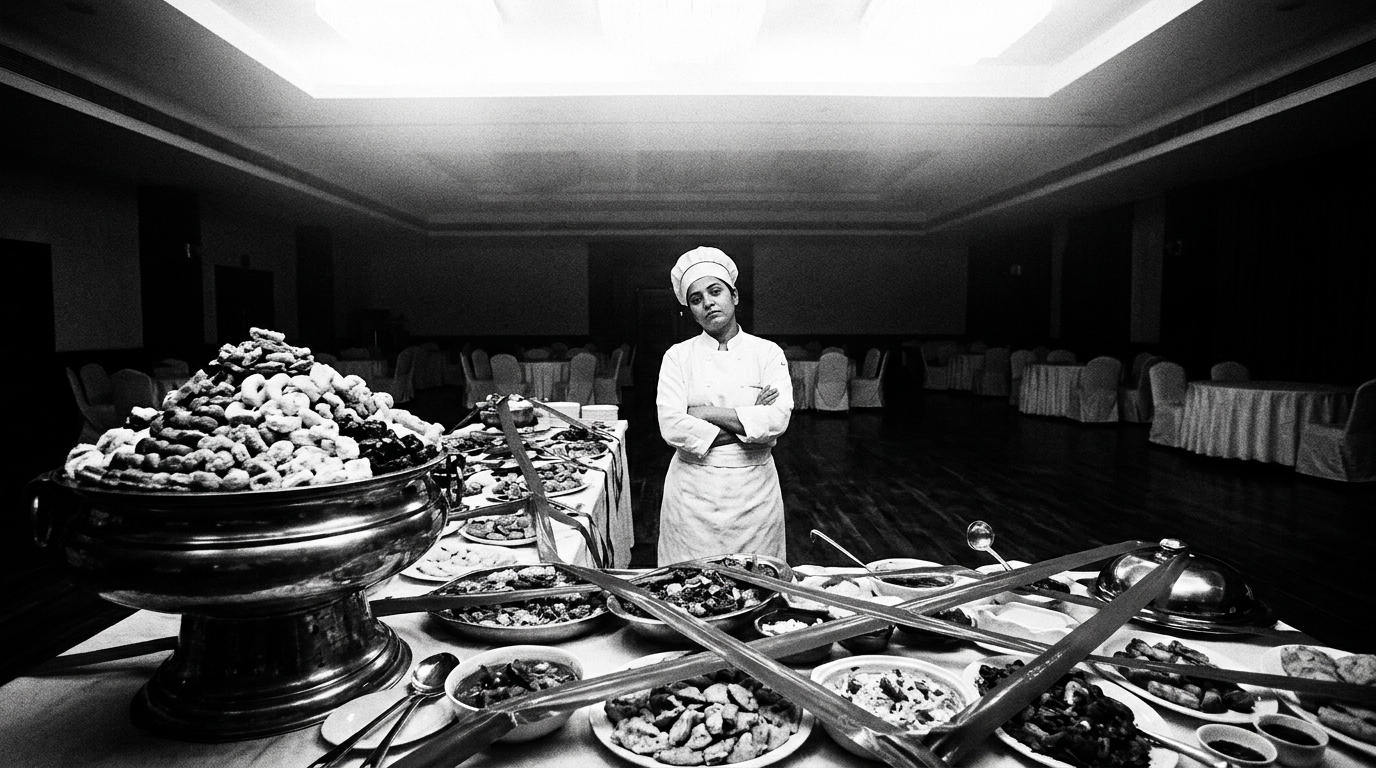
Marriott's Holi Dinner Is Cute. The Real Story Is F&B as a Brand Weapon in India.
A single festive buffet at a Whitefield property isn't news. But when F&B accounts for up to half of total hotel revenue in India and Holi is projected to drive $9.6 billion in spending, the question isn't whether to throw a party... it's whether your brand strategy treats food as a line item or a positioning engine.
Let me tell you what I see when I read about a Holi-themed dinner buffet at a Marriott in Bengaluru. I don't see a press release. I see the tip of something much bigger, and I see a lot of hotel brands who are about to get this either very right or spectacularly wrong.
Here's the setup. Holi 2026 is projected to generate over ₹80,000 crore... roughly $9.6 billion... across India, up 25% from last year. Hotels and restaurants are nearly fully booked for celebrations. F&B in Indian hotels now contributes 35% to 50% of total revenue, which is a number that would make most American select-service operators fall out of their chairs. And Marriott just debuted "Series by Marriott" in India with 26 hotels, explicitly targeting domestic travelers with regional character. So when a Marriott property in Whitefield puts together a Holi night with regional North and South Indian specials, live interactive counters, live music, and a pet-friendly policy (yes, really), that's not just a dinner. That's a brand positioning move disguised as a buffet. And the question every owner in India should be asking is: does my brand give me the framework to do this, or does my brand get in the way?
I sat in a brand review once where an owner in a secondary Indian market wanted to run a Diwali festival package... local sweets, cultural programming, the works. The brand's regional team loved it. The global standards team flagged three violations in the proposed menu presentation alone. By the time the concept cleared compliance, Diwali was over. The owner ran the event anyway, off-brand, and it was his highest-revenue F&B night of the year. That tension... between brand consistency and local cultural relevance... is the real story here, and it's one that plays out in every market where festivals drive spending. Marriott's "Future of Food 2026" report talks about "casual luxury" and "dining rooted in local flavors." Beautiful language. The Deliverable Test question is whether the brand apparatus actually lets a property-level team execute that vision fast enough to capture a cultural moment that arrives on a specific date and doesn't wait for approval chains.
The math underneath is what matters. Festive F&B initiatives in India are showing 15-20% uplifts in overall revenue, with themed events seeing 40-50% more covers than a normal weekend. At roughly ₹2,500 per couple (about $30 USD) for a dinner at this particular café, you're not talking about fine dining margins. You're talking about volume, atmosphere, and repeat-visit loyalty. The real return isn't the one-night revenue... it's the guest who comes back three Saturdays later because they remember the experience. That's where F&B becomes a brand weapon instead of a cost center. But here's the part the press release leaves out: the labor, the training, the sourcing for regional specialties, the live music booking, the setup and teardown. If your F&B team is already stretched (and in India's current hospitality labor market, they are), a festive event isn't a revenue gift. It's a staffing puzzle wrapped in a P&L question. The properties that win are the ones where the GM and the F&B director have enough operational freedom... and enough brand support... to build these moments without drowning in either red tape or labor costs.
And this is where I get pointed. Marriott is pushing hard into India. International RevPAR grew 6.1% last year. The Series by Marriott launch signals they want the domestic travel segment badly. F&B is the differentiator... not the room, not the loyalty app, the FOOD. If you're an owner operating under a Marriott flag in India (or any full-service flag, frankly), your brand should be handing you a playbook for cultural programming that's pre-approved, locally sourced, and operationally realistic. Not a press release about one property's Holi dinner. A repeatable framework. Because every market in India has its own festival calendar, its own culinary identity, and its own version of the guest who will spend money on an experience that feels authentic. The brands that build the infrastructure for that... not the concept, the infrastructure... are the ones that will own Indian hospitality's next decade. The ones that just let individual properties figure it out and then take credit in the earnings call? You already know how that ends.
If you're running a branded hotel in India... or honestly, any market with a strong cultural calendar... don't wait for your brand to hand you a festival playbook. Build one yourself. Map every major local festival to an F&B concept, cost it out (labor, sourcing, marketing, the whole thing), and present it to your brand team as a done deal, not a request. The properties making real money on cultural programming aren't asking permission. They're asking forgiveness. And their owners are too happy counting the revenue to complain.