Today · Apr 23, 2026
Nashville's Extended-Stay Shuffle Says More About the Market Than the Property

Nashville's Extended-Stay Shuffle Says More About the Market Than the Property

A 193-suite TownePlace Suites in Nashville just switched management companies, and the press release wants you to focus on the shiny new operator. The real story is what this move tells you about who's fighting over existing extended-stay assets... and why.

Let me tell you what I noticed first about this announcement, and it wasn't the property. It wasn't even the operator. It was the timing. Island Hospitality picks up a 193-suite TownePlace Suites in Nashville's Midtown corridor on the exact same day the industry learns that extended-stay hotel construction has dropped 21% year over year. That's not a coincidence. That's a strategy. When you can't build, you acquire management contracts. And when you're the owner of an existing extended-stay asset in a market like Nashville, suddenly every third-party operator in America wants to buy you dinner.

Here's what the press release doesn't tell you (and they never do, which is why I have a job): why did the previous management company lose this contract? The property opened in 2021 under a different operator. That's barely five years. In my experience, when a management transition happens this early in a property's life, one of two things occurred... either the asset changed hands, or the owner looked at the numbers and decided someone else could do better. The owner isn't named in any of the coverage. The reason for the switch isn't disclosed. And Island's leadership is out there talking about "proprietary management and marketing systems" like that phrase means something specific. (It doesn't. Every management company has "proprietary systems." It's the hotel equivalent of a restaurant claiming they have a "secret sauce." You're putting ketchup and mayo together, Kevin. We all know.) What matters is whether Island can actually move the needle on RevPAR index in a Nashville market that is, by every honest account, getting more competitive by the quarter.

The location is genuinely strong... proximity to Vanderbilt, Fisk, the Midtown entertainment corridor... and the property has an elevated bar concept called High Note with skyline views, which tells me someone was thinking about more than just the extended-stay box when they developed this. That's smart. Extended-stay properties that can capture transient demand on the weekends while maintaining their corporate base during the week are the ones that outperform. But here's my Deliverable Test question: can Island's team actually execute a dual-demand strategy with the staffing they're building? They were recruiting a Director of Sales at $80K-$90K before the announcement even went public. That salary range in Nashville in 2026 tells me they're looking for someone good but not someone great. In a market where every hotel within three miles is fighting for the same corporate accounts and the same weekend leisure traveler, "good but not great" on the commercial side is how you end up middle-of-the-pack in your comp set.

And here's what I really want owners to hear, because this is the part that affects YOU. Extended-stay construction is down 21%. That means the assets that exist today are more valuable, period. If you own an extended-stay property and your current management company is delivering mediocre results, you have leverage right now that you won't have in 18 months when the pipeline recovers. Every Island, every Aimbridge, every Crescent is looking for exactly your asset to add to their portfolio. The question isn't whether you should entertain a management switch. The question is whether your current operator knows you're entertaining it... because that conversation alone tends to produce remarkable improvements in attention and performance. I watched an owner I advised last year mention "exploring options" during a quarterly review, and suddenly the management company found budget for a revenue management specialist they'd been saying was "not in the plan." Funny how that works.

This Nashville move is a small story about one property. But it's a perfect snapshot of where the extended-stay segment is right now... existing assets appreciating in strategic value, operators competing aggressively for contracts, and owners holding better cards than they realize. If you're sitting on an extended-stay property in a top-25 market and you haven't had a serious conversation with your management company about performance benchmarks in the last 90 days, you're leaving money on the table. Not theoretical money. Real money. The kind that shows up in your distribution when the operator is actually motivated to perform.

Operator's Take

If you own an extended-stay property and your management company hasn't proactively brought you a performance improvement plan in the last six months, pick up the phone. Not to fire them... to let them know you're paying attention. With new construction down 21%, third-party operators are hungry for contracts, and your existing asset is worth more to them today than it was a year ago. Use that. Get three proposals. Even if you don't switch, I promise you the conversation changes the service you're getting.
— Mike Storm, Founder & Editor
Read full analysis → ← Show less
Source: Google News: Marriott
A&O's €40M Berlin Office Conversion Prices at €16,000 Per Bed. That's the Number That Matters.

A&O's €40M Berlin Office Conversion Prices at €16,000 Per Bed. That's the Number That Matters.

Europe's largest hostel project reveals the real math behind office-to-hospitality conversions, and the per-bed economics tell a very different story than the headline CapEx figure.

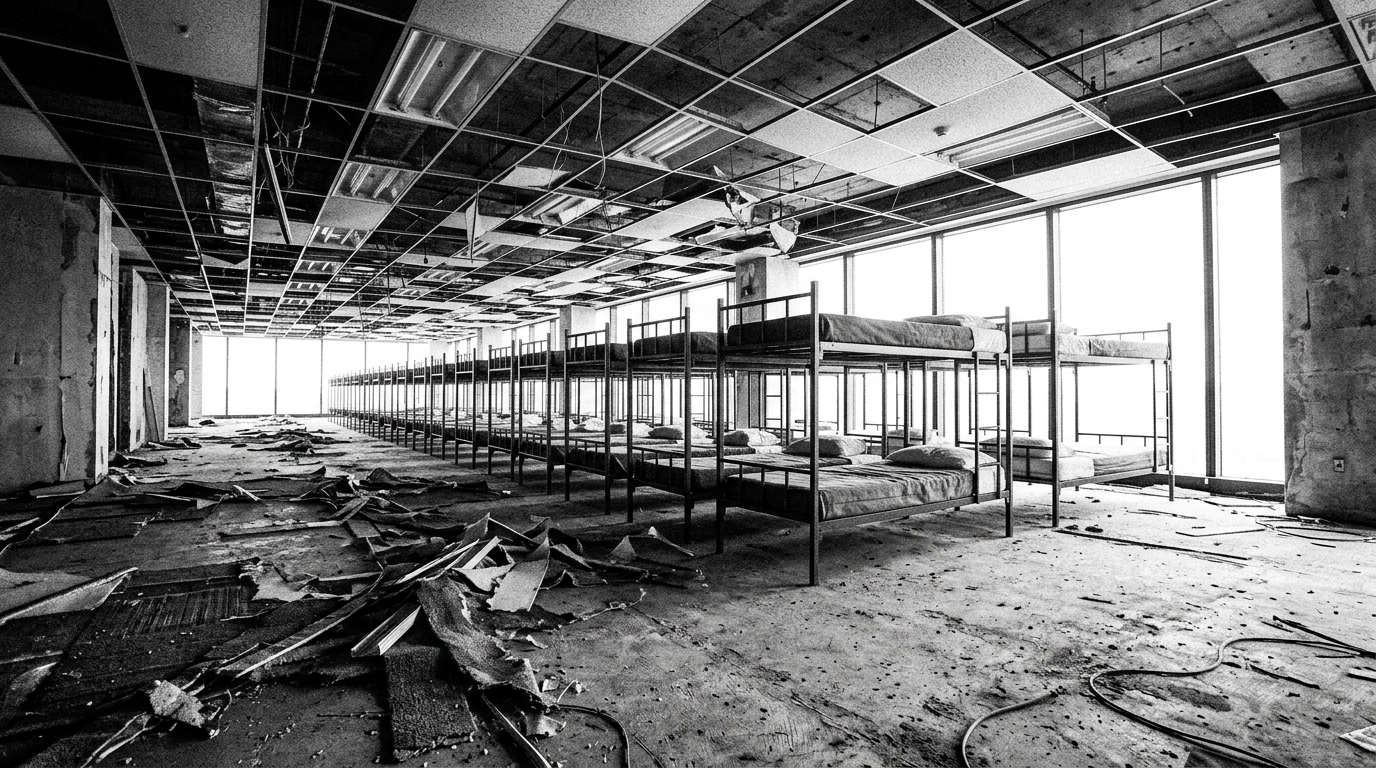
€40 million to convert 31,000 sqm of vacant Berlin office space into 2,500 beds across 610 rooms. That's €16,000 per bed, or roughly €65,600 per key. Let's decompose this.

The per-sqm conversion cost lands at approximately €1,290. For context, ground-up select-service hotel construction in Berlin runs €2,800-€3,500 per sqm depending on site conditions. A&O is building at 37% of new-build cost by repurposing an existing structural shell. The building permit is already secured. The general contractor is hired. They're targeting Q1 2027, which gives them roughly 12 months of construction on a project that would take 24-30 months if they were starting from dirt. The cost advantage of adaptive reuse isn't theoretical here... it's quantifiable, and it's substantial.

The room mix is where the model gets interesting. 31% private rooms, 69% shared dormitories. That 69% figure is doing enormous work in the unit economics. A shared dorm room with 6-8 beds generates 3-4x the revenue per square meter of a traditional hotel room while requiring a fraction of the FF&E spend. No minibar. No desk. No 55-inch TV. The cost-to-achieve on RevPAR is structurally lower than anything in the traditional hotel space. Berlin welcomed 13 million visitors in 2024 (up 7.5% year-over-year), and the demand floor for budget accommodation in a Kreuzberg location near Checkpoint Charlie is about as solid as it gets in European leisure markets.

The capital stack tells the institutional story. StepStone Group and Proprium Capital Partners backed a management-led buyout of a&o in late 2023, launching a €500 million investment program. This Berlin project is one piece of that deployment. Over the past 24 months, a&o has added 11,000 beds across Europe. That's not a hostel operator dabbling in growth. That's a platform executing a rollup strategy in a fragmented market that JLL projects will reach €8.2 billion by 2029. The real signal here isn't one building in Berlin... it's institutional capital treating hostels the way it treated select-service hotels 15 years ago. Fragmented sector. Scalable operating model. Consolidation opportunity. I've seen this acquisition pattern play out in hotel REITs multiple times. The playbook is identical. Buy distressed or obsolete assets below replacement cost, convert to a standardized operating platform, scale until the portfolio commands institutional pricing on exit.

The number nobody's discussing: what cap rate does this basis imply on stabilized NOI? Without published rate assumptions I can't complete the calculation, but at €16,000 per bed with a budget operating model, the yield-on-cost likely exceeds 10% at stabilization. If that's even close to accurate, every institutional investor with European hospitality exposure should be running the same math on stranded office assets in their own markets. The office obsolescence problem is the hostel sector's acquisition pipeline. Proprium's partner said it plainly... secondary office owners face an "increasing obsolescence challenge." That challenge is someone else's basis advantage.

Operator's Take

Here's what I'd tell you if you're an independent hotel operator in a major European city competing on price. These aren't backpackers crashing on bunk beds anymore... this is institutional capital building 2,500-bed properties at a cost basis you can't touch. If you're running a 100-key budget or economy hotel in Berlin, London, or any market where a&o is expanding, pull your STR data this week and figure out exactly where your rate floor overlaps with their ceiling. That's your vulnerability zone. Know the number before someone else shows it to your owners.

— Mike Storm, Founder & Editor
Read full analysis → ← Show less
Source: Google News: CoStar Hotels
Mixed Hotel Numbers Through February... And Nobody's Talking About What's Actually Moving

Mixed Hotel Numbers Through February... And Nobody's Talking About What's Actually Moving

CoStar's latest weekly data shows occupancy slipping while ADR holds. That's not "mixed performance." That's a very specific story about where demand is going and who's about to feel the squeeze.

I love the word "mixed." It's the hotel industry's favorite way of saying "some of the numbers are bad and we'd rather not get specific." CoStar's data through the week ending February 21 shows exactly the pattern I've been watching since the start of the year... occupancy soft, rate holding, RevPAR limping along on the back of ADR gains that are masking a demand problem. That's not mixed. That's a warning sign wearing a nice suit.

Here's what I see when I look at these numbers. Occupancy erosion in an environment where rate is still climbing means one thing... you're getting fewer guests but charging the survivors more. That works for a quarter. Maybe two. But eventually the rate ceiling meets the demand floor and you're staring at a RevPAR decline with a cost structure built for higher volume. I've seen this movie before. It played in 2007. It played again in late 2019. The sequel is never as fun as the original.

The real question nobody's asking is who's losing the heads in beds. Because it's not uniform. Group pace in a lot of markets is actually decent heading into spring. Convention calendars are holding. What's eroding is transient... specifically, the Tuesday and Wednesday business transient stays that used to be the backbone of urban select-service. Remote work didn't kill business travel. But it absolutely restructured it. The mid-week compression that used to bail out a mediocre revenue strategy? Gone. If you're a 200-key select-service in a secondary market still pricing like those Tuesday nights are coming back the way they were in 2019, you're building your budget on nostalgia.

I talked to a GM a few weeks ago who told me his ownership group keeps asking why occupancy is down when his STR report shows rate growth. He said "I feel like I'm winning and losing at the same time." That's exactly right. Rate growth without occupancy growth is a sugar high. It looks good on the weekly recap. It papers over the labor cost per occupied room that's climbing because you're spreading fixed costs across fewer stays. Your GOP margin is getting squeezed from both sides and the top-line headline is telling your owners everything's fine.

Look... if you're in a market where group business is strong and transient is supplementary, you might be okay through Q2. But if you're in a market dependent on business transient, particularly in the midweek window, now is the time to get honest about your demand generators. Not your rate strategy. Your demand strategy. Because you can't rate-manage your way out of empty rooms forever. The math doesn't lie. It just waits.

Operator's Take

If you're a GM at a select-service property and your occupancy has been trending down while ADR trends up, stop celebrating the rate hold and start building a midweek demand plan this week. Call your top 10 corporate accounts and find out what their travel policy actually looks like now... not what it was in 2023. Pull your segmentation report and figure out exactly where the lost room nights are coming from. Then sit down with your revenue manager and have an honest conversation about whether you're pricing for the hotel you have or the hotel you wish you still had. Your owners are going to notice the occupancy gap eventually. Better they hear it from you with a plan than from the asset manager with a question.

Read full analysis → ← Show less
Source: Google News: Hotel RevPAR
Portland Marriott Waterfront Sold at $59,500 Per Key. Let That Number Sink In.

Portland Marriott Waterfront Sold at $59,500 Per Key. Let That Number Sink In.

A 506-room downtown Marriott just traded at a 63% discount to its 2013 purchase price, with occupancy barely clearing 23%. The per-key price tells a story about Portland, about convention hotels, and about what happens when debt and reality stop agreeing.

$30.1 million for a 506-room full-service Marriott on the waterfront. That's $59,500 per key. The previous owners paid $82.7 million in 2013 and refinanced with a $71 million loan in 2018. They stopped making payments in February 2024 with $68.1 million in principal outstanding and roughly $800,000 in unpaid interest. The property went into receivership. It just closed at 36 cents on the 2013 dollar.

Let's decompose this. At $59,500 per key, the buyers (a New York alternative asset manager and an LA real estate firm, operating through a joint acquisition entity) are pricing this asset at roughly replacement cost for a select-service hotel. This is a full-service, 40,000-square-foot-convention-space waterfront property. The implied cap rate on trailing NOI at 23.5% occupancy is almost meaningless to calculate... the property isn't generating stabilized income. This isn't a yield play. This is a basis play. The buyers are betting they can hold at a cost basis so low that virtually any recovery scenario produces an acceptable return. Meanwhile, the previous equity is gone. Completely. The lender took a haircut of roughly $38 million on a $68 million balance (and that's before carrying costs and receivership fees). Someone at that lending desk is having a very specific kind of quarter.

The receiver's report noted the hotel "exceeded budget expectations" by hitting 23.5% occupancy against a 22.4% projection. I want to be precise about what that means. Beating a catastrophic projection by 110 basis points is not a recovery story. It's a slightly less terrible version of terrible. Portland hotel revenue in 2023 was still down nearly 38% from 2018 levels. Downtown convention demand hasn't come back, and a 506-room box needs group business to function. At 23.5% occupancy, this hotel is running roughly 119 occupied rooms per night. The fixed cost structure on a property this size... engineering, security, minimum staffing, franchise fees, property taxes... doesn't care that 387 rooms are empty. Those costs show up every month regardless.

The deal structure is textbook distressed acquisition. Joint venture between an asset manager with scale and a regional operator with execution capability. Marriott stays on as operator under the existing management agreement (which tells you Marriott's fee stream, even at these occupancy levels, is worth preserving... or the management agreement is simply too expensive to buy out at this basis). The buyers inherit a clean capital stack. No legacy debt. No deferred maintenance obligations from a previous owner who stopped investing when they stopped paying. They can underwrite a renovation, reposition the convention offering, and wait for Portland's downtown to recover... or not recover, in which case $59,500 per key gives them a land-value floor that limits downside.

I've analyzed enough distressed hotel acquisitions to know the pattern. The first owner builds or buys at cycle peak. The lender underwrites peak assumptions. The market corrects. The debt becomes unserviceable. The second owner buys at the bottom with clean basis and patient capital. The question is always the same: does the market come back, and how long can you afford to wait? At $59,500 per key with no legacy debt, these buyers can afford to wait a long time. The previous owners, who paid $82.7 million and then layered on $71 million in debt, could not. Same asset. Two completely different stories depending on when you bought and what you owe.

Operator's Take

If you're an asset manager or owner holding a full-service downtown hotel with pre-pandemic debt levels and post-pandemic demand... this is your benchmark, and it's brutal. Portland just told you what the market will actually pay for a 500-key convention hotel doing 23% occupancy. Don't wait for the recovery to "almost be here" before you stress-test your capital stack. Run your numbers against a 30% RevPAR decline from today's levels and see if your debt service still works. If it doesn't, you need to be talking to your lender now, not when you're 90 days delinquent. I've seen this movie before. The owners who survive are the ones who restructure before the receivership paperwork starts.

— Mike Storm, Founder & Editor
Read full analysis → ← Show less
Source: Google News: Marriott
IHG's Executive Share Grants Tell You Everything About Where the Money Goes

IHG's Executive Share Grants Tell You Everything About Where the Money Goes

IHG just handed its CEO over 6,500 shares at zero cost while U.S. RevPAR softened in Q4. If you're an owner writing PIP checks, you should know exactly how the company you're paying fees to is spending its windfall.

So IHG's senior executives just received their annual deferred share awards... CEO gets 6,572 shares, CFO gets 787, regional leads get their slice... all at nil consideration, which is the polite British way of saying "free." The shares vest in 2029 assuming the executives stick around, which, given that IHG just posted a 13% jump in operating profit to $1.26 billion and announced a $950 million buyback program, seems like a reasonably safe bet. This is not scandalous. This is not unusual. Every major publicly traded hotel company does some version of this. But here's why I think it's worth your attention anyway: because the story of WHO gets rewarded and HOW tells you everything about what a company actually values. And right now, IHG is telling you very clearly that it values its shareholders and its C-suite. The question is whether it's telling you the same thing about its owners.

Let me put this in brand terms, because that's where I live. IHG just launched Noted Collection, a luxury conversion brand designed to expand its upscale footprint by 48% over the next decade. That's ambitious. That's exciting, actually... I genuinely think conversion brands are smart strategy when they're done right (and IHG has a better track record than most on execution). But "48% upscale expansion" means IHG needs owners. Lots of them. Owners willing to convert existing properties, take on renovation debt, adopt IHG's systems, pay IHG's fees, and trust that the brand premium will justify the cost. Now zoom out: in the same quarter where IHG is asking owners to bet on its brands, it's returning $950 million to shareholders through buybacks and handing its executives free equity. The company generated $2.5 billion in revenue last year. It is, by every financial measure, thriving. The executives are thriving. The shareholders are thriving. And I just want to know... how are the owners doing?

Because here's what I keep coming back to. IHG's own CFO noted that U.S. RevPAR dipped in Q4 due to softening middle-class leisure travel. That's not a blip... that's a demand signal. And if you're an owner in a secondary market who just took on PIP debt to flag or reflag with IHG, a softening demand environment is where the math starts to get uncomfortable. Your franchise fees don't soften. Your loyalty program assessments don't soften. Your brand-mandated technology costs don't soften. Those are fixed obligations against variable revenue. The brand's fee income is protected because it's calculated on gross revenue, not on your profit. So when the cycle wobbles, the brand still eats. The owner absorbs the hit. I sat across the table from a family once who learned this lesson the hard way... projections that looked beautiful in the pitch deck turned into a debt service nightmare 30 months later. The brand was fine. The family lost their hotel.

I want to be clear: I'm not saying IHG is doing anything wrong. Deferred share awards are standard corporate governance for UK PLCs. The buyback program signals confidence. The Noted Collection launch is genuinely interesting strategy. IHG is, on paper, one of the best-run hotel companies in the world right now, and Elie Maalouf has earned the right to be compensated well. But "standard practice" and "right" aren't always the same thing, and I think owners deserve to see these filings and ask themselves a very simple question: is my return on this brand relationship proportional to the return the brand is generating for itself? Because IHG just told you it made $1.26 billion in operating profit. It just told you it's buying back nearly a billion dollars in stock. It just told you its executives are getting equity at zero cost that vests in three years. Now pull up your property P&L. Look at your total brand cost as a percentage of revenue. Look at your actual loyalty contribution versus what was projected. Look at your net owner return after fees, reserves, and debt service. Are you thriving too? Or are you the one funding the thriving?

That's the conversation I want owners to have. Not because IHG is the villain (they're not... they're a public company doing exactly what public companies do). But because the power dynamic between brands and owners only shifts when owners start reading the same filings the analysts read and asking the same questions. IHG returned over $5 billion to shareholders over five years. That money came from somewhere. It came from fees. It came from your hotels. You have every right to ask what you're getting back.

Operator's Take

Here's what I'd tell any owner flagged with a major brand right now... not just IHG, any of them. Pull your franchise agreement. Calculate your total brand cost as a percentage of gross revenue (include every fee, every assessment, every mandated vendor cost). Then compare your actual loyalty contribution to what was projected when you signed. If the gap is more than 5 points, you've got a conversation to have with your franchise rep. And if they point to systemwide RevPAR growth as justification, remind them that revenue growth without margin improvement isn't growth... it's a treadmill. The brands are doing great. Make sure you are too.

— Mike Storm, Founder & Editor
Read full analysis → ← Show less
Source: Google News: IHG
The CMA Just Called Your Revenue Management Stack a Cartel. Now What?

The CMA Just Called Your Revenue Management Stack a Cartel. Now What?

The UK's competition authority is investigating whether Hilton, IHG, Marriott, and CoStar's STR platform enabled algorithmic collusion on room rates. If you've ever benchmarked your ADR against your comp set... yeah, they're talking about you.

So let me get this straight. The platform that every revenue manager in the industry uses to benchmark occupancy, ADR, and RevPAR against their comp set... the one your brand probably requires you to subscribe to... is now at the center of a UK antitrust investigation. The CMA announced on March 2 that it's looking into whether Hilton, IHG, Marriott, and CoStar (which owns STR) used that shared data to effectively coordinate pricing without ever picking up the phone. And honestly? I've been waiting for this shoe to drop.

Look, I need to explain what "algorithmic collusion" actually means here, because the headlines are going to make this sound like three CEOs met in a back room. That's not it. The concern is more subtle and, frankly, more interesting from a technology perspective. STR collects non-public performance data from hotels... occupancy, rate, RevPAR... aggregates it, and sells it back as benchmarking reports. Revenue managers then feed those benchmarks into their RMS platforms to set pricing. The CMA's theory is that this cycle (share data, aggregate data, price off aggregated data, repeat) creates a feedback loop where competitors are essentially reacting to each other's rate moves in near-real-time without ever directly communicating. It's coordination by algorithm. And if you've ever watched an RMS automatically adjust rates based on comp set performance data, you've seen the mechanism they're investigating.

This isn't new territory. A class action in Illinois last year targeted hotels using Amadeus's Demand360 platform for the same basic theory. Another suit in San Francisco went after the IDeaS RMS for algorithmic price-fixing. CoStar and the major chains beat a similar US consumer lawsuit (dismissed sometime in 2024-2025, depending on who you ask). But here's what's different: the CMA isn't a plaintiff's attorney looking for a settlement. It's a government regulator with subpoena power and a mandate to act. And the timing matters... this follows the exact playbook regulators used against RealPage in the US rental housing market, where the DOJ argued that sharing real-time pricing data through a common platform suppressed competition. That case reshaped how the entire multifamily industry thinks about revenue management technology. Hotels are next.

Now here's the Dale Test question (what happens to the least technical person on the smallest shift when this plays out?). If the CMA finds that STR data sharing constitutes anticompetitive behavior, the remedies could fundamentally change how revenue management works. We're talking potential restrictions on what data can be shared, how granular it can be, how quickly it's available. Imagine your RMS suddenly can't pull real-time comp set data. Imagine STR reports delayed by 90 days instead of delivered monthly. Your revenue manager is now pricing blind... or at least pricing with one eye closed. The technology stack that every branded hotel depends on for rate optimization could get kneecapped by regulators who don't care about your RevPAR index. I talked to a revenue director at a mid-scale portfolio last month who told me, "Without STR, I'm basically guessing." That's 60% of the industry.

The real question isn't whether the CMA finds wrongdoing (they've been careful to say no assumptions should be made). The real question is what this investigation does to the data-sharing infrastructure the entire industry runs on. IHG shares dropped 5% on the announcement. CoStar says it's "surprised" that a decades-old benchmarking platform is suddenly under scrutiny. But the regulatory trend is clear... algorithmic pricing tools are getting examined across every sector, and hospitality's argument that "we've always done it this way" is not going to hold up. If you're a technology vendor building revenue management tools, start thinking about what your product looks like without third-party comp set data. If you're a hotel relying on that data to set rates... start thinking about what your pricing strategy looks like without it. Because that future just got a lot more plausible.

Operator's Take

Here's what nobody's telling you... this investigation could change how you price rooms within 18 months. If you're a branded GM who relies on STR benchmarking and an RMS that auto-adjusts based on comp set data, start having conversations with your revenue team now about what a manual or semi-manual pricing process looks like. Don't wait for the CMA to issue findings. Your owners are going to see this headline and ask if you're exposed. The answer is yes, every branded hotel using STR data is technically part of the ecosystem under investigation. Tell them the truth, tell them you're watching it, and tell them you have a pricing methodology that doesn't fall apart if the data pipeline gets restricted. Because if it does fall apart... that's a conversation you don't want to have after the fact.

— Mike Storm, Founder & Editor
Read full analysis → ← Show less
Source: Google News: IHG
The Monarch San Antonio Just Opened at $925K Per Key. Let's Talk About What That Actually Costs.

The Monarch San Antonio Just Opened at $925K Per Key. Let's Talk About What That Actually Costs.

A $185 million, 200-room Curio Collection hotel just opened in downtown San Antonio at nearly a million dollars per key. The architecture is stunning. The chef pedigree is real. The math? That's where it gets interesting.

So here's the thing about a $925,000 per-key build cost on a soft brand in a secondary Texas market... the numbers have to come from somewhere. The Monarch San Antonio opened today, 200 rooms, 17 stories, three chef-driven restaurants, 15,000 square feet of event space, all under the Curio Collection flag. Starting rate: $398 a night. And if you know anything about hotel development math, you just did the same thing I did... you grabbed a calculator.

The old rule of thumb (the 1-in-1,000 rule, which says your ADR needs to be roughly 1/1,000th of your per-key cost to make the economics work) puts the required ADR somewhere around $900. They're opening at $398. That's not a rounding error. That's a $500 gap between where the rate needs to be and where the market will actually pay. Now, does that mean the project is doomed? Not necessarily. Zachry Hospitality is a San Antonio institution with deep roots in the Hemisfair district going back to the 1968 World's Fair. There's almost certainly a layer of public subsidy, tax incentive, or favorable land deal underneath this that makes the pure per-key number misleading. But here's my question... has anyone actually published what that incentive structure looks like? Because if you strip out the subsidies and the project still pencils at $925K per key on a Curio flag, I'd love to see that proforma. Actually, I'd love to see that proforma either way.

Look, I genuinely respect what they're doing with the technology and F&B infrastructure here. A Michelin-pedigreed executive chef running three distinct concepts (a steakhouse, a rooftop Yucatán restaurant, and a café) is not your typical hotel food program. That's real operational complexity. The POS integration alone across three venues with different service models, different inventory systems, different labor profiles... that's a project. I consulted with a hotel group last year that tried to run two signature restaurants under one roof and the kitchen management software couldn't handle split-concept inventory tracking without a custom middleware build that took four months and cost $180K they hadn't budgeted. Three concepts at this scale? I hope their tech stack is ready for it. The question isn't whether the food will be good (that chef's resume suggests it will be). The question is whether the systems behind the food can handle a sold-out Saturday with a 200-person event in the ballroom, a two-hour wait at the rooftop, and room service running simultaneously.

The broader market play is actually smart. San Antonio's luxury inventory sits at roughly 8% of total supply versus 20% in Austin and Dallas. That gap is real and it's been there for years. A property like this, if executed well, doesn't just capture existing demand... it creates demand that was bypassing San Antonio entirely. Group planners who defaulted to Austin for upscale corporate events now have a reason to look south. That's the thesis, anyway. But "if executed well" is doing a LOT of heavy lifting in that sentence. The Curio flag gives them Hilton Honors distribution without the rigid brand standards of a Waldorf or Conrad, which is smart for an independent developer who wants creative control. But Curio is an upper-upscale soft brand, not a luxury flag. And $398 starting rate with this build cost means they need to push ADR significantly north of that opening number... probably into the $500-600 range blended... to make the operating economics work even with subsidies.

The Dale Test question here is straightforward: what happens to the guest experience in this 17-story, three-restaurant, 15,000-square-foot-event-space property when the integrated systems hiccup at 11 PM on a Saturday? Does the night team have manual fallbacks for the F&B POS? Can the front desk override the room management system if the cloud connection drops? At $398 a night minimum, the guest tolerance for technical failure is approximately zero. Every system in this building needs to work perfectly or fail gracefully. In my experience, buildings this complex with this many integrated technology layers take 6-12 months post-opening to stabilize. The real story of the Monarch won't be the opening. It'll be the TripAdvisor reviews in October.

Operator's Take

Here's what I want you thinking about if you're running an independent or soft-branded property in a market where somebody just dropped serious money on a new luxury build. Don't panic about the rate pressure... that $398 opening number is aspirational positioning, not your new comp set floor. What you SHOULD do is look at your F&B and event space. Properties like the Monarch pull group business that trickles into surrounding hotels for overflow. Get your catering sales team on the phone with local event planners this week. If there's a rising tide in San Antonio, make sure your boat is in the water.

— Mike Storm, Founder & Editor
Read full analysis → ← Show less
Source: Google News: Hilton
Starwood Capital's Hotel Loans Are Flashing Red. Here's What That Means for You.

Starwood Capital's Hotel Loans Are Flashing Red. Here's What That Means for You.

When a $10 billion fund manager starts showing cracks in their hotel debt portfolio, it's not just a Wall Street problem. It's a signal that the math is getting ugly for overleveraged properties everywhere... and some of you are sitting in them right now.

I've seen this movie before. Three times, actually. A big-name investment firm loads up on hotel assets during the good years, structures the debt assuming RevPAR only goes one direction, and then the music slows down. The loans go into special servicing. The press releases get quieter. And the GMs on the ground start getting calls from asset managers they've never met asking questions about line items they've never been asked about before.

Starwood Capital's hotel loan distress isn't surprising to anyone who's been paying attention. When you underwrite deals at peak-cycle valuations with aggressive cap rate assumptions, you're betting that the revenue growth will bail you out before the debt matures. Sometimes it does. Sometimes it doesn't. And when it doesn't... the property-level operators are the ones who feel it first. I worked with a GM once who found out his property was in receivership from a guest who Googled the hotel and found a court filing. Nobody from ownership or asset management had called him. That's how it goes when the money side gets distressed. Communication flows to the lawyers, not to the people running the building.

Here's what nobody's telling you about situations like this. The distress doesn't stay on the balance sheet. It bleeds into operations. CapEx freezes. FF&E reserves get raided or deferred. That PTAC replacement you've been begging for? Not happening. The carpet in the corridor that's been embarrassing you for 18 months? Still there. Brand QA scores start slipping. Guest satisfaction follows. And then RevPAR starts sliding... which makes the debt situation worse... which makes the CapEx freeze harder... which makes the RevPAR slide steeper. I've watched this death spiral at three different properties under three different ownership structures. The pattern is identical every single time.

The bigger picture here is what this tells us about where we are in the cycle. When institutional players with deep teams and sophisticated models start showing stress in their hotel portfolios, it means the assumptions that got baked into a LOT of deals over the last few years are starting to crack. And it's not just Starwood Capital. Look at the CMBS data. Hotel loan delinquency rates have been ticking up. Special servicing transfers are accelerating. If you're at a property with debt maturing in the next 18 months, your owner is having conversations right now that will directly affect your operation. You need to be part of those conversations. Not to understand the financial engineering (that's not your job). To make sure the people making the financial decisions understand what happens operationally when they cut your budget by 15%.

Let me be direct. This isn't 2009. Nobody's saying that. But it is the point in the cycle where the difference between well-capitalized owners and overleveraged ones becomes really visible at the property level. If your ownership group has dry powder and a long-term hold thesis, you're fine. Maybe better than fine... distress creates opportunity for well-positioned operators to pick up market share while competitors starve their buildings. But if your owner is sweating a refinance or staring at a maturity wall, you need to know it. Because the decisions they make in the next six months will determine what your property looks like in 2027.

Operator's Take

If you're a GM and you don't know your property's debt maturity date, find out this week. Ask your management company or your owner directly. "When does our loan mature and what's the plan?" That one question tells you everything about whether your CapEx requests have a prayer. If you're at a property with loan stress, document every deferred maintenance item, every brand standard gap, every guest complaint tied to physical condition... in writing, with dates. That paper trail protects you and it protects the asset. When new money eventually comes in (and it will), they'll want to know what they're buying. Make sure someone kept honest records.

Read full analysis → ← Show less
Source: Google News: CoStar Hotels
RLJ Beat Earnings by 14% While RevPAR Declined. Here's What Actually Happened.

RLJ Beat Earnings by 14% While RevPAR Declined. Here's What Actually Happened.

RLJ Lodging Trust posted $0.32 AFFO against a $0.28 consensus while comparable RevPAR dropped 1.5%. The spread between those two numbers is the real story, and it tells you more about where lodging REIT value creation is heading than the headline does.

$0.32 versus $0.28 consensus AFFO, on a quarter where comparable RevPAR fell 1.5% to $136.79. That's a 14.3% earnings beat on a negative top-line comp. Let's decompose this.

The RevPAR decline breaks down to 0.9% occupancy erosion (68.7%) and flat-to-soft ADR ($199.20). Government shutdown killed D.C. and Southern California demand... RLJ reported a 20% drop in government business. That's a known headwind. What's more interesting is where the beat came from: non-room revenue grew 7.2%, and the recently renovated properties (which represent real capital deployed, not financial engineering) are ramping. Revenue hit $328.6 million against $317.8 million expected. The $10.8 million variance didn't come from rooms. It came from everything around rooms.

Capital allocation is where this gets instructive. RLJ sold two hotels in Q4 for $49.5 million at a 16.3x EBITDA multiple. They repurchased 3.3 million shares at roughly $8.67 per share throughout 2025 while the stock trades at 0.9x price-to-sales. They refinanced all near-term maturities through 2028 and ended the year with over $1 billion in liquidity. The math here: sell assets at 16x EBITDA, buy back your own equity at a discount to NAV, lock in debt at known rates. That's textbook capital recycling, and the execution was clean.

2026 guidance is 0.5% to 3% RevPAR growth with full-year AFFO of $1.21 to $1.41. The midpoint ($1.31) implies the company expects the government headwind to fade while urban recovery continues (San Francisco RevPAR grew 52% in Q4... that's not a typo). The range is wide enough to accommodate a recession scenario at the bottom and event-driven demand (FIFA World Cup, America's 250th) at the top. I've modeled enough REIT guidance ranges to know that a 250-basis-point spread between low and high usually means management genuinely doesn't know. Which is honest. I prefer honest to precise-but-wrong.

The owner's return question matters here. RLJ returned $120 million to shareholders in 2025 through dividends and buybacks. Net EPS was negative $0.04 (beating negative $0.06 estimates, but still negative on a GAAP basis). The gap between AFFO and GAAP net income is depreciation and non-cash charges... standard for lodging REITs, but worth noting for anyone who stops reading at the wrong line. AFFO is the operating story. GAAP is the capital structure story. Both are real. One just gets the press release.

Operator's Take

Here's what I'd pay attention to if I'm running a hotel in a government-dependent market: RLJ just showed you that non-room revenue and renovation ROI can offset a 20% drop in a major demand segment. If you're not tracking your non-room revenue per occupied room as a separate line item... start this week. And if you've been sitting on a capital request waiting for "the right time," look at what the renovated properties did for RLJ's quarter. The right time was six months ago.

— Mike Storm, Founder & Editor
Read full analysis → ← Show less
Source: Google News: RLJ Lodging Trust
IHG's New Regent Spa Concept Is Gorgeous. Can Anyone Actually Staff It?

IHG's New Regent Spa Concept Is Gorgeous. Can Anyone Actually Staff It?

IHG is betting that crystal energy and sound therapy pods will differentiate Regent in the luxury wellness arms race. The renderings are stunning. The operational math is where it gets interesting.

Let me tell you what I love about this before I tell you what worries me. IHG bought Raison d'Etre, the spa consultancy, back in 2019. That was seven years ago. They didn't slap a press release together and call it a wellness strategy... they actually internalized the capability, built institutional knowledge, and are now rolling out a concept that emerged from inside the brand rather than being licensed from a third-party operator with their own logo on the towels. That's rare. That's how you're supposed to do it. The debut at their 150-room Bali property, with a pipeline through Jeddah, Kuala Lumpur, and Kyoto through 2028, suggests they're being deliberate about where this lives. Not every Regent, not overnight, not a mandate blasted across the portfolio with a deadline and a prayer. So far, so good.

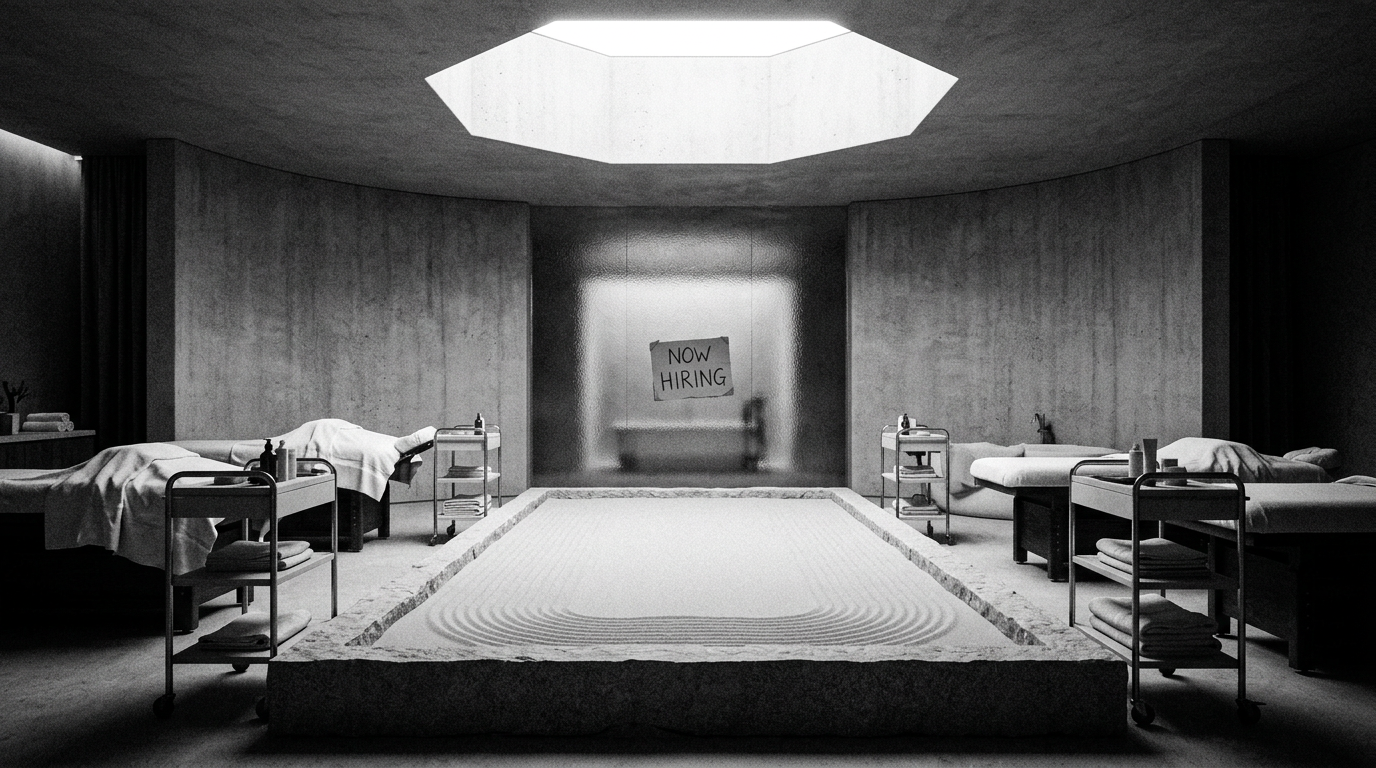
Now let's talk about what "meditative sound therapy pods" and "warm quartz sand bed massages" and "octagonal spatial designs to maximize energy flow" actually require at property level. Because I've sat through enough brand presentations to know the difference between a concept that photographs beautifully and a concept that operates beautifully, and those are two very, very different things. Every one of those signature treatments needs a specialist. Not a spa therapist who watched a training video... a specialist who understands the modality, who can deliver it consistently, who doesn't quit after four months because the Aman down the road is paying 20% more. Regent has 11 hotels open globally with 11 more in the pipeline. That's a small enough footprint that they can theoretically curate the talent. But the minute this scales (and brands always want to scale), the Deliverable Test gets brutal. Can the team in Jeddah execute "The Reset" with the same precision as the team in Bali? You already know the answer depends entirely on things that don't appear in any press release... local labor pools, training infrastructure, and whether the GM has the autonomy (and budget) to hire above market.

Here's the part that's actually smart, though, and I want to give credit where it's earned. IHG is positioning Regent's wellness offering as architecturally distinct from Six Senses, which they also own. Six Senses is the barefoot-on-a-cliff, sustainability-forward wellness brand. Regent is positioning as something more urbane... "secretive, mystical, elegant" were the actual words used. That's a real positioning choice. They're saying Regent wellness is NOT Six Senses wellness, which means they're willing to define what Regent ISN'T. I spend half my life begging brands to do this. Most won't, because saying "we're not that" means potentially losing a franchise fee from someone who wanted "that." The fact that IHG is drawing a clear line between two luxury wellness identities within the same portfolio tells me someone in the room actually understands brand architecture. (I'd like to buy that person a drink. They're probably exhausted from the internal fights it took to get there.)

What the press release doesn't mention, and what owners considering a Regent flag should be asking about immediately, is the cost structure. LED facials, EMS technology, radio frequency treatments... that's not a spa with massage tables and essential oils. That's a medical-adjacent wellness facility with equipment costs, maintenance contracts, specialized consumables, and insurance implications. A 1,500-square-meter spa like the one planned for Jeddah isn't a profit center on day one. It might not be a profit center on day 365. The question is whether it drives enough ADR premium and length-of-stay extension to justify the investment when you look at the whole P&L, not just the spa line. IHG's 2025 results showed a 13% jump in operating profit, north of $1.2 billion, with revenue up 7%... but US RevPAR actually dipped 0.1%. They need their luxury brands to pull harder on rate. This spa concept is a rate play dressed up as a wellness philosophy, and honestly? That's fine. Just be honest about what you're buying.

And because timing is everything... IHG announced this lovely wellness concept on the same day the UK Competition and Markets Authority launched an investigation into IHG, Hilton, and Marriott over alleged sharing of competitive pricing data through an analytics platform. Crystal energy and CMA investigations in the same news cycle. You cannot make this up. The spa announcement is the story they want you talking about today. The CMA investigation is the story that might actually matter six months from now. If you're an owner flagged with IHG, or considering a Regent conversion, keep your eyes on both. The beautiful renderings are nice. The regulatory exposure is real.

Operator's Take

Look... if you're an owner being pitched a Regent conversion or a new-build with this spa concept baked in, do one thing before you sign anything: get the actual equipment and staffing pro forma for the wellness program, separate from the hotel P&L. Not the "projected ancillary revenue uplift" slide. The real number. What does the spa cost to build out, staff, maintain, and operate in YOUR market with YOUR labor pool? I've seen too many owners fall in love with renderings and then discover the operating cost on page 47 of the franchise agreement. The concept is genuinely differentiated... I'll give IHG that. But differentiated and profitable are two different conversations. Have both of them before you commit a dollar.

— Mike Storm, Founder & Editor
Read full analysis → ← Show less
Source: Google News: IHG
Oil Past $80 Means Your Hotel P&L Just Lost 40-60 Basis Points

Oil Past $80 Means Your Hotel P&L Just Lost 40-60 Basis Points

Brent crude jumped past $80 on US-Israel strikes against Iran, and the market is pricing in sustained disruption. Here's what that does to hotel operating costs before most GMs even update their forecasts.

Brent crude crossed $80 this week on the back of US and Israeli military strikes against Iran, with oil infrastructure directly targeted. That's a 7-9% spike in a matter of days. For hotel owners and asset managers, the immediate question isn't geopolitics. It's the energy line on your P&L, the diesel surcharge your linen vendor is about to pass through, and what happens to travel demand if this sustains past 90 days.

Let's decompose the cost exposure. Energy typically runs 4-6% of total hotel revenue. A sustained $10/barrel increase in crude translates to roughly 8-12% higher utility costs within 60-90 days, depending on your energy contracts and regional utility pricing. On a 200-key select-service running $8M in revenue, that's $25,000-$58,000 in annual margin erosion from energy alone. But energy is only the first-order effect. Linen and laundry vendors reprice on fuel surcharges within 30 days. Food costs follow oil by about 45-60 days (transportation, packaging, fertilizer inputs). Guest amenity suppliers, cleaning chemical distributors, even your landscaping contractor... they all have diesel in their cost basis. The compounding effect across a full hotel P&L is 40-60 basis points of GOP margin at $80+ sustained crude. At $90+, you're looking at 70-100 basis points.

The demand side is harder to model but worth watching. Business travel correlates inversely with oil prices at a lag... corporate travel budgets tighten when input costs rise across all industries, not just hospitality. Leisure demand is more resilient in the short term but erodes if gas prices at the pump cross the psychological $4.00/gallon threshold in key drive-to markets. STR data from the 2022 oil spike showed RevPAR in drive-to leisure markets softened 3-5% within two quarters of sustained pump price increases. Fly-to markets held longer but eventually compressed on airfare sensitivity. The current geopolitical situation adds a layer the 2022 spike didn't have: direct military conflict disrupting Middle East airspace, which is already rerouting international flights and will pressure airline fuel hedges that were set at $70-75 Brent.

I ran a scenario model last week for a portfolio I advise. Twelve properties, mixed select-service and extended-stay, secondary markets. At $80 sustained crude, the portfolio loses approximately $340,000 in annual GOP before any demand impact. At $90, it's north of $500,000. The owner's reaction was instructive: "So my NOI just dropped and I haven't done anything wrong." Correct. That's the nature of exogenous cost shocks. The math doesn't care about your operating discipline.

The real number to watch isn't today's crude price. It's the futures curve. As of Friday, June 2026 Brent futures were pricing $82-84, which means the market expects this isn't a one-week event. If you're building your 2026 reforecast on $72 crude (which is what most budgets assumed in Q4 2025), your expense assumptions are already stale. Reforecast now. Don't wait for April actuals to tell you what the futures market is telling you today.

Operator's Take

Here's what I'd do this week if I were sitting in your chair. Pull up every vendor contract that has a fuel surcharge clause and figure out your exposure... linen, food delivery, waste hauling, all of it. Call your utility provider and ask about locking in rates if you're on variable pricing. Then reforecast your 2026 expense budget using $82-85 crude, not whatever rosy number you plugged in last fall. Your owners are going to see oil price headlines and ask what it means for their asset. Have the answer before they call. Don't wait for it to show up in your P&L 60 days from now when you could have been ahead of it today.

— Mike Storm, Founder & Editor
Read full analysis → ← Show less
Source: AP News
London's Luxury Hotel Boom Looks Gorgeous. The Operating Math Tells a Different Story.

London's Luxury Hotel Boom Looks Gorgeous. The Operating Math Tells a Different Story.

Six thousand new rooms flooding London by 2028, headlined by heritage conversions carrying nine-figure price tags. Everyone's talking about the renderings. Nobody's talking about what happens when the business rate hikes land in April.

I sat across from an owner once who'd just sunk everything into converting a historic building into a boutique hotel. Beautiful property. Jaw-dropping lobby. The kind of place that gets a two-page spread in a design magazine before it even opens. Six months after launch, he looked at me and said, "The pictures are gorgeous. The P&L is bleeding." He wasn't wrong. The gap between what a luxury conversion looks like in a press release and what it looks like on a monthly operating statement is something this industry never wants to talk about honestly.

So here comes London with roughly 6,300 new hotel rooms hitting between now and 2028. A 4% bump in total supply. And the headliners are exactly the kind of projects that make investors swoon... a 195-key St. Regis carved out of a £90 million Mayfair redevelopment. A 100-key Waldorf Astoria inside Admiralty Arch, a Grade I-listed landmark. Six Senses opening with 109 rooms and a 25,000-square-foot spa. Auberge making its UK debut. These are stunning projects. Genuinely. The heritage conversion play is smart for a lot of reasons... you sidestep London's brutal zoning, you reduce material cost exposure, and you get a building with a story that no new-build can replicate. I get it. I've been around long enough to know that a great building with real bones can be an operator's best friend.

But here's where the narrative falls apart. PwC is projecting London RevPAR will tick up 1.8% to about £159. That's not exactly a moonshot. And that modest topline growth is running headfirst into a cost wall that nobody putting out these breathless opening announcements wants to acknowledge. National Insurance Contributions are up. National Minimum Wage is up. And there's a business rates revaluation hitting in April 2026 that's going to land hardest on exactly these kinds of large hospitality footprints. You're talking about properties with massive public spaces, enormous spas, dedicated F&B operations... all of which are labor-intensive and all of which just got more expensive to run. The analysts are saying the quiet part out loud: operating margins are getting squeezed even at luxury price points. RevPAR growth doesn't mean profit growth. I've seen this movie before. Beautiful hotels that generate impressive revenue numbers while the owner watches their actual return shrink quarter after quarter.

And let's talk about timelines, because this is the part that always gets glossed over. Six Senses London was originally supposed to open in 2023. Maybe 2024. It's now targeting spring 2026. The Admiralty Arch project has been in some stage of development for six years. Heritage conversions are gorgeous in concept and brutal in execution... you're retrofitting modern hotel systems into buildings that were never designed for them, dealing with preservation requirements that add cost and time at every turn, and hoping the construction timeline holds while your carrying costs pile up. Some of these "2026 openings" are going to quietly slide into 2027. That's not speculation. That's pattern recognition from watching luxury projects in historic buildings for decades.

The real question nobody in the trade press is asking: what happens to the middle of the London market when all this ultra-luxury supply arrives? The smart money is already telling you... 74% of hospitality leaders expect acquisition competition to increase, but investment is polarizing toward ultra-luxury and economy. The middle is getting hollowed out. If you're operating a four-star property in central London that isn't distinctive enough to compete with a Waldorf Astoria in a landmark building but is too expensive to compete on value, you're about to have a very uncomfortable 18 months. That's the story behind the story. These gorgeous openings don't exist in a vacuum. Every one of them reshapes the competitive set for properties that were already there.

Operator's Take

If you're running a branded upper-upscale or luxury property in London right now, stop admiring the renderings and start stress-testing your rate strategy against 6,300 new rooms. Pull your comp set data this week and model what happens when two or three of these properties actually open and start competing for your guest. If you're an owner being pitched a heritage conversion investment anywhere... London or otherwise... demand a pro forma that includes realistic construction delay assumptions (add 18 months to whatever the developer tells you) and run the operating costs against current labor market reality, not last year's numbers. The buildings are beautiful. The math has to be beautiful too, or you're just buying expensive art.

Read full analysis → ← Show less
Source: Google News: Hyatt
Hilton's LXR Bet on a Former Versace Property Is Gorgeous Brand Theater... But Can They Deliver?

Hilton's LXR Bet on a Former Versace Property Is Gorgeous Brand Theater... But Can They Deliver?

Hilton is planting the LXR flag in Australia by converting the former Palazzo Versace on the Gold Coast, and the renderings are stunning. The question nobody at headquarters wants to answer is whether a collection brand can actually deliver a luxury promise inside someone else's architectural ego.

So Hilton is bringing LXR Hotels & Resorts to Australia, and they're doing it by converting one of the most recognizable (and most complicated) luxury properties in the Southern Hemisphere... the former Palazzo Versace on Queensland's Gold Coast. And look, I understand the appeal. The building is iconic. The location is prime. The brand awareness from the Versace era gives you a running start on positioning that most luxury conversions would kill for. On paper, this is exactly the kind of splashy debut that makes a brand team pop champagne in the conference room. I can practically hear the applause from the presentation deck.

But here's where my brain goes, and it's where yours should go too if you're an owner being pitched LXR as a conversion play. Collection brands live and die on a single question: can you deliver a consistent luxury promise inside properties that were designed for completely different identities? The Palazzo Versace wasn't built to be an LXR. It was built to be a Versace. Every tile, every fixture, every sight line in that building was designed around a specific fashion house's aesthetic DNA. Now you're asking it to serve a different brand narrative... one that Hilton describes as "independent spirit with the backing of Hilton." That's a lovely tagline. But what does it mean when the guest walks into a lobby that still screams Italian maximalism and the brand standard says something else entirely? This is the deliverable test, and I've watched it fail at properties far less architecturally opinionated than this one.

The broader play here is worth paying attention to. LXR has been on an expansion tear... Hilton has been aggressive about growing the collection in aspirational leisure markets, and Australia is a gap they clearly want to fill. The Gold Coast makes sense geographically (strong international leisure demand, proximity to Asian source markets, limited true luxury inventory). But collection brands have a structural tension that nobody at brand conferences wants to talk about honestly. The whole pitch is "keep your identity, get our distribution." Except the identity question gets messy fast. I sat in a brand review once where the owner of a conversion property asked the brand team, "So am I your hotel or my hotel?" The brand VP smiled and said "both." The owner didn't smile back. He knew that "both" means "neither" when the service standards manual lands on the GM's desk.

The PIP question is the one I'd be laser-focused on if I were advising the ownership group. What does Hilton require to bring this property up to LXR standard? The building has been through multiple identities already... Versace, then Ritz-Carlton's aborted courtship with it, now this. Every conversion cycle means capital. And luxury conversion capital isn't a fresh coat of paint... it's FF&E, technology systems, back-of-house upgrades, training infrastructure, the works. The franchise fee structure on a luxury collection brand, plus loyalty program assessments, plus the capital outlay... you need to be very clear-eyed about whether Hilton's distribution engine delivers enough incremental revenue to justify that total cost. For a property with this much existing brand equity from its Versace history, the math question is genuinely interesting: are you buying Hilton's system, or is Hilton buying your building's reputation? And who's paying whom?

Here's what I think is actually happening, and it's bigger than one property in Queensland. Hilton is using LXR to compete with Marriott's Luxury Collection and Hyatt's Unbound Collection in the conversion wars for iconic independent properties. That's a smart strategy... if the execution matches the ambition. But every collection brand eventually hits the same wall: you can't be everything to everyone. You can't promise "independent spirit" and also enforce brand standards. You can't tell an owner "keep your identity" and also require Hilton Honors integration, Hilton's revenue management system, and Hilton's service training. At some point, the owner looks around and realizes their "independent" hotel feels an awful lot like a Hilton with better furniture. And the guest... the guest who came for something unique... notices too. That's the journey leak. And it starts the day the flag goes up.

Operator's Take

If you're an independent luxury or upper-upscale owner getting pitched by a collection brand right now... LXR, Luxury Collection, Unbound, any of them... ask one question before you ask any others: show me the actual loyalty contribution data for properties in my comp set that converted in the last three years. Not the projections. The actuals. Then run the total brand cost (fees, assessments, PIP capital, technology mandates) against that number and see if the math works with a 20% revenue miss. Because that's the scenario nobody wants to model, and it's the one that matters most. I've seen this movie before. The renderings are always beautiful. The P&L is where the story gets real.

— Mike Storm, Founder & Editor
Read full analysis → ← Show less
Source: Google News: Hilton
IHG Just Crossed 1 Million Rooms. Here's What Nobody's Asking.

IHG Just Crossed 1 Million Rooms. Here's What Nobody's Asking.

IHG's 2025 annual report is a masterclass in asset-light financial engineering... record openings, 65% fee margins, nearly a billion in buybacks. But if you're the owner actually running one of those million rooms, the math looks very different from where you're sitting.

Available Analysis

Let me tell you what jumped off the page when I read through IHG's 2025 numbers. It wasn't the 1 million rooms. It wasn't the 443 hotel openings (a record, and good for them). It was this: fee margins hit 64.8%. Think about that for a second. For every dollar IHG collects in fees from owners, they're keeping almost 65 cents as profit. Up 3.6 percentage points in a single year. That is an extraordinarily efficient money-collection machine. And I mean that as a compliment to their business model and a wake-up call to every owner writing those checks.

Here's the picture from 30,000 feet. Total gross revenue $35.2 billion, operating profit from reportable segments up 13% to $1.265 billion, adjusted EPS up 16%. They returned $900 million to shareholders through buybacks last year and just authorized another $950 million for 2026. Raised the dividend 10%. The stock's trading near all-time highs. If you're an IHG shareholder, you're having a great year. If you're an IHG franchisee in the Americas where RevPAR grew 0.3%... zero point three percent... you might be wondering where all that profit is coming from. I'll tell you where. It's coming from you. From scale. From 160 million loyalty members that cost IHG relatively little to maintain but cost you plenty in assessment fees, program fees, and rate commitments. The loyalty contribution is real (I'm not arguing that), but so is the spread between what that contribution costs IHG to deliver and what it costs you to fund.

I sat in a budget review once with an owner who pulled up his total brand cost as a percentage of revenue. Franchise fee, loyalty assessments, reservation system charges, marketing fund, technology fees, the whole stack. It was north of 14%. He looked at me and said "I'm the most profitable business my franchisor has. They just don't count me as their business." He wasn't wrong. The asset-light model is brilliant for the brand company. Record fee margins prove that. But every point of margin improvement at the brand level is extracted from property-level economics. And when your RevPAR is growing at 0.3% in the Americas but your fee load keeps climbing, the math gets tighter every year. That's not a headline IHG puts in the annual report.

Now look... I'm not saying IHG is doing anything wrong. They're doing exactly what a publicly traded, asset-light company should do. Grow the system, expand margins, return cash to shareholders. That's the game. They're playing it better than almost anyone. The launch of their 21st brand (Noted Collection, aimed at accelerating conversions) tells you the strategy: sign more hotels faster with less friction. Soft brands are the fastest path to net unit growth because you're not building anything, you're just flagging existing properties. Smart. But here's the question nobody at the AGM on May 7th is going to ask: at 6,963 properties and counting, what's the quality control infrastructure actually look like? Because I've seen this movie before. Every major brand hits a phase where growth outpaces the ability to maintain standards at property level. The openings look great in the investor deck. The TripAdvisor scores tell a different story 18 months later.

The Greater China number is worth watching too. RevPAR down 1.6% for the year, though the CFO is pointing to a Q4 uptick of 1.1% and saying things are "bottoming out." Maybe. I hope so, for the owners' sake. But I've heard "bottoming out" about China three times in the last decade, and twice it was followed by another leg down. If you're an owner with IHG exposure in that market, don't budget on hope. Budget on what the trailing twelve months actually show, add a modest recovery assumption, and stress-test a scenario where flat is the new normal for another 18 months. Because the brand company can absorb a soft China. Their fee margins prove that. You probably can't.

Operator's Take

If you're an IHG franchisee, pull your total brand cost as a percentage of total revenue. Not just the franchise fee... everything. Loyalty, reservations, marketing, technology, all of it. If you're north of 12-13% and your RevPAR growth isn't keeping pace, you need to be in a conversation with your area team about what they're doing to close that gap. And if you're being pitched a Noted Collection conversion, get the actual loyalty contribution data from comparable properties in your comp set... not the projections, the actuals. The projections are always optimistic. The actuals are what pay your mortgage.

Read full analysis → ← Show less
Source: Google News: IHG
DiamondRock Just Told You Their Stock Is a Better Buy Than Your Hotel

DiamondRock Just Told You Their Stock Is a Better Buy Than Your Hotel

DiamondRock hits a 52-week high, posts record FFO, and basically announces they'd rather buy back their own shares than acquire another property. If you're an owner wondering what that says about where we are in the cycle... it says a lot.

Let me tell you what caught my eye this week. It wasn't that DiamondRock hit $10.34. Stock prices move. What caught my eye was the CEO essentially saying "we'd rather buy our own stock than buy your hotel." That's the tell. When a REIT with $297.6 million in adjusted EBITDA and a fully unencumbered portfolio (no debt maturities until 2029, by the way) looks at the acquisition market and says "nah, we're good"... that's not a stock story. That's a valuation story. And if you own a hotel, it's YOUR valuation story.

I've watched this exact moment play out twice before in my career. A public company gets its balance sheet clean, posts record numbers, and then... goes quiet on acquisitions. In 2015 it happened. In 2019 it happened. Both times, the message was the same: sellers want prices that buyers can't make work. DiamondRock bought back 4.8 million shares last year at an average of $7.72. Today the stock's north of $10.50. That's a 36% return on their own paper in roughly a year. Find me a hotel acquisition that pencils out that cleanly right now. I'll wait.

Now here's what the earnings beat actually tells you if you read past the headline. Their comparable RevPAR was basically flat... down three-tenths of a percent in Q4. The beat came from cost discipline and out-of-room spend. Food and beverage. Resort fees. Ancillary revenue. That's not top-line growth. That's squeezing more from what's already coming through the door. And look, I respect the execution. Jeff Donnelly's team is running a tight operation. But when your growth story depends on wringing margin out of a flat revenue line, you're playing defense. Smart defense. But defense.

The 2026 guidance tells you they know it too. RevPAR growth of 1% to 3%. EBITDA range of $287 to $302 million... which at the midpoint is actually below 2025's number. They're guiding to the possibility of flat-to-down earnings while the stock is at a 52-week high. That's confidence in the balance sheet, not confidence in the top line. There's a difference. And the market is rewarding it because in a world where everyone's worried about tariffs, labor costs climbing another 3%, and a government that can't decide if it's open or closed... a clean balance sheet with no maturities until 2029 is worth a premium. I get it. But if you're an owner out there thinking "the market's hot, maybe I should sell"... DiamondRock just told you they're not buying. Deutsche Bank raised their target to $12. Morgan Stanley's sitting at $9. The consensus is "hold." When the smartest money in the room can't agree on whether a stock is worth $9 or $12, that's not conviction. That's a coin flip with a spreadsheet attached.

Here's what I want you to take away from this. The luxury and resort segment is carrying this industry right now. DiamondRock's portfolio is 35 properties concentrated in leisure destinations and gateway markets, and that bet is paying off. But the K-shaped economy that's fueling resort spend is the same economy that's crushing select-service in secondary markets. If you're running a 150-key Hilton Garden Inn in a mid-tier city, DiamondRock's earnings call isn't your story. Your story is that labor costs are going up 3%, your RevPAR is flat, your brand is about to send you a PIP, and the REIT that might have bought your hotel two years ago would rather buy its own stock. That's not doom and gloom. That's reality. And reality is where the best operators do their best work.

Operator's Take

If you're an owner who's been quietly shopping your property, pay attention to what DiamondRock just said between the lines... institutional buyers are sitting on their hands because the math doesn't work at current seller expectations. That spread between buyer and seller isn't closing anytime soon. So either sharpen your pencil on price, or stop shopping and start operating like you're keeping this thing for another five years. If it's the latter, look hard at your ancillary revenue. DiamondRock's entire beat came from out-of-room spend and cost control, not rate growth. There's your playbook.

Read full analysis → ← Show less
Source: Google News: DiamondRock Hospitality
Your Delta in Utica Just Sold Out a Saturday to Anime Fans. Pay Attention.

Your Delta in Utica Just Sold Out a Saturday to Anime Fans. Pay Attention.

A $20-ticket anime convention filled a Marriott-branded property in a tertiary New York market on the last Saturday in February... which is exactly the kind of demand story most hotel operators are ignoring while they chase corporate group business.

Let me tell you what happened this weekend. A collector... some guy who loves anime and manga... rented out the Delta Hotels by Marriott in Utica, New York, brought in voice actors from shows like One Piece and Sailor Moon, charged twenty bucks a head, and packed the place. February 28th. Utica. A Saturday in the deadest month of the year in a market that most revenue managers couldn't find on a map without Google.

And that same Delta property? Already sold out for the New York State Tourism Conference in April. Overflow is spilling into the DoubleTree and the Fairfield. In Utica. Let that sink in for a minute.

I managed a property once in a market a lot like Utica. Secondary city, limited airlift, convention center that was "adequate" on its best day. My DOS kept chasing the big fish... state association meetings, regional corporate accounts, the stuff that looks impressive on a booking pace report. Meanwhile, our best weekends (and I mean best... highest ADR, highest F&B capture, lowest acquisition cost) came from niche events that nobody in the regional office had ever heard of. Vintage car shows. Quilting conventions. A reptile expo that I'm not making up. Those attendees didn't need rate negotiations. They didn't need 40-page RFPs. They showed up, they paid rack, they ate in the restaurant, and they told all their friends. The reptile people were, I swear, the most loyal repeat group we ever had.

Here's what nobody's talking about with these niche events. National occupancy hit 62.2% for the week ending February 21st. ADR was up 3% year over year at $164.56. RevPAR growth of 6.2%. Those are solid numbers for February. But they're national averages, which means they're hiding the reality for properties in markets like Utica, where you're fighting for every occupied room from November through March. A single-day anime convention with $20 tickets doesn't sound like a revenue strategy. But when it puts heads in beds on a Saturday in February, generates F&B revenue, creates social media content you couldn't buy (anime fans are prolific online... their engagement makes your Instagram strategy look like a fax machine), and costs you almost nothing in sales effort? That IS a revenue strategy. It's just not the one they taught in the brand's revenue management certification.

The broader trend here matters more than this one event. STR is projecting 0.7% supply growth for 2026 with just 0.6% RevPAR growth nationally. That's a tight margin environment. The properties that win in tight margin environments are the ones filling shoulder dates and dead weekends with creative demand sources. Meeting space compression is real... group demand is strong but capacity is getting squeezed by renovations and major events pulling inventory out of the market. That means niche events that used to bounce around looking for space are now valuable. The anime convention, the comic book show, the regional cosplay meetup... these aren't novelty bookings. They're demand generators in a supply-constrained world. The GM at that Delta in Utica figured this out. The question is whether you have.

Operator's Take

If you're a GM at a branded select-service or full-service property in a secondary or tertiary market, go find your local niche communities this week. Anime clubs, gaming groups, collector societies, hobbyist organizations... they all need event space and they all have members who will travel. Reach out directly. Don't wait for an RFP. Offer a simple package... meeting space, a room block, maybe a discounted F&B minimum... and get them locked in for your worst weekends. These groups book 12-18 months out once they trust a venue, and their acquisition cost is close to zero. Stop ignoring small-ball demand because it doesn't look sexy on the booking report. Sexy doesn't pay the mortgage. Occupied rooms do.

Read full analysis → ← Show less
Source: Google News: Marriott
Hyatt's Kosher Breakfast Fiasco Is a Masterclass in How Not to Cut Elite Benefits

Hyatt's Kosher Breakfast Fiasco Is a Masterclass in How Not to Cut Elite Benefits

A Grand Hyatt resort just told guests that only Jewish customers could access a specific breakfast venue... and what sounds like discrimination is actually something much more common and much more instructive: a brand quietly gutting loyalty perks while the front desk takes the heat.

Let me set the scene for you because this one is genuinely remarkable. You're a World of Hyatt Globalist... top tier, the status you earned by spending thousands of nights and tens of thousands of dollars with this brand. You walk up to the front desk at the Grand Hyatt Baha Mar in Nassau and ask about your complimentary breakfast options. And the person behind the desk tells you that the kosher food truck on the beach? That's only available to "Jewish/Kosher customers." Everyone else gets the buffet. The one with the hour-long wait. You blink. You ask again. Same answer. And now you're standing in a lobby in the Bahamas wondering if you've accidentally wandered into a Larry David episode.

Here's the thing... this isn't actually religious discrimination (though the optics are spectacular). It's a dietary accommodation that got run through the world's worst game of telephone. The hotel used to let Globalists choose from three breakfast venues: the Regatta buffet, Cafe Madeline, or Knosh, a kosher food truck. Someone in revenue management or F&B looked at the cost of honoring elite breakfast across three outlets and decided to funnel everyone to the high-volume buffet. Smart cost play. But you can't force kosher-keeping guests to eat at a non-kosher buffet... that's a genuine religious accommodation issue. So the food truck stayed open for guests with dietary restrictions. Completely logical. And then someone had to explain this policy to a front desk agent, who explained it to a guest, who explained it to the internet, and now we're here. The brand promise just leaked all over the lobby floor, and housekeeping doesn't have a mop for this one.

But I want you to look past the comedy for a second (and it IS comedy... the comments section is full of people announcing their sudden interest in converting, which, honestly, fair) because underneath the absurdity is a pattern I've been watching accelerate across every major brand. This is benefit degradation, and it's happening everywhere. The club lounge at this property closed during COVID and never reopened. That's not unusual... I've tracked dozens of properties across multiple flags where "temporary" closures became permanent, where made-to-order breakfast became grab-and-go, where elite perks got quietly downgraded while the loyalty program's marketing materials stayed exactly the same. The promise didn't change. The delivery did. And the gap between those two documents is where owner trust goes to die. This particular incident landed the same week Hyatt announced a massive devaluation of its points program... moving to a five-tier award chart that increases top-tier redemption costs by up to 67%. That's not a coincidence. That's a strategy. Squeeze the loyalty members from both ends: make the points worth less AND make the on-property benefits thinner. The brand captures the savings. The property-level team absorbs the guest anger.

And THAT is what I want every owner and GM reading this to understand. The person who decided to cut breakfast options at the Baha Mar isn't the one standing at the desk trying to explain a policy that sounds like it was drafted by a committee that never met a guest. Your front desk team is the delivery mechanism for brand decisions made in conference rooms where nobody has to look a Globalist member in the eye and say "actually, that benefit you earned? We've restructured it." I sat in a franchise review once where a brand executive described benefit reductions as "experience optimization." The owner across the table just stared at him. Didn't say a word. The silence was louder than anything I've heard in a boardroom. That's what this is. Experience optimization. For the brand's P&L. Not for the guest. Not for the owner.

If you're an owner at a full-service branded property, you need to audit your elite benefit delivery right now... not because of this specific incident, but because the trend is accelerating and your front desk is going to be the one explaining it. Map every elite perk your brand promises against what your property actually delivers. Find the gaps before a guest finds them and posts about them. And when the brand sends down the next "program enhancement" that's really a cost reduction dressed in marketing language? Run the numbers on what it saves the brand versus what it costs you in guest satisfaction and repeat bookings. Because here's what the press release about Hyatt's new award chart won't tell you: every point devaluation, every benefit reduction, every "streamlining" of elite perks shifts the burden of guest disappointment from the brand to the property. You're the face of a promise someone else decided to break.

Operator's Take

Here's what nobody's telling you about the loyalty benefit cuts rolling across every major flag right now. Your brand is saving money. You're absorbing the guest complaints. If you're a GM at a branded full-service property, pull your elite benefit standards document this week and compare it line by line to what you're actually delivering. Then call your brand rep and ask one question: "When you reduced this benefit, did you reduce my loyalty assessment?" I already know the answer. So do you. Document the gap, because when your owner asks why guest satisfaction scores are dropping among your highest-value guests, you need to show them it wasn't your decision... it was the brand's.

— Mike Storm, Founder & Editor
Read full analysis → ← Show less
Source: Google News: Hyatt
A Guest Died Escaping a Hotel Fire on Bedsheets. What's Your Mob Violence SOP?

A Guest Died Escaping a Hotel Fire on Bedsheets. What's Your Mob Violence SOP?

A woman fell to her death climbing down knotted bedsheets from the fourth floor of a Hyatt while a mob of 150 torched the building below her. If your crisis playbook doesn't have a chapter for civil unrest, you don't have a crisis playbook.

A 57-year-old woman is dead because the best escape plan available to her was tying bedsheets together and climbing out a fourth-floor window. Her husband watched it happen. The hotel was a Hyatt Regency. The city was Kathmandu. The date was September 9, 2025, during Nepal's anti-corruption protests that killed over 50 people and eventually toppled a prime minister. A mob of 100 to 150 people breached the property, set fires, looted guest belongings, and burned what they didn't take. The hotel told guests to move to higher floors. That advice trapped them.

Let that sit for a second. "Shelter in place, move to higher floors." That's the standard fire response in most hotel SOPs. It makes sense when the fire is accidental and the fire department is coming. It makes zero sense when the fire is intentional and the people setting it are still in the building. The husband just had his $12 million compensation claim dismissed by a Delhi court on procedural grounds... he sued Hyatt's Indian consulting arm trying to establish jurisdiction for something that happened in Nepal. The legal theory was shaky. The court kicked it. He can still file a civil suit. But here's what matters to you and me: the legal outcome is almost irrelevant compared to the operational question this case puts on every GM's desk. What is your plan when the threat isn't a kitchen fire or a gas leak... but people?

I've been through hurricanes, bomb threats, power failures that lasted days, and one situation I'd rather not describe in detail involving an armed individual in a lobby at 3 AM. Every one of those had a playbook. Every one of those playbooks assumed a functioning civil infrastructure... police respond, fire department arrives, the cavalry comes. Kathmandu in September 2025 had none of that. The cavalry wasn't coming. The police were overwhelmed. And the hotel's SOP, designed for orderly emergencies, became a death trap in a disorderly one.

If you're operating internationally... especially in regions with political instability, protest movements, or weak rule of law... you need a separate protocol for civil unrest. Not a paragraph in your emergency manual. A separate protocol. It needs to address evacuation routes when ground-floor exits are compromised. It needs to address communication when cell networks go down (they did in Kathmandu). It needs to address the possibility that "shelter in place" is the wrong call. And it needs to be something your night auditor, working alone at 2 AM, can execute without calling a regional VP who's asleep in a different time zone. The Hyatt Regency Kathmandu is still closed for reconstruction. Nepal's luxury hotel sector reported significant financial losses through the autumn tourist season. One family lost a wife and mother. All because the playbook assumed the world would behave the way it's supposed to.

This isn't just an international problem, by the way. Domestic hotels have faced protest-related incidents, civil disturbances during political events, and situations where local law enforcement was unavailable or delayed. If your emergency plan assumes help is always 10 minutes away... you're making the same bet that hotel in Kathmandu made. And sometimes the bet doesn't pay.

Operator's Take

Pull your emergency operations plan this week. Not next month. This week. Find the section on civil disturbance. If there isn't one, that's your answer. If you're managing properties in international markets (or frankly, any urban market where large-scale protests are a possibility), you need a protocol that addresses threats where the building itself becomes the target and where outside help isn't coming. Talk to your insurance broker about civil unrest coverage while you're at it... most standard policies have exclusions that would make your eyes water. And train your overnight staff specifically. They're the ones who'll be alone when it happens.

Read full analysis → ← Show less
Source: Google News: Hyatt
A "Watchlist" Built on Trading Volume Is Not Investment Analysis

A "Watchlist" Built on Trading Volume Is Not Investment Analysis

MarketBeat's algorithm flagged five hotel stocks for high dollar volume and called it a watchlist. The actual fundamentals tell a more complicated story.

Hilton is trading at a 50.97 P/E ratio with a $71.5 billion market cap. That's the number worth starting with, because it tells you everything about where public hospitality equity is priced right now... and what the market is assuming about future earnings growth to justify that multiple.

MarketBeat published a list of five hotel stocks (Marriott, Hilton, IHG, H World Group, Las Vegas Sands) selected not by fundamental analysis but by an automated screener filtering for highest dollar trading volume. High volume means institutional activity and liquidity. It does not mean "add to your watchlist." An asset manager I worked with years ago had a line I've never forgotten: "Volume tells you who's moving. Price tells you why. Most people confuse the two." This article confuses the two.

Let's decompose what's actually happening. Zacks raised Marriott's near-term EPS estimates for Q1 through Q4 2026, citing recovery momentum. The same week, Zacks published a separate piece warning about persistent industry headwinds. Marriott's stock traded lower on February 28 despite the earnings upgrade... mixed analyst commentary overwhelmed the positive revision. That's not a "top stock to watch." That's a stock where the market can't decide what the next 12 months look like. Two research notes from the same firm pointing in opposite directions within 48 hours should make you pause, not buy.

The real story underneath the volume data is valuation compression risk. Public hotel companies are priced for continued rate growth in an environment where ADR gains are decelerating and expense pressure (labor, insurance, property taxes) is accelerating. RevPAR growth without margin expansion is a treadmill. I've audited enough hotel management company financials to know that the line between "record revenue" and "declining owner returns" is thinner than most retail investors realize. Hilton at 51x earnings requires a very specific set of assumptions about net unit growth, fee revenue acceleration, and macro stability. If any one of those assumptions breaks, the multiple contracts fast.

For anyone allocating capital to public hospitality equities right now, the question isn't which stocks had the most volume last Tuesday. The question is what cap rate is implied by the current stock price, and does that match your view of where hotel asset values are heading in a rising-cost environment. Run that math before you run the screener.

Operator's Take

Look... if your ownership group or asset manager forwards you an article like this and asks "should we be worried about our brand parent's stock price?"... here's what to tell them. Stock price follows earnings, and earnings follow what happens at property level. Your job is flow-through. Control your GOP margin, manage your labor costs, and deliver on your RevPAR index. That's what protects everyone's investment, regardless of what the trading algorithms are doing on any given Tuesday.

— Mike Storm, Founder & Editor
Read full analysis → ← Show less
Source: Google News: Marriott
Hyatt's Tennis Sponsorship Is Brand Theater... and That's Exactly the Point

Hyatt's Tennis Sponsorship Is Brand Theater... and That's Exactly the Point

Hyatt just renewed its celebrity tennis partnership and sponsored a culinary event at Indian Wells. The real question isn't whether this is good marketing... it's whether the properties delivering the "experience" can actually execute what headquarters is promising 64 million loyalty members.

So Hyatt renewed its deal with Jessica Pegula, the top-ranked American tennis player who earns $7 million a year in endorsements alone, and is now the official hospitality partner for Taste of Tennis at the Grand Hyatt Indian Wells. There will be signature cocktails curated by a mixologist from a Park Hyatt. There will be a chef-hosted experience with a celebrated restaurateur. There will be content. There will be buzz. And somewhere in a mid-tier Hyatt property in a secondary market, a GM is going to get a guest who booked because of all this beautiful aspirational marketing... and then wonder why their king room doesn't feel like a Park Hyatt Melbourne.

This is the gap I have spent my entire career studying. The distance between brand promise and property delivery. And I want to be clear... I don't think this is a bad move by Hyatt. It might actually be a very smart one. Tennis reaches exactly the demographic luxury hospitality brands are fighting over: affluent, globally mobile, experience-driven travelers who will pay a premium if you give them a reason. Accor figured this out years ago with its French Open sponsorship. Marriott has its own sports marketing playbook. Hyatt is late to this particular party but they're arriving with a clear thesis... tie the loyalty program to exclusive, bookable experiences that make 64 million World of Hyatt members feel like insiders. The Pegula partnership works because she actually stays at the hotels (she travels ten months a year for tournaments), which gives the whole thing an authenticity that most athlete endorsements lack. She's not holding up a keycard and smiling. She's talking about her stay at a specific property during a specific tournament. That matters. Authenticity is the only currency left in influencer marketing, and Hyatt appears to understand this.

But here's where my brand brain starts asking the uncomfortable questions. When you build your loyalty marketing around curated cocktail experiences at a Grand Hyatt resort property and celebrity chef activations, you are setting an experiential expectation across the entire portfolio. You are telling 64 million members that World of Hyatt means something elevated, personal, distinctive. And that's beautiful at Indian Wells. What does it mean at the Hyatt Place in Omaha? What does it mean at the Hyatt House near the airport in a tertiary market where the front desk team is two people and the "dining experience" is a breakfast bar that runs out of yogurt by 8:30? (I'm not being hypothetical. I've walked these properties. You have too.) The brand promise radiates outward from these flagship moments, and every property in the system has to absorb the expectation it creates, whether they have the staffing, the budget, or the physical plant to deliver on it.

I sat in a brand review once where a VP showed a gorgeous sizzle reel of an experiential activation... celebrity chef, curated cocktails, the whole thing. An owner in the back row raised his hand and asked, "That's great. What does my property get?" The VP said, "You get the halo." The owner said, "Can I pay my PIP with halo?" Room went quiet. He wasn't wrong. The properties funding the system through their franchise fees and loyalty assessments are subsidizing the marketing that showcases the flagship properties, and the trickle-down benefit is genuinely hard to quantify. Does a tennis sponsorship drive incremental bookings to a Hyatt Regency in a convention market? Maybe. Probably some. But how much, and is it enough to justify the total cost of brand participation that keeps climbing?

Here's what I'd tell any Hyatt-flagged owner watching this announcement. Don't be cynical about it... this is Hyatt competing for share of mind in the luxury travel space, and they need to compete because Marriott and Accor aren't standing still. But do be precise about what it means for YOUR property. Pull your loyalty contribution numbers. Calculate your total brand cost as a percentage of revenue (fees, assessments, mandated vendors, PIP obligations, all of it). Compare that to the revenue the brand is actually delivering to your specific location. If the math works, great... you're benefiting from a system that's investing in top-of-funnel awareness. If the math doesn't work, the celebrity tennis partnership is a very expensive Instagram campaign that you're helping fund. The filing cabinet doesn't lie. Check your numbers against what was projected when you signed. Then decide if the "halo" is worth what you're paying for it.

Operator's Take

Here's the deal. Hyatt's doing what brands do... selling the dream at the top of the pyramid and hoping it lifts every property in the system. If you're a Hyatt-flagged owner or GM, don't get distracted by the sizzle. Pull your actual loyalty contribution percentage this week. Compare it to what your franchise sales team projected. If there's a gap (and there almost always is), that's your conversation starter with your brand rep. The tennis sponsorship looks great. Make sure it's working for YOUR hotel, not just for the brand's Instagram feed.

— Mike Storm, Founder & Editor
Read full analysis → ← Show less
Source: Google News: Hyatt
End of Stories