Today · Apr 10, 2026
80% of Accor Hotels Said Yes to Booking Children With Unrelated Men. Let That Land.

80% of Accor Hotels Said Yes to Booking Children With Unrelated Men. Let That Land.

A short seller's sting operation claims 45 out of 56 responding Accor properties agreed to accommodate minors traveling with unrelated adults under deeply suspicious circumstances. The brand's zero-tolerance policy apparently has a very high tolerance at the front desk.

I grew up watching my dad build a career on one principle: the brand promise is only as real as the person delivering it at 11 PM on a Tuesday. He'd come home from regional meetings where executives talked about "culture" and "values" and "standards," and he'd say the same thing every time... "That's a nice speech. Now let me tell you what happened at the front desk last night." The gap between what the brand says and what the property does has always been the most dangerous space in hospitality. And right now, Accor is standing in the middle of that gap watching the floor give way.

Here's what happened. A U.S. investment firm called Grizzly Research (and yes, they hold a short position, and yes, that matters, and no, it doesn't make the data disappear) sent reservation requests to roughly 250 Accor hotels across more than 20 countries between February and March of this year. The requests were designed to trigger every red flag in the book... Ukrainian girls aged 14 to 17, traveling with unrelated adult men, with room service requests that included champagne, condoms, and lubricants. Of the 56 hotels that responded to these specific bookings, 45 said yes. That's 80.4%. Eighty percent of the hotels that replied looked at a request that practically screamed trafficking and said "we'd be happy to accommodate you." All 18 contacted Accor properties in Russia agreed. Some reportedly assured the researchers they wouldn't share the booking information with Accor headquarters in France. Let me say that again... properties operating under the Accor flag actively promised to hide information from their own parent company. Accor's stock dropped somewhere between 5.7% and 10% in a single day. One of the worst single-day moves the company has seen in over two decades.

Now. Accor has a Human Rights Policy. They have an Ethics and Corporate Social Responsibility Charter. They have a zero-tolerance policy for human trafficking and child sexual exploitation. They train staff. They conduct internal audits (the last one, they say, was completed in 2025). They're part of the UN Global Compact. They developed a program with ECPAT International called "We Act Together for Children." They have, on paper, everything you could possibly want a global hospitality company to have. And 80% of the hotels that responded to a blatantly suspicious booking request said yes anyway. This is what I call the Brand Reality Gap... the distance between the brand's stated promise and what actually happens at property level when nobody from headquarters is watching. Except this time, the gap isn't about a missing amenity or a lobby that doesn't match the rendering. The gap is about children. (This is the part where the press release about "zero tolerance" starts to read like fiction.)

I need to be careful here, and I will be. Grizzly Research is a short seller. They profit when Accor's stock drops. That's a real conflict and it deserves disclosure, which they've given. But a conflict of interest doesn't fabricate email exchanges. It doesn't invent the responses from 45 individual properties. And it doesn't explain why Accor immediately launched both an internal investigation and hired an external firm to verify the findings... you don't do that if you think the whole thing is nonsense. You do that when you're worried the findings might hold up. Morgan Stanley flagged "significant legal, regulatory, and reputational risks" if the allegations are substantiated. France's 2017 duty of vigilance law could create civil liability. International humanitarian law, the Palermo Protocol on trafficking, and international criminal law are all potentially in play. This isn't a PR problem. This is an existential compliance failure dressed in a press release about values.

And here's the thing that should keep every brand executive, every franchise development officer, and every owner in a major flag awake tonight. Accor isn't some outlier operating without standards. They have the policies. They have the training. They have the programs. And it didn't matter. Because policies don't check in guests. People check in guests. And if the person at the desk at 2 AM hasn't internalized the training... if the property-level culture treats compliance as a binder on the shelf instead of a non-negotiable... if the franchise relationship is so loose that a property can promise to hide information from headquarters... then your brand charter is wallpaper. Pretty, expensive wallpaper that means nothing when it matters most. Nearly 200 new trafficking-related lawsuits were filed against hospitality defendants in the U.S. in 2025 alone. This is not an Accor problem. This is an industry problem that just got a name and a number attached to it. The question isn't whether your brand has a policy. The question is whether your 11 PM front desk agent knows what to do when the red flags walk through the door. And whether they feel empowered enough to say no.

Operator's Take

Here's what I want you to do this week, and I don't care what flag you fly. Pull your front desk team together... every shift, including overnights... and have the trafficking awareness conversation. Not the annual online module they click through. The real conversation. What does a red flag booking look like? What do they do when they see one? Who do they call? Do they feel empowered to refuse a check-in if something feels wrong, or are they terrified of a guest complaint hitting their scorecard? Because if your team hesitates for even a second between "this feels wrong" and "but I don't want to get in trouble," your policy has already failed. This isn't about Accor. This is about your property, your team, and whether the person working the desk tonight knows that saying no to a suspicious booking is not just allowed... it's expected. Document the conversation. Make it part of your culture, not your compliance binder. And if you're an owner in a franchise system, ask your brand partner one question: what is the actual verification process when a red-flag booking comes through my property? If they can't answer that specifically, you have your answer.

— Mike Storm, Founder & Editor
Read full analysis → ← Show less
Source: Google News: Accor Hotels
80% of Hotels Said Yes to Booking Trafficked Children. Your Front Desk Is the Last Line of Defense.

80% of Hotels Said Yes to Booking Trafficked Children. Your Front Desk Is the Last Line of Defense.

A short seller sent fake booking requests for underage girls from war-torn Ukraine to 249 Accor-branded hotels, and 45 out of 56 that responded agreed to take the reservation. The technology question nobody's asking is whether any hotel PMS on the market today could have flagged those emails before a human said yes.

So here's what actually happened. A US-based short seller called Grizzly Research sent emails to 249 Accor-branded hotels across more than 20 countries. The emails described a booking for girls aged 14-17, described as orphans from Russian-occupied Ukraine, accompanied by an unrelated adult. Of the 56 hotels that responded, 45 said yes. That's an 80.4% acceptance rate. Some of the emails used language that was, let's be direct here, strongly suggestive of child sexual exploitation. And hotels sent back formal booking confirmations.

Let me say that again. Hotels received booking requests that should have triggered every alarm in the building... and the system produced a confirmation number.

Look, I'm not here to litigate whether Grizzly Research has clean hands. They hold a short position in Accor. They profited when the stock dropped 9.8% on March 19th. Their motivations are their motivations. But motivation doesn't invalidate methodology. They sent emails with screaming red flags to hotel front offices, and the overwhelming majority of responses were "sure, here's your reservation." That's not a short seller problem. That's an operational problem. And it's a technology problem. Because somewhere between the inbox and the PMS, a human being read a request involving unaccompanied minors from a war zone with an unrelated adult... and nobody's workflow caught it.

This is where I get genuinely frustrated with our industry's approach to technology. We spend millions on revenue management systems that can detect a $3 rate discrepancy at 2 AM. We deploy AI-powered chatbots that can upsell a room upgrade before the guest finishes typing. We have fraud detection on credit card transactions that flags a $200 anomaly in milliseconds. But a booking request that contains the words "orphan," "14 years old," "unrelated guardian," and a conflict zone origin... that sails through to a confirmation? What does that tell you about what we've decided matters enough to build systems around?

The technology exists to flag this. Natural language processing that could scan inbound reservation emails for trafficking indicators is not science fiction... it's a straightforward classification model. The US Department of Homeland Security has published specific red flag indicators for hotels. The American Hotel & Lodging Association has training materials. The indicators are KNOWN. They're documented. But almost nobody has built them into the booking workflow as automated gates. Instead, we rely on training that happens once during onboarding (if it happens at all), delivered to staff that turns over at 73% annually, at properties where the person reading that email might be alone at the front desk at 11 PM handling six things at once. I consulted with a hotel group last year that had a beautiful human trafficking awareness poster in the break room and zero... literally zero... system-level safeguards in their reservation flow. The poster had been there for three years. Nobody could tell me the last time someone referenced it.

This isn't an Accor problem. This is an industry architecture problem. Accor is the one getting hit because they're the ones a short seller targeted, and because they kept operating 50-plus properties in Russia after the invasion (which is its own conversation). But if Grizzly had sent those same emails to 249 Marriott properties, or 249 Hilton properties, or 249 independents... does anyone actually believe the acceptance rate would be dramatically different? The Dale Test question here is brutal and simple: when the person working the overnight shift receives a suspicious booking request, does your system help them identify it as suspicious? Or does your system treat it like any other email that needs a confirmation number? If it's the second one... and for the vast majority of hotels, it IS the second one... then you don't have a safeguard. You have a hope. Hope is not a system.

Operator's Take

Pull five reservation requests from your inbox right now and read them the way a cop reads a tip, not the way a reservationist reads a booking. Something feel off? A minor traveling with an unrelated adult? Vague answers about purpose of stay? That's your gut telling you something your system isn't. Listen to it. Here's the practical problem: most of you don't have a system that helps. Your PMS doesn't flag suspicious language in reservation notes. Your email workflow doesn't route anything for a second look. You're relying on whoever happens to be at the desk, on whatever shift, having remembered a training they probably sat through once during onboarding. That's not a process. That's a prayer. So fix the process. This week, not next quarter. Call your PMS vendor and ask specifically whether they support keyword flagging on inbound reservation requests or notes fields. Most will say no. Ask anyway, because the conversation matters and because vendors build what operators ask for. Download the AHLA's trafficking recognition guidelines and run a 15-minute refresher at your next team meeting. Not a poster in the break room. An actual conversation with your actual staff about what a red-flag booking looks like and what they're supposed to do when they see one. Then do it again in 90 days, because the person who needs to catch this might be someone you haven't hired yet. If you're an independent without a brand compliance team pushing this down to you, you're more exposed, not less. Nobody's going to mandate this for you. Which means you either build it yourself or you find out the hard way that hope wasn't enough.

— Mike Storm, Founder & Editor
Read full analysis → ← Show less
Source: Google News: Accor Hotels
A Guest Nearly Drowned at a Disney-Area Hotel. Here's What Every GM Should Be Asking Right Now.

A Guest Nearly Drowned at a Disney-Area Hotel. Here's What Every GM Should Be Asking Right Now.

A near-drowning at the Signia by Hilton Orlando... a "Good Neighbor" Disney property... is the latest in a string of water incidents near the resort. If you run a hotel with a pool and no lifeguard, your risk exposure just got a lot more visible.

Available Analysis

Let me tell you what happened on March 9th and then let me tell you what it actually means.

A guest at the Signia by Hilton Orlando... that's the big Hilton-branded property on Bonnet Creek, an "Official Walt Disney World Hotel"... had a near-drowning incident at approximately 2:30 in the afternoon. Medical helicopter responded. Patient transported to a hospital. Orange County Sheriff on scene. And then... silence. No statement from the hotel. No statement from Disney. No patient condition update. That's standard protocol when there's no fatality, but the silence doesn't make the liability disappear. It just makes it quieter.

Here's what should bother you. This isn't isolated. In December 2024, a six-year-old drowned at the Crowne Plaza in Lake Buena Vista... another Disney "Good Neighbor" property. That family filed a lawsuit in November 2025 alleging no lifeguard, hazardous pool design, and signage that didn't match reality. In June 2025, a five-year-old autistic boy drowned in a pond at the Westgate Town Center Resort nearby. And Disney's own properties have had a string of guest deaths in the fall of 2025, though those were different circumstances. The pattern isn't "Disney is unsafe." The pattern is that water features at resort-area hotels are killing and nearly killing guests at a rate that should make every operator with a pool take a hard look at what they're actually doing versus what they think they're doing.

I managed a property once where the pool gate latch had been broken for three weeks. Three weeks. Maintenance knew. The GM knew. It was on a list. Nobody fixed it because nobody had drowned yet, and there were 40 other things on the list that felt more urgent. That's how it always works. Pool safety is a "when we get to it" item until the helicopter lands in your parking lot, and then it's the only thing that exists. The Signia is a 1,000-plus key convention hotel with a major brand flag and Disney affiliation. If it can happen there, in the middle of the afternoon, it can happen at your 150-key property at 7 PM on a Tuesday when the front desk agent is the only person in the building.

And here's the part that keeps me up at night as an operator. The "Good Neighbor" designation creates a perception gap that is absolutely going to show up in litigation. The guest books a "Walt Disney World Hotel." They see Disney branding in the marketing. They assume Disney-level safety protocols. But Disney doesn't own it. Disney doesn't operate it. Disney doesn't staff the pool deck. Hilton has brand standards, sure, but the actual safety execution... lifeguards or no lifeguards, pool inspections, emergency response training for front-line staff... that's on the owner and the management company. The guest doesn't know that. The jury won't care. If you're operating a branded property where the brand name implies a level of oversight that doesn't actually exist at the operational level, you're carrying risk that isn't priced into your insurance and isn't reflected in your safety budget.

So what do you do? You do the boring stuff that doesn't make the renovation presentation but keeps you out of a courtroom. You walk your pool deck tomorrow. Not next week. Tomorrow. Check the gates, the latches, the depth markers, the drain covers, the sight lines from wherever your staff is supposed to be monitoring. Check whether your "No Lifeguard On Duty" signage actually complies with your state and local code (in Florida, that's Chapter 514). Check when your last documented safety drill was for a water emergency. If the answer is "I don't know" or "we don't do those"... you just found your Monday morning priority. And document everything. The difference between a defensible position and a catastrophic judgment is almost always paper. Did you train? Can you prove it? Did you inspect? Is it logged? I've seen this play out in depositions. The hotel that has the binder wins. The hotel that says "we take safety seriously" without the binder loses.

Operator's Take

If you're a GM at any property with a pool, pull your aquatic safety file first thing Monday morning. If that file doesn't exist, you just identified the problem. Verify your "No Lifeguard" signage meets current code, confirm your staff has had documented water emergency response training in the last 90 days, and physically walk the pool deck checking gates, latches, drain covers, and sight lines. Then send a summary email to your management company or owner documenting what you found and what you fixed. That email is your insurance policy... not the one you pay premiums on, the one that actually protects you.

Read full analysis → ← Show less
Source: Google News: Hilton
That £8K Jewelry Theft at Gatwick? It's a Security Audit You Didn't Ask For

That £8K Jewelry Theft at Gatwick? It's a Security Audit You Didn't Ask For

A guest loses eight thousand pounds worth of jewelry from a hotel room near Gatwick, and the real story isn't the theft... it's how many properties are still running security protocols from 2005 while pretending it's fine.

Someone walked into a hotel room near Gatwick Airport, took £8,000 in jewelry, and walked out. That's the headline. Here's what the headline doesn't tell you... this happens constantly, and most of the time nobody writes a BBC story about it. You just get the incident report, the insurance claim, and a guest who will never come back.

I managed an airport-adjacent property years ago. 300-plus keys, international mix of guests, people coming and going at all hours with luggage carts full of everything they own because they're between flights and their entire life is in that room for 12 hours. We had a rash of thefts over one summer... nothing dramatic, nothing that made the news, but enough that I started losing sleep over it. Turned out a contract cleaning crew member had figured out the master key system. Not hacked it. Not bypassed it. Just figured out the pattern because we hadn't changed the authorization codes in seven months. Seven months. That was on me. And the fix cost us about £200 in new key cards and an hour of front desk time. The damage to our reputation with the corporate accounts who heard about it? That cost us a lot more than £200.

Here's what most GMs don't want to think about. The Hotel Proprietors Act of 1956 (yes, 1956... the law is literally older than most of the buildings it covers) caps your strict liability at £50 per item and £100 total per guest. That sounds like a shield until a solicitor proves negligence, and then that cap disappears entirely. Negligence isn't hard to prove when your key audit trail has gaps, your CCTV coverage has blind spots on guest floors, or your master key protocol hasn't been reviewed since the last brand standard inspection. And the Gatwick corridor is a target-rich environment... high-value transient guests, short stays, minimal relationship with staff, and a "I'll never be back anyway" anonymity that makes it attractive to anyone looking to work hotel floors.

What bothers me about stories like this isn't the theft itself. Theft happens. Bad people exist. What bothers me is that the operational controls to prevent most of these incidents are neither expensive nor complicated... they're just boring. Key audit logs reviewed weekly. CCTV on every guest floor (not just the lobby and the parking lot). Master key check-in/check-out logs that actually get checked. In-room safes that work and that front desk actively mentions at check-in. Staff trained to challenge unfamiliar faces on guest floors. None of this is revolutionary. All of it gets deprioritized because it doesn't generate revenue and nobody at the brand level is measuring it until something goes wrong.

The UK has seen a pattern recently... organized crews hitting hotel corridors in London, the Scottish Borders, airport properties, coastal resort towns. This isn't random. These are people who understand hotel operations well enough to exploit the gaps. City of London Police arrested four people in January working hotels in the Square Mile. Two burglars hit 11 rooms at a Devon property last spring. If you're running a property in the UK right now (especially near a major transport hub), this is not a "could happen to us" conversation. It's a "when" conversation. And the answer to "when" is determined almost entirely by how seriously you take the boring, unsexy, revenue-neutral work of physical security.

Operator's Take

If you're a GM at an airport hotel or any high-turnover transient property, pull your master key log right now. Today. If you can't tell me exactly who had a master key and when they returned it for every shift this week, you have a problem. Review your CCTV coverage on guest floors... not the lobby, the floors. And start mentioning in-room safes at check-in as standard practice, not as an afterthought. The £200 you spend tightening key protocols this week is a lot cheaper than the £8,000 claim and the TripAdvisor review that follows.

Read full analysis → ← Show less
Source: Google News: Hilton
A Loaded Gun in a Guest Room Means Your Housekeeping SOP Just Became a Safety Protocol

A Loaded Gun in a Guest Room Means Your Housekeeping SOP Just Became a Safety Protocol

A couple checked into an Uptown Charlotte hotel and found a loaded handgun in their room. That's not a news story... that's a room inspection failure, a liability nightmare, and a question every GM needs to answer before it happens at their property.

Let me paint this for you. You're a couple checking into an Uptown Charlotte hotel. You set your bags down, open a drawer or reach between the cushions, and your hand touches a loaded firearm that does not belong to you. Think about that moment. Think about what that guest is feeling. Now think about the phone call that GM got thirty minutes later.

Here's what actually happened. The previous guest left a loaded handgun in the room. Housekeeping turned that room. A front desk agent sold that room. And nobody... not one person in the chain... found the weapon before the next guest did. That's not a freak accident. That's a process failure with a body count attached to it if the circumstances were slightly different. A child in that room. Someone unfamiliar with firearms handling it incorrectly. We're not talking about a forgotten phone charger. We're talking about a deadly weapon sitting in a space your team certified as ready for occupancy.

I've seen this movie before, and Charlotte keeps screening it. A shooting at a Marriott on West Trade Street last September. A murder-suicide at a Tru by Hilton the year before that. A deadly shooting at a Motel 6 in South Charlotte. This isn't some theoretical risk you put in a safety manual and forget about. This is a pattern in a specific market, and if you're operating in Charlotte (or any city with similar dynamics), your team needs to know exactly what to do when they find something that shouldn't be there. Not "call the manager." Not "figure it out." A specific, trained, documented protocol. Because here's the thing about housekeeping room inspections... most SOPs are built around cleanliness and amenity placement. Check the bathroom, check under the bed for trash, restock the minibar. Nobody's training a room attendant on what to do when they open a nightstand and find a Glock. But they should be. Because it's happening.

And let's talk about the liability for a second, because your owners are going to ask. North Carolina is a shall-issue state for concealed carry. Hotels can prohibit firearms on premises by posting conspicuous notices. Are you posted? Do you know? Have you checked whether your signage actually meets the statutory requirements, or did somebody stick a small placard by the elevator three years ago and nobody's looked at it since? Because if you're not properly posted and a firearm incident occurs on your property, the legal conversation gets very different very fast. And even if you ARE posted, your exposure doesn't disappear... it just shifts. A guest who finds a weapon in their room has a negligence claim that starts with "your team inspected this room and missed a loaded firearm." Good luck defending that in discovery.

I worked with a GM years ago who added one line to his room inspection checklist after a similar incident at his property: "Check all drawers, closets, safes, and concealed spaces for items left by previous guest. Report ANY unusual item to MOD before releasing room." One line. It added maybe 45 seconds to the inspection. He told me later that in the first six months, his team found a hunting knife, two bags of something he didn't want to identify, and a handgun. All before guests checked in. Forty-five seconds. That's the difference between a near-miss and the kind of headline that shows up on the evening news with your flag on it.

Operator's Take

If you're a GM at any property... branded, independent, doesn't matter... pull your housekeeping SOP tomorrow morning. If there isn't a specific line item for checking drawers, safes, closet shelves, and under furniture for left-behind items with a mandatory MOD escalation for weapons or contraband, add it before your next shift starts. Then check your state's concealed carry posting requirements and make sure your signage is current and compliant. This costs you nothing but an hour of your time, and it's the cheapest insurance policy you'll ever buy.

Read full analysis → ← Show less
Source: Google News: Hyatt
A Guest Died Escaping a Hotel Fire on Bedsheets. What's Your Mob Violence SOP?

A Guest Died Escaping a Hotel Fire on Bedsheets. What's Your Mob Violence SOP?

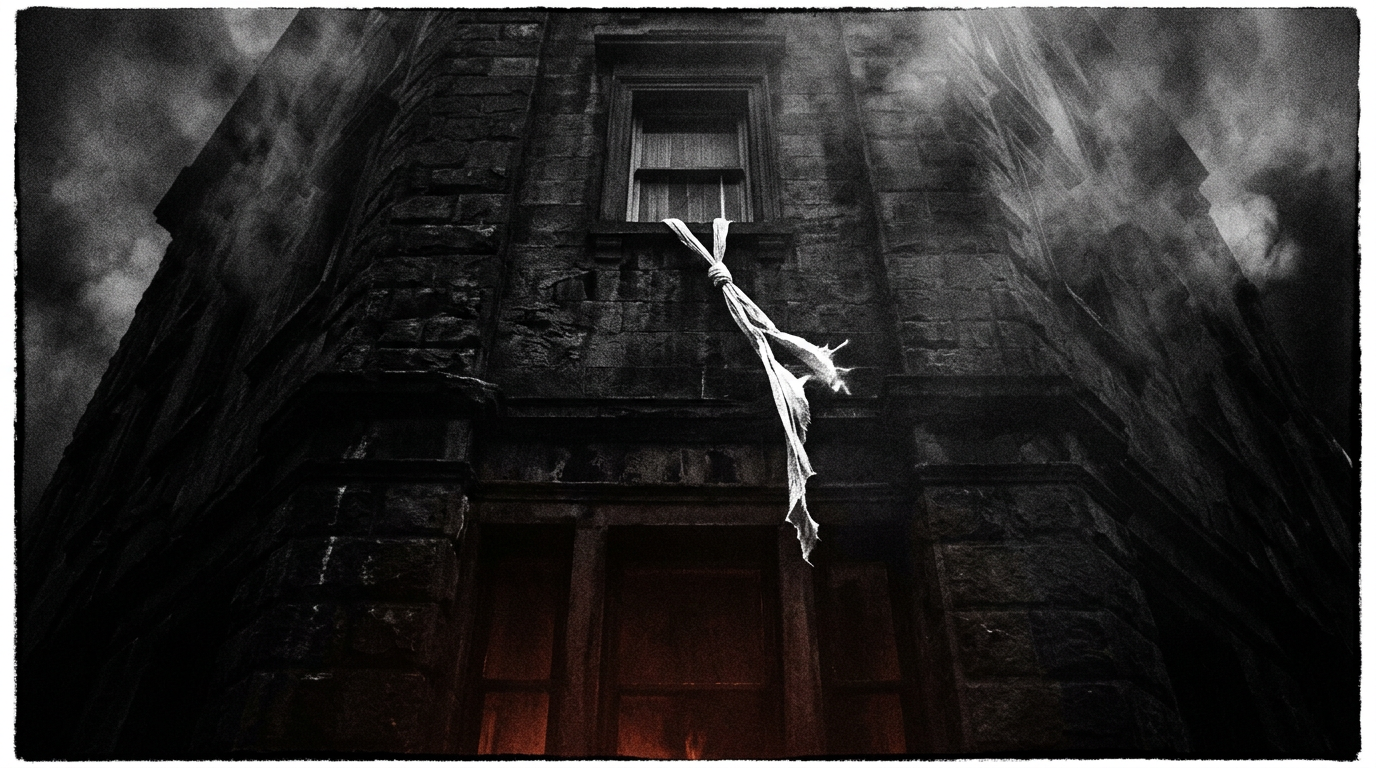
A woman fell to her death climbing down knotted bedsheets from the fourth floor of a Hyatt while a mob of 150 torched the building below her. If your crisis playbook doesn't have a chapter for civil unrest, you don't have a crisis playbook.

A 57-year-old woman is dead because the best escape plan available to her was tying bedsheets together and climbing out a fourth-floor window. Her husband watched it happen. The hotel was a Hyatt Regency. The city was Kathmandu. The date was September 9, 2025, during Nepal's anti-corruption protests that killed over 50 people and eventually toppled a prime minister. A mob of 100 to 150 people breached the property, set fires, looted guest belongings, and burned what they didn't take. The hotel told guests to move to higher floors. That advice trapped them.

Let that sit for a second. "Shelter in place, move to higher floors." That's the standard fire response in most hotel SOPs. It makes sense when the fire is accidental and the fire department is coming. It makes zero sense when the fire is intentional and the people setting it are still in the building. The husband just had his $12 million compensation claim dismissed by a Delhi court on procedural grounds... he sued Hyatt's Indian consulting arm trying to establish jurisdiction for something that happened in Nepal. The legal theory was shaky. The court kicked it. He can still file a civil suit. But here's what matters to you and me: the legal outcome is almost irrelevant compared to the operational question this case puts on every GM's desk. What is your plan when the threat isn't a kitchen fire or a gas leak... but people?

I've been through hurricanes, bomb threats, power failures that lasted days, and one situation I'd rather not describe in detail involving an armed individual in a lobby at 3 AM. Every one of those had a playbook. Every one of those playbooks assumed a functioning civil infrastructure... police respond, fire department arrives, the cavalry comes. Kathmandu in September 2025 had none of that. The cavalry wasn't coming. The police were overwhelmed. And the hotel's SOP, designed for orderly emergencies, became a death trap in a disorderly one.

If you're operating internationally... especially in regions with political instability, protest movements, or weak rule of law... you need a separate protocol for civil unrest. Not a paragraph in your emergency manual. A separate protocol. It needs to address evacuation routes when ground-floor exits are compromised. It needs to address communication when cell networks go down (they did in Kathmandu). It needs to address the possibility that "shelter in place" is the wrong call. And it needs to be something your night auditor, working alone at 2 AM, can execute without calling a regional VP who's asleep in a different time zone. The Hyatt Regency Kathmandu is still closed for reconstruction. Nepal's luxury hotel sector reported significant financial losses through the autumn tourist season. One family lost a wife and mother. All because the playbook assumed the world would behave the way it's supposed to.

This isn't just an international problem, by the way. Domestic hotels have faced protest-related incidents, civil disturbances during political events, and situations where local law enforcement was unavailable or delayed. If your emergency plan assumes help is always 10 minutes away... you're making the same bet that hotel in Kathmandu made. And sometimes the bet doesn't pay.

Operator's Take

Pull your emergency operations plan this week. Not next month. This week. Find the section on civil disturbance. If there isn't one, that's your answer. If you're managing properties in international markets (or frankly, any urban market where large-scale protests are a possibility), you need a protocol that addresses threats where the building itself becomes the target and where outside help isn't coming. Talk to your insurance broker about civil unrest coverage while you're at it... most standard policies have exclusions that would make your eyes water. And train your overnight staff specifically. They're the ones who'll be alone when it happens.

Read full analysis → ← Show less
Source: Google News: Hyatt
End of Stories