Today · Apr 5, 2026
Every Major Brand Wants Your Independent Hotel. The Question Is What You'll Have Left After They Get It.

Every Major Brand Wants Your Independent Hotel. The Question Is What You'll Have Left After They Get It.

IHG, Marriott, and Hyatt are racing to convert independent midscale hotels into branded properties, and the speed of that race should tell you something about who benefits most. The owners being courted with promises of loyalty contribution and distribution power might want to check the filing cabinet before they sign.

I sat in a franchise development pitch last year where the presenter used the word "seamless" eleven times in forty minutes. I counted. The owner sitting next to me... a woman who'd been running a 95-key independent for fourteen years... leaned over and whispered, "They keep saying that word. I don't think it means what they think it means." She signed anyway. I think about her a lot lately.

Because here's what's happening right now, and it's happening FAST. IHG's Garner brand hit 100 open hotels globally with nearly 80 more in the pipeline... the fastest-scaling brand in IHG's history. Conversions accounted for 52% of all IHG room openings in 2025. Marriott's City Express hit 100 signed deals in roughly 15 months, which they're calling the fastest brand launch in their U.S. and Canadian history. Hyatt's newest brands (Hyatt Select, Hyatt Studios, Unscripted) drove over 65% of all new U.S. deals in 2025. Every major brand is telling the same story: midscale conversions are the growth engine. And they're not wrong about the growth part. But growth for whom?

Let's talk about what "conversion-friendly" actually means at property level, because the press releases make it sound like changing a sign and plugging into a loyalty program. It's not. It's a PIP (property improvement plan) that will cost you real money, brand-mandated vendor contracts that limit your purchasing flexibility, loyalty program assessments that come off the top of your revenue, reservation system fees, marketing contributions, and rate parity restrictions that take away the pricing independence that made your independent hotel nimble in the first place. IHG is projecting Garner alone could reach 500 hotels in the next decade in the U.S., targeting what they call a $14 billion midscale market growing to $18 billion by 2030. That's a lot of franchise fees flowing in one direction. When someone tells you the market opportunity is $18 billion, ask yourself: whose $18 billion? Because the brand is calculating its fee revenue on that number. The owner is calculating whether the loyalty contribution justifies the total cost of affiliation... and those are two very different spreadsheets.

Here's where my years brand-side make me twitchy. I've read hundreds of FDDs. I've watched franchise sales teams project 35-40% loyalty contribution and then watched actual delivery come in at 22%. I've sat across from families who trusted those projections and lost everything. So when I hear that Hyatt is positioning its Essentials portfolio with over 30 hotels and roughly 4,000 rooms in the Southeast pipeline alone, and when Marriott is doubling Four Points Flex's European footprint to 50-plus properties by the end of this year, I don't hear "exciting growth." I hear "volume play." And volume plays are great for the brand's unit count and terrible for the individual owner who discovers that having 47 other Garner properties within driving distance of their hotel doesn't exactly create scarcity value. The brands are solving their distribution problem. Whether they're solving YOUR revenue problem depends entirely on numbers that don't exist yet... projected loyalty contribution, projected rate premium, projected occupancy lift. Projected. Not actual. The filing cabinet doesn't lie, and the variance between projected and actual performance in midscale conversions should give every independent owner a very long pause before signing.

This is what I call the Brand Reality Gap... brands sell promises at scale, but properties deliver them shift by shift. And the promise being sold here is seductive: "Join our system, get our loyalty members, access our distribution, grow your RevPAR." But what happens when the conversion costs run 30% over estimate (they will), when the loyalty contribution underperforms the projection (it often does), and when the brand standards require operational changes your current team can't execute with your current labor budget? That's when the "conversion-friendly" brand becomes a very expensive landlord. I'm not saying don't convert. I'm saying run the math on the WORST case, not the sales deck. Because I've watched three different flags pitch nearly identical "midscale conversion" stories over the past decade, and the owners who thrived were the ones who negotiated like they had options... because they did. Your independent hotel has value precisely BECAUSE it's independent. Don't let anyone make you forget that in the rush to put a flag on your building.

Operator's Take

Here's what I'd tell you if we were sitting at that hotel bar. If you're an independent owner being pitched a midscale conversion right now, you have more leverage than you think... every major brand is chasing the same pool of properties, and that competition is your negotiating tool. Before you sign anything, demand actual performance data (not projections) from comparable conversions in your comp set. Ask for the loyalty contribution numbers from properties that converted 24 months ago, not the ones that opened last quarter with a launch bump. Calculate your total cost of affiliation... franchise fees, PIP, mandated vendors, loyalty assessments, reservation fees, marketing fund... as a percentage of total revenue, and if it exceeds 15%, you need to see very specific evidence that the revenue premium covers it. And negotiate everything. Key money, PIP timeline, fee ramps, early termination clauses. Right now, the brands need you more than you need them. That won't last forever. Use the window.


— Mike Storm, Founder & Editor
Read full analysis → ← Show less
Source: Google News: Hotel Development
Hyatt Just Turned Austin's South Congress Hotel Into a Standard. 83 Keys, Zero New Construction.

Hyatt Just Turned Austin's South Congress Hotel Into a Standard. 83 Keys, Zero New Construction.

Hyatt is converting a beloved 83-room Austin independent into The Standard's first U.S. opening in over a decade, and the playbook tells you everything about where lifestyle brands are headed. The question isn't whether the concept works... it's whether the owner math survives what "culture-driven" actually costs to deliver.

Available Analysis

Let me tell you what this announcement really is, underneath the gorgeous renderings and the press release language about "culture-driven hospitality adventure." This is Hyatt doing exactly what every major brand company is doing right now... buying existing cool, slapping a flag on it, and calling it growth. And honestly? In this case, they might actually be right to do it. But "might" is doing a lot of heavy lifting in that sentence, and I want to unpack why.

The South Congress Hotel is an 83-room property on one of Austin's most iconic streets. It already has the vibe. It already has the location. It already has the kind of guest who posts their lobby coffee on Instagram without being asked. Hyatt paid $150 million base (with up to $185 million more over time) to acquire Standard International back in October 2024, which got them management, franchise, and licensing contracts for roughly 2,000 rooms across 22 open hotels and 30-plus future projects. That math works out to about $75K per existing key for the contracts alone... not the real estate, just the right to manage and flag. The stabilized annual fees from the base deal are projected at $17 million, growing to $30 million as the portfolio expands. This is asset-light strategy in its purest form, and I respect the financial architecture even as I side-eye the operational delivery. Because here's where it gets interesting for anyone who actually has to run one of these things.

Austin's hotel market tells a split story right now. Through October 2025, citywide ADR and RevPAR both declined roughly 5%, while the luxury segment's ADR has surged nearly 40% since 2019. There are 2,260 rooms under construction in the market. So you have softening in the middle and strength at the top, with a wave of new supply coming. The Standard is betting it lives in that top tier... that the brand cachet, the South Congress address, and the "curated" (yes, I'm using that word with full ironic awareness) experience will insulate it from the supply pressure hitting everyone else. And maybe it will. The location is legitimately special. The creative team they've assembled... local architects, local design firms, the existing Bunkhouse team providing community sensibility... suggests they're not phoning this in from a corporate office in Chicago. But 83 keys is tiny. The margin for error on F&B, on programming, on staffing a genuinely differentiated experience at that scale is razor-thin. Every single shift matters. Every hire matters. You can't hide a bad Tuesday night behind 400 other rooms absorbing the average.

Here's the part that keeps me up at night (well, that and my filing cabinet of FDDs). The South Congress Hotel is closing for renovations in summer 2026, which means layoffs. Real people losing real jobs at a property they helped build the reputation of... the same reputation Hyatt is now acquiring. The employees who created the "vibe" that made this property attractive enough to convert are the ones getting displacement notices. Some will be rehired. Some won't. And the ones who come back will be delivering someone else's brand standards instead of the independent spirit that made the place special in the first place. I've watched three different flags try this exact move... buy the cool independent, promise to "preserve the character," and then slowly sand down every edge until it's just another lifestyle hotel that photographs well and feels like nowhere in particular. The Standard has a stronger track record than most of keeping its properties distinctive. But that was before Hyatt's loyalty program, Hyatt's brand standards, and Hyatt's development team were in the mix. The tension between corporate infrastructure and independent spirit is the oldest story in lifestyle hospitality, and it almost always resolves in favor of corporate infrastructure. (I would love to be wrong about this. I am not holding my breath.)

What I'll be watching is the gap between promise and delivery. Hyatt's lifestyle group, led by the former Standard International team, is headquartered in New York with offices in Austin and Bangkok. That's encouraging... it suggests some operational autonomy from the mothership. They quintupled their lifestyle room count since 2017 and added 28 lifestyle hotels in 2024 alone. Growth at that pace is either evidence of genuine capability or evidence that "lifestyle" has become a bucket for anything that isn't a Hyatt Place. The Standard, Austin will tell us which one it is. Spring 2027 opening. I'll be there. I'll be the one checking whether the lobby bar has a dedicated mixologist or a front desk agent pulling double duty. Because that's where The Deliverable Test lives... not in the rendering, not in the press release, but in what actually happens when a guest walks in expecting the brand promise and meets the operational reality.

Operator's Take

If you're an independent boutique owner in a desirable market... Austin, Nashville, Portland, Asheville... this is your wake-up call. The major brands are done building lifestyle from scratch. They're buying YOU. Or rather, they're buying properties like yours, converting them, and using your market's existing cool as their growth strategy. Know what your property is worth as an independent AND what it's worth as a conversion target, because someone is doing that math right now whether you are or not. If you're already flagged with a lifestyle brand, pull your actual loyalty contribution numbers and compare them to what was projected. This is what I call the Brand Reality Gap... brands sell promises at scale, properties deliver them shift by shift. The Standard has brand equity, but brand equity doesn't check guests in at midnight. Your team does. Make sure the economics justify what you're being asked to deliver.

— Mike Storm, Founder & Editor
Read full analysis → ← Show less
Source: Google News: Hyatt
Hyatt Bought South Congress Hotel Four Months Ago. Now Everyone Who Works There Is Losing Their Job.

Hyatt Bought South Congress Hotel Four Months Ago. Now Everyone Who Works There Is Losing Their Job.

Hyatt is gutting an 83-room Austin boutique it acquired in December, closing for a year-long renovation and terminating nearly every employee. The part nobody's talking about is what this tells you about how major brands treat the humans inside the buildings they buy.

Available Analysis

Let me tell you something about the word "rebranding" that I learned the hard way after 15 years on the brand side of this business. Rebranding is what companies say when they mean "we're replacing everything, including the people." It sounds strategic and forward-looking in a press release. It sounds like a termination letter when you're the housekeeper who's been there since 2015.

Hyatt acquired South Congress Hotel from its original developer in December 2025. Four months later, nearly every employee is being let go effective May 31, with the property shuttering for a full year of renovation. The stated plan is to reopen in Q1 2027 with redesigned guestrooms, refreshed public spaces, and overhauled food and beverage... essentially a new hotel wearing the old hotel's address. Employees were told they'd be "eligible to reapply" when the doors open again. If you've ever been told you're eligible to reapply for your own job, you know exactly how that sentence lands. It lands like a door closing.

And here's where my brand brain starts doing the math that the announcement conveniently skips. Austin added 1,300 hotel rooms in 2024. Another 1,800 are nearing completion. Roughly 1,600 more are projected for 2026. Market-wide RevPAR declined 4.1% last year. So Hyatt is pulling 83 keys offline for a year in a market that's drowning in new supply, betting that a repositioned luxury boutique will command enough rate premium to justify the acquisition price (which they haven't disclosed, which tells you something), the renovation cost (also undisclosed), and twelve months of zero revenue. The luxury segment in Austin has seen ADR surge nearly 40% over 2019 levels, so the upside thesis isn't crazy. But "not crazy" and "guaranteed to pencil" are very different things, and I've sat across the table from enough families who trusted the optimistic projection to know the difference viscerally.

What really gets me is the sequencing. Hyatt also owns The Driskill and the Hyatt Regency Austin, both undergoing their own renovations. They're running three major construction projects in the same market simultaneously. That's not a renovation... that's a market repositioning play, and it's aggressive. The South Congress corridor already has Hotel San José and Austin Motel under the Bunkhouse Group, which (fun fact) is also under the Hyatt umbrella now. So Hyatt is essentially competing with itself on one of Austin's most iconic streets while telling employees at one of those properties to go find something else to do for a year and maybe come back. Maybe. The coffee shop stays open, though (the Mañana), which is a nice detail that I'm sure is enormously comforting to the front desk team cleaning out their lockers.

I want to be clear about something. I'm not anti-renovation. Properties age. An 11-year-old boutique in a market this competitive absolutely needs a refresh to stay relevant. And Hyatt didn't buy this hotel to leave it the way it was... that's not how acquisitions work. But the way you execute the transition tells you everything about what a brand actually values versus what it says it values. A WARN notice wasn't listed on the Texas Workforce Commission system as of the announcement date, despite a May 31 termination timeline that would typically trigger the 60-day requirement. Employees learned their fate through termination letters from Hyatt's VP of HR field operations. Not from the GM they'd worked alongside for years (though the GM confirmed the plans publicly). From an HR executive whose name most of them had probably never heard. That's not a transition plan. That's a brand deciding the humans inside the building are a line item to be zeroed out and restarted from scratch. And if you're an owner being pitched a Hyatt conversion right now, or any conversion, I want you to remember this moment. Because the brand promise is always about partnership and shared vision and long-term value. The brand reality, when it's time to renovate, is a letter from someone in HR you've never met telling your team to reapply for their own jobs in twelve months.

Operator's Take

Here's what I want you to hear if you're an independent owner being courted by a major flag right now. This is what I call the Brand Reality Gap... the distance between the promise in the pitch deck and what happens when the brand decides to "invest" in your property. Before you sign anything, ask the development team one question: "When you renovate, what happens to my staff?" Get the answer in writing. If you're a GM at a boutique that just got acquired or is about to be, start documenting your team's institutional knowledge now... guest preferences, vendor relationships, maintenance history, all of it. Because when the new owners decide to "reposition," that knowledge walks out the door with your people unless someone captures it first. And if you're in Austin running a hotel right now, pay attention to the supply math. Roughly 4,700 new rooms hitting a market with declining RevPAR, plus Hyatt pulling keys offline and then bringing them back repositioned at luxury rates. Your comp set is about to shift underneath you. Run your rate strategy against the market you'll be operating in by Q1 2027, not the one you're in today.

— Mike Storm, Founder & Editor
Read full analysis → ← Show less
Source: Google News: Hyatt
Marriott's Fee Cap Play Is Smart. The Question Is What Owners Give Up to Get It.

Marriott's Fee Cap Play Is Smart. The Question Is What Owners Give Up to Get It.

Marriott's U.S. development chief is pitching capped fees and efficient footprints as the answer to a frozen lending market. It sounds like the most owner-friendly deal in years... until you read the fine print on what "low double digits" actually includes and what it quietly doesn't.

Available Analysis

I watched a franchise sales pitch last year where the development rep kept using the phrase "predictable economics" like it was a magic spell. Every slide. Predictable economics. Predictable economics. The owner sitting next to me leaned over and whispered, "You know what else is predictable? That they'll raise fees in year four." He wasn't wrong. He'd been through two flag cycles and he knew exactly how this movie ends. The first act is always generous.

So here comes Marriott with a record pipeline of nearly 610,000 rooms, conversions making up a third of signings, and a midscale push built around City Express and StudioRes that's supposedly going to crack open the white space between economy and upscale. The pitch to owners is seductive: total fee loads in the "low double digits" as a percentage of room revenue, consolidated into a single package, with efficient hotel footprints that reduce both capital and operating costs. And look, I want to be excited about this. I really do. Because when I was brand-side, I spent years arguing that the fee structure needed to be simpler, more transparent, and more defensible to the people actually writing the checks. A consolidated, capped fee is a step in that direction. But "low double digits" is doing a LOT of heavy lifting in that sentence. Is that 10%? Is that 13%? Because the difference between 10% and 13% of room revenue on a 90-key midscale property is the difference between a viable deal and a deal that works only if occupancy stays above 68% forever. And occupancy doesn't stay above 68% forever. Ask anyone who owned a hotel in 2020.

The conversion strategy is the part that deserves the most scrutiny, because it's also the part that sounds the best. Seventy-five percent of conversion rooms joining the system within 12 months of signing is genuinely impressive execution speed. But speed of conversion and quality of conversion are two very different metrics, and only one of them shows up in the press release. I've seen conversions where the flag goes up, the PMS gets swapped, and the guest experience doesn't change for another 18 months because the PIP is phased and the staff hasn't been retrained and the "brand standard" lobby furniture is backordered until Q3. The sign changes fast. The promise takes longer. And in that gap between sign and substance, every negative review is hitting under YOUR brand name now. (This is the part where the development team and the operations team are having two completely different conversations about the same hotel, by the way. Development counts the signing. Operations inherits the execution. Guess who gets blamed when the TripAdvisor scores dip.)

Noah Silverman's "flight to quality" argument... that economic uncertainty is driving independents toward established brands... is interesting because it's simultaneously true and self-serving. Yes, some independent owners ARE looking for the safety of a flag right now. Lending is tight, construction costs are brutal, and a brand affiliation makes your deal more financeable. That's real. But "flight to quality" is also the exact narrative you'd construct if your growth strategy depended on converting independents who are scared. The question owners should be asking isn't "does a flag make me safer?" It's "does THIS flag, at THIS fee structure, with THIS loyalty contribution, in THIS market, generate enough incremental revenue to justify the total cost of affiliation?" Because I have a filing cabinet full of FDDs where the projected loyalty contribution was 35-40% and the actual delivery was in the low twenties. The gap between what the sales team projects and what the property receives is the most expensive number in franchising, and it almost never appears in the pitch deck.

Here's what I keep coming back to. Marriott returned over $4 billion to shareholders in 2025 through buybacks and dividends. Their adjusted EBITDA hit $5.38 billion. Their gross fee revenues were $5.4 billion. This is a company that is thriving. And the owners funding those fees... some of them are thriving too, and some of them are refinancing at rates that make their 2019 pro formas look like fiction. So when Marriott says "we're making the deal more predictable for owners," I want to know: predictable for whom? Because a capped fee that's still 12-13% of revenue on a midscale property where the brand delivers 22% loyalty contribution instead of the projected 35%... that's predictably expensive. The cap doesn't protect you if the revenue premium doesn't materialize. It just means you know exactly how much you're overpaying.

Operator's Take

Here's what I'd do if I'm an independent owner getting pitched a Marriott midscale conversion right now. First, get the exact total fee number in writing... not "low double digits," the actual percentage with every line item broken out. Franchise fee, loyalty assessment, reservation fee, technology fee, marketing contribution, all of it. Second, ask for actual loyalty contribution data from comparable properties in your market, not projections... actuals from hotels that have been in the system 24 months or more. If they won't provide it, that tells you something. Third, model your deal at 60% occupancy with the actual fee load and see if the numbers still breathe. Because the pitch always assumes stabilized performance, and stabilization in a midscale conversion can take 18-24 months. Your debt service doesn't wait for stabilization. This is what I call the Brand Reality Gap... brands sell promises at scale, properties deliver them shift by shift, and the gap between those two things is where owner equity goes to die. Get the real numbers before you sign anything.

— Mike Storm, Founder & Editor
Read full analysis → ← Show less
Source: Google News: Hotel Development
Memphis Spent $22M on a 590-Room Hotel. The Renovation Will Cost 11 Times That. Let's Talk About Why.

Memphis Spent $22M on a 590-Room Hotel. The Renovation Will Cost 11 Times That. Let's Talk About Why.

The city of Memphis bought the Sheraton Downtown for $22 million, rebranded it the Memphis Riverline Hotel, and now faces a $250 million renovation bill to make it match the convention center next door. The real story isn't the price tag... it's what happens to every owner who inherits decades of someone else's deferred maintenance.

Available Analysis

I grew up watching my dad take over hotels that the previous operator had starved. You'd walk the property with the asset report in one hand and a flashlight in the other, and within about forty minutes you'd know exactly how many years of "savings" you were about to pay for. The lobby looked fine. The back of house told the truth. Memphis just learned that lesson at scale, and the tuition is $250 million.

Here's what happened. The City of Memphis bought the 590-room Sheraton Downtown for $22 million in November 2025 because the property had deteriorated so badly it was dragging down the $200 million convention center renovation happening next door. That's roughly $37,300 per key for a hotel that city officials themselves described as being in "substandard condition" and a "state of disrepair." So the acquisition price wasn't a deal... it was an admission of how far gone the asset was. Now the renovation estimate sits at $250 million, which works out to about $423,700 per key in renovation cost alone. Add the purchase price and you're at $461,000 per key all-in for a hotel that won't be finished until Q1 2029. They've rebranded it the "Memphis Riverline Hotel," operating under an independent flag while staying "associated with" Marriott, which is corporate language for "the brand standards aren't met and everyone knows it, but we're keeping the reservation pipe open while we figure this out." The 12-month design phase followed by years of construction means this hotel will be under some form of disruption for the better part of three years. Guests during that period are going to feel it. Staff are going to feel it. And the convention center next door, the entire reason this purchase happened, is going to feel it every time a meeting planner asks "so where are my attendees sleeping?"

The math is what gets me. $461,000 per key all-in for an upper-upscale convention hotel in Memphis. For context, new-build select-service hotels in secondary markets are coming in at $150,000-$200,000 per key. Full-service new builds in comparable markets run $300,000-$400,000. Memphis is spending new-build-plus money to fix someone else's mess, and they're doing it because the alternative (letting the city's largest hotel continue to deteriorate next to a brand-new convention center) was worse. That's the thing about deferred maintenance. The cost doesn't disappear. It compounds. And eventually someone pays... either the current owner pays for the fix, or the next owner pays more for the fix plus the opportunity cost of years of decline. Memphis is the next owner, and the bill just came due.

What's interesting about the structure is who's actually holding the risk. The city owns it. A nonprofit subsidiary of the Downtown Memphis Commission holds and oversees it. Carlisle Development Group is running the renovation. And Marriott is hovering in the background with what amounts to a conditional relationship... if the renovation meets brand standards, this could become a full Marriott-branded property again. Could. That's a lot of "if" for $250 million. The city is bearing all the capital risk while Marriott gets to decide later whether the finished product is good enough for their flag. I've sat in rooms where that dynamic plays out, and the entity holding the checkbook and the entity holding the brand standards are almost never aligned on what "good enough" means. The brand always wants more. The owner always wants to know when "more" stops. And the answer, in my experience, is that it stops when the money runs out or the owner finally says no, whichever comes first.

The Memphis hotel market is actually showing some life right now... occupancy grew 2.7% year-over-year in 2025, and recent weekly data shows strong RevPAR gains partly driven by AI data center demand (which is a sentence I never expected to write about Memphis, but here we are). That's actually good news for the Riverline during its transition period. Convention-dependent hotels live and die by the market's ability to backfill when the big groups aren't in house, and a market with rising demand gives you a cushion. But three years is a long time to operate a 590-room hotel in renovation mode. The property has 14,000 square feet of meeting space of its own plus the skywalk to 300,000 square feet at the convention center next door. If even a quarter of that meeting space goes offline during construction phases, the revenue impact compounds fast. And every month that the guest experience is compromised by construction noise, closed amenities, or detour signs in the hallway is a month where the online reviews are telling a story that takes years to undo.

Operator's Take

Here's the number that should keep you up at night. $37,300 per key to acquire. $423,700 per key to fix. That's the CapEx Cliff... deferred maintenance doesn't stay deferred. It compounds. Quietly. Until it doesn't. If you're sitting on a property where the lobby looks fine and the back of house tells a different story... you already know where this goes. Pull your 5-year CapEx forecast. Not the version that makes the hold period look good. The real one. What does it cost to fix it now? What does it cost after three years of declining reviews and a convention bureau that's stopped recommending you? That gap is the cliff. Memphis fell off it. The bill was $250 million. Yours won't be that. But it'll be more than it is today, and it gets more expensive every quarter you wait.

— Mike Storm, Founder & Editor
Read full analysis → ← Show less
Source: Google News: Marriott
The Real Reason an 80-Room Hotel in Kigali Matters to Every Operator Reading This

The Real Reason an 80-Room Hotel in Kigali Matters to Every Operator Reading This

An independent hotel in Rwanda joins Hilton's Tapestry Collection and decides to invest in training before anything else. That sequence tells you everything about what actually makes a brand conversion work... and what most owners get backwards.

Available Analysis

I watched a property go through a brand conversion once where the owner spent $2.1 million on the lobby, $800K on new signage and exterior work, and exactly zero on staff training before the flag went up. Six months later, TripAdvisor reviews were brutal. Not about the rooms. Not about the lobby (which was, admittedly, gorgeous). Every single complaint was some version of "the staff didn't seem to know what kind of hotel this was supposed to be." Because nobody told them. The brand promise got built in concrete and fabric. The people who had to deliver that promise every shift got a binder and a prayer.

So when I read about Zaria Court Hotel in Kigali... an 80-key independent that just joined Hilton's Tapestry Collection in January... and the headline is about investing in people, not about the property's proximity to a 10,000-seat arena or a 45,000-seat stadium, my ears perk up. Because that's the right sequence. This is Hilton's first property in Rwanda. The ownership group, founded by Masai Ujiri, could have led with the real estate story. They could have led with the "transformative milestone" language (and trust me, there's plenty of that floating around). Instead, the story they're telling is about training and developing the team that has to make the Hilton promise real 24 hours a day in a market where skilled hospitality labor is genuinely scarce.

Here's what nobody's talking about. Hilton mandates a minimum of 40 hours of training per employee per year across its system. They run something north of 2,500 courses through their internal university, delivering over 5 million training hours annually. For a 200-key Hilton Garden Inn in Dallas with an established hospitality labor pool, that's a box to check. For an 80-room conversion in Kigali... a market Hilton has never operated in... that's a fundamentally different challenge. You're not just training people on brand standards. You're building the operational muscle from scratch in a market where the hospitality talent pipeline is still developing. Rwanda's tourism sector is growing fast, but the government itself has acknowledged the skilled labor gap. So when this ownership group says "we're investing in people," they're not being cute. They're solving the actual problem.

And this is where it gets interesting for operators everywhere, not just in Africa. Hilton is planning to nearly triple its footprint across the continent. That's not a press release... that's a strategic bet on markets where the infrastructure, the labor pool, and the operational norms are fundamentally different from mature markets. The brands that win in these environments won't be the ones with the best lobby renderings. They'll be the ones whose local partners invest in the team first. I've been saying this for 40 years and it's never been more true: your housekeeping staff, your front desk team, your night auditor... they ARE the brand. Everything else is just the set they perform on.

The lesson here isn't about Rwanda. It's about the universal truth that brand conversions live or die on the people delivering the promise, not on the sign out front. Hilton knows this. The smart owners know this. And yet I still see conversion budgets where training is a rounding error... 2% of the total spend, maybe less... while FF&E gets 60% and the lobby redesign gets the glamour shots for the press release. An 80-room hotel in Kigali just put the whole industry on notice about what the right priorities look like. Whether anyone's paying attention is another question entirely.

Operator's Take

This is what I call the Brand Reality Gap. Brands sell promises at scale. Properties deliver them shift by shift. If you're going through a conversion or a PIP right now, pull up your budget and check the ratio of hard costs to training investment. If training is less than 5% of your total conversion spend, you're building a set without hiring actors. Call your brand rep this week and ask specifically what training resources they're providing during conversion... not the online portal, not the PDF manual. What in-person, hands-on support are they sending to your property? If the answer is vague, that gap is yours to fill, and you need to budget for it before you spend another dollar on case goods.

Read full analysis → ← Show less
Source: Google News: Hilton
IHG's Garner Hit 100 Hotels in 30 Months. Here's What Nobody's Asking.

IHG's Garner Hit 100 Hotels in 30 Months. Here's What Nobody's Asking.

IHG's midscale conversion brand just became its fastest-scaling flag ever. But 100 open hotels and 80 more in the pipeline raises a question every independent owner should be thinking about... and most aren't.

Available Analysis

A hundred hotels in two and a half years. That's roughly one new Garner opening every nine to ten days since August 2023. Some of these conversions wrapped in barely a month from signing to doors open. Let that sink in. IHG is calling it their fastest brand scale-up ever, and the math supports the claim. Forty-three openings in EMEAA last year alone (more than any other IHG flag in the region), 23 in the Americas, and a pipeline of nearly 80 more coming. The press release is predictably triumphant. But I've seen this movie before... several times, actually... and the third act is where it gets interesting.

Here's what's really happening. IHG looked at the midscale independent market, saw a $14 billion segment in the U.S. projected to hit $18 billion by 2030, and built a conversion machine specifically designed to vacuum up those properties. Flexible design standards. Competitive cost-per-key. Reduced pre-opening spend. Fast turnaround. Everything an independent owner who's tired of fighting the OTAs alone wants to hear. And honestly? For some of those owners, this is probably the right call. The distribution muscle of IHG's loyalty engine is real. If you're running a 90-key independent in a secondary market and your direct booking percentage is under 30%, the pitch is compelling.

But here's what the press release doesn't mention. Conversions that happen in a month aren't transformations. They're sign changes with a reservation system swap. That 56-property deal with NOVUM in Germany? That's a bulk conversion agreement... terrific for IHG's investor deck, but the question I'd be asking is what the actual loyalty contribution looks like 18 months in at those properties versus what was projected at signing. I sat through a brand pitch once where the franchise sales team showed a 38% projected loyalty contribution for a secondary market conversion. The property was at 19% two years later. The owner was stuck with the fees either way. The brand counted it as a success because the flag was on the building. The owner had a different word for it.

What concerns me about this pace is the quality control problem that always follows scale-at-speed. Garner's brand promise is straightforward... comfortable beds, good sleep, hot breakfast, affordable price. Simple. But "simple" executed inconsistently across 180 properties in dozens of markets is how you end up with a brand that means nothing. Every conversion brand hits this inflection point. The first 50 properties are hand-picked, well-supported, and carefully vetted. Properties 100 through 200 are where standards start slipping because the development team has targets and the field team is stretched thin. IHG knows this (they've been through it before with other flags), and the question is whether they've built enough operational scaffolding to keep Garner from becoming just another collection of random midscale hotels sharing a name.

The other thing worth watching... and this is where it gets real for independents... is what this does to the competitive landscape in secondary and tertiary markets. Every Garner conversion is an independent that just got plugged into IHG's distribution system. If you're the independent across the street who didn't convert, you just lost a competitor and gained a branded one with loyalty pricing power you can't match. That's not hypothetical. That's happening in markets right now. The pressure to flag up is going to intensify, and the brands know it. This is what I call the Brand Reality Gap... brands sell promises at scale, and properties deliver them shift by shift. The gap between the two is where owners either win or get hurt, and it widens every time the pace of conversions accelerates beyond the brand's ability to support them.

Operator's Take

If you're an independent owner in a secondary market and a Garner (or similar conversion brand) rep is knocking on your door, don't say no reflexively... but don't say yes based on projections. Ask for actual loyalty contribution data from comparable conversions that have been open 18+ months, not pro formas. Get the total cost number... franchise fees, loyalty assessments, reservation fees, technology mandates, PIP if any... as a percentage of total revenue, and make sure the incremental revenue clears that bar by enough margin to justify the loss of independence. And if you're already a Garner conversion in that first wave of 100? Your job right now is to demand the field support you were promised before 80 more properties dilute the attention you're getting. Call your area director this week.

Read full analysis → ← Show less
Source: Google News: IHG
Marriott's Kapalua Bay St. Regis Play Is Gorgeous... and That's Exactly What Worries Me

Marriott's Kapalua Bay St. Regis Play Is Gorgeous... and That's Exactly What Worries Me

A 146-room Maui resort bought for $33 million in 2023 is getting the St. Regis treatment by 2027, and the math behind this conversion tells a very different story than the press release.

Available Analysis

Let me paint you a picture. You're an owner sitting on a 146-room oceanfront resort in Maui with residences that start at 1,774 square feet and top out past 4,050. You bought the operating business for $33 million in late 2023 when it was flagged as a Montage. And now you're handing the keys to Marriott, planning renovations, and aiming for a St. Regis flag by 2027. On paper? This is the dream conversion. Iconic location, 25 acres on Maui's northwest coast, a 40,000-square-foot spa with 19 treatment rooms, the kind of physical plant that makes brand executives start salivating during the first site visit. I get the excitement. I really do.

But here's where my brain goes, and it's the place the press release absolutely does not go... what does the total brand cost look like for an owner converting INTO St. Regis? Because St. Regis isn't a flag you slap on a building. It's a promise that requires staffing levels, service programming, F&B concepts, and physical standards that are among the most demanding in the Marriott portfolio. We're talking about butler service. Signature rituals. The champagne sabering. (Yes, that's still a thing, and yes, someone has to be trained to do it, and yes, that person is going to call in sick on a Saturday in peak season.) The renovation costs alone for a property that was already operating as a luxury resort under Montage are going to be substantial... because Montage standards and St. Regis standards are different documents with different price tags. And here's the question I'd be asking if I were advising this owner: once you layer franchise fees, loyalty program assessments, reservation system charges, brand-mandated vendor requirements, and the capital needed to meet St. Regis physical standards on top of a 146-key property... what's your actual return? At 146 rooms, you're spreading those fixed costs across a relatively small key count. The per-key economics have to be extraordinary to justify this.

Now, I want to be fair. Marriott's luxury strategy is working. Their stock is up 30% over the past year, trading around $314, with Goldman Sachs, BMO, and Barclays all raising price targets. They just launched "St. Regis Estates" in late 2025 for legacy-rich properties. They signed a Luxury Collection deal in Cambodia and Laos the same week as this announcement. They recorded 94 signed deals and 39 new properties in the Caribbean and Latin America last year alone, with conversions driving a huge chunk of that growth. Marriott knows how to grow through conversions. It's the playbook. And Kapalua Bay, with those massive residential-style units and that Maui oceanfront, is exactly the kind of trophy asset that makes the St. Regis portfolio stronger on the global stage. I've sat in enough brand development meetings to know that when a property like this comes available, every luxury flag in the industry makes a call. Marriott won. That matters.

What also matters... and this is the part that keeps me up at night... is the Deliverable Test. Can the St. Regis promise survive contact with reality at this specific property in this specific market? Hawaii's labor market is brutal. Housing costs on Maui make it nearly impossible to recruit and retain the caliber of staff that St. Regis service standards demand. You need people who can deliver personalized butler service, who can execute the brand's signature touches consistently, who understand what luxury hospitality actually feels like from the guest's perspective. And you need enough of them to cover a 24/7 operation where "we're short-staffed today" is not an acceptable answer when a guest is paying $1,500 a night (minimum, at this property). I once watched a luxury conversion in a resort market where the brand presentation was flawless... renderings, service scripts, training timelines, everything perfect. Eighteen months post-conversion, the property was running 40% of the promised programming because they simply could not hire enough qualified people. The TripAdvisor reviews were devastating. Not because the hotel was bad. Because the hotel promised something it couldn't consistently deliver. And guests don't punish you for being mediocre. They punish you for breaking a promise.

Here's my position, and I'm not going to hedge it. The Kapalua Bay physical product is probably worthy of St. Regis. The location is undeniable. But the distance between "worthy of" and "consistently delivering" is where owners get hurt. If you're an owner being pitched a luxury brand conversion right now... and Marriott is pitching a lot of them... don't fall in love with the rendering. Don't fall in love with the brand presentation. Pull the actual performance data from comparable St. Regis properties. Calculate your total brand cost as a percentage of revenue. Stress-test the labor model against your actual market. And ask the question that nobody at headquarters wants to answer: what happens to my return when I can only deliver 70% of the brand promise 100% of the time? Because that's reality. And reality doesn't care how beautiful your lobby is.

Operator's Take

If you're an owner being courted for a luxury brand conversion right now... and trust me, Marriott is not the only one making these calls... do not sign anything until you've calculated total brand cost as a percentage of gross revenue. I'm talking franchise fees, loyalty assessments, PMS mandates, vendor requirements, PIP capital, all of it. For a property this size, 146 keys, those fixed costs hit different. Run the labor model against what it actually costs to recruit and retain luxury-level staff in your specific market. The brand's pro forma assumes a staffing model. Your market might not support it. That gap is where the pain lives.

— Mike Storm, Founder & Editor
Read full analysis → ← Show less
Source: Google News: Resort Hotels
IHG's 21st Brand Is a Love Letter to Independent Owners. Read the Fine Print.

IHG's 21st Brand Is a Love Letter to Independent Owners. Read the Fine Print.

IHG just launched Noted Collection, its newest premium conversion play targeting 2.3 million independent rooms worldwide. The pitch is seductive... keep your identity, get our distribution. But if you're an independent owner being courted, the question isn't whether the brand sounds good. It's what happens three years in when the projections meet reality.

So IHG now has 21 brands. Twenty-one. That's 11 new brands in 11 years, for anyone keeping score at home, and I am absolutely keeping score. Noted Collection launched February 17th targeting upscale and upper-upscale independents who want the IHG machine (160 million loyalty members, global distribution, revenue management muscle) without giving up what makes them... them. The pitch is elegant. The addressable market is enormous. And the playbook is one I've watched every major company run in the last five years, which means I know exactly where the seams are.

Let me be clear about something... the strategy isn't wrong. Conversions are the smartest growth lever in a market where construction costs make new builds painful and lending is still tight. IHG's 2025 numbers back the thesis: over 102,000 rooms signed across 694 hotels, fee margin at 64.8% (up 360 basis points), EBIT up 13%. This is a company printing money on asset-light growth and telling Wall Street it's going to keep doing it. The target of 150 hotels in a decade for Noted Collection? Conservative, honestly, given the math. The EMEAA-first rollout makes sense too... that's where the largest concentration of unbranded premium properties sits. So far, so smart. Here's where I start asking the questions that don't appear in the press release.

What exactly distinguishes Noted Collection from voco? From Vignette Collection? From Hotel Indigo? I've read the positioning language and I can tell you this much... if you put the brand descriptions for all four in front of an owner without the logos attached, they'd struggle to sort them. "High-quality, distinctive, one-of-a-kind hotels" could describe any of those brands. And that's the problem with launching brand number 21... you're not filling a gap in the portfolio anymore, you're creating overlap and hoping the sales team can explain the difference in a pitch meeting. (Spoiler: half of them can't explain the difference between the brands they already have.) I sat in a brand review once where an owner asked a development VP to explain, without reading from the deck, what made their collection brand different from their lifestyle brand. The VP talked for four minutes and said nothing. The owner signed anyway. He shouldn't have.

Here's the part that matters if you're an independent owner getting the call. The promise is beautiful... keep your name, keep your character, get our engine. But the total cost of brand affiliation in the upscale space isn't the franchise fee on page one. It's the franchise fee plus loyalty assessments plus reservation system fees plus marketing contributions plus PIP requirements plus rate parity restrictions plus the vendor mandates that show up six months after signing. I've watched this math destroy owners who fell in love with the pitch. A family I worked with years ago... three generations of hotel people... took on millions in PIP debt because the projected loyalty contribution was going to make it all pencil out. Actual delivery came in nearly 40% below projection. The math broke. They lost their hotel. So when IHG says "gateway to stronger performance," I want to see the actual performance data for their existing collection brands, property by property, compared to what was projected at signing. That filing cabinet comparison is the only honest conversation in this industry, and nobody at brand headquarters wants to have it.

The real question for 2026 isn't whether IHG can sign independent owners to Noted Collection. Of course they can. The sales team is excellent, the loyalty platform is genuinely powerful, and independent owners are tired of fighting the OTAs alone. The question is whether this brand can deliver a revenue premium that exceeds total brand cost for the specific owner in the specific market with the specific cost structure they're operating in. That answer is different for a 60-key boutique in Lisbon than it is for a 200-key upscale property in Nashville. And if IHG is pitching both of them the same brand with the same enthusiasm, one of them is going to be disappointed. If you're the independent owner getting courted right now... and you will be, because IHG needs signings to hit that 150-hotel target... do not fall in love with the rendering. Do not fall in love with the loyalty member count. Ask for actuals from comparable properties in comparable markets already in IHG's collection brands. If they give you projections instead of actuals, you have your answer. You just have to be brave enough to hear it.

Operator's Take

If you're an independent owner in the upscale or upper-upscale space and IHG comes calling about Noted Collection... take the meeting. But before you sign anything, demand three things: actual RevPAR index performance (not projections) from existing voco and Vignette properties in comparable markets, a full total-cost-of-affiliation breakdown including every fee, assessment, and mandate for years one through five, and a written breakdown of what your PIP will actually cost versus the incremental revenue the brand is projecting. If they won't give you actuals, that tells you everything. The pitch is always beautiful. The P&L three years later is where the truth lives.

— Mike Storm, Founder & Editor
Read full analysis → ← Show less
Source: Google News: IHG
Marriott's City Express Just Landed in D.C. And the Real Story Isn't the Sign Change.

Marriott's City Express Just Landed in D.C. And the Real Story Isn't the Sign Change.

A 125-room independent near Capitol Hill is swapping its boutique identity for Marriott's midscale conversion play... and what it tells you about where the brand war is actually heading is more interesting than the press release suggests.

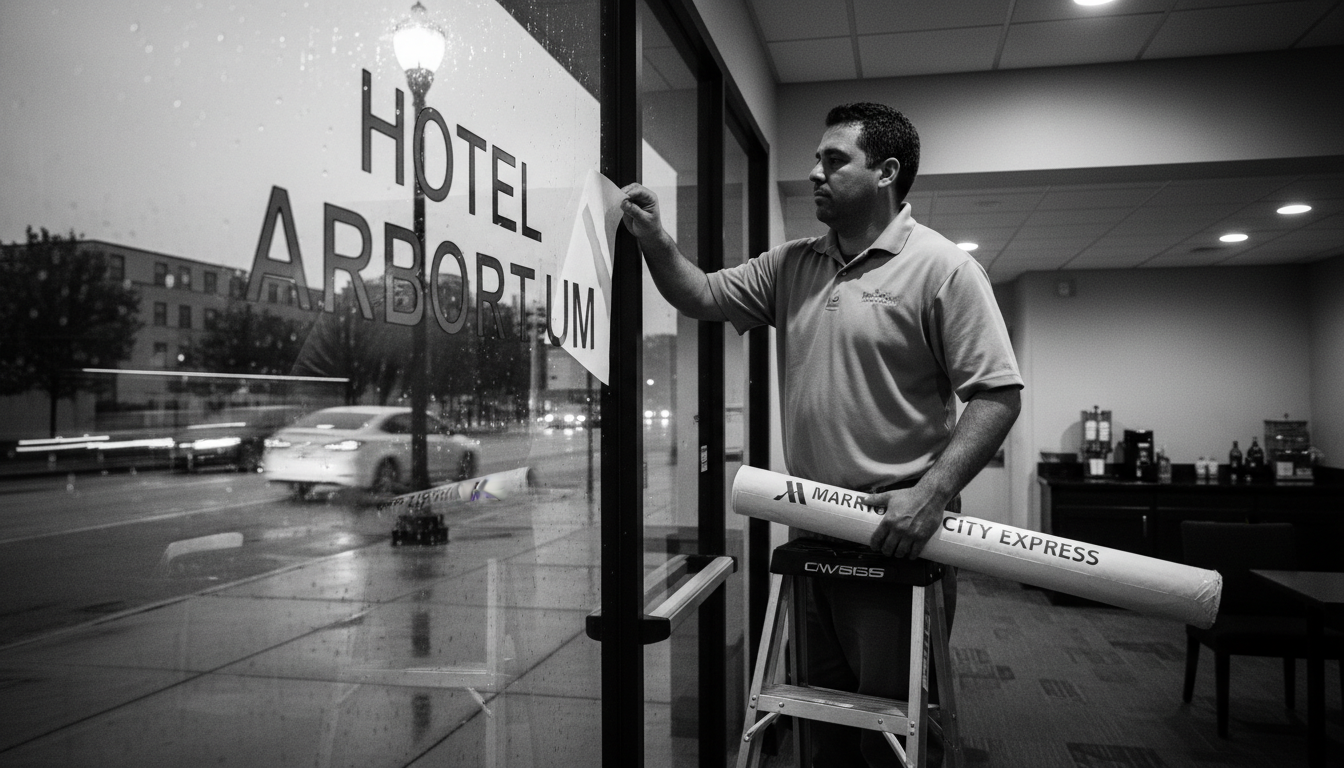
Let me tell you what I see when I read this headline, because it's not what Marriott wants you to see. PM Hotel Group just moved a 125-room property near Union Station in Washington, D.C.... the Hotel Arboretum... under Marriott's City Express flag. And if you're reading that as a routine conversion announcement, you're missing the chess move. This is Marriott planting its midscale conversion brand in the nation's capital, a market driven by government contracts and group business, on a property owned by Rocks Hospitality and managed by a Top-15 management company. That's not a test. That's a statement. Marriott hit 100 signed City Express agreements in the U.S. and Canada by December 2025, opened six properties last year, and is now pushing the brand into Asia Pacific. They are not experimenting anymore. They are executing.

And here's where my brand brain starts buzzing (and not in a good way). City Express was born in Latin America. Marriott bought the portfolio in 2023 for $100 million... roughly 17,000 rooms across Mexico, Costa Rica, Colombia, and Chile. The DNA of this brand is affordable midscale transient. Modern rooms, free breakfast, fast WiFi, get in, get out, no fuss. That works beautifully in markets where Marriott had almost no midscale presence. But Washington, D.C.? A market already saturated with select-service flags from every major company, where the guest mix skews heavily toward government per diem rates and association groups? The question isn't whether City Express can exist here. The question is whether the brand promise means anything different from the Courtyard three blocks away... or the Hilton Garden Inn around the corner... or the 47 other options a government travel booker is scrolling through on FedRooms. "Affordable midscale transient" is not a differentiator in D.C. It's the default setting.

Now, I want to be fair to the ownership group here, because the conversion math can absolutely work even when the brand positioning is muddy. If you're Rocks Hospitality, you're looking at a 125-key independent that probably needed a loyalty pipeline boost, especially for that government and group business. Marriott Bonvoy is the biggest loyalty engine in the industry. Plugging into it could genuinely move your occupancy needle. But... and this is the part the press release skips entirely... at what cost? Total brand cost for a Marriott flag isn't just the franchise fee. It's loyalty assessments, reservation system fees, marketing contributions, brand-mandated vendor requirements, and whatever PIP capital they negotiated. For many owners I've worked with, that total cost lands somewhere between 15% and 20% of revenue. So the real question for Rocks Hospitality isn't "will we get more bookings?" It's "will the incremental revenue exceed the total cost of being in the Marriott system?" And if the answer depends on projections rather than actuals... well, I have a filing cabinet full of franchise projections that aged very poorly. I sat across from an ownership group once... multi-generational family, beautiful property, trusted the brand's revenue projections completely. Actual loyalty contribution came in 13 points below what was promised. Thirteen points. The math broke so badly they couldn't service their PIP debt. That's not a spreadsheet problem. That's a family's future.

Here's what really interests me about this move, though. PM Hotel Group's president said at ALIS three weeks ago that their priority is organic growth, and he openly acknowledged how saturated the U.S. market is with Marriott and Hilton operating north of 60 brands between them. Sixty brands. Let that number sit with you for a second. And now one of those 60-plus brands is City Express, competing in the "affordable midscale" space alongside Marriott's own Four Points Flex, Fairfield, and the new StudioRes concept. Meanwhile Hilton is pushing Spark into the same segment. So if you're an owner being pitched City Express today, the first thing you should ask is: "How does Marriott plan to differentiate THIS flag from its own portfolio, let alone the competition?" Because "conversion-friendly" is an operational convenience, not a guest-facing brand promise. And guests don't book based on how easy your conversion was. They book based on what the stay feels like. If it feels like a Fairfield with a different sign... you've spent conversion capital to be interchangeable. That's not brand strategy. That's brand theater.

The bigger signal here is actually about where the industry is heading. The midscale conversion war is now fully engaged... Marriott, Hilton, Wyndham, Choice, everyone fighting for the same pool of independent and underperforming branded properties. If you're an independent owner, you've never had more suitors. That's the good news. The bad news is that more options doesn't mean better options. It means more sales teams with more projections and more pressure to sign before you've done the math. So do the math. Pull the actual performance data on City Express properties that opened in 2025. Not the projections... the actuals. Ask for the loyalty contribution percentage at comparable properties after 12 months of operation. Ask what happens to your rate positioning when the Courtyard down the street runs a Bonvoy promotion that undercuts you. And for the love of everything, stress-test the downside. What does your P&L look like if loyalty contribution comes in at 22% instead of the 35% they're projecting? Because I've seen that movie, and the ending is not the one in the franchise sales deck.

Operator's Take

If you're an independent owner getting pitched City Express (or any midscale conversion flag right now), do one thing before your next meeting: ask for actual loyalty contribution data from properties that have been open 12+ months, not projections. If they can't provide it or won't... that tells you everything. And if you're a management company running a newly converted property, build your budget on the low end of that loyalty range, not the midpoint. I've seen too many owners get upside down on PIP debt because the pro forma used the best-case number. The math doesn't lie... but the sales deck might.

— Mike Storm, Founder & Editor
Read full analysis → ← Show less
Source: Google News: Marriott
End of Stories