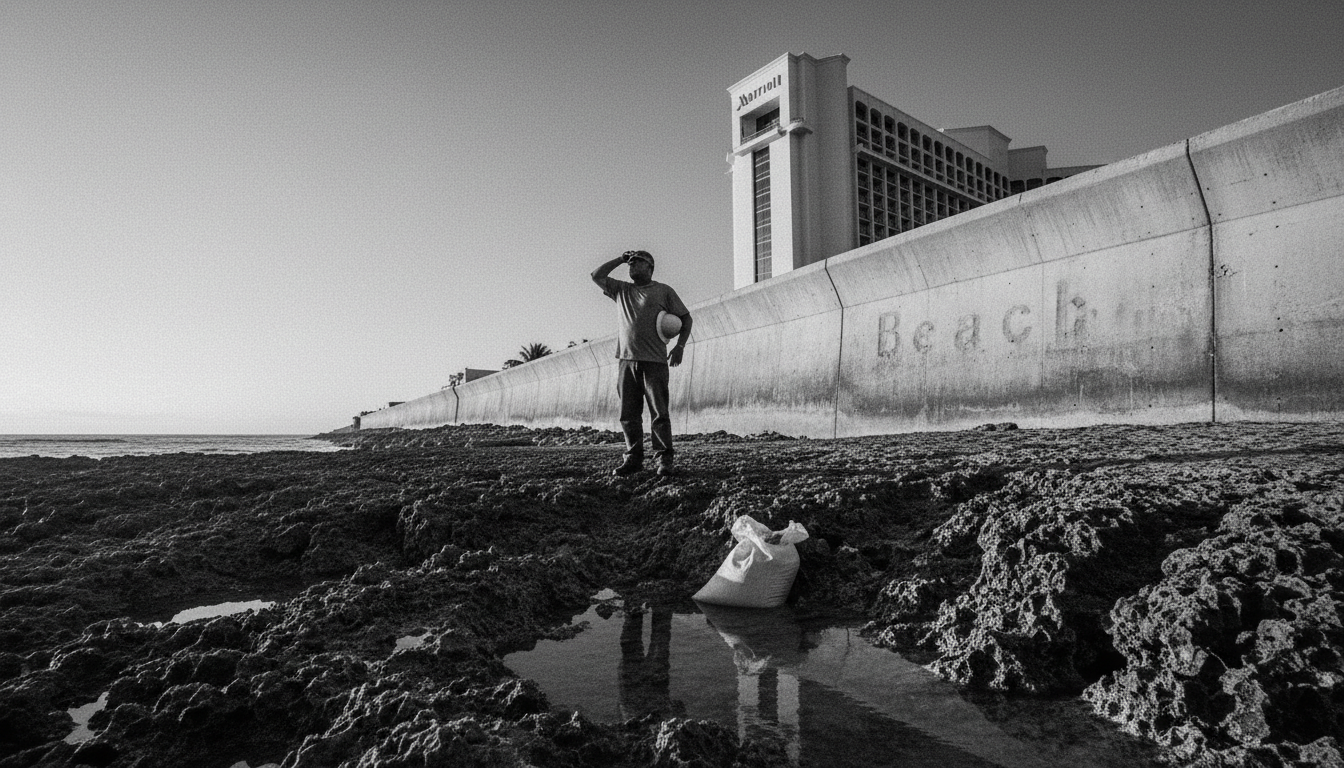
A Resort Lost Its Beach, Dropped "Beach" From Its Name, and Now Wants Both Back
The Grand Cayman Marriott is betting nearly $1 million in waived permits and 8,000 cubic yards of sand that it can reverse five years of erosion and 40% business losses... and every coastal resort owner should be watching what happens next.
There's something almost poetic about a beach resort that had to take "Beach" out of its name. The Grand Cayman Marriott did exactly that in 2023, because the sand was gone, and you can only market a "beach experience" for so long when your guests are staring at exposed rock and seawall. Now the resort says the beach could be back by September, with construction starting in May, 8,000 cubic yards of fresh sand across a 60-foot stretch, two 135-foot rock groynes to hold it in place, and a government that waived close to $1 million in permit fees to make it happen. The GM has gone on record saying the property lost 40% of its business over the last four to five years because of this erosion. Forty percent. Let that number sit with you for a second, because that's not a dip... that's a near-death experience for any hotel's P&L.
And here's where the brand story gets interesting (and where my years brand-side start tingling). Marriott International just reported Q4 2025 earnings with global RevPAR up 2% for the full year and leisure RevPAR climbing over 3%. The company is leaning hard into luxury and leisure positioning. So you've got a flagship leisure property in one of the Caribbean's most iconic destinations hemorrhaging business because the physical product... the actual beach... doesn't exist anymore. The brand promise and the brand delivery aren't just misaligned. One of them literally washed away. I've sat in brand reviews where the gap between what's on the website and what the guest experiences at arrival is embarrassing. This is the most extreme version of that I've ever seen. You cannot Photoshop a beach in real life (though I'm sure someone in marketing considered it).
What nobody's talking about is the precedent problem. The Cayman Islands' Department of Environment flagged this project as "precedent-setting" and warned against "piecemeal solutions" that could shift erosion to neighboring properties. They're not wrong. Rock groynes don't create sand... they trap it. Which means the sand that accumulates in front of the Marriott might be sand that would have naturally replenished someone else's shoreline. I've watched three different coastal repositioning projects promise they were the fix, and in every case, the conversation five years later was about who got hurt downstream. The government had previously approved CI$21 million for a broader beach restoration initiative that stalled. So instead of a coordinated plan, you've got one property doing its own thing because it couldn't wait any longer. Understandable from the owner's perspective. Potentially catastrophic from a destination-planning perspective.
For owners and operators at coastal properties... and this is the part that should keep you up tonight... this is a preview of what climate risk looks like when it hits your top line. Not gradually. Not theoretically. A 40% revenue decline because the amenity your entire positioning depends on disappeared. The global beach hotel market is valued at $142 billion and projected to nearly double by 2034, but that growth assumes the beaches are still there. If you own or manage a coastal resort and you don't have a climate risk line item in your capital planning, you are building a budget on sand (and I wish that were only a metaphor). The Marriott's projected 150 new jobs post-restoration tells you everything about how much operational capacity they've already shed. That's not just beach erosion. That's organizational erosion.
Here's what I want every brand executive and franchise development officer to understand about this story. The Grand Cayman Marriott didn't lose 40% of its business because of bad management, or a weak loyalty program, or insufficient brand standards. It lost it because the ocean moved. And no amount of brand theater... no lobby renovation, no F&B concept refresh, no "elevated arrival experience"... fixes that. Sometimes the Deliverable Test isn't about staffing or training or design. Sometimes it's about whether the planet cooperates with your brand promise. That's a test none of us are prepared to fail, and we're all going to face it sooner than the ten-year capital plan assumes. The Marriott is spending a fortune to buy back what nature took. The question every coastal owner should be asking right now isn't whether this project works. It's what their plan is when the same thing happens to them.
If you're running a coastal property anywhere... Caribbean, Gulf Coast, Southeast... pull your insurance policy and your franchise agreement this week. Look at what's covered for "natural erosion" versus "storm damage" (spoiler: the gap will make you nauseous). Then start a conversation with your ownership group about a dedicated climate reserve in the FF&E budget. The Grand Cayman Marriott waited until it lost 40% of its business and had to rename itself. Don't be the GM who has to explain that timeline to an owner. Get ahead of it now. The ocean doesn't negotiate.