Today · Jun 17, 2026
Marriott's Day-Pass Deal With ResortPass Sounds Like Free Money. It's Not.

Marriott's Day-Pass Deal With ResortPass Sounds Like Free Money. It's Not.

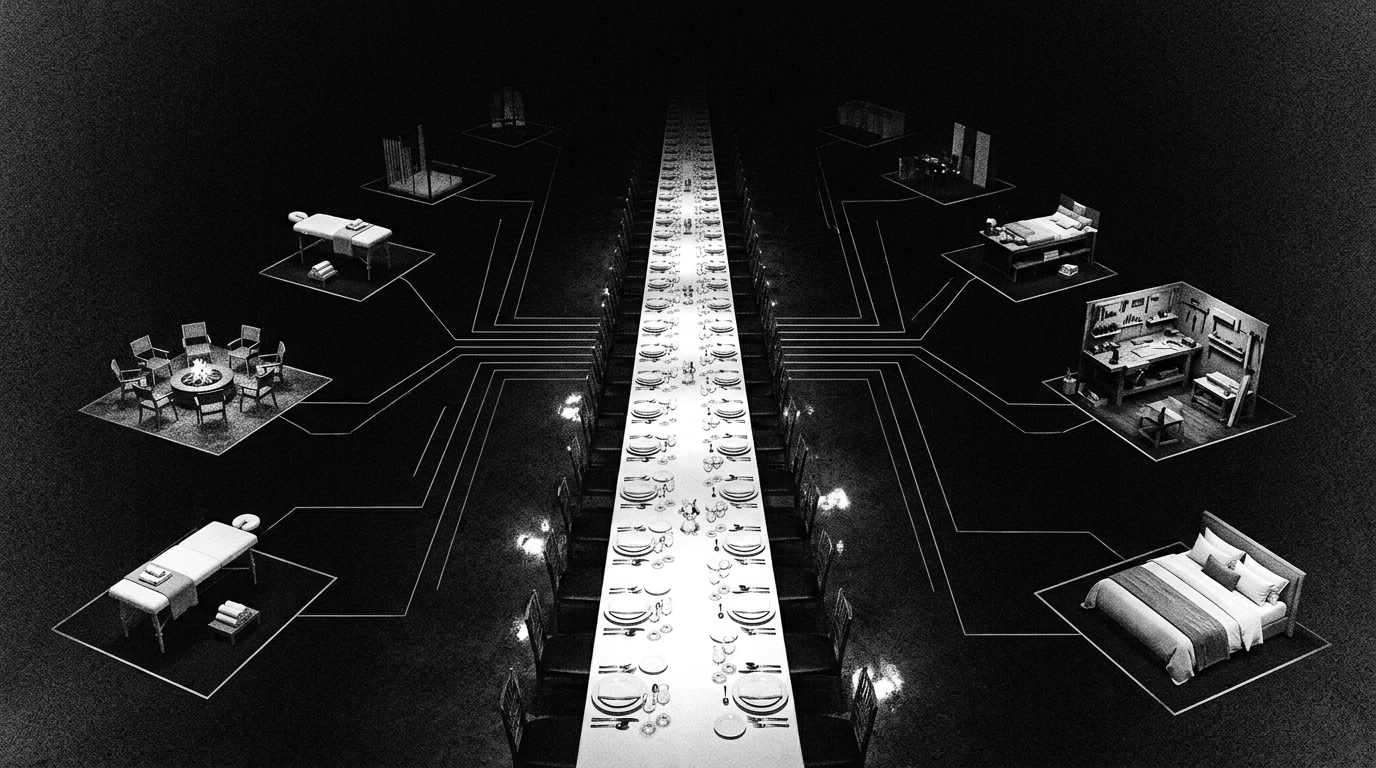
Marriott just signed a global agreement to let non-guests buy access to hotel pools, spas, and fitness centers through ResortPass. The brand gets a new revenue narrative for investors, but the owner holding the maintenance bill and the GM managing the pool deck are doing very different math.

Available Analysis

Let me tell you what I keep thinking about. A brand VP I used to work with had this phrase he loved in every development presentation: "incremental revenue at zero marginal cost." He'd say it with this big confident sweep of his hand, like the money just materialized from the atmosphere. And every single time, the GM in the back of the room would lean over to whoever was next to him and whisper something unprintable. Because there is no such thing as zero marginal cost when you're the one running the building. There just isn't. Somebody has to clean the pool chairs. Somebody has to check the guest in. Somebody has to deal with the family of six who bought a $25 day pass and is now monopolizing the cabana your overnight guest at $389 a night assumed would be available.

So Marriott has signed a global agreement with ResortPass... the platform that lets non-hotel-guests book day access to pools, spas, fitness centers, and other amenities. And look, I am not going to pretend this is a bad idea conceptually. It's not. The economics of an underutilized pool on a Tuesday in October are genuinely painful. You're paying for lifeguards, chemicals, towels, maintenance, and insurance whether twelve people use it or two hundred. Selling access to locals and day-trippers is a legitimate way to extract value from capital-intensive amenities that sit half-empty most of the year. ResortPass says they've facilitated roughly 3 million day passes and that one property generated over $100,000 in gross sales in a single month from a beach pass product that included an F&B credit. That's not nothing. That's a real revenue line.

But here's where the brand promise and the brand delivery diverge (and you knew I was going to say this, because I always say this, because it's always true). Marriott gets to announce a global partnership, talk about ancillary revenue diversification on the next earnings call, and position this as an innovation play that extends the Bonvoy ecosystem beyond overnight stays... which, by the way, is exactly what they've been building toward with 271 million loyalty members and a strategy that increasingly treats the hotel stay as one node in a broader lifestyle platform. Beautiful. That's the investor story. Now here's the property story. The property story is a resort GM who just found out that her pool deck... the one her $400-a-night guest considers part of the rate premium... is about to be shared with people who paid $25 through an app. The property story is the spa director who now has to manage a booking system layered on top of whatever reservation platform they're already using. The property story is the F&B team being told to expect incremental covers with no incremental staffing budget. The property story is always more complicated than the press release, and the press release never mentions the property story.

I've watched three different brands try this exact play over the years... opening amenities to non-guests under the banner of "monetizing underutilized assets." Two of them quietly scaled it back within eighteen months because the guest satisfaction scores from overnight guests dropped faster than the day-pass revenue grew. The third made it work, and you know why? Because they invested in the infrastructure to separate the experiences. Dedicated check-in for day guests. Separate pool sections. Additional staffing during peak periods. In other words, they treated it like what it actually is... a new business line that requires operational investment, not "free money from existing assets." The ones who failed treated it like the brand VP with the hand wave. Zero marginal cost. The Deliverable Test is simple here: can your property run a day-access program that generates meaningful revenue without degrading the experience your overnight guests are paying a premium for? If the answer requires a staffing model you can't afford or a physical layout you don't have, the answer is no, no matter how good the platform is.

And here's the part that keeps nagging at me. Marriott hasn't announced which brands or properties are participating, what the revenue split looks like, or how this integrates with property-level operations. That's a lot of blanks for a "global agreement." If you're an owner in a resort or urban market with amenities that genuinely sit underutilized, this could be a smart incremental play... IF you control the terms, IF you staff for it, and IF you protect the overnight guest experience that justifies your rate. But if this rolls out as a brand mandate with a platform fee, a revenue share that flows upward, and an operational burden that flows downward... well, I've seen that movie before too. It ends at the FDD. The question isn't whether day-access is a good idea. It is. The question is whether the owner gets to run it like a business or whether the brand gets to announce it like a strategy while the property absorbs the complexity. That's two very different outcomes wearing the same press release.

Operator's Take

Here's what I'd do if I'm running a resort or full-service property with pool, spa, or fitness amenities. Don't wait for the brand to tell you how this works... run your own numbers first. Calculate your true cost per amenity-user-day (staffing, consumables, insurance, wear-and-tear on FF&E) and figure out the minimum day-pass price that actually makes you money after the platform takes its cut. Then look at your peak occupancy days... any day you're running above 80%, day passes are probably diluting the experience your rate-paying guests expect. This is a shoulder-season and midweek play, not an everyday play, and if you let it become everyday, you're subsidizing a brand's revenue narrative with your guest satisfaction scores. If your brand comes to you with this, the first question is who keeps the revenue and the second question is who pays for the labor. Get both answers in writing before you opt in. This is what I call the Brand Reality Gap... the brand sells the promise at portfolio level and the property delivers it shift by shift. Make sure the economics work at YOUR property, not in aggregate across a system of 9,000 hotels.

— Mike Storm, Founder & Editor
Read full analysis → ← Show less
Source: Google News: Marriott
Marriott Is Selling You Colonial History at 5,000 Bonus Points a Night. Let's Talk About What That Actually Costs.

Marriott Is Selling You Colonial History at 5,000 Bonus Points a Night. Let's Talk About What That Actually Costs.

Marriott Golf's America's 250th anniversary package at The Williamsburg Lodge looks like a clever loyalty play wrapped in patriotic nostalgia. But for the nonprofit foundation that actually owns the property, the economics of trading on history while paying brand fees deserves a harder look than the press release gives it.

I worked with a resort GM years ago who had a gorgeous property... historic, storied, the kind of place where guests would wander the grounds and say things like "you can feel the history here." Beautiful. And every quarter he'd sit across from the ownership group and explain why a property with that much emotional currency was barely breaking even. The brand fees, the loyalty program assessments, the mandated vendor costs, the PIP requirements... they were all calibrated for a 300-key convention hotel in a suburban market, not a one-of-a-kind heritage asset. He used to say, "They charge me the same percentage whether I'm selling history or highway access. But my cost to deliver is twice as high."

That's what I think about when I see Marriott Golf rolling out the "Tee Your Way 5K" package at The Williamsburg Lodge for America's 250th anniversary. On the surface, it's a smart move. 323 keys. Autograph Collection flag since 2017. Access to 45 holes at the Golden Horseshoe Golf Club, including a new Rees Jones par-3 course they opened last year. Nightly accommodations, one round per person per night on the Gold Course, Colonial Williamsburg tickets, 5,000 Bonvoy bonus points, practice facility access, half-price rental clubs, and 10% off the golf shop. That's a loaded package. Marriott Golf, which manages 45 courses in 14 countries, knows how to merchandise this stuff. They've been doing it for 55 years.

But here's where my brain goes sideways. The Colonial Williamsburg Foundation... the nonprofit that owns this property through its for-profit subsidiary... isn't your typical hotel owner. They're a preservation organization. The hotel exists to support the mission, not the other way around. So when Marriott layers on 5,000 bonus points per night (which the property absorbs as a loyalty program cost), packages golf rounds that could be sold at full rack, discounts the pro shop, and throws in attraction tickets... who's eating the margin? The foundation is. The brand is acquiring loyalty members and feeding its Bonvoy machine. The property is subsidizing that acquisition with its own revenue.

This is the tension that lives inside every Autograph Collection deal, but it's sharper here because the owner isn't a REIT looking to flip in seven years. It's a nonprofit trying to keep 18th-century buildings standing. The Autograph pitch in 2017 was compelling... keep your identity, get our distribution, access the Bonvoy network. And that's real. Marriott's global reach absolutely drives heads in beds that Colonial Williamsburg couldn't reach on its own. But distribution isn't free. Between franchise fees, loyalty assessments, reservation system charges, marketing fund contributions, and the cost of delivering packaged amenities at a discount... you're looking at 15-20% of room revenue going back to the brand in one form or another. For a heritage property with higher-than-average maintenance costs and a mission that has nothing to do with shareholder returns, every basis point matters.

The par-3 course is actually smart, by the way. "The Shoe" is exactly the kind of accessible, time-efficient golf experience that brings in guests who won't commit to 18 holes but will absolutely play a quick nine and spend money in the clubhouse afterward. That's a genuine revenue diversifier. But wrapping it in a promotional package that trades margin for loyalty points and volume... that's a brand play, not an owner play. And when the owner is a foundation whose mission is preserving American history, someone should be asking whether the Bonvoy math actually pencils for them or just for Marriott.

Operator's Take

If you're managing a heritage or destination resort under a soft brand like Autograph Collection, pull the actual cost of every promotional package your brand partner is running. Not the rate card... the fully loaded cost including loyalty point liability, discounted ancillary revenue, and any comp'd amenities. I've seen properties where these packages look like winners on the top line and bleed margin on the bottom. Run the math on what those golf rounds and bonus points would generate at full price versus what they're generating packaged. If the delta is more than 10-12%, you're funding someone else's loyalty program with your owner's money. Bring that analysis to your ownership group before the next package rolls out... not as a complaint, but as a conversation about what I call the Brand Reality Gap. The brand sells these packages at portfolio scale. You deliver them one guest at a time, and the cost of delivery sits on your P&L, not theirs. Know your numbers. Protect your margin. That filing cabinet full of promises isn't going to do it for you.

Read full analysis → ← Show less
Source: Google News: Resort Hotels
Two Ski Industry CEOs Gone in a Year. That's Not Coincidence. That's a Pattern.

Two Ski Industry CEOs Gone in a Year. That's Not Coincidence. That's a Pattern.

Alterra's CEO exits less than four years in, the second abrupt departure atop a major ski company in twelve months. When private equity quietly replaces the person who just spent $2 billion of their money, the interesting question isn't why... it's what comes next for the resorts and the people running them.

I watched a GM get fired once after the best year the property ever had. Seriously. RevPAR up 14%, guest sat scores through the roof, staff retention the best in the region. He got let go on a Tuesday morning. The ownership group had decided the asset needed "different leadership for the next phase of growth." That's a phrase that means absolutely nothing and absolutely everything at the same time. The GM understood exactly what happened. The hotel had been repositioned, the value had been created, and now the owners wanted someone who would run it like the asset it had become rather than the turnaround it used to be. He wasn't doing anything wrong. The job had changed underneath him.

That's what I see when I look at Alterra Mountain Company right now. Jared Smith came in, spent over $2 billion on capital improvements, pushed a $400 million expansion at one of their marquee properties, added three new resorts to the portfolio, grew the Ikon Pass partner network by 37 destinations, and then... got shown the door at the end of ski season. The official language is all handshakes and gratitude. Eric Resnick, who runs KSL Capital Partners (the PE firm that co-owns Alterra with Henry Crown & Company), thanked Smith for "continued growth and operational advancement." Smith called it an "honor." Everyone's smiling. Nobody's explaining. And the board has moved to an "Office of the CEO" structure with ownership representatives and a former CEO running day-to-day operations. When ownership takes direct operational control, that's not a transition plan. That's owners who've decided they know better. Maybe they do. But the people managing those 20 resorts just woke up to a very different reporting structure than they had last week.

Here's what makes this worth paying attention to even if you've never managed a ski resort in your life. This is the second time in less than a year that a major consolidated ski company has abruptly replaced its CEO. Vail Resorts did the same thing last May. Two companies control an enormous percentage of destination ski in North America. Both just changed leadership under circumstances that suggest the PE and investment groups behind them are unsatisfied with something... and neither company is saying what. Meanwhile, both companies are facing a class-action lawsuit filed just days ago alleging they've been inflating daily lift ticket prices to force consumers into expensive multi-mountain passes. That's the backdrop. Leadership instability, legal exposure, and a pricing strategy that's drawing fire from the people who are supposed to be the customers.

If you're running a resort property (ski or otherwise) that relies on a pass product or loyalty program controlled by someone three levels above you, this is worth studying. The capital investment phase at Alterra was aggressive... $2 billion in improvements, massive terrain expansion, acquisition after acquisition. That phase appears to be over, or at least entering a different gear. When PE ownership takes the wheel back from the operating CEO, the next phase is almost always about returns, not reinvestment. That means tighter operating budgets. That means every resort GM in that portfolio should be looking at their cost structure right now, not waiting for the new CEO (whoever that turns out to be) to tell them what's changing. The people who survive leadership transitions are the ones who already have their house in order before the new boss walks in.

The Ikon Pass just went up about 5% for next season. The expansion spending has been historic. The CEO who oversaw all of it is gone. And ownership is running the show directly. I've seen this movie before. The credits are rolling on the growth chapter. What comes next is the efficiency chapter. And efficiency chapters are where the people on the ground feel it first.

Operator's Take

If you're a resort GM or department head inside a portfolio that just changed leadership... or is about to... don't wait for the memo. Pull your current operating budget and identify every line item that was built for a growth phase. Training programs, staffing models designed for expansion, capital project timelines that haven't been approved yet. Get realistic about which of those survive a pivot toward returns. The smartest move you can make right now is to walk into your next review with two budgets: one that assumes the current trajectory, and one that assumes a 10-15% tightening on discretionary spend. When the new leadership arrives (and it will, because "Office of the CEO" is a holding pattern, not a strategy), the GM who already has the efficiency plan ready is the one who keeps their job. The one who's still waiting to be told what to do is the one who gets the Tuesday morning meeting.

Read full analysis → ← Show less
Source: Google News: Resort Hotels
Disney Just Told Its Mid-Tier Resort Guests They're Second Class. Every Hotel Operator Should Be Watching.

Disney Just Told Its Mid-Tier Resort Guests They're Second Class. Every Hotel Operator Should Be Watching.

Walt Disney World made its tiered park access permanent, reserving the best perks for guests paying Deluxe rates. If you think this is just a theme park story, you're not paying attention to where the entire lodging industry is headed.

Available Analysis

I worked with a GM years ago who ran a 400-key resort near a major attraction market. One day corporate told him to pull the complimentary shuttle service for guests in the standard rooms. Keep it for the suites and club-level floors. He pushed back hard. "You're telling a family who's spending $189 a night that the family spending $349 gets the bus and they don't?" Corporate said it was about "aligning value with tier." He said it was about looking a dad in the eye at the front desk and explaining why his kid couldn't ride the bus. He lost that argument. Within six months, his standard-room guest satisfaction scores dropped 11 points. Not because the shuttle was gone. Because the FEELING changed. The property told half its guests they mattered less.

That's exactly what Disney just made permanent. The old Extra Magic Hours gave every resort guest... Value, Moderate, Deluxe... the same shot at early and late park access. It disappeared during the 2020 shutdown, and what came back was a two-tier system. Everybody gets 30 minutes of early entry. But Extended Evening Hours? That's Deluxe only. And as of this month, Disney confirmed this structure runs through at least 2027. This isn't a test. This isn't pandemic-era triage. This is the business model now.

Look... Disney isn't dumb. They're running $10 billion in operating income from their Parks segment. They've got $60 billion earmarked for experiences over the next decade. They know exactly what they're doing. They're training their customer base to accept that access is a function of spend, not loyalty. You want the full experience? Pay the Deluxe rate. You want to save money? Fine, but you're getting a lesser version of the same vacation. And the brilliant part (or the ruthless part, depending on where you sit) is they're not taking anything away from the Deluxe guest. They're just making sure the gap between tiers is wide enough that the upsell becomes irresistible. That's not a theme park strategy. That's a revenue management philosophy. And it's coming to a hotel near you if it hasn't already.

Here's what nobody in our industry wants to say out loud. We've been creeping toward this for years. Resort fees were the opening act... a way to charge more without raising the posted rate. Then came tiered loyalty benefits, early check-in for a fee, guaranteed room type for a fee, pool access for a fee at some properties. Every single one of those decisions is a hotel telling a segment of its guests that the base rate doesn't buy the full experience anymore. Disney just did it louder and more transparently than most of us have the guts to. The question for every operator isn't whether tiered access is coming to your property. It's whether you're doing it intentionally with a strategy, or whether it's happening by accident through a patchwork of fees and restrictions that confuse your guests and depress your scores.

The family paying $189 a night at your hotel is the same family paying Value rates at Disney. They're not stupid. They know when they're being sorted. The ones who can afford to trade up will... and some of them will trade up to your competitor who makes them feel like the rate they're paying buys the whole experience. The ones who can't afford it will stay, feel the sting, and write about it online. Disney can absorb that friction because they're Disney. The 200-key branded select-service on International Drive cannot. If you're going to tier your experience, you better make absolutely sure the base tier still feels complete. Because the moment "standard" starts to feel like "lesser," you've got a perception problem that no amount of revenue optimization is going to fix.

Operator's Take

If you're running a property with any kind of tiered access... club floors, premium rooms with exclusive amenities, paid early check-in... audit the gap right now. Not the rate gap. The experience gap. Walk the property as a guest paying your lowest rate and then walk it as a guest paying your highest rate. If "standard" feels like a punishment instead of a product, you've got a problem that's showing up in your reviews even if you haven't connected the dots yet. Disney can build a moat around Deluxe because they have $60 billion and no real competitor for what they sell. You don't. Your base-tier guest has 14 other options within three miles. Make sure they still feel like they bought something worth the price... because the moment they don't, they're not upgrading. They're leaving.

Read full analysis → ← Show less
Source: Google News: Resort Hotels
Hilton's Bahamas Debut Sounds Beautiful. Can 125 Keys Actually Deliver That Promise?

Hilton's Bahamas Debut Sounds Beautiful. Can 125 Keys Actually Deliver That Promise?

Hilton is bringing Curio Collection to Nassau with a stunning 125-key new-build resort packed with infinity pools, rooftop dining, and 15,000 square feet of spa space. The question nobody's asking is whether the brand promise survives contact with Bahamian labor reality and a franchise model that puts the owner on the hook for everything that goes wrong.

Let me tell you what I see when I read about Paradise Breeze Nassau, and it's not the infinity pool overlooking the sea or the artisanal bakery or the "curated market" (there's that word again... I have a physical reaction to it at this point). What I see is a 125-key new-build on West Bay Street with three restaurants, a rooftop specialty venue, a full spa with padel and squash courts, 4,000 square feet of event space, and a mixed-use residential component... all flying under a soft brand flag that gives the owner individual identity but requires Hilton-standard execution across every single one of those touchpoints. That is an enormous operational promise for a property that size. And the person who has to keep that promise isn't Hilton. It's B.P.G. LTD.

Here's where my brand brain starts doing the math that the press release conveniently skips. Curio Collection is Hilton's soft brand play, which means the property gets access to Hilton Honors (roughly 190 million members and growing) and Hilton's distribution engine, and in exchange, the owner pays franchise fees, loyalty program assessments, reservation system fees, and marketing contributions that, depending on the deal, can push total brand cost north of 15% of room revenue. For a resort in Nassau with that amenity load, the F&B operation alone is going to require serious staffing... three dining venues plus a bakery plus a coffee bar plus a pool bar is not a skeleton crew operation. You're looking at culinary talent, service staff, beverage programs, and supply chain logistics on an island where everything costs more and qualified hospitality labor is fiercely competitive (because Baha Mar and Atlantis are right down the road, paying premium wages and offering benefits that a 125-key independent-flagged resort may struggle to match).

I grew up watching my dad staff hotels, and the one thing he drilled into me was that the building doesn't matter if you can't staff it. You can design the most beautiful rooftop restaurant in the Caribbean, but if you can't find a sous chef who'll stay longer than one season, that restaurant becomes your biggest liability, not your differentiator. And this is where The Deliverable Test matters... can this concept, as designed, actually be executed on a Wednesday in August with the labor pool available in Nassau? Hilton's development team in the Caribbean is talking about doubling their footprint in the region (currently 300-plus hotels with 150 more in the pipeline), which is ambitious and probably smart given leisure demand trends. But pipeline numbers are press releases. Operational delivery is something else entirely. I've watched three different brands promise "distinctive, locally-inspired resort experiences" in Caribbean markets and end up delivering a lobby that photographs beautifully and a guest experience that reviews as "nice but nothing special." The journey leaks. It always leaks. And in a market like Nassau, where the competition includes mega-resorts with virtually unlimited programming budgets, the leak is fatal.

The residential component is the part I'd want to understand before I got anywhere near this deal. Mixed hotel-residential developments create a governance complexity that looks clean on paper and gets ugly in practice... shared amenities, HOA dynamics, different expectations from residents versus transient guests, maintenance allocation disputes. I sat in a brand review once for a mixed-use project in a resort market, and the owner spent the entire meeting talking about the residential sales velocity. Not the hotel operations. Not the guest experience. The condos. Because the condos were funding the construction. The hotel was almost an afterthought with a flag on it. I'm not saying that's what's happening here (I don't know B.P.G. LTD.'s capital structure or development philosophy). But when I see "combining hotel rooms and residences" in a 125-key footprint, I want to know how many of those 125 accommodations are actually hotel inventory versus branded residences, because that distinction changes the revenue model completely.

The 2028 opening target gives them runway, and Hilton's Curio collection is genuinely one of the better soft brand vehicles in the industry... it allows enough individuality to create something distinctive while plugging into a distribution system that independent resorts in the Caribbean desperately need. I'm not anti this project. I'm pro asking the questions that the announcement doesn't answer. What's the projected loyalty contribution, and is it based on comparable Curio properties in similar Caribbean markets or on portfolio averages that include urban properties with completely different booking patterns? What's the total brand cost as a percentage of projected revenue? What's the realistic staffing model for that amenity load in that labor market? And what happens to the owner's return when (not if) the construction timeline slides and the opening costs escalate? Because new-build resort construction in the Caribbean in 2026 through 2028 is not getting cheaper. It's getting more expensive, more complex, and more supply-chain dependent. This could be a beautiful property that makes money. It could also be a beautiful property that makes money for everyone except the owner. The filing cabinet has seen both outcomes. Many times.

Operator's Take

Here's what matters if you're an owner being pitched a soft brand resort deal right now, in any leisure market. Before you fall in love with the rendering, run the total brand cost calculation... franchise fees, loyalty assessments, reservation fees, marketing fund, technology mandates... as a percentage of realistic (not projected) room revenue. If it's north of 15%, you need the loyalty contribution to be delivering at least 35-40% of your bookings to justify it. Ask for actuals from comparable properties, not portfolio averages. Then model your F&B staffing for the concept they're selling you, at local market wages, with realistic turnover. If the concept requires specialized talent you can't reliably source in your market, the concept needs to change before you break ground, not after. I've seen too many resort owners build the brand's dream and then spend five years trying to afford it.

— Mike Storm, Founder & Editor
Read full analysis → ← Show less
Source: Google News: Hotel Industry
CAD $119 Easter Brunch Won't Save Your F&B. But the Strategy Behind It Might.

CAD $119 Easter Brunch Won't Save Your F&B. But the Strategy Behind It Might.

Four Seasons Whistler charged $119 per adult for an Easter brunch and wrapped it in egg hunts, maple taffy, and candle-making workshops. The interesting part isn't the holiday programming... it's the operational model that makes ancillary revenue feel effortless while most hotels can't staff a breakfast buffet past 9 AM.

I worked with a resort GM years ago who told me something I never forgot. He said, "Mike, anybody can put out a ham and call it Easter brunch. The ones who make money are the ones who turn a Sunday meal into a three-day stay." He wasn't talking about food. He was talking about programming as a revenue architecture. And he was running a 140-key mountain property with a skeleton crew that somehow made every holiday weekend feel like an event.

That's what I think about when I see Four Seasons Whistler rolling out their Easter package. CAD $119 per adult, $49 per kid for the brunch. Egg hunts. Maple taffy from 4 to 5. S'mores by a fire from 4 to 6. Spa scrub experience. Candle-making workshop. On paper, it's a luxury resort doing luxury resort things. Nothing revolutionary. But here's what most people miss... every single one of those touchpoints is designed to extend length of stay and increase per-guest spend across multiple revenue centers. The brunch gets them to the restaurant. The egg hunt keeps families on property through the afternoon instead of heading into the village. The spa experience and the candle-making workshop are Tuesday and Monday programming specifically designed to book the shoulder nights around the holiday. This isn't event planning. This is yield management disguised as hospitality.

And that's where the gap lives for 95% of hotels. Four Seasons has the brand equity, the staffing model, and the physical plant to execute this seamlessly. They just brought in a new GM two days before announcing this programming... Pierre Morillon, their new property leader... which tells you this stuff is systematized at the brand level, not dependent on one person's creativity. That's the difference. When your seasonal programming is a system, a new GM walks in and it runs. When it's one enthusiastic F&B director's side project, it walks out the door when they do. Most independent and select-service operators I know treat holiday programming as an afterthought. Something you throw together in March for Easter, in November for Thanksgiving. You print some flyers, maybe run a social post, and hope people show up. Then you wonder why the resort down the road is running 94% occupancy on Easter weekend while you're sitting at 71%.

Look... I'm not saying you need to be Four Seasons. You can't be, and trying to be is how you lose money. But the underlying principle is available to every property with a restaurant, a lobby, or an outdoor space. Map the guest's day hour by hour. Find the moments where they're deciding between staying on property and leaving. Put something in those moments. It doesn't have to be maple taffy (although if you're in a mountain market and you're NOT doing something with local flavor, what are you doing?). It has to be intentional. The s'mores station from 4 to 6 isn't random... that's the exact window when families with kids are deciding whether to go out for dinner or stay put. Keep them on property through that decision point and you just captured another $80-$150 in F&B revenue per family. Multiply that across your holiday weekend occupancy and you're looking at real money.

Four Seasons is also sitting on 60 additional projects in development globally and just launched a yacht product. They're playing a game most of us aren't playing. But the operational DNA underneath this Easter brunch... the idea that every guest touchpoint is either generating revenue or generating a reason to stay longer... that's available to a 120-key independent in Asheville just as much as it is to a luxury resort in Whistler. You just have to think about it like an operator instead of waiting for someone to hand you a programming playbook.

Operator's Take

If you run any property with F&B or event space, pull your calendar for Memorial Day weekend right now. Not next week. Now. Map your guest's day hour by hour and find the two or three windows where they're deciding to stay or leave. Build something... anything... for those windows. A tasting, a kids' activity, a fire pit with local beer. Price it to cover costs plus 30%. This is what I call the Price-to-Promise Moment... every stay has one moment where the guest decides the rate was worth it, and holiday weekends are where you either design that moment or let it happen accidentally. The property that programs the 3-to-6 PM window on a holiday Saturday captures $50-$150 more per occupied room than the one that doesn't. That's not a guess. I've watched it happen at every resort and full-service property I've ever touched. Don't wait until May to figure this out.

Read full analysis → ← Show less
Source: Google News: Four Seasons
A $100 Easter Brunch Won't Fix Bali's RevPAR Problem

A $100 Easter Brunch Won't Fix Bali's RevPAR Problem

The Ritz-Carlton Bali is promoting a $100-per-person Easter brunch while the island's luxury RevPAR just dropped nearly 9%. When the press release is about the holiday buffet and the STR data tells a different story, you should be reading the STR data.

I worked with an F&B director once who had a gift for turning every holiday into a production. Easter brunch, Mother's Day prix fixe, New Year's Eve gala... the guy could build a menu and a marketing plan that looked gorgeous on paper. And the events always sold well. The problem was that we were running 58% occupancy during those same weekends, and the brunch revenue was a rounding error against the rooms we weren't selling. He wasn't wrong about the brunch. He was solving the wrong problem.

That's what I think about when I see a luxury resort in Bali putting out a press release about Easter egg hunts and oceanfront dining at 1.5 million rupiah a head (roughly $95-100 per person before tax and service). It's fine. It's what Ritz-Carlton properties do. It's what every luxury resort does during holidays... create a moment, charge a premium, fill seats, get some social media content out of it. Nothing wrong with any of that.

But here's what the press release doesn't mention. Bali's island-wide RevPAR dropped 8.7% year-over-year in February 2026. That's not a blip. Luxury ADR is softening, which tells you the competitive discounting pressure is real. When the top of the market starts cutting rate (even quietly, even through packages and "value adds"), that compression rolls downhill fast. Marriott's luxury segment globally saw 6% RevPAR growth in 2025, which means Bali is moving in the opposite direction of the portfolio. If you're an owner of a luxury asset in that market, the holiday brunch isn't what's keeping you up at night. The question is whether the demand environment that justified your basis still exists, or whether you're watching a market correct in real time while the management company sends you photos of the chocolate fountain.

The bigger pattern here is one I've seen play out at resorts for decades. When the top-line softens, the instinct is to lean into programming. More events. More packages. More "experiences." And some of that works... it protects rate by wrapping value around the price point instead of cutting it. That's smart revenue management dressed up as F&B. But it only works if the core demand engine is functioning. If occupancy is compressing and ADR is slipping simultaneously, no amount of curated Easter brunch is going to change the trajectory. You're decorating the room while the foundation shifts.

Bali is targeting 6.63 million international arrivals in 2026 with a stated focus on "higher-quality visitors." That's government-speak for "we want to move upmarket." Every resort destination in the world says that. Very few actually execute it, because moving upmarket requires infrastructure investment, airlift, and (this is the part nobody wants to talk about) saying no to the volume segment that's been paying the bills. You can't court the $500-a-night guest and the $80-a-night guest simultaneously without confusing both of them. Bali's been trying to thread that needle for years. The February RevPAR numbers suggest they haven't figured it out yet.

Operator's Take

If you're running a luxury or upper-upscale resort in a leisure destination... anywhere, not just Bali... don't let holiday programming become a substitute for confronting your demand story. Pull your trailing 90-day RevPAR index against your comp set right now. If you're losing share, figure out where it's going before you plan the next themed brunch. Holiday F&B events are margin builders when occupancy is healthy. When occupancy is slipping, they're distractions that make your Instagram look better than your P&L. This is what I call the Price-to-Promise Moment... that single point during a guest's stay where they decide the rate was worth it. A $100 brunch can be that moment, but only if you've already earned the right to charge the room rate that got them there in the first place.

Read full analysis → ← Show less
Source: Google News: Resort Hotels
Sandals Is Training Travel Agents in 10 Minutes. That's the Whole Problem.

Sandals Is Training Travel Agents in 10 Minutes. That's the Whole Problem.

Sandals is running bite-sized training sessions to help Canadian travel advisors sell destination weddings. The question nobody's asking is whether 10 minutes of product knowledge is enough to responsibly sell a $30,000+ life event at a resort the advisor has never visited.

So here's what's happening. Sandals is rolling out quick training sessions... literally "in 10 minutes"... for Canadian travel advisors, focused on selling destination weddings. The pitch: the wedding market is booming (and it is... destination weddings held a 70.7% revenue share of the U.S. wedding services market in 2024), so let's equip advisors to capture that demand faster.

I get the logic. I do. The global wedding services market was valued at $650 billion in 2024 and is projected to nearly double to $1.29 trillion by 2032. That's a 9.16% CAGR. Sandals just committed $200 million to reimagine three Jamaican properties after hurricane damage, with reopenings scheduled for late 2026. They need the pipeline. They need advisors pushing bookings. And travel advisors are still Sandals' primary distribution channel for group and wedding business. None of that is controversial.

Here's where I start asking questions. A destination wedding isn't a room night. It's not even a vacation package. It's a complex, emotionally loaded, logistically dense event involving catering, venue coordination, group room blocks, travel logistics for dozens of guests, legal requirements for marriage licensing in foreign jurisdictions, and a couple who will remember every single thing that goes wrong for the rest of their lives. You're training someone to sell that... in 10 minutes? Look, I consulted with a resort group last year that was trying to build out their wedding tech stack. The intake form alone had 47 fields. The onsite coordinator role required a 12-week training period before they let anyone run a ceremony solo. And we're telling the person on the OTHER end of the transaction... the advisor who's supposed to match the couple to the right resort, the right package, the right expectations... that a 10-minute live session is sufficient?

What this actually is: lead generation infrastructure disguised as education. Sandals isn't training advisors to be wedding experts. They're training advisors to be confident enough to start the conversation and funnel the booking into Sandals' complimentary wedding planning service (which, to be fair, is where the real coordination happens). The advisor becomes the top of the funnel, not the expert. That's a legitimate distribution model. But calling it "training" implies competency transfer, and 10 minutes doesn't transfer competency in anything except how to click "book." The technology layer here is thin... these are live sessions, not interactive simulations or CRM-integrated certification paths. There's no assessment. No ongoing product updates pushed to the advisor's workflow. No integration with whatever booking platform the advisor actually uses day-to-day. It's a webinar. A short one.

The bigger issue is what happens downstream when an advisor sells a $30,000 wedding package to a couple based on 10 minutes of product knowledge and a beautiful slide deck, and the couple arrives to find that the resort is mid-renovation (three Sandals properties are being rebuilt right now), or that the "complimentary" wedding package has limitations they didn't fully understand, or that the group room block logistics weren't communicated correctly. The advisor doesn't absorb that risk. Sandals' onsite team absorbs it... the coordinator, the F&B team, the front desk handling 40 check-ins from a wedding party that's already stressed. This is a technology and process problem masquerading as a marketing win. If Sandals were serious about advisor enablement, they'd build a real certification platform with scenario-based modules, vendor-integration for group booking management, and a feedback loop from onsite coordinators back to the advisor channel. That would actually cost something to build. A 10-minute webinar costs almost nothing. And that tells you everything about the priority.

Operator's Take

Here's what to take from this if you're running a resort or full-service property that does wedding business. Your distribution partners... whether they're travel advisors, wedding planners, or OTA group tools... are only as good as the information flowing through them. If your third-party sellers don't understand what your property can actually deliver on a Tuesday with three call-outs, you're going to eat the gap between what was promised and what gets executed. Audit your own advisor training. Not Sandals'... yours. How long does it take to certify someone to sell your wedding product? If the answer is "we don't have a certification process," that's your Monday morning project. Build one. Make it specific. Include your actual capacity constraints, your real F&B limitations, and your group block policies. A 15-minute investment in expectation management saves you 15 hours of damage control when the mother of the bride shows up and the gazebo isn't what she saw on the website.

— Mike Storm, Founder & Editor
Read full analysis → ← Show less
Source: Google News: Resort Hotels
Disney Just Told Off-Site Guests to Find Their Own Ride. Every Resort Town Should Be Watching.

Disney Just Told Off-Site Guests to Find Their Own Ride. Every Resort Town Should Be Watching.

Disney's quiet shift from free transportation to a tiered access system isn't a theme park story. It's a masterclass in how a dominant property uses infrastructure to squeeze the independents around it... and the playbook is coming to a resort market near you.

Available Analysis

I managed a hotel once about two miles from a major attraction. Not Disney, but one of those destinations that pulled 10 million visitors a year and basically created the hotel market around it. For years, the attraction ran a free shuttle loop that picked up guests at a dozen nearby hotels. Owners loved it. It was basically free distribution... guests booked your hotel because the shuttle made it easy. Then one Tuesday morning, the attraction announced the shuttle was going away. No warning. No transition plan. Just... gone. Within six months, three of those hotels saw occupancy drop 8-12 points. Not because the attraction got less popular. Because the friction of getting there just shifted from zero to "figure it out yourself," and guests started booking on-site instead.

That's what's happening at Disney World right now, except at a scale that should make every hotel operator in a resort-dependent market pay attention. Disney killed its free airport shuttle (Magical Express) back in January 2022. The replacement options tell you everything about the strategy. Stay at a Deluxe resort? You can book a Minnie Van for $199 each way. Everyone else gets Mears Connect at $16 a head on a shared bus, or the public transit option at $2 per person (with the experience to match). And as of late March, Disney started enforcing "Resort Guests Only" policies on its internal bus system from Disney Springs during peak periods. You're an off-site guest who parked at Disney Springs and planned to hop a bus to the parks? Show your room key or your dining reservation, or find another way.

Look... Disney can do whatever it wants with its transportation infrastructure. It's their property, their roads (with $99.3 million in new road bonds approved by the oversight district), their buses. That's not the point. The point is the strategy underneath it. Every one of these moves increases the cost and friction of staying off-property while making on-property stays relatively more valuable. That's not an accident. That's a tiered access model being built in real time. And it's working... Disney's Experiences segment just posted $10 billion in quarterly revenue with per capita guest spending up 4%. They're not losing sleep over the off-site guests who are complaining on Reddit. They're monetizing the ones who upgrade to avoid the hassle.

Here's what nobody in the Orlando market is saying out loud: 66 vehicle crashes on Disney World roads in March alone. The Skyliner closes every time weather rolls in. Bus waits can hit an hour. The monorail breaks down. The transportation system that used to be a selling point ("you never need a car!") is now a friction point that Disney is selectively solving... for its highest-paying guests first, and everyone else whenever they get around to it. The ferry dock expansion, the road widening, the Polynesian bus area reconfiguration... all of that infrastructure money is flowing toward the on-property guest experience. If you're an independent or a branded select-service on International Drive counting on Disney's ecosystem to deliver your guests to the parks, you are relying on a system that is being deliberately redesigned to make your guests' lives harder.

This is the part that keeps me up at night for operators in any resort-dependent market (not just Orlando). When the anchor attraction controls the transportation infrastructure, they control the guest flow. And when they decide to monetize that control... to turn what was free into a tiered system where convenience costs extra... every hotel in the surrounding market feels it. The question isn't whether Disney's approach is fair. It's whether you've stress-tested your rate and your occupancy against a world where the path from your hotel to the attraction just got $400 more expensive for a family of four.

Operator's Take

If you're running a hotel within 20 miles of a major attraction that controls its own transportation... Disney, Universal, a major convention center with dedicated shuttle systems, any resort destination with an anchor property... sit down this week and map every way your guests currently get from your hotel to that attraction. Every single path. Then ask yourself what happens if the most convenient path gets more expensive or disappears. Because that's not hypothetical anymore. Disney just showed every major destination operator the playbook. Run the math on what a $200-400 round-trip transportation surcharge does to your rate competitiveness against on-site options. If the gap closes to where the guest says "might as well just stay there," you need a value proposition that goes beyond location. That means your shuttle program, your partnerships, your pre-arrival communication about transportation options... all of it needs to be airtight before someone else's infrastructure decision makes it irrelevant.

Read full analysis → ← Show less
Source: Google News: Resort Hotels
Disney Just Built a Velvet Rope Around Its Bus System. Every Resort Operator Should Be Watching.

Disney Just Built a Velvet Rope Around Its Bus System. Every Resort Operator Should Be Watching.

Disney World is now checking credentials before you can board a bus to its hotels, and they're calling it temporary. It's not temporary. It's the clearest signal yet that the biggest operator in hospitality is done pretending all guests are equal.

Available Analysis

I once worked with a resort GM who had a beautiful pool deck, a destination restaurant, and a lobby bar that was packed every night. Problem was, about a third of the people at that pool and half the people at that bar weren't staying at the hotel. They were guests from the budget property next door who figured out they could walk through the parking lot and enjoy $300-a-night amenities on a $129 budget. His paying guests noticed. His reviews started mentioning "crowded" and "hard to get a chair." He finally put up a wristband system. The budget hotel guests were furious. His actual guests? Their satisfaction scores jumped within a month.

That's what Disney just did, except with buses. Starting this past weekend, if you want to ride Disney transportation from Disney Springs to a resort hotel, you scan your MagicBand or your digital room key. No reservation? No ride. They'll check for dining reservations and activity bookings too, but the message is crystal clear... these buses are for people paying $600-plus a night, not for day-trippers who parked at Disney Springs for free and figured they'd hitch a ride to the Grand Floridian.

Disney is calling this a "temporary" measure for the Easter and Spring Break surge. They said the same thing when they tested it over Christmas. Here's what 40 years in this business has taught me about "temporary" operational changes at large hospitality companies... if it works, it's permanent. And this one works. When you're running a segment that just crossed $10 billion in quarterly revenue for the first time, and your resort bookings for the fiscal year are pacing up 5%, you don't go back to an open-door policy that dilutes the experience for the guests generating that revenue. The verification infrastructure is built. The cast members are trained. The data is being collected. This is a pilot program wearing a seasonal costume.

The bigger story isn't about buses. It's about the explicit tiering of the hospitality experience within a single ecosystem. Disney is spending $60 billion over ten years on its parks and resorts. They're adding complimentary parking for resort guests, 30-minute early theme park entry, free water park admission on check-in day. Every one of those moves widens the gap between on-property and off-property. Every one makes the on-property rate premium feel more justified. And now they're using transportation access... the most basic operational function... as a sorting mechanism. You're either in the system or you're outside it. That's not a crowd management tactic. That's a business model.

Look... I know what some of you are thinking. "Mike, this is Disney. They operate at a scale and with a captive audience that has nothing to do with my 200-key property." Fair. But the principle is universal. Every hotel operator in America is dealing with some version of this problem... non-guests using your amenities, your parking, your lobby, your WiFi, your restrooms. The question has always been whether the friction of enforcement is worth the improvement in guest experience. Disney just answered that question with $10 billion worth of confidence. They built a digital verification system, trained their front-line staff to enforce it, accepted the negative PR from day-trippers, and bet that paying guests would reward them for it. That's what I call the Price-to-Promise Moment... that instant where the guest paying a premium decides the rate was worth it. Disney just decided that moment happens when a resort guest boards a bus without waiting behind 40 people who aren't paying for the privilege. And they're probably right.

Operator's Take

If you're running a resort, a full-service property, or anything with amenities that attract non-guests, pay attention to what Disney is doing with verification infrastructure, not just policy. They built a system where a MagicBand scan instantly confirms guest status. You probably don't have that... but your PMS does generate digital keys, and your front desk does issue wristbands. Sit down this week and map every amenity touchpoint where non-guests dilute the experience for paying guests. Pool deck. Fitness center. Lobby bar during peak hours. Parking. Then calculate what a simple verification system would cost versus what your guest satisfaction scores say about "crowding" or "wait times." If you're charging $250-plus a night and your guests are competing with the public for a pool chair, you're giving away the very thing that justifies your rate. Your guests won't complain to your face. They'll complain on TripAdvisor. And they won't come back.

Read full analysis → ← Show less
Source: Google News: Resort Hotels
The Breakers Just Did What Every Resort Market GM Wishes Their Owner Would Do

The Breakers Just Did What Every Resort Market GM Wishes Their Owner Would Do

A luxury resort owner is spending $9.1 million on land alone to build 155 apartments for its workforce. The question isn't whether it's smart. It's why almost nobody else is doing it.

Available Analysis

I've been in this business 40 years, and the single most consistent lie I've heard from ownership groups is this: "We'll figure out the staffing." No you won't. Not in a resort market. Not when your housekeepers are driving 45 minutes each way because they can't afford to live within 20 miles of the property they clean. You're not figuring anything out. You're just hoping people keep showing up.

The Breakers in Palm Beach just stopped hoping. Their ownership entity, Flagler System Management, assembled 2.5 acres about four miles from the resort for $9.1 million... $8.5 million to a private seller and $600,000 to the City of West Palm Beach for a parcel the city rezoned specifically for this project. They're building an eight-story, 155-unit apartment complex. Seventy-nine of those units (51%) designated workforce housing. Rents starting around $1,200 for a studio, topping out at $3,000 for a two-bedroom. Pool, fitness center, shuttle service to the property. This isn't a converted motel with bunk beds. This is purpose-built housing designed to keep 2,400 employees within a reasonable orbit of a resort where median rents on the island run $10,000-$11,000 a month. The local planning board approved it unanimously last summer. Read that again... unanimously. When's the last time a development board agreed on anything unanimously?

Here's what I want you to think about. Palm Beach County has a deficit of 42,500 rental units for people earning at or below 60% of area median income. Median home price is $500,000. The county itself said it needs 81,000 new affordable units over the next decade. If you're running a resort or upscale property in any coastal market from Palm Beach to Napa to Maui, swap out the numbers and the story is basically the same. Your staff can't live where they work. And every year the gap gets wider, and every year you lose more institutional knowledge when your best people finally say "I can't do this commute anymore" and leave for a hospital job or a warehouse 10 minutes from their apartment.

I managed a resort property once... beautiful place, great reviews, the kind of hotel people planned their anniversaries around. We lost our best room attendant of eight years because her landlord raised rent $400 in one shot. She moved two counties over. Tried to make the commute work for about six weeks. Couldn't. Gone. Do you know what it costs to replace an eight-year room attendant? It's not the $3,500 you'll spend on recruiting and training a replacement. It's the 200 guests she would have turned into repeat visitors over the next year who now get someone learning the job. That cost is invisible on your P&L, and it's enormous.

The Breakers is privately held... Kenan family, descendants of Henry Flagler, same ownership since 1896. That matters. They don't answer to quarterly earnings calls. They invest $30 million a year in capital improvements because they think in decades, not quarters. Not every owner has that luxury. But the principle scales down. If you're an owner or operator in a resort market spending $8,000-$12,000 per year per position on turnover costs (and you are... you're just not tracking it), at what point does subsidized housing become cheaper than the churn? I've run that math for owners before. The breakeven is a lot sooner than people think. The Breakers isn't being charitable here. They're being smart. The $9.1 million land cost looks like a lot until you calculate what 2,400 employees' worth of annual turnover costs in a market where nobody can afford to live. They've been subsidizing staff housing for over 30 years already. This is just the logical next step... they're tired of renting the solution and decided to own it. That's an operator's instinct, not a developer's.

Operator's Take

If you're running a property in a high-cost resort market, pull your turnover data for the last three years and calculate the actual fully-loaded cost per departure... recruiting, training, productivity loss, the whole thing. Then go talk to your ownership group about what housing assistance looks like at your scale. It doesn't have to be a $9.1 million apartment complex. It could be a master lease on a nearby property, a housing stipend, or a partnership with the county housing authority. But "we'll figure out the staffing" isn't a strategy anymore. Not in these markets. The Breakers just showed you the math. Your owners need to see yours.

Read full analysis → ← Show less
Source: Google News: Resort Hotels
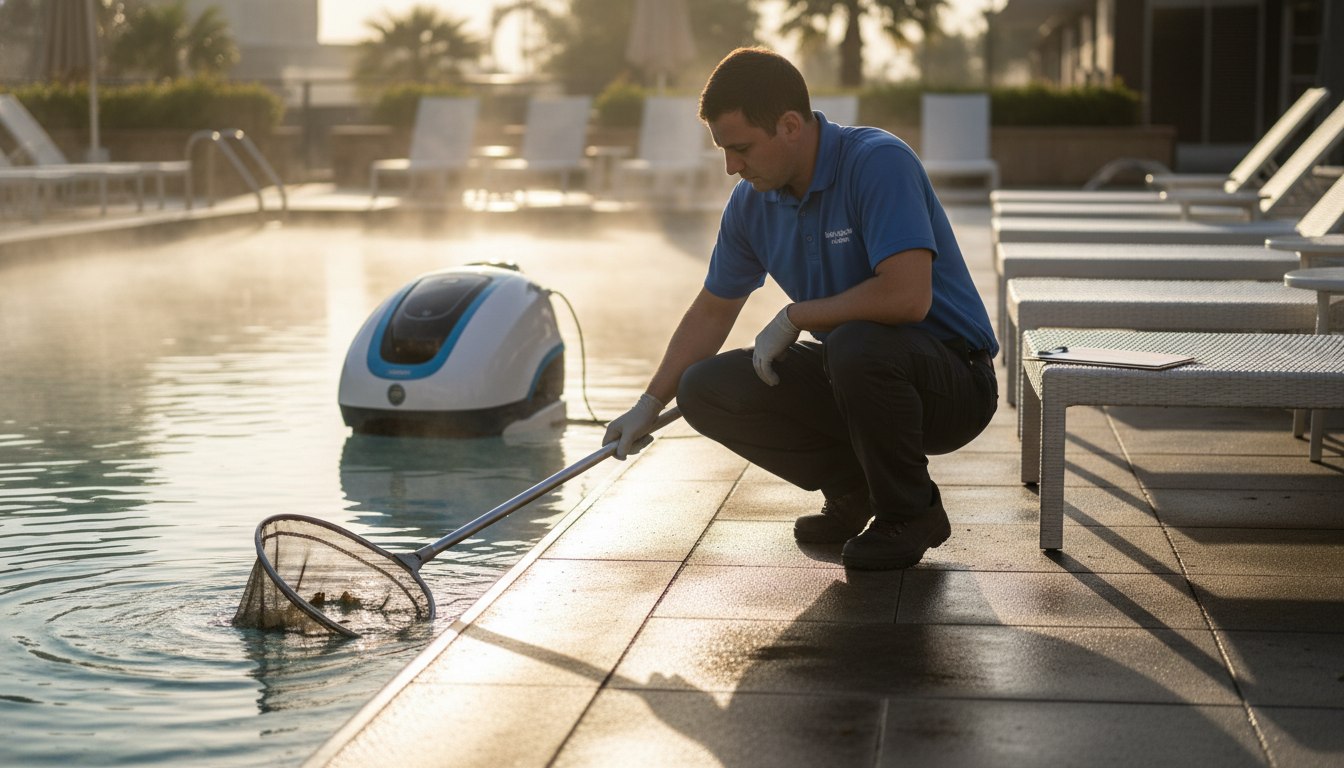
A Pool Cleaner Won at CES. Your Maintenance Budget Doesn't Care.

A Pool Cleaner Won at CES. Your Maintenance Budget Doesn't Care.

Fairland Group's iGarden M1 Pro Max won a CES 2026 Innovation Award as the "world's first bionic dual-vision pool cleaner." Unless you're running a resort with significant pool infrastructure, this is noise — not news.

Here's the thing nobody's telling you: CES awards get thrown around like Halloween candy. Every January, hundreds of gadgets win "Innovation Awards" in categories so narrow they're practically manufactured for the product itself. This year it's a pool cleaner with dual cameras and AI that supposedly cleans better than existing robotics.

I've been through enough pool equipment cycles to know what matters. Does it reduce labor hours? Does it cut chemical costs? Does it prevent that 2pm guest complaint about debris when your maintenance guy is at the other property? Those are the questions. A press release correction about pricing doesn't answer any of them.

The real story here is how far pool automation has come in the past five years. If you're running a select-service property with a basic 20x40 pool, you're probably fine with your current $800-1,200 robotic cleaner that you replace every 3-4 years. But if you're operating a resort with multiple pools, splash pads, and lazy rivers — the kind where pool maintenance is a 2-3 FTE operation — then yes, better robotics matter. They matter at budget time, they matter during labor shortages, and they matter when TripAdvisor reviews mention "dirty pool" and your occupancy drops 4 points.

But a CES award? That tells me nothing about warranty claims, parts availability, or whether this thing actually works in a commercial environment with 200 guests a day putting sunscreen, drinks, and God knows what else in your water. I need to see 12-18 months of real-world deployment data before I'm telling any GM to budget for bleeding-edge pool tech.

Operator's Take

If you're already shopping for new pool equipment, put this on your list to evaluate — but wait for independent third-party testing, not awards and press releases. If your current robotics are working fine, spend that capital budget on something that actually impacts RevPAR. A clean pool matters. An award-winning pool cleaner? Prove it to me with lower labor costs first.

Read full analysis → ← Show less
Source: PR Newswire: Travel & Hospitality
Greek Islands Resort Rankings Show Why Luxury Positioning Still Matters

Greek Islands Resort Rankings Show Why Luxury Positioning Still Matters

A travel expert's ranking of 21 top Greek islands hotels reveals what separates the winners from the wannabes in luxury resort markets.

Here's what these Greek islands rankings actually tell us about luxury resort operations. The properties making these lists aren't getting there by accident — they're executing fundamentals that most resort operators miss.

I've seen this movie before in markets from Maui to Martha's Vineyard. The resorts that consistently show up in expert recommendations are running 15-20 points higher RevPAR than their competition, not because they got lucky with location, but because they nail three things: property maintenance that screams luxury, service delivery that feels effortless, and positioning that justifies their rates.

The Greek islands market is brutal for second-tier properties right now. You're either premium enough to command €400+ per night in season, or you're fighting for scraps with everyone else. The properties making expert lists understand this. They invest in constant facility upgrades, they staff at ratios that independent operators think are crazy, and they never, ever compromise on guest experience to save a few euros.

But here's the thing nobody's telling you about these rankings — half of these "top" properties will struggle to maintain their positioning over the next five years. Rising labor costs, infrastructure challenges on the islands, and increased competition from new luxury developments mean only the operators with the deepest pockets and strongest operational discipline will stay on top.

The lesson for resort operators anywhere? If you're not premium, get premium or get out. The middle is disappearing faster than you think.

Operator's Take

If you're running a resort property in any leisure market, stop chasing occupancy and start chasing rate. Study what these Greek properties do differently — invest in your physical plant, train your staff to deliver luxury service, and price like you mean it. Half-measures get you half-empty in today's market.

Read full analysis → ← Show less
Source: Google News: Resort Hotels
Turtle Bay's Secret New Hotel Shows Why Market Intelligence Matters

Turtle Bay's Secret New Hotel Shows Why Market Intelligence Matters

A major hotel development next to Hawaii's Turtle Bay Resort got approved without guests — or apparently competitors — knowing about it. That's a problem you can't afford to have in your market.

Here's what happened at Turtle Bay Resort on Oahu's North Shore: while guests were checking in and out of the existing property, a completely separate hotel development got the green light right next door. And nobody's talking about it. Not the resort. Not the local tourism boards. Guests have no clue what's coming.

I've seen this movie before. A resort thinks it can keep major competitive developments quiet until the last possible minute. Sometimes it's to avoid guest concerns about construction noise. Sometimes it's wishful thinking that the project will die in permitting hell. But here's the thing nobody's telling you — in today's information age, trying to keep a hotel development secret is like trying to hide a 747 in your backyard.

This isn't just about Turtle Bay. If you're running any resort property in a market where land is scarce and valuable, you need to know what's in the pipeline 18-24 months out. Not when the bulldozers show up. Hawaii hotel markets are especially brutal because there's limited land and unlimited demand from developers with deep pockets.

The real issue here is market intelligence failure. Either Turtle Bay's management knew about this and chose not to communicate it, or they didn't know — which is worse. Your RevPar projections for 2027-2028 should already factor in new supply coming online. Your marketing strategy should account for increased competition. Your capital expenditure planning should consider what amenities you'll need to stay competitive.

Resort markets like Hawaii are particularly vulnerable because guests book 6-12 months out. If I'm a guest who booked Turtle Bay for next Christmas expecting exclusive beachfront access, and I show up to construction crews and a new hotel next door, that's a service recovery nightmare that could have been managed with proper communication.

Operator's Take

If you're running a resort property, set up Google Alerts for your market plus terms like "hotel development," "planning commission," and "zoning approval." Check county permitting databases quarterly. Your local STR rep should be briefing you on pipeline supply every six months. Don't let competitive surprises blow up your occupancy forecasts.

Read full analysis → ← Show less
Source: Google News: Hotel Development
End of Stories