Today · Jun 13, 2026
IHG Built a ChatGPT Booking App. Your Night Auditor Still Can't Fix the WiFi.

IHG Built a ChatGPT Booking App. Your Night Auditor Still Can't Fix the WiFi.

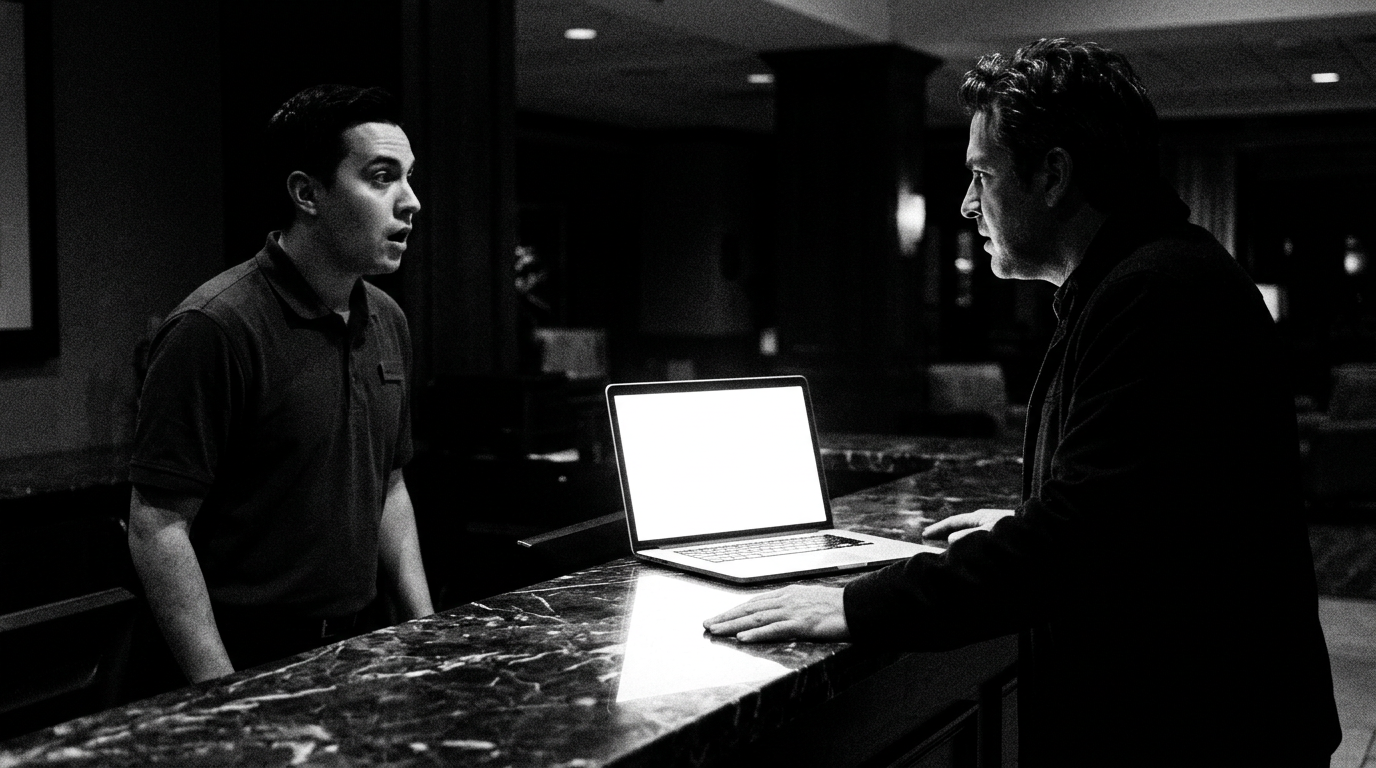
IHG just launched a ChatGPT integration that lets guests search and compare 7,000 hotels through conversational AI. The question nobody at headquarters is asking is what happens when the technology that finds the guest a room can't help the person who actually has to check them in.

Available Analysis

So IHG launched a dedicated app inside ChatGPT on June 3rd. You can search hotels, compare rates, see real-time availability, pull up amenities, look at maps... the whole discovery experience, powered by conversational AI. Then when you're ready to book, it kicks you over to IHG's direct channels to complete the reservation. They're planning to bring the same conversational search to IHG.com and the One Rewards app next. This is the shiny version. Let's talk about the actual version.

Here's what this actually does: it's a distribution play dressed up as an innovation story. IHG is spending money to make sure that when someone asks ChatGPT "find me a hotel near the convention center in Nashville," IHG properties show up with real-time pricing and a direct booking link. That's not nothing. With 56% of U.S. travelers reportedly using AI for trip planning, being absent from that channel is a real risk. Wyndham launched a similar ChatGPT app in May. Accor did it in January. Marriott and Hilton are building their own conversational search tools. This is an arms race, and if you're not in it, you're ceding discovery to whoever is. I get it.

But here's where I lose patience. IHG has 160 million loyalty members and over 7,000 hotels. They appointed a Senior VP of AI and Architecture in January. They partnered with Google Cloud back in 2024 for a generative AI travel planner. They're migrating data infrastructure to the cloud, embedding machine learning into revenue management and marketing. That's a real technology roadmap... for headquarters. Now go walk into a 140-key Holiday Inn Express in a secondary market and ask the front desk agent what any of that means for their Tuesday night. Ask the GM how their PMS integration is running. Ask whether the WiFi infrastructure (probably wired sometime during the Obama administration) can handle the guest-facing tech the brand keeps layering on. I consulted with a hotel group last year that was running three different brand-mandated platforms, none of which talked to each other, and the front desk team had developed a workaround using a shared Google Sheet. A Google Sheet. That's the gap between the press release and the property.

Look, I'm not anti-AI. I'm an engineer. I've built booking systems. The architecture IHG is describing... separating discovery from transaction, using conversational AI for the search layer while routing the actual booking through owned channels... that's smart. It protects rate integrity, keeps the guest data in IHG's ecosystem, and avoids the OTA intermediary problem. Technically sound. But the Dale Test question here is: what happens when this AI-driven guest arrives at the property expecting the experience the chatbot described, and the property is running a skeleton crew with a PMS that crashed during the night audit? The technology that FINDS the guest the room is getting billions in investment. The technology that helps the person DELIVER the stay is still running on hope and a prayer at most properties. IHG reported $1.2 billion in operating profit last year. They returned $1.17 billion to shareholders through buybacks and dividends. The money exists. The question is where it flows.

Would this work at my family's hotel? The ChatGPT discovery piece... sure, if we were flagged. More eyeballs, more direct bookings, fewer OTA commissions. That math makes sense. But my dad would ask the same question he always asks: "What happens at 2 AM when nobody's here?" And right now, the answer is the same as it's been for years. The guest-facing AI gets smarter. The property-level technology stays stuck. And the person working the overnight shift is still solving problems with a three-ring binder and a phone call to a maintenance guy who may or may not pick up.

Operator's Take

Here's what I'd actually do if I'm a GM at an IHG property right now. First, understand what this ChatGPT integration means for your inbound mix... if conversational AI starts driving discovery, your listing content (photos, amenity descriptions, rate accuracy) becomes even more critical because that's what the AI is pulling from. Audit your brand profile data this week. Make sure it's current, accurate, and reflects what a guest will actually experience when they walk in. Second, don't wait for the brand to solve your property-level technology gaps. If your PMS is crashing, your WiFi is dropping, or your team is running workarounds because the systems don't integrate... document it, cost it out, and bring it to your owner with a number attached. This is what I call the Vendor ROI Sentence... if you can't tie the investment to your P&L in one sentence, it's a story, not a solution. But it works both ways. If the brand can't tie their AI investment to your property's performance in one sentence, you deserve to ask why you're paying for it.

— Mike Storm, Founder & Editor
Read full analysis → ← Show less
Source: Google News: Hotel AI Technology
Airbnb's New AI Lab Is Personally Funded by Chesky. That's the Tell.

Airbnb's New AI Lab Is Personally Funded by Chesky. That's the Tell.

Brian Chesky just launched a separate AI lab outside Airbnb's corporate structure, funding it himself. The fact that he didn't run it through the company tells you more about what he's building than any press release will.

Available Analysis

So here's what caught my attention. Airbnb already has AI running inside the company. Their bot handles over 40% of customer service inquiries. AI accounts for nearly 60% of their engineering code output. They cut cost per booking by 10% year-over-year in Q1 just from automation gains. That's not a company that needs an AI lab. That's a company that already has one.

Which means the new lab isn't about making Airbnb's existing product better. It's about building something else entirely.

Chesky's stated reason is that current AI interfaces... the chatbots from OpenAI, Anthropic, everyone... are too text-heavy and not visual or interactive enough for travel and e-commerce. That's a design critique, not an operations critique. He's not saying "our AI doesn't work." He's saying "the entire AI interaction model is wrong for what I want to build." And he's funding it personally, outside the company, with an unnamed executive running day-to-day. That structure tells you everything. When a CEO puts his own money into a separate entity instead of running it through the $80B+ company he already controls, he's either protecting the idea from corporate gravity or he's building something that doesn't fit inside the existing business. Maybe both.

Here's the part that matters if you work in hotels. Airbnb isn't trying to be a better booking platform anymore. They've been saying "AI-native app" and "do-it-all travel concierge" for months. This lab is the R&D arm for that vision... a product that doesn't just list properties but plans, books, adjusts, and manages the entire trip. If that works (big if), it changes the competitive surface between Airbnb and traditional hospitality distribution in ways that OTA commission battles never did. You're not competing with a listing site anymore. You're competing with an AI that has the guest relationship from inspiration through checkout. The booking becomes a byproduct of a longer conversation the guest is having with a machine, and you're not part of that conversation.

Look, I've evaluated enough "AI-powered" products to know that most of them are a marketing label on a basic algorithm. But Airbnb's existing numbers suggest they're past that stage... 40% inquiry resolution, 60% code contribution, measurable cost reduction. Those are production metrics, not demo metrics. The question isn't whether Airbnb can build AI. They already are. The question is whether a separate lab, personally funded, building new interaction models, produces something that restructures how travelers find and choose accommodations. And the $208.7 million in insider selling over the past three months (with zero purchases) suggests that even the people closest to this company think the stock price has gotten ahead of the product. That's not a contradiction... it's a timing signal. The vision might be right. The timeline might be longer than the valuation assumes.

What I keep coming back to is the Dale Test. When Airbnb builds an AI concierge that handles the full trip, what's the fallback when it breaks? What happens when the AI books a property that doesn't match the listing, or adjusts a reservation incorrectly at midnight, and there's no human in the loop? Airbnb's customer service AI already handles 40% of inquiries... but that means 60% still need a person. The gap between "handles routine questions" and "manages your entire travel experience" is enormous, and it's exactly the gap where guest trust lives. I've built systems that worked perfectly in testing and failed spectacularly in production. The distance between those two states is where careers end and companies learn humility.

Operator's Take

Here's what I'd actually do if I were running a hotel right now. Stop thinking about Airbnb as a distribution channel you manage and start thinking about it as a platform that's trying to own the guest relationship end-to-end. If their AI concierge works, the guest never visits your website, never sees your brand story, never makes a decision based on anything except what the algorithm recommends. Your direct booking strategy needs to answer one question: what does your property offer that an AI recommendation engine can't replicate or replace? If the answer is "nothing"... if you're competing purely on rate and location... you're about to become inventory in someone else's product. Build the guest relationship yourself, now, before the machine does it for you.

— Mike Storm, Founder & Editor
Read full analysis → ← Show less
Source: Google News: Airbnb
Airbnb's New AI Lab Isn't About Chatbots. It's About Making Your Distribution Invisible.

Airbnb's New AI Lab Isn't About Chatbots. It's About Making Your Distribution Invisible.

Brian Chesky just announced a separate AI lab focused on visual interfaces and personalized recommendations, not text-based chat. If you're an independent operator who thinks your OTA strategy is about managing listings, the ground is shifting underneath you faster than you realize.

Available Analysis

So here's what actually happened. On June 4th, Brian Chesky announced he's funding a separate AI lab... not inside Airbnb, but adjacent to it... specifically to build AI models focused on visual interfaces and design for travel. His argument is that the chatbot approach (the thing every other tech company is chasing) is wrong for travel. People don't want to type "find me a hotel in Austin" and get a text response. They want rich, visual, interactive experiences that feel like browsing, not querying. And honestly? He might be right. But "right" and "good for hotel operators" are two very different things.

Let me explain why this matters more than it looks. Airbnb already resolves over 40% of guest issues without a human touching them. Sixty percent of the code their engineers write is AI-assisted... roughly double the industry average. They just rolled out a "Summer Release" that added boutique and independent hotel listings, airport transfers, car rentals, luggage storage, and AI-powered trip planning. They're not building a better vacation rental platform. They're building a travel operating system. And now Chesky wants a dedicated lab to make the interface layer so personalized that travelers who book hotels only see hotels, and travelers who book homes only see homes. Think about what that means for a second. Your property's visibility on their platform would be determined entirely by an AI model's interpretation of traveler intent. Not your listing quality. Not your photos. Not your rate strategy. An algorithm you can't see, built by a lab you can't talk to, optimizing for an experience metric you can't measure.

I talked to an independent operator last month who was excited about Airbnb adding hotel listings. "Finally, another channel that isn't Booking or Expedia," he said. I asked him one question: who controls the recommendation engine? He didn't have an answer. That's the problem. Every new distribution channel feels like freedom when you sign up. It feels like dependency 18 months later when you realize the platform decides who sees your property and you have zero insight into why. Airbnb did $29 billion in gross booking value last quarter... up 19% year over year... with $2.7 billion in revenue. They have $4.5 billion in trailing free cash flow. They are not building this lab because they need hotel operators. They're building it because they want to own the entire traveler decision journey, from intent to booking to in-stay services to post-trip. Hotels are inventory in that model. Not partners. Inventory.

Look, I'm not anti-AI. I've built rate management systems. I understand what good AI implementation looks like, and Airbnb's customer service automation (40% resolution without humans, 10% cost-per-booking reduction) is genuinely impressive engineering. The architecture works. But there's a massive difference between AI that makes operations more efficient and AI that sits between your property and the guest and decides whether they ever see you. The first one serves the operator. The second one serves the platform. Chesky's new lab is building the second one. His entire thesis... that travel AI should be visual and personalized rather than text-based... is essentially saying "we want to control not just WHERE the traveler books but HOW they discover what to book." That's not a distribution channel. That's a demand intermediary. And if you're an independent running 90 to 150 keys without a major brand's loyalty funnel behind you, this should keep you up at night.

The question nobody's asking is what happens to your direct booking strategy when the platform doesn't just list your hotel but actively curates whether a specific traveler ever encounters it. Every dollar you spend on your own website, your own booking engine, your own CRM... that's a bet on travelers finding you outside the platform. Chesky is building a lab specifically designed to make sure they don't need to. His $2.7 billion quarter says he has the resources to do it. His design background says he'll make it beautiful. And his track record says he'll make it work. The real Dale Test question here isn't whether this technology functions. It's whether the person working your front desk at 2 AM will even know which platform sent the guest standing in front of them... and whether it matters anymore.

Operator's Take

Here's what I'd tell any independent or soft-branded operator right now. Pull your channel mix report for the last 90 days and calculate your actual cost of acquisition per channel... not just commission rates, but total cost including rate parity restrictions and any platform-mandated pricing. If you're considering listing on Airbnb's new hotel platform, go in with your eyes open. You're not getting a new distribution partner. You're renting shelf space in someone else's store, and they're about to redesign the aisles with AI you can't influence. The move this week is to audit your direct booking infrastructure. What percentage of your revenue comes through channels you actually control? If that number is below 35%, you've got work to do before another platform decides your visibility for you. Every dollar you invest in your own CRM, your own email list, your own guest data... that's the only hedge against a world where AI decides who sees your property. This is what I call the Vendor ROI Sentence test applied to distribution: if Airbnb can't tell you exactly how their recommendation algorithm will surface your property to qualified travelers, they're selling you a story, not a solution.

— Mike Storm, Founder & Editor
Read full analysis → ← Show less
Source: Google News: Airbnb
Airbnb's CEO Sold $8.4M in Stock. Your OTA Problem Didn't Get Any Smaller.

Airbnb's CEO Sold $8.4M in Stock. Your OTA Problem Didn't Get Any Smaller.

Airbnb insiders unloaded over $45M in shares across three days while the company missed earnings estimates and launched new host protections. If you're an independent operator watching Airbnb expand its moat, the insider selling isn't the story... what they're building with the other hand is.

So here's something interesting. Between June 1 and June 2, Airbnb's CEO, CFO, and co-founder collectively sold roughly $45 million in company stock. Brian Chesky moved 62,764 shares for $8.4M. Joseph Gebbia's trust dumped 265,000 shares. The CFO sold another 7,400 shares on top of two previous sales in April and May. All pre-planned under 10b5-1 trading plans. All perfectly legal. All perfectly routine.

And I don't care about any of it.

Look, I get why insider selling makes headlines. It sounds dramatic. "CEO dumps millions in stock!" But 10b5-1 plans are literally designed to be boring... you set them up months in advance so you can sell without anyone accusing you of trading on inside information. Chesky still holds over 10.8 million shares. Gebbia's trust holds 3.4 million. These aren't people heading for the exits. They're diversifying, paying taxes, buying houses, whatever rich people do. The stock is trading around $133-136, analysts have price targets in the $162-168 range, and everyone with a Bloomberg terminal has already moved on.

What actually matters is what Airbnb is doing with its operational energy right now. They just launched earnings protection insurance for U.S. hosts. Think about that for a second. They're essentially telling potential hosts: "List your property, and if something goes wrong with your income, we've got a safety net." That's not a feature. That's a supply acquisition tool. Every new host listing that comes online because of that program is another unit competing with your hotel room on the same OTA search page. They're also building an AI lab, partnering with NASCAR venues, and cracking down on fake listings to improve platform trust. They missed their Q1 EPS estimate ($0.26 actual vs. $0.31 expected) but beat revenue by $60 million at $2.68 billion. That's a company investing in growth at the expense of short-term profit... which is exactly what should keep hotel operators up at night.

I talked to an independent owner a few weeks ago who told me he stopped tracking Airbnb supply in his market because "there's nothing I can do about it anyway." That's the most dangerous sentence in hospitality. There's always something you can do. But you have to actually understand what you're competing against. Airbnb isn't a startup anymore. It's a $85 billion distribution platform that's actively reducing friction for new supply to enter your market. The insider selling is noise. The host insurance product, the AI investment, the trust-building through listing verification... that's signal. And the signal says they're not slowing down.

The question nobody in our industry is asking loudly enough: what does your property offer that a well-reviewed Airbnb three blocks away doesn't? If your answer takes more than ten seconds, your guest already booked the Airbnb. That's not a technology problem. That's a value proposition problem. And no PMS upgrade or revenue management system is going to solve it for you.

Operator's Take

Here's what I want you to do this week if you're running an independent or a select-service in a leisure market. Go to Airbnb and search your zip code for your most popular weekend. Count the listings. Then count how many are new in the last 90 days. That number is your real comp set growth... not the new Hampton Inn down the road, but the 47 apartments and houses that just showed up on a platform with 2.68 billion dollars in quarterly revenue behind it. Now look at your own direct booking experience. Is it faster, easier, and more trustworthy than Airbnb's checkout flow? If it's not, that's your Monday morning project. You can't control their supply. You can control how hard you make guests work to book with you instead.

— Mike Storm, Founder & Editor
Read full analysis → ← Show less
Source: Google News: Airbnb
Airbnb Is Coming for Your Boutique Hotel. And They're Bringing AI, Car Rentals, and a Price Match Guarantee.

Airbnb Is Coming for Your Boutique Hotel. And They're Bringing AI, Car Rentals, and a Price Match Guarantee.

Airbnb just started listing boutique and independent hotels in 20 major cities with price match guarantees and booking credits... and most independent operators haven't even updated their PMS in three years.

Available Analysis

So let me get this straight. Airbnb... the company that built its entire brand on "forget hotels"... is now listing boutique and independent hotels in 20 cities, offering price match guarantees up to $400, and giving guests a 15% credit toward future home bookings when they book a hotel room. They're bundling car rentals, grocery delivery through Instacart, airport pickups, and luggage storage into the platform. And their AI assistant is already resolving over 40% of customer support issues without a human touching it. Their engineers? Nearly 60% of their code is now AI-generated. This isn't a company experimenting with AI. This is a company rebuilding its entire infrastructure around it while simultaneously expanding into YOUR market. And most independent hotel operators I talk to are still fighting with their channel manager about rate parity.

Look, I grew up in an independent hotel. I know what the tech stack looks like at a 90-key property. It's a PMS that was installed during the Obama administration, a channel manager that breaks every time someone pushes a rate update, and a website booking engine that loads slower than the elevator to the third floor. That's not a criticism... it's the reality of running a property where $15,000 for WiFi infrastructure is a real debate (trust me, I know this debate intimately). But here's what keeps me up at night about this Airbnb move: they're not just adding hotels to a listing site. They're wrapping hotel inventory inside a service platform that handles the entire trip. Car rental. Groceries. Airport pickup. Luggage storage. The guest doesn't leave the app. That's not distribution. That's ecosystem lock-in. And the independent operators who are going to feel this first are the ones who can't match that wrapper... which is almost all of them.

The AI piece is what actually matters here, and it's the part most hotel operators will ignore because "AI" has become background noise. But let me be specific about the mechanism. Airbnb's AI isn't just a chatbot answering "where are the towels." It's doing review summarization, listing comparison, and trip planning at a scale that changes how guests discover properties. If their system is generating AI-powered highlights from reviews and comparing listings algorithmically, that means your boutique hotel's discoverability on their platform isn't about your photos anymore... it's about whether your listing data is structured in a way their model can parse. I consulted with a hotel group last year that had beautiful listings on every OTA but zero structured data about their amenities, their neighborhood, or their service differentiators. Their listings were invisible to any AI-driven recommendation engine. That's not a hypothetical problem anymore. That's a Tuesday.

The price match guarantee is the sharpest knife in this drawer. Airbnb is telling potential hotel guests: book with us, and if you find it cheaper somewhere else, we'll cover the difference up to $400 AND give you credit toward a future stay. That's not competing on rate. That's competing on risk elimination. The guest has zero downside booking through Airbnb instead of your website. Your direct booking strategy... the one you've been investing in for years... just got undercut by a company with $1.9 billion in free cash flow and the willingness to subsidize its way into your market. And unlike the OTAs, Airbnb isn't charging you 15-25% commission on these hotel bookings (at least not yet... and that "not yet" should worry you more than the current terms).

Here's what I keep coming back to. Airbnb generated $22.9 billion in gross booking value in Q1 2024 alone. They have the cash, the engineering talent, and now the AI infrastructure to build a platform that wraps around the entire guest journey in a way that no independent hotel can replicate on its own. The question isn't whether this affects you. It's whether you've done anything to prepare for it. And if your answer involves the words "we're looking into it" or "our guests prefer the personal touch"... you're already behind. The personal touch matters. It matters enormously. But it has to be discoverable, bookable, and wrapped in an experience layer that doesn't make the guest do extra work. Airbnb just built that layer. You haven't.

Operator's Take

Here's what I'd do this week if I'm running an independent or boutique property in any of those 20 cities Airbnb just targeted. First, check whether your hotel is already listed on Airbnb... because some properties are showing up through third-party channel connections without the operator even knowing. Second, audit your listing data everywhere. Not just photos... structured data. Amenities, neighborhood descriptions, service differentiators, anything an AI model would use to recommend or compare your property. If it's not machine-readable, it doesn't exist to their platform. Third, stress-test your direct booking value proposition against a competitor offering price match plus a 15% future credit. If you can't articulate why a guest should book direct in one sentence that isn't "support small business," you need a better answer. And finally... this is the big one... start talking to your technology vendors about API access to your reservation and guest data. If Airbnb builds the wrapper around the guest journey and you can't plug into it (or build your own version), you're going to be selling rooms through someone else's storefront on someone else's terms. Again. I've seen this movie. The sequel is worse.

— Mike Storm, Founder & Editor
Read full analysis → ← Show less
Source: Google News: Airbnb
Wyndham Put a Booking App on ChatGPT. Let's Talk About What That Actually Does.

Wyndham Put a Booking App on ChatGPT. Let's Talk About What That Actually Does.

Wyndham says it spent less than $100,000 to connect to ChatGPT and claims engaged hotels are averaging $60,000 in incremental revenue. Before you get excited, let's talk about what "engaged" means and who's actually capturing the value.

Available Analysis

So Wyndham built a native app on ChatGPT. You can search their 8,400 hotels through a conversation, filter by amenities, see little interactive cards, and then... get redirected to WyndhamHotels.com to actually book. This is their second LLM integration (they launched on Anthropic's Claude last year), and Google's AI Mode is apparently next. The cost to connect? CEO Geoff Ballotti says less than $100,000. That number is doing a lot of work in this story, and I want to unpack what it actually means versus what it doesn't.

Look, the $100K figure is almost certainly accurate... and also almost certainly misleading. Connecting to an LLM through an API is not hard. I've built integrations like this. The API hookup, the data formatting, the conversational layer... that's a project, not a platform. The real investment is everything underneath: the cloud migration they completed in 2020, the $450 million in tech spend since 2018, the Wyndham Connect platform built on Canary Technologies, the data infrastructure that makes any of this queryable in real time. Saying the ChatGPT launch cost $100K is like saying a hotel room costs $15 to clean. Technically true on the marginal labor. Completely ignores the building, the furniture, the linen, and the 30 years of mortgage payments.

The more interesting number is the $60,000 in incremental revenue that "engaged" hotels averaged through Wyndham Connect. That's a genuinely meaningful figure for an economy or midscale property... if it's real and if "engaged" doesn't mean "the 12% of hotels that actually adopted the platform and used it consistently." Wyndham's own survey data from January says 73% of hotel owners feel overwhelmed by AI and need more guidance converting early adoption into long-term returns. So we have a franchisor reporting strong results from the hotels that went all-in, while nearly three-quarters of their owners are still trying to figure out what "all-in" even looks like. That gap is where this story actually lives.

Here's what I think this is really about: distribution cost arbitrage. Wyndham wants bookings that don't go through Expedia or Booking.com. OTA commissions run 15-25%. If a guest finds a Wyndham property through ChatGPT and books direct, the cost to Wyndham is a fraction of that. The 7% reduction in call center handle times, the conversational search, the AI-driven upsells for early check-in and late check-out... all of that is real, all of that matters, but the strategic play is positioning LLMs as a lower-cost distribution channel before the OTAs figure out how to own that space too. That's actually smart. Whether it works depends on something nobody can predict right now: how many people will actually book hotels through ChatGPT instead of Google or an OTA app? We don't have that data yet. Nobody does.

What I want to know... and what nobody at Wyndham is talking about yet... is what happens to the owner's data. When a guest interacts with Wyndham through ChatGPT, who owns that conversation? What about the behavioral data (what they searched for, what they almost booked, what made them bounce)? OpenAI's platform policies and Wyndham's data agreements with franchisees are two different documents, and the gap between them matters a lot more than the chatbot's UI. I've consulted with hotel groups where the vendor integration looked great on the surface but the data ownership clause in paragraph 47 of the agreement essentially gave the platform perpetual rights to guest interaction data. If you're a Wyndham franchisee, that's the question worth asking before you celebrate the $60K number.

Operator's Take

If you're a Wyndham franchisee, here's what to do this week: find out whether your property qualifies as "engaged" on Wyndham Connect. If you're not using the platform actively, that $60,000 number isn't yours... it belongs to the properties that are. Get with your Wyndham rep and ask for your specific property's Wyndham Connect revenue attribution, not the portfolio average. Second thing... ask about data ownership. When a guest finds your hotel through ChatGPT, where does that interaction data live and who can use it? This is what I call the Vendor ROI Sentence... if Wyndham can't tell you in one sentence exactly how this platform ties to YOUR P&L (not the system average, yours), then it's a story being told about you, not a solution being built for you. The technology play here is legitimate. But "less than $100K" and "$60K incremental revenue" are headline numbers. Your number is the one that matters.

— Mike Storm, Founder & Editor
Read full analysis → ← Show less
Source: Google News: Wyndham
Disney Just Opened Its Booking Engine to a Hyatt. Every Off-Site Hotel in Orlando Should Be Paying Attention.

Disney Just Opened Its Booking Engine to a Hyatt. Every Off-Site Hotel in Orlando Should Be Paying Attention.

The Hyatt Regency Grand Cypress can now be booked as part of a Walt Disney World vacation package directly through Disney's website. That sounds like a nice press release... until you think about what it means for the 400-plus other hotels within shuttle distance of the Magic Kingdom that just lost a competitive edge they didn't know they had.

Available Analysis

I've seen this movie before. Not with Disney specifically, but with the pattern underneath it. A dominant demand generator in a market... a convention center, a casino, a theme park... decides to extend its booking ecosystem to include a select few third-party properties. And everyone focuses on the property that got picked. The real story is what happens to the properties that didn't.

Xenia Hotels & Resorts owns the Hyatt Regency Grand Cypress. They paid $205.5 million for it back in 2017. That's roughly $252K per key for an 815-room resort sitting on 1,500 acres with a Jack Nicklaus golf course and a Michelin-recommended restaurant. It was already one of the strongest off-site plays in the Orlando market. Now Disney is letting guests book it directly through disneyworld.com as part of a bundled vacation package... theme park tickets, hotel, shuttle transportation, one checkout. That's not a marketing partnership. That's distribution infrastructure. Disney just handed this property a booking channel that reaches tens of millions of vacation planners who never leave the Disney ecosystem to shop. Think about that. A family planning a Disney trip goes to Disney's website, and instead of only seeing Disney-owned resorts at $400-600 a night, they now see a Hyatt option that probably comes in lower with arguably better amenities. Complimentary shuttles to the Transportation and Ticket Center, EPCOT, and Disney Springs included.

Here's what nobody in the press releases is talking about. Disney doesn't do this out of generosity. They do this because their own resort inventory has constraints... pricing, availability, capacity during peak periods... and every family that gets sticker shock and books off-site entirely is a family that might not buy the ticket bundle, might not book through Disney's channel, might not spend as much in-park. By pulling a high-quality off-site property INTO the Disney booking funnel, they keep the guest inside their commercial ecosystem even when the guest sleeps somewhere else. That's brilliant, frankly. And it should terrify every other off-site hotel operator in the Orlando market who's been competing on proximity and shuttle service as their differentiator. Because proximity and shuttle service just became table stakes for the property Disney chose... and irrelevant advantages for the ones they didn't.

I worked in a market once where the convention center started a "preferred hotel" program. Five properties got listed on the convention center's website with direct booking links. Those five saw a measurable lift in group business within 90 days. The other 30 hotels in the comp set? Their sales teams suddenly had to work twice as hard to get the same leads they used to get organically. Nobody's hotel got worse. The distribution landscape just shifted underneath them overnight. That's what's happening in Orlando right now, except the demand generator isn't a convention center with 200,000 attendees a year. It's Walt Disney World with 58 million.

The financial terms between Disney and Hyatt/Xenia haven't been disclosed, and they won't be. But make no mistake... there's a cost baked in somewhere. Commission structure, rate parity requirements, brand standards for the shuttle experience, something. Disney doesn't give away shelf space on their booking platform for free. The question for Xenia's asset management team is whether the incremental demand justifies whatever that cost turns out to be. For an 815-key resort property, even a 3-4 point occupancy lift from Disney channel bookings could move the NOI needle significantly. And for every other off-site hotel operator in Orlando who just watched a competitor get handed the most powerful leisure booking channel in the country... the question is what you're going to do about it before your next budget cycle.

Operator's Take

If you're running an off-site hotel in the Orlando market, this changes your competitive position whether you acknowledge it or not. The Hyatt Regency Grand Cypress just got access to a demand channel you can't buy your way into. Your move is to audit your own value proposition honestly this week. What are you offering Disney-bound guests that they can't get at the Grand Cypress with a Disney shuttle included? If the answer is "lower rate," that's a race to the bottom. If you have something real... location, a specific amenity, a family experience, a loyalty play... double down on it in your OTA descriptions, your Google profile, your direct booking messaging. And watch your comp set data like a hawk over the next two quarters. The shift won't show up in one month's STR report. It'll show up in your booking pace for Q4 and holiday season. See it coming before it arrives.

Read full analysis → ← Show less
Source: Google News: Hyatt
Airbnb's Hotel Business Is Growing Twice as Fast as Its Core. That's the Number That Should Keep You Up Tonight.

Airbnb's Hotel Business Is Growing Twice as Fast as Its Core. That's the Number That Should Keep You Up Tonight.

Wall Street just raised Airbnb's price target after Q1 revenue hit $2.68 billion, but the real signal for hotel operators isn't the stock price... it's that Airbnb's test-market hotel listings are expanding at double the rate of its home-sharing business, and the summer product launch might blow the doors open.

Available Analysis

So let's talk about what this actually does to your distribution strategy.

RBC bumped Airbnb's price target to $173. Goldman raised theirs. Wells Fargo raised theirs. Susquehanna raised theirs. That's four banks in one day telling institutional investors that Airbnb is undervalued. The Q1 numbers back it up... $2.68 billion in revenue, 17.8% year-over-year growth, 9% increase in nights booked. Fine. That's Airbnb's story. Here's yours: their test-market hotel business is growing at twice the rate of their core home-sharing product. Twice. And they're about to do a major product launch on May 20th that's expected to formally expand the platform into hotel inventory. If you're an independent operator who's been treating Airbnb as "that vacation rental thing that doesn't affect me"... that window just closed.

Look, I've evaluated distribution platforms for years. The pattern is always the same. A platform enters a new vertical quietly, tests in a handful of markets, figures out the unit economics, then scales fast. Airbnb has been doing exactly this with hotels. They've been running hotel listings in select markets, and the growth rate tells you everything about demand-side appetite... guests are already searching for hotels on Airbnb. The supply is what's been constrained. The May 20th "Summer Release" is almost certainly the moment they open the floodgates. And once that happens, you're looking at another OTA channel with 150+ million users and a booking interface that's already trained your future guests to expect flexible cancellation, rent-now-pay-later, and zero-friction checkout. The question isn't whether Airbnb becomes a hotel distribution channel. It's whether your property is ready for what that channel demands.

Here's what the press releases won't tell you about the technology implications. Airbnb's system architecture is fundamentally different from your existing OTA connections. Their API structure, their content requirements, their review ecosystem, their pricing display logic... none of it maps cleanly onto the channel manager setup you're currently running. I talked to a revenue manager last month at a 140-key independent who had been beta-testing Airbnb hotel listings for six months. His exact words: "The channel manager integration is held together with string. Rates sync maybe 80% of the time. The other 20% I'm catching manually." That's a beta problem, sure. But Airbnb's track record on hotel-side technology isn't exactly reassuring. They built their tech stack for individual hosts managing one or two properties through a phone app. Scaling that to support a 200-key hotel running yield management across eight channels is a completely different engineering problem, and I haven't seen evidence they've solved it yet.

The strategic play here is bigger than distribution. Airbnb committed $200-250 million to transform into what Brian Chesky keeps calling a "lifestyle platform"... a spend they announced for 2025 to launch and scale new businesses, and one that's now showing up in the product roadmap. Tours, experiences, car sharing, flexible living. They want weekly app engagement instead of the once-a-year vacation booking. That means they're not just adding hotel inventory... they're building an ecosystem (and yes, I hate that word, but it's actually accurate here) where the hotel stay is one node in a broader trip experience that Airbnb controls end-to-end. Delta miles on Airbnb experiences. FIFA World Cup inventory. They're embedding themselves into the travel lifecycle in ways that make traditional OTAs look like they're still selling rooms out of a catalog. For hotel operators, this means the competitive pressure isn't just on distribution cost. It's on the entire guest acquisition funnel. Airbnb is training travelers to start their trip planning inside the Airbnb app... and if your hotel shows up there, great, you pay their commission. If it doesn't, you're invisible to a growing segment of demand.

The occupancy math in the short-term rental space is also worth watching. U.S. supply is projected at 1.77 million listings in 2026, up from 1.69 million. Demand growth is slowing to 4.1%. ADR is barely moving... 1.5% increase. RevPAR growth of 0.6% in the STR sector means the easy growth is over for vacation rentals. So where does Airbnb go for its next leg of revenue growth? Hotels. That's not speculation. That's arithmetic. And the fact that their hotel vertical is already growing at double the core rate tells you the demand signal is there. The question for every independent and soft-branded property is simple: do you want to be on this platform on your terms, or do you want to figure it out reactively when your comp set is already there and taking share?

Operator's Take

Here's what I'd be doing this week if I were running an independent or a soft-branded property. First... find out if your channel manager actually supports Airbnb hotel listings. Call them. Don't email. Call. Ask specifically about rate parity enforcement, inventory sync reliability, and what happens when rates don't push correctly at 2 AM. If they can't answer that clearly, you've got a gap that needs fixing before May 20th. Second... run your current OTA commission costs as a percentage of revenue. All of them. Then model what adding another channel at a 15-18% take rate does to your net ADR. If you're already north of 30% OTA dependency, adding Airbnb without a direct booking offset strategy is just handing more of your margin to another platform. Third... watch the May 20th announcement like a hawk. The terms, the commission structure, the content requirements, the review integration... those details matter more than any analyst's price target. This is a distribution shift, not a stock story. Treat it like one.

— Mike Storm, Founder & Editor
Read full analysis → ← Show less
Source: Google News: Airbnb
A Glass Octagon Is Beating Your Hotel on Wishlist Rankings. That's Not an Architecture Problem.

A Glass Octagon Is Beating Your Hotel on Wishlist Rankings. That's Not an Architecture Problem.

The most wishlisted Airbnb in Massachusetts is a one-bedroom glass house in the woods charging $232 a night. If you're an independent operator in a leisure market wondering why your direct bookings feel soft, the answer might be sitting on seven acres in the Berkshires.

So a glass octagon in Otis, Massachusetts... one bedroom, two bathrooms, sits on seven acres of woods... just got named the most wishlisted Airbnb in the state. 464 reviews, 4.95 rating, starting at $232 a night. And Airbnb didn't bury this in some data dump. They built an entire marketing campaign around it. National press. Category placement. Algorithmic boost for wishlisted properties. This isn't a cute story about a cool house. This is Airbnb's distribution engine working exactly as designed, and it should make every independent operator in a leisure-driven market pay very close attention.

Here's what actually happened. Airbnb figured out years ago that hotels compete on consistency and convenience. They can't win that fight. So they stopped trying. Instead they built an entire discovery layer around properties that are fundamentally unbookable through any hotel channel... treehouses, converted barns, glass octagons in the woods. The "OMG!" category, the "most wishlisted" lists, the search algorithm that rewards saves and engagement... this is infrastructure. Not content marketing. Infrastructure. They're training travelers to start their trip planning with the question "what would be cool to stay in?" instead of "what hotel is near where I'm going?" And once that question changes, the competitive frame shifts entirely. You're not losing to another hotel. You're losing to a feeling.

Look, I've consulted with independent operators who look at these Airbnb stories and dismiss them. "That's a different customer," they say. "Our guests want a front desk and daily housekeeping." And for some segments, sure. But Airbnb just told us that 86% of surveyed travelers are interested in remote or rural destinations. Searches for unique stays jumped 94% between 2019 and 2021 and haven't come back down. The Berkshires property is 20 minutes from Great Barrington, 30 minutes from Tanglewood. That's the same demand pool feeding every boutique hotel and B&B in western Massachusetts. The glass octagon isn't stealing your confirmed reservations. It's capturing demand before the guest ever searches for a hotel. That's worse.

The technology angle here is what bugs me most. Airbnb's wishlist feature isn't just social... it feeds their ranking algorithm. Properties that get wishlisted over several months get a search boost. That's a self-reinforcing distribution loop. More wishlists, more visibility, more bookings, more reviews, more wishlists. Meanwhile, most independent hotels I work with are running a booking engine from 2019 with no discovery layer, no engagement loop, no reason for a traveler to save or share their listing anywhere. The distribution gap between a single Airbnb property and most independent hotels isn't about the product anymore. It's about the platform mechanics. And those mechanics are getting harder to replicate every quarter.

What I'd actually tell operators in leisure markets: stop dismissing these stories as novelty. This glass house has a 4.95 rating from 464 guests, which means it's been consistently delivering an experience that people remember and recommend. That's operational excellence packaged in a weird shape. The question isn't whether you should build a glass octagon. The question is whether your property gives anyone a reason to wishlist it... to save it, to share it, to tell a friend about it. If the answer is no, that's not an Airbnb problem. That's a product problem. And no booking engine upgrade fixes a product problem.

Operator's Take

If you're running an independent in a leisure or drive-to market, here's what I need you to do this week. Pull up your property on every platform you're listed on and look at it the way a traveler would. Not the way an operator would. Does anything about your listing make someone stop scrolling? If every photo looks like every other hotel photo... if your description reads like it was written by your management company in 2021... you've got a discovery problem that's costing you bookings you'll never even know you lost. Talk to your revenue manager about what percentage of your demand is coming through channels where you control the narrative versus channels where you're just another blue dot on a map. Then ask yourself the hard question: what's the one thing about your property that someone would actually tell a friend about? If you can't answer that in one sentence, that's your real problem. Not the glass octagon. Not Airbnb. Your product.

— Mike Storm, Founder & Editor
Read full analysis → ← Show less
Source: Google News: Airbnb
Airbnb Is Spending Millions on K-Pop Marketing. Your Independent Hotel Can't Afford to Ignore Why.

Airbnb Is Spending Millions on K-Pop Marketing. Your Independent Hotel Can't Afford to Ignore Why.

Airbnb just launched a free immersive K-pop experience in Seoul that will touch over 1,000 guests and generate millions in media impressions. The technology play underneath the celebrity veneer is what should keep independent operators up at night.

So Airbnb is giving away free stays and meet-and-greets with a Korean boy band called CORTIS, and the first reaction from most hotel operators is going to be "cool, that has nothing to do with me." And on the surface, yeah. A pop-up experience in Seoul for 1,000 fans doesn't move your occupancy needle in Memphis or Milwaukee.

But here's what this actually is. Airbnb reported 483 million nights and experiences booked in 2024. Their hosts and guests generated over $93 billion in economic activity across the U.S. alone in 2025. And the company's stated strategy... publicly, repeatedly... is to become a "full-trip platform" that integrates curated experiences with lodging. This K-pop thing isn't a one-off stunt. It's the latest iteration of an experiential infrastructure that Airbnb has been building for years. They did it with BTS. They did it with SEVENTEEN. They did it with MONSTA X. Each time, they get better at it. Each time, the technology stack underneath gets more sophisticated... the booking flow, the guest data capture, the integration between "experience" and "stay." That's not celebrity marketing. That's product development disguised as a press release.

Look, I consulted with a boutique hotel group last year that was losing weekend bookings to Airbnb listings that offered "local experience packages"... basically a curated itinerary bundled with the stay. The listings weren't cheaper. They were more expensive. But the perceived value was higher because the guest felt like they were buying an experience, not a room. The hotel group's response? They asked their PMS vendor if there was a module for bundling experiences. There wasn't. So they built a Google Form and linked it from their booking engine. It looked exactly as janky as you'd expect. The Airbnb listings had professional photography, integrated booking, automated communication, and review aggregation. The hotel had a Google Form. That gap... that's the real story here.

What Airbnb understands (and what most hotel technology vendors still don't) is that the booking is the beginning of the relationship, not the end. Every one of these celebrity experiences generates first-party data... who booked, what they're interested in, where they're traveling, what they'll pay for something they care about. That data feeds the recommendation engine. The recommendation engine drives the next booking. The flywheel spins. Meanwhile, most hotel PMS systems still can't tell you what a returning guest ordered from room service last time. 94% of visitors to Korea cite K-culture as a reason for their trip. Airbnb knows that because they have the data. Your hotel knows what your brand's loyalty program tells you, which is whatever the brand decides you need to know, minus everything that might make you question the fee.

The technology question for independent operators isn't "should I partner with a K-pop group?" Obviously not. The question is: what is your experience layer? What happens between booking and checkout that a guest can't get from a commodity listing? And does your technology stack support that, or are you still running a Google Form equivalent while Airbnb builds an integrated experience platform that makes your property interchangeable with any other place that has a bed and a bathroom? Because that's the endgame here. Not celebrity stunts. Platform lock-in through experience differentiation. And your PMS vendor isn't building the tools to help you compete with that. They're building the tools to help you comply with your brand's latest mandate. There's a difference.

Operator's Take

Stop treating Airbnb like a distribution problem. They're not undercutting your rate anymore. They're outbuilding your experience. This week. Go count your guest touchpoints between booking confirmation and checkout. Not automated confirmation emails. Actual meaningful interactions. If you get to three and you're struggling, you're invisible. You're a bed and a bathroom. So is the Airbnb listing down the street, except theirs comes with a curated itinerary and a review that says "felt like a local." Then call your PMS vendor. Ask them one question: "Can I bundle a local experience or add-on into my direct booking flow without a manual workaround?" Write down what they say. If the answer is anything other than yes with a demo, that's your gap. That's where Airbnb lives. That's where they're spending millions to dig deeper. You don't need a K-pop budget. You need a booking engine that lets you sell the thing that makes your property worth choosing. The neighborhood restaurant nobody knows about. The distillery tour. The fishing guide your front desk manager has been recommending by hand for six years. That's your experience layer. Right now it lives in your staff's heads. It needs to live in your booking flow. If your vendor can't do that, find one who can. Because the $93 billion Airbnb generated last year didn't come from better beds.

— Mike Storm, Founder & Editor
Read full analysis → ← Show less
Source: Google News: Airbnb
68% of Travelers Still Won't Let AI Book Their Hotel. Your Tech Budget Should Reflect That.

68% of Travelers Still Won't Let AI Book Their Hotel. Your Tech Budget Should Reflect That.

Expedia's new survey confirms what every hotel technologist suspected but vendors won't admit: travelers love AI for browsing and dreaming, but when it's time to enter a credit card number, they want a brand they trust. The implications for where independents spend their next dollar on technology are significant... and mostly ignored.

Available Analysis

So Expedia surveyed 5,700 travelers and found that 68% prefer booking with a trusted brand over an AI assistant. Only 8% are comfortable letting AI actually complete a reservation. Meanwhile, 53% are happy to let AI suggest options and 42% use it to watch prices. Let's talk about what this actually does to the technology conversation happening at every hotel right now.

This is the confirmation of something I've been saying to hotel groups I work with for the past year: AI is an incredible research assistant and a terrible closer. The trust gap isn't a bug... it's a feature of how humans make high-stakes purchasing decisions. You're asking someone to hand their credit card, their travel dates, their family's vacation to a system that hallucinates hotel amenities and invents cancellation policies. 57% of respondents cited loss of control as their primary concern. Another 57% flagged data and payment privacy. These aren't irrational fears. These are people who've been burned by auto-fill errors and chatbot loops and know exactly what happens when something goes wrong at 2 AM and there's no human to call. I talked to a GM last month who showed me a screenshot of an AI chatbot confidently telling a guest his property had a rooftop pool. It doesn't. It has a parking garage on the roof. That's the trust gap in one screenshot.

Here's where this gets interesting for independents and small portfolios. The SiteMinder announcement from April 15th... connecting 53,000 hotels to AI booking platforms like ChatGPT... is the industry's first real attempt to bridge this gap. The idea is sound: let AI handle discovery, but route the actual transaction back to the hotel's own booking page where the guest sees a brand they recognize. That's architecturally smart. It respects the trust boundary instead of trying to bulldoze through it. But (and this is a big but) it only works if your direct booking experience doesn't stink. If your booking engine is slow, your mobile experience is broken, or your rate parity is a mess, you've just built a beautiful front door that opens into a construction zone. The AI got the guest to your threshold. Your website pushed them to an OTA. You paid for discovery and someone else closed the sale.

Look, the vendor pitch right now is "AI is going to revolutionize distribution." And the data says... not yet. Not for transactions. What AI IS doing is reshaping the top of the funnel. 48% of travelers say it saves them time and helps discover new places. That's real. That's valuable. But only 8% are using AI chatbots for planning compared to 59% using search engines and 49% using OTAs. The revolution everyone's selling you is being adopted by fewer than one in ten travelers for the thing that actually generates revenue. So when a vendor walks into your office with an "AI-powered booking assistant" and a $2,000/month price tag, the Dale Test question is this: what problem does this solve for the 92% of your guests who are never going to use it?

The smart money right now isn't on AI booking agents. It's on making sure your property shows up correctly when AI is doing the recommending. That means clean, structured data. Accurate room descriptions. Current amenity lists. Photos that match reality. Because when 53% of travelers are letting AI suggest where to stay, the AI is pulling from whatever data it can find about your property... and if that data is wrong, outdated, or incomplete, you just lost the recommendation before the guest even knew you existed. That's the actual technology investment that maps to this data. Not the flashy AI concierge demo. The boring, unsexy work of making sure your digital presence is accurate across every platform an AI might scrape. Would this advice work at a 90-key independent with one person on the night shift? Yes. Because it doesn't require new software. It requires a Tuesday afternoon and someone who knows what your property actually offers.

Operator's Take

Here's what to do with this data. First, stop entertaining vendors selling AI booking tools until the adoption numbers change... 8% penetration is a science project, not a revenue strategy. Second, audit your property's digital footprint this week. Google your hotel. Ask ChatGPT about your hotel. Ask Gemini about your hotel. If any of them get your amenities, room types, or policies wrong, that's your actual problem... fix the data before you buy new software. Third, if you're an independent looking at SiteMinder's new AI channel connection, do it... but only after your direct booking engine loads in under 3 seconds on mobile and your rate parity is locked down. The AI funnel is only as good as what's on the other end. This is what I call the Vendor ROI Sentence test. If a vendor selling you AI booking technology can't tell you in one sentence how it generates revenue from the 92% of travelers who won't use AI to book... it's a story, not a solution.

— Mike Storm, Founder & Editor
Read full analysis → ← Show less
Source: Google News: Expedia Group
Marriott's China Roadshow for the Maldives Is Smart. It's Also a Tell.

Marriott's China Roadshow for the Maldives Is Smart. It's Also a Tell.

Marriott just wrapped a three-city sales blitz across China to push nine luxury Maldives resorts to 106 travel agents. The question isn't whether Chinese travelers are coming back to the Maldives... it's what this roadshow reveals about where Marriott's real growth anxiety lives.

Available Analysis

Nine resorts. Three cities. 106 travel agents. A brand new dedicated China destination sales team with five people on it. That's Marriott's first-ever China roadshow for its Maldives portfolio, which wrapped up March 11 in Shanghai, Chengdu, and Shenzhen. On the surface, this is straightforward luxury destination marketing. Underneath... it's a company telling you exactly where the pressure is.

Here's what you need to know. China reclaimed the top source market spot for the Maldives with over 300,000 arrivals through November 2025. That's a massive post-pandemic recovery story, and Marriott is smart to chase it. But context matters. Marriott's own Q4 2025 numbers showed systemwide room revenue in Greater China declined 1.7%. Their 2025 full-year adjusted profit forecast came in below Wall Street estimates, and weak domestic China performance was a big reason why. So you've got a company that signed 200-plus deals in Greater China last year (a record) while simultaneously watching domestic RevPAR soften. That's not a contradiction... it's a strategy shift. When your domestic China business is grinding, you pivot to capturing the outbound Chinese traveler before someone else does. This roadshow isn't just about the Maldives. It's about Marriott saying "if we can't fill beds in Chengdu, we'll make sure the Chengdu traveler fills beds in the Indian Ocean."

I sat next to a regional VP at a conference a few years back who told me something I've never forgotten. He said the hardest thing about luxury resort distribution in Asia isn't the product... it's the relationship layer between the brand and the travel agent. "You can have the most beautiful overwater villa on the planet," he said. "If the agent in Shanghai doesn't know your director of sales by name, that villa sits empty in shoulder season." Marriott clearly understands this. Building a five-person China destination sales team isn't a marketing expense... it's a distribution investment. And 106 agents in three cities is a serious first swing. But here's the thing... this only works if the follow-through is relentless. One roadshow doesn't build relationships. It starts them. The real question is whether Marriott has the operational commitment to keep those 106 agents warm 52 weeks a year, or whether this becomes another splashy initiative that looks great in the Q1 brand update and fades by Q3.

The broader play here is worth watching if you're any kind of operator in the luxury or upper-upscale space serving international leisure demand. Chinese outbound tourism is back, and the spending patterns are shifting. The post-pandemic Chinese luxury traveler is younger, more digitally connected, and more experience-driven than the pre-COVID cohort. If your resort property is still running the 2019 Chinese guest playbook (UnionPay terminals, Mandarin-speaking concierge, congee at breakfast... check, check, check), you're covering the basics but missing the evolution. The agents Marriott pitched in Shanghai and Shenzhen aren't selling room nights. They're selling curated itineraries to travelers who've already seen Bali and Phuket and want something they can't get anywhere else. Your F&B, your spa programming, your excursion partnerships... that's what closes the booking now. Not the thread count.

Look... Goldman Sachs just raised Marriott's price target to $398 with a buy rating, and a big piece of that thesis is 4.5-5% net rooms growth and a 35% increase in credit card fees. The Maldives roadshow feeds both of those narratives. More Chinese bookings through Marriott Bonvoy means more loyalty engagement, more co-brand credit card activity, more fee revenue that flows straight to the management company. The owners of those nine Maldives resorts are the ones who need to fill the rooms and manage the labor and maintain the overwater villas. Marriott collects the fee either way. That's the game. It's always been the game. And if you're an owner in a luxury resort market that depends on Chinese demand, you need to be asking your management company one question right now: what are YOU doing to capture this wave? Because Marriott just showed you what their answer looks like. If your operator doesn't have one... that's your answer too.

Operator's Take

If you own or manage a luxury resort property that draws Chinese leisure demand, this is your wake-up call to audit your distribution strategy this week. Call your management company and ask them specifically how many Chinese travel agent relationships they're actively maintaining, what the conversion rate is, and what their plan looks like for the next 12 months. Not the deck... the plan. If the answer is vague, start shopping for someone who has one. The Chinese outbound wave is real, it's accelerating, and the operators who built relationships six months ago are the ones filling rooms this summer.

Read full analysis → ← Show less
Source: Google News: Marriott
Airbnb Hosts Are Canceling Coachella Guests to Relist at Higher Rates. Hotels Should Be Paying Attention.

Airbnb Hosts Are Canceling Coachella Guests to Relist at Higher Rates. Hotels Should Be Paying Attention.

Coachella attendees are getting their Airbnb reservations yanked days before the festival so hosts can relist at surge pricing. For hotel operators in event-driven markets, the fallout is a masterclass in what happens when your competitor's platform can't enforce its own promises.

Available Analysis

So here's what's happening in the Coachella Valley right now. Guests who booked Airbnbs months ago... planned their trips, bought their festival passes, coordinated with friends... are getting cancellation notices days before check-in. The hosts aren't canceling because of emergencies. They're canceling because they can relist the same property at two or three times the original rate now that demand has spiked and supply has thinned out. Airbnb's maximum penalty for a last-minute host cancellation? $1,000. If a host can pick up an extra $3,000 or $5,000 by relisting during Coachella weekend, that penalty is just a cost of doing business. The math on that is not complicated.

What's actually interesting here (and what nobody in the hotel industry seems to be talking about) is that this is a platform architecture problem, not a people problem. Airbnb built a system that technically penalizes cancellations but doesn't actually prevent the behavior that causes them. A 25% penalty for cancellations within 30 days sounds meaningful until you realize the host is relisting into a market where rates have doubled. They eat the penalty, relist higher, and come out ahead. The system's incentive structure is broken. I've evaluated enough hotel technology platforms to know exactly what this looks like... it's a rule-based system pretending to be an enforcement mechanism. There's no rate lock. There's no cancellation-triggered block on relisting at a higher price. There's no algorithmic detection flagging hosts who cancel and immediately relist the same dates. These are solvable problems. Airbnb either hasn't solved them or doesn't want to.

And here's where it gets relevant for hotels. A DoubleTree in Palm Springs reportedly pulled the same move... canceling reservations made at lower rates, blaming a "technical glitch," then offering guests 50% off current published rates that were already significantly higher than the original booking. Look, I'm not going to pretend this is exclusively an Airbnb problem. It's a demand-spike problem, and any platform or property that doesn't have rate integrity controls baked into its booking architecture is vulnerable to the same temptation. The difference is that when a hotel does this, the brand has contractual and reputational mechanisms to address it. When an Airbnb host does it, the guest gets a voucher covering maybe 20% of the rebooking difference and a customer service chat that goes nowhere.

For operators in event-driven markets (Indio, Palm Springs, Nashville during CMA Fest, New Orleans during Jazz Fest, any market where a single week can represent 15-20% of annual revenue), this is actually an opportunity if you play it right. Every burned Airbnb guest who's scrambling for a room 72 hours before an event is a potential hotel customer with zero price sensitivity and maximum emotional vulnerability. They're not shopping your rate. They're shopping your availability. But here's the technology piece that matters... are your distribution channels updated in real time? Is your last-room-availability pricing logic responsive enough to capture that demand? I talked to an independent operator last year who told me he manually checks his OTA listings three times a day during his market's big event week because his channel manager has a four-hour sync delay. Four hours during peak demand is an eternity. That's rooms you're either not selling or selling at yesterday's rate.

The bigger question is whether Airbnb's reliability problem becomes a structural advantage for hotels over time. Right now, short-term rentals compete on price and space. Hotels compete on consistency and guarantee. Every time an Airbnb host cancels a guest three days before a festival, the "guarantee" side of that equation gets stronger. But only if hotels actually deliver on it. If your reservation system honors the rate the guest booked (which it should, always, full stop), you're offering something Airbnb structurally cannot... a promise that holds when demand spikes. That's not a marketing message. That's an architecture advantage. Use it.

Operator's Take

If you're running a hotel within 50 miles of a major recurring event, here's what to do before your next peak. First, audit your cancellation and rate-change policies and make sure your team knows that a confirmed reservation at a confirmed rate is sacred. I've seen this movie before... one front desk manager gets creative during a sellout weekend and the TripAdvisor review writes itself. Second, talk to your revenue manager about building a last-minute demand capture strategy specifically for the 72-hour window before major events. That's when displaced Airbnb guests start flooding back to hotels. Your direct booking channels, your OTA listings, and your call-in rates should all reflect real-time availability, not a number that's four hours stale. Third, if you're in one of these markets, this is a story worth telling. Not in a petty way... but "guaranteed reservation, guaranteed rate, no surprises" is a message that resonates with anyone who's been burned. Put it on your website. Put it in your booking confirmation email. Make it part of the promise. Because the promise is what you're selling. And right now, the other side can't keep theirs.

— Mike Storm, Founder & Editor
Read full analysis → ← Show less
Source: Google News: Airbnb
Airbnb Now Picks You Up at the Airport. Hotels Still Can't Get the WiFi Right.

Airbnb Now Picks You Up at the Airport. Hotels Still Can't Get the WiFi Right.

Airbnb just launched pre-booked airport rides in 125 cities through a third-party partner, and the move has nothing to do with transportation and everything to do with what happens when a platform decides it owns the entire guest journey... including the parts hotels forgot to compete for.

So here's what Airbnb actually did. They partnered with a company called Welcome Pickups... a Greece-based transportation provider that's been doing airport transfers since 2014... and integrated pre-booked private car service directly into the Airbnb app across 125 cities. Guest books a stay, the app offers a ride from the airport, destination is pre-filled, driver monitors your flight arrival time, done. The pilot ran earlier this year across Europe and Asia with an average rating of 4.96 out of 5. They're planning U.S. and Canada expansion later in 2026.

Let's talk about what this actually does. This isn't Airbnb building a ride-hailing network. They didn't build anything. They plugged in an existing service through what is almost certainly a fairly standard API integration with a revenue share on gross bookings. Welcome Pickups sets the price. Airbnb takes a cut. No additional fee to the guest. From a technical standpoint, this is not impressive. It's a booking widget with a pre-filled destination field and a flight-tracking hook. I've built harder things for a 90-key independent. What IS interesting... and what most of the coverage is missing... is what it signals about how Airbnb thinks about the guest relationship versus how hotels think about it.

Airbnb launched "Airbnb Services" back in May 2025. Private chefs, personal training, spa treatments, 260 cities. Now airport transfers. CEO Brian Chesky has been saying publicly that Services and Experiences could eventually contribute a billion dollars or more in annual revenue. They reported 12% year-over-year revenue growth to $2.8 billion in Q4 2025 and a 16% increase in gross booking value to $20.4 billion. This is a company that is systematically wrapping services around the accommodation booking... not because any single service is a massive revenue driver yet, but because each one makes it harder for the guest to leave the ecosystem. That's the play. Every additional service booked through the app is another reason the guest doesn't open a hotel's website, doesn't call the concierge, doesn't even think about the alternative. And hotels? Most hotel apps crash if you try to request extra towels.

Look, I'm not going to pretend a pre-booked car service from the airport is revolutionary technology. It's not. But the strategy underneath it deserves serious attention. Airbnb is building what amounts to a guest operating system... accommodation, experiences, dining, now transportation... and they're doing it asset-light by integrating third-party providers through revenue share deals. The barrier to entry for each individual service is low. The cumulative effect of wrapping ten services around a booking is enormous. Meanwhile, I consulted with a hotel group last year that spent eight months trying to get their PMS to talk to their loyalty program. Eight months. For one integration. Airbnb just added airport rides to 125 cities while hotels are still arguing about whether to upgrade their property WiFi infrastructure.

The Dale Test question here is actually interesting in reverse. When Airbnb's car service fails (driver doesn't show, flight delay isn't tracked, app glitches), the guest contacts Airbnb support... where AI agents are already handling a third of English-language customer service issues. When a hotel guest's airport shuttle fails, the night auditor is on the phone trying to find a cab company at midnight. Who has the better recovery path? For the first time in a while, I'm not sure the answer is the hotel. And that should bother every operator reading this.

Operator's Take

Here's what I'd be doing if I were running a property right now. Stop thinking about Airbnb as a competitor for room nights and start thinking about them as a competitor for the guest relationship. They're not just selling beds anymore... they're selling the trip. If your property offers any kind of airport transportation (shuttle, car service, partnership with a local provider), make sure it's bookable before arrival, ideally at the time of reservation. If it's not in your booking confirmation email, it doesn't exist. And if you're an independent competing for the same leisure traveler Airbnb is targeting... look at what services you're NOT offering that you could bundle through local partnerships. A local driver, a restaurant reservation service, a guided experience. You don't have to build the tech. You have to own the conversation before the guest opens someone else's app.

— Mike Storm, Founder & Editor
Read full analysis → ← Show less
Source: Google News: Airbnb
Sandals Is Training Travel Agents in 10 Minutes. That's the Whole Problem.

Sandals Is Training Travel Agents in 10 Minutes. That's the Whole Problem.

Sandals is running bite-sized training sessions to help Canadian travel advisors sell destination weddings. The question nobody's asking is whether 10 minutes of product knowledge is enough to responsibly sell a $30,000+ life event at a resort the advisor has never visited.

So here's what's happening. Sandals is rolling out quick training sessions... literally "in 10 minutes"... for Canadian travel advisors, focused on selling destination weddings. The pitch: the wedding market is booming (and it is... destination weddings held a 70.7% revenue share of the U.S. wedding services market in 2024), so let's equip advisors to capture that demand faster.

I get the logic. I do. The global wedding services market was valued at $650 billion in 2024 and is projected to nearly double to $1.29 trillion by 2032. That's a 9.16% CAGR. Sandals just committed $200 million to reimagine three Jamaican properties after hurricane damage, with reopenings scheduled for late 2026. They need the pipeline. They need advisors pushing bookings. And travel advisors are still Sandals' primary distribution channel for group and wedding business. None of that is controversial.

Here's where I start asking questions. A destination wedding isn't a room night. It's not even a vacation package. It's a complex, emotionally loaded, logistically dense event involving catering, venue coordination, group room blocks, travel logistics for dozens of guests, legal requirements for marriage licensing in foreign jurisdictions, and a couple who will remember every single thing that goes wrong for the rest of their lives. You're training someone to sell that... in 10 minutes? Look, I consulted with a resort group last year that was trying to build out their wedding tech stack. The intake form alone had 47 fields. The onsite coordinator role required a 12-week training period before they let anyone run a ceremony solo. And we're telling the person on the OTHER end of the transaction... the advisor who's supposed to match the couple to the right resort, the right package, the right expectations... that a 10-minute live session is sufficient?

What this actually is: lead generation infrastructure disguised as education. Sandals isn't training advisors to be wedding experts. They're training advisors to be confident enough to start the conversation and funnel the booking into Sandals' complimentary wedding planning service (which, to be fair, is where the real coordination happens). The advisor becomes the top of the funnel, not the expert. That's a legitimate distribution model. But calling it "training" implies competency transfer, and 10 minutes doesn't transfer competency in anything except how to click "book." The technology layer here is thin... these are live sessions, not interactive simulations or CRM-integrated certification paths. There's no assessment. No ongoing product updates pushed to the advisor's workflow. No integration with whatever booking platform the advisor actually uses day-to-day. It's a webinar. A short one.

The bigger issue is what happens downstream when an advisor sells a $30,000 wedding package to a couple based on 10 minutes of product knowledge and a beautiful slide deck, and the couple arrives to find that the resort is mid-renovation (three Sandals properties are being rebuilt right now), or that the "complimentary" wedding package has limitations they didn't fully understand, or that the group room block logistics weren't communicated correctly. The advisor doesn't absorb that risk. Sandals' onsite team absorbs it... the coordinator, the F&B team, the front desk handling 40 check-ins from a wedding party that's already stressed. This is a technology and process problem masquerading as a marketing win. If Sandals were serious about advisor enablement, they'd build a real certification platform with scenario-based modules, vendor-integration for group booking management, and a feedback loop from onsite coordinators back to the advisor channel. That would actually cost something to build. A 10-minute webinar costs almost nothing. And that tells you everything about the priority.

Operator's Take

Here's what to take from this if you're running a resort or full-service property that does wedding business. Your distribution partners... whether they're travel advisors, wedding planners, or OTA group tools... are only as good as the information flowing through them. If your third-party sellers don't understand what your property can actually deliver on a Tuesday with three call-outs, you're going to eat the gap between what was promised and what gets executed. Audit your own advisor training. Not Sandals'... yours. How long does it take to certify someone to sell your wedding product? If the answer is "we don't have a certification process," that's your Monday morning project. Build one. Make it specific. Include your actual capacity constraints, your real F&B limitations, and your group block policies. A 15-minute investment in expectation management saves you 15 hours of damage control when the mother of the bride shows up and the gazebo isn't what she saw on the website.

— Mike Storm, Founder & Editor
Read full analysis → ← Show less
Source: Google News: Resort Hotels
Airbnb Isn't Selling Rooms Anymore. It's Selling Feelings. And That Should Worry You.

Airbnb Isn't Selling Rooms Anymore. It's Selling Feelings. And That Should Worry You.

Airbnb's free Hannah Montana stays generate more press than your entire marketing budget ever will. The question for independent operators isn't whether this is silly... it's what happens when your competitor stops selling sleep and starts selling nostalgia.

So Airbnb is giving away ten free one-night stays in a $21 million Malibu mansion decked out to look like Hannah Montana's house. Sequined closet and everything. Zero dollars per person. And before you laugh this off as a gimmick that has nothing to do with your 150-key property... stop. Because this is actually a technology and distribution story disguised as a pop culture stunt, and the underlying architecture matters more than the wigs.

Here's what this actually is. Airbnb launched its "Icons" category back in May 2024 as a permanent product line... not a one-off PR play. They've done the Barbie DreamHouse. Shrek's swamp. A night inside a Mexico City stadium. These aren't revenue generators (they're literally free or capped at $100). They're brand infrastructure. Airbnb CEO Brian Chesky has been explicit about this... he's building what he calls a "full-fledged lifestyle brand" that extends beyond lodging. The Hannah Montana thing isn't about ten guests in Malibu. It's about the 50 million people who see it on Instagram, associate Airbnb with something emotional, and think of Airbnb first the next time they travel. That is a distribution weapon. And whatever Airbnb spent on property rental, decoration, staffing, and the Disney partnership to pull this off, it's almost certainly a fraction of what a hotel company would spend on a Super Bowl ad to achieve a fraction of the same cultural penetration. The stays are free to guests. The production costs are not. But the math still works in Airbnb's favor, and that's the point.

Look, I evaluate technology platforms for a living. And what I see when I look at Airbnb's Icons strategy is a company that has figured out something most hotel technology vendors haven't... the product isn't the room. The product is the story the guest tells afterward. That's a fundamentally different architecture. Not in the code (though Airbnb's booking and request system for these limited drops is genuinely clever from an engagement standpoint). In the business model. Hotels sell inventory. Airbnb is selling identity. And the technology stack behind that... the recommendation engines, the social sharing hooks, the request-to-book friction that creates scarcity... is purpose-built to make the platform stickier than any loyalty program I've ever evaluated.

Now here's where it gets uncomfortable for hotel operators. Airbnb's Q4 2025 earnings call was all about AI integration and "broader transformation beyond short-term rentals." Mizuho slapped an Outperform rating on them in January 2026 citing their AI product strategy. This company is not standing still. They're investing in technology that makes their platform smarter, more personalized, and harder to compete with on discovery. Meanwhile, I talk to independent hotel operators every week who are still fighting with their PMS vendor about a channel manager integration that was supposed to be "seamless" six months ago (it wasn't... it never is). The technology gap between what Airbnb is building and what most hotels are operating on is not shrinking. It's accelerating. And stunts like the Hannah Montana house are the visible tip of something much larger and much more strategic than they appear.

The honest take? You can't out-gimmick Airbnb. You don't have Disney partnerships and $21 million mansions. But you can learn from what they're doing right at the systems level. They're investing in emotional differentiation, not rate wars. They're building technology that creates stories, not just transactions. If your tech stack does nothing but manage inventory and push rates... if there's no mechanism for creating a guest experience that someone wants to talk about afterward... you're bringing a spreadsheet to a storytelling fight. And the storytellers are getting better every quarter.

Operator's Take

Here's what I want you to think about this week. Not the Hannah Montana thing specifically... the principle underneath it. Airbnb just generated global press coverage for what is, relative to traditional media spend, a remarkably efficient marketing investment. Your marketing line item last year probably bought you some digital ads and a website refresh that maybe moved the needle 2-3%. I'm not saying copy the gimmick. I'm saying audit your guest experience for one thing: is there a single moment in a stay at your property that a guest would photograph, share, or tell a friend about? If the answer is no, that's your real competitive gap... not rate, not inventory, not distribution. It's that nobody talks about you after they leave. Find that moment. Build it. It doesn't cost $21 million. It might cost $500 and some creativity from your team. But start there, because the platforms that are eating your lunch figured this out five years ago.

— Mike Storm, Founder & Editor
Read full analysis → ← Show less
Source: Google News: Airbnb
Airbnb Isn't Competing With Your Hotel. It's Competing With Your Guest's Imagination.

Airbnb Isn't Competing With Your Hotel. It's Competing With Your Guest's Imagination.

Disney and Airbnb are giving away free stays in the Hannah Montana house, and the tech behind these "Icons" listings matters more than the nostalgia. The distribution strategy underneath the stunt is what independent operators should actually be paying attention to.

So Airbnb and Disney just collaborated on a free promotional stay at the Malibu beach house used for exterior shots in Hannah Montana. Ten one-night stays, four guests each, between April 6 and April 16. Free. Zero revenue. And it's going to generate more media impressions than most hotel brands spend eight figures trying to buy in a year. Let's talk about what this actually does.

This is part of Airbnb's "Icons" category, which launched in May 2024 and features properties tied to pop culture, celebrity, and entertainment IP. The Barbie DreamHouse. The Up house. The X-Men mansion. Now Hannah Montana. Most of these stays are free or under $100. They're not revenue plays... they're distribution plays. Airbnb is using entertainment IP as a customer acquisition funnel. Every person who doesn't win one of these ten slots still downloaded the app, created an account, browsed listings, and entered Airbnb's remarketing pipeline. That's the mechanism. The Hannah Montana house is the hook. The lifetime customer value extraction happens afterward. This is sophisticated platform engineering dressed up as a nostalgia trip, and it's working... Airbnb posted $2.78 billion in Q4 2025 revenue and is guiding 14-16% year-over-year growth for Q1 2026.

Look, I get it. A free stay in a TV house from 2006 doesn't seem like it has anything to do with your 150-key select-service in Memphis. But here's the thing... it does, and the connection is architectural, not emotional. Airbnb isn't building a hotel company. They're building an attention engine with accommodation attached. Every "Icons" listing trains a new cohort of travelers to start their trip planning on Airbnb instead of on a hotel brand's website or an OTA. The booking might not happen at the Hannah Montana house. It happens three weeks later when that same user searches for a weekend getaway and Airbnb serves them a listing in your market, in your comp set's price range, with better photography and a "unique stay" badge that your king standard can't compete with. The demand capture happens upstream, and by the time you're looking at your booking pace wondering why Tuesday looks soft, the battle was already lost on someone's Instagram feed two weeks ago.

What actually concerns me here is the technology gap this exposes. Airbnb's "Icons" category isn't just a marketing stunt... it's a real-time demand generation system that integrates content, booking, remarketing, and platform engagement into a single funnel. Most hotel PMS and CRM systems can't even send a pre-arrival email that doesn't look like it was designed in 2014. I consulted with a hotel group last year that was spending $4,200 a month across three different platforms trying to build what Airbnb does natively with one listing page and a push notification. The issue isn't that hotels can't create experiences. The issue is that the technology stack most properties are running on wasn't designed for experience-based demand capture. It was designed for room inventory management. Those are fundamentally different architectures solving fundamentally different problems, and bolting a "lifestyle experience" page onto your existing booking engine doesn't close the gap.

The Dale Test question here is straightforward... when this kind of attention-driven demand shift happens and your occupancy dips 2-3 points in leisure segments, what does your current tech stack actually let you DO about it? Can your revenue management system identify that the lost demand went to alternative accommodations? Can your CRM retarget a guest who browsed your property but booked an Airbnb instead? For most independents and even a lot of branded select-service properties, the answer is no. Not because the technology doesn't exist, but because the integration between your PMS, your RMS, your CRM, and your digital marketing platform is held together with duct tape and good intentions. Airbnb just showed you what a unified platform looks like when it's built from scratch for demand capture. The question isn't whether you should panic. The question is whether your technology vendor roadmap has any answer at all for what just happened.

Operator's Take

Here's what I want you to hear. This isn't about Hannah Montana. This is about where your future guests are forming their booking habits, and right now Airbnb is training them before you ever get a chance to make your pitch. If you're a GM at an independent or a select-service property with any leisure mix at all, pull your channel data for the last 12 months and look at your direct booking trend line. If it's flat or declining while your OTA contribution is climbing, you're already in this fight and losing it quietly. Call your PMS and CRM vendors this week and ask one simple question... "What's your answer for experience-based demand capture?" If you get silence or a pitch for a website redesign, that tells you everything about whether your tech partners understand the competitive landscape. The properties that figure out how to create and distribute a compelling stay narrative... not a room type, a narrative... are going to hold their leisure share. The ones running the same booking engine from 2017 are going to watch it leak, 2-3 points at a time, to platforms that know how to sell imagination.

— Mike Storm, Founder & Editor
Read full analysis → ← Show less
Source: Google News: Airbnb
Hilton's AI Trip Planner Is a Distribution Play, Not a Guest Experience Play

Hilton's AI Trip Planner Is a Distribution Play, Not a Guest Experience Play

Hilton just launched a generative AI trip planner on its website, and everyone's talking about the guest experience. They're looking at the wrong thing. This is about who owns the booking funnel... and what that means for your property's cost per acquisition.

So Hilton rolled out its "AI Planner" in beta on March 10, and the press release is full of the usual language about reimagining the travel experience and putting guests first. Let's talk about what this actually does.

It's a conversational search tool on Hilton.com. You tell it you want a family trip to San Diego in July, it suggests properties, maybe packages, maybe experiences. It's built on a large language model (almost certainly OpenAI's, given Hilton's existing ChatGPT ad pilot partnership), and it's designed to keep you on Hilton.com instead of bouncing to Google, Expedia, or Booking.com to do your trip research. That's the game. Not "reimagining travel." Capturing demand earlier in the funnel and converting it on owned channels. Which, honestly? That's a smart play. I just wish they'd say it out loud instead of wrapping it in experience language.

Here's why this matters if you're an operator. Hilton moved 90% of its enterprise tech to the cloud between 2020 and now. That's not a vanity stat... that's infrastructure that lets them iterate fast. They're also working with Google on AI-model booking integration. When you combine an on-site AI planner, a Google partnership, and an OpenAI relationship, what you're looking at is Hilton building a distribution moat. The 2026 guidance projects 1-2% system-wide RevPAR growth. That's modest. The way you juice returns on modest RevPAR growth is you reduce cost of acquisition. Every booking that starts and finishes on Hilton.com instead of going through an OTA saves the system $15-40 per reservation depending on the channel. At Hilton's scale (over 7,800 properties), even a 2-3% shift in channel mix is worth hundreds of millions annually. That's the real number here. Not "enhanced guest experience." Channel economics.

Now here's where I get skeptical. I talked to an operations director last week who's running three branded select-service properties. He asked me a simple question: "Does this AI planner know that my pool is closed for renovation until April?" The answer, almost certainly, is no. Not yet. These tools are trained on marketing content and structured data feeds. They're great at saying "this property has a rooftop bar and is near the convention center." They're terrible at real-time operational context... the stuff that actually determines whether a guest shows up and has a good experience. The pool is closed. The restaurant changed hours. The shuttle doesn't run on Sundays anymore. That gap between what the AI promises and what the property delivers? That's where your 1-star reviews come from. And the AI doesn't get the review. You do.

Look, I'm not saying this is vaporware. Hilton has the engineering talent and the cloud infrastructure to build something real. Marriott's doing the same thing with natural language search. IHG partnered with Google. Expedia's been doing conversational planning since 2023. The industry is moving this direction and Hilton would be negligent not to move with it. But the question nobody's asking is: what's the property-level feedback loop? When the AI planner makes a recommendation that's wrong (and it will... every system fails eventually), who catches it? Your front desk agent at 11 PM? Is there a mechanism for GMs to flag inaccurate AI-generated descriptions? Because if there isn't, you've built a beautiful booking engine that occasionally lies to guests and leaves the property to clean up the mess. The Dale Test question here is straightforward: when this thing tells a guest your hotel has a feature it doesn't have, what happens next? If the answer involves a guest standing at your front desk saying "but the website told me," then the technology isn't ready. It's a demo feature being deployed as a production feature.

Operator's Take

Here's what you need to do this week. If you're a GM at a Hilton-branded property, go to Hilton.com right now and ask the AI planner to recommend your hotel. See what it says about your property. If it mentions amenities that are closed, hours that are wrong, or experiences you can't deliver... document it and send it up the chain immediately. Don't wait for a guest to find out before you do. This is a distribution tool, not a magic wand. Your job is to make sure the promise matches the delivery... and right now, nobody at corporate is checking that at property level. You are the quality control. Act like it.

— Mike Storm, Founder & Editor
Read full analysis → ← Show less
Source: Google News: Hilton
AI in Hotels Is Real Now. Most of It Still Fails the Night Shift Test.

AI in Hotels Is Real Now. Most of It Still Fails the Night Shift Test.

A new NYU/BCG report says 98% of hotels are "using AI" and projects a $2.28 billion market by 2030. The actual question nobody's answering: what happens to these systems at 2 AM when your night auditor is alone?

So NYU and BCG just published a report called "AI-First Hotels" and the headline numbers are impressive... $0.23 billion market in 2025 growing to $2.28 billion by 2030, 20% faster room cleaning, up to 15% RevPAR gains from AI-powered pricing, 50% reduction in food waste at one luxury resort. And here's the stat that made me actually sit up: 98% of hotels have "begun using AI." Ninety-eight percent. Let's talk about what that actually means, because I guarantee you most of that 98% is a chatbot on the website that routes to the front desk anyway.

Look, I don't want to be the guy who dismisses everything. Some of this is genuinely exciting. AI-synchronized housekeeping schedules that cut room prep time by 20%? I've seen early versions of this work. The logic is sound... you're taking real-time room status data, departure patterns, and staff availability, running optimization on the sequence, and pushing assignments dynamically instead of handing someone a printed list at 8 AM. That's a real workflow improvement. The food waste tracking is real too (the mechanism is typically computer vision on waste bins combined with prep forecasting... it's not magic, but it works). And dynamic pricing engines have been delivering measurable RevPAR lift for years now... the AI layer just makes them faster at reacting to demand signals. So yes, some of this is legitimate. But here's where I start asking uncomfortable questions.

The report says only 2.9% of full-time hospitality employees have AI skills. Two point nine percent. And 65% of North American hotels reported staffing shortages in 2025 with labor costs up 11.2% year over year. So we're telling an industry that can't find enough people to fold towels and check in guests that the answer is a technology requiring skills that almost nobody in the workforce possesses? Who's implementing this? Who's maintaining it? Who's troubleshooting the AI housekeeping scheduler when it assigns Room 412 to an attendant who called out sick and nobody updated the system? I consulted with a hotel group last year that bought an "AI-powered" revenue management tool... $2,400 a month. The revenue manager told me she overrides the system's recommendations about 40% of the time because it doesn't understand their corporate negotiated rates or the fact that there's a college graduation every May that the algorithm keeps missing. Forty percent override rate on a system that's supposed to be smarter than the human. That's not AI augmentation. That's an expensive suggestion box.

The part of this report that actually matters... and the part most people are going to skip... is the discovery and distribution shift. Over half of U.S. travelers used AI tools for trip planning by mid-2025. The report talks about moving from "search and scroll" to "ask and book." That's not hype. That's happening right now. And Marriott has already flagged that AI could shift reservations from direct channels to intermediaries, increasing distribution costs. So here's what's actually at stake for independents and smaller brands: if AI assistants are the new front door, and those assistants are pulling from structured data and trust signals, and you're a 90-key independent with a website built in 2019 and no schema markup... you don't exist. You're invisible. The OTAs are already integrating into these AI ecosystems. They'll make sure THEIR listed hotels show up. The question is whether YOUR hotel shows up without them taking their 15-22% cut. This is the real fight, and most operators aren't even aware it's happening.

Here's what bothers me most. The report frames this as "AI-first hotels" like it's a toggle you flip. It's not. It's infrastructure. It's data hygiene. It's integration architecture between your PMS, your RMS, your CRM, your channel manager... systems that in most hotels barely talk to each other through a patchwork of middleware that breaks every time one vendor pushes an update. You want AI to optimize your housekeeping? Great. Does your PMS expose real-time room status via API? Does your housekeeping app actually sync back? What happens during an internet outage? The $2.28 billion market projection by 2030 assumes hotels can absorb this technology. Most can't. Not because they don't want to. Because the building was wired in 1978 and the PMS contract locks them into a closed ecosystem and the staff turns over every 8 months. Start there. Fix the plumbing before you install the smart faucet.

Operator's Take

Here's what I'd tell you right now. If you're a GM at a select-service or independent property, forget the AI hype for a minute and do two things this week. First, check your hotel's structured data... Google your property and see what an AI assistant would actually find. If your website doesn't have proper schema markup, updated photos, and machine-readable rate and amenity data, you're already losing the discovery game. Call your web provider and ask specifically about schema. Second, before you sign any "AI-powered" vendor contract, ask them what happens at 2 AM when your night auditor is alone and the system fails. If they can't answer that in one sentence, walk away. The technology that's going to matter isn't the flashiest... it's the stuff that works when nobody's watching.

— Mike Storm, Founder & Editor
Read full analysis → ← Show less
Source: Google News: Hotel Industry
Airbnb's Q4 Numbers Look Great. Here's Why That's Your Problem to Solve.

Airbnb's Q4 Numbers Look Great. Here's Why That's Your Problem to Solve.

Airbnb just posted strong fourth-quarter bookings and an optimistic 2026 outlook. If you're running a hotel and not paying attention to what's actually driving their growth, you're fighting the wrong battle.

Airbnb's Q4 results came in strong, and management is projecting continued momentum into 2026. The headlines will focus on gross booking value and nights booked. Fine. But if you operate hotels, the number that should keep you up is the one they don't put in the press release: the percentage of their bookings that directly overlap with your comp set.

Here's what most hotel operators get wrong about Airbnb. They still think of it as a leisure-only, extended-stay alternative. That was true in 2016. It's not true now. Airbnb has been quietly building out its business travel segment, its urban short-stay inventory, and its "experiences" platform for years. Their product is no longer a couch in someone's apartment. In a lot of markets, it's a renovated one-bedroom with a kitchen, a dedicated workspace, and a check-in process that's smoother than what half the branded select-service properties in America offer. When their bookings grow, it's not just vacation rentals eating into resort demand. It's urban supply pulling midweek corporate travelers who used to book your 150-key Courtyard.

The technology angle matters here, and it's the piece most operators miss entirely. Airbnb's search and matching algorithms are genuinely sophisticated. They personalize results based on past behavior, trip context, group size, and price sensitivity in ways that most hotel booking engines simply don't. I consulted with an independent property group last year that was losing 12% of its repeat guests to short-term rentals in the same zip code. When we dug into it, the guests weren't choosing Airbnb because of price. They were choosing it because the booking experience felt more intuitive and the listing photos were better than the hotel's own website. That's a technology and distribution problem, not a rate problem.

What should concern you about the 2026 forecast isn't the top-line growth. It's the signal that Airbnb's supply acquisition engine is accelerating. More hosts, more inventory, more market coverage. Every new listing in your market is a room that doesn't show up in STR data, doesn't get tracked in your comp set, and doesn't play by the same rules on taxes, safety codes, or ADA compliance. You're competing against supply you can't even measure accurately. If your revenue management strategy doesn't account for alternative accommodation supply in your market, your rate optimization model is running on incomplete data. Period.

Look, Airbnb isn't going away, and the "hotels vs. short-term rentals" framing is tired. The real question is whether your property's technology stack, your direct booking experience, and your guest data strategy are good enough to compete for the traveler who now has three times as many options as they did a decade ago. If your website takes four clicks to book, if your PMS doesn't capture guest preferences that personalize the next stay, if your WiFi still drops on the third floor because nobody's touched the access points since 2019, you're handing market share to a platform that does all of those things better. Fix what you can control. Start with the booking experience. Then fix the in-stay technology. Then make sure your rate strategy reflects the real competitive set, not just the hotels across the street.

Operator's Take

If you're a GM at an independent or soft-branded property in an urban market, pull your AirDNA data this week. Not next month. This week. Know exactly how many active short-term rental listings are within a mile of your property and what they're charging. Then look at your own direct booking conversion rate. If it's below 3%, your website is the problem, not Airbnb. Call your web vendor, call your PMS rep, and ask them what it takes to get a two-click mobile booking flow live within 60 days. That's your counter-punch.

— Mike Storm, Founder & Editor
Read full analysis → ← Show less
Source: Google News: Airbnb
End of Stories