Today · Jun 15, 2026
The Primm Family Has Zero Debt and 568 Acres. They Need a Partner by July 4.

The Primm Family Has Zero Debt and 568 Acres. They Need a Partner by July 4.

Affinity Gaming is walking away from Primm, Nevada with $500M in debt and 344 employees about to lose their jobs and their homes. The family that built this town 40 years ago just got the land back for free... and the clock is ticking on whether anyone can keep the lights on.

Available Analysis

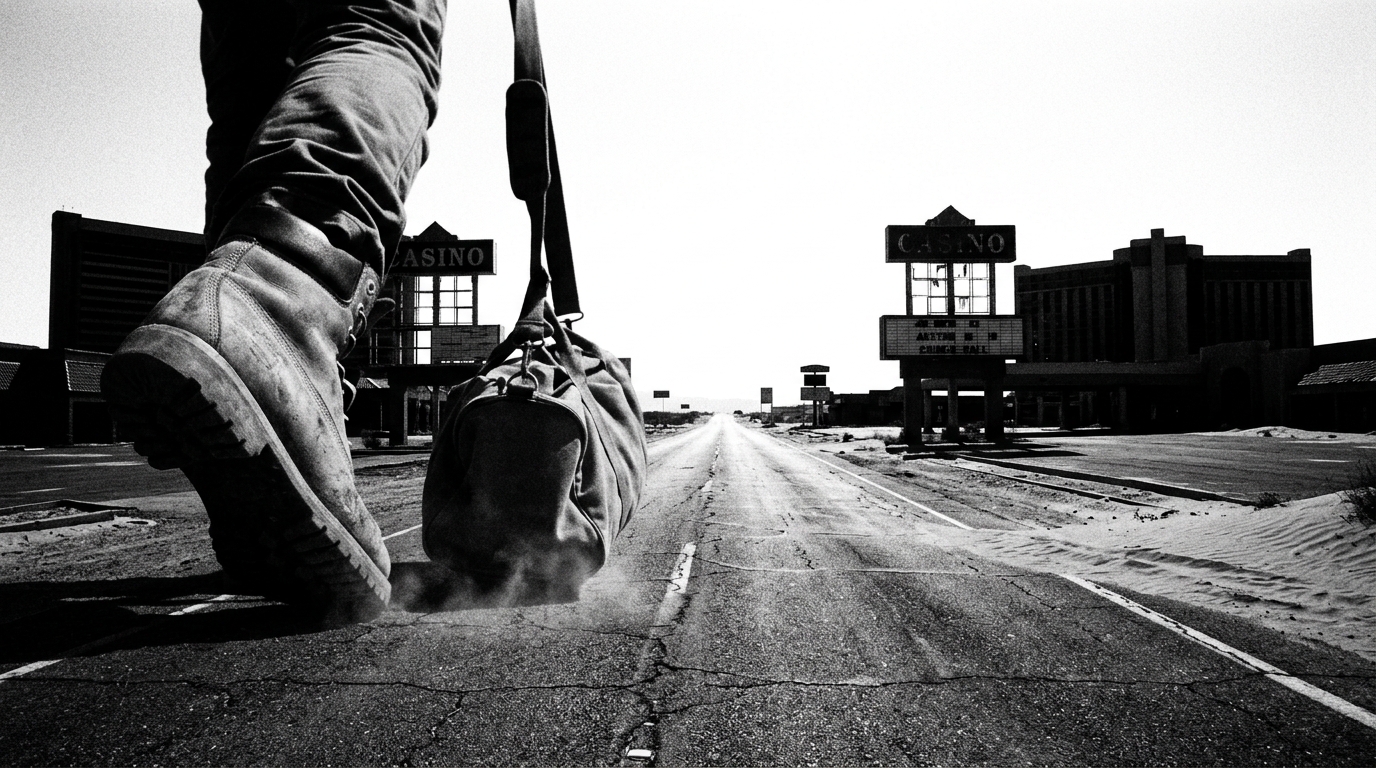
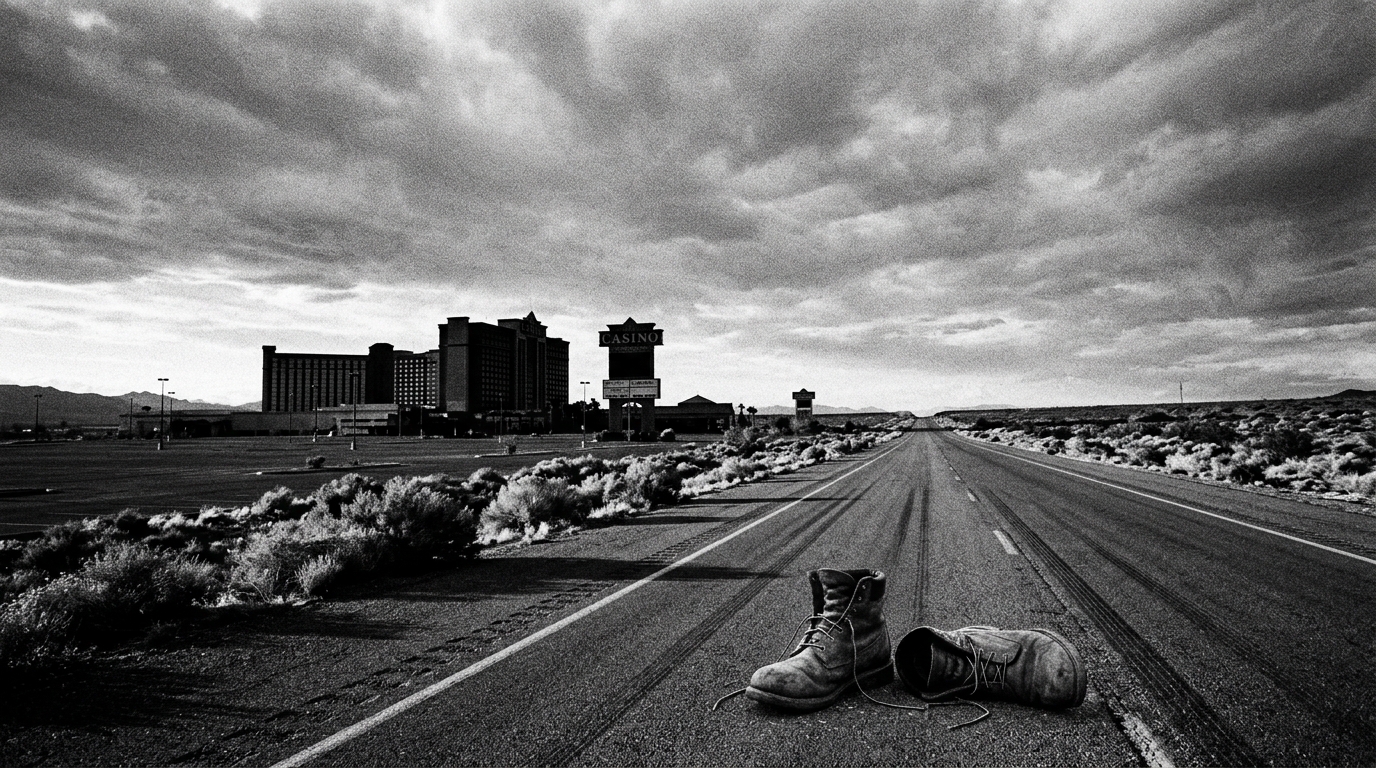
I watched a casino town die once. Not Primm... somewhere else, years ago. Different name, same story. The operator couldn't make the math work, the owner held the land, and everybody in between (the dealers, the housekeepers, the bartenders, the maintenance guys who kept 40-year-old HVAC systems breathing) got caught in the middle while the suits figured out who was going to sign the next lease. The town didn't die all at once. It just got quieter. Then the gas station closed. Then the diner. Then it was just a building with a sign that used to mean something.

That's what's staring the Primm family in the face right now, and the timeline is brutal. Affinity Gaming announced May 5 that it's pulling out of everything... Primm Valley Resort, Primm Center, the truck stop, the lotto store. Doors close July 4. That's not a deadline. That's a countdown. Whiskey Pete's already went dark in December 2024. Buffalo Bill's has been running limited operations since last July. Three hundred and forty-four people are about to lose jobs, and here's the part that makes your stomach turn... many of them live in company-owned apartments on the property. They're not just losing paychecks. They're losing their housing.

Now here's where it gets interesting from an ownership perspective. The Primm family still holds 568.5 acres of land. Affinity paid MGM $400 million for the operational rights back in 2007, rode the whole thing into the ground, and now they're walking away carrying (by their own CEO's admission) north of $500 million in total company debt. The Primms? They get their land back with zero debt on the casino operations. That's not a bad hand. In fact, if you're a potential operator or investor, it's a clean slate... no legacy debt, no deferred maintenance obligations from the previous operator's balance sheet, just dirt and buildings at one of the most visible highway intersections between Los Angeles and Las Vegas.

But clean slate and viable operation are two very different things. Affinity's CEO said publicly that Primm is "just not viable as a casino operation." He's not entirely wrong about the headwinds. Southern California tribal casinos have been eating this market alive for years. The drive-through traffic that used to stop in Primm because it was the first legal gambling on the Nevada side now has better options before they ever cross the state line. You can blame COVID's lingering effects, you can blame the competition, but the structural challenge is real... this location needs a reason to stop, not just a reason to pass by. There's talk of a supplemental airport for Southern Nevada projected out to 2037. That's a nice long-term catalyst if you're a land speculator. It's meaningless if you're trying to make payroll next month.

The Primm family's Cory Clemetson says an announcement on a new partner could come within a week. LV Petroleum, a company that runs 84 truck stops nationally, has publicly expressed interest in taking over all operations, including reopening Whiskey Pete's. But Clemetson tamped that down, calling reports of a done deal "overstated and premature" and indicating multiple proposals from "well-established operators" are on the table. Smart move. When you're negotiating from a position of owning the land free and clear, you don't jump at the first offer. You let them compete. But you also don't have the luxury of time when 344 people are watching a July 4 deadline approach and wondering if their town is about to become a ghost story.

Operator's Take

If you've ever operated a property in a market that depends on a single demand generator... a highway exit, a convention center, a military base, a factory... pay attention to this one. The Primm situation is what happens when the demand thesis changes and nobody adjusts the operating model for 15 years. For those of you running properties in secondary or tertiary markets, this is your stress test. Ask yourself: if your primary demand driver disappeared tomorrow, what's your fallback? Not theoretically. Actually. Write it down. And if you're in gaming, the tribal casino expansion across the Southwest isn't slowing down. Your three-mile radius is shifting, and the properties that survive are the ones whose operators saw it coming and repositioned before the traffic counts forced their hand.

Read full analysis → ← Show less
Source: Google News: Casino Resorts
Primm Valley Paid the Price for Standing Still Between Two Markets That Moved

Primm Valley Paid the Price for Standing Still Between Two Markets That Moved

Three casino resorts that once pulled 2,600 rooms of California traffic off I-15 are going dark by July 4th. The closure is a textbook case of what happens when your competitive moat evaporates and nobody builds a new one.

Available Analysis

I worked with a guy years ago who managed a property right off a major interstate exit. Location was everything. Travelers had to stop... there was literally nowhere else to go for 40 miles in either direction. He used to say "we don't need to be great, we just need to be here." And for a long time, that was true. Then a competitor opened 20 miles south. Then another one 15 miles north. Within three years his occupancy dropped 30 points and his ADR followed it down. He kept saying "but we're the original." Nobody cared. The travelers had options now, and his "we just need to be here" strategy turned out to be no strategy at all.

That's Primm. For decades, those three properties... 2,642 rooms, 137,000 square feet of casino floor, nearly 3,000 slot machines... existed because geography gave them a monopoly. You're driving from LA to Vegas, you need gas, you want to pull a slot handle, maybe stay overnight. Primm was the only game on that stretch of I-15. Then California's tribal casinos started expanding (Proposition 1A in 2000 gave them slot machines, and the build-out has been relentless ever since). Why drive to the Nevada border when you can gamble 45 minutes from home? The customer base didn't shrink gradually. It evaporated. And now the last property standing, Primm Valley Resort, closes July 4th. Three hundred and forty-four people lose their jobs. The ones living in company housing have two days after closing to be out.

Here's the part that should sting for anyone in operations. Affinity Gaming didn't ignore the problem. They tried to right-size. Closed Whiskey Pete's in December 2024. Moved Buffalo Bill's to events-only in mid-2025. Renovated. Adjusted. The CEO told the Nevada Gaming Control Board the property has been losing money for years despite investment. They did everything the playbook says to do... except the one thing that might have mattered, which is fundamentally reimagining what Primm was FOR. You can't right-size your way out of an existential problem. Trimming a business model that no longer works just means you're losing money more slowly.

Think about the timeline here. Herbst Gaming bought these three properties from MGM Mirage in 2007 for $400 million. That's roughly $151,000 per key across the portfolio. Today, nobody's buying at any price. There's a potential buyer sniffing around (a travel center operator interested in maybe reopening Whiskey Pete's), but the Primm family who owns the land says no deal is close. The distance between $400 million and "maybe someone will take one of these off our hands" is the entire story of what happens when your competitive advantage was never really yours... it was just geography, and geography stopped being enough.

This isn't just a casino story. Every hotel operator sitting on a location-dependent asset should be paying attention. If the only answer to "why do guests choose us?" is "because we're here," you're one competitor, one bypass road, one shift in travel patterns away from being Primm. The properties that survive market shifts are the ones that give people a reason to come, not just a reason to stop. That old night auditor's notebook, the $40K guest satisfaction platform, the revenue management system... none of it matters if the fundamental question of why you exist doesn't have an answer anymore.

Operator's Take

If you're running a property where location is your primary demand generator... an interstate exit, a remote stretch of highway, the only game near an airport or military base... take an honest hour this week and write down every competitive threat that could change that equation in the next five years. New supply. A road project that reroutes traffic. A tribal gaming expansion. A competitor's renovation that makes your product look tired. Then ask yourself: if that demand generator disappears, what's your second reason to exist? If you don't have one, start building it now. Primm had 25 years of warning that the California tribal casinos were coming for their customer base. Twenty-five years. And the answer was still "we're the stop on I-15." Don't be the operator who learns this lesson from someone else's closure when you could be learning it from your own honest assessment today.

Read full analysis → ← Show less
Source: Google News: Casino Resorts
344 People Just Got Told Their Town Is Closing. Primm Is Done.

344 People Just Got Told Their Town Is Closing. Primm Is Done.

Affinity Interactive is shutting down the last casino resort in Primm, Nevada on July 4th, ending a market that sold for $400 million less than 20 years ago. The death wasn't sudden... it was a decade of pretending repositioning could replace relevance.

I worked with a guy once who managed a highway hotel about 45 minutes outside a major market. Good guy. Solid operator. But every year, his feeder traffic got a little thinner. A new casino opened closer to the source market. Then another one. Then a tribal property with a golf course and a spa that made his renovated pool look like a puddle. He kept telling ownership they could reposition. Kept pitching capital improvements. New signage. Better F&B. "We just need to give them a reason to stop." One day I asked him, "What if the reason to stop doesn't exist anymore?" He didn't have an answer. Nobody ever does when the geography turns against you.

That's Primm. The whole story, right there.

Affinity Interactive just announced the permanent closure of Primm Valley Resort & Casino, effective July 4, 2026. Three hundred and forty-four employees lose their jobs. Some of them live in company-provided housing... they've got until July 6 to get out. Two days after the lights go off. This is the last domino. Whiskey Pete's closed in December 2024. Buffalo Bill's went dark for regular operations in July 2025. The Desperado roller coaster shut down back in 2019. They've been dismantling this town one amenity at a time for years. Now they're pulling the plug on the building that kept the lights on for everybody else.

Here's what makes this sting. In 2007, Herbst Gaming paid $400 million for these properties. Four hundred million dollars. That was the peak... the moment right before tribal casinos in Southern California (Pechanga, Morongo, Yaamava, and a dozen others) started siphoning away the exact customer base that made Primm viable. The entire business model was "catch them on I-15 before they get to Vegas." Once Southern California customers could gamble 45 minutes from home instead of driving three hours into the desert, Primm became a rest stop with slot machines. Affinity tried to rebrand it as a "travel resource for motorists." Think about that phrase for a second. That's what you call it when you've given up on being a destination but can't bring yourself to say it out loud. And now Affinity's own debt is trading at less than 50 cents on the dollar, with a debt-to-EBITDA ratio that ballooned from 7.8x to nearly 12x in about 18 months. They're not closing Primm because they want to. They're closing it because they have to.

The part that nobody's going to put in the press release is what happens to the 344 people. Some of them have been there for years. They moved to a town that exists because of these hotels. There is no "other employer" in Primm. There's no Plan B down the street. When the resort closes, the town closes. Cory Clemetson... the grandson of the guy who founded Primm... said he wished the operators could have done more. I'm sure he does. But "more" wasn't going to fix a market that lost its reason to exist. As recently as August 2025, they were announcing 600 renovated rooms and a buffalo-shaped pool. A buffalo-shaped pool. Eight months before permanently shutting down. That's not a strategy. That's denial with a rendering attached.

I've seen this movie before. Not at this scale, but the pattern is identical. A property that was built for one reality... geographic advantage, captive demand, limited competition... gets slowly strangled as the competitive landscape shifts. And instead of having the hard conversation early ("this location may not support this product anymore"), everybody keeps throwing capital at it. New rooms. New amenities. New branding. Trying to manufacture a reason for people to come when the original reason evaporated years ago. By the time someone finally says the word "closure," the money's already gone. The equity's already destroyed. The only people who didn't see it coming are the ones who weren't looking at the map.

Operator's Take

If you're operating a property where your primary demand generator is geographic positioning... an interstate location, a border-town advantage, proximity to something that used to draw people but doesn't anymore... stop reading the RevPAR report and start reading the competitive map. Drive a hundred miles in every direction and count what opened in the last five years. This is what I call the Three-Mile Radius, except in Primm's case it was a 200-mile radius and every new tribal casino inside it was a nail. The question isn't whether your numbers are okay today. The question is whether the thing that makes people stop at your property still exists, or whether you're running on residual habit. Habit runs out. Bring that map to your owner before the conversation becomes about closure instead of strategy.

Read full analysis → ← Show less
Source: Google News: Casino Resorts
344 Workers Just Got 60 Days Notice. Primm Is a Ghost Town by July 4th.

344 Workers Just Got 60 Days Notice. Primm Is a Ghost Town by July 4th.

Affinity Gaming is pulling the plug on the last Primm Valley casino properties and the Flying J truck stop by Independence Day, ending a border town gambling era that's been dying for 20 years. The $400 million question isn't why it's closing... it's what every operator sitting on a location-dependent property should be learning from the autopsy.

I worked with a GM once at a border-town property... one of those places that existed entirely because of the traffic pattern. Cars coming from one state to another, stopping because the exit was there and the signs were big. He told me something I never forgot: "We don't have guests. We have flow. The day the flow stops, we're done." He said it like a man who already knew the ending.

Primm, Nevada, is done. The last pieces of what was once a three-casino resort complex straddling I-15 between LA and Vegas will go dark on July 4, 2026. Affinity Gaming issued termination notices to 344 employees on May 5th, giving them and the people living in employee housing until July 6th to figure out what's next. Whiskey Pete's closed in December 2024. Buffalo Bill's went to events-only in July 2025. Now the remaining operations and the Flying J truck stop that served as a critical fueling point for long-haul drivers... all of it goes away. The Primm family, who developed this community and still own over 568 acres across the interstate, says they weren't given much notice. Three generations of a family watching the thing their patriarch built evaporate on someone else's timeline.

Let me give you the financial picture that tells the real story. Affinity Gaming (through its Primadonna Company subsidiary) bought these three casinos from MGM Resorts for $400 million in 2007. Four hundred million dollars. Right before the world fell apart. And what they bought was a business model with a single dependency: traffic volume at a state line crossing. Not a destination. Not a market with multiple demand generators. A gas stop with slot machines. When California tribal casinos expanded, when gas prices made the drive less casual, when COVID killed the spontaneous road trip... every one of those shifts hit the same vulnerability. Affinity's own general counsel said it plainly back in October 2024: traffic is "heavily weighted towards weekend activity and is insufficient to support three full-time casino properties." That's a lawyer's way of saying the math broke years ago and they've been managing the decline ever since.

Here's what bothers me about how this is being covered. The headlines are about a truck stop closing (and yes, that matters... if you're a CDL driver who relied on that Flying J for fuel and parking on the I-15 corridor, this is a real problem). But the operator story is bigger. Primm is a case study in what happens when your entire revenue thesis depends on a single external factor you don't control. Traffic flow. Border proximity. One highway. The Primm family built something real, but they built it on a foundation that assumed the world wouldn't change. The world always changes. California got casinos. Vegas got cheaper flights. Gas got expensive. The pandemic hit. And a property that exists purely because of geographic convenience has no defense against any of it. Zero demand diversification. Zero alternative revenue thesis. When the flow stopped, there was nothing left to manage.

The 344 people getting those termination letters... that's the part that stays with me. Some of them lived in employee housing on-site. They're losing their job AND their home with 60 days notice, in a town that essentially won't exist as an employment center after July 4th. Clark County says they're coordinating with the state's Rapid Response team, and I hope that's true and not just a press release. But let me be honest: when a property closes in a secondary market, the "assistance" rarely matches the disruption. These are real people in a town with no fallback employer. The nearest real job market is 40 minutes in either direction. That's not a career transition. That's a life upheaval.

Operator's Take

If you're running a property where more than 60% of your revenue comes from a single demand driver... one highway, one corporate account, one event venue, one seasonal pattern... Primm is your cautionary tale. Not because you're about to close. Because you need to honestly assess what happens to your P&L if that one thing shifts by 25-30%. Run that scenario this month. Not in your head... on paper, with your actual fixed costs. Then ask yourself what you're doing to diversify. For those of you with employee housing as part of your staffing model, look at what happened here. Those 344 people got a termination notice and a 60-day eviction in the same envelope. If you're ever in that position, your people deserve better planning than that. Build separation protocols now, before you need them. And if you're an owner holding a location-dependent asset with single-source demand, the honest conversation isn't whether to sell... it's whether waiting another year makes the number better or worse. Usually worse.

Read full analysis → ← Show less
Source: Google News: Casino Resorts
Hyatt Bought South Congress Hotel Four Months Ago. Now Everyone Who Works There Is Losing Their Job.

Hyatt Bought South Congress Hotel Four Months Ago. Now Everyone Who Works There Is Losing Their Job.

Hyatt is gutting an 83-room Austin boutique it acquired in December, closing for a year-long renovation and terminating nearly every employee. The part nobody's talking about is what this tells you about how major brands treat the humans inside the buildings they buy.

Available Analysis

Let me tell you something about the word "rebranding" that I learned the hard way after 15 years on the brand side of this business. Rebranding is what companies say when they mean "we're replacing everything, including the people." It sounds strategic and forward-looking in a press release. It sounds like a termination letter when you're the housekeeper who's been there since 2015.

Hyatt acquired South Congress Hotel from its original developer in December 2025. Four months later, nearly every employee is being let go effective May 31, with the property shuttering for a full year of renovation. The stated plan is to reopen in Q1 2027 with redesigned guestrooms, refreshed public spaces, and overhauled food and beverage... essentially a new hotel wearing the old hotel's address. Employees were told they'd be "eligible to reapply" when the doors open again. If you've ever been told you're eligible to reapply for your own job, you know exactly how that sentence lands. It lands like a door closing.

And here's where my brand brain starts doing the math that the announcement conveniently skips. Austin added 1,300 hotel rooms in 2024. Another 1,800 are nearing completion. Roughly 1,600 more are projected for 2026. Market-wide RevPAR declined 4.1% last year. So Hyatt is pulling 83 keys offline for a year in a market that's drowning in new supply, betting that a repositioned luxury boutique will command enough rate premium to justify the acquisition price (which they haven't disclosed, which tells you something), the renovation cost (also undisclosed), and twelve months of zero revenue. The luxury segment in Austin has seen ADR surge nearly 40% over 2019 levels, so the upside thesis isn't crazy. But "not crazy" and "guaranteed to pencil" are very different things, and I've sat across the table from enough families who trusted the optimistic projection to know the difference viscerally.

What really gets me is the sequencing. Hyatt also owns The Driskill and the Hyatt Regency Austin, both undergoing their own renovations. They're running three major construction projects in the same market simultaneously. That's not a renovation... that's a market repositioning play, and it's aggressive. The South Congress corridor already has Hotel San José and Austin Motel under the Bunkhouse Group, which (fun fact) is also under the Hyatt umbrella now. So Hyatt is essentially competing with itself on one of Austin's most iconic streets while telling employees at one of those properties to go find something else to do for a year and maybe come back. Maybe. The coffee shop stays open, though (the Mañana), which is a nice detail that I'm sure is enormously comforting to the front desk team cleaning out their lockers.

I want to be clear about something. I'm not anti-renovation. Properties age. An 11-year-old boutique in a market this competitive absolutely needs a refresh to stay relevant. And Hyatt didn't buy this hotel to leave it the way it was... that's not how acquisitions work. But the way you execute the transition tells you everything about what a brand actually values versus what it says it values. A WARN notice wasn't listed on the Texas Workforce Commission system as of the announcement date, despite a May 31 termination timeline that would typically trigger the 60-day requirement. Employees learned their fate through termination letters from Hyatt's VP of HR field operations. Not from the GM they'd worked alongside for years (though the GM confirmed the plans publicly). From an HR executive whose name most of them had probably never heard. That's not a transition plan. That's a brand deciding the humans inside the building are a line item to be zeroed out and restarted from scratch. And if you're an owner being pitched a Hyatt conversion right now, or any conversion, I want you to remember this moment. Because the brand promise is always about partnership and shared vision and long-term value. The brand reality, when it's time to renovate, is a letter from someone in HR you've never met telling your team to reapply for their own jobs in twelve months.

Operator's Take

Here's what I want you to hear if you're an independent owner being courted by a major flag right now. This is what I call the Brand Reality Gap... the distance between the promise in the pitch deck and what happens when the brand decides to "invest" in your property. Before you sign anything, ask the development team one question: "When you renovate, what happens to my staff?" Get the answer in writing. If you're a GM at a boutique that just got acquired or is about to be, start documenting your team's institutional knowledge now... guest preferences, vendor relationships, maintenance history, all of it. Because when the new owners decide to "reposition," that knowledge walks out the door with your people unless someone captures it first. And if you're in Austin running a hotel right now, pay attention to the supply math. Roughly 4,700 new rooms hitting a market with declining RevPAR, plus Hyatt pulling keys offline and then bringing them back repositioned at luxury rates. Your comp set is about to shift underneath you. Run your rate strategy against the market you'll be operating in by Q1 2027, not the one you're in today.

— Mike Storm, Founder & Editor
Read full analysis → ← Show less
Source: Google News: Hyatt
End of Stories