Primm Valley Paid the Price for Standing Still Between Two Markets That Moved
Three casino resorts that once pulled 2,600 rooms of California traffic off I-15 are going dark by July 4th. The closure is a textbook case of what happens when your competitive moat evaporates and nobody builds a new one.
I worked with a guy years ago who managed a property right off a major interstate exit. Location was everything. Travelers had to stop... there was literally nowhere else to go for 40 miles in either direction. He used to say "we don't need to be great, we just need to be here." And for a long time, that was true. Then a competitor opened 20 miles south. Then another one 15 miles north. Within three years his occupancy dropped 30 points and his ADR followed it down. He kept saying "but we're the original." Nobody cared. The travelers had options now, and his "we just need to be here" strategy turned out to be no strategy at all.
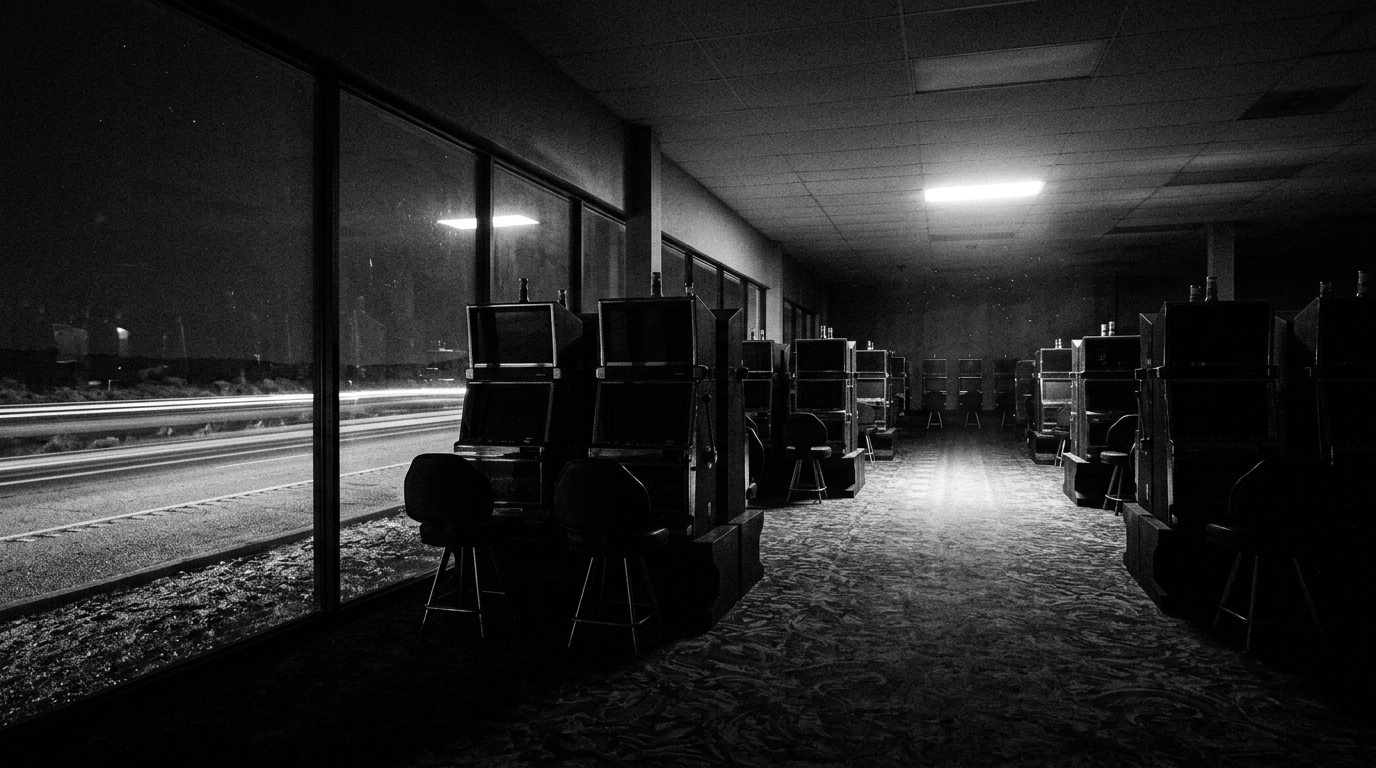
That's Primm. For decades, those three properties... 2,642 rooms, 137,000 square feet of casino floor, nearly 3,000 slot machines... existed because geography gave them a monopoly. You're driving from LA to Vegas, you need gas, you want to pull a slot handle, maybe stay overnight. Primm was the only game on that stretch of I-15. Then California's tribal casinos started expanding (Proposition 1A in 2000 gave them slot machines, and the build-out has been relentless ever since). Why drive to the Nevada border when you can gamble 45 minutes from home? The customer base didn't shrink gradually. It evaporated. And now the last property standing, Primm Valley Resort, closes July 4th. Three hundred and forty-four people lose their jobs. The ones living in company housing have two days after closing to be out.
Here's the part that should sting for anyone in operations. Affinity Gaming didn't ignore the problem. They tried to right-size. Closed Whiskey Pete's in December 2024. Moved Buffalo Bill's to events-only in mid-2025. Renovated. Adjusted. The CEO told the Nevada Gaming Control Board the property has been losing money for years despite investment. They did everything the playbook says to do... except the one thing that might have mattered, which is fundamentally reimagining what Primm was FOR. You can't right-size your way out of an existential problem. Trimming a business model that no longer works just means you're losing money more slowly.
Think about the timeline here. Herbst Gaming bought these three properties from MGM Mirage in 2007 for $400 million. That's roughly $151,000 per key across the portfolio. Today, nobody's buying at any price. There's a potential buyer sniffing around (a travel center operator interested in maybe reopening Whiskey Pete's), but the Primm family who owns the land says no deal is close. The distance between $400 million and "maybe someone will take one of these off our hands" is the entire story of what happens when your competitive advantage was never really yours... it was just geography, and geography stopped being enough.
This isn't just a casino story. Every hotel operator sitting on a location-dependent asset should be paying attention. If the only answer to "why do guests choose us?" is "because we're here," you're one competitor, one bypass road, one shift in travel patterns away from being Primm. The properties that survive market shifts are the ones that give people a reason to come, not just a reason to stop. That old night auditor's notebook, the $40K guest satisfaction platform, the revenue management system... none of it matters if the fundamental question of why you exist doesn't have an answer anymore.
If you're running a property where location is your primary demand generator... an interstate exit, a remote stretch of highway, the only game near an airport or military base... take an honest hour this week and write down every competitive threat that could change that equation in the next five years. New supply. A road project that reroutes traffic. A tribal gaming expansion. A competitor's renovation that makes your product look tired. Then ask yourself: if that demand generator disappears, what's your second reason to exist? If you don't have one, start building it now. Primm had 25 years of warning that the California tribal casinos were coming for their customer base. Twenty-five years. And the answer was still "we're the stop on I-15." Don't be the operator who learns this lesson from someone else's closure when you could be learning it from your own honest assessment today.