Today · Jun 15, 2026
Your Distressed Traveler Agreement Is Sitting in a Drawer. Airline Strike Season Starts in Two Weeks.

Your Distressed Traveler Agreement Is Sitting in a Drawer. Airline Strike Season Starts in Two Weeks.

Airline labor disputes across Europe are already live, U.S. carriers are under historic financial pressure, and most hotel front desk teams couldn't find their distressed traveler contract if you gave them ten minutes. That's a problem you can fix this week... if you move before the first cancellation wave hits your booking pace.

Available Analysis

I worked with a front desk manager years ago who kept a laminated card behind the desk with the airline distress contact numbers, the contracted rate, and the room block procedure. She updated it every January. When a freak ice storm shut down the nearby hub for 36 hours, her property picked up 74 room nights in a single evening while every other hotel within five miles was fumbling through filing cabinets trying to figure out who to call. She made it look easy. It wasn't easy. It was preparation disguised as instinct.

That's the story I keep thinking about as I watch what's happening in the airline world right now. Lufthansa's pilot union voted 96% in favor of strike action through the entire summer... through October 26th. Cabin crew voted 94%. Paris airports have a ground disruption planned for June 18th. Italy's got a nationwide ground handling strike June 26th. Spain's air traffic control dispute runs through the end of the month. And that's just Europe. The pressure is building on this side of the Atlantic too, because IATA just slashed its global airline profit forecast from $41 billion to $23 billion. Net margin for the entire industry is expected to hit 2.0%... that's $4.50 profit per passenger. Jet fuel at $152 a barrel, up 70% from last year. Airlines under that kind of financial squeeze don't settle labor disputes quickly. They can't afford to give, and the unions know it.

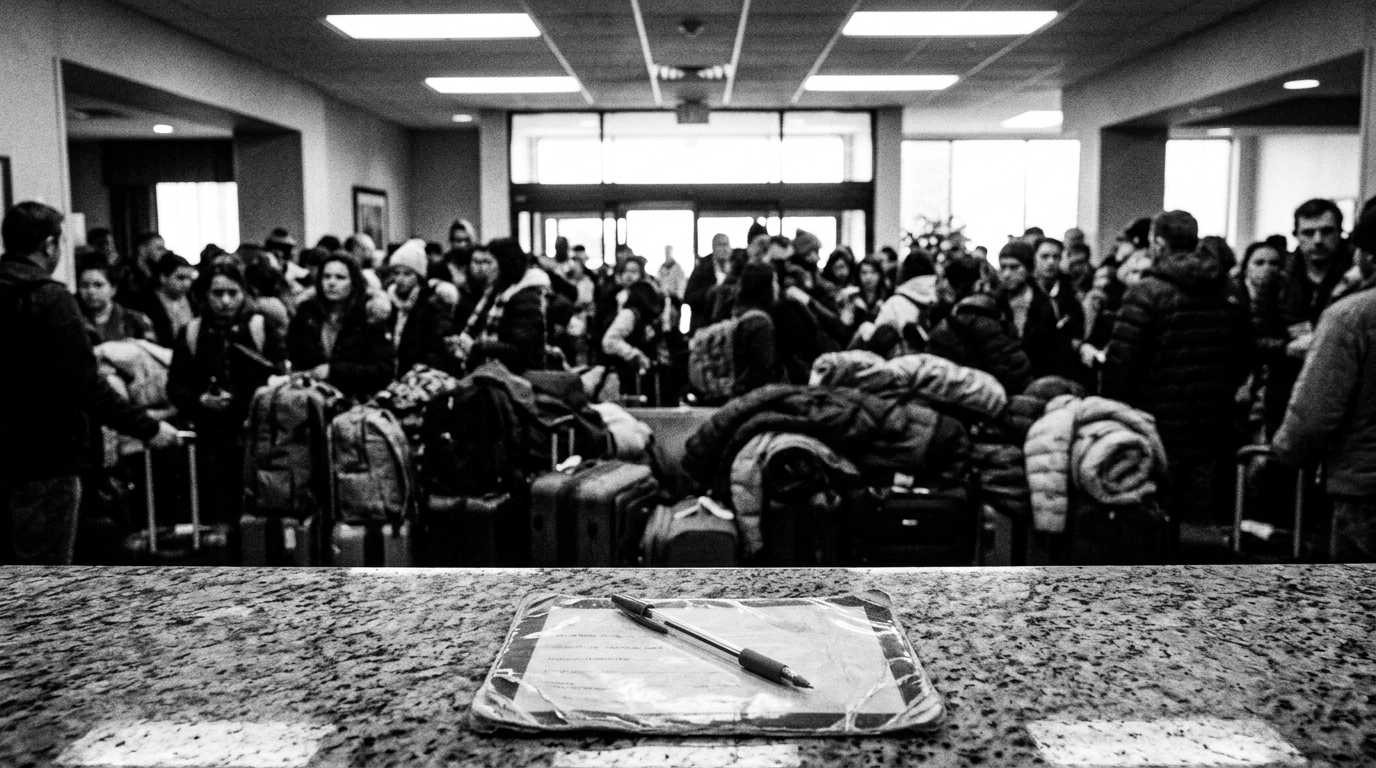
Here's what this means if you're running a hotel. You've got two problems coming at you simultaneously, and they require opposite responses. Problem one: distressed travelers. If you're within 10 miles of a major hub (O'Hare, DFW, Atlanta, Denver... you know who you are), stranded passengers are going to need rooms. Airlines typically contract those rooms through platforms at rates that can run 40% below your standard OTA rate. Those contracts are often signed during a slow quarter, filed somewhere, and never reviewed again. Your front desk team probably doesn't know the terms. Your FOM might not know the contact. And when 200 passengers get dumped at midnight because their connecting flight to wherever just got cancelled, "let me check on that" is not a revenue strategy... it's a missed revenue event.

Problem two is sneakier. Strike headlines suppress forward bookings even when no strike actually happens. Leisure travelers see "airline chaos" on their phone and they hesitate. They don't cancel immediately... they just stop booking. Your 30 to 60 day pace softens and you might not notice for two weeks. If you're a fly-to destination (think resort markets that depend on airlift), this is real exposure. If you're a drive-to leisure property, you might actually see a short-term bump as travelers substitute road trips. But if a significant chunk of your group business depends on attendees flying in... that's your biggest risk right now. Any meeting planner watching these headlines is doing the same mental math you should be doing. Check your July and August group contracts. How many of those groups have high air-dependency? What does your force majeure language actually say about labor actions? Because "act of God" doesn't cover a union vote. You need explicit strike language or you're exposed on both sides... the group cancels and you eat the revenue, or you enforce the contract and you lose the relationship.

The mistake most operators make is treating airline disruptions as weather... something that happens to you. It's not weather. It's predictable. The Lufthansa vote happened three weeks ago. The financial pressure on carriers has been building all year. The disruption calendar for European airports is already published. If you're scrambling when the first wave hits, you waited too long. And if you're sitting in a hub market with a distressed traveler agreement you haven't looked at since 2022, you're leaving money on the counter... literally.

Operator's Take

This is what I call the Shockwave Response. You don't wait for the shock to figure out your plan. If you're within 10 miles of a hub airport, pull your airline distress agreements this week. Read the rate. Read the block limits. If the rate is more than 30% below your current BAR, renegotiate now... airlines need those rooms secured more than you need a 2019 contract you forgot about. Print the contact info and the procedure and put it where your overnight team can find it without calling you. For revenue managers at fly-to-resort or destination properties, run your July and August pace against the same period last year. If 30-day pace is softening more than 5%, start your contingency pricing now... not after Fourth of July. Sales directors: pull every group contract with more than 25% air-dependent attendees and check whether your force majeure clause explicitly covers labor actions. If it doesn't, get on the phone with that planner this week and agree on terms before the first strike headline drops and the conversation gets adversarial. The operators who win during disruption seasons aren't luckier. They're earlier.

Read full analysis → ← Show less
Source: The Wall Street Journal
92,000 Tech Jobs Gone in 2026. Your Group Sales Director Should Be on the Phone Right Now.

92,000 Tech Jobs Gone in 2026. Your Group Sales Director Should Be on the Phone Right Now.

Amazon, Meta, Microsoft, and Oracle have collectively axed tens of thousands of corporate employees this year, and most hotel sales teams haven't connected the dots yet. The cancellation calls are coming... the only question is whether you're making the first call or waiting for theirs.

Available Analysis

I worked with a sales director years ago who had a ritual. Every Monday morning, she'd read the business section before the sales meeting. Not for hotel news... for layoff announcements, merger filings, earnings misses. Anything that meant a corporate client might be rethinking their travel budget. Her team thought she was paranoid. Her pipeline was the healthiest in the region because she never got blindsided. She'd call the contact before the cancellation call came in. "Hey, I saw the news. How are you guys doing? Let's talk about your Q3 event before someone above you makes that decision for both of us."

That's the phone call that needs to happen this week at every property with meaningful tech group business. And I mean this week. Not next month. Not after the RFP cycle. Now.

Here's what we're looking at. Amazon cut 16,000 corporate roles in January. Meta announced 8,000 more on April 23rd, with terminations starting May 20th. Microsoft just offered buyouts to roughly 8,750 employees... first time in their 51-year history they've done that, which should tell you something about the mood in Redmond. Oracle slashed 30,000 in March. Block cut 4,000. The running total for 2026 is north of 92,000 tech workers across nearly 100 companies. And here's the part that should bother you... these aren't struggling companies burning through cash. Meta is spending $135 billion on AI this year. Microsoft is nearly doubling its capital expenditures to $98 billion. Amazon is pouring over $125 billion into data centers. They're not cutting because they're broke. They're cutting because they've decided those people aren't part of what comes next. That distinction matters, because it means the travel budgets attached to those headcount aren't coming back when "the economy improves." There is no downturn to recover from. This is a permanent reallocation.

If you're a sales director in San Francisco, Seattle, Austin, New York, or any market where tech companies fill your group calendar... pull your 2026 pipeline right now and flag every account connected to a company that's announced restructuring. Not just the big names. The 200-person SaaS company that books your boardroom package four times a year? If their biggest client just froze spending, your boardroom booking is at risk too. The ripple moves fast. Sales kickoffs get "postponed" (which means cancelled with nicer language). Engineering offsites drop from three days to one. Incentive trips disappear entirely because it's hard to justify flying 200 people to Scottsdale when you just laid off their colleagues. The lag between the announcement and your phone ringing is typically 30 to 60 days. Meta's cuts start May 20th. Amazon's were January. If you haven't heard from your Amazon contacts yet, that silence isn't good news... it might mean the decision's already been made and nobody's bothered to tell you.

Now, here's where I've seen operators make the wrong move. The instinct is to panic and start discounting to fill the gap. Don't. A company that just eliminated 16,000 positions is not in a negotiating position to demand rate concessions on whatever group business they DO keep, even though their procurement team will absolutely try. They're going to call your sales team and say "we need to restructure our rate agreement given current conditions." What they're not saying is that they still need the meeting. The VP who survived the layoff still needs to get her remaining team aligned. That offsite might be smaller, but it's arguably more important now than it was before. You have more leverage than you think... if you understand what they actually need instead of just reacting to the word "restructure." This is what I call the Rate Recovery Trap. You cut rate to fill rooms today, and you spend the next year retraining the market to pay what you were worth before the cut. Don't do it. Hold your rate. Flex on concessions... the AV package, the F&B minimum, the attrition clause. Give them something that feels like a win without touching ADR.

One more thing, and I almost didn't include this because it feels counterintuitive. There's an upside here, and if you're sharp, you can capture it. The last time we saw a tech layoff cycle this deep, extended-stay properties and leisure-heavy hotels in drive-to markets saw a bump. Turns out, a software engineer with six months of severance and no reason to be in an office on Tuesday doesn't just sit at home. They travel. They work remotely from places they actually want to be. They book longer stays. Your revenue management team should be watching booking pace in the 7-plus night window for the next 90 days, because that's where the displaced demand shows up. It's not group revenue. It won't replace a cancelled sales kickoff. But it's real, and the properties that see it first will capture it.

Operator's Take

If you're a sales director at any property where tech companies represent more than 15% of your group revenue, stop reading this and go pull your pipeline. Every account tied to a company that's announced cuts or restructuring gets a proactive call this week... not an email, a call. You're not asking "are you cancelling?" You're saying "I saw what's happening, let's protect your event together." That positions you as a partner, not a vendor waiting to get fired. Second... review your 2026 negotiated corporate rate agreements with any tech company in restructuring mode. Do not preemptively offer rate reductions. Flex on concessions, hold on rate. Third... talk to your revenue manager about extended-stay pace. Displaced tech workers with severance are a real demand source over the next 90 days, especially in leisure and drive-to markets. The properties that adjust their channel mix and length-of-stay targeting now will pick up revenue that everyone else misses.

Read full analysis → ← Show less
Source: Cheapism
Meta Just Cut 15,000 Jobs. Your Sales Director Has About 90 Days Before That Lands on Your Books.

Meta Just Cut 15,000 Jobs. Your Sales Director Has About 90 Days Before That Lands on Your Books.

When a tech giant announces mass layoffs, hotel group and corporate transient revenue follows on a predictable 60-120 day fuse. Most revenue managers won't see it until Q3 pace reports tell them what they already should have known.

I worked with a sales director years ago who kept a whiteboard in her office with the logos of her top 20 corporate accounts. Not the revenue numbers... just the logos. Every morning she'd glance at it like a pilot scanning instruments. One Monday she walked in, erased two of them, and said "they're doing layoffs. We have maybe 10 weeks before someone in procurement calls to renegotiate our rate." She didn't wait for the call. She picked up the phone that morning, got ahead of it, and saved about $180K in group business that quarter by restructuring the contract before the client had a chance to cancel it outright.

That's the window we're in right now. Meta announced layoffs on March 25th... not a trim, not a "restructuring" press release with vague language. We're talking about senior executives directed to plan workforce reductions of roughly 20%, which translates to around 15,000 positions from a company of about 79,000. And Meta isn't alone. Microsoft has cut approximately 15,000 jobs over the past year. Salesforce eliminated over 1,000 in early 2025 and publicly stated that AI replaced 4,000 customer support roles. Google's been trimming steadily since January 2024. This isn't a blip. This is a sector rebalancing around AI investment, and the companies doing the cutting aren't struggling... they're redirecting capital. Which means the travel budgets attached to those headcounts aren't coming back when things "get better." They're gone because the heads are gone.

Here's what makes this particularly dangerous for hotel operators right now. Airlines just reported strong Q1 leisure earnings. Your blended occupancy number might look fine. It might even look good. And that's exactly the problem... because the aggregate number is hiding segment-level erosion that's already started. Corporate transient from tech accounts doesn't disappear overnight. It thins out. One fewer trip per quarter per account. A team offsite that was 40 rooms becomes 25. A sales kickoff that was three days becomes two, then becomes a Zoom call. By the time it shows up clearly in your pace report, you've already lost 60-90 days of runway to do anything about it. If you're in San Francisco, San Jose, Seattle, Austin, Denver, Raleigh, or Boston, you're in the direct path. But if you've got meaningful tech-sector group or corporate transient anywhere in your mix, you're exposed. Period.

The timeline is predictable because I've seen this movie before... 2001, 2008, and the post-pandemic tech correction all followed the same script. First 30 days: travel policy reviews tighten internally at the company. Days 30-60: negotiated corporate rates come up for "discussion," which is corporate-speak for "we want to pay less or we're pulling volume." Days 60-120: group contracts for Q3 and Q4... the offsites, the kickoffs, the training programs... get cancelled, downsized, or pushed to next year (which usually means never). The surviving employees at these companies aren't booking celebratory retreats. They're keeping their heads down and taking fewer trips. And here's the thing nobody wants to say out loud: business travel from the tech sector was already running below 2019 levels before this latest round of cuts. We're not losing ground we'd recovered. We're losing ground we never got back.

There's one structural shift worth watching, and it's not all bad news. Some percentage of those laid-off workers will land as independent consultants, fractional executives, freelancers. They still travel. But they book differently... direct, price-sensitive, shorter booking windows, different channels entirely. If your revenue strategy is built around negotiated corporate rates from big tech employers, that demand doesn't just shrink. It changes shape. The hotels that figure out how to capture the independent business traveler (who is basically a leisure booker with a business purpose) will find revenue the hotels still waiting for the corporate RFP cycle won't.

Operator's Take

If you're a sales director at any property running more than 10% of your group or corporate transient from tech-sector accounts, stop reading this and pull your account list. Today. Identify your top 10-15 tech accounts, flag every contract up for renewal in the next 90 days, and get on the phone before their procurement team gets on the phone with you. The person who initiates the conversation controls the conversation. If you're a revenue manager, stress-test your Q2 and Q3 corporate transient pace right now against a scenario where tech-sector pickup runs 15-20% below prior year... because that's not a worst case, that's a realistic case. This is what I call the Shockwave Response... know your floor and your breakeven before the shock hits, because panic is not a strategy. And for every GM watching blended occupancy hold and thinking you're fine... break it by segment this week. The leisure number is masking something. Find it before your P&L finds it for you.

Read full analysis → ← Show less
Source: InnBrief Analysis — National News
Your Corporate Rates Are Probably Too Low. Here's How I Know.

Your Corporate Rates Are Probably Too Low. Here's How I Know.

Business travel spending has blown past 2019 levels in raw dollars, and every headline is celebrating. But buried in the data is a reality that should have every DOS in the country pulling up their rate agreements this week.

Available Analysis

I sat across from a director of sales about six months ago who was genuinely proud of her corporate account retention through the pandemic. "We kept every single one," she told me. "Not one account lost." I asked her what rate she kept them at. She got quiet. Then she said, "We haven't renegotiated since 2021." She had 47 corporate accounts, most of them locked in at rates that made sense when occupancy was running 52% and the world was falling apart. Occupancy's not running 52% anymore. And those rates are bleeding her dry.

Here's the number that matters. Global business travel hit $1.47 trillion in 2024 and is projected to reach somewhere between $1.57 and $1.69 trillion by 2026. Average daily hotel costs for U.S. corporate clients jumped 20.5% year over year to $229 in 2025. That's the market rate. Now compare that to whatever's sitting in your corporate rate agreements... the ones you signed during recovery, when you were grateful for any guaranteed volume. If you haven't touched those contracts in two years, you're leaving $15-30 per night on the table per corporate room. Multiply that across your corporate mix and tell me that's not a conversation worth having with your revenue manager on Monday morning.

But here's what nobody's telling you about the "bleisure" trend everyone keeps breathlessly reporting. The data is messier than the headlines suggest. The average U.S. business trip clocked in at 2.5 days in 2025... that's actually shorter than the pre-pandemic average of over three nights. Single-day trips still account for nearly a quarter of all business bookings. So when someone tells you business travelers are "staying 2-3 nights instead of single-night trips," that's only half the story. What's actually happening is a bifurcation. Some travelers are extending trips by tacking on personal days (bleisure grew 25% last year). Others are compressing trips shorter than ever because their companies are consolidating travel for efficiency. You're not dealing with one trend. You're dealing with two opposite trends wearing the same name.

And that group business everyone assumed was coming roaring back? Marriott reported that group bookings fell for nine consecutive months year over year through 2025. Nine months. That's not a blip. That's a pattern. Companies are sending travelers, but they're sending them differently... smaller groups, less frequently, with higher expectations per trip. Your group sales team chasing the same 200-person regional meeting they booked in 2018 is chasing a ghost. The money has moved to smaller corporate meetings (15-40 people), incentive travel, and hybrid events where half the attendees are remote. If your catering minimums and meeting room packages are still built around the old model, you're pricing yourself out of the business that actually exists.

Look... I've been through enough cycles to know that the most dangerous moment isn't when business is bad. It's when business is good enough that you stop paying attention to the details. Corporate travel is back. The dollars are real. But the inflation-adjusted spending is still 14% below 2019, which means the volume hasn't recovered... just the price. You're selling fewer corporate room nights at higher rates, and if your cost structure is built for the old volume, you've got a margin problem dressed up as a revenue win. Pull your corporate accounts. Compare contracted rates to what the market is actually bearing. Identify which accounts are delivering real volume and which are just names on a list collecting a discount they no longer deserve. And for the love of everything, stop packaging your extended-stay corporate offering like it's 2019. Laundry service, reliable WiFi, a workspace that doesn't involve sitting on the bed... these aren't amenities anymore. They're baseline expectations for anyone staying more than two nights. The hotels that figure this out in the next 90 days are going to capture a disproportionate share of the corporate wallet. Everyone else is going to wonder where the money went.

Operator's Take

If you're a DOS or revenue manager at a full-service or upper-select property, pull every corporate rate agreement you have and compare it to your current transient BAR. Any account with a negotiated rate more than 15% below BAR that isn't delivering at least 500 room nights annually gets a renegotiation call this week... not next quarter, this week. And if your group sales team is still chasing large-block RFPs, redirect 30% of their outbound effort toward small corporate meetings in the 15-40 person range. That's where the actual demand is. The big blocks aren't coming back the way they were.

Read full analysis → ← Show less
Source: Vertexaisearch

Super Bowl Week Cultural Events Are Hotel Revenue — If You Actually Show Up

Kwanza Jones's Culture In Motion tour is bringing Apollo Theater programming and community events to Bay Area neighborhoods during Super Bowl week. Most GMs will ignore this completely, and that's leaving money on the table.

Here's the thing nobody's telling you: mega-events like the Super Bowl aren't just about game-day rooms at $800 ADR. The real revenue opportunity is the week of programming that surrounds it — cultural events, community activations, after-parties — and most operators treat this stuff like background noise instead of booking opportunities.

Culture In Motion is rolling through Northern California this week with the SUPERCHARGED platform and Apollo Theater backing. That means venues, performances, community gatherings. Which means people traveling to attend. Which means hotel rooms, F&B, and ground transportation.

But here's where most properties miss it: you're waiting for these attendees to find you on OTA search instead of going directly to event organizers. If you're running a select-service or boutique property within 20 minutes of any Culture In Motion venue, you should have contacted the tour organizers three weeks ago with a group rate proposal. These cultural events draw audiences that book late, travel in small groups of 2-4, and they'll pay your BAR if you're convenient and they know you exist.

I've seen this movie before with Art Basel, SXSW, and regional music festivals. The properties that win aren't always closest to the venue — they're the ones who actually engaged with event producers early, offered shuttle service or F&B packages, and got listed as "preferred lodging" in event communications. That's 15-30 rooms you just pulled out of thin air during a week when you thought you were already at compression.

The broader point: Super Bowl week generates dozens of satellite events across multiple cities. Cultural programming, corporate hospitality, influencer gatherings. If your sales team is only tracking the NFL host committee official events, you're working half the puzzle.

Operator's Take

If you're in the Bay Area right now, get your sales director to pull a list of every Culture In Motion venue and event this week, then cold-call offering last-minute group rates with shuttle service. For the rest of you: when mega-events hit your market, track the cultural and community programming that orbits around them — that's where your unsold shoulder nights go.

Read full analysis → ← Show less
Source: PR Newswire: Travel & Hospitality
End of Stories