Today · Jun 15, 2026
Your Distressed Traveler Agreement Is Sitting in a Drawer. Airline Strike Season Starts in Two Weeks.

Your Distressed Traveler Agreement Is Sitting in a Drawer. Airline Strike Season Starts in Two Weeks.

Airline labor disputes across Europe are already live, U.S. carriers are under historic financial pressure, and most hotel front desk teams couldn't find their distressed traveler contract if you gave them ten minutes. That's a problem you can fix this week... if you move before the first cancellation wave hits your booking pace.

Available Analysis

I worked with a front desk manager years ago who kept a laminated card behind the desk with the airline distress contact numbers, the contracted rate, and the room block procedure. She updated it every January. When a freak ice storm shut down the nearby hub for 36 hours, her property picked up 74 room nights in a single evening while every other hotel within five miles was fumbling through filing cabinets trying to figure out who to call. She made it look easy. It wasn't easy. It was preparation disguised as instinct.

That's the story I keep thinking about as I watch what's happening in the airline world right now. Lufthansa's pilot union voted 96% in favor of strike action through the entire summer... through October 26th. Cabin crew voted 94%. Paris airports have a ground disruption planned for June 18th. Italy's got a nationwide ground handling strike June 26th. Spain's air traffic control dispute runs through the end of the month. And that's just Europe. The pressure is building on this side of the Atlantic too, because IATA just slashed its global airline profit forecast from $41 billion to $23 billion. Net margin for the entire industry is expected to hit 2.0%... that's $4.50 profit per passenger. Jet fuel at $152 a barrel, up 70% from last year. Airlines under that kind of financial squeeze don't settle labor disputes quickly. They can't afford to give, and the unions know it.

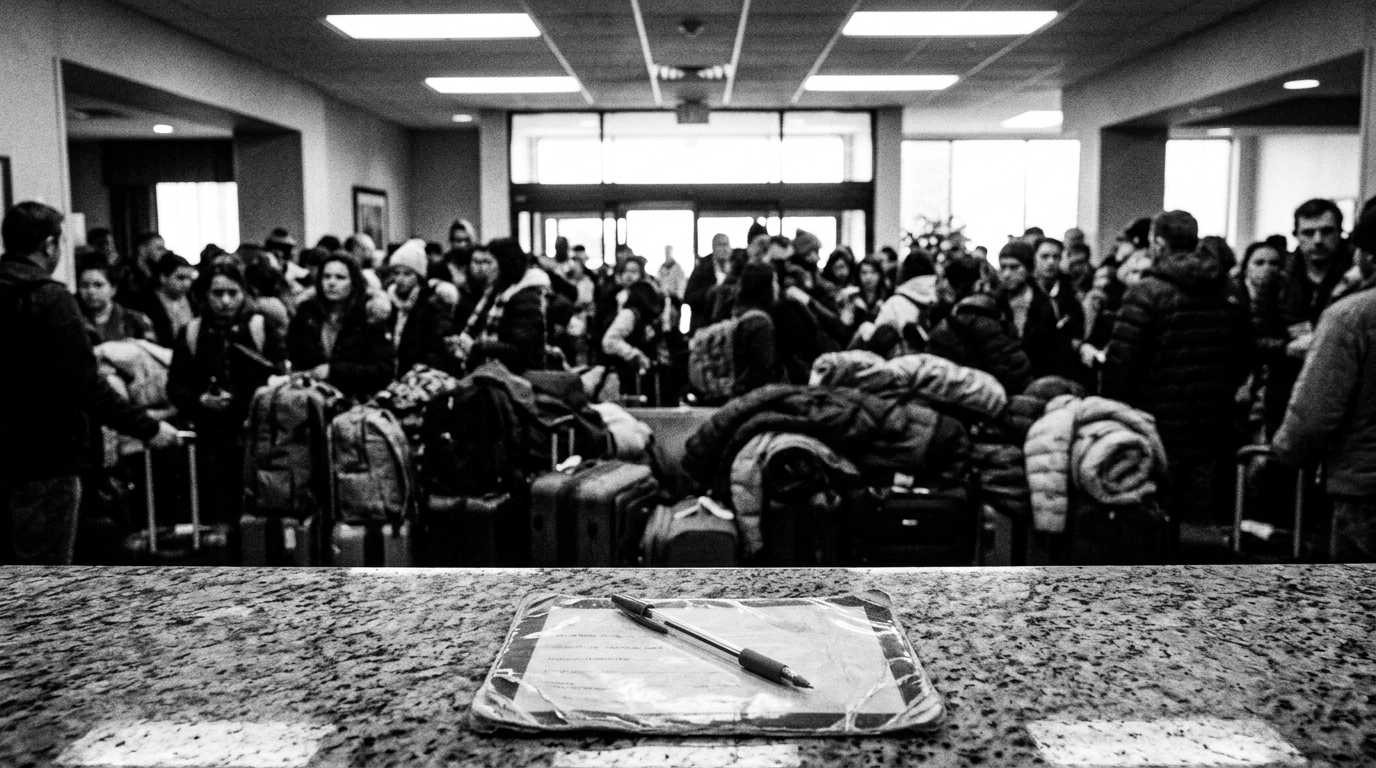
Here's what this means if you're running a hotel. You've got two problems coming at you simultaneously, and they require opposite responses. Problem one: distressed travelers. If you're within 10 miles of a major hub (O'Hare, DFW, Atlanta, Denver... you know who you are), stranded passengers are going to need rooms. Airlines typically contract those rooms through platforms at rates that can run 40% below your standard OTA rate. Those contracts are often signed during a slow quarter, filed somewhere, and never reviewed again. Your front desk team probably doesn't know the terms. Your FOM might not know the contact. And when 200 passengers get dumped at midnight because their connecting flight to wherever just got cancelled, "let me check on that" is not a revenue strategy... it's a missed revenue event.

Problem two is sneakier. Strike headlines suppress forward bookings even when no strike actually happens. Leisure travelers see "airline chaos" on their phone and they hesitate. They don't cancel immediately... they just stop booking. Your 30 to 60 day pace softens and you might not notice for two weeks. If you're a fly-to destination (think resort markets that depend on airlift), this is real exposure. If you're a drive-to leisure property, you might actually see a short-term bump as travelers substitute road trips. But if a significant chunk of your group business depends on attendees flying in... that's your biggest risk right now. Any meeting planner watching these headlines is doing the same mental math you should be doing. Check your July and August group contracts. How many of those groups have high air-dependency? What does your force majeure language actually say about labor actions? Because "act of God" doesn't cover a union vote. You need explicit strike language or you're exposed on both sides... the group cancels and you eat the revenue, or you enforce the contract and you lose the relationship.

The mistake most operators make is treating airline disruptions as weather... something that happens to you. It's not weather. It's predictable. The Lufthansa vote happened three weeks ago. The financial pressure on carriers has been building all year. The disruption calendar for European airports is already published. If you're scrambling when the first wave hits, you waited too long. And if you're sitting in a hub market with a distressed traveler agreement you haven't looked at since 2022, you're leaving money on the counter... literally.

Operator's Take

This is what I call the Shockwave Response. You don't wait for the shock to figure out your plan. If you're within 10 miles of a hub airport, pull your airline distress agreements this week. Read the rate. Read the block limits. If the rate is more than 30% below your current BAR, renegotiate now... airlines need those rooms secured more than you need a 2019 contract you forgot about. Print the contact info and the procedure and put it where your overnight team can find it without calling you. For revenue managers at fly-to-resort or destination properties, run your July and August pace against the same period last year. If 30-day pace is softening more than 5%, start your contingency pricing now... not after Fourth of July. Sales directors: pull every group contract with more than 25% air-dependent attendees and check whether your force majeure clause explicitly covers labor actions. If it doesn't, get on the phone with that planner this week and agree on terms before the first strike headline drops and the conversation gets adversarial. The operators who win during disruption seasons aren't luckier. They're earlier.
Read full analysis → ← Show less
Source: The Wall Street Journal
75 Million Passengers. 750,000 Flights. Your Front Desk Is the Last Stop When It All Falls Apart.

75 Million Passengers. 750,000 Flights. Your Front Desk Is the Last Stop When It All Falls Apart.

Airlines are bracing for the most chaotic summer in a decade, and when flights collapse at 11 PM, stranded passengers don't call their congressman. They walk into your lobby. The question is whether you've set your team up to turn that anger into revenue... or just absorb it.

Available Analysis

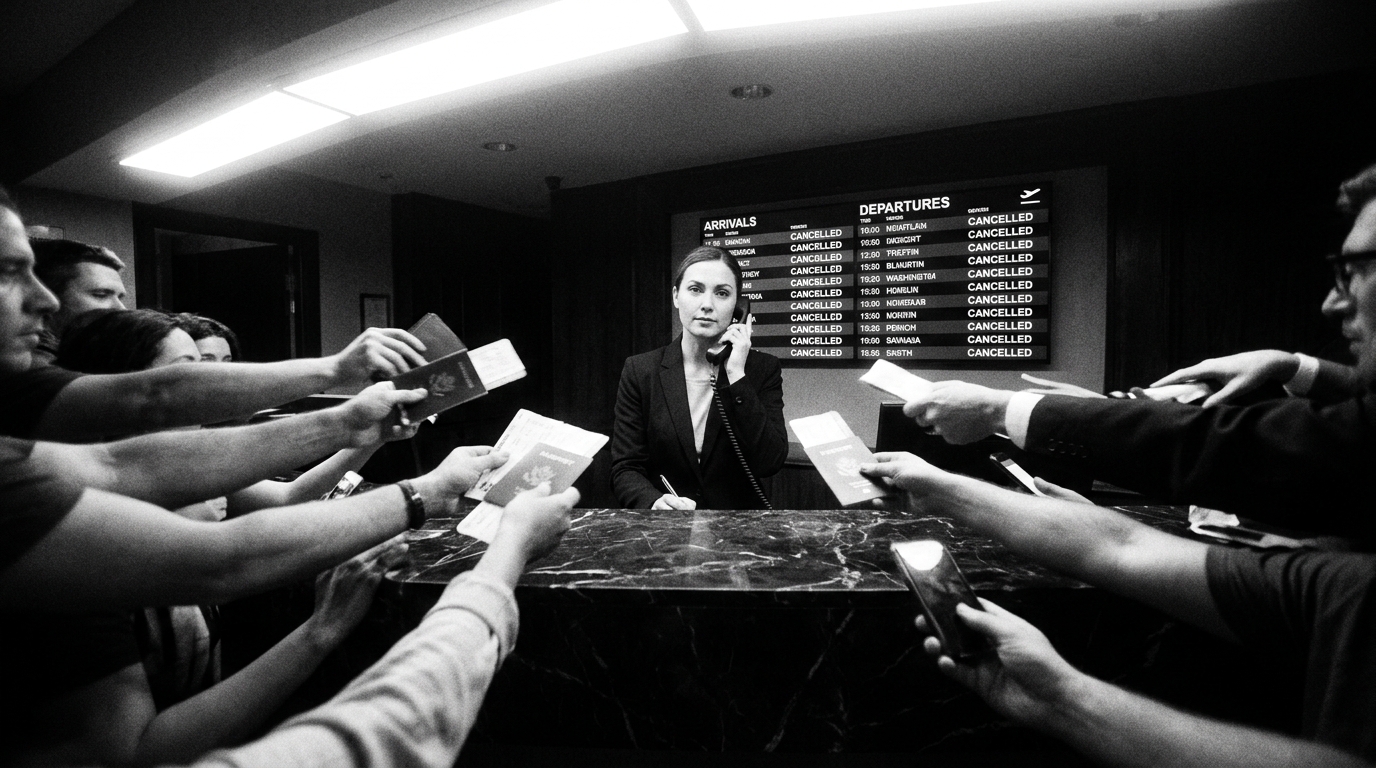
I worked with a front desk manager years ago at an airport hotel who kept a laminated card taped to the inside of the desk drawer. It said: "They are not mad at you. They are mad near you." She made every new hire read it on their first day. That property had the highest guest recovery scores in the region, and it wasn't because of the PMS or the loyalty program or the breakfast buffet. It was because someone had bothered to prepare the team for the moment when 40 people walk through the door at midnight, nobody has a reservation, half of them have been sitting on a runway for four hours, and the airline's 800 number has been ringing busy since 9 PM.

That moment is about to happen a lot this summer. American alone is projecting 75 million passengers on 750,000 flights through September. On-time arrivals last year were the worst since 2014... one out of every twelve flights showing up at least an hour late, over 100,000 cancellations across the industry. The FAA is capping flights at congested hubs. Airlines have committed to providing hotel rooms for overnight controllable delays (nine of the ten majors, all but Frontier), and those placements run through third-party systems like Travelliance's StormX portal and API's platform. If your property is within 10 miles of a major hub and you're not enrolled in at least one distressed passenger program... or worse, you're enrolled but nobody's checked that the rates are loaded correctly since last fall... you're watching revenue walk past your building to the Courtyard down the street.

But here's the part most operators aren't thinking about. Distressed passenger programs pay contracted rates. They're volume business, they fill rooms that might otherwise sit empty on a Tuesday, and they're fine. The real money this summer is the second-order effect. A family in Destin whose return flight gets cancelled doesn't call the airline's hotel desk. They walk to the front desk of the resort they're already staying at and ask to extend. That incremental night, booked at the counter with no advance purchase and no OTA discount, is close to rack rate. It's high-margin, zero-acquisition-cost revenue that shows up only if your team knows how to handle it and your system isn't blocking it with rigid length-of-stay restrictions or sold-out inventory you could have opened.

The operational piece matters more than the revenue management piece, and I say that as someone who's spent 40 years obsessing over both. Your front desk agent at 11:30 PM on a Friday in July is going to be the first human being a stranded traveler has talked to face-to-face since their gate agent disappeared. That interaction... the first 90 seconds of it... is going to determine your review score for that stay. Not the room. Not the amenities. Not the thread count. The human moment. I've seen properties turn distressed walk-ins into loyalty program enrollments and five-star reviews. I've also seen properties treat them like an inconvenience and eat a one-star hit that dragged their score for months. The difference was never the property. It was always whether someone had taken 15 minutes to brief the team before the chaos started.

This isn't complicated. It's preparation. And the GMs who do it this week, before the Fourth of July surge, are going to outperform the ones who wait until they're standing in the lobby at midnight trying to figure it out in real time.

Operator's Take

If you're running an airport-adjacent property, pull up your distressed passenger program enrollment today. Not tomorrow. Today. Verify the rates are loaded, the room types are correct, and your front desk knows the process for airline-referred walk-ins. If you're not enrolled, call Travelliance or API before the weekend. For resort and leisure GMs... check your length-of-stay restrictions and make sure your system allows same-day extensions at a rate that makes sense. Then do the thing that actually moves the needle: brief your front desk team this week. Ten minutes. Role-play the angry walk-in. Give them the language. "I'm sorry that happened to you. Let's get you taken care of." This is what I call the Price-to-Promise Moment... the single interaction where a guest decides whether your property was worth it. For a stranded traveler, that moment is the check-in, and you get exactly one shot at it. The properties that nail this will bank revenue and reviews all summer. The ones that don't will wonder why their scores dipped in Q3.

Read full analysis → ← Show less
Source: CNN
Your Airport Hotel Is About to Get Very Busy. Or Very Empty. There's No Middle Ground This Summer.

Your Airport Hotel Is About to Get Very Busy. Or Very Empty. There's No Middle Ground This Summer.

Airlines are cutting capacity, TSA agents are walking off the job, and jet fuel just hit $4.62 a gallon. If you're running an airport hotel without a distressed-passenger protocol locked in by Memorial Day, you're about to learn the difference between opportunity and chaos.

Available Analysis

I worked with a GM years ago who ran a 280-key airport property. Every summer he'd tape a handwritten checklist to the back office wall titled "Storm Season." Not weather. Flight disruptions. He had a protocol for everything... who to call at each airline's local ops center, which rooms to hold back for distressed passenger blocks, how to staff the desk for a midnight wave of 60 angry people who just got told their connection doesn't exist anymore. The guy treated summer like a hurricane plan. Most of his competitors treated it like any other Tuesday. Guess who consistently ran 8-12 points higher in occupancy June through August.

That checklist matters more this summer than any summer I can remember. And here's why. You've got three things converging at once, and any one of them would be a big deal on its own. Together, they're going to reshape your summer P&L whether you're ready or not. First, jet fuel has nearly doubled since late February... $2.50 a gallon to $4.62 by the end of March. That's not a blip. The Iran situation has the Strait of Hormuz disrupted, fuel depots under attack, and United's CEO on record saying we might not see $100-a-barrel fuel again before the end of 2027. When fuel is a quarter of an airline's operating cost and Delta just ate an extra $400 million in one month, the airlines don't absorb that. They cut. United already announced 5% of planned flights through Q3 are gone. The FAA just capped operations at 40 major airports. Chicago O'Hare is running under a hard ceiling of 2,800 daily ops. Second, TSA is falling apart. Over 500 officers have resigned since mid-February. The nationwide call-out rate hit 10.6% on March 30... normal is 2%. Some airports (Baltimore, Houston, Atlanta, JFK) are running 20-40% call-out rates. Training a replacement takes four to six months. This isn't getting better by June. The acting TSA administrator used the phrase "perfect storm" in front of Congress last week, and for once that wasn't hyperbole. Third, the regulatory side is a slow-burn wildcard. The DOT's automatic refund rule for canceled flights is live, which means passengers have more leverage to bail entirely rather than rebook. Meanwhile, the ancillary fee disclosure rule got killed by a federal appeals court in February, so airlines keep their fee revenue for now... but Congress has the "End Airline Extortion Act" sitting in committee, and if that gets legs, it squeezes another revenue line the carriers depend on. Less airline revenue means more capacity cuts. More capacity cuts means fewer travelers in the system. Period.

Now here's where it gets interesting, because this story cuts two completely different ways depending on what kind of hotel you're running. If you're an airport property, disruption is your friend... but only if you're operationally set up to capture it. Walk-in demand at 11 PM from 200 stranded passengers is a revenue event or a disaster, and the difference is entirely about preparation. Do you have a distressed-passenger rate agreement with the carriers at your hub? Do you have the front desk staffed to handle a surge? Can housekeeping turn rooms at 10 PM? Do your night team members have the authority to sell rooms at the right rate without calling a manager who's asleep? If the answer to any of those is no, you're going to watch that demand walk across the road to the property that said yes. I've seen it happen. It's brutal.

If you're a destination property... especially in Florida, the Caribbean, or any mountain resort market that depends on air access... this is a different and uglier conversation. When airlines cut capacity on leisure routes, your guests don't just arrive late. Some of them don't arrive at all. A family that booked a five-night stay and loses the first day to a cancellation doesn't just shorten the trip by one night. They start reconsidering whether the trip is worth the hassle. Your cancellation policy language matters more right now than it has in years. Your group sales contracts with air-dependent attendees need contingency clauses. And your revenue managers should be stress-testing what happens to your forecast if 5-8% of your booked room nights evaporate to flight disruptions, because that's the range that's realistic given the capacity cuts already announced.

The bigger picture here is something that doesn't show up in any single headline but matters more than all of them combined. We're looking at what could become a structural reduction in the number of people moving through the system. Not a one-week blizzard disruption. Not an air traffic control glitch that clears up in 48 hours. The fuel situation isn't temporary (the Iran conflict isn't ending next month). The TSA staffing crisis takes months to recover from, not weeks. And if Congress decides to squeeze airline ancillary revenue on top of all that, the carriers respond the only way they know how... they shrink. Fewer flights, fewer seats, fewer travelers, fewer hotel nights. AHLA estimated that flight cuts alone could cost hotels $9 to $22 million per day in lost revenue, and that was before the FAA started capping operations at 40 airports. This is what I'd call a Shockwave Response moment... you need to know your floor, know your breakeven, and have a plan before the shock fully arrives. Because by the time CNN is showing lines at O'Hare on the evening news, it's too late to build one.

Operator's Take

If you're running an airport property, get your distressed-passenger agreements signed with every major carrier at your hub before Memorial Day. Not started. Signed. Build a disruption staffing protocol... who you call, how fast housekeeping can turn rooms after 9 PM, and what rate authority your night team has without manager approval. Drill it once before June. If you're at a destination property dependent on air access, pull your summer forecast right now and model a 5-8% reduction in booked room nights from flight disruptions. Review every group contract with air-dependent attendees and add contingency language if it's not there. Check your cancellation policy... if a guest can't get to you because the airline canceled their flight, what's your position? Decide that now, not when the guest is on the phone at midnight. Whichever property type you are, don't wait for this to become obvious. The GM who walks into the owner meeting with a summer disruption plan already built is the one who looks like they're running the business. The one who waits to be asked about it is already behind.

Read full analysis → ← Show less
Source: InnBrief Analysis — National News
End of Stories