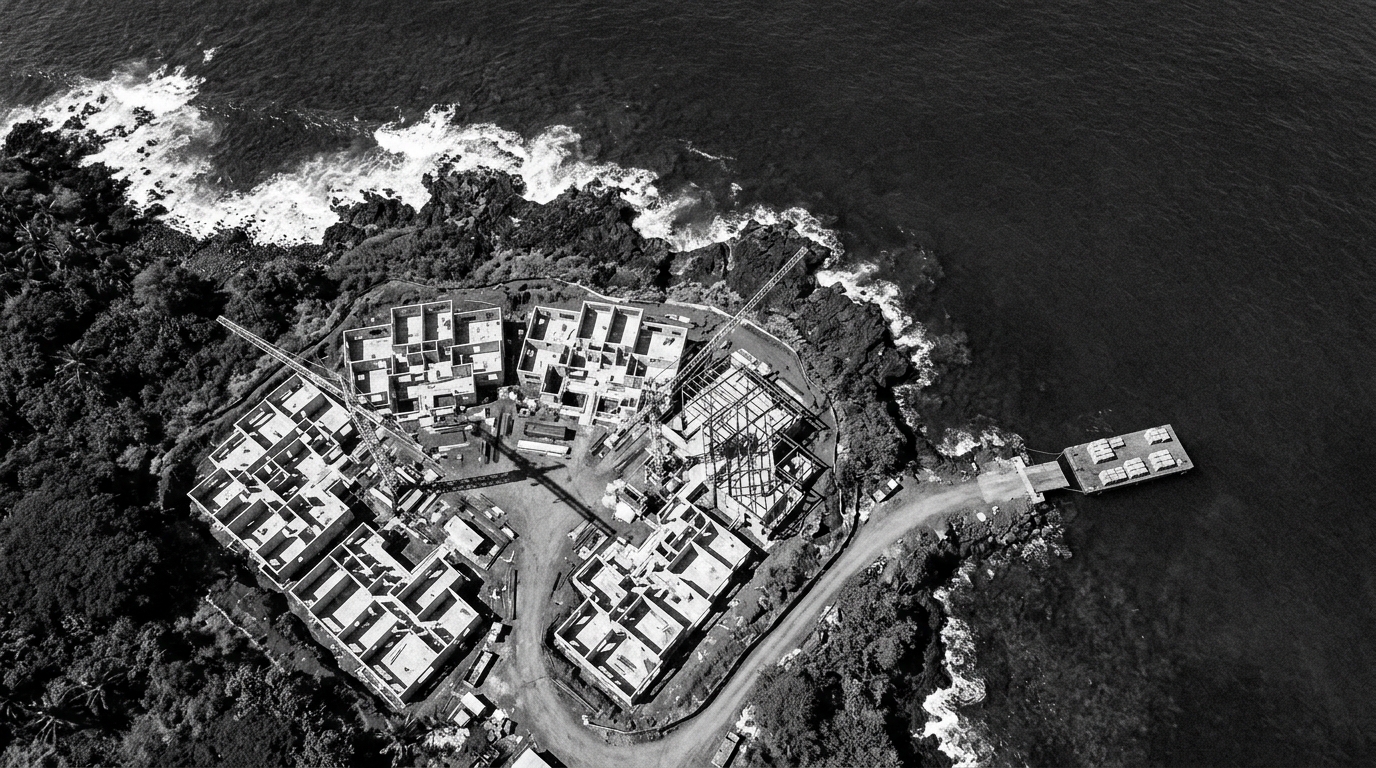
Hilton's First Curio in Hawaii Cost $714K Per Key to Build. Let That Land for a Second.
A $150 million construction loan for 210 rooms on Kauaʻi sounds like paradise until you do the per-key math and ask what Curio Collection actually delivers that justifies the premium over a straight Hilton flag in a market where visitor arrivals have flatlined.
So let's decompose this. Hilton just announced Hale Hōkūala Kauaʻi as the first Curio Collection property in Hawaii, opening Fall 2026. New build. 210 rooms. Silverwest Hotels owns it, Hilton manages it. Construction financing: a $150 million senior loan closed in mid-2024. That's roughly $714,000 per key in construction debt alone... before you add the land basis, pre-opening costs, FF&E procurement, or whatever soft costs didn't make it into that loan figure. On an island where your concrete gets barged in. Where your labor pool is a fraction of any mainland market. Where your utility costs make a Manhattan operator wince.
Look, I'm not saying this can't work. Kauaʻi is a beautiful island with high barriers to entry, which is exactly why developers love it... limited supply means rate power. The location near Lihue Airport and Kalapaki Beach is smart. You've got access to a Jack Nicklaus golf course. The outdoor event space (10,000 square feet) is clearly targeting the group and wedding segment, which on Kauaʻi is a real revenue driver. But here's what bothers me: what does Curio Collection actually DO for this asset that a different flag (or no flag at all) wouldn't? Curio is Hilton's "soft brand" collection... meaning the property keeps its individual identity while plugging into Hilton Honors distribution. That distribution is the entire value proposition. So the question every technology and systems person should be asking is: does the Hilton Honors pipe deliver enough incremental demand at a high enough ADR to justify the franchise cost on a $714K-per-key asset in a market where total visitor arrivals have been flat at 9.6 million?
Here's where it gets interesting from a systems perspective. Hawaii's hotel market generated roughly $12 billion in economic activity in 2025, but that number masks a split... visitor spending is up while arrivals are flat. Translation: fewer guests spending more per trip. That's a rate story, not a volume story. And a rate story on Kauaʻi means your revenue management system, your booking engine, your CRM, your dynamic pricing logic... all of it has to be tuned for a market where you're extracting maximum yield from a constrained demand pool rather than filling rooms. The technology stack matters more, not less, when your occupancy ceiling is set by airline capacity to a small island airport. I've consulted with resort properties in similar constrained-demand markets, and the ones that treat their RMS like a set-it-and-forget tool are the ones leaving $15-30 per occupied room on the table every single night.
The broader pattern here is Hilton aggressively expanding its luxury and lifestyle portfolio in Hawaii... over 25 operating hotels, nearly 10 more in the pipeline. They converted the former Trump property in Waikiki to their LXR brand. They added an Ambassador Hotel to Tapestry Collection. Now Curio gets Kauaʻi. What they're actually building isn't just a hotel portfolio... it's a loyalty distribution monopoly across Hawaiian luxury. If you're a Hilton Honors member planning a Hawaii trip, they want a Hilton option on every island, at every price point, capturing every trip occasion. That's a smart corporate strategy. Whether it's a smart owner strategy at $714K per key with rising insurance costs, construction inflation, and a GM who has to staff a resort-level operation in one of the tightest labor markets in America... that's a very different question. And it's not a question Hilton has to answer, because Hilton isn't writing the check. Silverwest is.
The technology infrastructure decisions being made right now for this property... PMS selection, RMS integration, guest-facing tech, WiFi and connectivity across what I guarantee is a spread-out resort campus... those decisions will determine whether this asset hits its pro forma or spends years trying to operationalize a brand promise that looked great in the development pitch. A 210-room new build on a Hawaiian island with 10,000 square feet of outdoor event space isn't a hotel. It's a technology integration project disguised as a resort. And if the systems team doesn't have an operator with island-market experience whispering in their ear during implementation, they're going to build something that demos beautifully and breaks the first time a tropical storm knocks out connectivity to 40% of the property.
Here's what to bring to your ownership group if you're looking at resort development or soft-brand conversion in a high-barrier market. Run the actual per-key construction cost against your realistic stabilized NOI... not the pro forma year-three fantasy, but what the asset actually generates once you account for Hawaii-level labor costs, insurance that's been climbing 15-20% annually, and utility expenses that would make your mainland controller cry. If you're already operating in Hawaii or any island market, pressure-test your technology stack right now. Your RMS needs to be optimized for rate extraction in a constrained-demand environment, not volume fill. And if a brand is pitching you on loyalty contribution as the justification for their fee structure, ask for actuals from comparable resort properties in similar markets... not system-wide averages, not mainland comps. Actuals. From resorts. On islands. If they can't produce them, that tells you everything you need to know about how confident they are in their own numbers.
