Today · Apr 21, 2026
Hilton Bayfront St. Pete Sells for $288K Per Key. The Buyer Isn't Keeping the Hotel.

Hilton Bayfront St. Pete Sells for $288K Per Key. The Buyer Isn't Keeping the Hotel.

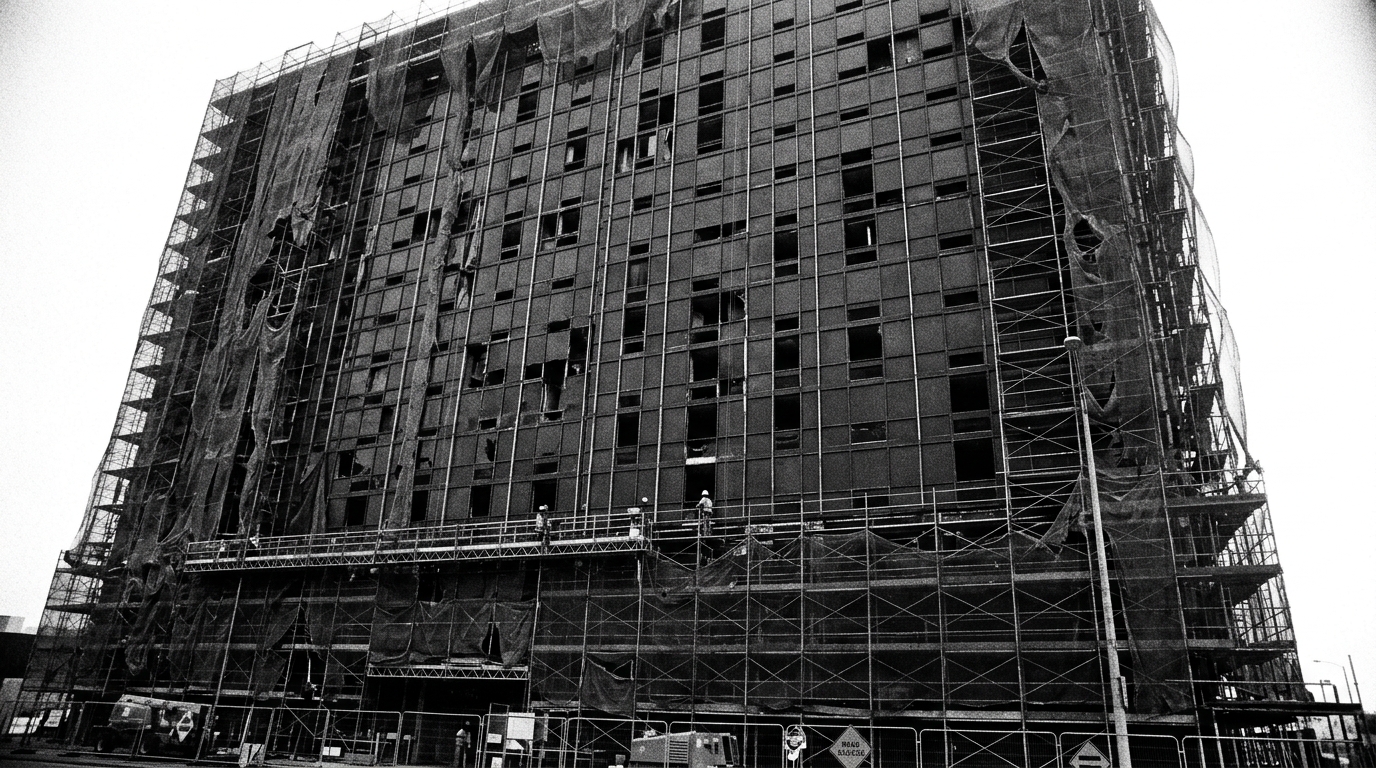
Kolter Group is paying $96 million for a 333-room Hilton in downtown St. Petersburg, and the per-key math only makes sense if you stop thinking about it as a hotel transaction. This is a land play dressed in a room key, and it tells you something uncomfortable about where real estate value is heading in coastal Florida markets.

$96 million for a 333-room hotel built in 1972. That's $288,288 per key. On trailing hotel operations alone, that number is aggressive for an upper-upscale property in St. Pete. It stops being aggressive the moment you realize Kolter Group isn't buying a hotel. They're buying three acres of DC-1 zoned waterfront land in one of the fastest-appreciating downtown corridors in the Southeast. The hotel is what happens to be sitting on it.

Let's decompose this. Ashford Hospitality Trust acquired this property in 2004 as part of a 21-property, $250 million portfolio deal. That's roughly $11.9 million per property on average (not all equal, but directional). They're exiting a single asset for $96 million two decades later. Net of selling expenses, Ashford walks away with approximately $95.3 million in cash, nearly all of which goes to a mortgage lender. That last detail matters. Ashford isn't cashing a $95 million check. They're retiring $94.7 million in debt. For a REIT carrying negative equity and sustained losses, this isn't an opportunistic sale. It's triage.

Kolter's playbook is already visible. They bought the adjacent 1.65-acre parking lot from Ashford in 2019 for $17.5 million and turned it into Saltaire, a 35-story condo tower that opened in 2023. Now they're assembling the rest of the block. Three acres of waterfront with high-density zoning in a market where residential towers are selling... that's the asset. The 333 rooms and 47,710 square feet of meeting space are a placeholder. The Hilton flag is temporary.

The per-key number here is a trap for anyone trying to use it as a comp. If you're benchmarking hotel acquisitions in the Tampa-St. Pete market, $288K per key for a 1972 build with a 2014 renovation implies a cap rate that only works if you're underwriting significant NOI growth. Kolter isn't underwriting NOI growth. They're underwriting demolition and a residential tower. This is a land transaction priced per key because the land currently has a hotel on it. The moment it clears the hospitality comp set and enters the residential development comp set, $32 million per acre for prime downtown waterfront starts to look like exactly what it is... a market bet on St. Pete's trajectory, not a hotel investment thesis.

One more number worth noting. Tampa-St. Pete hit all-time high RevPAR in 2023, with ADR surpassing $170 and occupancy in the low 70s. The market is performing. This hotel could operate. But "could operate" and "highest and best use" are different calculations, and Kolter did the second one. That's the story. When the land under a performing hotel is worth more as condos than as rooms, the hotel loses. Every time.

Operator's Take

Here's what I'd bring to my owner unprompted if I ran a hotel within three miles of this site. First, you're about to lose 333 rooms and 47,000+ square feet of meeting space from your comp set. That changes your supply picture. If you compete for group business in downtown St. Pete, your leverage just improved... start having the rate conversation now, before the hotel goes dark. Second, if you own waterfront or near-waterfront hotel land in any appreciating Florida market, get a current land appraisal separate from your hotel valuation. Know both numbers. Because somewhere, a developer is already doing that math on your parcel. Third, for anyone using this as a transaction comp... don't. This is a land deal. Your per-key benchmarks end where the demolition permit begins.

— Mike Storm, Founder & Editor
Read full analysis → ← Show less
Source: Google News: Hilton
Host Hotels at $412K Per Key and a 5.8% Implied Cap Rate. Check Again.

Host Hotels at $412K Per Key and a 5.8% Implied Cap Rate. Check Again.

Citigroup just bumped Host Hotels' price target to $22, and three other analysts followed the same direction in the same month. The interesting number isn't $22... it's what $13B in market cap plus $5B in debt tells you about where Wall Street thinks luxury hotel yields are heading.

Host Hotels trades at roughly $18.70 per share with a $13.1B market cap and $5.08B in debt. Citigroup's new $22 target implies roughly 18% upside from current levels. That's not a mild adjustment. That's a thesis.

The Q4 2025 earnings tell a split story. Revenue hit $1.6B, up 12.3% year-over-year, beating estimates by $110M. EPS came in at $0.20 against a $0.47 consensus. Revenue up, earnings down. That gap has a name: expense growth outpacing topline. Across the REIT hotel sector, FFO multiples sit at 8.9x. Host is trading inside that band. The analysts raising targets aren't saying the current numbers are great. They're pricing in a belief that Host's capital recycling (selling the Four Seasons Orlando and Jackson Hole, redeploying into higher-yield assets) will compress the expense-to-revenue gap over the next 12 months. That's a bet, not a finding.

Host's 76-property portfolio at roughly 41,700 rooms puts the enterprise value around $435K per key. For luxury and upper-upscale assets in high-barrier markets, that's not unreasonable. But run the implied cap rate on trailing NOI and you're in the mid-to-high 5% range. That only works if you believe NOI grows from here. CFO Sourav Ghosh pointed to affluent consumer spending, FIFA World Cup tailwinds, and muted new supply as 2026 catalysts. All plausible. None guaranteed. Muted supply is the strongest argument (you can verify it in the pipeline data). Consumer spending on experiences is the weakest (it's a narrative until it's a number).

The real signal isn't any single price target. It's the clustering. Stifel at $22. JP Morgan at $21. Argus upgrading to strong-buy. Weiss moving from hold to buy. Four positive moves in 30 days. When consensus shifts this fast, it usually means one of two things: either the underlying thesis genuinely improved, or the first mover created gravity and everyone else adjusted to avoid being the outlier. I've audited enough analyst models to know that the second scenario is more common than anyone on the sell side wants to admit.

The number that matters for anyone benchmarking their own assets: Host is divesting properties and the market is rewarding the strategy. That tells you where institutional capital wants to be (experiential resorts, high-barrier markets) and where it doesn't (urban full-service with flat RevPAR growth). If your asset fits the profile Wall Street is buying, your basis looks better today than it did 60 days ago. If it doesn't, no analyst upgrade changes your math.

Operator's Take

Here's what nobody's telling you about these analyst upgrades. When four firms raise targets on the largest lodging REIT in 30 days, institutional capital follows. That reprices the whole luxury and upper-upscale transaction market... and your comp set valuations move whether you're publicly traded or not. If you're an owner of a luxury or upper-upscale asset in a high-barrier market, pull your trailing 12-month NOI right now and run it against a 5.5-6.0% cap rate. That's where the institutional money is pricing. If the number surprises you, it's time to have the disposition conversation before the cycle gives you a reason not to. If you're in urban full-service with flat margins, don't mistake this for good news for you. Host is literally selling those assets to buy what you're not. Read that signal clearly.

— Mike Storm, Founder & Editor
Read full analysis → ← Show less
Source: Google News: Host Hotels & Resorts
Detroit's $660K Per Key Convention Hotel Bet. Do the Math on That Subsidy.

Detroit's $660K Per Key Convention Hotel Bet. Do the Math on That Subsidy.

A $396 million, 600-room JW Marriott is rising on the Detroit riverfront with $142 million in tax breaks and a skybridge to the convention center. The question nobody's asking is what happens when the city needs that tax revenue back and the hotel hasn't hit projections.

I sat across from a developer once... sharp guy, good track record... and he told me his new convention hotel was going to "transform the city." I asked him what his stabilized occupancy assumption was. He changed the subject. That conversation was 15 years ago at a different project in a different city, and I can tell you exactly how it ended: the hotel opened late, stabilized slower than projected, and the city spent a decade wondering where the economic impact went.

Detroit's getting a 600-room JW Marriott connected by skybridge to the convention center. Nearly $400 million all-in. That's roughly $660,000 per key for a new-build luxury convention hotel, which honestly isn't outrageous for the product type... comparable convention properties in Nashville and Indianapolis have traded at similar levels. The $142 million in tax incentives underwriting the deal, though... that's where I want to slow down. That's a 30-year Renaissance Zone worth about $130 million plus another $11.6 million in abatements. The city's math says the hotel generates $25.4 million in annual tax revenue and $2.5 billion in economic impact over those 30 years. I've seen these projections before. The revenue number always assumes full stabilization by year three and consistent demand growth through year ten. Reality tends to be less cooperative.

Here's the thing... Detroit genuinely needs this hotel. The convention center has reportedly been losing 12 events a year because there wasn't an attached hotel. The NBA reportedly wouldn't bring an All-Star game without more rooms. The NCAA Final Four is booked for April 2027, essentially timed with the opening. That's real demand. That's not speculative. What concerns me is the supply math around it. Marcus & Millichap projected 1,200 new rooms hitting downtown Detroit, with occupancy expected to dip to 59% during the absorption period. The market's current ADR sits around $126. This JW Marriott is projecting an average rate of $345. That's a 174% premium to the market average. Even with the JW flag and the convention connection, that spread is aggressive. It assumes the hotel operates almost entirely outside the existing comp set, pulling demand that currently goes to other cities, not other Detroit hotels. That's the bet. And it might be right. But if convention bookings underperform those projections by even 15-20%, the flow-through math on a $400 million asset gets ugly fast.

The developer, Sterling Group, has already secured $252 million in financing through Ullico, the union labor insurance company. That's smart... union labor financing for a union-built hotel creates alignment. And they're already booking room blocks through 2029, which suggests genuine market confidence. But I've watched convention hotels in a half-dozen cities open with strong advance bookings and then struggle to fill the gaps between events. Convention demand is lumpy. You're sold out for three days, then you're running 45% for the next week. Your F&B operation (three restaurants, a spa, a 50-foot lap pool) has fixed costs that don't care whether there's a convention in-house or not. At $660K per key, the debt service alone demands consistent high-rate performance. The 30-year tax break helps the developer's return, but it doesn't help the operator fill Tuesday nights in February.

What I'll be watching is the gap between what the city was promised and what gets delivered. $2.5 billion in economic impact over 30 years is $83 million a year. That's a bold number for a single hotel, even a 600-room convention property. If the JW Marriott Detroit delivers 70% of that projection, the city probably still comes out ahead. If it delivers 50%, someone's going to be asking why $142 million in tax breaks went to a hotel that generates less revenue than promised. That's the math that matters... not whether the hotel opens (it will), not whether it's beautiful (it will be), but whether the economic assumptions that justified $142 million in public money hold up when the projection meets a Tuesday night in January with no convention on the books.

Operator's Take

If you're running a hotel in downtown Detroit right now, the next 18 months are going to reshape your market. A 600-room luxury property with $345 average rate is going to pull group business you've never competed for... but it's also going to compress your rate ceiling on the citywide events you currently benefit from. Run your group pace against the convention calendar for 2027 and beyond. Identify the events where you've been the overflow hotel and figure out which ones this JW Marriott absorbs entirely. For independent and select-service operators within three miles of the convention center, this is what I call the Three-Mile Radius in action... your revenue ceiling just changed. Don't wait to see it in the numbers. Adjust your mix strategy now, lean harder into transient and extended-stay segments where a $345-per-night convention hotel isn't competing with you, and get your rate positioning locked before 600 new rooms start showing up in the comp set data.

Read full analysis → ← Show less
Source: Google News: Marriott
$4.3B for 78 Hotel Suites. That's $55M Per Key. Check Again.

$4.3B for 78 Hotel Suites. That's $55M Per Key. Check Again.

One Beverly Hills just locked in the largest hospitality financing package in a decade for a 78-suite Aman hotel and luxury residential complex. The per-key math on the hotel component alone should make every asset manager in the country recalibrate what "luxury" means as an investment thesis.

Available Analysis

$4.3 billion in total financing. $2.8 billion senior from J.P. Morgan. $1.5 billion mezzanine from VICI Properties (up from a $450 million position... they more than tripled down). The project's developers now peg completed market value at $10 billion. Those are the headline numbers. Let's decompose this.

The hotel component is 78 suites. Seventy-eight. Even if you generously allocate only 20% of the total project cost to the hotel (the rest being residential towers, retail, club, gardens), you're looking at roughly $860 million attributable to a 78-key property. That's $11 million per key on a cost basis. If you allocate based on the $10 billion projected completed value, the per-key figure climbs past anything I've seen outside of a sovereign wealth fund vanity project. For context, the most expensive hotel transactions in recent history have closed in the $2-3 million per-key range. This isn't the same math. This isn't even the same sport.

The real story is the capital stack structure. VICI Properties, a net-lease REIT that built its portfolio on gaming assets, just committed $1.5 billion in mezzanine debt to an ultra-luxury mixed-use play. That's not a passive investment. VICI, Cain International, and Eldridge Industries have signed a non-binding letter of intent to form what they're calling an "Experiential Cross-Capital Venture" for future deals. Translation: VICI is betting its thesis on experiential real estate extends well beyond casinos. The mezzanine position means VICI is subordinate to $2.8 billion in senior debt. In a downside scenario (and every deal has one), VICI absorbs losses before J.P. Morgan takes a haircut. The question isn't whether VICI's underwriters modeled that scenario. The question is what occupancy and ADR assumptions they used, because at this basis, the breakeven math requires rate levels that essentially don't exist yet in the U.S. hotel market.

The residential pre-sales provide some comfort. The first Aman-branded tower is approaching $1 billion in contracted sales, with units priced from $20 million to north of $40 million. That's real capital coming in the door, and it de-risks the overall project significantly. But the hotel has to stand on its own economics eventually. Seventy-eight suites generating enough NOI to justify even a fraction of this basis requires sustained ADR in a range that maybe five or six hotels globally achieve consistently. The comp set for this property doesn't really exist in the U.S. You're looking at Aman Tokyo, Aman Venice... properties operating in markets with fundamentally different supply constraints and buyer profiles.

The 30-year economic impact projection of $40 billion is the kind of number that belongs in a municipal approval presentation, not a financial analysis. I'll leave that one alone. What I won't leave alone: this deal tells you exactly where institutional capital believes the margin is in hospitality. Not in select-service. Not in upper-upscale conversions. In ultra-luxury mixed-use where the hotel is the amenity, the residences are the revenue engine, and the brand is the multiplier on both. If you're an investor or asset manager watching this, the signal isn't "go build an Aman." The signal is that the smartest capital in real estate is pricing hotel keys as components of larger experiential ecosystems, not as standalone cash-flow assets. That repricing has implications for how every luxury hotel deal gets underwritten from here.

Operator's Take

Look... this deal lives in a universe most of us will never operate in. But the structural lesson applies everywhere. VICI tripling its mezzanine position tells you that gaming-focused REITs are coming for experiential hospitality assets. If you're an owner of a luxury or upper-upscale property in a major gateway market, your asset just became more interesting to a wider pool of buyers than it was 12 months ago. That's worth a conversation with your broker this quarter... not to sell, but to understand where your valuation sits now that the capital pool is expanding. And if you're sitting on mixed-use potential (hotel plus residential, hotel plus entertainment), start modeling it. The days of institutional capital evaluating hotel assets in isolation are ending. The smart money wants the ecosystem. Make sure you know what yours is worth.

— Mike Storm, Founder & Editor
Read full analysis → ← Show less
Source: Google News: Hotel Industry
A DoubleTree Just Became a Tapestry in Rochester. Here's What That Actually Tells You.

A DoubleTree Just Became a Tapestry in Rochester. Here's What That Actually Tells You.

When a 157-room hotel in Rochester quietly swaps one Hilton flag for another, most people see a press release. I see a playbook that every owner with a full-service conversion on the table needs to understand before they sign anything.

A 157-room hotel in Rochester, New York... originally built as senior housing in the '70s, converted to a hotel in 1979, run as a DoubleTree for years... just showed up on tourism sites as a Tapestry Collection by Hilton. No big announcement. No splashy press event. Just a quiet flag swap within the same parent company. And that quiet part is the part worth paying attention to.

Here's what most people miss about intra-family brand conversions. The sign changes. The reservation system gets a different code. The loyalty tier structure shifts. But the building is the same building, the staff is largely the same staff, and the owner is still staring at the same P&L wondering if this move actually pencils out. In this case, you've got rooms that are about 15% larger than typical (thank the original apartment layout), a rooftop bar, a steakhouse, spa, event venues... all the bones of something that fits the "independent spirit, big brand distribution" pitch that Tapestry was designed for. Moving from DoubleTree to Tapestry isn't an upgrade or a downgrade. It's a repositioning bet. The owner is betting that this property generates more revenue as a "collection" hotel with personality than as a cookie-cutter full-service flag. In a market like Rochester, where you're not swimming in leisure demand, that bet carries real risk.

The math question that matters: what does the total brand cost look like before and after? DoubleTree carries full-service standards, full-service PIP expectations, and full-service fees. Tapestry is built as a softer-touch collection brand... fewer mandates on the operating model, theoretically lower PIP exposure, but you're trading some of that brand recognition and direct booking engine power. The property went through a renovation in 2023. Smart timing if you're going to switch flags anyway... do the capital work under the old brand, launch the new identity on a refreshed product. That tells me somebody at that ownership group (a local operator that also runs a Hyatt Regency in the same market) is thinking three moves ahead.

I sat in a brand review once with an owner who was converting from one flag to another within the same family. He'd been told it was "mostly cosmetic." Six months in, he was dealing with a new reservation system integration, retraining his front desk on different loyalty tier recognition protocols, a complete rewrite of his sales materials, and a property-level marketing spend that nobody had budgeted for because "it's the same company." He told me: "They said it was like moving apartments in the same building. It's more like moving to the same street in a different city." That's the part the press releases never cover. The operational drag of a conversion is real even when the parent company stays the same.

This is Hilton playing the long game on lifestyle and collection brands. They've announced plans to more than double their lifestyle presence in EMEA, they're pushing Tapestry openings from Crete to Cork to Cologne, and in the U.S. they're doing exactly what you see in Rochester... finding existing properties within their own portfolio that fit the collection model better than the legacy flag they're wearing. It's a smart strategy at the portfolio level. But at the individual property level, the question is always the same: does this flag change put more money in the owner's pocket after all costs, or does it just look better in Hilton's brand architecture slide? The answer depends entirely on execution, and execution happens shift by shift, not in a PowerPoint.

Operator's Take

If you're an owner being pitched a conversion from one brand to another within the same family... whether it's Hilton, Marriott, IHG, doesn't matter... get the total cost comparison in writing before you agree to anything. Not just the franchise fee delta. The full picture: PIP requirements (or PIP relief), system migration costs, training hours, marketing transition spend, and the revenue gap during the 6-12 months when your old brand identity is gone and your new one hasn't taken hold yet. This is what I call the Brand Reality Gap... the brand sells you a repositioning story at the corporate level, but you deliver it at the property level, and the gap between those two realities is where your margin lives or dies. Run a 90-day post-conversion scenario on your P&L. If you can't model positive NOI impact within 18 months of the switch, push back hard on the timeline or the terms. And if the brand tells you it's "mostly cosmetic"... it's not. Budget accordingly.

Read full analysis → ← Show less
Source: Google News: Hilton
14,000 Cladding Fixes on a Brand-New Hotel. That's Not a Punch List. That's a Warning.

14,000 Cladding Fixes on a Brand-New Hotel. That's Not a Punch List. That's a Warning.

A 189-key Hilton in the UK needs 14,000 exterior panel fixes barely a year after opening, and the contractor is eating the cost. If you think this is just a British construction story, you haven't looked at your own building envelope lately.

A 23-story, 189-key Hilton opened in late 2024 as the crown jewel of a £540 million mixed-use development in Woking, England. Panels started falling off the building in 2021... three years before the hotel even opened. Let that sit for a second. The cladding was failing during construction, and they opened anyway. A temporary fix last spring addressed about 2,000 of the roughly 4,000 exterior panels. Now the permanent solution requires installing over 14,000 revised fixings across the entire facade. Six months of work. Road closures. And the main contractor, Sir Robert McAlpine, is footing the bill under their design-and-build contract.

Here's where this gets interesting for anyone who operates or owns a hotel built in the last decade. The UK has been dealing with building envelope failures since the Grenfell Tower tragedy in 2017, and the regulatory response has been massive... combustible cladding bans on buildings over 18 meters, extended specifically to hotels in December 2022. Remediation costs across the UK run £1,318 to £2,656 per square meter. The government has committed £5.1 billion, but the estimated total bill is £16.6 billion. Those numbers tell you the scope of the problem. And while this specific failure isn't about combustibility (it's about panels physically detaching from the building), the underlying lesson is the same: building envelope failures on newer properties are not theoretical risks. They're happening. Regularly.

I've seen this pattern play out stateside more times than I'd like. A property opens with fanfare, the punch list supposedly gets cleared, and eighteen months later you've got water intrusion behind the curtain wall or facade panels that weren't rated for the actual wind load at elevation. The contractor points at the architect. The architect points at the specs. The owner's lawyer points at everyone. Meanwhile, the GM is dealing with road closures, scaffolding that makes the entrance look like a construction site, and guests asking if the building is safe. The revenue impact of six months of scaffolding on a 189-key property isn't theoretical... it's real money walking across the street to a competitor that doesn't look like it's under renovation.

What makes the Woking situation instructive is the ownership structure. The local borough council owns the hotel through a holding company. Hilton operates it under a management agreement and collects a fee. The council doesn't receive hotel income directly... it flows through the holding entity, which pays Hilton. So when the cladding fails, the management company keeps collecting its fee (their contract doesn't care about your facade), the contractor absorbs the remediation cost (for now... these things have a way of ending up in court), and the owner... the council, backed by taxpayers... holds the risk on any revenue disruption during six months of construction. That's the alignment gap in three sentences. The entity absorbing the pain isn't the entity that built the building or the entity operating it.

If you own or manage a property built in the last 15 years, especially anything above four stories with a modern rainscreen or curtain wall system, this is your wake-up call. Not to panic. To inspect. Building envelope warranties have specific timelines and specific exclusion language. If you haven't had an independent facade inspection (not from the original contractor... independent), you're trusting the people who built it to tell you whether they built it right. I've been around long enough to know how that usually works out.

Operator's Take

If you're a GM or asset manager at a property built after 2010 with any kind of panel facade system, pull your original construction warranty this week. Check what's covered, what's excluded, and when it expires. Then schedule an independent building envelope inspection... not through your contractor, through a third-party facade consultant. The cost is negligible compared to the alternative. If you're at a managed property, bring this to your owner proactively with the inspection scope and cost already figured out. This is what I call the CapEx Cliff... deferred envelope maintenance doesn't announce itself gradually. It announces itself when panels start hitting the sidewalk. The owner who gets ahead of this looks like they're running the building. The one who waits for the phone call from risk management looks like they weren't paying attention.

Read full analysis → ← Show less
Source: Google News: Hilton
Hotels Will Spend 10% of IT Budgets on AI This Year. Here's What That Actually Buys You.

Hotels Will Spend 10% of IT Budgets on AI This Year. Here's What That Actually Buys You.

58% of hoteliers say they'll dedicate over 10% of their IT budget to AI in 2026, and the big brands are already reporting real numbers back. The question is whether any of those numbers translate to a 140-key independent running one night auditor and a PMS from 2017.

So here's where we are. The big hotel companies are done calling AI an experiment. Hyatt says its group sales teams are 20% more productive. Marriott claims a 35% jump in direct booking conversions. Hilton's reporting 5-8% revenue increases from AI-driven pricing and segmentation. And J.P. Morgan is on the record saying 2026 is the year scaled AI deployments start showing up in earnings.

Those are real numbers from real companies. I'm not dismissing them. But let's talk about what this actually does... and doesn't... mean for the operator reading this who isn't Marriott.

The Canary Technologies report says 85% of hospitality IT decision-makers plan to put at least 5% of their IT budget toward AI tools in the next 12 months, with 58% going above 10%. That sounds aggressive until you do the math on what "10% of IT budget" means at a 150-key select-service versus a 2,000-room convention hotel. For a property spending $180K annually on technology, 10% is $18,000. That's one vendor contract. Maybe two if you negotiate. Marriott spent between $1 billion and $1.2 billion on tech initiatives including AI. They're operating at a scale where they can build custom tools, train proprietary models, and absorb the implementation cost across thousands of properties. You can't. That $4.4 million Hyatt saved on AI-powered reservations? It came from deploying across their entire system. The per-property math is completely different when you're buying off the shelf and implementing with a team of... you.

Here's what bothers me. Only 32% of hotel owners have AI embedded across most operations, but 98% say they've "begun incorporating" it. That gap is enormous, and it's the same gap I've seen with every technology cycle in this industry. Somebody buys a tool. Somebody configures it during a two-hour onboarding call. Three months later it's running at 30% utilization because the person who set it up left (73% turnover, remember?) and nobody trained the replacement. The tool still shows up on the IT budget. The ROI doesn't show up anywhere. I consulted with a hotel group last year that was paying for four different "AI-enhanced" platforms. When I asked the front desk team which ones they used daily, the answer was one. Partially. The rest were expensive screensavers.

Look, I'm not anti-AI. I'm an engineer. I've built rate-push systems and reservation tools. I get genuinely excited when someone solves a real operational problem with smart automation. The Ritz-Carlton property that increased room-cleaning speed by 20% with an AI system? That's a specific workflow improvement with a measurable outcome... I want to know more about how they did it. The resort that cut food waste 50% in eight months? That's real money recaptured from a real operational leak. Those are products that pass what I'd call the operational survival test... they solve a problem the staff actually has, they work when the GM isn't watching, and they deliver value you can trace to a line item. But "AI-powered" as a label on a vendor pitch deck? That tells me nothing. What model? What's the fallback when it fails at 2 AM? Does it integrate with your actual PMS or does it need a middleware layer that costs another $400 a month? The 62% of operators citing "lack of expertise" as a barrier aren't wrong. They're describing reality. And until the vendor community starts building for the night auditor instead of the demo room, that barrier isn't going anywhere.

The real number in this story isn't the billions the big brands are spending. It's the 40% of operators who say integration with legacy systems is their biggest challenge. Because that's the actual constraint. You can buy the smartest AI pricing tool on the market, but if your PMS was built before the iPhone existed and your building's network infrastructure can't sustain a reliable API connection, you've bought a Ferrari for a dirt road. Start with the road.

Operator's Take

Here's what I'd tell any GM or independent owner reading the AI headlines right now. Don't start with the tool. Start with the problem. Write down the three workflows that eat the most labor hours or leak the most revenue at your property. Then... and only then... go looking for a solution. If you're spending $18K on AI this year (that 10% number for a typical select-service IT budget), make it one tool that solves one real problem and train every shift on it. Not four tools at 30% utilization. One tool at 90%. And before you sign anything, ask the vendor what happens when your night auditor is alone at 2 AM and the system goes down. If they can't answer that in one sentence, walk. This is what I call the Vendor ROI Sentence... if they can't tie the value to your P&L in one sentence, it's a story, not a solution. The big brands will figure out AI at scale because they have the money and the infrastructure. Your job is to figure out AI at YOUR scale, on YOUR network, with YOUR team. That's a completely different problem, and nobody's solving it for you.

— Mike Storm, Founder & Editor
Read full analysis → ← Show less
Source: Google News: Hotel Industry
APLE's Stock Just Broke Below Every Major Moving Average. The Real Number Is in the EBITDA.

APLE's Stock Just Broke Below Every Major Moving Average. The Real Number Is in the EBITDA.

Apple Hospitality REIT's stock crossed below its 200-day moving average on declining fundamentals, and the technical signal is the least interesting part of the story. The per-key math on their recent dispositions tells you exactly how management is pricing this cycle.

APLE closed at $11.83 on March 19, which puts it below the 5-day, 10-day, 20-day, 50-day, 100-day, and 200-day moving averages simultaneously. That's not a technical blip. That's a market repricing the thesis.

The headline is the moving average cross. The real number is the 8% year-over-year decline in comparable hotel adjusted EBITDA for Q4 2025, landing at $99 million. RevPAR fell 2.6% to $107 on 70% occupancy. Full-year net income dropped from $214 million to $175 million. And management's own 2026 guidance says RevPAR will land somewhere between negative 1% and positive 1%. That's not cautious optimism. That's a company telling you the ceiling is flat while costs keep climbing. Net income guidance for 2026 is $133 million to $160 million... the midpoint represents a roughly 16% decline from 2025. Two consecutive years of net income compression on a rooms-focused REIT portfolio tells a specific story about where select-service margins are headed.

Let's decompose the disposition activity. Seven hotels sold in 2025 for approximately $73 million. Without the individual property breakdowns, the blended number suggests these weren't trophy assets. Meanwhile, $58 million went to repurchasing 4.6 million shares at roughly $12.60 per share (shares now trading below that basis). The 13 Marriott-managed hotels transitioning to franchise agreements is the move worth watching. Management frames it as "operational flexibility." What it actually is: a bet that self-managing or third-party managing those assets produces better flow-through than the Marriott management fee structure was delivering. That's a real operational thesis. Whether it works depends entirely on execution at property level.

The monthly distribution of $0.08 per share annualizes to $0.96, yielding roughly 8.1% at current prices. High yield on a declining stock in a flat-RevPAR environment is not a gift. It's a question. The question is whether that payout is sustainable if net income lands at the low end of guidance. At $133 million in net income against a distribution commitment of $0.96 per share, the gap between what the company earns and what it pays out is real... and it gets filled by depreciation add-backs in FFO. That math works until it doesn't. An 8.9x FFO multiple for hotel REITs as a sector tells you the market already prices in the cyclical risk. APLE trading below consensus target of $13.60 tells you some portion of investors think even that's generous.

The analyst range of $12 to $15 is a $3 spread on a $12 stock. That's a 25% disagreement about value. When the bulls and bears are that far apart on a select-service REIT with transparent fundamentals, the disagreement isn't about the numbers. It's about what happens next in government travel pullback, rate compression in secondary markets, and whether the franchise conversion strategy generates enough margin improvement to offset revenue headwinds. None of those questions have clean answers right now. The stock is telling you that.

Operator's Take

Here's the operational signal inside the financial noise. APLE is converting 13 managed hotels to franchise agreements because the management fee math stopped working. If you're a GM at a select-service property where your management company's fee is eating into an already-compressed margin... bring that analysis to your owner before someone else does. Pull your management fee as a percentage of total revenue for the last three years. If it's rising while GOP margin is falling, that's the conversation. APLE's 2026 RevPAR guidance of flat to negative 1% is a decent proxy for the broader select-service segment. If that's your world, your budget better reflect it. Don't build a 2026 forecast on rate recovery that isn't showing up in the data. Build it on cost discipline and flow-through. The math doesn't lie... but a budget built on hope will.

— Mike Storm, Founder & Editor
Read full analysis → ← Show less
Source: Google News: Apple Hospitality REIT
RevPAR Up 4.6% Nationally. Your Hotel Probably Wasn't Average. Check Your Comp Set.

RevPAR Up 4.6% Nationally. Your Hotel Probably Wasn't Average. Check Your Comp Set.

The mid-February national numbers look healthy at $103.35 RevPAR, but the spread between the best and worst performing markets was nearly 50 percentage points. If you're benchmarking against the national average instead of your three-mile radius, you're not managing... you're guessing.

A revenue manager I worked with years ago used to keep two printouts taped to her monitor. One was the national STR data. The other was her comp set. When anyone from corporate called to talk about "industry trends," she'd point to the national number, nod politely, then go back to working the comp set. She told me once... "The national number tells me what season it is. My comp set tells me whether I'm winning."

That's the lens you need for the mid-February data. Nationally, occupancy hit 61.5%, ADR came in at $167.98, and RevPAR landed at $103.35... all up year-over-year. Looks great on a slide. But here's where it gets real. Los Angeles posted a 26.5% RevPAR jump (NBA All-Star Game). San Diego surged 20.2%. Meanwhile, New Orleans... which had the Super Bowl the prior year... dropped 23.3% in RevPAR. Orlando fell 10% in occupancy. Same week. Same country. Completely different realities. If you're a GM in New Orleans looking at a headline that says "U.S. hotels up 4.6%," that number is worse than useless. It's misleading.

This is the part that never makes the press release. Event-driven markets are volatile by nature. The week you have the All-Star Game or a massive convention, your numbers look like genius. The following year, when that event is in another city, you're comping against a number you were never going to hit again. Smart operators know this. They built it into their forecasts months ago. But owners who manage by headline... and I've worked for a few... see the year-over-year decline and start asking uncomfortable questions. If you're in a market that benefited from a major event last year and you haven't already reframed expectations with your ownership, you're late.

And then there's the trend underneath the trend. Look at the week ending February 28... just two weeks later. Nationally, ADR and RevPAR both turned negative year-over-year, down 0.2%. Occupancy was flat. The positive story from mid-February evaporated in fourteen days. That's not a catastrophe. It's a reminder that weekly data is noisy, event-driven, and dangerous to build a narrative around. The operators who win aren't the ones reacting to every weekly report. They're the ones who understand their demand calendar at the micro level... what's coming in, what's falling off, what their comp set is pricing, and what their actual cost-to-achieve looks like against the rate they're holding.

Here's what I keep coming back to. The gap between the best and worst markets in any given week is enormous. $167.98 national ADR means nothing to the GM in a secondary market running a $109 ADR and watching labor costs climb. It means nothing to the GM in Los Angeles who just rode a one-time event to a $225 ADR and now has to figure out what normal looks like next week. The number that matters is YOUR number, in YOUR market, against YOUR comp set, measured against YOUR cost structure. Everything else is noise. Useful noise, maybe... context noise. But still noise.

Operator's Take

This is what I call the National Number Trap. The 4.6% RevPAR gain is real, but it's an average across markets that are performing 50 points apart from each other. If you're a GM at a 150-key select-service, pull your STR report for the last four weeks... not the national summary, your actual comp set. Compare your RevPAR index, not your RevPAR. If you're indexing above 100, you're winning regardless of what the national number says. If you're below 100 and your ADR is flat while your comp set is pushing rate, you have a pricing problem that no amount of good national news is going to fix. And if you're in a market that comps against a major event from last year, get ahead of it now... put together a one-page brief for your owner or asset manager showing the adjusted baseline, what realistic performance looks like absent the event, and what you're doing to close the gap. Don't wait for them to see the year-over-year decline and call you. Be the one who brings it up first, with a plan already formed.

Read full analysis → ← Show less
Source: Google News: CoStar Hotels
A Platinum Elite Guest Got Stranded in a Crisis Zone and Demanded Late Checkout. This Is the Whole Loyalty Problem in One Story.

A Platinum Elite Guest Got Stranded in a Crisis Zone and Demanded Late Checkout. This Is the Whole Loyalty Problem in One Story.

A Marriott Bonvoy Platinum member with over 1,000 lifetime nights got stranded by cartel violence in Puerto Vallarta and took to Reddit to complain about not getting a 4 PM late checkout at a Westin resort. The hotel offered a 2 PM checkout and a hospitality suite, but the guest wanted his "earned" benefit... and the internet's reaction tells you everything about where loyalty programs actually break down.

Available Analysis

I once watched a guest walk up to a front desk during a hurricane evacuation and demand his suite upgrade. Power was intermittent. Half the staff had gone home to take care of their families. The lobby smelled like wet carpet because the loading dock had flooded. And this guy, rain-soaked, rolling his Tumi through two inches of standing water, looked at the front desk agent and said, "I'm a top-tier member. I was promised a suite." The agent... a 23-year-old kid who'd been on shift for 14 hours... just stared at him. The manager stepped in. She handled it. I've never forgotten the look on that kid's face. It was the moment hospitality broke for him, just a little.

So when I read about a Platinum Elite member with 1,000 lifetime Marriott nights getting stranded during cartel violence in Puerto Vallarta and going to Reddit to complain that the Westin wouldn't give him a guaranteed 4 PM late checkout... look, I understood him and I was exhausted by him at the same time. Here's the thing most people reading this story are missing. The guest wasn't technically wrong about his benefit. And the hotel wasn't wrong to deny it. Marriott Bonvoy's own terms say the 4 PM late checkout is guaranteed at most properties but subject to availability at resort and convention hotels. The Westin Puerto Vallarta is a resort. The hotel offered 2 PM checkout and access to a hospitality suite. That's not a property failing a loyal guest. That's a property operating within policy while simultaneously dealing with a security crisis that shut down roads and airports. The U.S. government was telling citizens to shelter in place. And this guy's grievance was about his checkout time.

But here's where I'll push back on everyone laughing at the guest, too. The brands created this monster. They did. They built programs that train guests to see loyalty status as a contract rather than a relationship. "Earn 50 nights, receive these guaranteed benefits." The word "guaranteed" does heavy lifting in that sentence. It creates an expectation that is absolute, not contextual. And then the fine print says "except at resorts, convention hotels, and these other property types where it's subject to availability." The guest with 1,000 nights isn't reading the fine print every trip. He's been conditioned over years to believe his status means something immovable. The brand sold him that belief... it's the entire engine of the loyalty program. And then when reality collides with the promise, the property-level team absorbs the anger. Not the brand. Not Bethesda. The front desk agent at the Westin who's probably also worried about whether she can get home safely.

This is what I call the Brand Reality Gap. The brand sells the promise at scale... glossy, clean, aspirational. The property delivers it shift by shift, with real humans, during real situations that no brand standards manual anticipated. Cartel violence wasn't in the training module. Airport closures weren't in the late checkout policy exception flowchart. And yet the front desk team had to figure it out in real time while a guest with 1,000 nights stood there feeling like his loyalty was being disrespected. The gap between the promise and the delivery is always widest during a crisis. And the person standing in that gap is never the one who made the promise.

The internet roasted this guest. Fine. He probably deserved some of it. But I'd rather talk about what this reveals structurally. Loyalty programs have evolved from "thank you for your business" into transactional entitlement engines. The guest didn't ask for help getting home safely. He didn't ask the hotel to coordinate with the embassy or arrange alternative transportation. He asked for his benefit. Because that's what the program trained him to value. When your loyalty architecture teaches guests that status equals contractual rights, don't be surprised when they invoke those rights during a crisis. The program designed this behavior. The property inherited the consequences.

Operator's Take

If you're a GM at a branded resort or convention hotel, go read your brand's loyalty terms right now... specifically the exceptions for your property type. Know exactly which "guaranteed" benefits are actually subject to availability at your location, because your front desk team needs to be able to explain that clearly and confidently when a top-tier member pushes back. Script it. Role-play it. Do it before something goes sideways, not during. And here's the bigger one... build a crisis hospitality playbook that goes beyond checkout times. When your area faces a weather event, civil unrest, or any situation that strands guests, your team should already know the answer to "what do we offer?" before anyone asks. Hospitality suites, meal vouchers, transportation coordination, embassy contact info... have the list ready. Because the guest who feels genuinely taken care of during a crisis becomes your most loyal advocate. The guest who gets a policy recitation becomes a Reddit post.

Read full analysis → ← Show less
Source: Google News: Marriott
Xenia's F&B Revenue Jumped 13.4% in 2025. Here's the Number That Actually Matters.

Xenia's F&B Revenue Jumped 13.4% in 2025. Here's the Number That Actually Matters.

Xenia is projecting $3M to $5M in incremental EBITDA from a single F&B reconcepting at one property. That per-outlet math should make every upper-upscale owner rethink what their restaurants are actually worth... or what they're leaving on the table.

Xenia Hotels & Resorts grew F&B revenue 13.4% across 30 properties in 2025, with banquet and catering up 17.2%. The headline reads like a win. The real number is underneath it.

Total RevPAR grew 8%. Same-property RevPAR guidance for 2026 is 1.5% to 4.5%, midpoint 3%. Total RevPAR guidance is 2.75% to 5.75%, midpoint 4.25%. That 125-basis-point spread between RevPAR and Total RevPAR tells you exactly where Xenia thinks the growth is coming from. Not rooms. F&B and ancillary. The company is betting that non-room revenue grows faster than room revenue in 2026. For a public REIT to make that bet explicit in guidance, the internal data has to be convincing.

The number that deserves decomposition: $3M to $5M in projected incremental hotel EBITDA from the reconcepted F&B outlets at a single property (their Nashville asset, in partnership with a celebrity chef group). That's one hotel. One F&B overhaul. At the midpoint, $4M in EBITDA against a company-wide adjusted EBITDAre projection of roughly $260M means a single restaurant reconcepting at one of 30 properties could represent 1.5% of total portfolio EBITDA. I audited a management company once that spent two years chasing 1.5% of portfolio EBITDA through rate optimization across every property. Xenia is projecting the same impact from one kitchen.

The risk is real and Xenia acknowledges it. Renovation disruption carries an estimated $1M negative impact on adjusted EBITDAre and FFO in 2026. CapEx drops from $86.6M in 2025 to a guided $70M-$80M range. Group pace is up 10%, which supports the banquet thesis, but group pace in March doesn't guarantee group actualization in Q3. The 2026 guidance also implies adjusted FFO per share of $1.89 at midpoint, roughly 7% growth. That's not a blowout. That's a company threading a needle between capital investment, renovation disruption, and the assumption that corporate groups keep spending on evening events at resort properties. If corporate travel budgets tighten (and there are reasons to think they might), the banquet-heavy F&B model is the first line item that contracts.

The structural question for the industry: Xenia shifted its portfolio from 26% luxury exposure in 2018 to 37% in 2025. That repositioning is what makes the F&B math work. You can't generate 17.2% banquet revenue growth at a select-service. The strategy is portfolio-specific, not replicable at every chain scale. But the principle is universal... non-room revenue as a percentage of total revenue is the metric that separates REITs with pricing power from REITs running on a treadmill. Xenia's 125-basis-point spread between RevPAR and Total RevPAR guidance is the clearest public signal I've seen that a lodging REIT is pricing F&B as a growth engine rather than an amenity cost center.

Operator's Take

Here's what to do with this. If you're running an upper-upscale or luxury property with F&B outlets, pull your banquet and catering revenue as a percentage of total F&B for the last 12 months. Then compare it to 2019. Xenia's 17.2% banquet growth tells you the corporate group wallet is open right now... but it's open for properties that invested in the product. If your banquet kitchen hasn't been touched since 2017, you're watching that revenue walk to the property down the road that did the renovation. This is what I call the Flow-Through Truth Test... that 13.4% F&B revenue growth only matters if it's flowing to the bottom line, and F&B has a nasty habit of eating its own gains through labor and COGS. Don't just chase the top line. Track your F&B flow-through monthly. If revenue is up 13% and F&B profit is up 4%, you're working harder for less. That's not momentum. That's a treadmill.

— Mike Storm, Founder & Editor
Read full analysis → ← Show less
Source: Google News: Hotel REIT
Marriott's Apartment Brand Just Swapped GMs After One Year. That Tells You Everything.

Marriott's Apartment Brand Just Swapped GMs After One Year. That Tells You Everything.

The first mainland U.S. property for Apartments by Marriott Bonvoy just replaced its opening GM after 12 months, and the real story isn't the personnel change. It's what a $275-$325 ADR apartment-hotel conversion from student housing tells us about where brands are heading... and what they're asking owners to figure out on the fly.

Available Analysis

A GM I worked with years ago told me something I never forgot. He said the hardest property to run isn't the one that's failing. It's the one that's brand new, because nobody knows what it's supposed to be yet. The playbook doesn't exist. You're writing it in real time while guests are checking in and ownership is watching every line on the P&L.

That's what I thought about when I saw the announcement out of Savannah. The Ann Savannah... 157 units, converted from old college housing, running under a brand that has exactly one other property in the entire country (a spot in Puerto Rico that opened in late 2023). This is Marriott's Apartments by Marriott Bonvoy concept, their answer to the "we want space, kitchens, and laundry but with loyalty points" traveler. The opening GM lasted roughly a year before a new GM was named. That's not scandalous. It happens. But when you're running the flagship domestic property of a brand that's still finding its operational identity, a leadership change 12 months in tells you the concept is harder to execute than the pitch deck suggested.

Here's the math that matters. The property is targeting $275-$325 ADR with an average stay of three to four nights. That's upper-upscale money for an apartment conversion. The franchise investment range Marriott quotes for this brand is $33.8M to $112.2M, with royalty fees at 5% and a brand fund contribution of 1.57%. So the owner (Tidal Real Estate Partners and Sage Hospitality Group developed this together, with Sage managing) is paying 6.57% off the top to Marriott before they've figured out housekeeping frequency for a four-night stay, before they've solved what "food and beverage" means in a property with full kitchens and no traditional restaurant, before they've determined the right staffing model for a product that's part hotel, part apartment, part extended-stay but marketed as none of those things. The brand deliberately skips traditional hotel amenities like meeting space and full-service F&B. That sounds like cost savings until you realize it also means your revenue streams are almost entirely rooms-dependent. No banquet revenue cushion. No outlet profit to smooth a soft month.

I've seen this movie before. Not with this exact brand, but with every "new concept" launch where the brand unveils a gorgeous rendering, signs up enthusiastic developers, and then leaves the property-level team to solve the 47 operational questions that nobody at headquarters thought to ask. What's the housekeeping model for a unit with a full kitchen and in-unit laundry? How do you turn a four-bedroom loft in under 24 hours with current labor availability? When a guest stays four nights and cooks every meal, the wear on that unit is fundamentally different from a traditional hotel room. Your FF&E reserve better reflect that reality... and I'd bet the pro forma doesn't. The new GM comes in with 20-plus years of experience and strong satisfaction scores from a previous Marriott select-service property. Good. She's going to need every bit of that experience, because running a traditional Courtyard and running a 157-unit apartment hotel with four-bedroom lofts in a historic conversion are about as similar as driving a sedan and captaining a fishing boat. Both involve transportation. That's where the comparison ends.

The bigger question isn't about Savannah. It's about the brand itself. Marriott is expanding this concept to Detroit, St. Louis, Italy, Saudi Arabia, and now Orlando with a for-sale residential component. They signed a deal with Sonder to add 9,000 apartment-style units. That's aggressive growth for a brand that has barely proven the operating model at a single domestic property. Every one of those future owners and operators is going to be looking at The Ann Savannah's performance data to make investment decisions. If the first year required a leadership reset, what does year two look like? What does the actual loyalty contribution end up being versus whatever Marriott's development team projected? Those are the numbers I'd want before I signed anything.

Operator's Take

If you're an owner or developer being pitched Apartments by Marriott Bonvoy right now, slow down. This brand is still in beta testing, and The Ann Savannah is the test lab. Before you commit, demand actual performance data from the existing properties... not projections, not "anticipated ADR ranges," but real trailing twelve-month numbers on occupancy, ADR, length of stay, housekeeping cost per occupied unit, and loyalty contribution percentage. Run your own FF&E reserve analysis assuming kitchen and laundry appliance replacement cycles that are 30-40% shorter than traditional hotel rooms. And if you're converting an existing building, add 15-20% to whatever your architect quoted for the renovation, because converting student housing or office space into upper-upscale apartments has a way of surfacing expensive surprises behind every wall you open. The concept might work. But "might work" at 6.57% in fees to Marriott is an expensive gamble. Make them prove it with data, not renderings.

Read full analysis → ← Show less
Source: Google News: Marriott
Xenia Sold Dallas at $204K Per Key. The $80M They Didn't Spend Tells the Real Story.

Xenia Sold Dallas at $204K Per Key. The $80M They Didn't Spend Tells the Real Story.

Xenia's Q4 numbers look clean on the surface... EPS beat, RevPAR up 3.9%, aggressive buybacks at $12.59 a share. But decompose the Fairmont Dallas disposition and the 2026 CapEx guidance, and you start seeing a REIT that's quietly choosing which assets to feed and which to starve.

Available Analysis

Xenia Hotels reported $0.45 EPS against a $0.04 consensus estimate, which looks like a massive beat until you realize the gap is almost entirely driven by disposition gains and timing, not operational outperformance. Same-property RevPAR grew 3.9% in 2025. Adjusted EBITDAre came in at $258.3 million across 30 properties and 8,868 rooms. Those are the numbers they want you to see. The number I want you to see is $203,670 per key on the Fairmont Dallas sale... and the $80 million in near-term CapEx the buyer now owns.

Let's decompose that Dallas transaction. A 545-room full-service asset sold for $111 million. At face value, $204K per key for a Fairmont in a major metro looks thin. Then you learn Xenia disclosed approximately $80 million in near-term capital expenditure needs on the property. Add that to the purchase price and the effective basis for the buyer is closer to $350K per key, which starts to make sense for a luxury-branded asset in Dallas. For Xenia, the math was straightforward: sell at $204K and let someone else write the $80M check, or keep the asset and deploy capital into a property that was about to consume roughly 72% of its sale price in renovations. They chose the exit. I've seen this exact calculus at three different REITs. The asset that looks fine on trailing NOI but has a CapEx cliff hiding behind the curtain... that's the one smart owners sell before the market figures it out.

The buyback program tells you where management thinks the real value is. Xenia repurchased 9.35 million shares in 2025, including 6.66 million shares at a weighted average of $12.59. The stock traded around $14.72 as of mid-March 2026. Management is effectively saying the portfolio is worth more than the market price, and they'd rather buy their own equity than acquire new hotels. That's a conviction trade. The 2026 guidance projects adjusted FFO per share up 7% to $1.89 at the midpoint, with same-property RevPAR growth of 1.5% to 4.5%. The range is wide enough to drive a truck through, which tells you management isn't sure whether the group and corporate transient recovery holds or softens.

One data point that should make asset managers recalculate: $1.4 billion in total debt at a weighted average interest rate of 5.51%. On 8,868 rooms, that's roughly $158K in debt per key, with annual interest expense running close to $77 million. Against $258.3 million in Adjusted EBITDAre, that's a debt service coverage ratio around 3.4x, which is comfortable but not generous if RevPAR growth lands at the low end of guidance. The $70-80 million in planned 2026 CapEx across 30 properties averages roughly $2.3-2.7 million per property... not transformational spend. This is maintenance and targeted upgrades, not repositioning. Meanwhile, the COO sold $3.2 million in stock on February 27. Insider sales aren't inherently bearish (executives have tax bills and mortgages like everyone else), but zero insider purchases against $3.2 million in sales over three months is a data point worth noting.

The real question for anyone watching Xenia isn't whether 2025 was good. It was adequate. The question is whether a 30-property luxury and upper-upscale portfolio carrying $158K per key in debt, guided for mid-single-digit RevPAR growth, and spending $2.5 million per property in CapEx, is building long-term asset value or managing a controlled glide. The Dallas exit suggests management knows the answer for at least some of these properties. The buyback suggests they think the market is undervaluing the ones they're keeping. Both things can be true. Check again.

Operator's Take

Here's what nobody's telling you about REIT disposition math, and it applies whether you're running one of Xenia's 30 properties or any hotel owned by a publicly-traded company. When a REIT sells a property with $80M in deferred CapEx and immediately plows the proceeds into share buybacks, that's the clearest signal you'll get about capital allocation priorities. If you're a GM at a REIT-owned asset and your capital request keeps getting pushed to "next cycle," go pull your owner's most recent earnings call transcript. Look at the buyback numbers. Look at the CapEx guidance per property. Do the division. If they're spending more per share on buybacks than per key on your building, that's not a temporary delay... that's a strategy. And your job is to run the best operation you can with the capital you're actually going to get, not the capital you were promised. Run your FF&E reserve balance against your actual replacement schedule this week. Know your number before someone else decides it for you.

— Mike Storm, Founder & Editor
Read full analysis → ← Show less
Source: Google News: Xenia Hotels
A Japanese Hotel Chain Lost 2.6% on Rate While Running 86% Occupancy. Sound Familiar?

A Japanese Hotel Chain Lost 2.6% on Rate While Running 86% Occupancy. Sound Familiar?

Polaris Holdings pushed occupancy up in January while watching its rate slide nearly 3%... a pattern any operator who's ever chased heads-in-beds over rate integrity knows in their bones. The question isn't whether it worked in Tokyo. It's whether you're making the same trade at your property right now.

Available Analysis

Here's a story that has nothing to do with Japan and everything to do with what's probably happening at your hotel this month.

Polaris Holdings runs 65 hotels across Japan. In January, they posted an 86% occupancy rate... up slightly year over year. Sounds great until you look at the rate. ADR dropped 2.6% to roughly ¥10,793 (about $72 USD at current exchange). RevPAR slid 1.9%. They filled more rooms and made less money per room. I've seen this movie before. I've been IN this movie before. You probably have too. The temptation to chase occupancy when a demand segment softens is as old as the reservation book, and it almost always ends the same way... you train the market to expect a lower price, and then you spend the next two quarters trying to claw the rate back.

What makes the Polaris story interesting isn't the numbers themselves. It's the WHY behind them. Chinese inbound travel to Japan fell 60.7% year over year in January. A Chinese government travel advisory since November 2025, plus a Lunar New Year calendar shift, basically erased one of Japan's biggest feeder markets overnight. Polaris says the impact was "limited" because Chinese guests only represent about 6% of their mix. And that's probably true at the portfolio level. But here's the thing... when you lose ANY demand segment, the instinct is to backfill. And backfilling almost always means discounting. The occupancy went up. The rate went down. That's not a coincidence. That's a revenue manager doing exactly what revenue managers do when a hole opens in the forecast... they fill it. The question is at what cost.

Now, Polaris diversified well. They picked up demand from South Korea, Taiwan, Thailand, the U.S., and Australia. Winter sports properties in Hokkaido and regional markets actually outperformed. Smart portfolio strategy. But the overall rate still dropped, which tells me the replacement demand came in at a lower average than the demand it replaced. This is the part that translates directly to any operator in any market. When you lose a high-rated segment (whether that's Chinese leisure travelers in Tokyo or corporate travelers in Dallas or wedding blocks in Savannah), the rooms don't stay empty. You fill them. But you fill them with something that pays less. And if you're not careful, that "something that pays less" becomes your new baseline.

The broader picture is actually encouraging for Japan's hotel market. Asia-Pacific is projected for 3-4% RevPAR growth in 2026, outpacing the global 1-2% forecast. Polaris is aggressively rebranding acquired properties under their KOKO HOTEL flag and pushing toward 100 hotels by their fiscal year target. Their underlying operating profit (excluding goodwill) grew 122.5% through the first three quarters. So the business is healthy. The January dip is a blip, not a trend. But blips have a way of becoming trends when nobody's watching. And the pattern of trading rate for occupancy is the one that sneaks up on you, because every individual decision looks rational. It's the accumulation that kills you.

I knew a revenue manager once who had a rule... she'd track what she called her "rate replacement ratio." Every time a segment dropped out of her mix, she'd calculate the average rate of whatever replaced it. If the replacement came in at less than 85% of the lost segment's rate, she'd flag it. Not because she wouldn't take the business... sometimes you have to. But because she wanted to see the cost of the trade in black and white, not buried in an occupancy number that made everyone feel good. That's the kind of discipline that separates operators who manage revenue from operators who just fill rooms.

Operator's Take

This is what I call the Rate Recovery Trap. You cut rate to fill rooms today (or you accept lower-rated demand to replace a segment that disappeared), and you spend the next year retraining the market to pay what you were worth before the cut. If you're running above 80% occupancy and your ADR is flat or declining year over year, stop celebrating the occupancy and start asking harder questions about your mix. Pull your segmentation report this week. Identify which segments are growing and which are shrinking... then compare the average rate of each. If your fastest-growing segment is your lowest-rated one, you don't have a demand problem. You have a rate integrity problem disguised as strong occupancy. The fix isn't turning away business. The fix is knowing exactly what the trade costs you so you can reverse it before it becomes permanent.

Read full analysis → ← Show less
Source: Google News: Hotel RevPAR
Chatham Lodging Trust Isn't Panicking. Neither Should You.

Chatham Lodging Trust Isn't Panicking. Neither Should You.

A junk-source headline screams "panic selling" about a lodging REIT that just bought six hotels, raised its dividend twice, and cut its debt by $70 million. The real story is what smart capital allocation looks like when everyone else is nervous.

Available Analysis

I'm going to save you a click. There's an article bouncing around from a Vietnamese trade-volume site (no, really) with a headline asking whether Chatham Lodging Trust can "weather a recession" and invoking the phrase "panic selling." The source is not credible. The analysis is not there. And the conclusion is contradicted by virtually every move Chatham has made in the last six months. But the headline exists, and headlines travel, and I guarantee somebody's going to forward it to somebody who forwards it to an owner who gets nervous. So let's talk about what's actually happening.

Here's what Chatham actually did in the last year. They sold four older hotels for $71.4 million... at a 6% cap rate, which means they sold at a decent number, not a distressed number. They used that money to knock $70 million off their debt, dropping leverage from 23% to 20%. They bought back 1.8 million shares at an average of $6.87 because management thinks the stock is cheap (and at 7.3x adjusted FFO, they're probably right). Then in early March, they closed on six Hilton-branded hotels... 589 keys for $92 million, which works out to about $156,000 per key. And they bumped the dividend 11%. That's the second consecutive year of double-digit dividend increases. Does any of that sound like panic to you?

Look... I've been around lodging REITs long enough to know what actual distress looks like. I sat through 2009. I watched companies slash dividends, defer every dollar of CapEx, and pray the credit facility didn't get called. Distress is when you can't draw on your revolver. Chatham has a $300 million revolver with zero drawn on it. Distress is when your margins are collapsing. Chatham's hotel EBITDA margins went UP 70 basis points in Q4 despite RevPAR dropping nearly 2%. That's not panic. That's expense discipline from a team that knows how to manage through a soft patch. Their 2026 guidance is cautious... RevPAR somewhere between negative half a percent and positive one and a half... and honestly, cautious guidance from a REIT right now is a sign of adults running the show, not a sign of trouble.

The thing that actually matters here, the thing worth your attention, isn't whether Chatham can survive a recession. It's the playbook they're running. Sell older assets at reasonable cap rates before you HAVE to sell them. Use proceeds for debt reduction, not shiny new acquisitions at premium pricing. Buy your own stock when Mr. Market is being stupid about your valuation. Acquire selectively at $156K per key when others are paying $250K-plus for comparable product. Keep $300 million of dry powder untouched. That's what I'd call the opposite of panic. That's a company positioning itself so that IF a recession comes, they're the buyer, not the seller. I knew an owner once who told me his whole strategy was to be liquid when everyone else was leveraged. "Recessions are when you get rich," he said. "Expansions are when you prove you deserved to." Chatham looks like they've read that playbook.

The real lesson isn't about one REIT's balance sheet. It's about the noise. We are swimming in garbage content right now... AI-generated, SEO-optimized, financially illiterate content designed to generate clicks, not inform decisions. A headline that says "panic selling" about a company that's actively acquiring assets and raising dividends is not analysis. It's content pollution. And it gets dangerous when it reaches someone who doesn't have the context to know it's nonsense. Your job, whether you're an operator, an owner, or an asset manager, is to know the difference between signal and noise. This one was noise. The signal is in the earnings release, the acquisition announcement, and the balance sheet. Always has been.

Operator's Take

If you're a GM or operator at a Chatham property, the signal from corporate is clear... they're investing, not retreating. That $26 million CapEx budget for 2026 (including renovations at three hotels starting Q4) means the company is spending on the portfolio, not stripping it. If your property is on the renovation list, start planning for disruption now, not when the contractors show up. If you're an operator at any lodging REIT and an owner forwards you a scary headline, this is the move: pull the actual earnings release, pull the debt maturity schedule, and bring YOUR read of the situation to the table before anyone asks. The operator who shows up with context before the panic call is the operator who looks like they're running the business.

Read full analysis → ← Show less
Source: Google News: Chatham Lodging Trust
What a Mumbai Bar Takeover at Grand Hyatt Gurgaon Actually Teaches About Hotel F&B

What a Mumbai Bar Takeover at Grand Hyatt Gurgaon Actually Teaches About Hotel F&B

A cocktail bar pop-up at a luxury hotel in India sounds like fluff news. It's not. It's a blueprint for how hotels can stop losing the F&B battle to independent restaurants... if they're willing to let someone else drive.

A Mumbai cocktail bar called Late Checkout just did a two-night takeover at Bar Musui inside the Grand Hyatt Gurgaon. Specialty cocktails with names like "Missing Trust Fund" and "Main Character Energy." À la carte pricing. Two nights and done. On the surface, this is a lifestyle press release. Beneath it, there's something worth paying attention to... especially if you're running a hotel where the bar has become an afterthought that happens to have a liquor license.

Here's what caught my eye. Chrome Asia Hospitality, the group behind Late Checkout, is planning takeovers in 20 cities this year. Twenty. They're not doing this for fun. They're building a touring model... essentially a concert circuit for cocktail bars. And the hotels hosting these events aren't doing it out of charity either. Grand Hyatt Gurgaon just hired an Assistant Director of F&B specifically known for driving international bar takeovers. They promoted their Executive Chef in January with a mandate for "culinary innovation and experiential dining." This isn't a one-off event. It's a deliberate F&B strategy. They're renting credibility they can't build fast enough internally, and honestly... that's smart.

I knew a beverage director once at a 400-room full-service who spent $80,000 redesigning his lobby bar menu. New glassware. New garnish program. Staff training for six weeks. RevPAR in the bar went up about 4%. Then a local restaurant group did a three-night pop-up in his space (his idea, to his credit), and the bar did more covers those three nights than it had done in any full week that quarter. The pop-up cost him almost nothing. The local press alone was worth more than his entire redesign budget. He looked at me afterward and said, "I just learned that my guests don't want MY bar to be better. They want something they can't get anywhere else, for a limited time, and then tell their friends about." That's the insight buried in this Gurgaon story.

The Indian market is moving fast on this. Bar takeovers are becoming a legitimate channel in what's reportedly a $55 billion alcobev market. Liquor brands sponsor these events as marketing. The visiting bar gets exposure in a new city. The hotel gets foot traffic, social media buzz, and a reason for local diners to walk through the lobby... which is the hardest thing for any hotel bar to achieve. The average guest who's already checked in will visit your bar. The local who has 40 restaurant options on their phone will not... unless you give them a reason. A two-night exclusive with a buzzy Mumbai bar is a reason. Your Tuesday night happy hour with discounted well drinks is not.

Look, this specific event is in India and involves a Grand Hyatt. I get it. Most of the people reading this aren't managing luxury properties in Gurgaon. But the model translates everywhere. The principle is simple and it works at any scale: stop trying to be great at F&B by yourself if you don't have the team, the budget, or the local credibility to pull it off. Find someone who already has it. Give them your space for a night or a weekend. Split the upside. Your bar becomes a destination instead of a holding pen for guests who don't want to leave the building. Your team learns techniques they'd never pick up in a brand training module. And your F&B line on the P&L starts looking like a revenue center instead of a cost center with a garnish budget. The hotels that figure this out... the ones willing to let go of the idea that they have to own every experience under their roof... are going to win the F&B game. The ones that keep running the same cocktail menu with the same undertrained bartender and the same $14 mojito? They're going to keep wondering why nobody sits at the bar.

Operator's Take

If you're a GM at a full-service property where your bar revenue has been flat for two years, call the best independent bar or restaurant operator within 50 miles of your hotel this week. Propose a one-night or two-night takeover. You provide the space, the staff, and the liquor license. They bring the concept, the menu, and the social media following. Split the revenue or charge a flat hosting fee... either way you win. This is what I call the Brand Reality Gap playing out in F&B: your brand gives you a bar template, but the local operator gives you a reason for people to actually show up. Start small. One event. Measure covers, check average, and social impressions against your best normal night. The numbers will make the argument for you.

Read full analysis → ← Show less
Source: Google News: Hyatt
IHG's Ruby Bet in Milan Is About to Hit the Deliverable Test

IHG's Ruby Bet in Milan Is About to Hit the Deliverable Test

IHG is planting its $116 million lifestyle acquisition in one of Europe's most demanding hotel markets. The question isn't whether Milan is the right city... it's whether "Lean Luxury" means anything when the guest is standing in the lobby.

Available Analysis

So IHG bought Ruby Hotels for $116 million last year, and now they're rolling it into Milan with a 128-key property in the Isola district, scheduled for 2028, developed alongside an Italian real estate partner. Third Ruby in Italy after Florence and Rome. Twenty hotels operating across Europe, fifteen more in the pipeline, and IHG's stated ambition of 120 Ruby properties in the next decade. That's a lot of growth riding on two words: "Lean Luxury." And every time I hear those two words together, I reach for my filing cabinet, because someone is about to make a promise that property-level operations will have to keep.

Here's what makes this interesting (and I mean actually interesting, not press-release interesting). Milan is running hot. Occupancy above 85% for key dates around the Winter Olympics, ADR projected to spike nearly 50% during peak periods, and RevPAR up almost 5% in 2024 driven primarily by rate. That's a market where upscale and upper upscale properties already represent roughly 60% of room stock. So you're walking into a city where the competition is established, the guest expectations are stratospheric, and your brand positioning is... efficient luxury? In MILAN? The city that invented luxury and has never once associated it with the word "lean"? This is either brilliantly counterintuitive or deeply confused, and I genuinely haven't decided which yet.

The adaptive reuse angle is smart... converting existing buildings including an industrial hangar gives Ruby some architectural personality that a ground-up box never could, and it keeps development costs more rational in a market where construction pricing is punishing. But here's the part the announcement skips entirely: what does "Lean Luxury" look like operationally in a city where the guest walking through your door just came from shopping on Via Montenapoleone and had dinner at a restaurant with a six-week waitlist? The Ruby model works by stripping out traditional service layers and replacing them with design-forward spaces and tech-enabled efficiency. That plays beautifully in Berlin or Munich, where the traveler values independence and aesthetic minimalism. Milan is a different animal. Milan guests notice things. They notice if the lobby is beautiful but the interaction is absent. They notice if "lean" means "nobody's there when I need something." The brand promise and the brand delivery are two different documents, and right now I've only seen one of them.

I sat in a brand pitch once... different company, different concept, similar energy... where the development team showed renderings of a converted industrial space in a European capital. Gorgeous. Everyone in the room was nodding. Then someone asked how many FTEs the operating model assumed per shift. The number was so low that the room went quiet. You could feel the owners doing math in their heads, calculating the gap between what the renderings promised and what three employees at 2 PM on a Saturday could actually deliver. That gap is where brands go to die. Not in the renderings. Not in the press release. In the Tuesday afternoon when the guest needs something and nobody's at the desk because the model says they shouldn't need to be.

IHG is projecting franchise fees from the Ruby brand to exceed $15 million by 2030. That tells you this isn't a passion project... it's a growth vehicle. And growth vehicles have a specific failure mode that I've watched play out repeatedly: the brand expands faster than the concept matures, the pipeline becomes the metric instead of the guest experience, and suddenly you've got 60 properties open and none of them feel like the brand deck said they would. If IHG gets this right... if "Lean Luxury" can actually translate into a consistent, deliverable guest experience across wildly different European markets... they'll have something genuinely valuable. But Milan is going to be the test. Not Florence, which is more forgiving of boutique experimentation. Not Rome, where tourists expect chaos. Milan, where the guest knows exactly what luxury is supposed to feel like and will punish you instantly if you don't deliver it.

Operator's Take

Here's the thing about lifestyle brands entering premium markets... the concept has to survive contact with the guest, not just the investor deck. If you're an independent owner or a franchisee operating in a European gateway city where a new Ruby (or any IHG lifestyle flag) is about to land in your comp set, don't panic about rate compression yet. Watch the reviews. The first 90 days of guest feedback will tell you whether "Lean Luxury" translates or whether the market rejects the service model. That's your real competitive intelligence. And if you're being pitched a Ruby conversion or a similar "efficient luxury" franchise, run the Deliverable Test yourself: can your team, at your staffing levels, in your market, deliver the brand promise every single shift? If the answer requires optimistic assumptions about labor, you already know how this ends.

— Mike Storm, Founder & Editor
Read full analysis → ← Show less
Source: Google News: IHG
An 85-Key Hotel in Crete Just Got Upgraded to Hilton's Flagship. Here's What That Actually Tells You.

An 85-Key Hotel in Crete Just Got Upgraded to Hilton's Flagship. Here's What That Actually Tells You.

A family-owned management company on Crete is staffing up for a luxury opening that Hilton quietly upgraded from Curio Collection to its flagship brand. The real story isn't the hiring... it's what the brand elevation says about where Hilton sees its premium positioning headed.

Available Analysis

A Greek family hotel group called Hotelleading (the management arm of the Tsiledakis Group, which has been running hotels on Crete since 1985) just made a round of senior hires... cluster GM, group sales and marketing director, group revenue director... ahead of opening the Hilton Chania Old Town Resort and Spa this summer. Eighty-five keys. Every room with a private pool. Roughly €25 million invested. Year-round operation in a market most people think of as strictly seasonal.

That's a nice story. But it's not the interesting story.

The interesting story is that this property was originally signed in 2023 as a Curio Collection. Somewhere between then and now, Hilton made the call to elevate it to the flagship Hilton Hotels & Resorts brand. That's not a small move. Curio is a soft brand... the owner keeps most of their identity, the standards are flexible, the guest expectation is "something unique." Flagship Hilton is a completely different animal. Tighter standards. Higher guest expectations. More operational infrastructure required. And it means this 85-key resort on Crete will be the only hotel in Greece carrying the flagship Hilton name (since the former Hilton Athens converted to Conrad and Curio Collection properties). Think about that for a second. Hilton looked at this family-owned, family-managed property on a Greek island and said "this is where we want our name."

I've seen this play out before... a brand upgrades a property mid-development because the owner is delivering something beyond the original scope, and the brand realizes they can plant their flag in a market with a stronger asset than they expected. It's actually a compliment to the ownership group. But it comes with a cost. Flagship standards mean flagship staffing. Flagship training protocols. Flagship consistency expectations from guests who know the Hilton name and arrive with assumptions about what that means. The Tsiledakis family has been doing this for four decades, and they're clearly not naïve about what they signed up for... the leadership hires (including a cluster GM with Hilton experience dating back to 2021 and a luxury hospitality background) tell you they're building the team to match the brand promise. That's the right move. But building the team is the easy part. Sustaining the team year-round in a market where most hotels shut down for winter? That's where the real test begins.

Here's what I think is actually worth watching. The Tsiledakis Group is positioning Chania as a four-season destination. Conference facilities, wellness programming, the kind of infrastructure that pulls corporate groups and incentive travel in the shoulder and off-season months. This is a bet that a family-run management company with five properties on Crete can do what most Mediterranean operators have been trying (and mostly failing) to do for decades... break the seasonality trap. The €25 million investment only pencils if occupancy holds outside of June through September. The year-round staffing model only works if there are guests in February. Every number in this deal hinges on that one assumption.

What makes this worth paying attention to... even if you're running a 150-key select-service in Ohio and couldn't find Chania on a map... is the pattern. A strong local operator convinces a global brand to put its flagship name on a small, high-quality asset in an emerging luxury market. The brand gets premium positioning without development risk. The owner gets distribution, loyalty contribution, and the credibility of the name. The risk? It's almost entirely on the owner. If that year-round bet doesn't pay off, Hilton still collected its fees. The Tsiledakis family is the one holding €25 million in invested capital and a staffing model built for 12 months of demand that might only materialize for seven. I've seen this movie before. Sometimes the owner's vision is exactly right and they build something iconic. Sometimes the projections were optimistic and the brand walks away with its reputation intact while the owner restructures. The difference usually comes down to one thing... whether the operator is honest with themselves about the downside scenario before they open the doors.

Operator's Take

This is what I call the Brand Reality Gap. Hilton sells the promise of year-round flagship demand in a seasonal Mediterranean market. The Tsiledakis family has to deliver it shift by shift, twelve months a year, with a payroll that doesn't flex the way summer-only properties do. If you're an owner being courted by a brand to upgrade your flag... whether it's in Greece or Galveston... do the math on what happens when occupancy underperforms the projection by 25%. If the deal still works at that number, sign. If it doesn't, you're not investing... you're hoping. And hope is not a financial strategy.

Read full analysis → ← Show less
Source: Google News: Hilton
Japan Hotel REIT's Flat RevPAR Hides a Rate Problem That Won't Fix Itself

Japan Hotel REIT's Flat RevPAR Hides a Rate Problem That Won't Fix Itself

JHR posted ¥14,185 RevPAR in January, essentially unchanged year-on-year. But occupancy climbed 1.9 points while ADR dropped 2.3%. That's not stability. That's a trade.

Available Analysis

Japan Hotel REIT reported January 2026 numbers across 29 variable-rent hotels: RevPAR of ¥14,185 (up 0.1%), occupancy at 79.7% (up 1.9 percentage points), ADR at ¥17,800 (down 2.3%). Total revenue came in at ¥5.87 billion, up 1.4%. The headline says "stable." The composition says something else entirely.

Let's decompose this. Occupancy rose nearly two full points while rate fell 2.3%. That means the REIT filled more rooms by accepting lower prices. RevPAR came out flat because the volume gain offset the rate decline almost exactly. In isolation, one month of that is a tactical decision. But the mechanism matters. Chinese arrivals to Japan dropped roughly 61% year-on-year in January, driven by diplomatic friction and Lunar New Year calendar shifts. Total international visitors fell 4.9%, the first decline in four years. JHR absorbed that demand loss by pulling from other source markets (South Korea, Taiwan, the U.S.) and likely domestic travelers, but those segments came at a lower rate. The F&B line tells a more interesting story: ¥1.76 billion, up 4.0%. Restaurants don't care which passport the guest carries. That revenue held because the bodies were in the building, even if those bodies paid less per night.

The ¥130 billion Hyatt Regency Tokyo acquisition announced in February adds context. JHR is buying into international brand distribution at scale, betting that global loyalty programs diversify demand away from any single source market. That's a reasonable thesis when Chinese arrivals just cratered 61% in one month. There's a cost assumption embedded in that bet. The REIT simultaneously locked ¥10 billion in debt at a fixed 2.38% through 2030 via an interest rate swap. That brings roughly 75% of interest-bearing debt to fixed rate. Good discipline if rates climb. Expensive insurance if they don't. The real question is whether the international brand premium generates enough ADR lift to offset the financing cost of the acquisition. If January's pattern holds (more occupancy, less rate), the answer gets uncomfortable.

Ichigo Hotel REIT reported a 5.7% revenue decline in January. Hoshino Resorts REIT saw RevPAR slip 0.7% with ADR down 2%. JHR outperformed both. But all three are telling the same structural story: when your highest-spending inbound segment disappears, you can replace the heads but not the rate. Japan's tourism surplus fell 10.4% year-on-year in January. The yen's weakness makes Japan cheap for visitors, which fills rooms, which looks like demand, which isn't the same as profitable demand.

Analysts have a consensus "Buy" on JHR with a ¥98,325 average target. Earnings growth is forecast at 0.2%, revenue growth at 1.9%. Those are thin projections for a REIT that just committed ¥130 billion to a single asset. The projected dividend of ¥5,177 per unit requires the variable-rent portfolio to hold its revenue line. One month of flat RevPAR is fine. Six months of occupancy-funded flatness with declining rate is a flow-through problem... because the cost to service those extra occupied rooms (housekeeping, utilities, amenities, breakfast) doesn't decline with ADR. More rooms at lower rates means more expense per revenue yen. Check the GOP margin in six months. That's where this story either resolves or escalates.

Operator's Take

Here's the pattern... and it's not unique to Japan. When you lose a high-value demand segment and replace it with volume, your top line holds but your margins compress. I've seen this movie play out domestically every time a market loses a major demand generator and tries to fill with discount channels. If you're managing a property in any market with concentrated source-market exposure, do the math on your cost-to-serve per occupied room at your current ADR versus last year's. Know that number before someone else asks you about it. The F&B outperformance here is a bright spot... it tells you the in-house spend is holding even when room rate isn't. Protect that line. Don't cut restaurant hours or menu quality to offset a rooms margin squeeze. That's robbing the one segment that's actually growing.

— Mike Storm, Founder & Editor
Read full analysis → ← Show less
Source: Google News: Hotel REIT
IHG's Phuket Bet Looks Great on Paper. The Market's About to Get Crowded.

IHG's Phuket Bet Looks Great on Paper. The Market's About to Get Crowded.

IHG just signed another Hotel Indigo in Phuket with a 2030 opening, and the pipeline numbers tell a story the press release conveniently skips... over 2,000 new rooms hitting that island in the next three years while occupancy is already softening.

Let me tell you what I see when I read a signing announcement for a hotel that won't open for four years. I see a bet. Not a hotel. A bet on what a market will look like in 2030, placed by people who are looking at 2025 tourism revenue numbers and projecting forward in a straight line. That's not strategy. That's optimism with a logo on it.

Here's the deal. IHG just signed a 170-key Hotel Indigo in Phuket, near Nai Yang Beach, five minutes from the airport. Their partner is AssetWise, a Thai residential developer making their second hotel play with IHG on the island. The brand pitch is the usual Hotel Indigo formula... neighborhood story, local flavor, lifestyle positioning. And look, I actually like the Hotel Indigo concept when it's executed well. The "every property tells a local story" thing works when the operator commits to it. The problem is never the concept. The problem is what happens between the rendering and the reality.

Phuket is booming right now. Tourism revenue targeting $17.3 billion for 2025, up 10% projected for 2026. ADR for luxury and upscale is climbing... 3.9% year-over-year to around 7,000 baht. Sounds great, right? But here's the number behind the number. Over 2,000 new rooms are entering the Phuket market between now and 2028. That's a 4.3% inventory increase, and most of it is concentrated in the luxury and upscale segments... exactly where this Hotel Indigo is positioning. Meanwhile, occupancy in those segments already dipped from 76.8% to 76% in the back half of 2025. That's a small move, but it's the wrong direction when you're adding supply. And this Hotel Indigo doesn't open until 2030, which means even more rooms will be in the pipeline by then. I've seen this movie before. Everybody looks at the demand curve and assumes their property will be the one that captures the growth. Nobody models what happens when every developer on the island is making the same assumption at the same time.

The developer angle is interesting, and honestly it's the part of this story that tells you the most. AssetWise is a residential company diversifying into hospitality for "consistent recurring income." I've watched residential developers enter the hotel business at least a dozen times over the years. Some of them figure it out. Most of them underestimate how fundamentally different hotel operations are from selling condos. A residential developer looks at a hotel and sees a building that generates monthly revenue. An operator looks at that same hotel and sees 170 rooms that need to be sold every single night, staffed every single shift, and maintained against the relentless wear of tropical humidity, salt air, and guests who treat resort furniture like it owes them money. Those are very different businesses wearing similar-looking buildings. The fact that this is their second IHG deal suggests they're committed, but commitment and operational expertise aren't the same thing. I knew a developer once who opened a beautiful 200-key resort property with world-class finishes and zero understanding of what it costs to staff an F&B outlet seven days a week in a seasonal market. The building was gorgeous. The P&L was a horror show inside of 18 months.

IHG's broader play here is aggressive... they want to nearly double their Thailand footprint to 80-plus hotels in the next three to five years. That's a lot of flags, a lot of franchise and management fees, and a lot of owners betting on the IHG loyalty engine to deliver heads in beds. But here's what the press release doesn't say. In a market getting this competitive, with Da Nang and Phu Quoc pulling leisure travelers with newer inventory and lower price points, the loyalty contribution percentage is going to matter more than ever. And loyalty contribution in resort markets has historically underperformed compared to urban and airport locations because leisure travelers are less brand-loyal than business travelers. They're shopping on Instagram, not the IHG app. So the owner here needs to be very clear-eyed about what percentage of their revenue is actually going to flow through IHG's channels versus what they'll have to generate through OTAs and direct marketing... because that math changes the total cost of the flag dramatically.

Operator's Take

This is what I call the Brand Reality Gap. The brand sells a vision... neighborhood storytelling, lifestyle positioning, loyalty contribution. The property delivers it room by room in a market where 2,000 new keys are showing up to compete. If you're an owner or operator looking at resort development in Southeast Asia right now, do not underwrite based on current ADR trends and assume straight-line growth. Model the supply pipeline. Model loyalty contribution at 20-25% (not the 35-40% the franchise sales deck shows), and stress-test your pro forma at 70% occupancy... not 76%. If the deal still works at those numbers, you've got something real. If it only works in the sunny-day scenario, you're not investing. You're hoping.

Read full analysis → ← Show less
Source: Google News: IHG
End of Stories