Today · Apr 23, 2026
What a Mumbai Bar Takeover at Grand Hyatt Gurgaon Actually Teaches About Hotel F&B

What a Mumbai Bar Takeover at Grand Hyatt Gurgaon Actually Teaches About Hotel F&B

A cocktail bar pop-up at a luxury hotel in India sounds like fluff news. It's not. It's a blueprint for how hotels can stop losing the F&B battle to independent restaurants... if they're willing to let someone else drive.

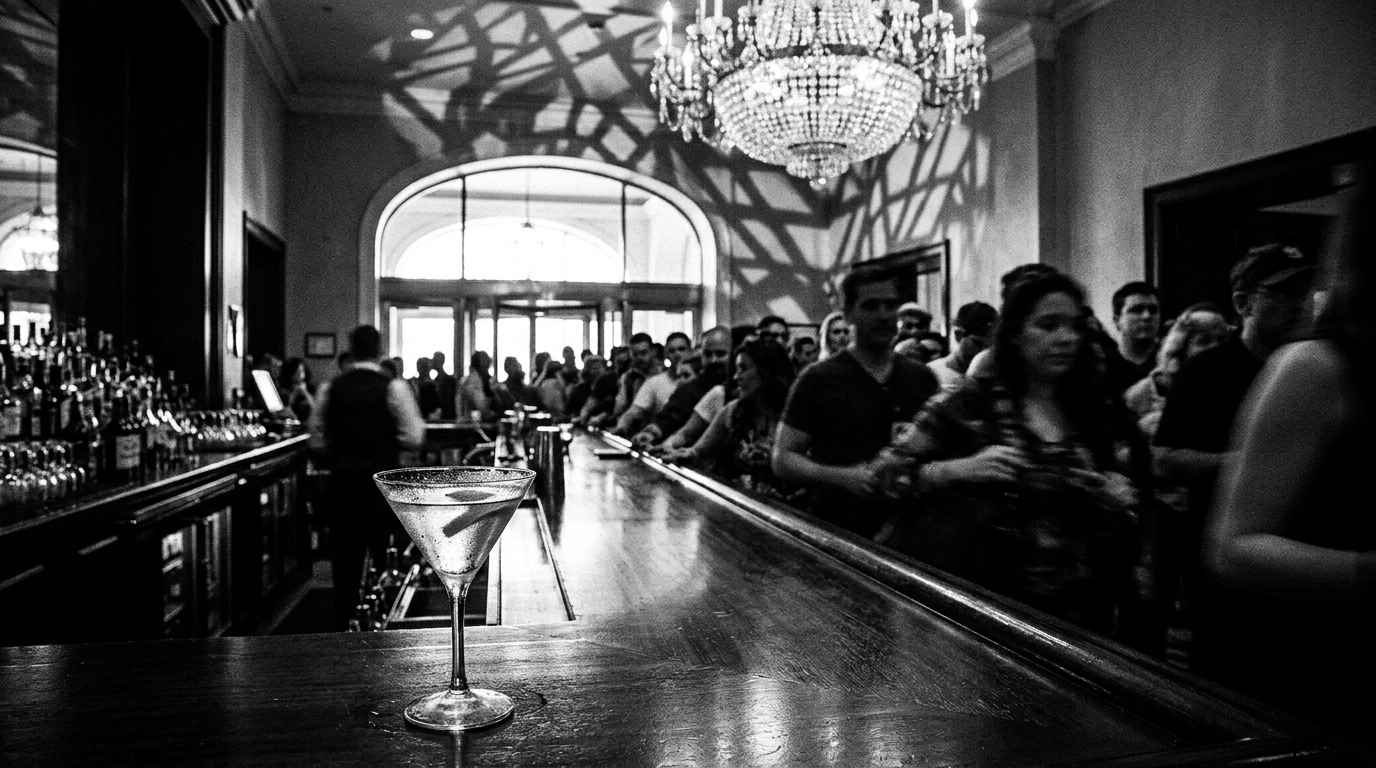
A Mumbai cocktail bar called Late Checkout just did a two-night takeover at Bar Musui inside the Grand Hyatt Gurgaon. Specialty cocktails with names like "Missing Trust Fund" and "Main Character Energy." À la carte pricing. Two nights and done. On the surface, this is a lifestyle press release. Beneath it, there's something worth paying attention to... especially if you're running a hotel where the bar has become an afterthought that happens to have a liquor license.

Here's what caught my eye. Chrome Asia Hospitality, the group behind Late Checkout, is planning takeovers in 20 cities this year. Twenty. They're not doing this for fun. They're building a touring model... essentially a concert circuit for cocktail bars. And the hotels hosting these events aren't doing it out of charity either. Grand Hyatt Gurgaon just hired an Assistant Director of F&B specifically known for driving international bar takeovers. They promoted their Executive Chef in January with a mandate for "culinary innovation and experiential dining." This isn't a one-off event. It's a deliberate F&B strategy. They're renting credibility they can't build fast enough internally, and honestly... that's smart.

I knew a beverage director once at a 400-room full-service who spent $80,000 redesigning his lobby bar menu. New glassware. New garnish program. Staff training for six weeks. RevPAR in the bar went up about 4%. Then a local restaurant group did a three-night pop-up in his space (his idea, to his credit), and the bar did more covers those three nights than it had done in any full week that quarter. The pop-up cost him almost nothing. The local press alone was worth more than his entire redesign budget. He looked at me afterward and said, "I just learned that my guests don't want MY bar to be better. They want something they can't get anywhere else, for a limited time, and then tell their friends about." That's the insight buried in this Gurgaon story.

The Indian market is moving fast on this. Bar takeovers are becoming a legitimate channel in what's reportedly a $55 billion alcobev market. Liquor brands sponsor these events as marketing. The visiting bar gets exposure in a new city. The hotel gets foot traffic, social media buzz, and a reason for local diners to walk through the lobby... which is the hardest thing for any hotel bar to achieve. The average guest who's already checked in will visit your bar. The local who has 40 restaurant options on their phone will not... unless you give them a reason. A two-night exclusive with a buzzy Mumbai bar is a reason. Your Tuesday night happy hour with discounted well drinks is not.

Look, this specific event is in India and involves a Grand Hyatt. I get it. Most of the people reading this aren't managing luxury properties in Gurgaon. But the model translates everywhere. The principle is simple and it works at any scale: stop trying to be great at F&B by yourself if you don't have the team, the budget, or the local credibility to pull it off. Find someone who already has it. Give them your space for a night or a weekend. Split the upside. Your bar becomes a destination instead of a holding pen for guests who don't want to leave the building. Your team learns techniques they'd never pick up in a brand training module. And your F&B line on the P&L starts looking like a revenue center instead of a cost center with a garnish budget. The hotels that figure this out... the ones willing to let go of the idea that they have to own every experience under their roof... are going to win the F&B game. The ones that keep running the same cocktail menu with the same undertrained bartender and the same $14 mojito? They're going to keep wondering why nobody sits at the bar.

Operator's Take

If you're a GM at a full-service property where your bar revenue has been flat for two years, call the best independent bar or restaurant operator within 50 miles of your hotel this week. Propose a one-night or two-night takeover. You provide the space, the staff, and the liquor license. They bring the concept, the menu, and the social media following. Split the revenue or charge a flat hosting fee... either way you win. This is what I call the Brand Reality Gap playing out in F&B: your brand gives you a bar template, but the local operator gives you a reason for people to actually show up. Start small. One event. Measure covers, check average, and social impressions against your best normal night. The numbers will make the argument for you.


Read full analysis → ← Show less
Source: Google News: Hyatt
IHG's Ruby Bet in Milan Is About to Hit the Deliverable Test

IHG's Ruby Bet in Milan Is About to Hit the Deliverable Test

IHG is planting its $116 million lifestyle acquisition in one of Europe's most demanding hotel markets. The question isn't whether Milan is the right city... it's whether "Lean Luxury" means anything when the guest is standing in the lobby.

Available Analysis

So IHG bought Ruby Hotels for $116 million last year, and now they're rolling it into Milan with a 128-key property in the Isola district, scheduled for 2028, developed alongside an Italian real estate partner. Third Ruby in Italy after Florence and Rome. Twenty hotels operating across Europe, fifteen more in the pipeline, and IHG's stated ambition of 120 Ruby properties in the next decade. That's a lot of growth riding on two words: "Lean Luxury." And every time I hear those two words together, I reach for my filing cabinet, because someone is about to make a promise that property-level operations will have to keep.

Here's what makes this interesting (and I mean actually interesting, not press-release interesting). Milan is running hot. Occupancy above 85% for key dates around the Winter Olympics, ADR projected to spike nearly 50% during peak periods, and RevPAR up almost 5% in 2024 driven primarily by rate. That's a market where upscale and upper upscale properties already represent roughly 60% of room stock. So you're walking into a city where the competition is established, the guest expectations are stratospheric, and your brand positioning is... efficient luxury? In MILAN? The city that invented luxury and has never once associated it with the word "lean"? This is either brilliantly counterintuitive or deeply confused, and I genuinely haven't decided which yet.

The adaptive reuse angle is smart... converting existing buildings including an industrial hangar gives Ruby some architectural personality that a ground-up box never could, and it keeps development costs more rational in a market where construction pricing is punishing. But here's the part the announcement skips entirely: what does "Lean Luxury" look like operationally in a city where the guest walking through your door just came from shopping on Via Montenapoleone and had dinner at a restaurant with a six-week waitlist? The Ruby model works by stripping out traditional service layers and replacing them with design-forward spaces and tech-enabled efficiency. That plays beautifully in Berlin or Munich, where the traveler values independence and aesthetic minimalism. Milan is a different animal. Milan guests notice things. They notice if the lobby is beautiful but the interaction is absent. They notice if "lean" means "nobody's there when I need something." The brand promise and the brand delivery are two different documents, and right now I've only seen one of them.

I sat in a brand pitch once... different company, different concept, similar energy... where the development team showed renderings of a converted industrial space in a European capital. Gorgeous. Everyone in the room was nodding. Then someone asked how many FTEs the operating model assumed per shift. The number was so low that the room went quiet. You could feel the owners doing math in their heads, calculating the gap between what the renderings promised and what three employees at 2 PM on a Saturday could actually deliver. That gap is where brands go to die. Not in the renderings. Not in the press release. In the Tuesday afternoon when the guest needs something and nobody's at the desk because the model says they shouldn't need to be.

IHG is projecting franchise fees from the Ruby brand to exceed $15 million by 2030. That tells you this isn't a passion project... it's a growth vehicle. And growth vehicles have a specific failure mode that I've watched play out repeatedly: the brand expands faster than the concept matures, the pipeline becomes the metric instead of the guest experience, and suddenly you've got 60 properties open and none of them feel like the brand deck said they would. If IHG gets this right... if "Lean Luxury" can actually translate into a consistent, deliverable guest experience across wildly different European markets... they'll have something genuinely valuable. But Milan is going to be the test. Not Florence, which is more forgiving of boutique experimentation. Not Rome, where tourists expect chaos. Milan, where the guest knows exactly what luxury is supposed to feel like and will punish you instantly if you don't deliver it.

Operator's Take

Here's the thing about lifestyle brands entering premium markets... the concept has to survive contact with the guest, not just the investor deck. If you're an independent owner or a franchisee operating in a European gateway city where a new Ruby (or any IHG lifestyle flag) is about to land in your comp set, don't panic about rate compression yet. Watch the reviews. The first 90 days of guest feedback will tell you whether "Lean Luxury" translates or whether the market rejects the service model. That's your real competitive intelligence. And if you're being pitched a Ruby conversion or a similar "efficient luxury" franchise, run the Deliverable Test yourself: can your team, at your staffing levels, in your market, deliver the brand promise every single shift? If the answer requires optimistic assumptions about labor, you already know how this ends.

— Mike Storm, Founder & Editor
Read full analysis → ← Show less
Source: Google News: IHG
An 85-Key Hotel in Crete Just Got Upgraded to Hilton's Flagship. Here's What That Actually Tells You.

An 85-Key Hotel in Crete Just Got Upgraded to Hilton's Flagship. Here's What That Actually Tells You.

A family-owned management company on Crete is staffing up for a luxury opening that Hilton quietly upgraded from Curio Collection to its flagship brand. The real story isn't the hiring... it's what the brand elevation says about where Hilton sees its premium positioning headed.

Available Analysis

A Greek family hotel group called Hotelleading (the management arm of the Tsiledakis Group, which has been running hotels on Crete since 1985) just made a round of senior hires... cluster GM, group sales and marketing director, group revenue director... ahead of opening the Hilton Chania Old Town Resort and Spa this summer. Eighty-five keys. Every room with a private pool. Roughly €25 million invested. Year-round operation in a market most people think of as strictly seasonal.

That's a nice story. But it's not the interesting story.

The interesting story is that this property was originally signed in 2023 as a Curio Collection. Somewhere between then and now, Hilton made the call to elevate it to the flagship Hilton Hotels & Resorts brand. That's not a small move. Curio is a soft brand... the owner keeps most of their identity, the standards are flexible, the guest expectation is "something unique." Flagship Hilton is a completely different animal. Tighter standards. Higher guest expectations. More operational infrastructure required. And it means this 85-key resort on Crete will be the only hotel in Greece carrying the flagship Hilton name (since the former Hilton Athens converted to Conrad and Curio Collection properties). Think about that for a second. Hilton looked at this family-owned, family-managed property on a Greek island and said "this is where we want our name."

I've seen this play out before... a brand upgrades a property mid-development because the owner is delivering something beyond the original scope, and the brand realizes they can plant their flag in a market with a stronger asset than they expected. It's actually a compliment to the ownership group. But it comes with a cost. Flagship standards mean flagship staffing. Flagship training protocols. Flagship consistency expectations from guests who know the Hilton name and arrive with assumptions about what that means. The Tsiledakis family has been doing this for four decades, and they're clearly not naïve about what they signed up for... the leadership hires (including a cluster GM with Hilton experience dating back to 2021 and a luxury hospitality background) tell you they're building the team to match the brand promise. That's the right move. But building the team is the easy part. Sustaining the team year-round in a market where most hotels shut down for winter? That's where the real test begins.

Here's what I think is actually worth watching. The Tsiledakis Group is positioning Chania as a four-season destination. Conference facilities, wellness programming, the kind of infrastructure that pulls corporate groups and incentive travel in the shoulder and off-season months. This is a bet that a family-run management company with five properties on Crete can do what most Mediterranean operators have been trying (and mostly failing) to do for decades... break the seasonality trap. The €25 million investment only pencils if occupancy holds outside of June through September. The year-round staffing model only works if there are guests in February. Every number in this deal hinges on that one assumption.

What makes this worth paying attention to... even if you're running a 150-key select-service in Ohio and couldn't find Chania on a map... is the pattern. A strong local operator convinces a global brand to put its flagship name on a small, high-quality asset in an emerging luxury market. The brand gets premium positioning without development risk. The owner gets distribution, loyalty contribution, and the credibility of the name. The risk? It's almost entirely on the owner. If that year-round bet doesn't pay off, Hilton still collected its fees. The Tsiledakis family is the one holding €25 million in invested capital and a staffing model built for 12 months of demand that might only materialize for seven. I've seen this movie before. Sometimes the owner's vision is exactly right and they build something iconic. Sometimes the projections were optimistic and the brand walks away with its reputation intact while the owner restructures. The difference usually comes down to one thing... whether the operator is honest with themselves about the downside scenario before they open the doors.

Operator's Take

This is what I call the Brand Reality Gap. Hilton sells the promise of year-round flagship demand in a seasonal Mediterranean market. The Tsiledakis family has to deliver it shift by shift, twelve months a year, with a payroll that doesn't flex the way summer-only properties do. If you're an owner being courted by a brand to upgrade your flag... whether it's in Greece or Galveston... do the math on what happens when occupancy underperforms the projection by 25%. If the deal still works at that number, sign. If it doesn't, you're not investing... you're hoping. And hope is not a financial strategy.

Read full analysis → ← Show less
Source: Google News: Hilton
Japan Hotel REIT's Flat RevPAR Hides a Rate Problem That Won't Fix Itself

Japan Hotel REIT's Flat RevPAR Hides a Rate Problem That Won't Fix Itself

JHR posted ¥14,185 RevPAR in January, essentially unchanged year-on-year. But occupancy climbed 1.9 points while ADR dropped 2.3%. That's not stability. That's a trade.

Available Analysis

Japan Hotel REIT reported January 2026 numbers across 29 variable-rent hotels: RevPAR of ¥14,185 (up 0.1%), occupancy at 79.7% (up 1.9 percentage points), ADR at ¥17,800 (down 2.3%). Total revenue came in at ¥5.87 billion, up 1.4%. The headline says "stable." The composition says something else entirely.

Let's decompose this. Occupancy rose nearly two full points while rate fell 2.3%. That means the REIT filled more rooms by accepting lower prices. RevPAR came out flat because the volume gain offset the rate decline almost exactly. In isolation, one month of that is a tactical decision. But the mechanism matters. Chinese arrivals to Japan dropped roughly 61% year-on-year in January, driven by diplomatic friction and Lunar New Year calendar shifts. Total international visitors fell 4.9%, the first decline in four years. JHR absorbed that demand loss by pulling from other source markets (South Korea, Taiwan, the U.S.) and likely domestic travelers, but those segments came at a lower rate. The F&B line tells a more interesting story: ¥1.76 billion, up 4.0%. Restaurants don't care which passport the guest carries. That revenue held because the bodies were in the building, even if those bodies paid less per night.

The ¥130 billion Hyatt Regency Tokyo acquisition announced in February adds context. JHR is buying into international brand distribution at scale, betting that global loyalty programs diversify demand away from any single source market. That's a reasonable thesis when Chinese arrivals just cratered 61% in one month. There's a cost assumption embedded in that bet. The REIT simultaneously locked ¥10 billion in debt at a fixed 2.38% through 2030 via an interest rate swap. That brings roughly 75% of interest-bearing debt to fixed rate. Good discipline if rates climb. Expensive insurance if they don't. The real question is whether the international brand premium generates enough ADR lift to offset the financing cost of the acquisition. If January's pattern holds (more occupancy, less rate), the answer gets uncomfortable.

Ichigo Hotel REIT reported a 5.7% revenue decline in January. Hoshino Resorts REIT saw RevPAR slip 0.7% with ADR down 2%. JHR outperformed both. But all three are telling the same structural story: when your highest-spending inbound segment disappears, you can replace the heads but not the rate. Japan's tourism surplus fell 10.4% year-on-year in January. The yen's weakness makes Japan cheap for visitors, which fills rooms, which looks like demand, which isn't the same as profitable demand.

Analysts have a consensus "Buy" on JHR with a ¥98,325 average target. Earnings growth is forecast at 0.2%, revenue growth at 1.9%. Those are thin projections for a REIT that just committed ¥130 billion to a single asset. The projected dividend of ¥5,177 per unit requires the variable-rent portfolio to hold its revenue line. One month of flat RevPAR is fine. Six months of occupancy-funded flatness with declining rate is a flow-through problem... because the cost to service those extra occupied rooms (housekeeping, utilities, amenities, breakfast) doesn't decline with ADR. More rooms at lower rates means more expense per revenue yen. Check the GOP margin in six months. That's where this story either resolves or escalates.

Operator's Take

Here's the pattern... and it's not unique to Japan. When you lose a high-value demand segment and replace it with volume, your top line holds but your margins compress. I've seen this movie play out domestically every time a market loses a major demand generator and tries to fill with discount channels. If you're managing a property in any market with concentrated source-market exposure, do the math on your cost-to-serve per occupied room at your current ADR versus last year's. Know that number before someone else asks you about it. The F&B outperformance here is a bright spot... it tells you the in-house spend is holding even when room rate isn't. Protect that line. Don't cut restaurant hours or menu quality to offset a rooms margin squeeze. That's robbing the one segment that's actually growing.

— Mike Storm, Founder & Editor
Read full analysis → ← Show less
Source: Google News: Hotel REIT
IHG's Phuket Bet Looks Great on Paper. The Market's About to Get Crowded.

IHG's Phuket Bet Looks Great on Paper. The Market's About to Get Crowded.

IHG just signed another Hotel Indigo in Phuket with a 2030 opening, and the pipeline numbers tell a story the press release conveniently skips... over 2,000 new rooms hitting that island in the next three years while occupancy is already softening.

Let me tell you what I see when I read a signing announcement for a hotel that won't open for four years. I see a bet. Not a hotel. A bet on what a market will look like in 2030, placed by people who are looking at 2025 tourism revenue numbers and projecting forward in a straight line. That's not strategy. That's optimism with a logo on it.

Here's the deal. IHG just signed a 170-key Hotel Indigo in Phuket, near Nai Yang Beach, five minutes from the airport. Their partner is AssetWise, a Thai residential developer making their second hotel play with IHG on the island. The brand pitch is the usual Hotel Indigo formula... neighborhood story, local flavor, lifestyle positioning. And look, I actually like the Hotel Indigo concept when it's executed well. The "every property tells a local story" thing works when the operator commits to it. The problem is never the concept. The problem is what happens between the rendering and the reality.

Phuket is booming right now. Tourism revenue targeting $17.3 billion for 2025, up 10% projected for 2026. ADR for luxury and upscale is climbing... 3.9% year-over-year to around 7,000 baht. Sounds great, right? But here's the number behind the number. Over 2,000 new rooms are entering the Phuket market between now and 2028. That's a 4.3% inventory increase, and most of it is concentrated in the luxury and upscale segments... exactly where this Hotel Indigo is positioning. Meanwhile, occupancy in those segments already dipped from 76.8% to 76% in the back half of 2025. That's a small move, but it's the wrong direction when you're adding supply. And this Hotel Indigo doesn't open until 2030, which means even more rooms will be in the pipeline by then. I've seen this movie before. Everybody looks at the demand curve and assumes their property will be the one that captures the growth. Nobody models what happens when every developer on the island is making the same assumption at the same time.

The developer angle is interesting, and honestly it's the part of this story that tells you the most. AssetWise is a residential company diversifying into hospitality for "consistent recurring income." I've watched residential developers enter the hotel business at least a dozen times over the years. Some of them figure it out. Most of them underestimate how fundamentally different hotel operations are from selling condos. A residential developer looks at a hotel and sees a building that generates monthly revenue. An operator looks at that same hotel and sees 170 rooms that need to be sold every single night, staffed every single shift, and maintained against the relentless wear of tropical humidity, salt air, and guests who treat resort furniture like it owes them money. Those are very different businesses wearing similar-looking buildings. The fact that this is their second IHG deal suggests they're committed, but commitment and operational expertise aren't the same thing. I knew a developer once who opened a beautiful 200-key resort property with world-class finishes and zero understanding of what it costs to staff an F&B outlet seven days a week in a seasonal market. The building was gorgeous. The P&L was a horror show inside of 18 months.

IHG's broader play here is aggressive... they want to nearly double their Thailand footprint to 80-plus hotels in the next three to five years. That's a lot of flags, a lot of franchise and management fees, and a lot of owners betting on the IHG loyalty engine to deliver heads in beds. But here's what the press release doesn't say. In a market getting this competitive, with Da Nang and Phu Quoc pulling leisure travelers with newer inventory and lower price points, the loyalty contribution percentage is going to matter more than ever. And loyalty contribution in resort markets has historically underperformed compared to urban and airport locations because leisure travelers are less brand-loyal than business travelers. They're shopping on Instagram, not the IHG app. So the owner here needs to be very clear-eyed about what percentage of their revenue is actually going to flow through IHG's channels versus what they'll have to generate through OTAs and direct marketing... because that math changes the total cost of the flag dramatically.

Operator's Take

This is what I call the Brand Reality Gap. The brand sells a vision... neighborhood storytelling, lifestyle positioning, loyalty contribution. The property delivers it room by room in a market where 2,000 new keys are showing up to compete. If you're an owner or operator looking at resort development in Southeast Asia right now, do not underwrite based on current ADR trends and assume straight-line growth. Model the supply pipeline. Model loyalty contribution at 20-25% (not the 35-40% the franchise sales deck shows), and stress-test your pro forma at 70% occupancy... not 76%. If the deal still works at those numbers, you've got something real. If it only works in the sunny-day scenario, you're not investing. You're hoping.

Read full analysis → ← Show less
Source: Google News: IHG
IHG's Hotel Indigo Phuket Signing Is Brand Theater Until 2030 Proves Otherwise

IHG's Hotel Indigo Phuket Signing Is Brand Theater Until 2030 Proves Otherwise

IHG signs a 170-key Hotel Indigo in Phuket with a residential developer who's never operated a hotel, and the press release reads like a vacation brochure. Let's talk about what's actually happening here.

So IHG just announced a 170-key Hotel Indigo at Nai Yang Beach in Phuket, partnering with a Thai residential developer called AssetWise and its subsidiary, and I have questions. Not about Phuket... Phuket is legitimately one of the strongest leisure markets in Southeast Asia right now, coming off its best high season in five years. Not about the location... five minutes from the international airport, walkable to a national park and a beautiful beach, that's a real positioning advantage. My questions are about everything between the press release and the 2030 opening date, which is where brand promises go to either become real hotels or become cautionary tales in my filing cabinet.

Let's start with the partner. AssetWise is a residential and real estate company. They build condos. They're publicly traded in Thailand, they have a thing called the "TITLE Ecosystem" (which, I promise you, is exactly as buzzy as it sounds), and they're diversifying into hospitality to generate "consistent recurring income." I've heard this story before. A residential developer looks at hotel margins, sees the recurring revenue, and thinks "how hard can this be?" And the answer is: harder than you think. Residential development and hotel operations share almost nothing in common except that both involve buildings with beds. The skill set that makes you excellent at selling condominiums does not prepare you for managing a 170-key lifestyle hotel where the brand requires you to deliver a "neighborhood-inspired" experience with locally sourced F&B and curated cultural programming. Who is running this hotel day-to-day? What management company? What's their track record with lifestyle brands in Southeast Asian resort markets? The press release is silent on this, and that silence is loud.

Now, the Hotel Indigo brand itself. I have a complicated relationship with Hotel Indigo because the concept is genuinely good... neighborhood storytelling, local character, design that reflects the destination rather than a corporate template. When it works, it really works. But "neighborhood-inspired" is one of those brand promises that requires extraordinary operational commitment to deliver. Every Hotel Indigo is supposed to feel different from every other Hotel Indigo, which means you can't just install a standard package and walk away. You need a team that understands the local culture deeply enough to program it authentically, and you need an owner willing to invest in that programming continuously, not just at opening. A residential developer entering hospitality for the first time, building their second IHG property ever (after a voco that's also still under construction)... are they ready for that level of brand delivery? The Deliverable Test here makes me nervous. Can this ownership group execute a genuine neighborhood story with the operational sophistication Hotel Indigo requires, or will this end up as a beautiful building with a lobby mural and a locally named cocktail that checks the "authentic" box without actually being authentic?

IHG's Thailand pipeline is aggressive... 37 properties now, with a stated goal of doubling to 80-plus within three to five years. That's ambitious for any market, and Thailand has some real headwinds right now. The baht has strengthened, eroding price competitiveness. Tourism arrival forecasts for 2026 range from 33 million to 37 million depending on who you ask, which is a wide enough spread to suggest nobody's actually sure. And Phuket specifically is absorbing new supply at a pace that should make any owner do the math twice on a 2030 delivery. Four years is a long time. A lot of rooms can open between now and then. When I was brand-side, I watched pipeline announcements get celebrated like wins when the real win doesn't happen until the hotel opens, stabilizes, and the owner's actual returns match the projections. IHG is collecting signatures. That's not the same as collecting success stories.

Here's what I keep coming back to. I watched a family lose their hotel once because a franchise sales projection was optimistic and nobody stress-tested the downside. That experience lives in every brand evaluation I do now. IHG's luxury and lifestyle segment is growing at nearly 10% annually, and that growth creates pressure to sign deals... lots of deals, fast, in hot markets like Phuket. Speed and quality are almost always in tension. A first-time hotel owner from the residential sector, building a lifestyle brand that demands operational nuance, in a market that's absorbing new supply aggressively, with a four-year runway before anyone has to prove anything... I'm not saying this won't work. I'm saying the conditions exist for it to not work, and the press release doesn't acknowledge a single one of those conditions. Which is exactly what press releases do. And exactly why someone needs to say it out loud.

Operator's Take

Here's what I'd say to anyone watching IHG's Southeast Asia pipeline expansion. This is what I call the Brand Reality Gap... brands sell promises at scale, and properties deliver them shift by shift. If you're an owner being pitched a lifestyle flag by any major company right now, ask one question the franchise sales team won't volunteer: what is the actual loyalty contribution at comparable Hotel Indigo properties in resort markets, not the projection, the actual trailing twelve months? Then ask what happens to your returns if that number comes in 30% below the pitch deck. If the math still works at the stress-tested number, sign the deal. If it only works at the optimistic number... you already know how that movie ends.

— Mike Storm, Founder & Editor
Read full analysis → ← Show less
Source: Google News: IHG
Xenia's Q4 Beat Hides the Number That Actually Matters for 2026

Xenia's Q4 Beat Hides the Number That Actually Matters for 2026

Xenia Hotels posted a quarter that looked strong on every line investors care about. The 2026 expense guidance tells a different story for anyone calculating owner returns.

Xenia's Q4 same-property RevPAR hit $176.45, up 4.5% year-over-year, with adjusted FFO of $0.45 per diluted share (beating consensus by $0.03). Same-property hotel EBITDA jumped 16.3% to $68.8 million with a 214 basis point margin improvement. The stock touched a 52-week high. Everybody's happy.

Let's decompose this. Full-year net income was $63.1 million, but tucked inside is a $40.5 million one-off gain. Strip that out and you're looking at roughly $22.6 million in recurring net income on $1.08 billion in revenue. That's a 2.1% net margin on a recurring basis. The adjusted metrics look better (they always do... that's what "adjusted" is for). But if you're an owner or an investor trying to understand what this portfolio actually earns on a normalized basis, the gap between $63.1 million and $22.6 million is not a rounding error. It's the difference between a story and a finding.

The 2026 guidance is where things get interesting. RevPAR growth projected at 1.5% to 4.5%. Operating expenses projected up approximately 4.5%, with wages and benefits growing around 6%. Run that math at the midpoint. You're looking at 3% RevPAR growth against 4.5% expense growth. That's negative flow-through unless non-rooms revenue (currently 44% of total revenue, highest among lodging REIT peers) continues to outperform. The company is betting heavily on group demand and F&B to bridge that gap. It's a reasonable bet. It's still a bet.

The capital allocation picture is more compelling than the operating picture. The Fairmont Dallas sale at $111 million avoided an estimated $80 million PIP and generated an 11.3% unlevered IRR. That's a clean exit. The Grand Hyatt Scottsdale renovation drove a 104% RevPAR increase for the full year. And 28 of 30 properties sit unencumbered by property-level debt, with $640 million in total liquidity. The balance sheet is positioned for a downturn that hasn't arrived yet. At $1.4 billion in total debt with a 5.51% weighted-average rate, the carrying cost isn't cheap, but the structure is defensible.

The share repurchase program tells you what management thinks about the stock. They bought back 9.4 million shares at a weighted-average price of $12.87. The stock is trading above $16. That's $30 million in paper gains on the buyback alone. Whether that's smart capital allocation or a signal that management sees limited acquisition opportunities at current pricing depends on where you sit. $97.5 million remains authorized. The question for 2026 isn't whether the hotels perform. It's whether expense growth eats the RevPAR gains before they reach the owner's line... and whether the capital recycling strategy (sell the capital-intensive assets, reinvest in higher-margin ones) generates enough momentum to offset a decelerating top line.

Operator's Take

Here's what I'd tell any asset manager looking at an upper-upscale or luxury REIT portfolio right now. The 2026 math on labor costs alone... 6% wage growth against 3% RevPAR at the midpoint... means your flow-through is going to compress unless you're finding real non-rooms revenue or cutting somewhere else. That's what I call the Flow-Through Truth Test. Revenue growth only matters if enough of it reaches GOP and NOI. Pull up your F&B contribution margin and your group pace report before your next owner meeting. If those two numbers aren't both moving in the right direction, the RevPAR headline is just noise.

— Mike Storm, Founder & Editor
Read full analysis → ← Show less
Source: Google News: Xenia Hotels
IHG Just Planted Two Flags Six Blocks Apart in Midtown. Let's Talk About What That Actually Means.

IHG Just Planted Two Flags Six Blocks Apart in Midtown. Let's Talk About What That Actually Means.

IHG opened a 419-key voco in Times Square and a 529-key Kimpton six blocks away within three weeks of each other. That's not expansion. That's a bet... and if you're running a competing property in Midtown Manhattan, the math on your comp set just changed.

I watched a management company launch two restaurants in the same hotel six months apart once. Different concepts, different menus, different target guests. On paper, it made sense. The building had the traffic to support both. In reality, they split the same customer base, cannibalized each other's covers, and the F&B director spent more time explaining the "strategy" to ownership than actually running either outlet profitably. Both closed within two years.

I keep thinking about that when I look at what IHG just did in Midtown Manhattan.

On February 24th, IHG opened voco Times Square... Broadway. 419 keys, 32 stories, new construction, right at Seventh and 48th. The brand's biggest property in the Americas. Three weeks later, on March 13th, they opened the Kimpton Era Midtown. 529 keys. Six blocks away. That's 948 rooms of premium IHG inventory hitting the same submarket in less than a month. And here's the thing... IHG is calling voco their fastest-growing premium brand globally (they crossed 100 hotels last year, targeting 200 within a decade). The Kimpton is lifestyle luxury. So on the org chart in Atlanta, these are different brands serving different guests. On the street in Midtown? They're competing for the same Tuesday night business traveler who wants something nicer than a Courtyard but isn't booking the St. Regis. The press releases talk about "premium" and "lifestyle" like those are meaningfully different positions. Walk six blocks on Seventh Avenue and tell me the guest knows the difference.

Now, credit where it's due. New York is performing. 84.1% occupancy in 2025. $333 ADR. Luxury RevPAR was up over 10% in the first half of last year. And that voco is reportedly one of the last new-build projects approved in the Times Square landmark zone, which means they've locked in a location that literally cannot be replicated. That's smart. That's the kind of barrier-to-entry play that makes real estate people very happy. But here's what the press release doesn't mention... IHG also had a 607-key InterContinental in Times Square that just sold for $230 million in December. New ownership. Moved from IHG management to franchise under Highgate. So IHG's management fee stream on that asset is gone, replaced by franchise revenue. They're adding 948 new premium keys to the submarket while their existing flagship just changed hands and operating philosophy. If you're running any IHG property in Midtown right now, your comp set didn't just shift. It detonated.

Let's talk about the owner's math for a second, because somebody paid to build a 419-key new-construction tower in Times Square. Development costs for new-build in Manhattan are running well north of $150,000 per key... for a project this size, in this location, you're probably looking at $250K-plus per key when you factor land, construction, and pre-opening. That's a $100M-plus bet (conservatively) on the voco brand delivering enough rate premium and occupancy to service the debt and generate a return. IHG's Americas RevPAR grew 0.3% last year. Zero point three. The system is growing at nearly 5% net... which means more rooms chasing roughly the same demand. I've seen this movie before. The brand is thrilled because they're collecting fees on 948 new keys. The owners are the ones who have to fill them. And when two of your sister properties are six blocks apart fighting for the same group block, the brand's fee doesn't shrink. The owner's margin does.

The bigger picture here is IHG's premium strategy overall. They opened a record 443 hotels globally in 2025. They've got a $950 million share buyback running in 2026. Analysts at BofA and Jefferies are tripping over each other to upgrade the stock. And Elie Maalouf is forecasting 4.4% system growth this year. All of that is true. All of it looks great from 30,000 feet. But I've spent 40 years at ground level, and what I see is a brand company doing what brand companies always do... optimizing for system size and fee revenue, which is their job, while individual property economics get squeezed tighter. The question isn't whether IHG's stock price benefits from this kind of aggressive expansion. It does. The question is whether the owner of that voco, five years from now, looks at the gap between the franchise sales projection and the actual loyalty contribution and feels the same way. I know a family that lost a hotel over exactly that gap. It's not theoretical to me.

Operator's Take

If you're running a premium or upper-upscale property anywhere in Midtown Manhattan, pull your STR data this week and re-run your comp set with both of these properties included. Don't wait for the monthly report to tell you what's already happening to your rate positioning. For any owner being pitched a voco or Kimpton conversion right now in a major urban market, ask one question before anything else: how many sister-brand properties are in your three-mile radius, and what's the brand's plan when their own flags start competing with each other for the same demand? This is what I call the Brand Reality Gap... brands sell promises at scale, but properties deliver them shift by shift, and when two promises land on the same six blocks, somebody's shift gets a lot harder.

Read full analysis → ← Show less
Source: Google News: IHG
Distressed Office Buildings Are Selling at 50 Cents on the Dollar. Here's What That Actually Means for Hotel Math.

Distressed Office Buildings Are Selling at 50 Cents on the Dollar. Here's What That Actually Means for Hotel Math.

Nearly $1 trillion in commercial real estate loans are maturing this year alone, and office valuations have cratered 53% on average. The hotel conversion math finally works... but "works" depends entirely on which line you stop reading at.

A 25-story office tower in San Diego traded for $61 million in late 2023. That same building had $68 million in Class A renovation work done just three years earlier. The acquisition price was less than the remodel cost. That's the distressed CRE market right now, and it's the number that makes hotel conversion developers start making phone calls.

The macro picture is straightforward. National office vacancy hit 20.4% in Q1 2025. San Francisco is at 26.3%. Nearly $1 trillion in commercial mortgage debt is maturing in 2025, almost triple the 20-year average. Owners who borrowed at 3.5% are refinancing at 6.5-7.0% (or they're not refinancing at all). Distressed office valuations are averaging 53% below original issuance. Retail is almost as bad at 52%. Buildings that were assets in 2021 are problems in 2026. Problems get sold cheap.

Here's what the headline doesn't tell you. Acquisition basis is one input. Conversion cost is the one that kills deals. That San Diego tower? Acquisition was $61 million. Total estimated project cost is $250 million. So the acquisition represents roughly 24% of the all-in basis. The other 76% is construction, FF&E, soft costs, carry, and everything else that doesn't get a discount just because the building was cheap. Construction costs remain elevated (tariffs, labor, supply chain... pick your headwind). A property I analyzed last year showed a similar profile: stunning acquisition price, then conversion costs that pushed the total per-key basis within 15% of new construction. At that point the "discount" is mostly theoretical. You're buying a different set of problems, not fewer problems.

The select-service and extended-stay math is where this gets interesting. RevPAR for that segment hit $78 in 2024 with demand approaching 2019 levels. Over $62 billion invested in the sector across four years. The demand profile supports new supply in the right markets. But "right markets" is doing a lot of work in that sentence. A downtown core with 26% office vacancy isn't just offering cheap buildings. It's signaling a demand ecosystem in decline. The restaurants that fed the office workers are closing. The retail that served the lunch crowd is gone. The pedestrian traffic that makes a downtown hotel walkable and vibrant is thinner. You're converting a building at a great basis in a neighborhood that may take five years to find its new identity. The acquisition math works on the spreadsheet. The RevPAR assumption behind it needs stress-testing against a submarket that's actively contracting.

The window is real. Fed funds are at 3.5-3.75% as of March 2026, down from peaks, and projected to settle lower. As rates normalize, distressed sellers gain options. The 50-cents-on-the-dollar pricing compresses. Franchise development teams at every major flag are already mapping distressed assets against white space (Extended Stay America just celebrated nearly 60 properties open with a target of 100 by 2030... that pipeline needs buildings). But for anyone running the acquisition model, the honest version has three scenarios: one where the submarket recovers on your timeline, one where it doesn't, and one where construction costs overrun by 20% while it doesn't. If the deal only works in scenario one, the deal doesn't work.

Operator's Take

Here's the part of this story that hits existing hotel operators, and it's not about converting anything. If there are distressed office or retail properties within your three-mile radius, your world is changing whether you buy anything or not. Vacant storefronts kill your walk score, your guest experience, and eventually your assessed value. What I'd call the Three-Mile Radius problem... your revenue ceiling isn't set by your room count, it's set by what surrounds you. If you're seeing commercial vacancy creeping into your neighborhood, get ahead of it. Pull your comp set data, document the impact on your rate positioning, and bring your owner a market brief before they read about "distressed CRE" in a headline and start asking questions you haven't thought through yet. Be the one with the answer, not the one caught flat-footed.

— Mike Storm, Founder & Editor
Read full analysis → ← Show less
Source: InnBrief Analysis — National News
The NLRB Didn't Get Stronger. But Your Employees Still Might Organize Tomorrow.

The NLRB Didn't Get Stronger. But Your Employees Still Might Organize Tomorrow.

Everyone's treating the new union organizing rules like a tidal wave. The reality is messier... some of those rules just got kneecapped in court, and the ones that survived are the ones most operators aren't paying attention to.

I sat across from a GM about ten years ago... non-union full-service property in a gateway city, 400-plus keys, running a $2-per-hour labor cost advantage over the unionized house down the street. He was proud of it. Had it on his monthly dashboard like a trophy. I asked him one question: "What are you doing with that $2 that your people can actually feel?" He looked at me like I'd asked him to explain gravity. The answer was nothing. The savings went to the bottom line. His team got the same vending machines and the same busted break room chairs as everybody else. That property organized 14 months later.

Here's what I need you to understand about this NLRB story, because the headline is doing about 60% of the work and the details matter. Yes, there are new rules that make organizing faster. The "quickie" election rules have been in effect since December 2023... pre-election hearings now happen 8 calendar days from the notice instead of 14 business days, and elections can happen roughly 3-4 weeks after a petition is filed. That's real. That compresses your response window dramatically. But two other pieces that everyone assumed were coming? They got stopped. The expanded joint employer rule... the one that would have made brands co-employers with franchisees... was formally withdrawn by the NLRB on February 26th of this year. Gone. And the Cemex decision, which was the big stick that let the NLRB impose a bargaining order if an employer committed any unfair labor practice during organizing... the Sixth Circuit rejected that on March 6th. Said the Board exceeded its authority. So the landscape is not the pro-union steamroller some people are writing about. It's a faster election timeline bolted onto a legal framework that's actually more fractured than it was a year ago.

But here's the thing that matters more than any of those legal details, and it's the thing I keep coming back to after 40 years of managing in both union and non-union environments. The timeline was never the problem. Nobody ever lost a union election because they didn't have enough weeks to prepare. They lost because when the organizer showed up, the employees already knew the answer. Your housekeeper making $17 an hour with unpredictable scheduling and no clear grievance process doesn't need four weeks of card-signing to know she wants representation. She decided six months ago when her shift got cut without explanation and nobody in management returned her call. The quickie rules just mean you have less time to pretend that wasn't happening.

The markets the source material identifies are right... New York, Chicago, LA, San Francisco, Vegas, Boston, Seattle. Those are the cities where organizing infrastructure already exists, where UNITE HERE has 300,000 members and established relationships, where the playbook is proven. If you're running a non-union property in one of those markets, you should assume organizing is possible at any time, regardless of what the NLRB does. But I'd add this: secondary markets with growing hotel supply and tight labor are vulnerable too, especially where a successful organizing campaign at one property creates momentum. I've seen it happen in cities nobody expected. One property goes union, and suddenly the organizer has a case study three miles from your front door.

The financial reality is this. The union wage premium nationally runs about 17.5%... median weekly earnings of $1,337 for union workers versus $1,138 for non-union. In hospitality, the gap varies by market, but in the gateway cities we're talking about, it can be wider. Add benefits, work rules, grievance procedures, and the management time to administer a CBA, and you're looking at a meaningful shift in your labor cost structure. This is what I call the Invisible P&L... the costs that don't appear on your current P&L but are sitting right underneath it, waiting to surface. The delta between your current non-union labor cost and what it would be under a CBA is a number you should know today. Not because organizing is inevitable, but because the gap between those two numbers tells you exactly how much exposure you're carrying and how much room you have to invest in making the union unnecessary.

Operator's Take

If you're a GM at a non-union property in a high-density market, stop reading legal analyses and start walking your building this week. Talk to your housekeeping supervisors. Ask your front desk leads what complaints they're hearing that never make it to you. The properties that organize are the ones where management lost touch with the floor... not the ones that ran out of time on an election calendar. And if you're an owner or asset manager, build the union labor cost scenario into your 3-year model now. Know the number. If the delta between your current labor cost and union scale is $2-3 per hour per employee, figure out where even a portion of that gap can go toward retention, scheduling transparency, or benefits that your people can actually feel. The cheapest union avoidance strategy in the world is being the kind of employer people don't want to organize against.

Read full analysis → ← Show less
Source: InnBrief Analysis — National News
Airlines Are Selling Seats at Record Pace. Your Summer Rates Are Too Low.

Airlines Are Selling Seats at Record Pace. Your Summer Rates Are Too Low.

Every major U.S. carrier just confirmed record forward bookings for summer despite absorbing billions in fuel cost overruns. That's the most reliable demand signal a hotel revenue manager gets... and most properties haven't moved their rate ceilings yet.

A revenue manager I worked with years ago had a saying that stuck with me: "The airlines spend more on demand forecasting in a week than your hotel spends in a decade. When they're raising prices into headwinds, stop second-guessing and follow the money." She was right then. She's right now.

Delta, American, and United all confirmed record Q1 booking volumes this week. American reported its highest quarterly revenue growth outside the pandemic recovery period... eight of their top ten booking days in company history happened in the first quarter of 2026. United's CEO went on record saying fare increases would come fast. These aren't optimistic projections from a sales deck. These are airlines watching real-time booking curves and betting hundreds of millions of dollars on the strength of summer demand. Jet fuel hit $4.56 a gallon on March 20th... up 60% since January, largely driven by the Iran conflict disrupting shipping routes. The airlines are absorbing that and still pushing fares higher because they know the seats will sell. That's not hope. That's data.

Here's what this means if you're running a hotel in a leisure market. The correlation between airline booking volume and hotel occupancy isn't theoretical... it's one of the most reliable leading indicators we have. When airlines are filling planes to Orlando, Las Vegas, coastal Florida, and mountain resort towns at record pace, those passengers need rooms. And they're booking now. If your revenue manager is still sitting on last summer's rate strategy waiting for your comp set to move first, you're leaving money on the table during a window that won't stay open. First-mover advantage on rate in a compression environment is real. Once the comp set catches up, you've lost the margin.

Now here's the nuance that matters. This demand signal is strongest for fly-to leisure markets. Drive markets are a different story. Gas just crossed $3.94 a gallon nationally and it's still climbing. That won't kill drive-market leisure (people don't cancel vacations over gas prices alone), but it creates drag... especially on the mid-week shoulder demand that fills your Tuesday and Wednesday in summer. And there's a transatlantic wrinkle worth watching. Early data from February showed advance bookings from Europe to the U.S. down over 14%. The record volumes may be heavily concentrated on domestic routes and non-European international corridors. If your market depends on inbound European travelers, don't assume this rising tide lifts your boat equally.

The other piece nobody's talking about is group displacement. If you're a group sales director holding blocks for June through August at rates you locked six months ago, transient leisure demand at premium rates is about to compress your available inventory faster than your pace report shows. Every group room you're holding at $189 that could sell transient at $239 is a choice... and right now, the math favors transient in most leisure markets. Review those blocks this week. Release what isn't going to materialize. And if you're running a select-service or extended-stay near a major airport, get ready for spillover. When the primary hotels in a compression market sell out, late-booking leisure travelers land in your lobby. Make sure your OTA availability reflects that opportunity and your rates are positioned to capture it, not discount it.

Operator's Take

This is what I call the Rate Recovery Trap in reverse... right now you have the rare chance to set rate ceilings higher BEFORE the market forces you to, and that's how you build the floor for next year. If you're a revenue manager at a leisure-heavy property, push your summer rate ceilings up this week, not next month. If you're a group sales director, audit every block from June through August against what transient is willing to pay... the gap is your opportunity cost. And if you're a GM at a select-service near a gateway airport, brief your front desk team now on compression pricing and make sure your channel manager isn't auto-discounting into a market that's about to overheat.

Read full analysis → ← Show less
Source: Vertexaisearch
The Hotel Training Pipeline Got Sold Off a Decade Ago and Nobody Noticed

The Hotel Training Pipeline Got Sold Off a Decade Ago and Nobody Noticed

AHLA handed its training business to the restaurant industry's trade group back in 2017. Nine years later, the disconnect between who develops hotel training content and who actually needs it has never been wider.

I was talking to a director of training at a management company last year. She manages onboarding and skills development across 35 hotels. I asked her where her front desk training curriculum came from. She paused. "Honestly? I think it's a mix of stuff from three different vendors, some brand modules, and a binder someone put together in 2019." She wasn't embarrassed about it. She was exhausted by it. And she's not alone.

Here's something most operators don't even remember happening. Back in late 2016, AHLA... the industry's own trade association... sold off the training arm of the American Hotel & Lodging Educational Institute to the National Restaurant Association. The whole thing. 180 training products. The building in Michigan. All of it. AHLA kept the certification side (your CHA, your CRME, those credentials). But the actual nuts-and-bolts training content... how to run a front desk, how to manage housekeeping operations, how to handle a guest recovery... that got handed to an organization whose core expertise is restaurants. Not hotels. Restaurants.

Now look, I'm not saying the NRA hasn't done anything useful with it. They've updated the high school curriculum. They've pushed international certifications. Fine. But let's be honest about what happened here. The hotel industry's own association looked at the business of training hotel workers and decided it wasn't core to their mission. They wanted to focus on advocacy and lobbying. I understand the strategic logic. I've sat in enough board meetings to know how these conversations go. Someone stands up with a slide that says "focus on core competencies" and everyone nods. But when you're an industry with 73% annual turnover, and your biggest operational challenge is getting people trained fast enough to deliver a consistent guest experience... training IS advocacy. Training IS the industry story. You can't separate them and pretend nothing changed.

The result, nine years later, is exactly what you'd expect. Training in hotels is fragmented to the point of absurdity. Brands have their modules. Management companies have their programs. Individual GMs are cobbling together whatever works. Some of it's decent. A lot of it is a 45-minute video nobody watches followed by a quiz nobody fails. And the organization that was supposed to be the clearinghouse for all of it... the educational arm of the hotel industry itself... reports to an association that's primarily worried about food safety certifications and restaurant labor. The hotel industry effectively outsourced its own workforce development to another industry. And then we wonder why we can't find or keep good people.

I've seen this movie before. An association or a brand decides that something "non-core" can be spun off, partnered out, or consolidated without impact. And for the first couple of years, nothing visible changes. The products still exist. The logos still look right. But slowly, the investment priorities shift. The people making decisions about content don't have hotel operations in their DNA. The updates get slower. The relevance drifts. And by the time anyone notices, the gap between what your team needs to know and what the available training actually teaches has become a canyon. That's where we are. And most operators don't even know how we got here.

Operator's Take

If you're a GM or a director of operations at a management company, pull up your current training stack this week and actually audit it. How much of what your new hires see in their first 72 hours was built by someone who's worked in a hotel? If the answer makes you uncomfortable, stop waiting for the brand or the association to fix it. Build your own property-level onboarding program... even if it's a two-page document and a shadow shift with your best front desk agent. The best training I've ever seen at any hotel wasn't a module or a platform. It was a GM who gave a damn and a senior employee who knew how to teach. That costs you nothing but time and intention.

Read full analysis → ← Show less
Source: Google News: AHLA
OYO Just Told 1,500 Franchise Owners Exactly Where They Stand

OYO Just Told 1,500 Franchise Owners Exactly Where They Stand

G6 Hospitality's decision to pull back from AAHOA isn't about "aligning resources." It's about a new owner redrawing the map of who matters and who doesn't... and if you're a Motel 6 franchisee, you should be paying very close attention to which side of that line you're on.

Available Analysis

I've seen this movie before. New ownership comes in, spends the first few months saying all the right things about "honoring the legacy" and "supporting our franchise partners," and then quietly starts cutting the ties that connected the old regime to the people who actually own the buildings. G6 Hospitality walking away from AAHOA is that scene. The one where the new owners show you who they are.

Let's be clear about what AAHOA represents. This isn't some peripheral industry group. It's the largest hotel owners association in the country, and its membership is disproportionately concentrated in exactly the segment G6 operates in... economy and extended-stay. These are the owners who built Motel 6 into a nearly 1,500-location brand. The ones who took franchise risk, signed personal guarantees, and kept the lights on through every downturn. CEO Sonal Sinha's letter to franchise owners said the company wants to "direct resources toward organizations more closely aligned with the operating realities of economy and extended-stay lodging." Read that again. He's telling economy hotel owners that the economy hotel owners' association isn't aligned with economy hotel realities. That takes a certain kind of nerve.

Here's what's actually happening. OYO paid $525 million for this business... a fraction of the $1.9 billion Blackstone originally spent in 2012. Blackstone made its money by stripping the real estate out and selling an asset-light franchise machine. OYO now owns that machine, and their playbook is technology-driven distribution, not relationship-driven advocacy. They're a platform company. They think in algorithms, not in handshakes at the AAHOA convention. Walking away from the industry's most important ownership group is a signal that franchise owner relationships are going to be managed through an app, not through a regional VP who knows your name and has been to your property. I worked with an owner once who ran six economy properties under a single flag. He told me the only time he felt like the brand actually listened to him was at the annual owners' conference. "The rest of the year," he said, "I'm a line item on someone's spreadsheet." That was before his brand got acquired. After? He wasn't even the line item anymore. He was the rounding error.

The $10 million marketing investment, the technology integration from OYO's global platform, the promise of 150-plus new hotels in 2025... all of that sounds great in the investor deck. But here's the question nobody at G6 is answering right now: what's the franchisee's recourse when the tech doesn't deliver? AAHOA was the megaphone. AAHOA was the place where owners could collectively look a brand executive in the eye and say "your loyalty contribution numbers are garbage and your PMS integration doesn't work." Without that collective voice, you've got individual franchisees filing support tickets into a system designed by people who've never managed a night audit. OYO's track record in other markets isn't exactly reassuring on this front. The Reddit threads and industry chatter about quality issues and operational breakdowns aren't hard to find.

This is what I call the Brand Reality Gap. OYO is selling a vision... technology-powered occupancy lifts, RevPAR improvements, global distribution muscle deployed on behalf of economy hotels. That's the promise. The delivery happens property by property, shift by shift, in buildings wired in the 1970s with staff who may have never heard of OYO. And the organization that existed specifically to hold brands accountable when the promise and the delivery diverge? G6 just walked away from it. If you're a Motel 6 franchisee right now, the silence where AAHOA used to be isn't peace. It's exposure.

Operator's Take

If you're a Motel 6 or Studio 6 franchisee, do two things this week. First, pull your loyalty contribution numbers for the last 12 months and compare them to whatever projections OYO made during the transition. Write it down. Build your own file. Second, connect directly with other franchisees in your market... not through brand channels, through your own network. The owners' association was your collective bargaining power. Without it, you're negotiating alone against a company that paid $525 million for the right to collect your fees. Alone is not where you want to be.

Read full analysis → ← Show less
Source: Google News: AHLA
Chatham's Capital Recycling Math Is the Sharpest Play in Lodging REITs Right Now

Chatham's Capital Recycling Math Is the Sharpest Play in Lodging REITs Right Now

Chatham sold hotels averaging 25 years old at 27% EBITDA margins and bought hotels averaging 10 years old at 42% margins. The per-key math on that swap tells you everything about where this REIT is headed.

Available Analysis

Chatham Lodging Trust posted Q4 2025 adjusted FFO of $0.21 per share against a consensus estimate of negative $0.12. That's a $0.33 beat. The original headline floating around says $0.17. Check again. Revenue came in at $67.7 million, which actually missed the $68.6 million estimate by about $900K. So the earnings story and the revenue story are pointing in opposite directions, and the earnings story is the one that matters here.

The real number isn't in the quarter. It's in the capital recycling program. Over the past 18 months, Chatham sold six hotels averaging 25 years old with RevPAR of $101 and EBITDA margins of 27%. Then in early March, they acquired six Hilton-branded hotels (589 keys) for $92 million... roughly $156,000 per key, with an average age of 10 years, RevPAR of $116, and EBITDA margins of 42%. Let's decompose this. The acquired portfolio's implied cap rate is approximately 10%. The hotel they sold in Q4 went for a 4% cap rate. They sold low-margin assets at compressed cap rates and bought high-margin assets at a 10% yield. That's not just capital recycling. That's portfolio arbitrage executed with discipline.

Q4 RevPAR declined 1.8% to $131 across 33 comparable hotels. ADR slipped 0.9% to $179. Occupancy dropped 70 basis points to 73%. Management attributed roughly 300 basis points of RevPAR drag to government-related demand contraction and convention center disruptions in D.C., San Diego, and Austin. Those are real headwinds, and they're market-specific, not structural. Hotel EBITDA margins actually expanded 70 basis points to 33.2% despite the RevPAR decline, which tells you cost discipline is doing real work. Moderating labor pressure and property tax refunds contributed, but a 70 basis point margin expansion on negative RevPAR comp is not accidental.

The balance sheet story reinforces the thesis. Net debt dropped $70 million in 2025. Leverage ratio went from 23% to 20%. Common dividend increased 28% during the year, then another 11% in March 2026 to $0.10 per quarter. They repurchased approximately 1 million shares at $6.73 average in Q4. The stock trades around that level now with a consensus target of $10. When a REIT is simultaneously deleveraging, raising dividends, buying back stock, and acquiring higher-quality assets... that's a management team that believes the spread between private market value and public market price is wide enough to exploit. Stifel's $10 target and Zacks' upgrade to Strong Buy in mid-March suggest the sell-side agrees.

The 2026 guidance is cautious: RevPAR growth of negative 0.5% to positive 1.5%, adjusted EBITDA of $84 million to $89 million, adjusted FFO of $1.04 to $1.14 per share. That guidance doesn't yet reflect a full year of contribution from the March acquisition. The acquired portfolio's 42% EBITDA margins and 10% cap rate will begin flowing through in Q2. If management finds another similar deal (and CEO Jeff Fisher has signaled appetite for more acquisitions citing favorable seller expectations), the earnings trajectory steepens. The extended-stay concentration... highest among lodging REITs... provides a demand floor that full-service peers don't have. The math works. The question is whether "works" means the stock re-rates to $10 or stays trapped in the $6-7 range while the portfolio quietly becomes a different company.

Operator's Take

Here's what nobody's telling you... Chatham just showed every mid-cap lodging REIT how to play the capital recycling game. They sold tired assets at low cap rates and redeployed into newer, higher-margin extended-stay properties at a 10% yield. If you're an asset manager at a REIT holding 20-plus-year-old select-service hotels with sub-30% EBITDA margins, bring your CIO a disposition list next week with reinvestment targets identified. The bid-ask spread on older assets is narrowing as seller expectations adjust, and the window to execute this kind of margin-arbitrage trade won't stay open forever. The math is right there. Do it before your competition does.

— Mike Storm, Founder & Editor
Read full analysis → ← Show less
Source: Google News: Chatham Lodging Trust
A Developer Just Paid $96M for a Hotel They're Almost Certainly Going to Demolish

A Developer Just Paid $96M for a Hotel They're Almost Certainly Going to Demolish

Kolter Group is buying the 333-key Hilton St. Petersburg Bayfront from Ashford Hospitality Trust. They're not buying a hotel. They're buying three acres of waterfront dirt with high-density zoning and a 54-year-old building standing in the way.

Available Analysis

Let me save you some time. This isn't a hotel transaction. This is a land play wearing a hotel costume. Kolter Group... the same outfit that already turned an adjacent parking lot they bought from the same seller into a 35-story luxury residential tower... is paying $96 million cash for a 333-room Hilton that was built in 1972 and last renovated over a decade ago. That works out to roughly $288,000 per key, which would be a stretch for a select-service in that market, let alone a 54-year-old full-service property that needs... well, everything. But Kolter isn't buying keys. They're buying a three-acre waterfront site with DC-1 zoning that lets them go vertical. The hotel is just what happens to be sitting on it.

I've seen this exact scenario play out maybe a dozen times over 40 years. A hotel reaches a certain age where the PIP math becomes punishing, the land value exceeds the going-concern value, and someone with deeper pockets and a different vision shows up. The building stops being an asset and starts being a placeholder. Ashford originally acquired this property back in 2004 as part of a 21-hotel portfolio deal valued at $250 million. Twenty-two years later they're selling one hotel for $96 million. On paper that looks like a win. In practice... Ashford has been under pressure for years, selling assets to service debt and clean up a balance sheet that's been ugly since the pandemic. This isn't a strategic disposition. This is triage.

Here's the part that should make every hotel operator in a coastal Florida market sit up. St. Pete's hotel fundamentals are actually strong... RevPAR hit all-time highs recently, occupancy running in the low 70s, ADR pushing past $170. The market isn't weak. But when a developer looks at three acres of waterfront and calculates what luxury condos sell for per square foot versus what hotel rooms generate per occupied night, the hotel loses that math every single time. Good hotel markets with appreciating land values are where hotels are most vulnerable to conversion. That's not intuitive. Most people think weak markets kill hotels. Sometimes it's the strong markets that do it... because the dirt becomes worth more than the operation.

What about the 333 employees who work there? What about the 47,000 square feet of meeting space that local businesses use? What about the guests who've been staying at that property for decades? Those questions don't show up in the transaction press release. They never do. I talked to a GM years ago whose property got sold to a residential developer. He found out the same day the staff did. Twenty-two years of combined tenure on his leadership team. Gone in 90 days. He told me, "The building was worth more dead than alive. I just wish someone had told me that before I spent two years fighting for a renovation budget." That's the brutal economics of waterfront hospitality real estate in 2026.

Kolter hasn't announced specific plans yet, and they won't until they have to. But the pattern is unmistakable. They buy strategic sites. They build towers. They already proved the model on the lot next door. The only question is whether the Hilton flag stays in some form (ground-floor hotel component in a mixed-use tower) or disappears entirely. If I'm betting... and I am... that flag is gone within 18 months of closing.

Operator's Take

If you're running a full-service hotel on valuable urban land, especially waterfront, and your building is north of 40 years old, understand something clearly: your ownership group is looking at your asset two ways right now, and only one of them involves you keeping your job. This is what I call the CapEx Cliff... when the cost to renovate exceeds the incremental value of the renovation, the building's highest and best use changes, and it changes fast. Talk to your asset manager now. Find out where you stand. If there's a PIP coming and ownership is going quiet on approval, that silence is telling you something. Don't be the last one to figure it out.

Read full analysis → ← Show less
Source: Google News: Hilton
Plymouth's Hilton Math: Two Projects, One Confirmed, One Still a Hole in the Ground

Plymouth's Hilton Math: Two Projects, One Confirmed, One Still a Hole in the Ground

Hilton just signed a 120-key Tapestry Collection conversion in Plymouth while the city's long-promised Hilton Garden Inn site sits empty after the council terminated its developer. The per-key economics of these two deals tell very different stories about what "Hilton coming to town" actually means.

Plymouth now has two Hilton-branded projects on paper. One is real. One is a decade-old aspiration with a freshly terminated developer contract and a council planning to "remarket" the site in May. The real number worth examining: the city bought the old Quality Hotel site in January 2016 and demolished it that same year. Ten years of carrying cost on a cleared lot with zero revenue. Whatever the acquisition price was, the true cost to Plymouth taxpayers now includes a decade of opportunity cost, site maintenance, and at least two failed development cycles.

The confirmed deal is the New Continental Hotel, an 1865-era property converting to Tapestry Collection by Hilton with 120 rooms and a Spring 2027 opening. This is textbook Hilton conversion strategy. Their Q4 2025 earnings showed conversions comprising roughly 40% of room openings globally, with a record pipeline exceeding 520,000 rooms. Tapestry exists specifically for this... heritage buildings with character that don't fit a standard-brand prototype. The buyer, Elevate Hotels Plymouth Ltd, gets Hilton's distribution engine on an existing asset. No ground-up construction risk. No 10-year entitlement process. The math on conversions is structurally faster than new builds, which is precisely why Hilton is leaning into them.

The old Quality Hotel site is the opposite story. Propiteer Hotels Limited was named preferred developer in 2022, proposing a 150-key Hilton Garden Inn plus 142 residential apartments. Propiteer's holding company, Never What if Group Ltd, entered liquidation in 2024 carrying approximately £9.8 million in debts. The council terminated the contract on March 6, 2026, citing unmet obligations. Councillor Lowry says there are "over a dozen new expressions of interest." Expressions of interest are not letters of intent. Letters of intent are not contracts (I will never stop saying this). And contracts, as Plymouth just learned, are not completions.

Here's what the headline doesn't tell you. The confirmed Tapestry deal actually makes the Garden Inn site harder to develop, not easier. A 120-key upscale conversion absorbs some of the unmet demand that justified the Garden Inn's projections. Any new developer running a feasibility study on the Quality Hotel site now has to model against a Hilton-branded competitor that didn't exist when Propiteer's numbers were built. The demand gap Plymouth keeps citing... the shortage of four-star-and-above rooms... is about to narrow by 120 keys. The 150-key Garden Inn pro forma needs to be rebuilt from scratch with that absorption factored in.

The council says the market has experienced "a recent uplift." Maybe. But the math on that site now includes: acquisition cost plus 10 years of carry, demolition expense, two failed developer cycles, and a new branded competitor opening 18 months before any replacement project could break ground. Whatever a developer bids for this site, the council's basis is already underwater. The question isn't whether Plymouth needs more hotel rooms. It's whether the returns on this specific site, with this specific cost history, pencil for anyone who actually has to write the check.

Operator's Take

Here's what I'd tell any owner or developer looking at secondary UK markets right now. When a council tells you they've had "a dozen expressions of interest" on a site that's been empty for a decade with a bankrupt developer in the rearview mirror... that's not demand. That's a dating profile. This is what I call the Brand Reality Gap... Hilton's name on a press release and Hilton's flag on an operating hotel are two completely different things, and Plymouth just learned that lesson the expensive way. If you're being pitched a site with a municipal partner, get the full cost basis including carry time, and stress-test the pro forma against every pipeline project within 10 miles. The confirmed Tapestry conversion is the real story here. The Garden Inn site is still just a story.

— Mike Storm, Founder & Editor
Read full analysis → ← Show less
Source: Google News: Hilton
NYC's Proposed 9.5% Property Tax Hike Is a Tech Budget Killer for Hotels

NYC's Proposed 9.5% Property Tax Hike Is a Tech Budget Killer for Hotels

New York City wants to raise hotel property taxes by 9.5% while operating costs already outpace revenue growth by 4x. For hotels running on thin margins, the technology investments that keep properties competitive are about to get axed first.

So here's the situation. New York City hotels generate roughly $38.4 billion in visitor spending annually, support 264,000 jobs, and send about $4.9 billion back to local, state, and federal governments in tax revenue. And the city's response to its fiscal shortfall is to propose a 9.5% real property tax increase that lands squarely on the buildings producing all that economic activity. Operating costs have already grown four times faster than revenue over the past five years. The city has lost 20,000 hotel rooms since 2019. And now someone in budget planning decided the answer is to squeeze harder.

I talk to hotel operators about technology budgets constantly. And I can tell you exactly what happens when a cost increase like this hits a P&L that's already stretched... the capital improvement plan gets pushed, the software upgrade gets "deferred to next fiscal year," and the property manager tells the PMS vendor "we'll renew at the current tier, not the premium one." Technology is always the first line item to get cut because it doesn't check guests in by itself (yet) and the ROI is harder to point to than a new lobby carpet. A property I consulted with last year was running a PMS version three generations old because every year, some new cost pressure ate the upgrade budget. That's not a technology problem. That's a margin problem wearing a technology mask.

Look, the math on this is brutal for anyone trying to modernize. Combined hotel taxes in NYC already run around 14.375% plus a flat per-night fee, generating roughly $1.7 billion annually. Add a 9.5% property tax bump on top of operating costs that are already outrunning revenue by a factor of four. Then factor in the Hotel and Gaming Trades Council contract expiring in July 2026, with the union holding stronger leverage thanks to New York State's recent unemployment benefit improvements (maximum weekly benefits jumped to $869, and the waiting period for striking workers got shorter). Every dollar of new tax burden is a dollar that doesn't go into guest-facing technology, cybersecurity improvements, or the WiFi infrastructure that guests now consider as essential as hot water.

And here's what really bothers me. International travel to NYC dropped 5% in 2025. International visitors spend an average of $4,000 per trip... significantly more than domestic travelers. So the highest-value guest segment is shrinking, operating costs are accelerating, the tax burden is increasing, and the city is simultaneously adding regulatory compliance costs through things like the Safe Hotel Act. Meanwhile, 4,852 new hotel rooms are projected to enter the NYC market in 2026. More supply. Less international demand. Higher costs. Lower margins. The properties that survive this are going to be the ones that invested in operational technology when they still could... revenue management systems that actually optimize rate strategy, labor scheduling tools that prevent overstaffing on slow nights, energy management that trims utility costs by 8-12%. The properties that didn't invest? They're going to try to manage through this with spreadsheets and gut instinct. Some will make it. Many won't.

The city needs to understand something fundamental. You can't tax an industry into generating more revenue for you while simultaneously making it harder for that industry to invest in the tools that drive guest satisfaction, operational efficiency, and competitive positioning. The $15,000 WiFi upgrade that a hotel owner keeps deferring? That's not a luxury spend. That's the infrastructure that determines whether a guest books direct or goes to the OTA, whether the review says "great stay" or "couldn't even get online," whether the property can run the cloud-based PMS or keeps limping along on the legacy system that crashes during night audit. Every tax dollar extracted is a technology dollar not deployed. And technology is how hotels survive cost environments like this one.

Operator's Take

Here's what I call the Invisible P&L... the costs that never show up on the financial statement but destroy more margin than the ones that do. If you're running a hotel in NYC right now, the invisible cost is the technology investment you're NOT making because every new tax and mandate ate the budget. Call your technology vendors this week. Renegotiate. Consolidate platforms. Find the 30% of features you're paying for but not using and drop to a lower tier. Protect the systems that actually drive revenue and cut the ones that are just expensive dashboards nobody opens. And if you're an owner with NYC properties, don't wait for the final budget vote to model the impact... run the scenario now at 9.5% and identify your technology floor. The properties that come out of this competitive are the ones that kept investing in ops tech while everyone else was just trying to survive the tax bill.

— Mike Storm, Founder & Editor
Read full analysis → ← Show less
Source: Google News: AHLA
Hyatt's Family Shield Just Got Thinner... But Don't Bet on a Sale Yet

Hyatt's Family Shield Just Got Thinner... But Don't Bet on a Sale Yet

Thomas Pritzker's exit as chairman removes the founding family's face from the boardroom, and Wall Street is already gaming out acquisition scenarios. The math on a deal is more interesting than the headlines suggest... and more complicated.

So here's what actually happened. Thomas Pritzker stepped down as Executive Chairman on February 16, effective immediately, after 45 years of involvement with the company his father founded. The stated reasons were personal. The market's reaction was strategic. Hyatt's market cap dropped from $15.62 billion to $13.42 billion in the 30 days that followed... a 14.08% decline. And every analyst with a lodging coverage universe started running the same calculation: what does Hyatt look like as a target now?

Let's talk about what this actually does to the deal math. Bernstein called Hyatt a "bite-sized" luxury target, which is accurate if you're comparing it to Marriott or Hilton (each managing 9,000+ properties versus Hyatt's roughly 1,450). But here's what the headline doesn't tell you: the Pritzker family still controls approximately 89% of voting power through a dual-class share structure where Class B shares carry ten votes each. Thomas Pritzker leaving the chairman's seat doesn't change that structure. Not one share changed hands. Not one vote moved. Mark Hoplamazian, who's been CEO for nearly two decades, slides into the chairman role. The family's voting lock stays firm. So when analysts say Pritzker's departure "incrementally reduces long-standing control hurdles"... sure. Incrementally. The way removing one brick from a castle wall incrementally reduces its structural integrity.

The technology angle here is what interests me most, and it's the one nobody's discussing. Hyatt has spent the last five years executing an asset-light strategy through acquisitions... Dream Hotel Group for up to $300 million in 2022, Apple Leisure Group for $2.7 billion in 2021, Playa Hotels & Resorts for approximately $2.6 billion in June 2025. Each of those acquisitions brought different PMS platforms, different loyalty integration requirements, different technology stacks. I've consulted with hotel groups going through exactly this kind of multi-brand technology consolidation. It is brutal. The system integration debt alone... getting guest profiles to sync across legacy platforms, getting rate-push logic to work consistently across brands that were built on completely different distribution architectures... that's a multi-year, multi-hundred-million-dollar project. Any acquirer looking at Hyatt isn't just buying 1,450 hotels. They're buying three or four technology integration projects that are still in progress. And that's before you even start thinking about what happens when you layer a FIFTH company's tech stack on top.

Look, Hyatt's Q4 2025 numbers tell an interesting story if you decompose them. Total operating revenue hit $1.79 billion, up 11.7% year-over-year. Adjusted EPS came in at $1.33 against a forecast of $0.37... a 259% beat. But net income was negative $20 million for the quarter and negative $52 million for the full year. That spread between adjusted EPS and actual net income is where any potential acquirer's technology and integration due diligence team should be spending their time. What's getting adjusted out? How much of it is integration-related? How much is the ongoing cost of stitching together four acquisition platforms into something that functions as a single operating system? Those aren't rhetorical questions. Those are the questions that determine whether $13.4 billion is a bargain or a trap.

The real question for anyone watching this isn't whether Hyatt gets acquired. It's whether Hyatt's technology and integration runway is far enough along that an acquirer could actually absorb it without spending another billion dollars just getting the systems to talk to each other. I've seen this play out at hotel companies that tried to grow through acquisition without solving the integration problem first. The brands look great on the investor deck. The properties look great on the website. And then you pull up the actual tech infrastructure and it's four different reservation systems held together with API middleware that breaks every time someone updates a rate code. The Dale Test question here is straightforward: if something fails at 2 AM across a portfolio that spans Andaz, Grand Hyatt, Thompson, Dream, and the Unbound Collection... who's on call, which system are they logging into, and does the fix propagate across all platforms? If nobody has a clean answer to that, the integration isn't done. And if the integration isn't done, any acquirer is inheriting someone else's unfinished homework.

Operator's Take

Here's what I'd tell you if you're a Hyatt-flagged GM or an owner with a Hyatt franchise agreement: nothing changes Monday morning. The Pritzker family still controls 89% of the vote. Your franchise agreement, your PIP timeline, your loyalty contribution... all the same today as it was yesterday. But if you're in the middle of a technology migration or platform transition mandated by the brand, pay close attention to the timeline. Acquisition speculation creates internal uncertainty, and internal uncertainty slows down integration projects. I've seen this movie before. If your brand rep starts getting vague about system rollout dates, that's your signal to start documenting everything and building your own contingency plan. Don't wait for a memo.

— Mike Storm, Founder & Editor
Read full analysis → ← Show less
Source: Google News: Hyatt
H/2 Dropped $24 Million More Into RLJ at $7.26 a Share. Here's What They're Actually Buying.

H/2 Dropped $24 Million More Into RLJ at $7.26 a Share. Here's What They're Actually Buying.

A credit-focused fund keeps adding to a position in a lodging REIT trading at $7.60 while RevPAR declines and net income hits a penny per share. The math tells you this isn't a hotel bet. It's a balance sheet bet.

Available Analysis

H/2 Credit Manager LP added 3.28 million shares of RLJ Lodging Trust at an estimated cost basis of $7.27 per share, bringing its total position to $71.4 million. The stock is down roughly 8% over the trailing twelve months and sitting at $7.60 as of this week. Full-year 2025 EPS came in at $0.01. One cent.

Let's decompose what H/2 is actually looking at. This is a credit manager, not a lodging operator. They don't care about your lobby renovation or your World Cup projections. They care about the debt stack. RLJ just refinanced all maturities through 2028, extended its $600 million revolver to 2031, and added term capacity out to 2033. The next significant maturity is 2029 after the $500 million in senior notes due this July get retired. That's a clean runway. For a credit-oriented fund, this is the thesis: buy the equity at a discount to NAV, collect a 7.5% dividend yield, and wait for the balance sheet clarity to reprice the stock.

The operating picture is a different conversation. Comparable RevPAR contracted 5.1% in Q3 2025 with a 3.1% occupancy drop. Full-year revenue fell to $1.35 billion from the prior year. Net income dropped to $28.5 million. Management is guiding 0.5% to 3% RevPAR growth for 2026, leaning on urban recovery, renovations, and events. That's a wide range (and "events" as a growth driver is another way of saying "we need external help"). The 9.75x EV/EBITDA multiple tells you the market isn't giving RLJ credit for the turnaround story yet. Some analysts say that's not discounted enough versus peers. I'd want to see at least two quarters of positive RevPAR comps before arguing otherwise.

Here's what the headline doesn't tell you. H/2's $26 million net increase includes both new purchases and stock price movement. When a credit fund increases exposure to a lodging REIT at these levels, they're not making a call on hotel fundamentals. They're making a call on capital structure. RLJ's $1 billion in total liquidity ($375 million cash plus the revolver) against $2.2 billion in total debt gives them options. The asset recycling program (selling non-core properties to fund reinvestment) adds flexibility. A portfolio I analyzed years ago had a similar profile... declining operating metrics, clean debt schedule, active disposition program. The equity traded at a discount for 18 months before the balance sheet story caught up. The investors who bought the operating thesis lost patience. The investors who bought the capital structure got paid.

The consensus "Hold" from six analysts with an $8.64 average target implies 13.8% upside from current levels. Add the 7.5% yield and you're looking at a potential 21% total return if the target holds. That's the bull case. The bear case is that RevPAR guidance misses, renovations disrupt more rooms than planned, and the $0.01 EPS becomes the new normal rather than a trough. H/2 is betting the trough is in. The operating data hasn't confirmed that yet.

Operator's Take

Here's what nobody's telling you... when a credit fund loads up on your REIT's stock, they're not betting on your hotel. They're betting on the balance sheet behind it. If you're a GM at an RLJ property, this changes nothing about your Monday morning. But if you're an owner or asset manager watching the institutional flow, understand the signal: smart money sees the debt refinancing as a floor under this stock, not the operations. That tells you where the real value creation pressure is going to come from in 2026. Your ownership group is going to hear "institutional conviction" and think the hard part is over. It's not. The hard part is delivering that 0.5%-3% RevPAR growth management promised. That's your job. The balance sheet bought you time. Don't waste it.

— Mike Storm, Founder & Editor
Read full analysis → ← Show less
Source: Google News: RLJ Lodging Trust
IHG's $1.2 Billion Shareholder Return Tells You Exactly Who's Getting Paid

IHG's $1.2 Billion Shareholder Return Tells You Exactly Who's Getting Paid

IHG stock is wobbling on short-term sentiment while the company funnels $1.2 billion back to shareholders in 2026. The real number isn't the stock price. It's the fee margin expansion that makes those buybacks possible.

IHG's fee margin grew 360 basis points in 2025. That single number matters more than any "inflection" a trading algorithm identified in the stock chart. Adjusted operating profit hit $1,265 million, up 12.5% year over year, on global RevPAR growth of just 1.6% in Q4. Read that again. Revenue per available room barely moved. Profit surged. That's the asset-light model working exactly as designed... for the franchisor.

The company opened a record 443 hotels in 2025 and added 694 to the pipeline. Net system growth of 4.7%. Nearly 2,300 hotels in the pipeline representing 33% future rooms growth. Every one of those signings generates franchise fees, loyalty assessments, reservation system charges, technology mandates, and marketing contributions. IHG's adjusted EBITDA climbed to $1,332 million. And where did that cash go? $270 million in dividends. $900 million in share buybacks. Another $950 million buyback program launched for 2026. The company has returned over $1.1 billion to shareholders in 2025 and expects to exceed $1.2 billion in 2026.

Let's decompose who's actually earning what. IHG's fee margin (now well above 60%) means the company keeps more than sixty cents of every fee dollar after its own costs. The owner paying those fees is operating on GOP margins that have been compressed by labor inflation, insurance increases, and brand-mandated capital expenditures. I audited a management company once that was celebrating "record fee revenue" in the same quarter three of its managed properties missed debt service. Same industry. Two completely different financial realities depending on which line you stop reading at.

The midscale concentration is the strategic bet worth watching. Over 80% of IHG's U.S. portfolio sits in midscale brands... Holiday Inn, Holiday Inn Express, avid, Garner. Analysts project this segment growing from $14 billion to $18 billion by 2030 in the U.S. alone. That's where the pipeline is pointed. The Ruby acquisition for $116 million (projected to generate $8 million in incremental fee revenue by 2028) is a rounding error on the balance sheet but signals the lifestyle play IHG wants without the capital intensity of building it organically. $116 million for a brand platform is cheap if the conversion pipeline materializes. It's expensive if Ruby becomes another flag in a portfolio that already has 19 brands competing for the same developer attention.

The stock falling 2.44% over ten days while IHG actively repurchases shares through Goldman Sachs (76,481 shares on March 19 alone at roughly $131) tells you management thinks the price is wrong. Analyst targets range from $115 to $160 with a consensus "Moderate Buy." The trading algorithms see "weak near-term sentiment." The balance sheet sees a company generating $1.3 billion in EBITDA with a 2.3x net debt ratio and enough cash flow to buy back nearly a billion in stock annually. Those are two different conversations. Only one of them matters to the person who owns a Holiday Inn Express and is about to receive the next PIP letter.

Operator's Take

Here's what nobody's telling you... IHG's 360-basis-point fee margin expansion means the brand is getting more efficient at collecting from you while your cost to deliver their standard keeps climbing. If you're an IHG-flagged owner, pull your total brand cost as a percentage of revenue right now. Franchise fees, loyalty assessments, reservation charges, technology mandates, marketing contributions, PIP capital... all of it. If that number exceeds 15% and your loyalty contribution is under 30%, you need to have that conversation with your asset manager before the next franchise review. The math doesn't lie. The question is whether the math works for the person signing the franchise agreement or just the person collecting the fee.

— Mike Storm, Founder & Editor
Read full analysis → ← Show less
Source: Google News: IHG
End of Stories