Airbnb's Anti-Party Tech Blocked 20,000 Bookings Last July 4th. Hotels Should Be Paying Attention to Where Those Guests Went.
Airbnb is deploying its party-detection system for the fifth straight July 4th weekend, and it's openly redirecting rejected guests toward hotel rooms. If you're running a limited-service property near a popular Airbnb market, some of your holiday weekend bookings aren't organic demand... they're Airbnb's rejects.
So here's something that should make every hotel operator within five miles of a party-prone Airbnb market stop and think for a second. Airbnb just activated its anti-party technology for the fifth consecutive July 4th weekend. Last year, that system blocked or redirected over 20,000 people from booking entire-home listings across the U.S. That's 3,100 in Florida alone. Another 3,100 in Texas. 2,500 in California. 450 in Atlanta. And here's the part that matters to us... Airbnb's own language says those guests get "redirected to private rooms or hotel rooms through Airbnb." They're not just blocking these people. They're sending them somewhere. And that somewhere might be you.
Let's talk about what this actually does. The system is a risk-scoring engine. It looks at booking patterns (last-minute, local, one-night stays on high-risk weekends), cross-references them against the listing type and guest history, and flags anything that smells like a party booking. From a pure technology standpoint, this is straightforward classification... behavioral signals fed into a model that outputs a risk score and triggers a block or redirect. It's not magic. It's pattern matching at scale, and honestly, it works. Airbnb says party reports are down over 50% since 2020, with fewer than 0.06% of U.S. reservations generating a party complaint in 2024 and 2025. Those are real numbers. The system does what it says it does.
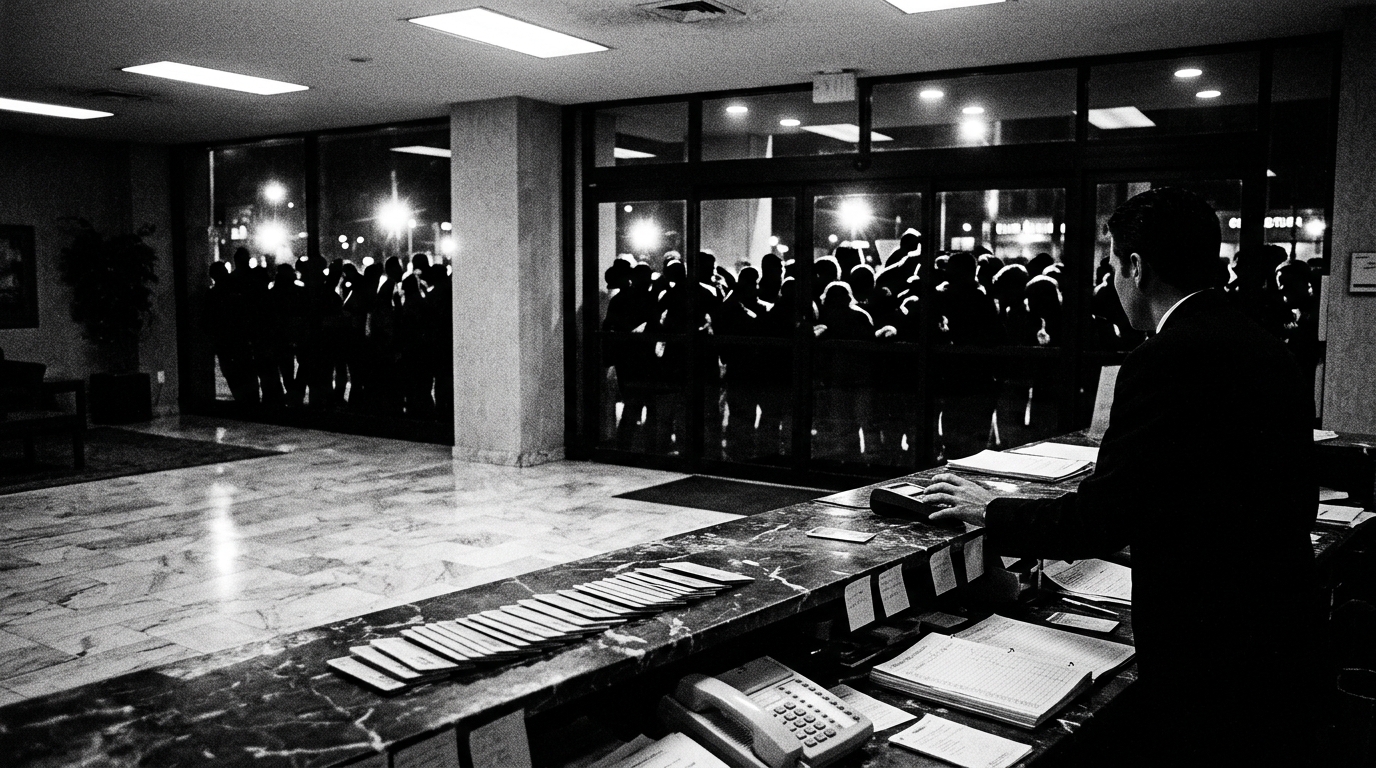
But here's my question, and it's the one nobody in the hotel industry seems to be asking: what happens to those 20,000 redirected bookings? Some of those people just don't travel. Fine. But a meaningful percentage of them book hotels instead... possibly through Airbnb's own platform, possibly through an OTA, possibly direct. And the hotel on the receiving end has no idea that the guest checking in on July 3rd was flagged as a party risk by another platform's algorithm 48 hours ago. You're absorbing Airbnb's rejected demand without any of the intelligence that identified why it was rejected. That's a data asymmetry problem, and it's one that no PMS or guest screening tool I've seen is designed to handle. I talked to a GM last month who told me his noise complaints triple on holiday weekends and he couldn't figure out the pattern. I asked him if he'd looked at booking lead times for those specific nights... most were booked within 72 hours by local guests. Sound familiar?
There's a broader technology lesson here too. Airbnb built this system because they had a real problem (a guest got killed at a party in 2019, which is about as real as problems get) and they had the data infrastructure to do something about it. Every booking, every review, every complaint... all feeding one centralized system that can flag risk in real time. Hotels don't have that. We have fragmented PMS data, disconnected guest profiles across brands, and CRM systems that can barely remember a guest's pillow preference let alone assess behavioral risk. Airbnb's anti-party tech isn't impressive because it blocks parties. It's impressive because it demonstrates what you can build when your data architecture isn't held together with API duct tape and vendor promises. The gap between what platforms can do with guest intelligence and what hotels can do is widening, and stories like this make that gap visible.
One more thing. Research on markets where short-term rental restrictions have been implemented shows hotels see an average 3.5% revenue bump, with smaller and midscale properties benefiting the most. Airbnb's party crackdown isn't a regulatory restriction, but the mechanism is similar... it constrains supply on high-demand nights and pushes displaced guests toward traditional lodging. If you're a select-service or extended-stay operator in a market with heavy Airbnb density, holiday weekends are quietly becoming your best opportunity for rate optimization. Not because demand grew. Because supply got filtered.
Here's what I'd do if I were running a property in a market with significant short-term rental inventory. Pull your July 4th booking data from the last three years and look at lead time, source, and guest origin. If you're seeing a spike in last-minute, local, OTA-sourced bookings on holiday weekends, you're probably catching Airbnb's redirected demand... and you should be pricing accordingly, not leaving rate on the table. More importantly, talk to your front desk and security teams before this weekend. Holiday noise complaints aren't random. They follow a pattern, and the pattern just got amplified by a platform pushing 20,000 rejected bookings into the market. Tighten your noise policy communication at check-in. Brief your night audit. And if you don't have a guest screening process for last-minute local bookings on high-risk weekends, build one. It doesn't have to be algorithmic. It just has to exist.