Today · Jun 17, 2026
80% of Host City Hotels Are Tracking Below World Cup Forecasts. Summer Just Got Complicated.

80% of Host City Hotels Are Tracking Below World Cup Forecasts. Summer Just Got Complicated.

Hotel owners in 11 FIFA World Cup host cities were told to expect a once-in-a-generation demand surge. The AHLA's new survey says 80% of them are watching bookings come in below forecast, and the international visitors everyone was counting on aren't coming.

I knew a GM in a secondary market once who spent $180,000 renovating his bar and lobby lounge because the city landed a major sporting event. New furniture, new lighting, new cocktail menu, the works. He was going to capture all that international walk-in traffic. The event came and went. His regulars loved the new bar. The international wave never showed up. He spent two years paying off furniture for a party that happened somewhere else in town.

That story keeps replaying in my head this week.

The AHLA just dropped survey results from hoteliers across all 11 U.S. host cities for the 2026 FIFA World Cup, and the numbers are ugly. Eighty percent of respondents say bookings are tracking below initial forecasts. Between 65% and 70% cite visa barriers and geopolitical concerns as the primary reasons international demand hasn't materialized. And here's the detail that should make every revenue manager in a host city sit up straight... roughly half of surveyed hoteliers report that FIFA has released material room blocks it had previously committed to. Those blocks created an early demand signal that looked real. It wasn't. It was a placeholder that evaporated.

Let's talk about what this means at property level, because the national story misses the texture. Kansas City is getting crushed... 85% to 90% of hoteliers there say bookings are below expectations. Boston, Philly, San Francisco, Seattle... nearly 80% are calling the tournament a "non-event" for their hotels. Even the stronger markets (Dallas, Houston, LA, New York) are running 60% to 70% below World Cup projections, though in some cases that puts them roughly in line with normal summer demand. Which means the World Cup premium they priced into their rate strategy? It's not there. Meanwhile, rates in host cities are up 55% year-over-year on World Cup dates, but occupancy for those same dates is still in single digits. Read that again. Rates are up 55%. Occupancy is in single digits. That is a rate correction waiting to happen, and every day you wait to adjust is a day you're losing pickup to the hotel down the street that already did.

The deeper problem isn't FIFA or even the visa situation (though both are real factors). The deeper problem is that the original economic projections were fantasy math from the start. FIFA's own president projected $30.5 billion in U.S. economic output and anticipated a roughly even split between domestic and international visitors. The Congressional Research Service reported in early May that international tourism to the U.S. declined 5.5% in 2025, and non-citizen air arrivals in January 2026 were still running nearly 13% below January 2019 levels. Nobody who was paying attention to the inbound travel data should be surprised that the international demand wave isn't showing up. The data has been telling this story for months. The projections just chose to ignore it. This is what I call the National Number Trap... someone in a boardroom builds a model based on aggregate projections, and the hotel three miles from the stadium is supposed to build a business plan around it. Your comp set is the forecast that matters. The FIFA economic impact number never was.

Here's what I think happens next. The properties that priced aggressively for World Cup dates and haven't seen the pickup are going to face a brutal choice in the next 30 to 45 days. Drop rate and try to capture what domestic demand exists, or hold rate and watch the rooms go empty. If you drop, you risk repricing your market for the rest of the summer. If you hold, you eat the vacancy. Neither option is great. But one of them is recoverable and the other one leaves money on the table permanently. I know which one I'd choose. And I know which one most revenue managers are going to be pressured into by ownership groups that were already counting on World Cup revenue in their 2026 budgets.

Operator's Take

If you're a GM or revenue manager in a host city, this is a right-now conversation. Pull your World Cup date pickup reports today. Compare where you are against your budget and against the same dates last year. If you're holding rate at a 55% premium with single-digit occupancy on those dates, you need to have an honest conversation about where the floor is... because the demand composition has shifted from international to domestic, and domestic travelers are more rate-sensitive and book closer in. Adjust your rate strategy now while there's still time to capture pickup, and build a 30-day tactical plan that doesn't depend on international walk-ins who aren't coming. If you already spent CapEx or marketing dollars based on World Cup projections, document the variance between what was projected and what materialized... that paper trail matters when your owner asks what happened. Be the one who brings this to your ownership with a plan already attached. Not the one who waits to be asked why June came in short.


Read full analysis → ← Show less
Source: Google News: Hotel Industry
NYC Kept Airbnb Locked Out for the World Cup. Hotel Operators, This Is Your Window.

NYC Kept Airbnb Locked Out for the World Cup. Hotel Operators, This Is Your Window.

New York City just refused to lift its short-term rental restrictions for the FIFA World Cup, removing roughly 20,000 Airbnb listings from the supply equation during the biggest event the city has hosted in decades. If you're running a hotel in the metro area and you haven't repriced your June and July inventory yet, someone else already has.

So here's what actually happened. New York City had a choice... temporarily suspend Local Law 18, the regulation that wiped out over 90% of Airbnb listings since September 2023, and open up cheap supply for the 1.2 million visitors expected for the FIFA World Cup. Or keep the restrictions in place, protect housing stock in a city with a 1.4% rental vacancy rate, and let hotel operators absorb all that demand.

They chose the hotels. And they didn't even hesitate.

Look, I get why business groups were pushing for the suspension. The Partnership for New York City and a coalition of borough chambers argued that without flexible lodging options, visitors would just stay in Jersey City and Hoboken and take their spending with them. And the data supports that concern... short-term rental occupancy in the Jersey City-Newark corridor is already up 169% for the June 13 match date compared to baseline. That's not a projection. That's bookings already on the books. The demand is real, and it's finding a bed somewhere. The question is whether that bed is in your building or across the river.

Here's the technology angle nobody's talking about. When Local Law 18 went into effect, it didn't just remove supply... it broke the distribution infrastructure that Airbnb had built over a decade. The registration requirements (hosts must be present, max two guests, no locked internal doors, $145 non-refundable fee) made the platform functionally unusable for anyone who wasn't renting a spare bedroom while sitting in the living room. Airbnb tried to launch a World Cup New Host Reward Program offering $750 to new hosts in FIFA event zones, but NYC isn't even eligible. The system they built to compete with hotels in this market literally cannot operate here anymore. That's not a temporary setback for them. That's an architectural problem. Their supply acquisition pipeline is broken in the largest hotel market in the country during the largest demand event of the decade.

For hotel operators with revenue management systems... this is where your RMS should be earning its subscription fee. You have a supply-constrained market with a known demand spike, a defined event window (June 11 through July 19), and a competing platform that's been legislated into near-irrelevance. If your RMS isn't already flagging these dates for aggressive rate optimization, run the Dale Test on it... could your night auditor do better with a spreadsheet? Because the properties that reprice now, before May, will capture the rate premium. The ones that wait for the demand to show up in booking pace will be chasing rates that the early movers already set. I talked to an RM consultant last week who said half the NYC hotels she works with haven't touched their World Cup pricing yet because "we're waiting to see how demand develops." Demand already developed. It's in the data. The 11% ADR jump to $393 after Local Law 18 took effect in late 2023 happened in a normal demand environment. This is a World Cup. With 90% of short-term rental supply still gone.

The spillover to Jersey City and Hoboken is real and it matters for operators on both sides of the Hudson. If you're running a hotel in the NJ metro area, you're about to absorb overflow demand from visitors who can't find (or afford) NYC accommodations. Your technology stack needs to handle the volume... booking engine capacity, rate-push frequency, channel manager responsiveness. If your PMS integration with your channel manager has a 15-minute sync delay, that's 15 minutes of rate arbitrage you're losing every time you adjust. And if you're an NYC operator watching demand leak to Jersey, that's actually fine. You don't need all the demand. You need enough demand at the right rate. A sold-out night at $300 is worth less than 85% occupancy at $450. The math on that is straightforward... but only if your systems are set up to optimize for revenue, not just occupancy.

Operator's Take

Here's what I'd be doing this week if I were running a property anywhere in the NYC metro. First... if you haven't built dedicated rate strategies for the June 11 through July 19 window, stop reading this and go do it. The supply constraint is locked in. Local Law 18 isn't changing. That means your comp set is your comp set... no shadow inventory from Airbnb undercutting you at the last minute. Second, stress-test your booking engine and channel manager for volume. World Cup searches are going to spike hard in the next 60 days, and if your tech stack chokes on traffic or lags on rate updates, you're leaving money on the table. Third... and this is for the Jersey City and Hoboken operators specifically... don't just raise rates. Build packages. Transportation to MetLife Stadium, fan experiences, group blocks. The visitors who end up on your side of the river didn't choose you. Make them glad they landed there anyway. That's where the review scores and the repeat bookings come from. The demand window is finite. Your pricing strategy shouldn't be.

— Mike Storm, Founder & Editor
Read full analysis → ← Show less
Source: Google News: Airbnb
The World Cup Is Less Then 100 Days Out. Your Staffing Plan Is Already Late.

The World Cup Is Less Then 100 Days Out. Your Staffing Plan Is Already Late.

Eighty-five million international visitors are projected for 2026, and every hotel in an NFL host city is about to discover whether their operation is actually built for prime time... or just built for Tuesday nights in October.

Available Analysis

I managed a hotel during the '96 Olympics. Not one of the flagship properties downtown that got all the press. A 280-key about 20 minutes from the venues that nobody thought would see much action. We saw plenty of action. We also saw our housekeeping team buckle under the pressure by day three because we'd staffed for a 15% occupancy bump and got a 40% one. By the second week, I was stripping beds myself at 11 PM. My AGM was running towels in her personal car from a linen supplier 45 minutes away because our par levels were a joke.

That experience taught me something I've never forgotten: major international sporting events don't just fill your hotel. They fundamentally change who's IN your hotel, how long they stay, what they expect, and how fast everything breaks when you're running at 97% occupancy with a staff built for 78%.

So let's talk about what's actually coming. The National Travel and Tourism Office is projecting 85 million international arrivals in 2026... a 10% jump over 2025 and well past the pre-pandemic high of 79.4 million in 2019. The primary driver is obvious: the FIFA World Cup, running June 11 through July 19, with 78 matches across 11 U.S. cities. Tourism Economics estimates 1.24 million international visitors specifically for the tournament, and roughly 60% of those are incremental trips (meaning people who wouldn't have come to the U.S. otherwise). Post-draw booking data is already showing the impact. For the week of the final at MetLife Stadium, booking volumes are up 102% year-over-year with ADR climbing 72%. Some host city markets are already showing 14% ADR growth for the first nine months of 2026 versus the national average. The revenue opportunity is real. Nobody's debating that.

Here's what nobody's debating loudly enough: the service delivery risk. AHLA's own numbers from early 2024 showed 67% of hotels still reporting staffing shortages, with housekeeping cited as the most critical gap by nearly half of respondents. That was during NORMAL demand. Now layer on a five-week international mega-event where your guest mix shifts overnight from domestic business travelers who know how everything works to international leisure guests who need more front desk time, more concierge interaction, more patience, and more towels. A lot more towels. If you're a GM at a 200-key select-service in Dallas or a 350-key full-service in Miami, your current labor model was not designed for this. And if you're waiting until April 2026 to start building your tournament staffing plan, you're going to be the hotel that earns a 30% ADR premium and a 1.5-star review drop that haunts you for 18 months after the final whistle.

The 1994 World Cup is the historical parallel everyone cites... host city hotels saw revenue increases of 40-60% during tournament months. What people forget is the other side of that data. Properties that couldn't maintain service standards during the surge saw review damage (and this was before TripAdvisor and Google Reviews made every bad experience permanent and searchable). In 2026, a single viral social media post about a filthy room or a 45-minute check-in line doesn't just cost you a guest. It costs you a year of rate integrity. The math on this is brutal: you can push ADR to $400 a night during the group stage, but if your post-tournament reviews tank your ranking, you're discounting your way back to $180 by September. I've seen this exact pattern play out after every major event I've worked through. The hotels that win aren't the ones that charge the most during the event. They're the ones that maintain their standards WHILE charging more, and come out the other side with their reputation intact.

Let me be direct about what the revenue management conversation should look like right now. Yes, model your ADR scenarios. The 30-50% premium during tournament periods is achievable and probably conservative for properties within 30 minutes of a venue. But model it against cost to achieve. What does your labor cost look like at 95% occupancy for five consecutive weeks with a 40% international guest mix? What's the incremental cost of multilingual front desk coverage? What happens to your laundry operation when every room is turning daily instead of every three days? What's your linen par level for a five-week period where you can't rely on your normal vendor delivery cadence because every hotel in your market is ordering more at the same time? These aren't hypothetical questions. These are P&L line items that will eat your rate premium alive if you don't plan for them now. Revenue managers love to model the top line. The GMs who survive events like this are the ones modeling the bottom line just as aggressively.

Operator's Take

If you're a GM in any of the 11 host cities, stop reading and put three things on your calendar this week. First: schedule a meeting with your HR director (or your department heads if you don't have one) to build a tournament-specific staffing model... you need to know exactly how many incremental FTEs you need for June 11 through July 19, and you need to start recruiting for them by Q3 of this year. Second: call your linen vendor and lock in guaranteed delivery volumes and frequency for the tournament period before every other hotel in your market does the same thing. Third: sit down with your revenue manager and model the FULL picture... not just the rate premium, but the cost to achieve at sustained peak occupancy with an international guest mix. The hotels that are going to win the World Cup aren't the ones charging the most. They're the ones that can actually deliver at the rate they're charging.

Read full analysis → ← Show less
Source: Staffingindustry
Spain Is Training in Chattanooga. The GM Down the Street Just Got the Weirdest Demand Surge of Their Career.

Spain Is Training in Chattanooga. The GM Down the Street Just Got the Weirdest Demand Surge of Their Career.

FIFA is scattering 48 national teams across smaller U.S. cities for World Cup base camps this summer, and the hotels near those training sites are about to experience something no forecast model prepared them for. The question isn't whether demand shows up... it's whether you're ready for demand that travels with a security detail and a nutritionist.

Available Analysis

I worked a major sporting event once at a property that wasn't even in the host city. We were 45 minutes away, technically in the overflow zone, and we figured we'd pick up a few extra room nights from people who couldn't afford downtown rates. What actually happened was a foreign delegation's advance team showed up three weeks early, wanted to inspect every room on the fourth floor, asked if we could remove all the furniture from the meeting room and install temporary flooring, and then negotiated a rate that was 15% below our published rack. We made money on it. But nobody on my team was remotely prepared for what "hosting a national delegation" actually looks like at property level.

That memory is exactly what I think about when I read that FIFA has placed World Cup base camps in cities like Chattanooga, Greensboro, Winston-Salem, Lawrence (Kansas), and Morristown, New Jersey. These aren't your host cities. These aren't the markets with 11 matches and $500 million economic impact projections. These are secondary and tertiary markets where a 150-key select-service property might suddenly have a national soccer team's entourage filling 30-40 rooms for three weeks... with dietary requirements, security protocols, media blackout zones, and an expectation of service that would make your typical corporate group look like a walk-in.

Here's the part that CoStar's RevPAR forecast doesn't capture. The national number... 1.2% RevPAR lift in June, 1.5% in July... is almost meaningless if you're in one of these base camp markets. This is what I call the National Number Trap. That 1.2% is a weather report averaged across every hotel in the country. The GM in Chattanooga hosting Spain's training camp isn't living in a 1.2% world. They're living in a world where their property is about to operate more like a boutique resort for a very specific, very demanding client for 20-plus consecutive nights. And meanwhile, the GM in a mid-market city 90 miles from any base camp or host venue is looking at potential tourism displacement... leisure travelers who decided to skip their summer trip because they assumed everything was sold out or overpriced. Same national average. Completely different realities.

The other thing nobody's talking about is the FIFA reservation "wash." In mid-March, FIFA canceled thousands of hotel room reservations across multiple markets... roughly 2,000 in Philadelphia alone. If you're in a base camp market and you blocked rooms based on FIFA's initial commitments, check those blocks right now. Today. Not Monday. Some of those rooms may have already been released, and your revenue manager needs to know the real number so they can adjust pricing strategy for the compression window around them. The demand is real but it's reshaping, and the properties that win this summer won't be the ones who sat on a FIFA block and assumed the rooms would fill themselves. They'll be the ones who priced dynamically around whatever confirmed demand actually materializes.

And look... for the 60% of U.S. hotels that aren't near a host city or a base camp, this event is mostly noise. The full-year national RevPAR forecast is 0.4% growth, and without the World Cup it would be 0.2%. That's not a rising tide. That's a rounding error with a soccer ball attached to it. The opportunity here is hyperlocal. If you're in it, it could be the best June your property has ever had. If you're not, don't chase it. Focus on the business that's actually in your three-mile radius.

Operator's Take

If you're a GM or revenue manager at a property within 20 miles of a confirmed base camp site, stop reading and go verify your group blocks against what FIFA actually has on the books right now... not what they committed to six months ago. That "wash" in March changed the math. Second, talk to your front office and F&B teams this week about what hosting a delegation-style group actually means... restricted floors, custom meal requirements, media and security coordination. This isn't a wedding block. It's closer to a diplomatic visit. Price accordingly. If you can identify the team's advance coordinator, reach out directly... don't wait for the reservation to show up in your PMS. And if you're NOT near a base camp or host city, don't let the World Cup hype distract you from your actual summer strategy. The national lift is negligible. Your energy is better spent on rate integrity for the demand you already have than chasing demand that isn't coming to your market.

Read full analysis → ← Show less
Source: Google News: CoStar Hotels
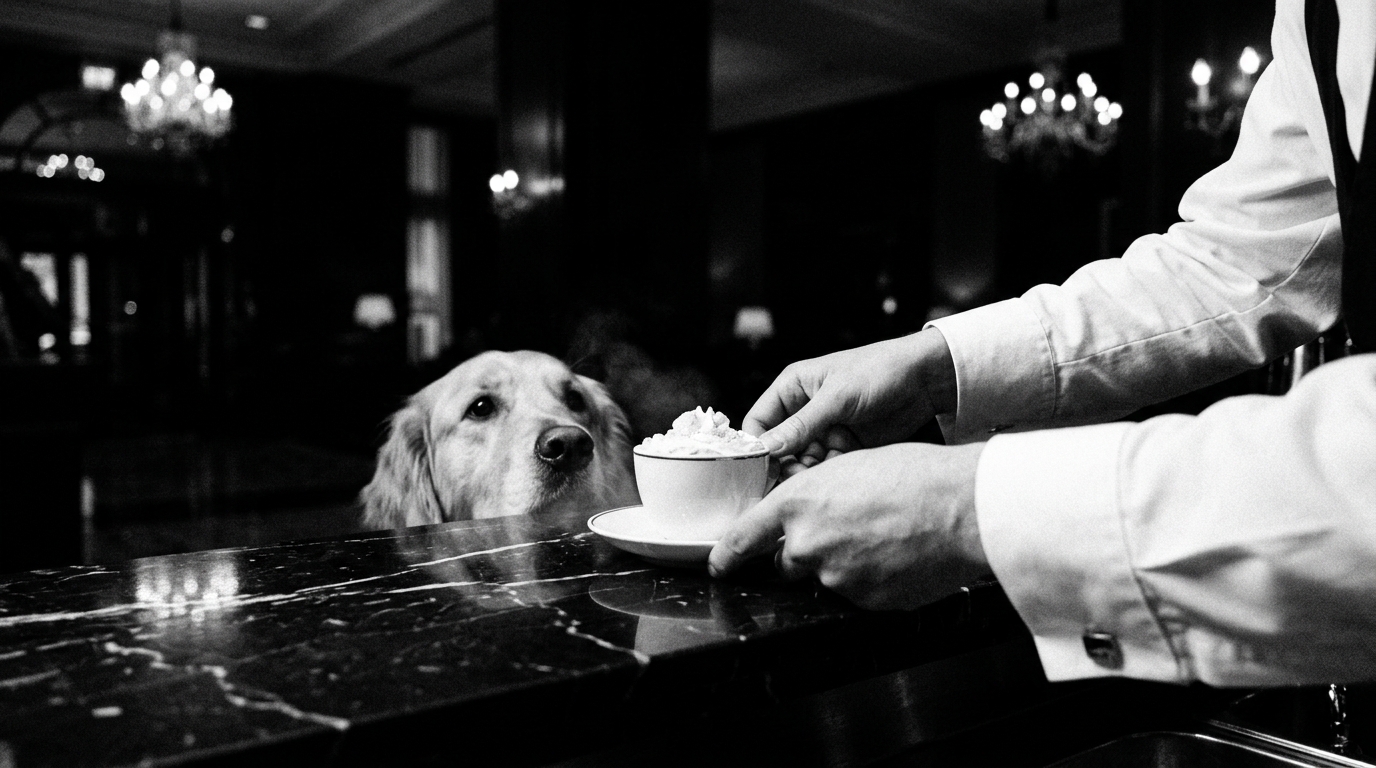
JW Marriott Is Selling a Puppuccino for Your Dog. And the Brand Strategy Is Smarter Than You Think.

JW Marriott Is Selling a Puppuccino for Your Dog. And the Brand Strategy Is Smarter Than You Think.

A travel writer's stay at the JW Marriott Parq Vancouver with her dog reads like lifestyle fluff, but underneath is a $31 billion pet-friendly hotel market and a World Cup city about to run out of rooms... which means the brands charging $50 for a pet cleaning fee today are leaving real money on the table.

Available Analysis

Let me tell you something about the word "curated" that I have learned from fifteen years of brand work and a filing cabinet full of franchise disclosure documents: it means absolutely nothing until somebody has to deliver it at property level. So when I read that the JW Marriott Parq Vancouver is offering a "Very Important Pet package" complete with a custom pet meal and a puppuccino... my first reaction was not "how adorable." My first reaction was "who's making the puppuccino at 6 AM when the lobby bar isn't staffed yet, and did anyone write that into the labor model?"

But here's where I have to give credit. Because this isn't just a cute amenity... this is actually smart brand positioning at exactly the right moment, and the numbers back it up. The global pet-friendly hotel market is projected at roughly $31 billion this year, growing at over 8% annually. The luxury segment alone is headed toward $2.4 billion by 2033. Dogs account for more than 50% of that market. JW Marriott is a luxury brand charging CAD $50 per stay for pet cleaning (or waiving it if you upgrade to the VIP package, which... of course you do, because the upsell psychology is textbook). With Vancouver hosting seven FIFA World Cup matches between June and July, and a Deloitte report projecting a shortfall of 70,000 accommodation nights during a critical nine-day window, every revenue stream matters. Hotels in that market are looking at rates potentially surging over 200%. You know what a pet-traveling guest represents during a supply crunch? A guest who is less price-sensitive, more loyal, and more likely to book direct because they need to confirm the pet policy before they commit. That's not a niche. That's a revenue segment with built-in friction that rewards brands who remove it.

Now here's where the brand strategy gets interesting and where most flags are going to fumble it. Marriott has over 1,500 pet-friendly hotels in the U.S. alone, but the policies are wildly inconsistent... weight limits range from 25 to 75 pounds, fees range from $20 to $150, and the actual guest experience varies from "we tolerate your animal" to "here's a monogrammed dog bowl." That inconsistency is a brand problem. If I'm a pet-traveling luxury guest and I have a great experience at the JW Marriott in Vancouver, I'm going to expect the same thing at the JW Marriott in Austin. And when the Austin property has a different weight limit, no VIP package, and a front desk agent who looks at my dog like I brought a raccoon into the lobby... that's a journey leak. The brand promise broke. The guest doesn't blame the property. The guest blames JW Marriott. (This is the part where I'd pull out my filing cabinet and show you six examples of brands that launched amenity programs at flagship properties and never standardized them across the portfolio. Same movie. Every time.)

What I want to know... and what the Yahoo travel piece doesn't ask because it's not written for operators... is whether Marriott is building this into the brand standard or leaving it as a property-level decision. Because those are two completely different strategies with two completely different outcomes. If it's a standard, then every JW Marriott owner needs to budget for pet amenity infrastructure, staff training, deep-cleaning protocols, and the liability insurance that comes with having animals in a luxury property. If it's optional, then you get the inconsistency problem I just described, and the brand dilutes itself one disappointed dog owner at a time. I've watched brands try to have it both ways... mandate the marketing, delegate the cost. It doesn't work. It never works. The owner absorbs the expense and the brand takes the credit, and if you don't think that creates resentment, you haven't sat across the table from enough franchise owners.

The real opportunity here isn't the puppuccino (though I will admit, reluctantly, that it's a memorable touchpoint and whoever thought of it understands that Instagram is a distribution channel). The real opportunity is that pet-friendly travel is no longer a lifestyle quirk... it's a $31 billion market segment that most hotel brands are serving accidentally instead of strategically. The brands that build real programs around it... consistent policies, trained staff, purpose-designed amenity kits, dedicated room inventory that's actually set up for animals instead of just "allowed"... those brands are going to capture disproportionate loyalty from a guest segment that books more carefully, stays longer, and forgives less when the experience falls short. And in a World Cup market where rooms are about to become the most expensive commodity in Vancouver, the property that can confidently say "yes, bring your dog, here's exactly what to expect" is the property that books first. Can the team at your average JW Marriott execute this on a Tuesday with two call-outs? That's the question. That's always the question.

Operator's Take

Here's what I'd tell any GM at a luxury or upper-upscale branded property right now. Pet-friendly isn't a checkbox on your website anymore... it's a revenue strategy, and if you're treating it like an inconvenience you tolerate, you're losing bookings to the property down the street that figured this out. Pull your pet-stay data for the last 12 months. How many rooms, what was the average rate, what was the incremental revenue from fees and upsells. If you don't have that data separated out, that's your first problem. Second... if you're in a World Cup host city or any major event market this summer, get your pet policy locked down NOW. Clear weight limits, clear fees, clear amenity offering, and make sure your front desk team can explain it in 30 seconds without checking with a manager. This is what I call the Brand Reality Gap... the brand is marketing the puppuccino in Vancouver, but the guest experience lives or dies with the person at your front desk who either knows the program or doesn't. Third, bring this to your owner as a revenue conversation, not an amenity conversation. "We can capture X additional room nights per month from pet travelers at Y premium" is a sentence that gets attention. "We should be nicer to dogs" is not.

— Mike Storm, Founder & Editor
Read full analysis → ← Show less
Source: Google News: Marriott
The Northeast Is About to Have Its Moment. Most of You Aren't Ready for What Comes After.

The Northeast Is About to Have Its Moment. Most of You Aren't Ready for What Comes After.

CoStar just flagged Philadelphia, Boston, and New York as the Northeast hotel markets to watch in 2026, and the FIFA World Cup is the headline reason. But the operators who've survived event-driven demand spikes before know the real question isn't how high it goes... it's what your market looks like when the circus leaves town.

Available Analysis

I worked with a GM once who managed a property near a Super Bowl host city. Months before kickoff, the ownership group was giddy. Rate projections through the roof. Every room sold. The GM told me he spent more time in those months worrying than celebrating. Not about the event itself... he could handle a sellout. He was worried about what his team would look like on the other side. Because he'd been through it before, at a different property in a different city for a different event, and he knew the pattern. You burn out your best people during the surge, you train your revenue team to chase peak rates, and then the event ends and you're staring at a booking pace that looks like someone pulled the plug.

That's where my head goes when I read CoStar's piece about Northeast markets to watch in 2026. They're right about the surface story. Philadelphia, Boston, and New York are going to benefit from the World Cup. Investment is accelerating in the Northeast while the Midwest is pulling back. New York alone has 8,100 rooms in the construction pipeline set to open by 2028. If you're operating in one of these markets, the next 12-18 months could be very, very good.

But let me ask you something. If you're running a 250-key full-service in one of these markets, what's your plan for Q4 2026? After the World Cup demand evaporates, after the rate premiums disappear, after those 8,100 new rooms start absorbing the demand that used to be yours? Because here's what the "regions to watch" framing always misses... the event creates a demand spike, the spike attracts capital, the capital builds supply, and the supply doesn't go away when the event does. I've seen this movie before. Multiple times. The operators who win aren't the ones who ride the wave. They're the ones who use the wave to build something that survives normal seas.

And there's another layer here that CoStar touches on but deserves more attention. Even within New York, Manhattan is thriving while the outer boroughs are struggling. That's not a market story. That's a comp set story. If you're a select-service operator in Queens or Brooklyn reading a headline about New York being a "market to watch," that headline might as well be about a different city. Your reality is completely different from the full-service property on Sixth Avenue. National and even metro-level data can be dangerous when it convinces you that the tide is lifting all boats. Some boats are sitting on dry ground.

Look... I'm not telling you to be pessimistic. If you're in Philly or Boston and you haven't already started thinking about your World Cup pricing strategy, your group sales approach for the shoulder periods, and your staffing plan for peak demand, you're behind. The opportunity is real. But the operators I respect most are the ones who take a good year and use it to build a war chest, invest in the team, lock in rate integrity with corporate accounts... not the ones who spend it celebrating a RevPAR number that was always going to be temporary.

Operator's Take

If you're in a World Cup market, here's what I'd do this week. First, pull your forward booking pace for July through December and compare it to the same window in 2024 and 2025. Know exactly where your post-event demand stands before the noise starts. Second, identify the three to five corporate and group accounts that matter most to your base business and start those 2027 conversations now... while you have leverage and occupancy numbers that make you look like a hero. Third, if you're in New York specifically, know your submarket. Manhattan operators and outer borough operators are living in different universes right now, and your strategy needs to reflect YOUR three-mile radius, not the metro average. This is what I call the Three-Mile Radius... your revenue ceiling is set by what's happening within three miles of your front door, not by a CoStar headline about the Northeast. Use the good months to build the foundation. Don't mistake a temporary demand spike for a permanent market shift.

Read full analysis → ← Show less
Source: Google News: CoStar Hotels
A $57M Hotel Sold for $25M Is Now Getting the JW Marriott Sign. Let's Talk About What That Really Means.

A $57M Hotel Sold for $25M Is Now Getting the JW Marriott Sign. Let's Talk About What That Really Means.

Stonebridge picked up the W Atlanta Downtown at a 56% discount through a deed-in-lieu of foreclosure, and now they're converting it to a JW Marriott just in time for the World Cup. This is either brilliant opportunistic repositioning or the most expensive bet on a single summer event since someone built a hotel next to an Olympic village.

Available Analysis

So here's a story that has everything... a distressed asset, a brand swap, a mega-event on the horizon, and a price per key that should make every owner in America stop scrolling. Stonebridge Companies bought the 237-room W Atlanta Downtown in December 2023 for $24.8 million. That's roughly $105,000 per key for a downtown Atlanta hotel. The previous owner, Ashford Hospitality Trust, paid $56.75 million for the same property in 2015. Let that math sit with you for a second. Ashford didn't just lose money on this deal... they surrendered it through a deed-in-lieu of foreclosure as part of a broader strategy to offload 19 underperforming hotels and shed approximately $700 million in debt. This property has been foreclosed on twice now (2010 and 2023), which means two different ownership groups looked at this asset and said "we can't make this work." And now a third group is saying "hold my old fashioned, we're going JW Marriott." The confidence is... something.

Here's where it gets interesting from a brand perspective, and where I have opinions. The W brand is effectively exiting Atlanta entirely with this conversion. That's not a small thing. When a lifestyle brand loses every property in a major market, that's not "strategic repositioning"... that's retreat. And the replacement brand matters. JW Marriott is a very different promise than W. W says "we're cool, we're nightlife, we're the lobby scene." JW says "we're refined, we're consistent, we're the place your company books when they want luxury without surprises." Those are fundamentally different guests, different F&B concepts, different staffing models, different everything. You don't just change the sign and swap the playlist. You're rebuilding the entire service culture from scratch with (presumably) many of the same team members who were trained to deliver a completely different experience. I've watched three different flags try this kind of repositioning... lifestyle to traditional luxury... and the ones that succeed are the ones that invest as much in retraining as they do in renovation. The ones that fail are the ones that put all the money into the lobby and hope the staff figures it out.

The timing tells you everything about the thesis. Spring 2026 opening, FIFA World Cup in Atlanta in June 2026. Stonebridge is betting that they can ride the wave of a massive international event to establish rate positioning for a newly converted luxury property. And look, that's not crazy... Atlanta's hotel construction pipeline was the second largest in the U.S. in Q4 2025, which means the market believes in this city's trajectory. But here's the part the press release left out: what happens in July? And August? And the 50 weeks a year when there ISN'T a World Cup in town? The real question isn't whether JW Marriott Atlanta Downtown will have a great June 2026. Of course it will. Every hotel in downtown Atlanta will have a great June 2026. The real question is whether the brand conversion generates enough sustained loyalty contribution and rate premium to justify itself over a full cycle, in a market that's about to absorb a LOT of new supply.

Now, I want to talk about something that's actually fascinating here, which is the "Mindful Floor" concept... 24 wellness-focused rooms that would be the first of their kind for JW Marriott in the U.S. This is the kind of thing that sounds beautiful in a rendering and I genuinely want to know: what does it cost to operate? What's the rate premium? What happens when the aromatherapy diffuser breaks at 2 AM and the guest calls down to a front desk agent who has never heard of a "Mindful Floor" because they started last Tuesday? (I'm not being sarcastic. I actually love this concept in theory. But the Deliverable Test is the Deliverable Test, and "wellness floor" has to survive contact with a Tuesday night skeleton crew or it's just a marketing page on Marriott.com.) I sat in a brand review once where the VP of design spent 40 minutes walking us through a wellness concept and couldn't answer a single question about housekeeping protocols for the specialty linens. Forty minutes of vision. Zero minutes of operations. That's brand theater.

Here's what I'll be watching. The $105K per key acquisition cost gives Stonebridge extraordinary cushion... they could spend $40,000-50,000 per key on renovation and still be all-in at a number that makes the math work at reasonable cap rates. That's the advantage of buying distressed. You get to play with house money on the upside. But the brand conversion is where it gets real. Total brand cost for a JW Marriott... franchise fees, loyalty assessments, reservation system fees, PIP compliance, brand-mandated vendors... you're looking at 15-18% of revenue easily. That loyalty contribution better be real, and it better show up in the STR data by Q1 2027, or this is just a prettier version of the same problem that put this hotel into foreclosure twice. My filing cabinet has a lot of franchise sales projections in it. The variance between what was projected and what was delivered should keep every owner up at night. Stonebridge got the bones at the right price. Now they need the brand to deliver on the promise. And that... that's where the story actually begins.

Operator's Take

If you're an owner who's been pitched a brand conversion... especially lifestyle to traditional luxury... pull the actual loyalty contribution data for comparable JW Marriott properties in similar urban markets. Not the projections. The actuals. Then stress-test your model at 70% of that number and see if the deal still works. And if you're a GM inheriting a conversion like this, your number one job right now isn't the renovation timeline... it's the retraining plan. Get your service culture roadmap locked in before the new sign goes up. The sign is the easy part.

— Mike Storm, Founder & Editor
Read full analysis → ← Show less
Source: Google News: Marriott
Your International Bookings Are Disappearing. Here's What to Do Before Summer.

Your International Bookings Are Disappearing. Here's What to Do Before Summer.

Foreign inbound tourism dropped 5.4% in 2025 and it's getting worse heading into 2026. If you're running a full-service property in a gateway city, this isn't a blip... it's a structural shift in your demand mix, and your summer forecast is probably wrong.

I had a director of sales at a downtown property tell me something last month that stuck with me. She said "I keep looking at my booking window for July and August and it looks fine... until I filter by country of origin. Then it looks like someone turned off a faucet." She's been in the business 22 years. She said she's never seen Canadian bookings just vanish like this. Not decline. Vanish.

That's the thing about this story that most people are missing. A 5.4% national decline in foreign inbound tourism sounds manageable. Sounds like a rounding error if you're running a Courtyard in Des Moines. But that number is an average, and averages lie. The pain is concentrated. Gateway cities... New York, Miami, Los Angeles, San Francisco, Chicago, Orlando... are absorbing the vast majority of that hit. And within those cities, it's the upper-upscale and luxury full-service properties that built their ADR strategy on European FIT travelers, Asian tour groups, and Canadian snowbirds who are getting crushed. If your international segment was 15-20% of occupied room nights, you don't have a soft patch. You have a revenue model that just lost a load-bearing wall.

Here's what nobody wants to say out loud. This isn't seasonal. This isn't cyclical. This is a perception problem, and perception problems compound. Four million fewer Canadian travelers came to the US in 2025... a 22% drop. That's $4.5 billion in spending that went somewhere else. And 59% of Canadians surveyed said US government policies and political rhetoric are the reason they're staying home. You can't run a rate promotion to fix that. You can't loyalty-point your way out of someone deciding your country isn't worth visiting. The strong dollar is making it worse (everything is more expensive for inbound travelers), and the immigration enforcement headlines are making it worse than that. I've seen this movie before... not at this scale, but the first time around in 2017-2018 there was a measurable dip in international arrivals that took years to recover. This time it's deeper and the rhetoric is louder. The US Travel Association is estimating $1.8 billion in lost export revenue for every single percentage point of decline. Do that math on a 5-6% drop and you're looking at $10 billion-plus that's not coming back this year.

Everyone wants to talk about the FIFA World Cup as if it's going to save 2026. Let me be direct. It won't. Will it generate a concentrated burst of demand in host cities between June 11 and July 19? Absolutely. The projections say 1.2 million international visitors for the tournament. That's real. If you're a revenue manager at a property in one of those host cities and you're not already fully committed on World Cup dates at premium rates, you're leaving money on the table and it might be too late to get it back. But here's the part that gets lost in the excitement... a month of soccer doesn't offset eleven months of structural decline. The national RevPAR lift during tournament months is projected at maybe 1.7%. Outside the host cities? Negligible. The World Cup is a sugar rush, not a cure.

So what do you actually do? First... pull your international segment data right now. Not next week. Monday morning. What percentage of your Q1-Q2 room nights came from non-US origin? If it's above 15%, you need to stress-test your summer and fall forecasts with a 10-15% reduction in that segment and figure out what domestic rate or volume fills the gap. For a lot of urban full-service properties, the answer is going to be uncomfortable... you either drop rate to fill with domestic demand (which tanks your ADR and your flow-through), or you hold rate and eat the occupancy decline (which might actually be the smarter play depending on your cost structure, but try explaining that to an owner watching revenue fall). Second... if you're in a World Cup host city, make sure your sales team is done being cute about those dates. Price them. Commit them. Move on to the harder problem, which is everything before June and everything after July. Third... and this is the one that requires some courage... start building domestic demand programs now. Group sales. Corporate negotiated rates. Regional leisure packages. Whatever fills the void. Because this perception problem isn't going away after an election cycle. The damage to the US travel brand is real, it's measurable, and the people making decisions in London, Toronto, Tokyo, and Sydney are reading the same headlines your inbound guests used to read before they booked.

Operator's Take

If you're a GM or revenue manager at a full-service property in New York, Miami, LA, San Francisco, Chicago, or Orlando, stop reading this and go pull your international segment mix for the last two quarters. If non-US origin is above 15% of your occupied room nights, build two forecasts for summer... one at current pace and one with a 12-15% reduction in that segment. Show both to your ownership group before they see the variance on their own. For World Cup host cities, your group sales team should already have those dates locked at premium rates... if they don't, that's a Monday morning conversation. For everyone else, the play is domestic demand capture, and the time to start was three months ago. Second best time is tomorrow.

Read full analysis → ← Show less
Source: Vertexaisearch
NYC Hotel Union Timed This Fight Perfectly. And Every GM Knows It.

NYC Hotel Union Timed This Fight Perfectly. And Every GM Knows It.

The Hotel Trades Council's contract expires right as the FIFA World Cup fills every room in New York. If you think that's a coincidence, you haven't been paying attention for the last two years.

I've negotiated union contracts. I've sat across tables at 2 AM from people who were very good at their jobs... the job being to extract maximum concession at maximum leverage. And let me tell you something about the timing of this one. The HTC didn't stumble into a contract expiration that lines up with the biggest event New York has hosted in decades. They engineered it. They spent 2025 getting the state to boost unemployment benefits for striking workers to $869 a week (up from $504) and cutting the waiting period to two weeks. That's not preparation. That's a chess move made 14 months before the board is set.

Here's what the headlines aren't telling you. The union represents north of 27,000 workers across roughly 250 hotels. Room attendants are already making around $40 an hour with pension and zero-cost medical. These are not sweatshop wages. This is already the highest-paid hotel workforce in the country. So the negotiation isn't really about whether these workers are treated fairly (they are, relative to the rest of the industry). It's about how much of a $3.3 billion economic windfall the labor side gets to capture. And the union has positioned itself to ask that question at the exact moment when ownership can least afford to say no.

The math on a strike during the World Cup is brutal and it's simple. The tournament runs June 11 through July 19, the final is in MetLife Stadium, projections say 1.2 million visitors for the region. Hotel prices in host cities are already up 55% year-over-year. If you're an owner with a 400-key union property in Manhattan, you're looking at what might be the single best revenue month in your hotel's history. A week-long strike doesn't just cost you that week. It costs you the compression pricing, the ancillary F&B revenue, the banquet bookings, and (this is the part people forget) it costs you the OTA positioning and review momentum that carries into Q4. One bad week in July can ripple through November.

I sat in a labor negotiation once where the union rep leaned across the table, looked at the ownership group, and said "you can pay us now or you can pay the guests who don't come back." He wasn't wrong. That's the calculation every New York hotel owner is running right now. The Hotel Association is out there saying a strike would be "extremely premature" and pointing to 24% workforce losses since the pandemic and rising operating costs. And they're right about the cost pressures. But being right about cost pressures doesn't help you when your housekeeping staff walks out the week FIFA sells 80,000 tickets across the river in New Jersey. Nobody cares about your margin story when there are no clean sheets.

Here's what I think happens. I think this gets settled. I think it gets settled expensively, but it gets settled, because ownership cannot afford the alternative and the union knows it. The real question isn't whether there's a strike. The real question is what the new contract costs per occupied room and whether that number breaks the model for the properties that were already struggling. Because HANYC isn't lying about the closures and the cost inflation. Some of these hotels were barely making it before the World Cup windfall appeared on the horizon. If the new labor contract prices in the boom but the boom is a one-time event... you've just locked in peak costs for the next cycle. I've seen this movie before. The hangover from a leverage-driven contract shows up about 18 months later, when occupancy normalizes and the new wage floor doesn't.

Operator's Take

If you're running a union property in New York, your contingency planning should have started yesterday. Get your labor attorney on the phone this week, not next month. Model two scenarios: a settlement at 12-15% total compensation increase and a 7-day work stoppage during peak World Cup week. Know what each one costs and present both numbers to your ownership group before they read about it in the Post. And if you're a non-union property in the metro area... start thinking about what a strike at 250 hotels means for your rate strategy and your ability to hold onto staff who suddenly have leverage they didn't have last Tuesday.

Read full analysis → ← Show less
Source: Google News: Hotel Labor
The World Cup Is Less Than 100 Days Out. The War In The Middle East Just Changed Your Plan.

The World Cup Is Less Than 100 Days Out. The War In The Middle East Just Changed Your Plan.

Hotels in FIFA host cities have been pricing rooms like it's 1999. Now a shooting war, $90 oil, and a global travel sentiment shift are about to stress-test every assumption baked into those rate strategies.

I've seen this movie before. Not this exact movie... but close enough that the pattern recognition is firing on all cylinders.

It was 2003. We were 18 months out from a major international event at a property I was running, and the revenue strategy was built on one assumption: the world would cooperate. Then the Iraq invasion happened. Oil spiked. International bookings softened. Not catastrophically... just enough to make every forecast we'd built look optimistic by 15-20%. The event still happened. We still made money. But the GMs who adjusted early made a lot more than the ones who white-knuckled their original rate strategy and hoped the world would sort itself out.

Here's where we are right now. FIFA World Cup 2026 is set to be the biggest sporting event ever held on North American soil. The numbers are staggering... $17.2 billion in projected U.S. GDP impact alone (Oxford Economics puts the broader North American figure at $40.9 billion), 185,000 U.S. jobs, over 5 million fans expected across 16 host cities in three countries. Host cities like LA, Dallas, Atlanta, and Kansas City have been watching booking volumes climb 80-100% year-over-year with ADRs up 20%+ in event windows. Some markets are looking at 200% rate premiums. Vancouver is projecting a 70,000-night accommodation shortfall... that's an average daily gap of 7,700 unaccommodated fans, peaking at nearly 15,000 on the busiest match days. Revenue managers have been building their World Cup rate fences for months, and most of those fences assumed a stable global travel environment.

That assumption took a hit on February 28 when the U.S. and Israel launched coordinated strikes against Iran... Operation Epic Fury and Operation Roaring Lion. This isn't a limited engagement. We're talking strikes on leadership targets, nuclear facilities, missile sites, and naval assets. Iran responded with counter-strikes against Israel and U.S. military bases across the Gulf. This is a hot war involving a World Cup host nation and a qualified World Cup participant, and FIFA is stuck in the middle of it.

Let me be direct about what this means operationally. Oil prices jumped to seven-month highs in the first 72 hours, with Brent crude rallying nearly 3% on day one alone and climbing from there. That flows straight into airfare, which flows straight into total trip cost for every international visitor planning to attend. Over 5,000 flights were cancelled in the first two days of the conflict due to airspace closures across the Middle East... and that number has ballooned past 19,000 since, with more than half of all scheduled Middle East flights grounded. Emirates, Qatar Airways, Etihad... the carriers that move a massive chunk of international long-haul traffic... are all disrupted. Iran's delegation didn't show up to a World Cup planning meeting in Atlanta this week. Neither did Qatar's, reportedly due to air travel suspensions. The Iranian Football Federation president has publicly questioned whether they'll participate at all. The President of the United States said he "really doesn't care" if Iran shows up, calling them "a very badly defeated country running on fumes." FIFA is doing what FIFA always does... monitoring the situation and saying the right things while hoping someone else solves the problem.

Meanwhile, Oxford Economics is projecting Middle East inbound tourism could drop 11-27% this year... that's 23 to 38 million fewer international travelers and $34 to $56 billion in lost visitor spending globally. Not all of those travelers were coming to the World Cup. But some were. And the ripple effects on global travel sentiment don't stop at the Mediterranean.

Here's what nobody's talking about yet. Three things, actually.

First, the security cost explosion. Every World Cup host hotel was already budgeting for enhanced security... team hotels, FIFA delegation properties, fan zone adjacents. A hot war involving the U.S. military changes that calculus entirely. I talked to a GM last week at a 400-key full-service in one of the host cities who told me his security line item for the World Cup window had already doubled from his original estimate, and that was BEFORE the Iran strikes. He's now expecting to triple it. That's real money... $150,000 to $200,000 in incremental security spend for a 30-day window. And that's one hotel. If you're a management company running five or six properties in a host city, you're looking at a seven-figure security adjustment that nobody underwrote when the World Cup excitement started.

Second... and this is the one that keeps me up at night if I'm a GM in a host city... labor. Everyone's talking about rate strategy and security budgets. Nobody's talking about where you're going to find 60 temporary housekeepers, 20 front desk agents, and a small army of F&B staff for a 30-day surge when every hotel in your market needs the same people at the same time.

I knew a director of housekeeping once who kept a binder... not a spreadsheet, a physical three-ring binder... with the name and phone number of every good housekeeper who'd ever worked for her, even the ones who'd moved on. When a citywide convention hit and we needed 30 extra hands in 48 hours, she had people on the phone before I finished asking. That binder was worth more than any staffing agency contract we had. The point is this: the operators who've been quietly building their surge staffing relationships for months are going to be fine. The ones who think they'll call a temp agency in May and get qualified bodies for June are going to get the leftovers... or pay double.

And here's the part the story's revenue projections don't capture. If international mix softens 10-15% and domestic travelers fill the gap, you're not just looking at lower ADR and shorter length of stay. You're looking at a guest who uses more F&B, has more front desk interactions, and has higher per-interaction service expectations. Your staff is working harder for less revenue per occupied room. That's a margin squeeze from both directions. In union markets, there's a real question about whether your labor agreement covers World Cup premium pay or temporary rate adjustments. Even in non-union shops, when the Marriott down the street starts offering $25/hour for temp housekeepers during the event window, your $18/hour team is going to notice. What's your retention plan?

And don't forget training. Temporary staff in a high-security, international-guest environment during an active military conflict involving the host country... that's not a two-day orientation. You need language capabilities, cultural sensitivity protocols for a global event, and security training that reflects the current threat environment. That takes weeks, not days. The clock is ticking.

Third, insurance. Nobody's talking about this either, but they should be. Event cancellation coverage, terrorism riders, general liability premiums... all of that is being repriced right now across host city markets. If you're an owner who bound coverage six months ago, you're probably fine. If you're trying to get quotes today, the numbers look very different. Call your broker this week. Not next month. This week.

The smart operators are doing all of this simultaneously. They're stress-testing their rate strategies against a scenario where international mix drops 10-15% and domestic travelers fill the gap... a fundamentally different revenue profile that changes your F&B projections, your labor model, and your ancillary revenue assumptions. They're building cancellation flexibility into their World Cup inventory blocks instead of locking everything into non-refundable. I know that feels counterintuitive when demand looks this strong, but a rigid cancellation policy in an uncertain geopolitical environment is how you end up with 40 empty rooms on match day because a European tour operator pulled out and you had no recovery time. They're locking in temp staffing contracts and security vendors NOW, before every other hotel in the market drives those costs up another 30%. And they're having the conversation with ownership about what the World Cup ACTUALLY nets after you account for the security budget, the labor surge, the insurance repricing, and the softer international mix.

Because the worst version of this is an owner who's expecting $2 million in World Cup profit and gets $1.2 million because nobody told them the assumptions had changed. Or worse... an owner who finds out in July that the security costs ate the upside and the temp labor bill was double what anyone projected.

Get ahead of it. Show them the adjusted pro forma. Show them the scenarios. Give them the real number. That's your job.

Operator's Take

If you're a GM or revenue manager in a World Cup host city, here's your punch list for this week. Not this month. This week. Pull your international booking pace report and compare it to where you were 30 days ago. Any softening... even 5%... is your early warning. Adjust your mix assumptions now, not in May. Model what happens to your bottom line if domestic fills the international gap at 15-20% lower ADR with shorter stays and higher operational intensity. Call your security vendor today and get an updated quote that reflects the current threat environment. Those vendors are about to get very busy and very expensive. If you don't have a contract locked in, you're already behind. Call your temp staffing agencies. All of them. Find out what their capacity looks like for June and July. If you have a director of housekeeping with a binder full of names (you know the type), buy that person lunch and start making calls. Every hotel in your market is going to be fishing from the same pool. Early bird gets the housekeeper. Call your insurance broker. Find out where your terrorism coverage and event cancellation riders stand. If you need to bind or adjust, do it before the underwriters finish repricing your market. And if you haven't had the "here's what the World Cup ACTUALLY nets us" conversation with your ownership group, schedule it for next week. The number they have in their head is wrong. It was wrong before February 28, and it's more wrong now. Your job is to give them the real one before reality does it for you.

Read full analysis → ← Show less
Source: Commissioned
End of Stories