Today · Jun 13, 2026
Caesars Is Spending Millions to Acquire Bettors. Your Hotel Lobby Is the Funnel.

Caesars Is Spending Millions to Acquire Bettors. Your Hotel Lobby Is the Funnel.

Caesars' refer-a-friend promotion offers up to $500 in bonus bets per user, and it's not a sportsbook story... it's a loyalty pipeline story that ends at your front desk, your restaurant, and your comp set.

I worked with a casino hotel GM years ago who kept two whiteboards in his office. One tracked rooms revenue. The other tracked what he called "the invisible guest"... the person who showed up because of a sports bet, a promo code, or a buddy's referral link, and ended up eating at the steakhouse, booking a suite for a birthday weekend, and joining the loyalty program. He told me once, "I stopped caring about how they find us. I care about what happens after they walk through the door." That whiteboard had more useful data on it than most of the reports his corporate office sent him.

That's the lens you need to look at this Caesars refer-a-friend program through. On the surface, it's a sportsbook promotion. Existing users refer friends, everybody gets $50 in bonus bets, and the referrer can stack up to $500 over 10 referrals. The bet minimums are low ($50 deposit, $50 in wagers within 90 days), the bonus bets come in $10 chunks, and everything expires in 30 days. Standard stuff for the online betting world. FanDuel, DraftKings, BetMGM... they all run variations of this. If you're not in the gaming space, your instinct is to skip this headline entirely.

Don't. Because here's what's actually happening. Caesars has 65 million Rewards members. That's not a sportsbook database... that's a hospitality ecosystem. Every new bettor who comes in through a referral link gets folded into Caesars Rewards, which means they start earning tier credits that are redeemable at Caesars' 50-plus properties. They announced "Summer Savings" promotions last week... up to 50% off hotel stays, daily F&B credits. The timing isn't coincidental. They're acquiring digital customers in April to convert them into hotel guests by June. The sportsbook is the top of the funnel. The hotel room is the monetization. Caesars Digital did $335 million in net revenue in Q1 2025, up 19% year over year. That growth isn't happening in a vacuum... it's being engineered to feed rooms, restaurants, and casino floors.

If you're competing with a Caesars property in your market, understand what you're up against. They're not just marketing hotel rooms. They're acquiring customers through an entirely different channel (sports betting), converting them into loyalty members at essentially zero incremental acquisition cost to the hotel side, and then driving them to physical properties with rate incentives funded by gaming margins. Your traditional demand generation... OTA commissions, brand.com marketing spend, group sales... is competing against a machine that turns a $50 bonus bet into a lifetime loyalty member who books three stays a year. The per-acquisition math is wildly different, and it tilts the playing field in ways that don't show up in a standard comp set analysis.

This is where the industry is splitting into two lanes. Companies like Caesars (and MGM, and to a lesser degree Wynn) have built omnichannel ecosystems where gaming, hospitality, entertainment, and digital betting all feed each other. The rest of us are still selling rooms. I'm not saying it's over for non-gaming hotels... that's absurd. But if you're in a gaming-adjacent market and you're wondering why your loyalty contribution feels flat while the casino hotel down the street seems to have an endless pipeline of new guests, this is your answer. They're not better at hospitality. They've got a customer acquisition engine you don't have access to. Knowing that changes how you think about your own marketing spend, your OTA strategy, and what kind of partnerships might actually move the needle.

Operator's Take

If you're a GM or revenue manager competing with a Caesars (or any major gaming company) property in your comp set, stop benchmarking purely on room product and rate. You're competing against a vertically integrated acquisition machine that converts bettors into hotel guests at a fraction of what you're paying per booking through OTAs or brand channels. This is what I call the Invisible P&L... Caesars is absorbing customer acquisition costs on the gaming side that never appear on the hotel P&L, making their effective cost-per-booking look impossibly efficient. Your move isn't to panic. It's to get honest about your own acquisition costs per booking channel, identify which channels actually produce repeat guests (not just heads in beds), and bring that analysis to your ownership or management company with a proposal to reallocate spend toward whatever is building your own version of a loyalty flywheel. You won't out-spend a casino. You can out-hustle them on the guest relationship once someone's in your building.

Read full analysis → ← Show less
Source: Google News: Caesars Entertainment
Pechanga Is Giving Away a $2 Million House. That's Not Generosity. That's Customer Acquisition Math.

Pechanga Is Giving Away a $2 Million House. That's Not Generosity. That's Customer Acquisition Math.

A tribal casino resort is handing someone the keys to a four-bedroom home in Irvine as the centerpiece of a three-month promotional blitz. The real story isn't the house... it's what the promotion reveals about how casino resorts think about loyalty, and what commercial hotel operators keep getting wrong about the same problem.

I worked with a casino resort GM years ago who told me something I never forgot. We were looking at his player development budget... a number that would have made every commercial hotel GM in the room physically ill... and I asked him how he justified it. He didn't blink. "Every dollar I spend on a rated player, I can trace to a return. Can you say that about your loyalty program?" I couldn't. Most of us still can't.

Pechanga Resort Casino is running a promotion right now where someone's going to walk away with a fully furnished four-bedroom house in Orange County worth north of $2 million. A house. Not a gift card. Not a free night. A house. They're pulling in Ty Pennington as the spokesperson, they've got 20 finalists competing on a Saturday night in May, and the whole thing runs for three months. It's spectacle by design. And here's the part that matters... this is the second year they've done it. Which means last year's version worked well enough to run it back.

Let me put $2 million in context. Pechanga is a 1,090-room resort that did a $300 million expansion in 2018. They sponsor the Lakers, the Clippers, the Rams, and the Chargers. Their president has publicly described a 10-year reinvestment master plan. This is not a property throwing money at a gimmick because someone in marketing had a fun idea. This is a property that understands its customer acquisition cost at a granular level and decided that a house... an actual house... pencils out as a promotional investment. Think about that. They ran the numbers and a $2 million home made the cut.

Now think about how most commercial hotel operators approach the same fundamental problem. We're fighting over the same loyalty travelers with points programs we don't control, brand marketing funds we contribute to but can't direct, and promotional strategies that amount to "10% off BAR if you book direct." Casino resorts operate in a completely different universe when it comes to customer intelligence. Every swipe of that rewards card generates data... play patterns, spend levels, visit frequency, food and beverage habits. They know their customer's lifetime value to the penny. They're not guessing which promotions drive incremental revenue. They're measuring it in real time. And they're willing to make big, bold bets because they have the data to back them up. The charitable angle here is smart too... nearly $100,000 to Habitat for Humanity tied to the LA wildfire rebuilding. That's not an afterthought. That's the brand planting a flag in the community while running a promotion. Two birds, one very well-calculated stone.

The lesson for commercial hotel operators isn't "go give away a house." Obviously. The lesson is that there's an entire segment of the hospitality industry that treats customer data as a revenue weapon, builds promotions around measurable outcomes, and isn't afraid to spend real money on customer acquisition because they can prove the return. Meanwhile, most of us are still arguing about whether we should offer free breakfast to loyalty members. The gap between how casino resorts think about their customers and how traditional hotels think about theirs is widening every year. And it's not because they have more money. It's because they have better data... and the operational discipline to act on it.

Operator's Take

If you're running a commercial hotel with a loyalty program you didn't design and promotional tools limited to whatever the brand gives you, here's what you can actually do. Pull your own data this week. Look at your top 20 repeat guests over the last 12 months. Calculate what each one spent... rooms, F&B, incidentals, everything. Now ask yourself what it would cost to lose them and replace them with an OTA booking. That delta is your customer retention budget, and I guarantee most of you aren't spending a fraction of it. You don't need a $2 million house. You need a $50 bottle of wine delivered to a room with a handwritten note from the GM. The principle is the same... know your customer's value, invest proportionally to keep them, and measure the return. Casino operators figured this out 30 years ago. The rest of us are still catching up.

Read full analysis → ← Show less
Source: Google News: Casino Resorts
Airbnb's $0 Hannah Montana Stay Is a Marketing Play Worth More Than Your RevPAR Strategy

Airbnb's $0 Hannah Montana Stay Is a Marketing Play Worth More Than Your RevPAR Strategy

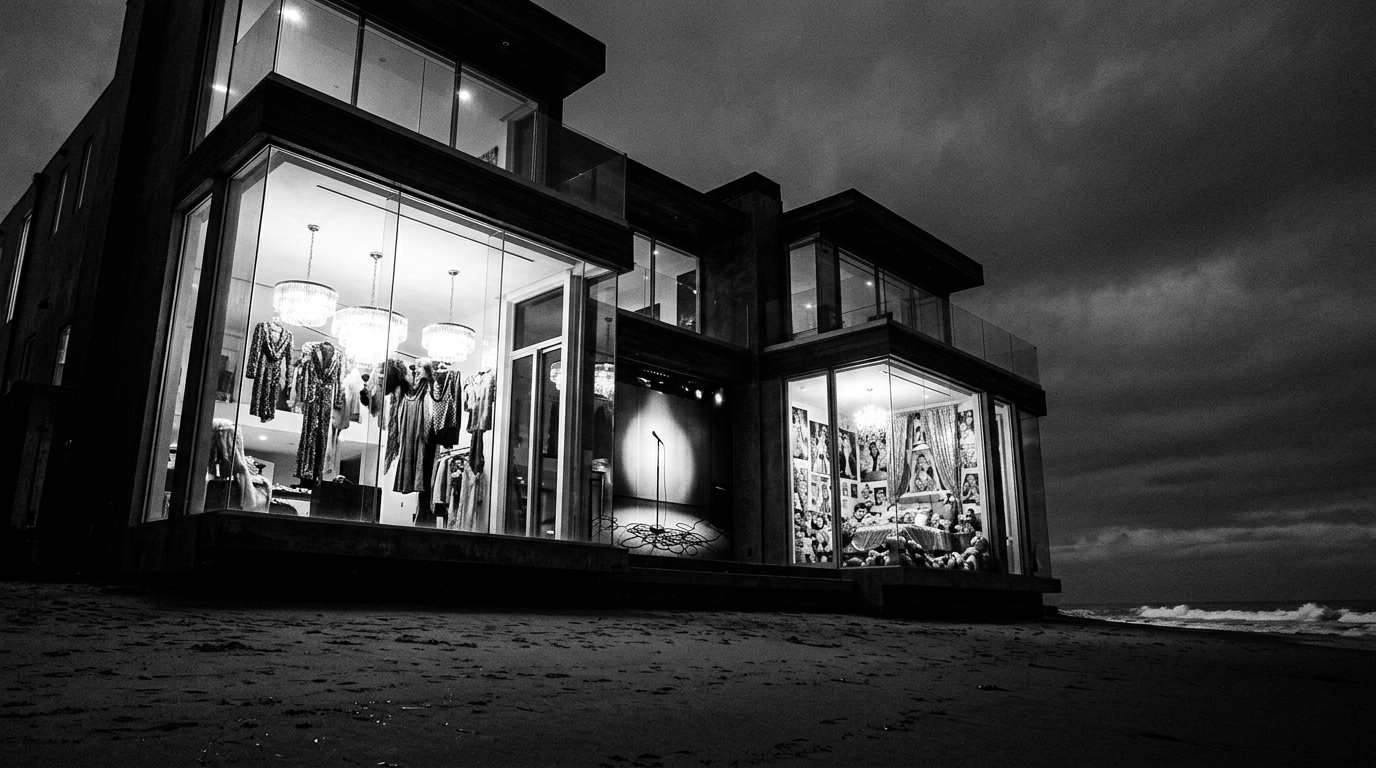
Disney and Airbnb are giving away ten free nights in a $21 million Malibu beach house dressed up as Hannah Montana's bedroom. The per-night value they're forgoing tells you exactly how these companies think about customer acquisition cost... and why traditional hospitality keeps losing the narrative war.

A $21 million Malibu property, available for long-term rental at $60,000 to $80,000 per month, is being offered for ten complimentary one-night stays through Airbnb's "Icons" program. The occasion is the 20th anniversary of a Disney Channel show. The price per night: $0.

Let's decompose this. At $70,000/month midpoint, one night in this property carries an implied value of roughly $2,333. Ten nights is $23,333 in foregone rental income (assuming the property would otherwise be occupied, which at that price point is generous). Add the interior transformation costs... replica closets, sequined wardrobe, karaoke setup, branded staging... and the all-in investment is probably $150,000 to $250,000. That's the real budget. The media coverage, the social amplification, the waitlist data from everyone who tried to book on March 26... that's the return. Airbnb doesn't disclose "Icons" program economics, but the earned media value on previous activations (the Barbie DreamHouse, Shrek's Swamp) generated coverage worth multiples of the investment. This isn't hospitality. This is customer acquisition disguised as hospitality.

The structural question for hotel owners and asset managers isn't whether this is clever (it is). It's what it reveals about how Airbnb allocates capital versus how hotels allocate capital. Airbnb spends on narrative. They create moments that generate billions of impressions and cost less than a single property renovation. Hotels spend on physical product... FF&E refreshes, PIP compliance, lobby redesigns... and then struggle to make anyone care. I analyzed a portfolio last year where the ownership group spent $8.2 million on renovations across six properties and couldn't demonstrate a measurable lift in direct booking share. Airbnb spent effectively nothing on ten nights and dominated a news cycle.

This is also a data play. Every person who visited airbnb.com/hannahmontana and requested a booking provided intent data. Airbnb now knows exactly who responds to nostalgia-driven experiential marketing, what demographics they skew, and how to retarget them. Hotels give away data to OTAs. Airbnb creates events that generate data voluntarily. The asymmetry is worth sitting with.

None of this changes your comp set RevPAR tomorrow. But it should change how ownership groups think about marketing spend allocation. The gap between what hotels spend to acquire a guest and what Airbnb spends to acquire a narrative is widening. Ten free nights in a beach house just made that gap visible.

Operator's Take

Look... this story isn't about Hannah Montana. It's about the growing gap between how hotels spend marketing dollars and how platforms spend them. If you're an owner or asset manager reviewing your 2026 marketing budget, ask one question: what percentage of your spend generates earned media versus paid impressions? Most hotel marketing budgets are 90%+ paid channels. Airbnb just dominated a week of coverage for the cost of staging a single property. You don't need a $21 million beach house to learn from that. You need to stop treating marketing as a line item and start treating it as a story. If your property has a genuine local hook... a history, a character, a neighborhood connection... that's your version of this play. Use it. The brands won't do it for you. They're too busy selling consistency.

— Mike Storm, Founder & Editor
Read full analysis → ← Show less
Source: Google News: Airbnb
End of Stories