Tripadvisor's AI Summaries Called a Hotel "Spotless." 412 Guests Are Suing Over Illness.
A consumer investigation found Tripadvisor's AI review summaries are scrubbing out reports of food poisoning, sexual harassment, and hygiene failures. If you're an operator who actually fixed your problems, the AI might be burying your competitive advantage under the same bland praise it gives everyone else.
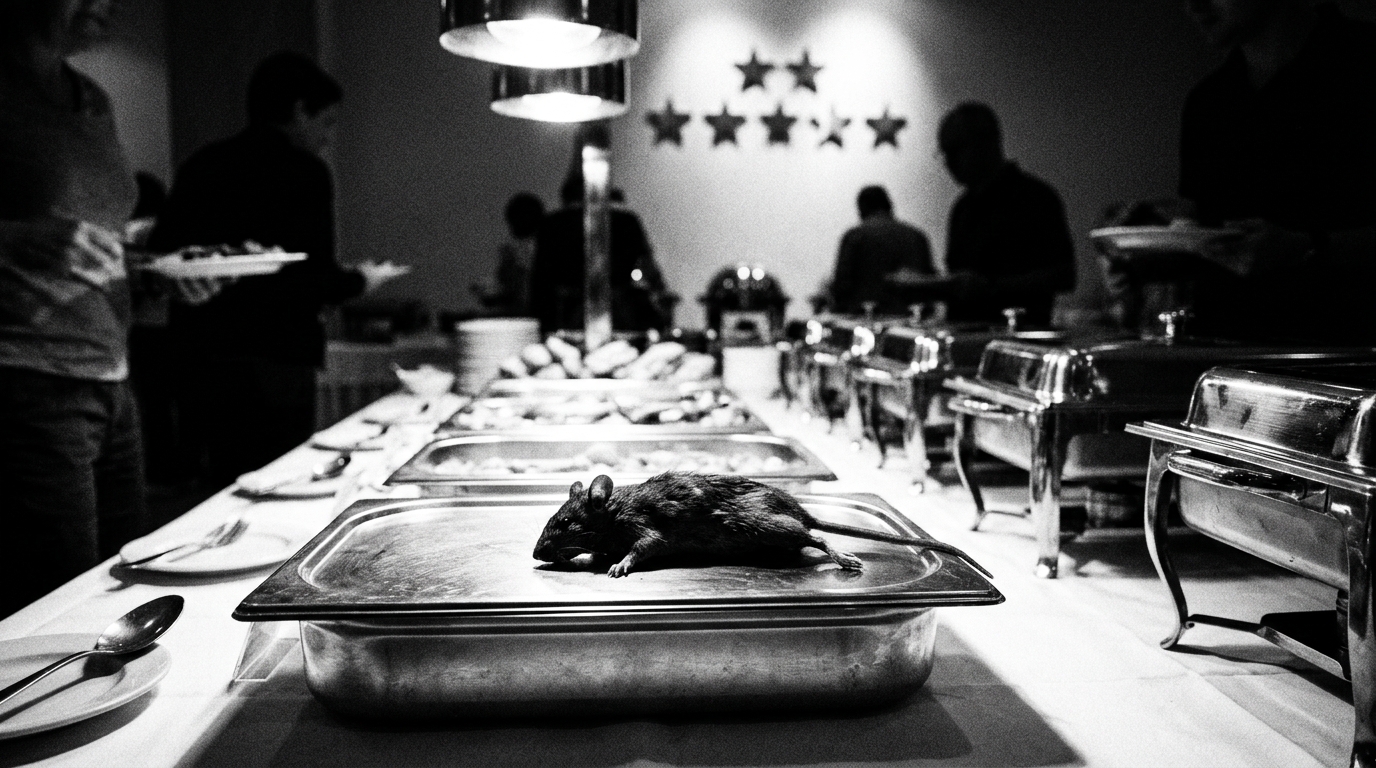
So here's what actually happened. A consumer group called Which? tested Tripadvisor's AI-generated review summaries against the actual reviews underneath them. At one resort currently facing a group legal action from 412 guests alleging illness, the AI summary described the place as "spotless" with restaurants earning "rave reviews." The original reviews? Raw chicken. Flies on buffets. Dead mice. At another property where guests reported sexual harassment from staff, the AI called the service "friendly."
Let me be direct about what this is. This is a summarization model doing exactly what summarization models do... averaging sentiment across a dataset and producing the mean. The mean of 500 reviews where 450 are positive and 50 describe food poisoning is... a positive summary. That's not a bug in the traditional sense. That's the architecture working as designed. The problem is that the architecture was designed for a use case where flattening outliers is fine (summarizing product reviews for headphones, maybe), and then deployed in a use case where the outliers are the most important data points. A guest who got food poisoning is not an outlier. That's a safety signal. And the system is trained to smooth safety signals into background noise.
Look, I've evaluated a lot of AI implementations in hospitality at this point. The pattern is always the same... the demo works beautifully, the pitch deck is compelling, and nobody asks what happens when the edge cases are the ones that matter most. Tripadvisor says their systems "automatically suppress AI summaries for listings with serious safety incidents." Which? found properties with documented safety incidents still showing sanitized summaries. So either the suppression logic has gaps (likely... defining "serious safety incident" programmatically is genuinely hard), or the threshold is set too high, or both. Either way, the safeguard isn't working. And Tripadvisor's response... that users can "easily access full reviews"... misses the entire point of why they built the AI summary in the first place. You built it because people DON'T read all the reviews. That was your value proposition. You can't then say "but they should read all the reviews" when your summary gets it wrong.
Here's where this gets interesting for operators specifically. If you're running a clean property... if you invested in food safety, if you trained your team, if you actually fixed the problems that generate one-star reviews... the AI is now flattening your competitive advantage. Your competitor with the pest problem and your property with the perfect health inspection score are getting the same bland AI-generated "guests enjoy the dining options" summary. The differentiation you earned through operations is being averaged away by an algorithm. That's not theoretical. That's happening right now on the platform where a huge percentage of leisure travelers make booking decisions. And there's not a single thing you can do about it from the property level.
The broader question here is one I keep coming back to with every AI deployment in travel... who validated this for the actual use case? Tripadvisor says AI-engaged users generate 2-3x the revenue of traditional users. Great. But if the AI is directing those users toward properties with active food poisoning complaints by describing them as "spotless," that revenue metric is measuring engagement with misinformation. The conversion is real. The information driving it isn't. And at some point (probably when a lawsuit lands, not when a consumer group publishes a report), someone's going to have to answer for the gap between what the AI said and what the guest experienced. My question is simple... has anyone at Tripadvisor run these summaries past a hospitality operator? Not a product manager. Not an AI engineer. Someone who's actually managed a property where a guest got sick and knows what that one-star review represents? Because the architecture tells me no one did.
Here's what I'd do this week. Pull up your property's Tripadvisor listing and read the AI summary. Then read your last 20 one-star reviews. If there's a gap between what the summary says and what the reviews say, screenshot both. That's documentation you may need. If you're an operator who's invested real money in food safety, training, or facility improvements... and your AI summary reads the same as the hotel down the road that hasn't... start thinking about how you're telling your story on channels you actually control. Your own website, your own pre-arrival communication, your own booking engine. You cannot control what an algorithm does with your reviews. You can control the narrative on platforms you own. And for the love of all things operational, do not let your marketing team point to a positive AI summary as evidence that your reputation management is working. The AI summary is not your reputation. Your one-star reviews are your reputation. Read those. Fix those. The algorithm will catch up eventually... or it won't, and you'll need to have already built the direct channel that doesn't depend on it.