Barry Diller Wants MGM at $48.30. The Market Already Said No.
People Inc.'s $18 billion bid for MGM Resorts prices the company at a 24% premium to its 30-day average, but shares immediately traded above the offer, and now a wave of shareholder investigations is asking the question the board should have anticipated from day one.
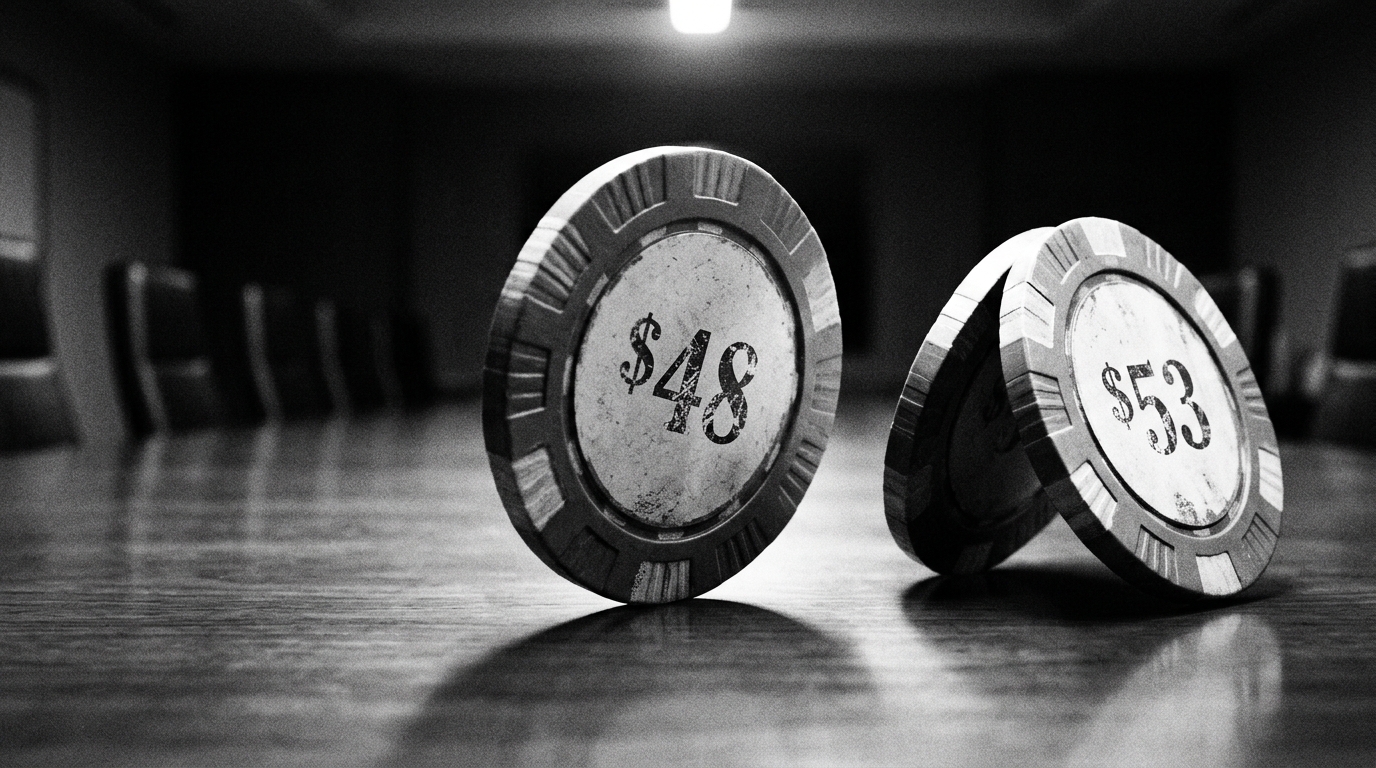
MGM shares closed at $50.69 the day after People Inc. dropped its $48.30-per-share bid. The market priced the offer as a floor, not a ceiling. That's a 5% gap between what Diller is offering and what public investors think the company is worth. When the market trades through your premium on day one, your "premium" isn't one.
Let's decompose this. The $18 billion enterprise value implies a valuation on MGM's $42.2 billion asset base that looks modest before you even factor in BetMGM's digital growth trajectory or the Osaka integrated resort. JPMorgan moved its target to $53. Stifel downgraded to Hold not because they think the deal is bad, but because they think $48.30 undervalues the company and the uncertainty isn't worth the position. Two different conclusions, same underlying finding: the bid is light.
The legal investigations are procedurally predictable but structurally significant. Barry Diller sits on MGM's board. People Inc. owns 26.1% of MGM. The buyer's chairman is a director of the target. Under Delaware law, that conflict requires a level of process rigor that most boards find uncomfortable... independent committees, fairness opinions, and a standard of review that assumes the transaction is unfair until proven otherwise. Diller has said he'll recuse himself from board deliberations. Recusal is necessary. It is not sufficient. The shareholder plaintiffs' bar knows this, which is why multiple firms filed investigations within weeks.
The real question for anyone watching this from the investment side: what does Diller actually need to pay? MGM's trailing EBITDA, its development pipeline, and its digital optionality all argue for a number north of $53. An owner I spoke with last year during a different gaming deal put it simply: "When the acquirer is also on the board, the first offer is never the real offer. It's the opening bid dressed up as a final number." People Inc. has the balance sheet capacity to go higher. The question is whether the board has the independence to demand it.
For hotel-focused investors and asset managers tracking gaming-adjacent hospitality, this deal's outcome sets valuation benchmarks across the sector. If MGM trades at $48.30, that reprices every integrated resort asset in the market. If it trades at $55-plus, the Fertitta-Caesars deal at $17.6 billion starts looking like a different conversation. The per-key math on MGM's Strip portfolio alone suggests the current bid leaves substantial value on the table. The legal investigations aren't just shareholder theater. They're the mechanism that forces the real number into the open.
Look... if you're in gaming-adjacent hospitality or you've got ownership groups that also hold gaming exposure, this one matters. The MGM bid sets the pricing floor for integrated resort assets across the Strip and beyond. If you're an asset manager benchmarking hotel valuations against gaming comps, don't use $48.30. The market has already told you that number is wrong. Use $53 as your starting point and stress-test from there. And if your ownership group holds any MGM shares directly, make sure they know about the shareholder investigations before they read about it in the Journal. Be the person who brings the context, not the one who gets asked about it later.