Today · Apr 7, 2026
Historical Tours Are Revenue You're Leaving on the Table at Legacy Properties

Historical Tours Are Revenue You're Leaving on the Table at Legacy Properties

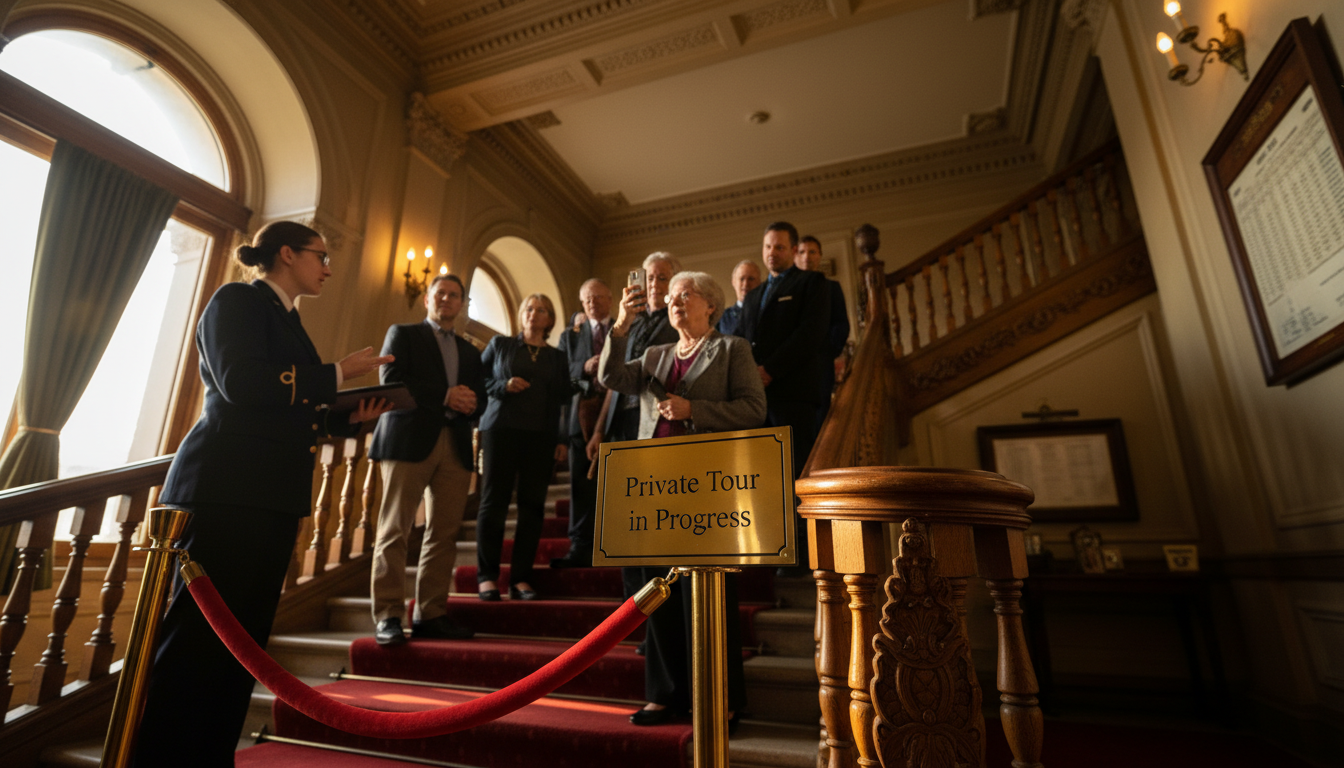
The Hotel Jerome in Aspen is partnering with the local historical society to run property tours. Before you dismiss this as boutique fluff, consider what you're missing if your property has any story worth telling.

Here's the thing nobody's telling you: if you're operating a property with 75+ years of history, you're sitting on untapped revenue and you don't even know it. The Hotel Jerome — a 140-year-old landmark in Aspen — just formalized tours with the Aspen Historical Society. Smart move. They're monetizing their story.

I've watched operators at historic properties treat their past like wallpaper. Nice to have, mentioned in marketing copy, maybe a few photos in the lobby. But they never ask the next question: who will pay to experience this? The answer is local historical societies, architecture groups, hospitality students, even competing properties doing comp shopping with context. The Jerome figured this out.

Let me be direct about the economics. A 60-minute tour priced at $25-35 per person with groups of 15-20 runs you maybe 90 minutes of staff time when you factor setup. That's $375-700 in revenue for labor cost under $50. Your marginal cost is almost nothing — you're already paying to light and climate-control those spaces. Run two tours a week and you're adding $40K-75K annually. Not transformational, but it's pure margin and it fills shoulder periods.

But the real value isn't the tour ticket. It's relationship-building with your community and creating another reason for locals to engage with your property who aren't staying overnight. Those historical society members? They have out-of-town guests. They plan events. They're retirement-age with disposable income. You're building your database and your local reputation while someone else (the historical society) does half the marketing.

The contrarian take: most "historic" hotel tours I've seen are terrible. Docent rambles about furniture for 45 minutes, skips the mechanical systems, never mentions the economics of restoration. If you're doing this, make it actually interesting. Talk about the renovation budget. Show the back-of-house. Explain why you kept the original windows or why you didn't. Give people the real story, not the sanitized brochure version.

Operator's Take

If you're running an independent with 50+ years of history in a drive-to or resort market, reach out to your local historical society this month. Propose a quarterly tour program where they handle registration and you provide the access. Price it at $30-40, split the revenue 70/30 in your favor, and make sure your F&B team has a post-tour package ready. This isn't just incremental revenue — it's community relations that actually pays.

Read full analysis → ← Show less
Source: Google News: Resort Hotels

Disney's Five-Year Poly Reno Shows Why Your Timeline's Probably Wrong Too

Disney just pushed the Polynesian Village Resort reopening to 2027 — that's five years for a refurb. If they can't estimate renovation timelines right, neither can you.

Here's what happened: Disney's Polynesian Village Resort, one of their Magic Kingdom flagship properties, has pushed its renovation completion date again. We're now looking at 2027 for full completion. Do the math — that's roughly five years from when this project kicked off in phases starting around 2022-2023.

Let me be direct: If Disney — with unlimited capital, in-house project management, and properties they can shift guests to — can't nail a renovation timeline, your 180-day soft goods refresh is going to blow past six months. And your eight-month full property reno? Budget twelve to fifteen.

I've seen this movie before. You start with selective room blocks. Then you discover the plumbing's worse than the scope showed. Your millwork vendor misses dates. The new PMS integration takes three times longer than IT promised. Your designer spec'd tile from Italy that's now backordered until next quarter. What looked like a clean Q1 completion suddenly bleeds into summer — exactly when you needed those rooms for high-season rate.

The Poly's running at limited capacity for years while Disney prints money on this thing. They're eating the displacement cost because they can. You can't. Every room out of inventory at an 80-key select-service is 1.25% of your total revenue base. At a 200-room full-service, you're looking at occupancy math that makes your owner panic and your lender nervous.

But here's what Disney's doing right that most operators miss: They're phasing intelligently and keeping parts of the property operational. They didn't close the whole resort. They're managing guest expectations with clear communication. And they're using the reno to justify a rate increase on the back end — because when you finally unveil fresh product after years of anticipation, you better be repricing it.

Operator's Take

If you're planning any renovation beyond fresh paint, take your contractor's timeline and multiply by 1.5. Then add 30 days for things you haven't thought of yet. Build that extended timeline into your budget, your owner expectations, and your staffing plan. And for God's sake, negotiate rate protection in your franchise agreement before you start — because your brand won't let you drop standards, but they'll hammer you on guest satisfaction scores while you're running a construction zone.

Read full analysis → ← Show less
Source: Google News: Resort Hotels
End of Stories