Today · Apr 7, 2026
A $75 Dining Credit Won't Save Your Spring Break Strategy. But the Model Behind It Might.

A $75 Dining Credit Won't Save Your Spring Break Strategy. But the Model Behind It Might.

The Hilton Anatole is packaging pool access, dining credits, and parking into a spring break bundle that looks like a standard seasonal promotion. What's actually happening is a 1,610-room convention hotel using a $20-25 million water park to solve a revenue problem most large urban properties still haven't figured out.

I worked with a GM once at a big-box convention hotel... 1,200 keys, massive meeting space, downtown location. Every March he'd watch his corporate transient dry up for two weeks while the leisure travelers drove right past his lobby to the beach resorts. One year he finally said to his team, "We have a pool, a restaurant, and 400 empty rooms. Why are we not in the spring break business?" His DOS looked at him like he'd suggested putting a Ferris wheel in the parking garage. Three years later that pool complex was generating more ancillary revenue per occupied room in March than the bar did in December. Sometimes the crazy idea is just the obvious idea nobody wanted to own.

That's what I think about when I see the Hilton Anatole rolling out its spring break package. On the surface, this looks like standard stuff... $75 dining credit per night, $20 arcade credit, free self-parking, guaranteed access to JadeWaters. Slap a resort fee of $32 plus tax on top and call it a promotion. But zoom out. This is a 1,610-room property in the middle of a $100 million renovation that needs to keep cash flowing while 899 atrium guestrooms wait for their turn under the construction dust. You don't survive a multi-year renovation by hoping convention business carries you. You build revenue channels that pull leisure demand into a property that was never originally designed for it. That 3-acre water park complex with 800-plus seats of capacity, two water slides, a lazy river, and a swim-up bar... that's not an amenity. That's a revenue engine. And the spring break package is just the packaging around what is fundamentally an ancillary spend strategy disguised as a family promotion.

Here's what the press release doesn't get into. The real play is on-property capture rate. You give a family a $75 dining credit, they don't spend $75 at your restaurant. They spend $130 because the credit gets them in the door and the kids order dessert and dad gets another round. The $20 arcade credit works the same way... it's a seed, not a gift. Guaranteed pool access removes the friction that keeps families from booking a convention hotel for leisure in the first place ("will it be too crowded? will we actually get in?"). And comping self-parking in a market like Dallas, where everyone drives, eliminates the last objection before someone hits "book." Every piece of this package is engineered to increase total guest spend, not discount the room. That's the difference between a promotion and a strategy.

The timing matters too. Hilton's own 2026 trends data says 84% of travelers want shared family activities and 78% of parents say their kids influence the booking decision. Meanwhile, Dallas-Fort Worth is leading the nation in hotel construction with nearly 200 projects and over 24,000 rooms in the pipeline. When that much new supply is coming, you can't just compete on room rate... you compete on reasons to stay. A water park is a reason to stay. A dining credit is a reason to eat on-property instead of driving to a restaurant. This is a property that figured out years ago (when they invested $20-25 million in JadeWaters back in 2014-2015) that the way to win in a market flooded with conventional hotel rooms is to stop being a conventional hotel.

The question I'd be asking if I were running a large urban property without this kind of amenity investment: what's YOUR version of JadeWaters? You don't need water slides. But you need something that converts an empty room in a soft week into an occupied room with $180 in ancillary spend. Because the properties that figured this out are eating the lunch of the ones still waiting for the convention calendar to save them.

Operator's Take

If you're running a 300-plus key property that depends on group and corporate transient, look at your March and April occupancy for the last three years. If you're consistently soft during school breaks, you have a leisure revenue gap and you're leaving money on the floor. You don't need a $25 million water park. You need a package that gives families a reason to choose you over the resort down the highway... and then captures their spend once they're inside your building. Build your spring break (or summer, or holiday week) package around ancillary revenue triggers, not room rate discounts. A $50 F&B credit that drives $120 in restaurant spend is a 140% return on a marketing cost you were going to eat anyway. Run the numbers on your own on-property capture rate during leisure periods. If it's below 40%, your problem isn't demand... it's that guests are leaving your building to spend money somewhere else. Fix that before you discount another room night.

Read full analysis → ← Show less
Source: Google News: Hilton
$20 Coffee Pods and $180 Cocktails: Hotels Have Forgotten What Business They're In

$20 Coffee Pods and $180 Cocktails: Hotels Have Forgotten What Business They're In

When your in-room coffee costs more than the guest's lunch and two drinks at a show require a payment plan, you haven't found a revenue strategy. You've found the fastest way to teach your best customers to spend their money somewhere else.

I knew a food and beverage director once who had a phrase he used every time ownership pushed him to bump menu prices. He'd say "there's a difference between charging what something's worth and charging what you think you can get away with." The first one builds a business. The second one works exactly once.

That's what I thought about when I saw what's happening at some of these properties right now. Twenty bucks for a Nespresso pod at a Grand Hyatt. A hundred and eighty dollars for two cocktails and two waters at a show venue inside an MGM property in Vegas... and that includes a $25 "admin fee," which is my new favorite euphemism for "because we can." Look, I understand ancillary revenue. I've managed the P&L. I know what F&B margins look like and I know how hard it is to move the needle when your labor costs are running 35% and your food costs are climbing. But there's a line between smart ancillary capture and treating your guest like an ATM with legs, and we blew past that line somewhere around the time someone decided a pod of coffee that costs $0.70 wholesale should retail for twenty dollars. The math on that markup would make a pharmaceutical company blush.

Here's what nobody in the corporate revenue optimization meeting wants to hear: this stuff doesn't exist in isolation. A guest doesn't experience the $20 coffee pod as an independent transaction. They experience it as a data point in a running calculation that goes something like this... "The room was $389. Parking was $55. The resort fee was $45. And now they want twenty bucks for coffee I make at home for thirty cents." That calculation has a tipping point, and when you hit it, you don't get a complaint. You get something worse. You get a guest who checks out, leaves a three-star review, and books the boutique independent down the street next time. You never see the damage because it doesn't show up on this month's revenue report. It shows up in next year's repeat booking rate. This is what I call the Price-to-Promise Moment... every stay has one moment where the guest decides the rate was worth it or it wasn't. A $20 coffee pod at 6 AM before a business meeting is not that moment. It's the anti-moment. It's the second the guest decides they got played.

What's telling is that MGM's own CEO admitted last fall that aggressive pricing (his words, not mine) had alienated customers. He specifically referenced $12 Starbucks coffee on property. Said they'd "lost control of the narrative." They did price corrections. And now we're seeing $180 for two drinks at a show venue. So either the corrections didn't reach every outlet, or the definition of "corrected" is more generous than I'd use. Meanwhile, Hyatt is pulling back loyalty benefits and moving to a five-tier award pricing system that's going to cost members more points for the same rooms. So the message to your best, most loyal guests is... we're going to charge you more for the room AND more for the coffee once you get there. That's a bold strategy. I've seen it before. It doesn't end well.

The real problem is structural. When you go asset-light (which Hyatt is aggressively doing... 80% of earnings from fees is the target), you're collecting management and franchise fees whether the guest comes back or not. The owner eats the repeat-booking decline. The brand collects the same percentage. So who exactly has the incentive to protect the guest relationship? The brand will tell you they do. But the brand isn't the one who decided to charge $20 for a coffee pod. That decision was made at property level, by someone trying to hit a margin number, probably one that was set by an asset manager or an owner who's trying to cover the franchise fees, the loyalty assessments, the reservation fees, and the PIP debt. Everyone in the chain is rational. And the guest still pays $20 for coffee. That's the machine working as designed. Which should terrify every owner reading this, because the machine is designed to extract, not to build loyalty.

Operator's Take

If you're a GM or a property-level F&B director, audit every single ancillary price point in your hotel this week. Not next month. This week. Calculate the markup on your top 20 highest-margin in-room and outlet items and ask yourself one question: if a guest posted this price on social media with a photo, would it make you proud or make you cringe? Because that's exactly what's happening... every overpriced coffee pod is one iPhone photo away from being your next TripAdvisor disaster. If you're an owner, understand that your brand partner's fee structure incentivizes them to push revenue up regardless of what it does to guest sentiment. That's your asset taking the long-term hit, not theirs. Set pricing guardrails in your management agreement if you haven't already. The $20 coffee pod isn't a revenue strategy. It's a reputation loan you're going to repay with interest.

Read full analysis → ← Show less
Source: Google News: Hyatt
Atour's Pillow-Selling Hotel Empire Is the Future Nobody in the U.S. Is Building

Atour's Pillow-Selling Hotel Empire Is the Future Nobody in the U.S. Is Building

A Chinese hotel chain is generating a third of its revenue from retail... not lobby gift shops, but a full-blown consumer brand built on sleep products. The model is growing at 17% CAGR while most Western operators are still arguing about minibar margins.

So here's something that should bother every hotel technology and product strategist in the U.S.: a mid-to-upscale Chinese chain called Atour just posted 50%+ revenue growth and 70%+ profit growth in 2024, and a full third of that revenue... RMB 2.2 billion... came from selling pillows and quilts. Not room nights. Pillows. And quilts. Through a retail brand called Atour Planet that cross-sells to hotel guests and then follows them home through Douyin and Xiaohongshu (China's equivalents of TikTok and Instagram, roughly). Sixty percent of retail revenue came from hotel members. Sixty-seven percent of active retail members also booked stays. That's not a side hustle. That's a flywheel.

Let's talk about what this actually does from a technology standpoint, because the business model only works if the data pipes are real. Atour's "manachised" model (franchised and managed, essentially) runs on a 6% monthly GTV fee split between brand and management. Standard enough. But the retail integration means their tech stack has to do something most hotel PMS platforms in the West can't even conceptualize: track a guest's in-room product interaction, convert it into a retail purchase pathway, and then maintain that customer relationship across a completely separate e-commerce channel. That's not a PMS bolt-on. That's a fundamentally different architecture. I talked to a CTO at a U.S. hotel group last year who was trying to connect their loyalty program to a basic merchandise shop. Six months in, they gave up because the PMS couldn't pass guest preference data to the e-commerce platform without manual CSV exports. Manual. CSV. Exports. In 2025. And Atour's doing real-time cross-channel member attribution at scale across nearly 2,000 properties.

Look, I get the instinct to dismiss this as "that's China, different market." It's not that simple. The underlying insight... that a hotel stay is a product trial for things people want to buy... is universal. Every hotel in America has guests who ask "where can I buy these sheets?" or "what brand is this mattress?" and the answer is usually a shrug or a card on the nightstand that links to a wholesale site with a 2003 interface. Atour built an entire revenue engine around that moment. Their deep-sleep pillow line alone is projected to hit RMB 4.1 billion in GMV by 2029. Their temp-control quilt line is growing at 31% CAGR. These aren't vanity products. They're margin machines that also happen to reinforce the brand promise every time someone sleeps on one at home.

The Dale Test question here is real though. What happens when this model hits operational friction? Atour's expansion target is roughly 2,000 hotels and 230,000 rooms by 2025. At that scale, the retail fulfillment, the content marketing engine, the member data synchronization... all of that has to work at 2 AM when nobody's monitoring it. The projections from Dolphin Research (RMB 19 billion total revenue by 2029, 22% net profit CAGR) assume the flywheel keeps spinning. But I've seen enough "platform" companies scale past their infrastructure to know that the gap between 1,948 properties and 3,000 is where systems either prove themselves or crack. And Atour's stock at $35.74 with a $5.14 billion market cap and analyst targets around $45... that's pricing in a lot of continued execution.

Here's what actually matters for U.S. operators: the ancillary revenue model is coming whether you build it or not. Journey just partnered with SiteMinder to let hotels retail spa and dining experiences alongside rooms. Highgate is working with Procure Impact on curated retail programs. These are early, clumsy versions of what Atour has already operationalized. If you're running a branded select-service or an independent boutique, start asking your PMS vendor one question: can your system identify what a guest interacted with during their stay and connect that data to a purchase opportunity after checkout? If the answer involves the words "custom integration" or "roadmap," you're two years behind a company that's already proving the model works at scale.

Operator's Take

Here's what nobody's telling you... the guest-to-retail pipeline isn't a gimmick. It's the next franchise fee justification brands are going to use, and if you're an independent, it's a revenue line you're leaving on the table every single night. If you're a GM at a 150-key independent or soft brand, call your PMS vendor this week and ask them point-blank: "Can you track guest product interactions and pass that data to an e-commerce platform?" Write down their answer. If it's anything other than "yes, here's how," you know where your tech stack stands. The hotels that figure out how to sell the experience AFTER checkout are going to have a fundamentally different P&L in three years. Don't wait for your brand to build it for you... they'll charge you 2% of GTV for the privilege.

— Mike Storm, Founder & Editor
Read full analysis → ← Show less
Source: Google News: Hotel RevPAR
Historical Tours Are Revenue You're Leaving on the Table at Legacy Properties

Historical Tours Are Revenue You're Leaving on the Table at Legacy Properties

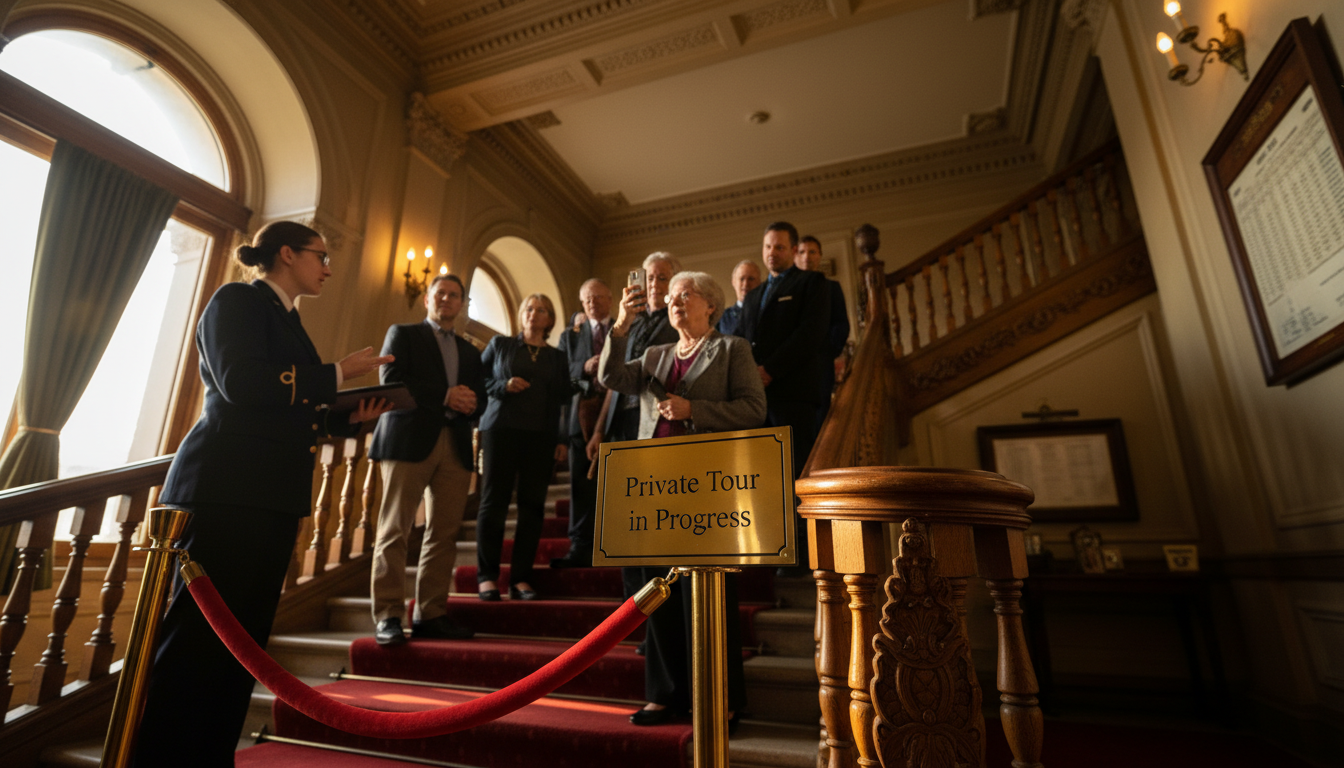
The Hotel Jerome in Aspen is partnering with the local historical society to run property tours. Before you dismiss this as boutique fluff, consider what you're missing if your property has any story worth telling.

Here's the thing nobody's telling you: if you're operating a property with 75+ years of history, you're sitting on untapped revenue and you don't even know it. The Hotel Jerome — a 140-year-old landmark in Aspen — just formalized tours with the Aspen Historical Society. Smart move. They're monetizing their story.

I've watched operators at historic properties treat their past like wallpaper. Nice to have, mentioned in marketing copy, maybe a few photos in the lobby. But they never ask the next question: who will pay to experience this? The answer is local historical societies, architecture groups, hospitality students, even competing properties doing comp shopping with context. The Jerome figured this out.

Let me be direct about the economics. A 60-minute tour priced at $25-35 per person with groups of 15-20 runs you maybe 90 minutes of staff time when you factor setup. That's $375-700 in revenue for labor cost under $50. Your marginal cost is almost nothing — you're already paying to light and climate-control those spaces. Run two tours a week and you're adding $40K-75K annually. Not transformational, but it's pure margin and it fills shoulder periods.

But the real value isn't the tour ticket. It's relationship-building with your community and creating another reason for locals to engage with your property who aren't staying overnight. Those historical society members? They have out-of-town guests. They plan events. They're retirement-age with disposable income. You're building your database and your local reputation while someone else (the historical society) does half the marketing.

The contrarian take: most "historic" hotel tours I've seen are terrible. Docent rambles about furniture for 45 minutes, skips the mechanical systems, never mentions the economics of restoration. If you're doing this, make it actually interesting. Talk about the renovation budget. Show the back-of-house. Explain why you kept the original windows or why you didn't. Give people the real story, not the sanitized brochure version.

Operator's Take

If you're running an independent with 50+ years of history in a drive-to or resort market, reach out to your local historical society this month. Propose a quarterly tour program where they handle registration and you provide the access. Price it at $30-40, split the revenue 70/30 in your favor, and make sure your F&B team has a post-tour package ready. This isn't just incremental revenue — it's community relations that actually pays.

Read full analysis → ← Show less
Source: Google News: Resort Hotels

Historic Resorts Are Killing It With Wellness — If You Know How To Price It

The Omni Homestead's 250-year-old warm springs operation proves heritage properties can own the wellness market. But most operators are leaving serious ADR on the table.

Here's what nobody's telling you about historic resort properties: the wellness crowd will pay 40-50% premiums over your rack rate if you package your unique assets right. The Omni Homestead in Hot Springs, Virginia — operating since 1766 — has figured this out with their historic warm springs bathhouses. Two original structures, gender-separated, fed by natural 98-degree mineral water. They're not trying to be a Four Seasons spa. They're leaning into what nobody else can replicate.

I've seen this movie before with heritage properties. Most GMs treat their historic features like museum pieces — something to mention in the welcome packet and forget. Wrong approach entirely. The Homestead charges separately for the springs experience on top of room rates, and guests are lining up. Why? Because you can get a massage anywhere. You cannot get a 250-year-old bathhouse experience anywhere else.

Let me be direct: if you're running a historic independent or a resort with any kind of natural feature — hot springs, mineral baths, even just killer mountain views — you need to rebuild your entire rate strategy around exclusivity. The wellness market is worth $1.8 trillion globally and growing at 9-10% annually. These guests don't comparison shop on OTAs. They book direct when you give them something unreplicable.

But here's where operators screw it up. They undercharge because they think "old" means "less valuable." The opposite is true. Historic properties should price 20-30% above comparable modern resorts in your market, minimum. Add experience packages that bundle your unique assets at premium pricing. The Homestead gets this — they're not competing on thread count. They're selling an experience literally nobody else can offer.

Operator's Take

If you're running a property with any historic or natural feature, audit your ancillary revenue today. Are you charging separately for unique experiences? Are you packaging them at premium rates? Stop giving away your differentiation as a free amenity. Build standalone revenue centers around anything your competition cannot copy, price them aggressively, and watch your RevPAR index climb 15-20 points.

Read full analysis → ← Show less
Source: Google News: Resort Hotels
End of Stories