Today · Apr 7, 2026
J.P. Morgan Says Hotel AI Will Pay Off in 2026. Let's Check Their Math.

J.P. Morgan Says Hotel AI Will Pay Off in 2026. Let's Check Their Math.

A sell-side research note claims hotel AI investments hit an "inflection point" this year with measurable EBITDA gains. The headline numbers are impressive. The derived numbers tell a different story.

Available Analysis

J.P. Morgan analyst Daniel Politzer says 2026 is the year hotel AI spending starts paying off. The source article doesn't break out the exact capital allocation, but the major brands are directing meaningful portions of their technology budgets at AI-adjacent transformation. Let's decompose that.

The bull case relies on a few data points that keep circulating. Hyatt claims 20% greater productivity in group sales teams using AI tools. Wyndham says AI-powered call centers are cutting labor costs for franchisees. A Deloitte study (sourced from vendor-friendly research, which I always flag) claims 250% ROI within two years, driven by 15-20% staffing savings and up to 10% RevPAR lift. Those numbers are doing a lot of heavy lifting. A 10% RevPAR boost from AI-based pricing at a 200-key select-service running $95 RevPAR is $9.50 per room per night... $693K annually. Against what implementation cost? The research doesn't say. Nobody's showing the denominator.

Here's what the headline doesn't tell you. "Productivity gains" in group sales don't flow directly to EBITDA unless you reduce headcount or close incrementally more business with the same team. Hyatt hasn't specified which one. A 20% productivity number without a corresponding revenue or labor line item is a metric without a home on the P&L. I've audited management companies that reported "efficiency improvements" for three consecutive years while GOP margins stayed flat. The improvements were real. The earnings impact wasn't. Same structure here... until someone shows me the flow-through, the productivity number is a press release, not a finding.

The franchise owner's math is where this gets uncomfortable. Wyndham's AI call center savings accrue to the franchisee, which is genuinely interesting... if the franchisee isn't simultaneously absorbing a technology fee increase that offsets the labor reduction. I analyzed a portfolio last year where the management company rolled out an "AI-enhanced" revenue management layer. The software cost $4.20 per room per month. The incremental RevPAR gain over the existing RMS was $1.80 per occupied room at 68% occupancy... roughly $1.22 per room per month. The owner was paying $2.98 per room per month for the privilege of saying they had AI. Check again.

The real number here is not whether AI creates value in hotels. It does. Dynamic pricing has been creating value for 15 years (we just called it revenue management). The real number is whether 2026 AI spending generates returns that exceed the cost of capital for the owners funding it. J.P. Morgan is a sell-side firm covering publicly traded hotel companies. Their job is to tell investors the story is getting better. The owner at a 150-key branded property writing checks for technology mandates needs a different calculation... one that starts with total cost deployed and ends with actual incremental free cash flow. That calculation is conspicuously absent from every AI earnings narrative I've read this quarter.

Operator's Take

Here's what I'd tell you if you're a GM watching your management company or brand roll out new AI tools this year. Track two numbers: the actual monthly cost (all of it... licensing, integration maintenance, the hours your team spends feeding the system) and the actual incremental revenue or labor savings you can tie directly to the tool. Not "productivity." Not "efficiency." Dollars in, dollars out. Put it on a spreadsheet. Update it monthly. When your owner asks whether the AI investment is working, you want to be the one with the answer... not the brand's regional VP with a slide deck. The math doesn't lie. But somebody has to do the math.
— Mike Storm, Founder & Editor
Read full analysis → ← Show less
Source: Google News: Hotel Industry
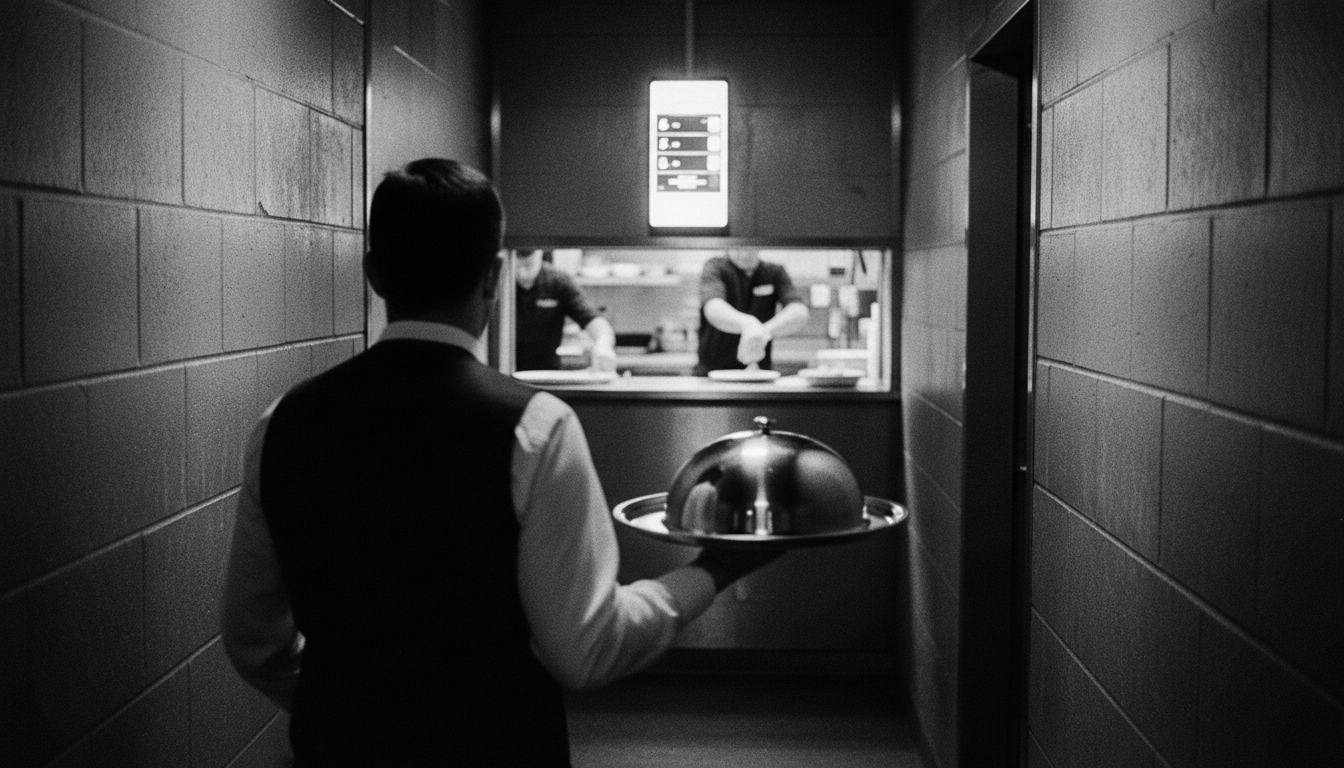
Mandarin Oriental's 54% Room Service Bump Is Real... But Your Property Isn't Mandarin Oriental

Mandarin Oriental's 54% Room Service Bump Is Real... But Your Property Isn't Mandarin Oriental

A luxury hotel group slaps a QR code on mobile ordering and revenue jumps 54%. Before you rush to replicate it, let's talk about what actually happened here and whether the math works below the luxury tier.

So here's the headline everyone's going to forward to their GM this week: Mandarin Oriental rolled out IRIS mobile ordering across 20 properties, room service revenue jumped 54%, orders up 39%. That's a genuinely impressive number. I'm not going to pretend it isn't. But let's talk about what this actually does before anyone starts treating it like a template.

What IRIS does is replace the phone call. Guest scans a QR code, browses the menu on their phone, orders, pays. The kitchen gets a structured digital ticket instead of a handwritten note from whoever answered the phone. That's the mechanism. It's not AI. It's not machine learning. It's a well-built ordering interface with menu management, upsell prompts, and analytics on the backend. The reason it works at Mandarin Oriental is that their room service operation was already staffed, already high-margin, and already had guests who expect to spend $60+ on in-room dining without blinking. When you remove friction from a high-intent, high-spend behavior... yeah, revenue goes up. That's not magic. That's UX doing what UX does.

Here's the Dale Test question. You're running a 180-key upper-upscale in a secondary market. You've got one room service attendant on evenings, maybe nobody after 10 PM. Your average in-room dining check is $28. You implement mobile ordering. Orders increase 39%. Great... except now you've got 39% more orders hitting a kitchen that was already struggling with timing, and your single runner is now doing laps between floors while the phone rings at the front desk because the guest in 412 ordered 20 minutes ago and nothing's arrived. The technology didn't solve the problem. It amplified a capacity constraint you already had. I talked to an ops director at a resort group last month who told me they turned OFF their mobile ordering between 6 and 8 PM because the kitchen couldn't handle the spike. Think about that. They built demand they couldn't fulfill. That's worse than not having the system at all, because now the guest experience is "I ordered on my phone and waited 45 minutes." That's a one-star review with a technology wrapper.

Look, I'm not saying mobile ordering is bad. I'm saying the 54% number requires context that the press release conveniently skips. IRIS reports their average client sees 20-40% revenue increases. Mandarin Oriental beat that range. Why? Because luxury guests have high willingness to pay, the properties have the kitchen infrastructure and staffing to fulfill demand spikes, and the brand's F&B operation was already a profit center, not an afterthought. Strip those conditions away and you get a very different outcome. The actual question for most operators isn't "should I add mobile ordering" (probably yes, eventually). It's "can my kitchen and staffing model absorb 30-40% more orders without the guest experience collapsing?" If you haven't answered that question, the technology is premature.

The real number worth paying attention to is buried in the IRIS data: 10-minute average reduction in guest wait times across their client base. THAT matters. Not because it's flashy, but because it tells you where the actual value is... not in revenue growth (which requires demand you may or may not have), but in operational efficiency. Fewer phone calls to the kitchen. Fewer miscommunicated orders. Fewer comps for wrong items. If you're evaluating mobile ordering for your property, don't start with the revenue projection. Start with your current order error rate, your average delivery time, and your labor hours spent on phone-based ordering. If those numbers are ugly (and at most properties, they are), mobile ordering solves a real operational problem regardless of whether revenue jumps 54% or 5%.

Operator's Take

Here's what I'd tell you if you called me tomorrow. Don't chase the 54% headline... that's a luxury-tier number built on luxury-tier infrastructure. Instead, pull your room service data for the last 90 days. Look at order errors, average delivery time, and labor hours spent taking phone orders. If you're running more than a 5% error rate or averaging over 35 minutes from order to delivery, mobile ordering pays for itself on the ops side alone... forget the revenue bump. But if your kitchen can't handle current volume, adding a frictionless ordering channel is like putting a bigger funnel on a clogged pipe. Fix the pipe first.

— Mike Storm, Founder & Editor
Read full analysis → ← Show less
Source: Google News: Hospitality Technology
End of Stories