Today · Apr 7, 2026
Florida's New Fee Disclosure Law Hits July 1. Your Banquet Contracts Aren't Ready.

Florida's New Fee Disclosure Law Hits July 1. Your Banquet Contracts Aren't Ready.

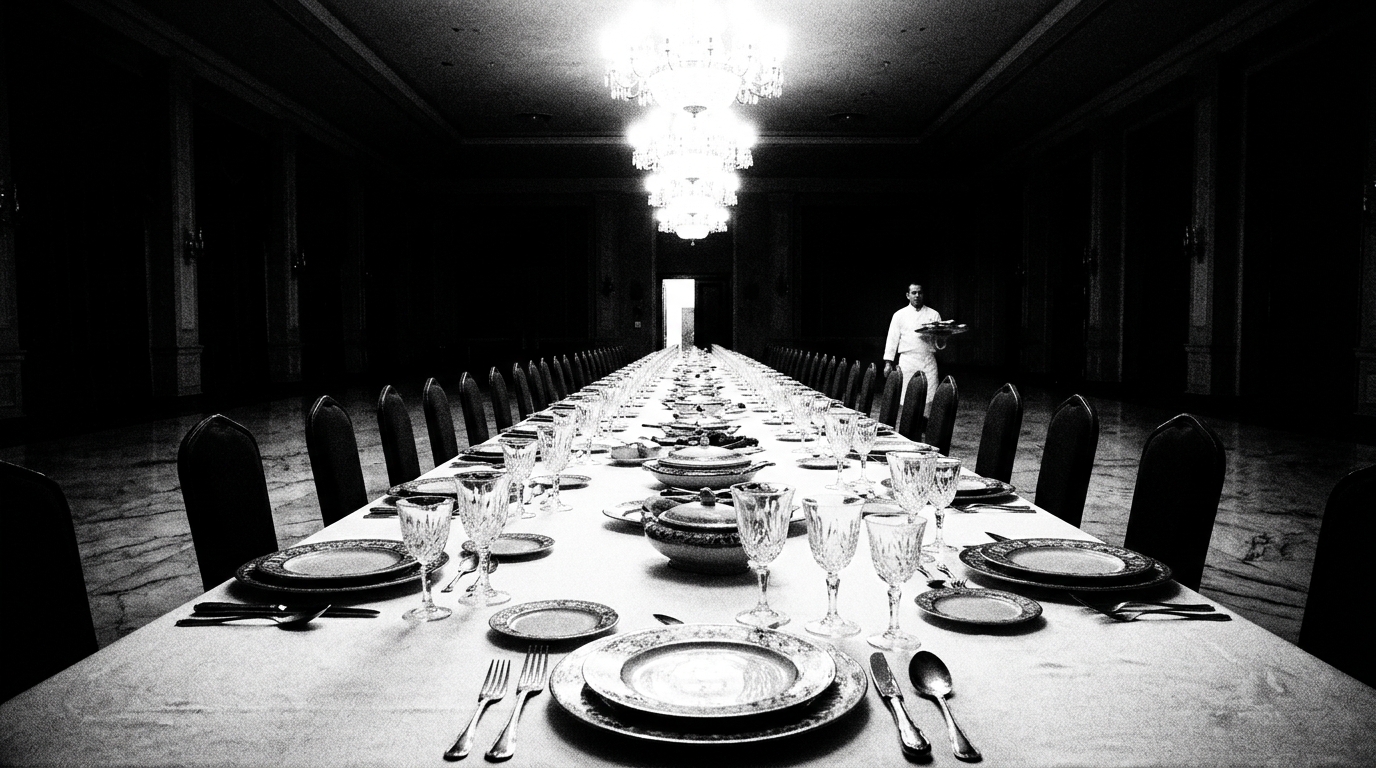
Florida's "operations charge" law requires every automatic fee in your F&B operation to be disclosed by amount, purpose, and line item on every receipt, menu, and contract. If you're running banquets, catering, or any restaurant outlet in the state, you have 90 days to rebuild how you communicate charges to guests... or explain to your lawyers why you didn't.

I ran a banquet operation once where we buried the service charge in the contract like everybody else did. Page four, paragraph nine, font size that required reading glasses and a flashlight. The bride's father found it at the final billing review and looked at me like I'd stolen his wallet. He wasn't wrong to feel that way. We'd made it hard to find on purpose. Everybody did. That game is over in Florida as of July 1.

Senate Bill 606 requires every public food service establishment in the state (and yes, your hotel restaurant, your pool bar, your banquet operation, and your catering department all qualify) to disclose any automatic charge that isn't a government tax. Service charges. Automatic gratuities. Credit card surcharges. Delivery fees. All of it. And "disclose" doesn't mean burying it in the terms and conditions. The law says the font has to be equal to or larger than your menu item descriptions. It has to state the amount or percentage AND the specific purpose. It has to appear on physical menus, digital menus, websites, mobile apps, written contracts, and if you don't have table service... on a sign by the register. Your receipts need separate line items for gratuity, operations charges, and sales tax. If your service charge includes an automatic gratuity component, that gratuity has to be broken out separately.

Let me tell you what this actually means for hotel F&B. Your banquet event orders need to be rewritten. Every single template. Your catering contracts need revision. Your POS system needs reconfiguration so receipts print with separate line items instead of the bundled mess most properties are running right now. Your digital menus (if you went QR code during COVID and never went back) need updating. Your website's private dining page, your room service menu, your grab-and-go signage... all of it. And here's the part that's going to cost you time you don't have: someone has to decide, in plain language, what the purpose of each charge actually IS. "Service charge" isn't going to cut it anymore. You need to say what it's for. Is it going to staff? Is it retained by the house for operational costs? Is part of it gratuity and part of it not? That's a conversation most hotel F&B operators have been avoiding for years because the answer is complicated and sometimes uncomfortable.

The good news (if you want to call it that) is there's no private right of action. A guest can't sue you for non-compliance. But the Florida Department of Business and Professional Regulation is expected to provide enforcement guidance, and if you think guests won't notice the new disclosures at the property next door while yours are still hiding the ball... you don't understand how fast complaints travel on social media. One more thing worth knowing: this is a state floor, not a ceiling. Local jurisdictions like Miami-Dade already have stricter requirements, including multilingual disclosure mandates. If you're operating in multiple Florida markets, you need to check local ordinances too.

Here's what nobody's talking about yet. This law is going to change the economics of the service charge conversation at every hotel in the state. When you have to print, in a font guests can actually read, that your 22% "service charge" is retained by the house and does not go to the server... some guests are going to react. Some are going to tip less because they assumed the service charge WAS the tip. Some are going to tip more because they finally understand it wasn't. Either way, your servers are going to feel it, and your turnover in F&B (already brutal) is going to be affected by how well you handle this transition. The transparency is the right thing. I've always thought so. But right things still cost money and management attention to implement well.

Operator's Take

If you're running any F&B operation in Florida... hotel restaurant, banquet hall, catering department, pool bar, room service... you have until July 1 to get compliant, and the operational lift is bigger than you think. Start this week: pull every banquet contract template, every menu (physical and digital), every catering proposal, and audit them against the new requirements. Then call your POS vendor and find out how long reconfiguration takes to produce receipts with separate line items for gratuity, operations charges, and tax... because if the answer is "six weeks," you're already behind. Most importantly, sit down with your F&B director and your HR team and decide exactly how you're describing the purpose of every automatic charge. Write it in plain English. If you can't explain it clearly, that's a sign the charge structure itself needs rethinking before July 1 forces you to explain it to every guest who reads the menu.
Read full analysis → ← Show less
Source: Google News: Hotel Industry
Hilton's Ramadan Strategy Is Smart. The Question Is Who's Paying for It.

Hilton's Ramadan Strategy Is Smart. The Question Is Who's Paying for It.

Hilton is tailoring Iftar buffets, Suhoor packages, and staycation deals across the Middle East and Africa during Ramadan, and cutting food waste by 61% in the process. The real question is whether the owner running these programs is capturing the margin or subsidizing the brand's cultural marketing campaign.

I worked with a GM years ago who ran a 280-key full-service in a market with a significant Muslim population. Every Ramadan, he'd transform one of his banquet rooms into an Iftar dining space. Brought in a local chef. Decorated the room himself. Adjusted housekeeping schedules so his observing staff could break fast together in the employee dining room at sunset. He did it because it was the right thing to do for his guests and his team. Nobody at corporate told him to. Nobody gave him a playbook. He just understood his market.

That's what I think about when I see Hilton rolling out a polished, portfolio-wide Ramadan campaign with AED 225 weekday Iftar buffets at their Dubai Palm Jumeirah property and QR 295 per person at their Doha location. The instinct is right. Ramadan generates real F&B revenue... family gatherings, corporate Iftars, staycation packages. And the sustainability angle is legitimate. A 61% reduction in food waste across UAE, Saudi Arabia, and Qatar properties during the 2025 holy month? That's not a press release number. That's operational discipline (probably driven by switching from open buffets to table service, which also happens to reduce labor).

Here's where my brain goes, though. These programs require real investment at property level. You're adjusting F&B operations, extending service hours for Suhoor (which means staffing kitchens at 2 or 3 AM), creating dedicated dining experiences, training staff on cultural sensitivity, and in some cases offering early check-in at 10 AM and late check-out at 4 PM... which compresses your housekeeping window and costs you turn time. The brand gets the halo. The brand gets to talk about "meaningful moments" and "cultural currency" (their words, from their own marketing leadership). The property gets the labor bill, the food cost, and the operational complexity. This is what I call the Brand Reality Gap. Brands sell promises at scale. Properties deliver them shift by shift. And the shift delivering a 3 AM Suhoor service is a shift somebody has to staff and pay for.

Now look... I'm not saying this is a bad program. It's actually a good one, and Hilton deserves credit for the sustainability component especially. The question operators need to ask is whether the revenue generated by these Ramadan-specific offerings actually flows through to the bottom line after you account for extended kitchen hours, additional staffing, the reduced room turn efficiency from those generous check-in and check-out windows, and the food cost of a 225-dirham buffet. In markets like Dubai and Doha where these properties sit, labor isn't cheap and neither are the ingredients for an authentic Iftar spread. If the program drives incremental occupancy and F&B revenue that more than covers the cost... great. If it drives brand awareness for Hilton while the owner absorbs a margin compression during what has historically been a softer demand period across much of the Middle East... that's a different conversation.

The 61% food waste reduction is the sleeper story here. That's not just sustainability theater. At scale, food waste reduction in hotel F&B operations can save 8-12% on food cost depending on the operation. If Hilton is pushing properties toward controlled-portion service models during Ramadan and those practices stick year-round, that's a genuine operational improvement that benefits the owner. That's the part I'd be paying attention to. Not the marketing language about "cultural currency." The food cost line on the P&L.

Operator's Take

If you're running a full-service property in the Middle East or any market with meaningful Ramadan demand, don't wait for your brand to hand you a playbook. Build your own P&L for these programs right now. Track every dollar of Ramadan-specific F&B revenue against incremental labor, food cost, and the real cost of those extended check-in/check-out windows (calculate the housekeeping hours you're losing and what that costs in overtime or additional staff). The food waste reduction piece is where I'd invest my attention... if you can move from open buffet to portioned service and save 10% on food cost, that's money you keep whether or not the brand ever sends you a marketing template. Bring those numbers to your owner proactively. Show them you're running a business, not executing someone else's campaign.

Read full analysis → ← Show less
Source: Google News: Hilton
Mandarin Oriental's 54% Room Service Bump Is Real... But Your Property Isn't Mandarin Oriental

Mandarin Oriental's 54% Room Service Bump Is Real... But Your Property Isn't Mandarin Oriental

A luxury hotel group slaps a QR code on mobile ordering and revenue jumps 54%. Before you rush to replicate it, let's talk about what actually happened here and whether the math works below the luxury tier.

So here's the headline everyone's going to forward to their GM this week: Mandarin Oriental rolled out IRIS mobile ordering across 20 properties, room service revenue jumped 54%, orders up 39%. That's a genuinely impressive number. I'm not going to pretend it isn't. But let's talk about what this actually does before anyone starts treating it like a template.

What IRIS does is replace the phone call. Guest scans a QR code, browses the menu on their phone, orders, pays. The kitchen gets a structured digital ticket instead of a handwritten note from whoever answered the phone. That's the mechanism. It's not AI. It's not machine learning. It's a well-built ordering interface with menu management, upsell prompts, and analytics on the backend. The reason it works at Mandarin Oriental is that their room service operation was already staffed, already high-margin, and already had guests who expect to spend $60+ on in-room dining without blinking. When you remove friction from a high-intent, high-spend behavior... yeah, revenue goes up. That's not magic. That's UX doing what UX does.

Here's the Dale Test question. You're running a 180-key upper-upscale in a secondary market. You've got one room service attendant on evenings, maybe nobody after 10 PM. Your average in-room dining check is $28. You implement mobile ordering. Orders increase 39%. Great... except now you've got 39% more orders hitting a kitchen that was already struggling with timing, and your single runner is now doing laps between floors while the phone rings at the front desk because the guest in 412 ordered 20 minutes ago and nothing's arrived. The technology didn't solve the problem. It amplified a capacity constraint you already had. I talked to an ops director at a resort group last month who told me they turned OFF their mobile ordering between 6 and 8 PM because the kitchen couldn't handle the spike. Think about that. They built demand they couldn't fulfill. That's worse than not having the system at all, because now the guest experience is "I ordered on my phone and waited 45 minutes." That's a one-star review with a technology wrapper.

Look, I'm not saying mobile ordering is bad. I'm saying the 54% number requires context that the press release conveniently skips. IRIS reports their average client sees 20-40% revenue increases. Mandarin Oriental beat that range. Why? Because luxury guests have high willingness to pay, the properties have the kitchen infrastructure and staffing to fulfill demand spikes, and the brand's F&B operation was already a profit center, not an afterthought. Strip those conditions away and you get a very different outcome. The actual question for most operators isn't "should I add mobile ordering" (probably yes, eventually). It's "can my kitchen and staffing model absorb 30-40% more orders without the guest experience collapsing?" If you haven't answered that question, the technology is premature.

The real number worth paying attention to is buried in the IRIS data: 10-minute average reduction in guest wait times across their client base. THAT matters. Not because it's flashy, but because it tells you where the actual value is... not in revenue growth (which requires demand you may or may not have), but in operational efficiency. Fewer phone calls to the kitchen. Fewer miscommunicated orders. Fewer comps for wrong items. If you're evaluating mobile ordering for your property, don't start with the revenue projection. Start with your current order error rate, your average delivery time, and your labor hours spent on phone-based ordering. If those numbers are ugly (and at most properties, they are), mobile ordering solves a real operational problem regardless of whether revenue jumps 54% or 5%.

Operator's Take

Here's what I'd tell you if you called me tomorrow. Don't chase the 54% headline... that's a luxury-tier number built on luxury-tier infrastructure. Instead, pull your room service data for the last 90 days. Look at order errors, average delivery time, and labor hours spent taking phone orders. If you're running more than a 5% error rate or averaging over 35 minutes from order to delivery, mobile ordering pays for itself on the ops side alone... forget the revenue bump. But if your kitchen can't handle current volume, adding a frictionless ordering channel is like putting a bigger funnel on a clogged pipe. Fix the pipe first.

— Mike Storm, Founder & Editor
Read full analysis → ← Show less
Source: Google News: Hospitality Technology
End of Stories