Your Hotel Restaurant Isn't Broken. Your Expectations Are.
Everyone's suddenly rediscovering that hotel F&B can make money. The truth is it always could... if you stopped treating the kitchen like a checkbox and started running it like a business.
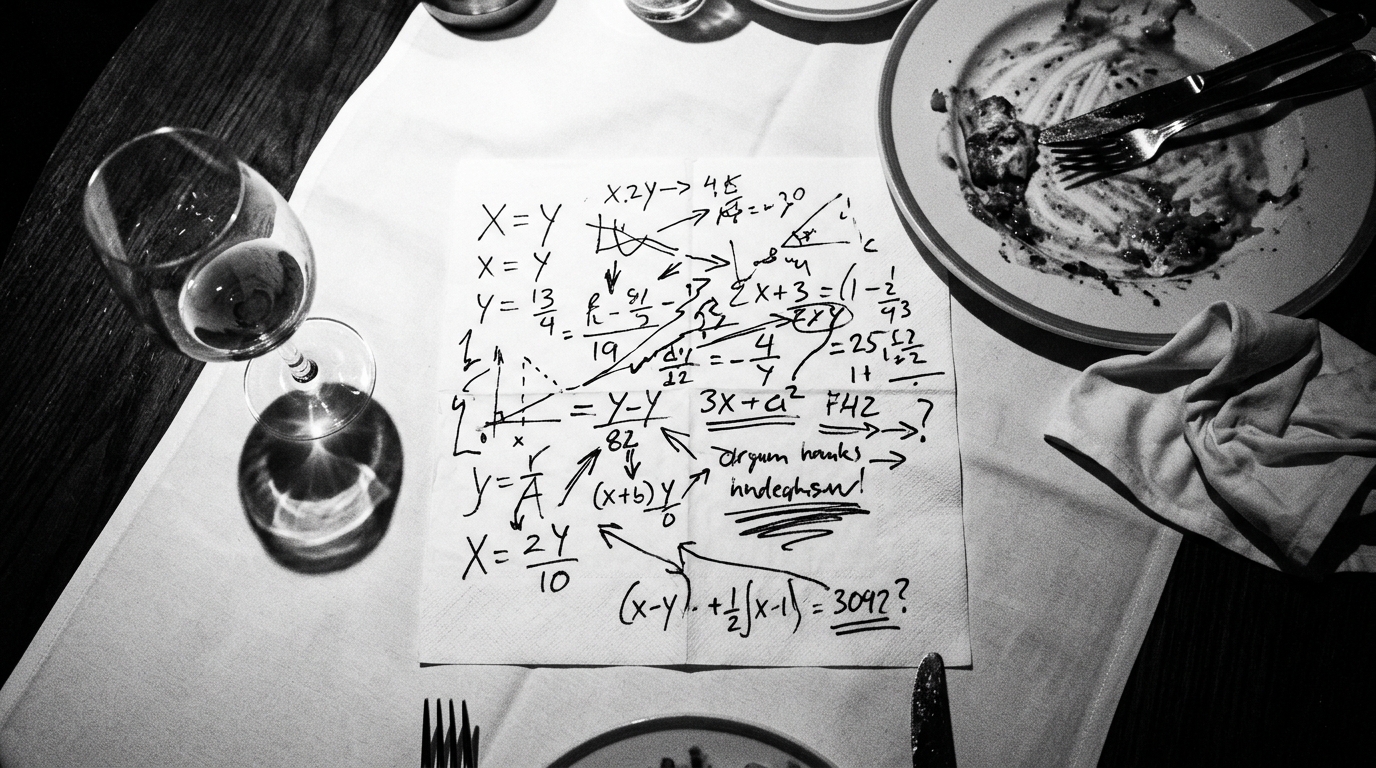
I sat across from an owner once... full-service, 280 keys, decent market... and he told me his restaurant was "a necessary evil." Those were his exact words. Necessary evil. The restaurant was doing $1.8 million in revenue with a 14% profit margin, and he was treating it like a tumor he couldn't remove. Meanwhile, his rooms department was celebrating a 3% RevPAR bump like they'd discovered fire. I pulled out a napkin and did the math right there. His "necessary evil" was generating more incremental profit opportunity per square foot than his lobby gift shop, his meeting space, and his vending operation combined. He just never looked at it that way because nobody had ever told him to.
That's the hard truth about hotel restaurants. It's not that they lose money. Some do, sure. But the bigger problem is that we've spent 30 years telling ourselves they're supposed to lose money, and then we manage them accordingly. Self-fulfilling prophecy. You staff the kitchen like an afterthought, you hire an F&B director who's really just a banquet manager with a bigger title, you let the brand dictate a menu concept designed in a test kitchen 1,200 miles from your market... and then you're shocked when the P&L looks ugly. The restaurant didn't fail. You set it up to fail.
Look at the numbers that are actually coming in. F&B department profit margins hit 29.1% in the first half of 2025. F&B revenue per occupied room grew 3.8% while total hotel revenue grew 3.0%. That's F&B outpacing rooms. And rooms revenue growth is flattening... up only 0.8% in the first half of 2025. So if you're a GM still building your entire commercial strategy around RevPAR while your restaurant sits there generating 20-45% of total property revenue and you're not optimizing it... you're ignoring the fastest-growing line on your P&L. That's not strategy. That's habit.
Here's where it gets interesting (and where most of the industry commentary misses the point). The shift from RevPAR thinking to TRevPAR thinking isn't just a metric change. It's an operational philosophy change. When you manage for TRevPAR, suddenly that 2,400 square feet of restaurant space has to justify itself per square foot, just like your meeting rooms, just like your lobby bar. And when you start measuring revenue per square foot, you start making different decisions. You rethink the buffet that requires 14 chafing dishes and three attendants for a $22 breakfast. You look at that underperforming lunch service running Tuesday through Saturday for 11 covers a day and you ask whether a grab-and-go concept with a quarter of the labor would generate better margin. You stop copying the brand playbook and start reading your own data. CBRE says every 1% improvement in F&B profitability adds roughly $136,000 in hotel value for a typical full-service property. One percent. That's not a renovation. That's not a capital project. That's better purchasing, tighter scheduling, and a menu that actually reflects what your guests order instead of what your chef wants to cook.
The operators who are winning at F&B right now aren't the ones with celebrity chefs and $40 cocktails (though some of those work too). They're the ones who stopped treating the restaurant as an amenity and started treating it as a business unit with its own P&L accountability, its own marketing, and its own reason to exist beyond "the brand requires it." They're pulling locals in. They're running food cost at 28% instead of 35% because someone's actually counting inventory twice a week instead of once a month. They're cross-training staff so the breakfast server can cover the bar during the gap between lunch and dinner instead of scheduling a separate shift. It's not glamorous. It's not a press release. It's just good operations applied to a part of the building that's been neglected for a generation.
This is what I call the Flow-Through Truth Test. Your F&B revenue can grow all day, but if the margin isn't flowing to GOP because you're overstaffed, over-concepted, or buying product like you're feeding a cruise ship, the top line is a vanity number. Here's what to do this week: pull your F&B P&L for the last six months, calculate your profit per square foot of restaurant space, and compare it to your meeting room revenue per square foot. If the meeting space wins by more than 30%, your restaurant has an operations problem, not a concept problem. If you're a GM at a full-service property reporting to a management company, bring that number to your next owner call. It changes the conversation from "should we even have a restaurant" to "how do we fix the one we've got." That's a better conversation.