25 Teens Got Cited at an Airbnb House Party. Your Front Desk Stopped That Last Saturday.
Twenty-five minors were cited for underage drinking at an Airbnb rental in McAllen, Texas, and police still can't figure out who rented the property or supplied the alcohol. Meanwhile, every hotel night auditor in America already knows why that scenario doesn't happen on their shift.
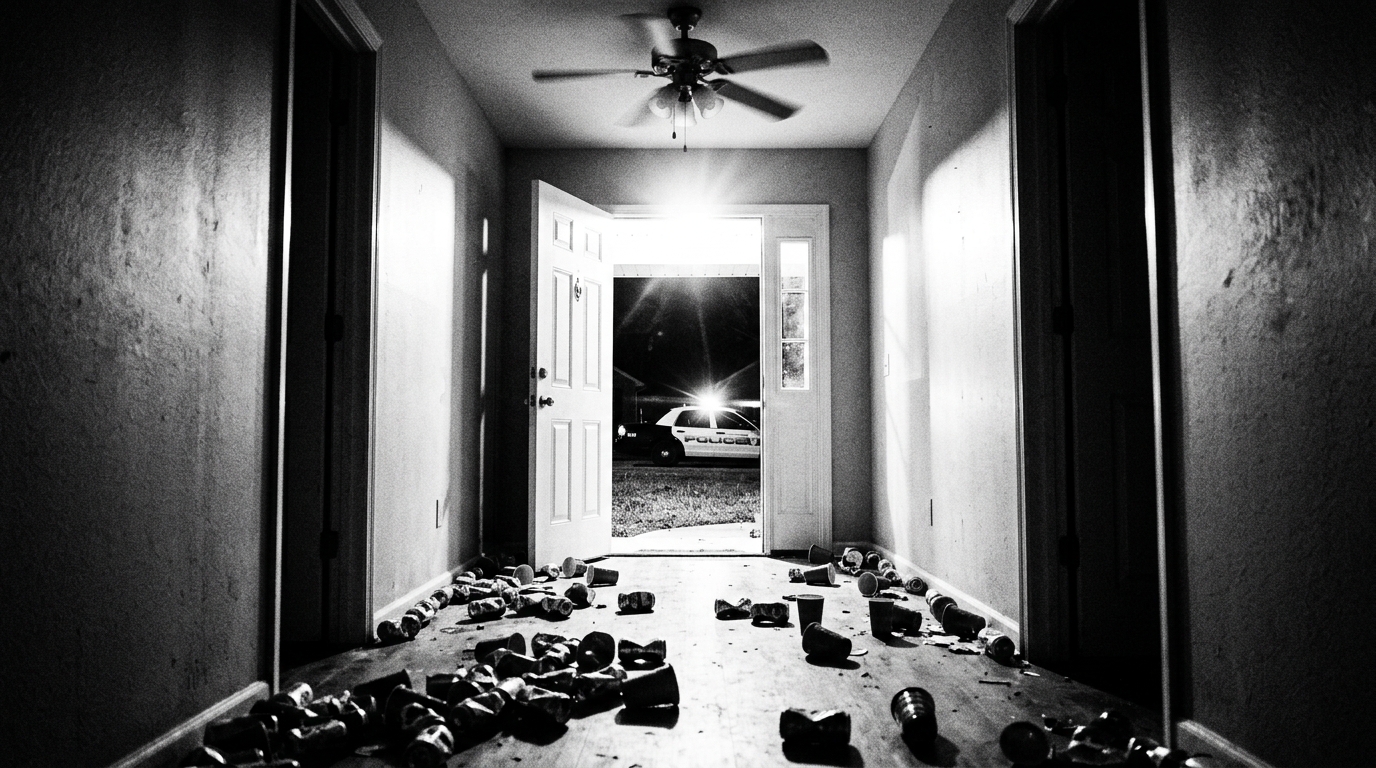
So here's what actually happened. Saturday night, April 11, McAllen, Texas. Someone books an Airbnb on Kingsborough Avenue. By 9:35 PM, there are roughly 30 people inside, most of them between 16 and 18 years old, with alcohol stacked in the fridge and empty cartons scattered across the house. A neighbor sends police a photo. Officers show up, cite 25 teenagers for possession of alcohol by a minor (Class C misdemeanors... basically traffic tickets), and now detectives are trying to figure out who rented the place and who bought the booze.
Let that sit for a second. The platform that processed this booking... the one with the "global party ban," the "anti-party screening tools," the "24-hour safety line"... has no idea who actually walked through that door. The homeowner had to let police in and confirm it was an Airbnb rental. Airbnb's official response? They're "looking into the situation." Look, I've built reservation systems. I've written the code that validates guest identity at booking. And I can tell you that "looking into the situation" after 25 minors got caught drinking in your listing is not a technology problem. It's an accountability architecture problem. The platform collects the payment. The platform takes its cut. The platform does not check IDs at the door. There is no door. That's the product.
This isn't even an outlier anymore. Two days before McAllen, a party at an Airbnb in Citrus Heights reportedly caused thousands in damages... booked under a fake elderly profile. Airbnb suspended the guest after the fact. They reinforced their party ban ahead of the NFL draft in Pittsburgh. They keep announcing enforcement mechanisms that sound impressive in a press release and consistently fail the most basic operational test: what happens at the property when no one from the platform is there? (Which is always. No one from the platform is ever there.) I talked to an independent hotel owner last month who competes with 14 Airbnb listings within a mile of his property. He said something that stuck with me: "They get the booking. I get the regulation." He's required to collect hotel occupancy tax, train his staff on responsible alcohol service, and verify guest identity at check-in. The Airbnb host down the street registers for a $100 annual fee and hopes for the best. (Yes, Texas requires STR hosts to carry liability insurance too... on paper. The enforcement gap between "required" and "verified at booking" is exactly the kind of thing that shows up in a police report.)
And that's actually the technology angle nobody's talking about. Hotels solved this problem decades ago... not with AI screening tools or anti-party algorithms, but with a human being standing between the reservation and the room. A front desk agent who checks ID. A night auditor who notices when 30 people walk into a building that booked for four. A security protocol that exists because there's someone physically present whose job includes saying "no." Airbnb's anti-party technology is trying to replicate with software what hotels accomplish with a person and a lobby. And it keeps failing because you cannot software your way out of the absence of on-site accountability. The architecture doesn't support it. The booking guest is a name on a screen. The occupants are whoever shows up. The host may not even be in the same city. That's not a bug in the system. That's the system.
What bothers me most... and this is the engineer in me talking... is that the technology to prevent this exists. Real-time occupancy monitoring. Noise sensors (Airbnb actually offers these for free to hosts). Smart lock systems that could limit access to verified guests. But adoption is voluntary. Enforcement is retroactive. And the platform's economic incentive is to process bookings, not prevent them. Every booking Airbnb screens out is revenue it doesn't collect. Every hotel front desk agent who turns away an unverified guest is doing their job. The incentive structures are pointing in opposite directions, and incidents like McAllen are what happens in the gap.
Here's what I'd tell every independent operator competing against short-term rentals in your market. This story is ammunition, and you should use it. If your local government is debating STR regulation, print this out and bring it to the next council meeting. You already do what Airbnb can't... you verify guests, you staff the building, you maintain liability insurance, you train employees on responsible service. That's not overhead. That's the product. If you're marketing against Airbnb in your comp set, lean into the safety and accountability angle... especially for group bookings, family travel, and events. "Staffed 24/7" and "verified guest check-in" aren't just operational facts. They're differentiators that matter to parents, corporate travel managers, and anyone who's read a headline like this one. And if you're running a property near a cluster of STR listings, track incidents. Noise complaints, police calls, neighbor complaints... document everything. That data has value when regulation discussions happen, and they will happen.