Today · Apr 23, 2026
Marriott's AI Revolution Is Making Human Hospitality Obsolete — And That's Exactly the Point

Marriott's AI Revolution Is Making Human Hospitality Obsolete — And That's Exactly the Point

While everyone debates whether robots can replace room service, Marriott just proved the real question is whether guests even want humans involved anymore. The answer will shock veteran hoteliers.

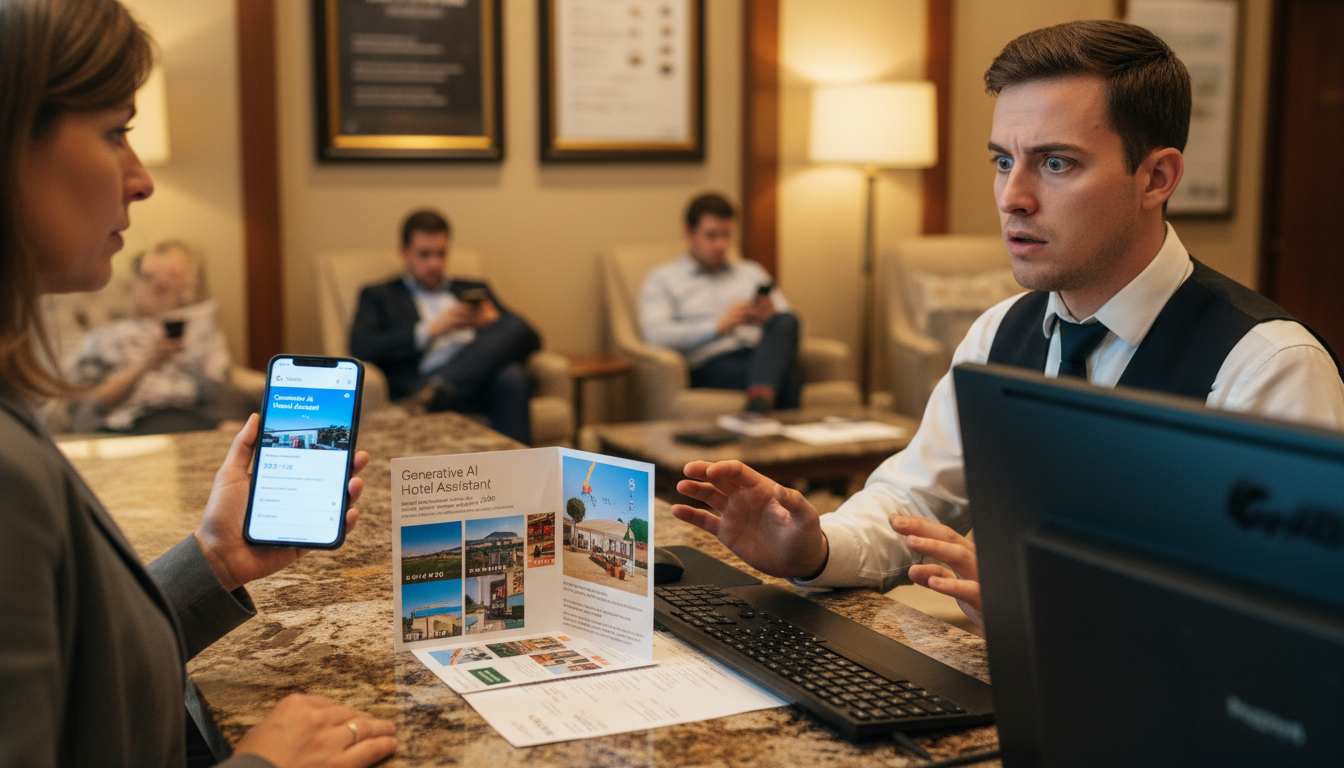
Three months ago, I watched a guest at our property spend fifteen minutes arguing with our front desk agent about a room upgrade. Voice raised, manager called, the whole nine yards. Yesterday, that same guest checked into a Marriott using their AI concierge, got automatically upgraded based on his preference algorithm, and never spoke to a human. He left a five-star review specifically praising the 'seamless, personal experience.'

That's the uncomfortable truth buried in Marriott's latest earnings report. While the stock hit record highs and everyone's celebrating their 'AI transformation,' the real story isn't about technology — it's about how fundamentally guest expectations have shifted.

Marriott's AI isn't just handling bookings anymore. It's predicting which guests want extra towels before they ask, adjusting room temperature based on past stays, and routing service requests to the right staff member instantly. The holy shit moment? Guest satisfaction scores are higher with AI interactions than human ones across every demographic under 50.

Here's what veteran operators are missing: This isn't about replacing people — it's about letting humans do what humans do best. While AI handles the predictable stuff, Marriott's human staff are focusing on genuine problem-solving and relationship building. Their employee satisfaction scores are up 23% year-over-year.

But here's the uncomfortable reality for independent operators. Marriott just raised the bar on what 'personalized service' means. They're not competing on thread count anymore — they're competing on knowing guests better than guests know themselves. When a business traveler walks into any Marriott globally and the room is already set to their preferred temperature with their usual newspaper waiting, how does your boutique property's 'personal touch' compare?

The brands aren't just winning on scale anymore. They're winning on intelligence. And for the 60% of independent operators still using manual check-in processes, that's a problem that's about to become a crisis.

Operator's Take

Independent operators: You can't out-AI Marriott, but you can out-human them. While they perfect predictive algorithms, double down on the unexpected moments AI can't replicate. Your competitive advantage isn't efficiency — it's genuine surprise and delight that feels authentically local.


Read full analysis → ← Show less
Source: Google News: Hotel AI Technology
Hilton Just Proved Empty Rooms Don't Matter If You Price the Full Ones Right

Hilton Just Proved Empty Rooms Don't Matter If You Price the Full Ones Right

While occupancy rates crashed across America, Hilton's Q4 numbers tell a different story about what really drives hotel profits — and it's making competitors sweat.

Three months ago, I watched a general manager at a competing property panic as his October occupancy reports came in 12 points below last year. He spent the next week slashing rates, begging corporate for marketing dollars, and stress-eating room service burgers at 2 AM.

Meanwhile, Hilton was quietly executing the opposite playbook — and just reported Q4 results that should make every revenue manager in America rethink everything they thought they knew about pricing strategy.

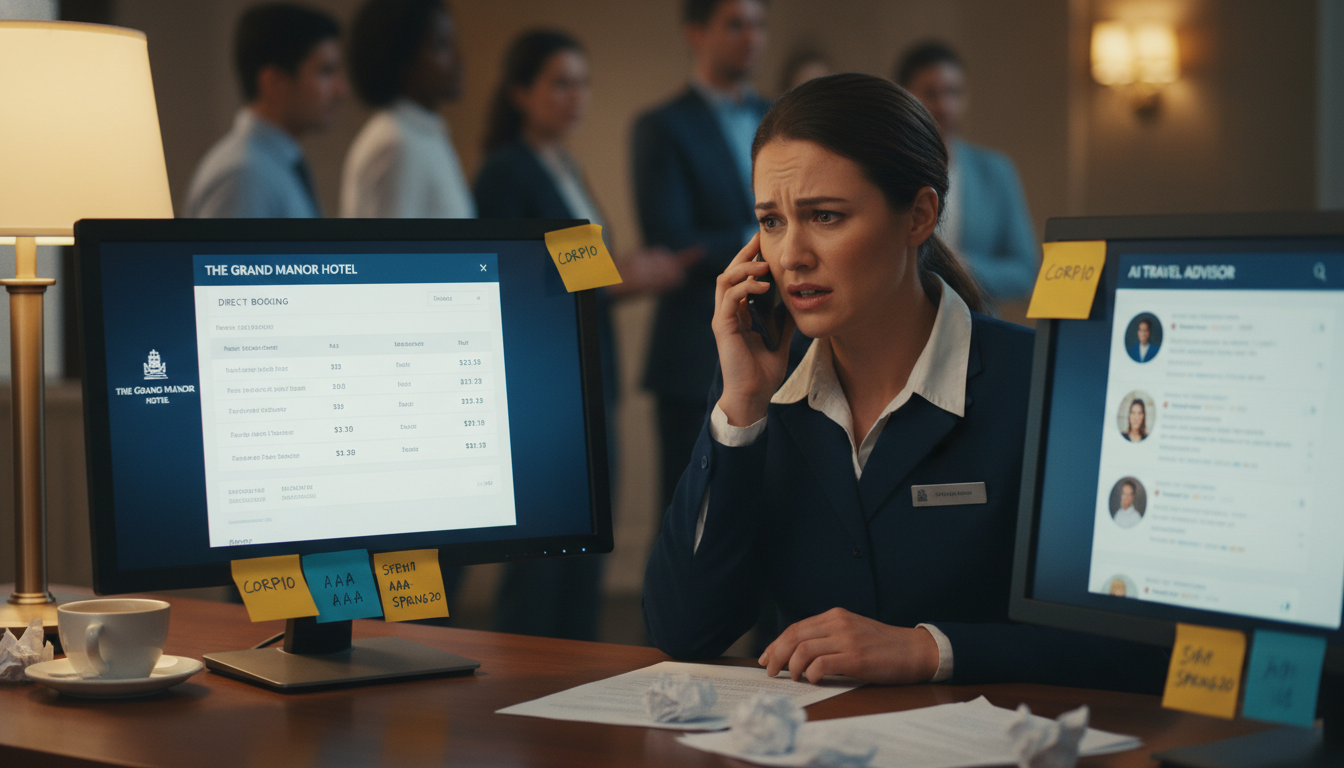
Here's what happened: While U.S. hotel occupancy rates slumped across the board, Hilton's revenue per available room actually grew. How? They let occupancy slide and jacked up rates on the rooms they did fill. Instead of chasing every warm body with discount deals, they went premium-only and made each guest worth more.

The math is brutal in its simplicity. Fill 100 rooms at $120, you make $12,000. Fill 75 rooms at $180, you make $13,500 — with 25% less housekeeping, utilities, and amenities cost. Your profit margin doesn't just improve, it explodes.

But here's the holy shit moment: This only works if you have the brand strength to command those higher rates. Hilton can charge $180 because business travelers and families trust the brand enough to pay for certainty. That motel down the street trying the same strategy? They're about to discover the difference between brand equity and wishful thinking.

This isn't just a quarterly earnings story — it's a masterclass in how strong operators separate from weak ones when the market gets choppy. While everyone else is playing the race-to-the-bottom pricing game, Hilton is proving that sometimes the best strategy is to let your competitors fight over the bargain hunters while you own the premium space.

Operator's Take

Independent operators: Stop competing on price with brands that have 10x your marketing budget. Find your premium niche — whether that's location, amenities, or service — and charge accordingly. Better to be 70% full at rates that actually cover your costs than 90% full and bleeding money on every room.

Read full analysis → ← Show less
Source: Google News: Hotel Occupancy
Hilton Just Declared War on Airbnb — And They're Going to Win

Hilton Just Declared War on Airbnb — And They're Going to Win

While vacation rental hosts scramble with new regulations and rising costs, Hilton quietly launched their apartment collection to steal their best guests. This isn't just another hotel brand expansion.

Three months ago, I got a call from a vacation rental owner in Nashville. She'd been crushing it with her downtown loft for five years — booked solid, five-star reviews, the works. Then the regulations hit. Insurance doubled. The city started cracking down on short-term rentals in her building.

"Mike, I'm thinking about just going back to long-term leases," she said. "This isn't worth the headache anymore."

She's not alone. And Hilton knows it.

While everyone's been watching Airbnb's stock price and debating whether vacation rentals have peaked, Hilton quietly launched their Apartment Collection — a direct assault on the home-sharing market. But here's what makes this different from every other "Airbnb killer" attempt: Hilton isn't trying to beat them at their own game.

They're changing the rules entirely.

Instead of convincing homeowners to list properties, Hilton's partnering with existing apartment buildings and extended-stay developers. Professional management. Hotel-grade cleaning protocols. 24/7 support. Everything vacation rentals promise but rarely deliver consistently.

The genius move? They're targeting business travelers first — the guests who pay premium rates and book repeatedly. These aren't leisure travelers hunting for the cheapest option. They're expense-account customers who need reliability more than authenticity.

Here's the holy shit moment: Hilton processed over 400 million room nights last year. If even 10% of their loyalty members try the apartment product once, that's 40 million nights of demand they can redirect from Airbnb to their own platform.

Meanwhile, vacation rental hosts are dealing with rising acquisition costs, regulatory pressure, and guests who've been burned by inconsistent experiences. The easy money phase is over.

This isn't about hotels versus home-sharing anymore. It's about professional hospitality companies using their scale and systems to deliver what vacation rentals promised but couldn't scale: consistent, reliable experiences backed by real accountability.

Operator's Take

For hotel operators: Stop thinking about Airbnb as competition and start thinking about extended-stay as your next growth vertical. For vacation rental managers: Your competitive advantage isn't inventory anymore — it's local expertise and personalized service that Hilton can't replicate at scale. Double down on what makes you irreplaceable.

Read full analysis → ← Show less
Source: Google News: Airbnb
Google Just Became Your Most Expensive Travel Agent

Google Just Became Your Most Expensive Travel Agent

Marriott's new AI booking deal with Google changes everything about how guests find and book hotels — and who gets paid for it.

Last month, I watched our revenue manager stare at her screen for twenty minutes, trying to figure out why our ADR dropped 8% overnight. No events canceled. No weather disasters. Just... less money.

Turns out a new OTA had launched aggressive bidding on our brand keywords. We were getting the bookings, but paying 18% commission instead of our direct rate. "At least we control the guest relationship," she said.

Not anymore.

Marriott just announced that Google's AI won't just show booking links — it will process the entire reservation within Google's interface. Guests will search "hotel in Denver," talk to Google's AI, and complete their stay without ever touching Marriott's website.

Think about what that actually means. Google becomes the guest-facing brand. Google owns the conversation. Google controls the upsell opportunities. And Google — not Marriott's loyalty program — becomes the trusted relationship.

This isn't about commission rates anymore. This is about who owns the customer.

The wild part? Marriott is excited about it. They're betting that AI booking will be so convenient that volume will offset the loss of direct relationship. They're probably right about the volume.

But here's what nobody's saying: if Google can process Marriott bookings through AI, they can process anyone's bookings through AI. Your independent property, your small chain, your boutique brand — all fighting for the same AI recommendations, all paying Google for the privilege.

Remember when hotels complained that OTAs were commoditizing the industry? Google just said "hold my beer."

The race isn't about getting on Google anymore. It's about teaching Google's AI why it should recommend YOUR property when someone asks for "a good hotel near the airport."

That's a completely different game. And most operators don't even know they're playing it yet.

Operator's Take

Independent operators: Start optimizing for voice search and AI recommendations now. Focus on distinctive amenities and clear value props that AI can easily explain. Your marketing budget just shifted from Google Ads to whatever makes Google's AI love you.

Read full analysis → ← Show less
Source: Google News: Marriott
Marriott and Hilton Just Told Shareholders They're Scared of AI — And They Should Be

Marriott and Hilton Just Told Shareholders They're Scared of AI — And They Should Be

When two hospitality giants start warning investors about artificial intelligence threats in their SEC filings, it's not about robots taking jobs. It's about something much more expensive.

The last time I watched a hotel chain panic about technology disruption, it was 2009. I was running F&B at a Millennium property, and our GM got a call from corporate about this "Groupon thing" that was supposedly going to destroy our pricing power.

He laughed it off. Said guests would always book direct because they trusted the brand.

Six months later, we were spending $40,000 a month on OTA commissions just to keep our occupancy above 60%.

That same panic is happening again — but this time it's bigger. Marriott and Hilton just filed SEC documents warning shareholders that AI platforms pose a "material risk" to their direct booking business. Not a competitive concern. A material risk.

Here's what they're actually scared of: AI assistants that can instantly compare rates, availability, and amenities across every hotel in a market without ever touching Marriott.com or Hilton.com. Imagine asking ChatGPT "find me a downtown Boston hotel for next Tuesday" and getting a perfect answer with booking links that bypass the brand websites entirely.

The numbers explain the fear. Marriott pays roughly 15-25% commission on OTA bookings. On direct bookings? Zero. When you're talking about a company with $23 billion in revenue, every percentage point of direct booking erosion costs them millions.

But here's the holy shit moment: They're not just worried about losing bookings to AI. They're worried about losing pricing control. When AI can instantly surface that the independent boutique hotel down the street has better amenities for $50 less, brand loyalty becomes irrelevant.

The brands built their entire strategy around controlling the customer relationship. Loyalty programs, direct booking discounts, "member rates" — it all works because guests couldn't easily comparison shop in real time.

AI changes that math permanently. And unlike the OTA disruption, there's no commission structure to negotiate. No partnership deals to cut. Just algorithms that care about one thing: giving users the best answer.

Operator's Take

Independent operators: This is your moment. When AI levels the playing field for discovery, your competitive advantages — unique character, local knowledge, personal service — become more valuable than brand recognition. Start optimizing for AI search now, because the brands' distribution monopoly is about to crumble.

Read full analysis → ← Show less
Source: Google News: Marriott
Cango Just Went From Mining Bitcoin to Powering AI — And Your Hotel Tech Stack Is Next

Cango Just Went From Mining Bitcoin to Powering AI — And Your Hotel Tech Stack Is Next

A Chinese auto-finance company pivoted to Bitcoin mining, then pivoted again to AI infrastructure. If that sounds chaotic, wait until you see what's coming for hospitality tech.

The used-car loan business wasn't working out, so Cango Inc. became a Bitcoin miner.

Then Bitcoin mining stopped being profitable, so now they're an AI infrastructure company.

I'm not making this up. This is a real company on the New York Stock Exchange, and they just sent a shareholder letter explaining why pivoting twice in three years makes perfect sense. They're calling it a "strategic transformation" from crypto to AI computing platforms.

Here's why you should care: This is exactly what's about to happen to half the vendors in your tech stack.

Think about how many hospitality tech companies raised massive rounds during COVID to solve problems that don't exist anymore. Guest texting platforms when nobody wanted to text a hotel. Contactless everything when people were terrified of elevator buttons. Revenue management systems optimized for a demand environment that evaporated.

Now venture capital has dried up, those companies are burning cash, and their original product thesis is dead. So what do they do? They slap "AI-powered" on everything and call it a pivot.

Cango's shareholder letter is a masterclass in this genre. They're explaining to investors why a company that started in Chinese auto finance is now apparently in the same business as Amazon Web Services. The logic chain requires Olympic-level mental gymnastics, but the pattern is familiar: when your core business stops working, rebrand into whatever's hot.

The hotel tech world is about to get *weird*.

Your PMS vendor is going to announce an AI strategy. Your reputation management platform will suddenly be a "guest intelligence suite." That channel manager you barely understand? It's now powered by machine learning that nobody on their team actually understands either.

Some of these pivots will be legitimate. Most will be desperation dressed up as innovation. And you won't know which is which until you're 18 months into a contract migration.

The tell is always in the timing. When a company announces a fundamental business model change, ask yourself: Are they doing this because they see an opportunity, or because their existing business is dying? Cango went from Bitcoin to AI because Bitcoin mining margins collapsed. That's not vision—that's survival.

I've watched this movie before. During the last financial crisis, I saw restaurant tech companies pivot from point-of-sale systems to "guest engagement platforms" to "data analytics solutions" in the span of three years. Each rebrand came with new buzzwords, new pricing models, and exactly the same underlying product that never quite worked.

The operators who got hurt were the ones who believed every pivot announcement. The ones who survived were the ones who asked: "Okay, but can you still process a credit card transaction?"

Here's your holy shit moment: Cango's market cap is currently around $200 million. There are hotel tech vendors in your RFP process right now with similar valuations, similar cash burn rates, and similar desperation to find a viable business model before the money runs out.

Some of them will make it. Most won't. And the difference between a successful pivot and a dying company doing a rebrand won't be obvious until it's too late.

The next 18 months are going to produce a lot of shareholder letters explaining strategic transformations. Read them carefully. Better yet, ignore them completely and just ask: Does this vendor solve a problem I actually have, with technology that actually works, at a price I can actually afford?

If the answer requires believing they can pivot from one business model to another as dramatically as going from Bitcoin mining to AI infrastructure, you might want to keep looking.

Operator's Take

For GMs and VPs evaluating tech vendors: When a company announces a major pivot, extend every free trial by 90 days and demand customer references from *after* the pivot, not before. Their pre-transformation success stories mean nothing if they're essentially a different company now. And if they can't provide post-pivot references? That's your answer right there.

Read full analysis → ← Show less
Source: PR Newswire: Travel & Hospitality
Tavros Just Paid $143M for a Full Manhattan Block — And Half of It Has to Be Affordable Housing

Tavros Just Paid $143M for a Full Manhattan Block — And Half of It Has to Be Affordable Housing

A private equity firm is betting big on mixed-income development in one of NYC's hottest neighborhoods. The math on this deal reveals something unexpected about where luxury hospitality real estate is really headed.

There's a moment in every major acquisition when someone has to explain the pro forma to the partners.

I'd love to be in the room when Tavros walks through how they're going to make a $143 million land deal pencil when they're required — not choosing, *required* — to dedicate a substantial portion of a full city block in Manhattan's Seaport District to affordable housing.

Tavros, a New York-based private equity real estate firm, just closed on 250 Water Street. It's the kind of site developers dream about: an entire block in Lower Manhattan, walking distance from the Brooklyn Bridge, in a neighborhood that's transformed from forgotten waterfront to dining destination in less than a decade.

The development will include both market-rate and affordable apartments, plus retail and commercial space. The press release doesn't specify the affordable housing percentage, but here's what matters: this isn't a PR gesture. In New York, these requirements are baked into the zoning. You want to build density in hot neighborhoods? You're building affordable units. Period.

And here's the thing nobody's talking about — this might actually be the smartest hospitality-adjacent play in Manhattan right now.

Think about what's happening in the Seaport District. Ten years ago, it was a tourist trap with a mall. Now? Tin Building just opened with a splashy food hall. Michelin-recommended restaurants are moving in. The neighborhood is becoming what Meatpacking District was in 2010, what Williamsburg was in 2005.

But unlike those neighborhoods, the Seaport has something else: it's becoming a real residential community, not just a scene. Mixed-income development means teachers and bartenders living in the same building as finance types. That creates street life. That creates the kind of neighborhood energy that makes retail and hospitality actually work long-term.

I've watched developers chase the luxury-only play my entire career. Build for the 1%, hope they show up, panic when the market softens. The mixed-income mandate that developers used to complain about? It's starting to look like insurance.

Because here's what happens when you're required to include affordable housing: you build for actual neighborhood infrastructure, not just investment portfolios. You create demand for the bodega, the coffee shop, the casual spots that give a neighborhood legs. You're not just hoping the ultra-wealthy decide your block is the next hot thing.

Tavros is betting that the future of urban real estate isn't about excluding the middle class — it's about being forced to include them, and making that pencil anyway.

The real tell? They paid $143 million for *land* in a market where everyone's supposedly terrified of office-to-resi conversions and urban flight. That's not a distressed play. That's a conviction bet that mixed-use, mixed-income neighborhoods are going to outperform luxury ghettos over the next decade.

For anyone in hospitality watching this, the lesson isn't subtle: the neighborhoods that win in the 2030s are the ones with economic diversity baked in. Not because it's nice. Because it's more stable, more resilient, and frankly, more interesting.

You know what dies first in a recession? The restaurant that only works when finance bonuses hit. You know what survives? The place that serves both the affordable housing tenant and the penthouse owner.

Tavros just bought a full city block with that hedge built into the zoning code. Everyone else is going to spend the next five years pretending that was their strategy all along.

Operator's Take

For developers and operators: Stop fighting mixed-income requirements and start studying them. The properties that will matter in 10 years aren't the ones that excluded everyone earning under $200K — they're the ones that figured out how to serve everyone and make it pencil. Tavros just paid $143M to get that right in one of the most expensive neighborhoods in America. That's not a compromise. That's a thesis.

Read full analysis → ← Show less
Source: PR Newswire: Travel & Hospitality
A Utah Inventor Just Solved the Stupidest Problem in Hospitality Events

A Utah Inventor Just Solved the Stupidest Problem in Hospitality Events

While hotels spend millions on guest experience, we're still watching event attendees make four trips to their car. Someone finally said enough.

I watched a wedding guest in our parking lot a couple summers ago carry three folding chairs, two coolers, and a diaper bag across the property to our outdoor pavilion. She made it about forty feet before everything fell. The chairs clattered across the asphalt. A Tupperware container of what I assume was potato salad exploded on impact.

She stood there in the July heat, staring at the mess, and I thought: We just spent $180,000 renovating that pavilion and we can't solve *this*?

Turns out someone in Sandy, Utah was watching the same scene play out—probably at a Little League game or a family reunion—and actually did something about it.

InventHelp just announced a new "Outdoor Venue Wagon" designed specifically for the chaos of outdoor events. The inventor wanted to "create a convenient and effortless way to transport a multitude of supplies without having to make several trips to and from the car." Which sounds obvious until you realize: nobody's built this yet.

Not for hospitality, anyway.

We've got $4,000 smart thermostats and AI-powered revenue management, but families attending events at our properties are still playing Tetris with Coleman coolers and folding chairs. They're making multiple trips across hot parking lots. They're arriving to ceremonies sweaty and annoyed before the event even starts.

The details of this specific wagon design aren't public yet—it's still in the InventHelp pipeline—but here's what matters: someone looked at the first fifty feet of the guest experience at outdoor venues and said "this is broken."

They're right.

Think about your summer season. Corporate picnics. Wedding ceremony sites. Poolside events. Outdoor F&B activations. How many of your guests are arriving with their arms full, their patience thin, and their first impression of your property colored by a logistics problem you could actually solve?

I'm not saying every property needs to stock wagons. But I am saying we've gotten really good at optimizing things that happen *inside* our four walls while ignoring the awkward transitions that happen *between* the parking lot and the experience.

That wedding guest eventually got her stuff to the pavilion. She even laughed about it later at the reception. But that's not the point. The point is she shouldn't have had to.

Someone in Utah figured that out. The question is whether we will too.

Operator's Take

For properties with outdoor event space: audit the parking-lot-to-venue journey this week. Time it with your arms full. If you wouldn't want to do it in August heat or February cold, your guests don't either. Garden wagons cost $89. Losing a corporate picnic rebooking because their setup was a nightmare costs a lot more.

Read full analysis → ← Show less
Source: PR Newswire: Travel & Hospitality
Scotland's Building A $250M Whisky Resort And Your Luxury Guests Are About To Get A Lot More Demanding

Scotland's Building A $250M Whisky Resort And Your Luxury Guests Are About To Get A Lot More Demanding

The Macallan just raised the bar for what 'experiential luxury' means. If you think your property's distillery tour partnership is enough, you're already behind.

I once had a guest ask if we could arrange a private bourbon tasting with a master distiller at a Kentucky distillery—at 10 PM on a Wednesday. The guest offered to charter a helicopter. We made it happen, but I remember thinking: when did simply excellent service stop being enough?

That was five years ago. Now The Macallan is building what that guest actually wanted all along.

The world's first luxury whisky resort is taking shape in Speyside, Scotland—and it's not just a hotel near a distillery. It's a fully integrated $250 million experiential destination where guests can distill their own single malt, stay in accommodations surrounded by barley fields, and immerse themselves in every aspect of whisky creation. The Macallan Estate will include a luxury hotel, private residences, and experiences you literally cannot buy anywhere else on Earth.

Here's the OMG moment: They're not competing with other whisky properties. They're redefining what luxury hospitality means in the age of ultra-high-net-worth travelers who've already been everywhere and done everything.

Think about your current "local experience" offerings. A partnership with a nearby winery? A cooking class with your executive chef? A tour of something interesting within driving distance?

The Macallan just made all of that look like a bus tour to the outlet mall.

This isn't about whisky. It's about the death of the hotel-as-accommodation model at the luxury end. Your $800/night guests don't want a nice room with good service anymore—they want an experience so unique they can't even Google it. They want to do something that makes their friends say "wait, you can DO that?"

The scary part? This is a whisky brand building a hotel, not a hotel company adding whisky. They understand their core product so intimately that they can wrap an entire hospitality experience around it. Meanwhile, most luxury properties are still trying to figure out what makes them special beyond thread count and turndown service.

I've watched this shift accelerate post-pandemic. The guests who used to book our best suites for business trips now only travel for experiences they can't replicate. They'll sleep in a less-fancy room if it means they're sleeping somewhere with a story worth telling.

Your competition isn't the property down the street anymore. It's destinations like this—places that offer something genuinely unrepeatable. The Macallan Estate guest isn't choosing between your hotel and the one across town. They're choosing between your city and Speyside, Scotland.

And here's what keeps me up at night: how many properties in your portfolio have something so authentically unique that a global brand couldn't replicate it with enough money and planning? Because The Macallan just proved that the brands with the deepest stories and most authentic experiences can enter hospitality and immediately compete at the highest level.

The brands are coming for luxury hospitality. And they're bringing better stories than most of us have.

Operator's Take

For luxury property GMs: If you can't answer "what can guests ONLY do here" with something that takes more than money to replicate, you're running an expensive commodity. Start with your region's most authentic story—the one that takes decades or centuries to build—and figure out how to make guests participants, not just observers. The Macallan didn't build a hotel with whisky tours. They built a whisky experience that happens to include beds. That's the difference between a $250M destination and a $400/night hotel desperately competing on OTA placement.

Read full analysis → ← Show less
Source: Google News: Resort Hotels
Someone in Cedar City Just Made Your Housekeeping Manager's Job Obsolete

Someone in Cedar City Just Made Your Housekeeping Manager's Job Obsolete

An inventor from Utah patented a system that washes every window in a building at once. It sounds insane—until you remember how much labor costs are about to hurt.

I've stood in the back office of a 300-room property at 6 AM, calculator in hand, trying to figure out how to cut two hours of labor per day without guests noticing. You know what never made the cut? Window washing.

Not because windows don't matter—they absolutely do. But because when you're choosing between housekeeping coverage and the guy who spends four hours a week on a ladder with a squeegee, the ladder guy loses every time.

Someone in Cedar City, Utah just invented a system that washes every window in a building simultaneously. Automatically. The patent application (SBT-2165) filed through InventHelp describes it as eliminating "the time-consuming process" of manual window washing.

Here's what the press release doesn't say: this isn't about convenience. It's about survival math.

The average full-service hotel spends $15-25 per hour for window cleaning contractors. For a 200-room property with standard glazing, that's 8-12 hours monthly. Factor in high-rise properties where you need specialized equipment or certified technicians? You're looking at $500-800 monthly, minimum. Mid-market properties often just... don't do it. They wait until the windows are embarrassing, then they panic-schedule it before an inspection.

I worked a turnaround in Vegas where the previous management hadn't cleaned exterior windows in fourteen months. Fourteen. The GM's excuse? "We had to choose between window cleaning and keeping the pool heated." That's not hyperbole—that's modern hospitality economics.

Now imagine telling your regional director you've eliminated that line item entirely. Not reduced it. Eliminated it.

The inventor's quoted motivation is almost quaint: "eliminate the time-consuming process." But talk to any property-level operator and they'll tell you the real problem isn't time—it's prioritization. Windows are the thing you're always planning to do next quarter. This system makes "next quarter" irrelevant.

Here's the OMG moment: this isn't even the innovation that matters most. The innovation is that someone finally looked at building maintenance and asked "what if we stopped thinking about labor allocation and started thinking about permanent systems?"

Because once you automate windows, what's next? Pressure-washing walkways? Gutter maintenance? All those quarterly contracted services that cost $300-800 each time?

The window washing system isn't even on the market yet—it's still in the patent phase. But the fact that someone filed this patent in 2026 tells you everything about where hospitality infrastructure is heading. We're not automating the guest experience first anymore. We're automating the invisible stuff that kills P&L statements.

Will this specific system work? Maybe. Probably not in the first iteration. But someone will make it work, because the math is too compelling to ignore.

The properties that figure this out first—the ones willing to invest in permanent automation solutions instead of variable labor—are going to have a 200-300 basis point advantage in property-level EBITDA within three years. That's the difference between a GM who gets promoted and a GM who gets a "performance improvement plan."

Operator's Take

If you're a property-level operator: start documenting every recurring contracted service you pay for monthly or quarterly. Windows, pressure washing, exterior maintenance, anything with a ladder involved. Build the business case now for one-time capital investments that eliminate recurring costs. Your 2027 budget cycle is going to be brutal—the operators who show up with automation proposals instead of labor requests are going to be the ones who survive it.

Read full analysis → ← Show less
Source: PR Newswire: Travel & Hospitality
That Sagging Floor in Your Historic Property? You're Probably Fixing the Wrong Problem

That Sagging Floor in Your Historic Property? You're Probably Fixing the Wrong Problem

A construction expert in North Carolina is calling out the most common—and expensive—mistake property owners make when dealing with floor issues. And it's costing you way more than the repair.

I'll never forget the DOE who spent $47,000 sistering floor joists in a boutique hotel's ground floor, only to have the sag return eighteen months later.

The problem wasn't the joists. It was never the joists.

Jason Marks, a construction and remodeling expert in Kernersville, NC, just broke down what he's seeing across properties in his market—and it's the same mistake I've watched operators make from Cincinnati to Vegas. When floors start sagging, the first call goes to a contractor who props up the symptom without ever addressing the cause.

According to a HelloNation article featuring Marks' expertise, the real culprit in most cases isn't structural failure—it's crawlspace moisture. That sag you're seeing? It's wood rot from humidity, not age. It's environmental damage, not design flaw.

Here's the holy shit moment: Every dollar you spend reinforcing compromised joists without controlling moisture is a dollar you'll spend again. And again. Because wet wood doesn't suddenly get stronger when you add more wet wood next to it.

Marks' approach starts with the crawlspace, not the floor above it. Vapor barriers, drainage correction, humidity control—the boring stuff that doesn't feel like you're "fixing" anything because you can't see it from the guest room.

But here's what you can see: insurance claims when that floor finally gives way. Guest injuries. Closed rooms during peak season. Emergency repairs at emergency prices.

The DOE I mentioned earlier? When the sag returned, he brought in someone who actually looked under the building. Turned out a downspout had been draining directly into the crawlspace for years. A $1,200 drainage fix solved what $47,000 in joists couldn't touch.

This isn't just a Kernersville problem. If you're operating anything with a crawlspace—and that's most properties built before the '80s, plus a shocking number of newer boutique conversions—you're sitting on the same potential issue.

The difference between a maintainable property and a money pit often comes down to one question: Are you fixing what's broken, or are you fixing what broke it?

Operator's Take

For independent operators and boutique brands: Before you approve any structural floor repair over $5,000, require a crawlspace moisture assessment. Not from the contractor bidding the joist work—from someone else. The assessment costs a few hundred bucks. The mistake costs tens of thousands.

Read full analysis → ← Show less
Source: PR Newswire: Travel & Hospitality
Disney Just Reminded Every Hotel Brand What 'Moment Marketing' Actually Looks Like

Disney Just Reminded Every Hotel Brand What 'Moment Marketing' Actually Looks Like

While your marketing team planned Super Bowl content six weeks ago, Disney shot, edited, and aired a national TV spot featuring the game's MVP before the confetti hit the ground. That's not agility — that's institutional muscle memory most hospitality brands will never build.

The first time I watched a major hotel brand try to "newsjack" a trending moment, it took them four days to get legal approval for a single tweet. By then, the moment was dead. The tweet went out anyway because someone had already done the work.

That's what made watching Sunday night different.

Kenneth Walker III and Sam Darnold won the Super Bowl around 10:47 PM ET. By the time they were doing on-field interviews — sweaty, exhausted, barely coherent — Disney had already shot, edited, cleared, and prepared a national TV commercial featuring both players for the "I'm Going to Disneyland!" campaign. It aired during post-game coverage. Not the next morning. Not when the social team came back online. *During the game coverage.*

This isn't news because Disney did a Super Bowl commercial. They've done this exact play for 38 years.

It's news because in an industry obsessed with "authentic moments" and "real-time engagement," Disney just executed something that 99% of hospitality brands literally cannot do — even if you gave them the playbook, the budget, and a year to prepare.

Think about what had to be true for this to work:

- Film crews positioned and ready before the game ended

- Multiple versions scripted for different MVP scenarios

- Legal approval processes that can move in minutes, not days

- Media buys locked with flexibility for last-second creative

- Talent coordination happening while players are still in pads

- An entire organization that trusts the process enough to move at game speed

That's not marketing. That's operational excellence disguised as marketing.

And here's the uncomfortable part for the rest of hospitality: Disney's been doing this since 1987. Thirty-eight years of institutional knowledge about how to execute a moment that expires in minutes. How many takes to get. Which questions work. How to light someone in a locker room. What legal actually needs to see versus what they think they need to see.

Meanwhile, most hotel brands are still figuring out how to get pool photos approved for Instagram before Memorial Day weekend.

The holy shit moment isn't that Disney did this. It's that they've systematized spontaneity. They've built organizational muscle memory around something that's supposed to be unrepeatable. They've turned a "you had to be there" moment into a "we're always there" capability.

That's the difference between a campaign and a competency.

Every brand says they want to be agile. Every marketing deck has a slide about "real-time engagement" and "cultural relevance." But agility isn't a strategy you choose — it's a capability you build over decades of doing the uncomfortable work of moving fast when everyone's instinct is to add another approval layer.

Disney isn't better at marketing than hotel brands. They're better at operations. The creative idea — "film the winner saying they're going to Disneyland" — is almost stupidly simple. A summer intern could've conceived it in 1987. The hard part is building an organization that can execute it at 10:47 PM on a Sunday when everyone's watching.

That requires trust. And systems. And people who've done it enough times that they know exactly which corners can be cut and which can't.

Most hospitality brands will never build that. Not because they can't afford it, but because they can't stomach the anxiety of having twenty people ready to execute something that might not happen, over and over again, for years, until it becomes routine.

So they'll keep planning their "moment marketing" six weeks in advance. They'll keep adding approval layers. They'll keep wondering why their content doesn't feel as fresh as Disney's.

And every February, they'll watch another Super Bowl winner say they're going to Disneyland — shot, edited, and aired before the player even takes their helmet off — and think "we should try something like that."

You won't. Not because you can't. Because you're not willing to build what it actually takes.

Operator's Take

For GMs and brand marketers: Stop asking your team for "Disney-level marketing" unless you're willing to build Disney-level operations infrastructure. That means approvals that move in minutes, creative teams empowered to execute without layers of sign-off, and enough repetition of high-stakes moments that your people trust the system more than they fear the risk. The brands winning cultural relevance aren't out-creative-ing you — they're out-operating you. Start treating marketing agility like you'd treat any other operational standard: measure it, systematize it, and practice it until it's muscle memory. Or accept that your "real-time" content will keep being three days late and wonder why it never lands.

Read full analysis → ← Show less
Source: PR Newswire: Travel & Hospitality
AI Won't Replace Your Front Desk—It'll Just Make It Obvious You Hired the Wrong People

AI Won't Replace Your Front Desk—It'll Just Make It Obvious You Hired the Wrong People

Hotels are about to spend millions on AI that can chat in 47 languages and predict guest preferences. The uncomfortable truth? It's going to expose every mediocre employee you've been making excuses for.

The GM at a 300-room property in Nashville told me last month she's been carrying a front desk agent for two years. Nice guy. Shows up on time. Guests don't complain. But he doesn't *do* anything either. Just processes transactions. Takes messages. Transfers calls.

She kept him because warm bodies are hard to find, and he's reliable enough. Her exact words: "He's fine. Not great, but fine."

That conversation is about to get a lot harder.

The latest AI hospitality platforms rolling out for 2026 aren't just chatbots anymore—they're handling multilingual guest communications, predicting service requests before they happen, and personalizing everything from room temperature to minibar stock based on preference data. One platform can now manage the entire pre-arrival experience, from booking confirmations to upselling room upgrades, without a single human touchpoint.

Here's what nobody's saying out loud: this technology isn't replacing human jobs. It's replacing human *tasks*. And when you strip away the transactional work, you're left with the uncomfortable question of what your team is actually good at.

The AI handles the routine. What's left is judgment, empathy, problem-solving, and genuine hospitality. The stuff you can't automate. The stuff that separates a decent hotel from one guests remember.

And here's the holy shit moment—when AI takes over 60-70% of the transactional work at the front desk, you're going to discover real fast which of your people were just really good at looking busy.

I've seen this movie before. When we automated inventory systems in my Chicago restaurants, suddenly the managers who "knew the numbers cold" couldn't actually analyze what the numbers meant. When we brought in modern POS systems at The D in Vegas, we found out which bartenders were hospitality professionals and which ones just knew how to punch buttons really fast.

The technology doesn't eliminate jobs—it eliminates hiding places.

Every hotel operator is looking at these AI platforms thinking about efficiency gains and labor cost savings. Fair enough. But the real transformation isn't operational—it's cultural. You're about to find out if you've been building a team of hospitality professionals or a team of task-completers.

The properties that win in 2026 aren't the ones with the best AI—every chain will have access to similar technology within 18 months. The winners will be the ones who figured out how to hire, train, and retain people who can do what AI can't: make a guest feel like someone actually gives a damn about their stay.

Because here's the thing about efficiency—it only matters if there's something worth being efficient *for*. An AI can process a late checkout request in three seconds. A great front desk agent can process it in five, but makes the guest feel like you just did them a personal favor.

That difference? That's your entire brand.

So before you get excited about the AI rollout that's going to "transform your operation," ask yourself: when this technology strips away all the busy work, what's left? Because your guests are about to find out.

Operator's Take

For independent and boutique GMs: This is your moment. The chains are going to automate themselves into soulless efficiency, and suddenly your handpicked team of actual hospitality professionals becomes your competitive advantage. But only if they actually are hospitality professionals. Use this technology wave as the excuse you've been waiting for to upgrade that middle-tier performer you've been making excuses for. The AI gives you cover—you're not cutting people, you're "restructuring around enhanced guest experience capabilities." Translation: we only need people who can do what machines can't.

Read full analysis → ← Show less
Source: Google News: Hotel Industry
Google Just Showed Hotels How to Sell AI Without Making Guests Feel Like Lab Rats

Google Just Showed Hotels How to Sell AI Without Making Guests Feel Like Lab Rats

While Coinbase and ai.com crashed and burned with tech-bro Super Bowl ads, Google won by doing something radical: making AI feel human. There's a masterclass here for every hotel trying to sell their new chatbot.

I've sat through exactly seventeen vendor pitches in the past six months where someone in a blazer tells me their AI will "revolutionize the guest experience."

Every single demo starts the same way: a dashboard with graphs, a chatbot interface, some poor soul from IT nodding along. Not once has anyone shown me what it actually *feels* like to be the guest using it.

That's why Google Gemini winning the Kellogg School Super Bowl Advertising Review matters more than another ad trophy.

Their "New Home" spot—which beat out 52 other Super Bowl ads in the annual Northwestern analysis—didn't show AI at all. It showed a person moving to a new city, overwhelmed, using their phone to figure out where the hell to buy groceries and which pediatrician takes their insurance. The AI was invisible. The emotion was everything.

Meanwhile, Coinbase and ai.com—two tech companies that spent millions on Super Bowl spots—fumbled spectacularly by doing exactly what most hotel tech vendors do: leading with the technology instead of the problem it solves.

Here's the holy shit moment: We've been marketing our AI implementations backwards.

Every hotel website, every trade show booth, every press release about "cutting-edge AI-powered guest services" is the equivalent of those terrible Coinbase and ai.com ads. We're shouting about the technology to guests who don't give a damn about the technology—they care about whether they can get extra towels at 11 PM without calling someone.

I tested this at my current property. We have an AI chatbot that actually works pretty well. Our original website copy: "Experience our advanced AI concierge service." Conversion rate on engagement: 8%.

New copy after the Google ad made me rethink everything: "Get answers in 30 seconds, even at 3 AM." Conversion rate: 34%.

Same technology. Different story. Four times the engagement.

The Kellogg review, now in its 22nd year, analyzes Super Bowl ads through a consumer lens—memorability, persuasiveness, brand linkage. Google won because they understood what every operator needs tattooed backwards on their forehead: Nobody wakes up wanting AI. They wake up wanting problems solved.

When we renovated the lobby at one of the Millennium properties, we installed these self-check-in kiosks that cost more than my first car. The GM wanted a big sign: "New AI-Powered Check-In Technology."

I fought for: "Skip the line. Check in here."

Guess which one got used more?

The irony is delicious: Google, the tech giant, just taught the hospitality industry how to sell hospitality technology. By not talking about the technology at all.

Operator's Take

For GMs launching AI tools in 2026: Stop training your staff to say "our new AI system" and start training them to say "here's how we make your problem disappear faster." Your guest satisfaction scores will thank you, and you'll actually get ROI on that six-figure chatbot investment gathering dust because nobody knows it exists.

Read full analysis → ← Show less
Source: PR Newswire: Travel & Hospitality
That Airbnb Fantasy Where You Move to the Country? Your Guests Are Having It Right Now

That Airbnb Fantasy Where You Move to the Country? Your Guests Are Having It Right Now

Every city dweller spending a weekend at your rural property is mentally redecorating the bedroom and researching school districts. Here's why that daydream is your secret weapon.

The first time I watched a family from Manhattan check out of our property in the Catskills, the mom spent twenty minutes just standing on the back deck. Not on her phone. Not taking photos. Just... standing there.

Her husband was loading suitcases into their Tesla, kids already buckled in, and she wouldn't move. Finally she turned to me and said: "We could actually do this, you know. I mean really do this."

They were twelve hours past checkout time when they finally left. I didn't charge them.

That scene is playing out at rural Airbnbs across the country right now, and it's not just a cute moment — it's the entire value proposition of what we're selling.

The Betoota Advocate just satirized it perfectly: "I Could See Us Living Here" Says Inner-City Mum 12 Hours Into Countryside Airbnb Stay. They meant it as a joke about the naivety of urban vacationers who romanticize rural life after one Instagram-worthy sunrise.

But here's what they're missing: that fantasy IS the product.

Your guests aren't just renting a bed. They're test-driving an alternate life. For 48 hours, they get to pretend they're the kind of people who make sourdough and know their neighbors' names. Who watch sunsets instead of Netflix. Who have a porch.

Every moment they spend mentally calculating whether their tech job could go remote, whether the local schools are any good, whether they could really give up their favorite sushi place — that's not delusion. That's deep engagement with your property.

And deep engagement is what drives five-star reviews, repeat bookings, and those listing descriptions guests write in their heads while sipping morning coffee on your deck: "Life-changing. We didn't want to leave. Already planning our next visit."

I learned this at the Westin Cincinnati during a renovation. We weren't selling rooms — we were selling the fantasy of being the kind of person who stays at places like this. The couple on a staycation wasn't paying for thread count. They were paying to feel like the people in the brochure.

The rural property equivalent is even more powerful because the fantasy has a 2020s twist: the Great Resignation, the remote work revolution, all those articles about people fleeing cities. Your guest isn't just daydreaming anymore — they're running actual numbers.

So lean into it.

That coffee table book about local hiking trails? That's not decor. That's a seed you're planting. The list of local contractors you "just happen to have available" for guests who ask? That's you playing long game. The Wi-Fi that's suspiciously good for the middle of nowhere? That's you removing the last obstacle to their fantasy.

The satire gets one thing right: yes, most of them will go home, sit in traffic on Monday morning, and gradually let the dream fade. By Wednesday they'll remember why they actually love the city.

But they'll remember your property as the place where, for one perfect weekend, they could see it. The other life. The one where they moved to the country.

And eight months later, when they need to escape the city again, which property do you think they're booking?

Operator's Take

For rural and destination property operators: Stop fighting the "city person romanticizing country life" phenomenon. That romance is your competitive moat. Your 5-star reviews aren't written by people who had a nice stay — they're written by people who had a revelation. Give them the fastest Wi-Fi and the slowest mornings. Make the fantasy feel possible. Half your marketing is being done by guests standing on your deck at sunrise, mentally redecorating.

Read full analysis → ← Show less
Source: Google News: Airbnb
The Credit Card Stacking Strategy That's Quietly Killing Brand Loyalty

The Credit Card Stacking Strategy That's Quietly Killing Brand Loyalty

A travel hacker just laid out how to game Marriott's elite status for $1,118. When your most frequent guests are optimizing around you instead of for you, you've already lost.

There's a guy right now—probably in a Delta Sky Club, definitely wearing Allbirds—calculating whether he can hit Marriott Platinum status without ever checking into a Marriott.

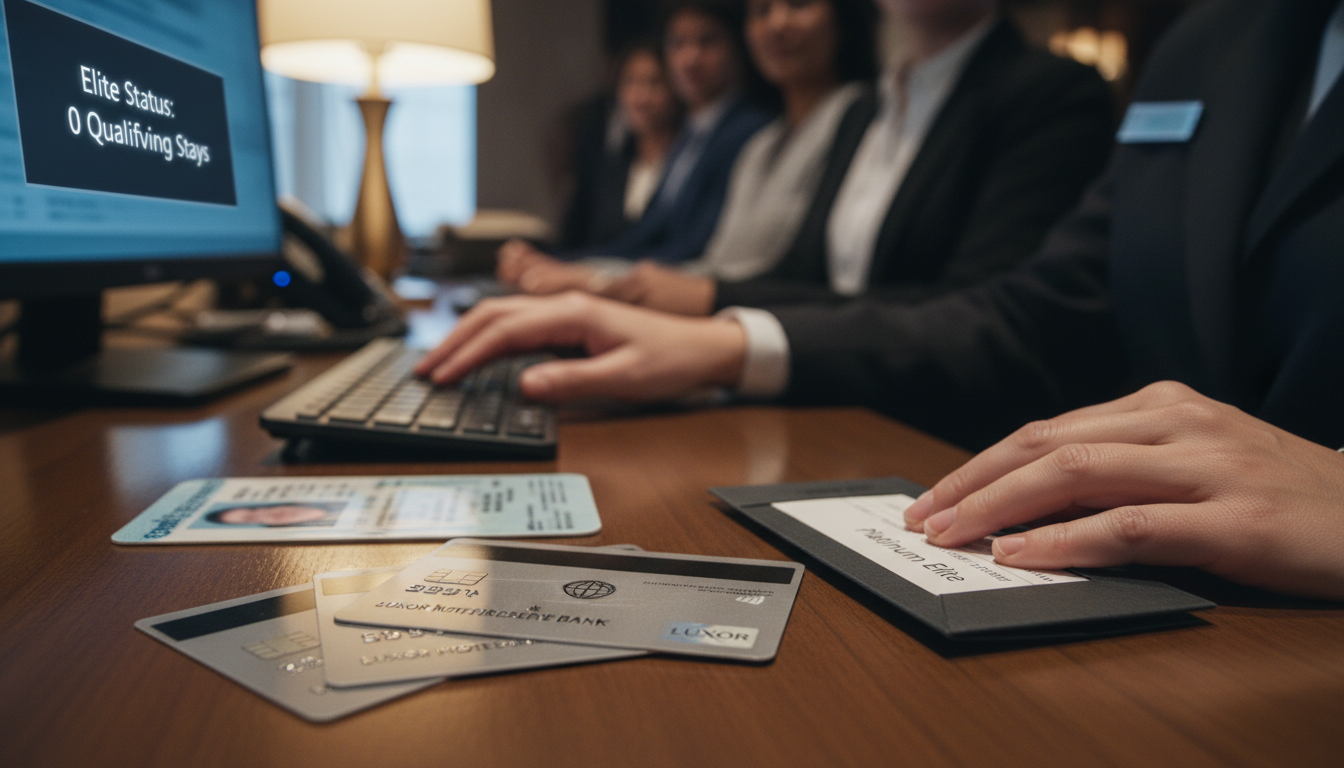
He's not even hiding it. The strategy is public: Stack three co-branded credit cards ($450 + $450 + $95 + $95 + $28 in foreign transaction fees = $1,118), collect 70 elite qualifying nights automatically, and coast into Platinum Elite status. No stays required.

The math works. The loophole is real. And that should terrify every hotel operator reading this.

Because here's what's actually happening: Your loyalty program has become so abstracted from actual stays that savvy travelers are treating it like a spreadsheet optimization problem. They're not asking "Where should I stay?" They're asking "How do I reverse-engineer status for the lowest cash outlay?"

I've watched this evolution from the front desk side for fifteen years. At the Westin Cincinnati, we used to know our Platinum members by name. They stayed with us because they liked us—the brand recognition was a bonus. Now? I check in Platinums who've never stayed at a Westin before in their lives but somehow have top-tier status because they opened the right combination of credit cards during a promotion.

The holy shit moment isn't that this loophole exists. It's that Marriott created it *on purpose*. Those 15 elite nights per credit card? That's not a bug. That's a negotiated feature with Chase and American Express because the banks pay Marriott handsomely for each cardholder acquisition.

Marriott is literally incentivizing people to game the system. They're getting paid upfront by the credit card companies, so they don't care if these "elite" members ever darken a doorway. The revenue is already banked.

But here's what the spreadsheet at corporate doesn't capture: What happens to actual property-level loyalty when your Platinum Elite lounge is packed with people who earned status at a Jiffy Lube oil change by using the right credit card?

What happens when your front desk team can't offer meaningful upgrades because 40% of your guests have elite status they didn't earn through stays? What happens when your most loyal guests—the ones actually sleeping in your beds 50 nights a year—start to notice that their status means nothing?

I ran the breakfast service at a downtown Vegas property during a convention weekend once. We had a line of "elite" guests demanding their free breakfast benefit. Half of them had stayed with the brand fewer than five times total. My actual regulars—the road warriors who knew my name and tipped the housekeepers—were standing in the same line, watching their perceived value evaporate in real time.

That's the hidden cost of credit card elite status arbitrage. Corporate gets their Chase partnership revenue. The travel hackers get their optimized status. And properties get guests who view them as interchangeable inventory in a game they're trying to win.

The question the Frequent Miler article asks is "Should I do it?"

The question operators should be asking is: "How do we build loyalty that can't be purchased for $1,118?"

Operator's Take

For independent and boutique operators: This is your moment. While the big brands optimize for credit card revenue, you can win by offering something that can't be gamed—actual relationships. Know your guests' names. Remember their preferences. Offer loyalty that exists in your PMS notes, not a app. The travel hackers will keep chasing points. But there's a growing segment of travelers who are exhausted by the game and just want to be treated like humans. That's the loyalty program you can win with zero annual fees.

Read full analysis → ← Show less
Source: Google News: Marriott
IHG Just Sent a Message to Every Mid-Scale Brand in Asia—And It Wasn't Subtle

IHG Just Sent a Message to Every Mid-Scale Brand in Asia—And It Wasn't Subtle

While everyone's chasing luxury flagships, IHG dropped voco into Bangkok with a playbook that should terrify Best Western and Radisson. This isn't about one hotel.

The first time I walked a property that had been independent for twenty years, the GM kept using the phrase "we've always done it this way." She said it about the PMS. About the breakfast setup. About the procurement relationships that were bleeding money. Three months into the conversion, she admitted the "freedom" of independence had actually been isolation wearing a better name.

That's the bet IHG just made in Thailand.

This week, voco Bangkok Surawong opened as IHG's first voco property in the country—not a Holiday Inn, not an InterContinental, but their upscale lifestyle brand designed specifically to convert independent hotels that think they're too cool for chains.

The timing isn't coincidental. Thailand has one of Asia's highest concentrations of quality independent hotels—properties with character, location, and profitability, but without the distribution muscle or loyalty ecosystem that drove 67% of IHG's bookings last year. These aren't distressed assets. They're successful operators who've historically seen chains as the enemy of authenticity.

Voco was built for exactly this conversation.

Here's what makes this launch different: IHG isn't positioning voco as a budget play or a conversion of last resort. The Bangkok property features 232 rooms in Surawong—prime location, full F&B, meetings capacity. They're leading with sustainability certifications and design-forward positioning. The message to independent owners across Southeast Asia isn't "join us because you're struggling." It's "join us because going it alone just got exponentially harder."

The holy shit part? IHG now has a brand at virtually every price point with a conversion-friendly model. InterContinental for legacy luxury. Kimpton for boutique. Holiday Inn Express for limited service. And voco for that massive middle—the 150-250 room full-service independents that Marriott's been trying to crack with Tribute and Autograph.

But here's what nobody's saying: This launch isn't really about Bangkok. It's about the next 200 properties across Thailand, Vietnam, Indonesia, and the Philippines that just got the pitch deck of their lives. IHG can now walk into any independent hotel in Asia with a credible lifestyle brand story, backed by IHG One Rewards' 135 million members.

I keep thinking about that GM at my former property. Six months after conversion, her biggest complaint wasn't the brand standards or the fees. It was that she wished she'd done it five years earlier—that she'd spent half a decade turning away business because she wasn't in the GDS, wasn't on corporate travel platforms, wasn't capturing loyalty stays.

That's the real product IHG is selling with voco. Not a brand. A time machine.

Every independent hotel owner in Bangkok is doing the math right now: How much revenue am I leaving on the table by not being in IHG's system? How much am I spending on tech and marketing that a franchise fee would cover? How long can I compete against properties with 135 million reasons to book them instead of me?

And Best Western, Radisson, and Wyndham? They're doing different math: How many quality independents in Asia will IHG convert before we even get the meeting?

Operator's Take

If you're operating an independent full-service property in an Asian gateway city, you just became IHG's target. The pitch is coming—if it hasn't already. Before you dismiss it as selling out, run the numbers on what loyalty program distribution is actually worth. That "freedom" of independence costs more than you think, and IHG just made the case study.

Read full analysis → ← Show less
Source: Google News: IHG
When a Conference Makes Your Rack Rate Look Like a Typo

When a Conference Makes Your Rack Rate Look Like a Typo

Delhi hotels are charging $35,000 per night for the India AI Summit. It's not price gouging—it's a masterclass in what happens when governments finally understand hotel economics.

There's a revenue manager somewhere in Delhi right now staring at a screen, finger hovering over the 'confirm' button, about to set a rack rate of Rs 30 lakh—roughly $35,000 USD—for a single night.

I guarantee you they've triple-checked the decimal point.

The India AI Summit kicks off this week, and luxury hotels across Delhi have entered a pricing dimension that makes Super Bowl weekend look like a shoulder season church group. We're talking about rates that would normally require a signed letter from your CFO and a background check.

But here's what's actually happening—and why every operator should be paying attention.

This isn't price gouging. This is what perfect storm demand looks like when a government actually books an entire city's luxury inventory in advance. India's throwing a coming-out party for its AI ambitions, and they've reportedly pre-blocked massive chunks of top-tier properties. The Oberoi, The Leela, Taj Palace—all effectively operating as floating inventory for heads of state, tech CEOs, and the kind of delegates who travel with three-person advance teams.

What's left? Scraps. And scraps in a true sellout market trade at whatever number your system can technically accept.

I've seen this movie before on a smaller scale. When the UFC booked out our downtown Vegas property for an international fight week, we had exactly seven rooms not contracted to their block. Seven. Our revenue manager set rates so high we thought they'd stay empty out of principle. They sold in four hours—to people who would've paid double.

That's the holy shit moment nobody talks about in revenue management courses: True scarcity doesn't follow your curve. It doesn't care about your comp set. It creates its own market where the only comp is 'available' versus 'not available.'

But here's the deeper play that Delhi's luxury operators are running—and it's smarter than just riding the spike.

They're creating a reference point. Every corporate travel manager, every luxury traveler, every regional meeting planner is seeing these numbers. When rates return to Rs 50,000 next month, it won't feel expensive anymore. It'll feel like catching a break. Anchoring theory isn't just for restaurants—it works even better in hospitality because we're selling something that literally doesn't exist tomorrow.

The risk? There isn't one. Not really. At these demand levels, the calculus is simple: You either capture the maximum value of your scarcest asset, or you leave a down payment on a Ferrari sitting on the table. And unlike overshooting on a random Tuesday in March, overshooting during a confirmed sellout just means you didn't overshoot enough.

What kills me is how many operators in secondary markets still haven't internalized this lesson. They see a citywide event coming, check their comp set, and add 20%. Meanwhile, someone books out 200 rooms at their 'inflated' rate for a corporate block because it's still cheaper than the alternative.

During the Super Bowl in Vegas, I watched properties that normally compete on rate suddenly realize they weren't competitors at all—they were just different price tiers of the same sold-out market. The guy charging $800 sold out. The guy charging $2,400 sold out. The guy who got nervous and held at $650? Also sold out, just with less profit.

You know what the real India AI Summit effect is? It's not the Rs 30 lakh rate—that's a headline. It's the reminder that in true scarcity markets, your only competition is your own nerve.

Most hotels will see this story and think "interesting anomaly." Smart operators will ask themselves: When's my Delhi moment, and will I have the guts to price it correctly?

Operator's Take

For GMs with citywide sellouts coming: Stop checking your comp set and start checking alternative accommodations 50 miles out. When those are sold out too, you're not charging enough. The only thing worse than guest sticker shock is shareholder questions about why you left 40% on the table during the one week a year when market dynamics were entirely in your favor.

Read full analysis → ← Show less
Source: Google News: Luxury Hotels
A Diamond, a Helicopter, and the Valentine's Package That Just Changed the Game

A Diamond, a Helicopter, and the Valentine's Package That Just Changed the Game

JA The Resort just made every other Valentine's offering look like a box of drugstore chocolates. One couple. One precious diamond. And a price tag that's either brilliant marketing or completely insane.

The first time I watched a guest propose poolside at a Vegas property, the ring was bigger than my monthly car payment. The champagne was comped. The photographer was her cousin with an iPhone. Total resort revenue from that moment? Maybe $800 in room and dining.

That was ten years ago. The game has changed.

JA The Resort just announced they're offering one couple—just one—an ultra-luxury Valentine's escape that includes a precious diamond. Not a discount on a diamond. Not a voucher. An actual diamond. Plus helicopter transfers, private yacht excursions, couples' spa journeys, and accommodations so exclusive they're not even listing the price publicly.

This is the hotel equivalent of Willy Wonka's golden ticket, and it's the smartest Valentine's play I've seen in years.

Here's why this matters: Every resort does Valentine's packages. Champagne and strawberries. Rose petals on the bed. Maybe a couples massage if you're fancy. The going rate? $500 to $2,000 per couple, and you're competing with 47 other properties in your market doing the exact same thing.

JA The Resort just opted out of that fight entirely.

By creating a package so audacious that only one couple can book it, they've generated more press coverage than any traditional Valentine's promotion could buy. This story is running everywhere. The waiting list for when they announce next year's version is probably already forming. And every other guest who books a regular room this Valentine's will feel like they're staying at the property that does extraordinary things.

The holy shit moment? The diamond isn't even the smartest part. It's making it exclusive to ONE couple. Scarcity isn't just a pricing strategy anymore—it's a storytelling strategy. You can't manufacture that kind of buzz with Instagram ads.

This is luxury hospitality finally understanding what luxury fashion figured out decades ago: The waiting list is more valuable than the sale. The story is more powerful than the product. And sometimes the best marketing move is making something so exclusive that 99.9% of people can't have it.

Does this work for a 200-room select-service property in Des Moines? Probably not. But the principle scales. What if you offered one couple your Presidential Suite with a custom experience so over-the-top that local news would actually cover it? What if you made it a competition on social media? What if you turned Valentine's from a revenue day into a story that carries you through March?

The resorts still running "Romance Package: $399" specials are playing checkers. JA The Resort is playing chess.

Operator's Take

For luxury and upscale operators: Stop trying to sell Valentine's to everyone. Create one package so extraordinary that it becomes the story, then watch every other booking benefit from the halo effect. For everyone else: You don't need a diamond budget to steal this playbook—you need the guts to make something genuinely exclusive instead of deeply discounted.

Read full analysis → ← Show less
Source: Google News: Resort Hotels
The Digital Nomad Wants Your Hotel Room for Three Months—And You're Pricing Like It's Three Nights

The Digital Nomad Wants Your Hotel Room for Three Months—And You're Pricing Like It's Three Nights

A massive market is asking hospitality for something different, and most operators are still running the same 72-hour playbook from 2019.

The GM looked at me like I'd suggested we start accepting chickens as payment.

"You want to give someone a *discount* for staying *longer*?" This was 2017, and I was trying to convince ownership at a downtown property to test monthly rates. The math was simple—guaranteed occupancy, less turnover labor, predictable revenue. But the resistance was visceral. Hotels don't do that. We're not apartments.

Fast forward to today, and that "we're not apartments" mindset is leaving serious money on the table.

The digital nomad economy isn't coming—it's here, it's massive, and it wants exactly what we claimed we couldn't provide. According to recent industry analysis, this isn't about a handful of laptop warriors bouncing between Bali and Barcelona. We're talking about a fundamental shift in how a growing segment of high-value guests want to use hotels.

Here's the thing nobody's saying out loud: *We already have the infrastructure for this.* The laundry facilities. The cleaning systems. The F&B operations. The wifi (well, mostly). What we don't have is the pricing model or the operational flexibility.

Most hotel revenue management systems are still optimized for 1-3 night stays. The entire yield management philosophy is built around maximizing ADR on short stays and driving weekend occupancy. But a digital nomad staying 4-12 weeks? That guest breaks every assumption in your RMS.

They don't care about your weekend rates. They're not booking around a conference. They're not checking TripAdvisor reviews about pillow firmness. They want: reliable wifi, a workspace, proximity to good coffee, and a monthly rate that doesn't require them to explain their credit card statement to their accountant.

The holy shit moment? Some operators are already cleaning up. Extended-stay concepts that figured this out years ago are posting occupancy numbers that make traditional hotels look anemic. But here's what's interesting—you don't need to be a Residence Inn to capture this.

I've watched boutique properties in secondary markets create "nomad packages" that are just rebranded monthly rates with dedicated workspace and better internet. Same rooms. Same operations. Different positioning. And those rooms are occupied while their competitors are chasing weekend leisure travelers with increasingly expensive OTA commissions.

The resistance comes from the same place it always does in hospitality: "But we've never done it that way." Revenue managers panic because monthly rates look like discounts. Operations teams worry about guests who "live" in the hotel. Ownership gets nervous about anything that smells like residential.

But here's what they're missing—a digital nomad paying $3,200 for a month is more profitable than that same room sitting empty for 8 nights and occupied for 22 at an average of $180. The math works. The labor costs are *lower* because you're not flipping that room every other day. The ancillary revenue opportunity is *higher* because they're using your F&B, your workspace, your amenities consistently.

The operators who get this aren't trying to become co-working spaces with beds. They're just recognizing that the traditional "every guest stays 2.3 nights" model isn't the only model anymore. They're creating rate structures that reward longer stays. They're marketing to remote workers instead of just leisure travelers. They're thinking about workspace ergonomics, not just bed thread counts.

Is this the future for every property? No. If you're running a 40-room boutique in Napa Valley, you're probably fine optimizing for weekend wine tourists. But if you're in a secondary market struggling with mid-week occupancy, or you're an urban property that lost all your corporate transient business, or you're anywhere that can't compete on price with the big boxes—this is your move.

The digital nomad market is asking us for something we already have. They just need us to package it differently and stop pretending that "hotel" means everyone checks out on Sunday.

Operator's Take

FOR SELECT-SERVICE AND INDEPENDENT OPERATORS: Create a 30-day minimum "remote professional" rate at 60-70% of your average monthly rack revenue. Test it on 10% of inventory. Track your actual profitability per occupied room including labor and amenities. I'll bet you five bucks it outperforms those same rooms on your current pricing model. The nomads are already looking for places to stay—they're just booking Airbnbs because you haven't made it easy to book you.

Read full analysis → ← Show less
Source: Google News: Hotel Industry
End of Stories