Today · Apr 23, 2026
$34M on an Airport Hotel. Let's Talk About the Math.

$34M on an Airport Hotel. Let's Talk About the Math.

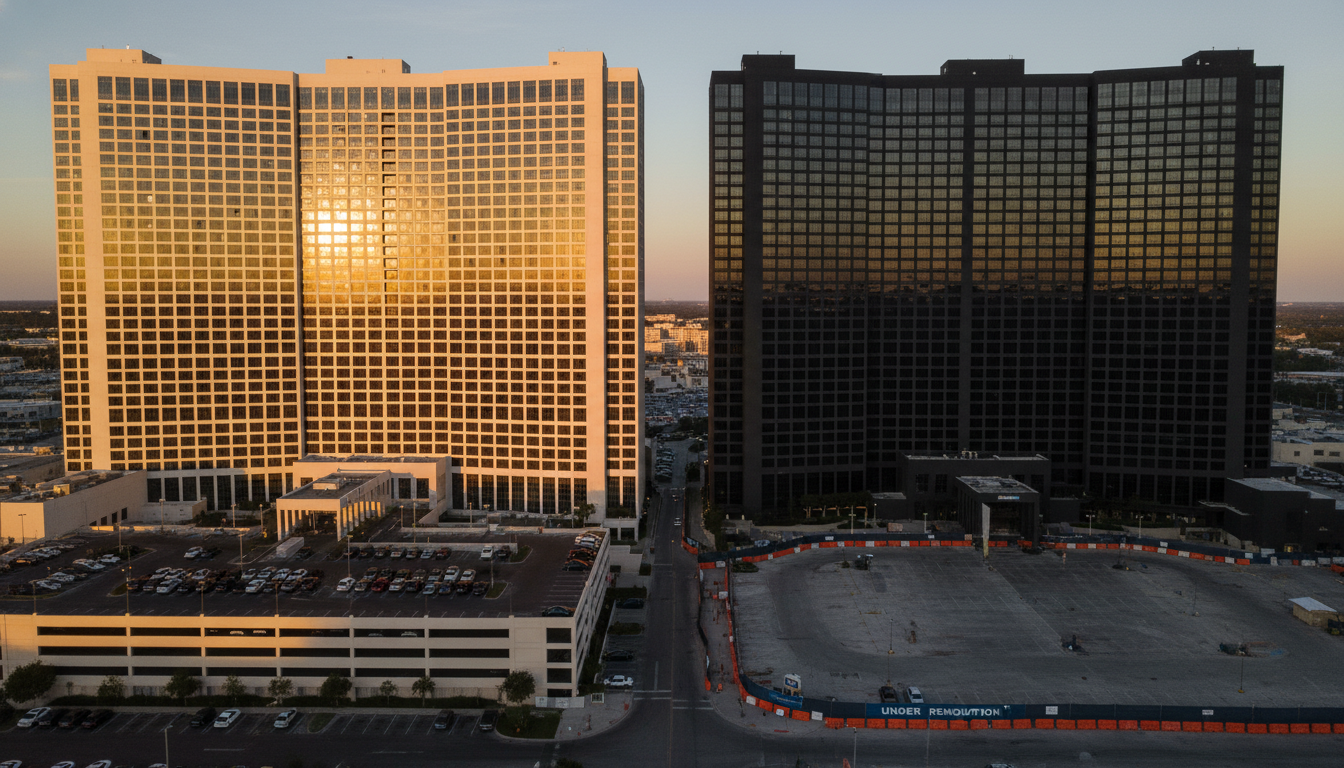
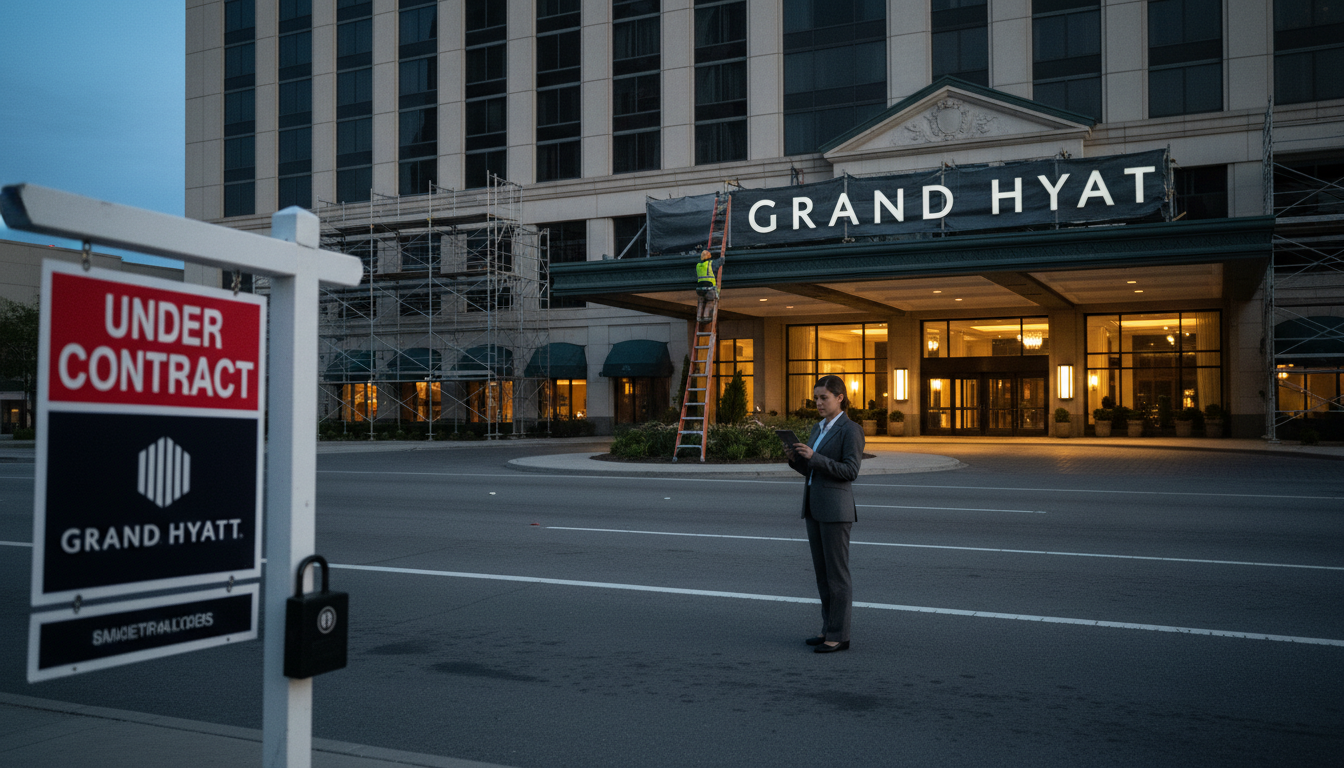
Grand Hyatt DFW just unveiled a $34 million renovation. The press release is gorgeous. The capital math deserves a closer look.

$34 million. That's the number attached to the Grand Hyatt DFW Airport renovation. New lobby, redesigned rooms, refreshed food and beverage — the full-property treatment. The renderings look great. The press release reads like it was written by someone who's very good at writing press releases.

Let me talk about what the press release doesn't talk about.

Airport hotels operate in a category with a specific financial logic. Your demand generator is bolted to the ground — you don't lose the airport, and nobody's building a competing airport across town. That's the upside. The downside is equally structural: your rate ceiling is real. Business travelers booking airport hotels are not making aspirational purchase decisions. They're booking because their connection got canceled or their meeting is at 7 AM. The willingness to pay is bounded in ways that a resort or a lifestyle property can stretch.

So when you drop $34 million into a renovation, the question isn't whether the property needed it. It probably did. Airport hotels take a beating — high turnover in rooms, constant foot traffic, luggage damage, the wear pattern of a property that never really has a slow season. The question is what the $34 million is expected to *return*.

Here's where my audit brain kicks in. A renovation of this scale on an airport property has to pencil through one of two mechanisms: either you're capturing meaningful rate premium post-renovation, or you're defending market share against newer competitive supply. The first requires demand elasticity that airport hotels typically don't have in abundance. The second is a defensive spend — necessary, but don't confuse it with growth capital.

DFW is one of the busiest airports in the world. The Grand Hyatt sits inside the airport campus. That's a distribution advantage no renovation can replicate and no competitor can easily challenge. Which means this $34 million is less about creating something new and more about maintaining the relevance of an asset that already has a structural moat.

(The press release calls it a "transformation." In my experience, when an asset has a captive demand generator and you're renovating to current brand standards, that's maintenance capex dressed in a tuxedo.)

None of this means the renovation was wrong. Deferred maintenance on a high-volume airport property compounds fast — every year you delay, the cost goes up and the guest experience degrades in ways that show up in your review scores, which show up in your OTA ranking, which shows up in your booking pace. I've seen that cycle at properties in my portfolio. The math on deferral is always worse than it looks in the year you're deferring.

But $34 million is a significant commitment. The asset owner — whoever's writing that check — is making a bet that the post-renovation performance justifies the capital outlay on a risk-adjusted basis. For an airport hotel, the recovery timeline on a renovation of this scale is typically longer than owners want to hear, because the rate growth is incremental, not transformational.

Look, airport hotels are good businesses. Predictable demand, high barriers to entry, relatively stable cash flows. That's exactly why the renovation math matters so much. You're not swinging for a home run on rate. You're grinding basis points out of occupancy stability and incremental ADR. At $34 million, you need a lot of basis points.

The renovation is done. The rooms are open. The real story starts now — in the monthly P&Ls, in the STR comps, in whether the capital deployed here earns its cost. That's the number nobody puts in a press release.

Operator's Take

Jordan's asking the right questions about returns. She always does. But here's what I'd add — and I say this as someone who's led renovations at multiple properties: the $34 million number tells you nothing until you know what they were working with before. I've walked airport hotels where the soft goods hadn't been touched in a decade. Where the HVAC was running on prayers. Where the front desk team was apologizing for the property before the guest even got to the room. That kills your people. You can't build pride in a product your team is embarrassed by. I watched it happen at Hooters — staff wouldn't tell their families where they worked. You think that doesn't show up in your TripAdvisor scores? In your turnover rate? In your training costs? If this renovation gives the team at the Grand Hyatt DFW a property they're proud to run, the financial return will follow in ways Jordan's spreadsheet can't fully capture. Employee pride is the most undervalued line item in hospitality. It doesn't show up on the P&L, but it drives every number that does. Here's what I'd tell the GM: You've got a window right now — maybe 90 days — where your team is energized by a fresh product. Don't waste it on a ribbon-cutting photo op. Use it. Reset your standards. Retrain to the new product. Let your housekeepers take ownership of rooms they're proud to clean. That window closes fast. The renovation bought you the opportunity. What you do with your people in the next three months determines whether this was $34 million well spent or $34 million that just made the lobby look nicer for a year.

— Mike Storm, Founder & Editor
Read full analysis → ← Show less
Source: Google News: Hyatt
The Scrambled Eggs Are the Canary in the Coal Mine

The Scrambled Eggs Are the Canary in the Coal Mine

Hotel free breakfast isn't just facing budget cuts — it's splitting into two completely different realities based on who your guest is. And the operators caught in the middle are about to learn a brutal lesson about what 'value' actually means.

There's a woman I think about sometimes. She worked the breakfast bar at a property I managed years ago — one of those 120-room boxes off the highway where the complimentary breakfast was, honestly, the entire reason half our guests booked with us over the place across the street.

Her name was Rosa. She could keep that chafer line humming like a short-order kitchen. Scrambled eggs never sat long enough to turn gray. The waffle station always had batter. She knew which guests wanted their coffee before they got to the urn. She was breakfast.

One quarter, ownership decided the continental spread was "underperforming on cost metrics." They wanted to cut the hot items and go cold — muffins, yogurt, cereal. I fought it. Lost. Rosa's hours got cut in half. Within six weeks, our TripAdvisor scores dropped a full point and our repeat-guest rate fell off a cliff. We brought the hot breakfast back by month four, but Rosa had already taken another job. We never recovered what she'd built.

I think about Rosa every time someone in a boardroom treats breakfast as a line item instead of what it actually is — the last impression before checkout.

Now CNBC is reporting that America's free hotel breakfast is facing what they're calling a "K-shaped economic threat." And the framing is exactly right. This isn't a story about breakfast getting worse everywhere. It's about breakfast splitting into two realities — one moving up, one moving down — and the gap between them accelerating.

Here's what's actually happening. At the top of the K, brands like Hyatt are leaning into breakfast as a loyalty weapon. Better ingredients. More local sourcing. Made-to-order options at select-service properties that would have been unthinkable five years ago. They're spending more because their guest — the corporate traveler, the elite-status loyalist — expects it and will pay the rate premium that funds it.

At the bottom of the K, the Holiday Inns and the midscale brands that built their identity around complimentary breakfast are getting squeezed from every direction. Food costs are up 25-30% from pre-pandemic levels. Labor to staff a breakfast operation is harder to find and more expensive to keep. And their core guest — the family road-tripper, the youth sports parent, the budget-conscious leisure traveler — is more price-sensitive than ever. They need breakfast to compete, but they can't afford to do it well.

So what do they do? They cut corners. The eggs go from scrambled-on-site to poured-from-a-bag. The fruit goes from fresh to canned. The attendant who kept things stocked becomes a front desk agent who checks on the buffet when they can. The breakfast "experience" becomes a room with picked-over food under fluorescent lights.

And here's the part that should terrify every midscale operator in America — your guest notices. They always notice.

The data backs this up in ways that should make owners lose sleep. Breakfast-related mentions in hotel reviews have increased 40% since 2022, according to multiple reputation management platforms. Guests aren't just eating breakfast — they're evaluating it, photographing it, posting about it. A sad breakfast spread doesn't just cost you a return visit. It costs you bookings from people who never stayed with you in the first place.

The K-shape isn't just about economics. It's about a fundamental divergence in how different segments of the industry understand the relationship between cost and value. The upper branch gets it — breakfast is a revenue driver disguised as an expense. The lower branch still sees it as a cost center to be minimized.

I've operated on both sides of this divide. When I was running properties downtown in Vegas, breakfast wasn't even in the conversation — those guests were eating at restaurants or not eating at all. But at the select-service and midscale level? Breakfast IS the amenity. It's the pool, the gym, and the lobby bar rolled into one. It's the thing that makes a parent with three kids in the back seat choose your flag over the one next door.

What kills me is that the math isn't even that complicated. A well-run breakfast program at a 120-room select-service hotel costs somewhere between $4 and $7 per occupied room. A one-point drop in your review scores from a lousy breakfast can cost you $3-5 in ADR across your entire inventory. You're not saving money by cutting breakfast. You're borrowing against future revenue and hoping nobody notices.

But they notice. They always notice.

Operator's Take

If you're a midscale or select-service operator reading this, here's your move — stop budgeting breakfast as a fixed cost and start treating it as your highest-ROI marketing spend. A $5-per-key breakfast done well generates more loyalty, more positive reviews, and more direct bookings than any digital ad campaign at the same price point. The operators who survive the bottom of the K will be the ones who find ways to deliver a $7 experience for $5 — through smarter purchasing, cross-trained staff, and a breakfast attendant they actually invest in. Fire your breakfast and your guests will fire you. It's that simple.

— Mike Storm, Founder & Editor
Read full analysis → ← Show less
Source: Google News: IHG
Hyatt's Q4 Tells the Story Every Hotel Operator Is Living: More Revenue, Less Profit

Hyatt's Q4 Tells the Story Every Hotel Operator Is Living: More Revenue, Less Profit

Hyatt just posted higher RevPAR and lower net income in the same quarter. If that sounds like your P&L lately, it's not a coincidence — it's the new math of hospitality, and it's not going away.

I remember sitting in the GM's office at a property in Scottsdale, staring at a month-end report that made no sense to me. Top line was up. Occupancy was healthy. ADR had climbed. And somehow, the owner's distribution was smaller than the month before.

I called our regional controller. He laughed — not the funny kind. "Welcome to the squeeze," he said.

That was over a decade ago. The squeeze never left.

Hyatt just reported Q4 results: RevPAR up, net income down. On the surface, that's a corporate earnings story for analysts and investors. But if you've been running a hotel — any hotel, any brand, any market — you already know what that headline really means. You've been living it.

Here's what's actually happening. Revenue per available room keeps climbing because rate integrity has held and demand hasn't fallen off a cliff. That's the good news, and operators deserve credit for holding the line on pricing when every OTA discount button is screaming at guests to shop harder.

But between the top line and the bottom line, there's a war of attrition. Labor costs haven't just increased — they've restructured. The housekeeper you paid $14 an hour in 2019 now costs you $19 or $20, and she's harder to find. Insurance premiums are up double digits in markets with weather exposure. Energy costs, food costs for F&B operations, technology fees, brand fees — every line item between revenue and profit has gotten fatter.

And here's the part that nobody on the earnings call is going to say out loud: for a company like Hyatt that's been aggressively shifting toward an asset-light model — collecting management and franchise fees rather than owning bricks — if THEIR net income is down, imagine what the owners of those hotels are feeling. The franchise fee doesn't shrink when your profit does. The brand's technology surcharge doesn't care about your utility bill. Those are fixed extractions from a margin that's getting thinner by the quarter.

I've operated through three of these cycles now. The pattern is always the same. RevPAR goes up because we're good at selling rooms. Costs go up faster because we don't control half of what we spend. And the gap between "the hotel is doing great" and "the hotel is making money" gets wider until something breaks.

What breaks is usually people. The director of sales who's been covering two roles gets a recruiter call and takes it. The chief engineer who's been nursing 20-year-old chillers with duct tape and prayer finally says he's done. The GM who's been told to hit last year's flow-through on this year's cost structure starts updating their LinkedIn.

That's the real story behind Hyatt's Q4. Not the RevPAR number. Not the net income number. The growing distance between them — and the people standing in that gap trying to hold it all together.

The question nobody in a boardroom is asking is the one every operator needs answered: At what point does rising revenue with falling profit become a structural problem rather than a cyclical one? Because if your costs have permanently reset — and labor says they have — then the old flow-through models are fiction. You're not managing a down cycle. You're managing a new reality.

And a new reality demands a new operating thesis. Not just "raise rate" — that well has a bottom. Not just "cut staff" — you've already cut past muscle into bone. Something more fundamental about how hotels create and capture value has to change.

Operator's Take

If you're a select-service or lifestyle operator looking at a healthy RevPAR and a disappointing NOI, stop blaming the cycle and start rebuilding your operating model from the expense side up. Audit every vendor contract renegotiated before 2023 — you're overpaying somewhere that's now invisible. Cross-train relentlessly so you're staffing to demand curves, not org charts. And have the honest conversation with your ownership group: the days of 40%+ flow-through on rate increases are behind us. The operators who thrive from here aren't the ones who sell the most rooms. They're the ones who've re-engineered what it costs to service them.

Read full analysis → ← Show less
Source: Google News: Hotel RevPAR
The Palms Just Showed Vegas How Labor Fights Really Work

The Palms Just Showed Vegas How Labor Fights Really Work

When front desk agents vote Teamsters in a casino property, it's not about wages. It's about what happens when corporate forgets the most basic rule of hospitality management.

Three years ago, I watched a general manager at a downtown Vegas property spend two hours explaining to ownership why his front desk team was asking about union cards. "They make $18 an hour," he kept saying. "What more do they want?"

What they wanted was to not get screamed at by drunk guests at 2 AM without backup. What they wanted was consistent scheduling so they could pick up their kids from daycare. What they wanted was someone to listen when they said the new property management system was creating hour-long check-in lines.

But ownership heard "union" and stopped listening.

Now the front desk crew at the Palms Casino just voted to join the Teamsters. Not the Culinary Union, which represents most Vegas hotel workers. The Teamsters. That's not an accident.

Here's what nobody's talking about: This isn't about money. Vegas front desk wages have been climbing steadily. This is about respect. And when your front-facing team — the people who literally hand guests their room keys — feels disrespected enough to organize, you've already lost the game.

The Palms has been through three ownership changes since 2019. Each transition promised "investment in team members." But promises don't solve the fundamental problem: When you treat hospitality like a factory, workers organize like factory workers.

I've seen this movie before. The property fights the certification. Management starts treating organized workers like the enemy. Guest service suffers because your front desk team is documenting every interaction for potential grievances instead of just solving problems.

Here's the part that should terrify every Vegas GM: The Teamsters don't just represent hotel workers. They represent truck drivers, warehouse workers, delivery drivers. They understand supply chains. They know how to shut things down.

What happens when your linen delivery, your food service trucks, your maintenance supplies all get "delayed" during your next big concert weekend? What happens when solidarity isn't just about room attendants walking out, but about nothing getting in or out of your loading dock?

The smart money says other properties are already scheduling "team appreciation" meetings and dusting off retention bonuses. But if you're reacting to union votes with pizza parties, you've missed the point entirely.

The Palms front desk team didn't vote for the Teamsters because they wanted different health insurance. They voted because they wanted to be heard. And now they will be — whether management likes it or not.

Operator's Take

If you're running a non-union property in a union town, your next all-hands meeting better focus on communication, not compensation. Because the moment your team stops believing you'll listen, they'll find someone who will.

Read full analysis → ← Show less
Source: Google News: Las Vegas Hotels
Hyatt's Asset-Light Strategy Is Creating a New Hotel Owner Class — And Killing Another

Hyatt's Asset-Light Strategy Is Creating a New Hotel Owner Class — And Killing Another

While Hyatt celebrates shedding properties and expanding brands, there's a seismic shift happening that most operators are missing. One group of owners is about to get very wealthy. Another is about to disappear.

Three years ago, I watched a family-owned hotel in Vegas get squeezed out by a management company that decided their 180-room property wasn't "scalable enough" for the brand's new direction. The family had operated that hotel for two generations. The management company? They were pivoting to an "asset-light strategy."

Hyatt's Q4 results just told that same story on a massive scale.

The numbers look impressive — brand expansion driving momentum, management fees growing while property ownership shrinks. But here's what the earnings call didn't mention: this isn't just a business model shift. It's the creation of two entirely different classes of hotel ownership.

On one side, you have institutional investors and REITs who can afford to own multiple properties across Hyatt's expanding brand portfolio. They're getting richer as management companies compete for their assets, driving down fees and offering better terms.

On the other side? Independent owners and smaller groups who can't achieve the scale these asset-light strategies demand. They're being systematically priced out, not by the market, but by the very brands they helped build.

I've seen this movie before. When I was working turnarounds in downtown Vegas, the properties that survived weren't necessarily the best-operated ones. They were the ones with owners who could play the long game while management companies optimized for quarterly growth.

Hyatt's "caution" in their guidance isn't about market conditions — it's about the fact that they're fundamentally changing who gets to participate in hotel ownership. The asset-light strategy works brilliantly for shareholders. But it's quietly eliminating an entire tier of the industry.

The family that lost their Vegas property? They're now managing a Hampton Inn. They went from owners to employees of their own business model.

That's not disruption. That's displacement.

Operator's Take

If you're an independent owner with 1-3 properties, the next 24 months will determine whether you scale up, sell out, or get squeezed out. The middle ground is disappearing faster than these earnings calls admit.

Read full analysis → ← Show less
Source: Google News: Hyatt
UK Hospitality Battles Tourist Tax While Missing the Real Revenue Killer

UK Hospitality Battles Tourist Tax While Missing the Real Revenue Killer

Industry leaders are fighting the wrong battle. While they petition against visitor levies, the real threat to profitability is hiding in plain sight at every property.

Three years ago, I watched a GM in Boston spend six months fighting a proposed parking fee increase while his housekeeping costs ballooned 40%. He won the parking battle and lost $2.3 million that year.

That's exactly what's happening in the UK right now.

Hospitality chiefs are urging Chancellor Rachel Reeves to abandon plans for a visitor levy — essentially a tourist tax that would add a few pounds to each hotel stay. Their argument? It'll hurt tourism and damage local economies.

They're not wrong. Tourist taxes do create friction. Edinburgh's proposed levy could add £2-7 per night to stays. That's real money that might push price-sensitive travelers to skip the trip or book elsewhere.

But here's what nobody's talking about: while the industry mobilizes against a transparent tax that guests can see, they're getting murdered by hidden costs they can't control.

Labor shortages are forcing overtime rates that would make your CFO weep. Energy costs have hotels reconsidering whether keeping lobbies lit past 10 PM makes sense. Insurance premiums are climbing faster than your ADR ever will.

I've seen this movie before. In Vegas, we spent months fighting a room tax increase while our workers' comp costs doubled overnight. Guess which one actually moved the needle on our bottom line?

The visitor levy fight feels righteous because it's visible and defeatable. You can write letters, hold press conferences, make rational arguments about economic impact. It's the kind of battle hotel executives know how to fight.

Meanwhile, the real killers — the 15% jump in linen costs, the HVAC system that's limping toward winter, the PMS upgrade you've been deferring — those don't make headlines. They just quietly bleed you dry.

Don't get me wrong. Tourist taxes are bad policy. They're regressive, they hurt smaller properties more than chains, and they treat visitors like ATMs rather than guests.

But if UK hospitality leaders think defeating this levy will solve their profitability crisis, they're fighting yesterday's war with tomorrow's problems.

Operator's Take

Independent hotel owners: Stop waiting for government salvation. While chains lobby against tourist taxes, you need to audit every line item that's grown 20%+ since 2022. That's where your real money is bleeding — and that's what you can actually control.

Read full analysis → ← Show less
Source: Google News: Hotel Industry
The $2 Billion Renovation That Nobody Wanted

The $2 Billion Renovation That Nobody Wanted

China just proved what every hotel operator knows but won't say out loud — sometimes the property is too iconic to touch, too expensive to hold, and too political to profit from.

Three years ago, I watched a GM explain to his ownership group why their $40 million renovation was hemorrhaging money. 'We thought we were upgrading the Ritz,' he said. 'Turns out we were embalming it.'

That conversation keeps echoing as news breaks that China's Anbang Insurance is selling the Waldorf Astoria New York at a massive loss — after spending nearly $2 billion on renovations that turned the legendary property into a money pit.

Here's what happened: Anbang bought the Waldorf for $1.95 billion in 2014, the highest price ever paid for a hotel. Then they discovered what every operator learns the hard way — iconic doesn't mean profitable.

The property had 1,413 rooms generating revenue 365 days a year. Post-renovation? It's down to 375 hotel rooms and 375 condos, with construction delays that kept cash flowing out for years longer than projected. They essentially spent $2 billion to cut their revenue-generating inventory by 75%.

But here's the part that should terrify every operator: this wasn't amateur hour. Anbang knew hotels. They had deep pockets. They had the best consultants money could buy.

What they didn't account for was the hidden cost of prestige. When you own a property that famous, every decision becomes political. Every vendor knows you're desperate to maintain the legacy. Every delay costs exponentially more because you can't just 'make do' at the Waldorf.

I've seen this pattern play out on a smaller scale — operators who buy the 'crown jewel' property in their market, then discover that being iconic means being held hostage by your own reputation. You can't cut corners, can't phase renovations, can't make the practical decisions that keep normal properties profitable.

The Waldorf became a $4 billion lesson in why sometimes the most famous address is the worst investment. Anbang is now selling at a loss just to stop the bleeding — exactly what that GM should have done three years ago.

Operator's Take

For independent operators: If a property's 'legacy' is the main selling point, run the numbers assuming everything will cost 3x more and take 2x longer. Prestige is expensive, and the market doesn't care about your historical significance if you can't fill rooms profitably.

Read full analysis → ← Show less
Source: Google News: Hotel Renovation
NYC's Junk Fee Ban Just Made Your Hotel Pricing Strategy Obsolete

NYC's Junk Fee Ban Just Made Your Hotel Pricing Strategy Obsolete

While operators debate ancillary revenue, New York City just outlawed the playbook. The ripple effects will reshape how every property in America prices rooms.

The call came at 6 AM from a revenue manager friend of mine "Mike, did you see what New York just did? We need to talk."

NYC Mayor Zohran Mamdani just banned hidden hotel fees — the sneaky charges that have quietly become the backbone of modern hotel revenue management. Resort fees, facility fees, cleaning fees, WiFi charges, early check-in premiums. Gone.

But here's what everyone's missing: This isn't just about New York.

I've watched this movie before. When one major market bans a revenue practice, it creates a domino effect that reshapes the entire industry. Remember when cities started cracking down on Airbnb? The platform changes rippled everywhere, even to markets with zero regulations.

The five fees NYC specifically targeted tell the whole story:

• Resort fees (the big one — some properties derive 15-20% of revenue here)

• Facility fees (gyms, pools, business centers you used to include)

• Cleaning fees (the new favorite since COVID)

• WiFi charges (still common in legacy properties)

• Early check-in/late checkout fees (pure margin, zero cost)

Now comes the uncomfortable math. If you're running a 200-room property averaging $25 per room in ancillary fees, you just lost $1.8 million in annual revenue. Where does that money come from now?

The rack rate. Which means the sticker shock moves from checkout to booking.

Here's the thing nobody's talking about: This might actually save your bacon. I've seen too many operators get addicted to fee revenue because it felt like free money. But it was never sustainable. Guest satisfaction scores have been tanking as fee structures got more aggressive. Online reviews increasingly focused on "hidden charges" rather than service quality.

The properties that survive this transition will be the ones that embrace transparent pricing now, before they're forced to. The ones that wait for regulation to reach their market will be playing catch-up while competitors gain trust with all-inclusive rate structures.

Your Tuesday morning just got more interesting. Because every revenue meeting from now on needs to answer the same question: What happens when the fees disappear?

Operator's Take

Independent operators — start testing transparent pricing models now. Build guest loyalty while your chain competitors are still nickel-and-diming. When fee bans reach your market, you'll already have the operational advantage of honest pricing and better guest relationships.

Read full analysis → ← Show less
Source: Google News: Resort Hotels
Your Front Desk Staff Want AI More Than Your Guests Do — And That Should Terrify You

Your Front Desk Staff Want AI More Than Your Guests Do — And That Should Terrify You

The real AI hotel revolution isn't happening in boardrooms. It's happening at 3 AM when your night auditor realizes the computer can handle the drunk guest complaints better than they can.

Last month, I watched our night auditor train our new AI chatbot to handle noise complaints. She was practically giddy showing it how to automatically dispatch security, log the incident, and follow up with affected rooms — all while she handled the drunk guy trying to pay his bill with Monopoly money.

"This thing doesn't get tired at 4 AM," she told me. "And it doesn't take shit personally."

That's the real story behind the AI hotel boom nobody's talking about. While guests are still skeptical about robot concierges and voice-activated everything, your staff is quietly falling in love with technology that makes their impossible jobs slightly less impossible.

The data backs this up. Staff satisfaction with AI tools is running 73% positive, while guest acceptance hovers around 45%. Think about what that gap means for a second.

Your people want efficiency. Your guests want humanity. And somehow you're supposed to thread that needle while your competitors are going all-in on flashy AI marketing that might be alienating the very people paying the bills.

I've seen this movie before. In 2008, everyone rushed to eliminate front desk positions for self-check kiosks. Properties that went too far too fast spent years rebuilding guest trust. The smart operators found the sweet spot — technology that empowered staff rather than replaced them.

Here's the thing your staff understands that you might not: AI isn't replacing hospitality. It's removing the administrative garbage that prevents hospitality from happening. When your front desk agent isn't manually updating three different systems every time someone checks in, they can actually look the guest in the eye.

But there's a trap here. If you let staff satisfaction drive your AI strategy without considering guest comfort levels, you'll optimize for the wrong outcome. Happy employees matter, but guests who feel like they're checking into a laboratory don't come back.

The operators getting this right are using AI behind the scenes — revenue management, maintenance scheduling, staffing optimization — while keeping human touchpoints visible to guests. They're letting technology handle the 2 AM inventory reports so humans can handle the 2 AM family emergencies.

Your night auditor was right. The computer doesn't get tired at 4 AM. But your guests didn't choose your property to interact with a computer. They chose it to feel taken care of by humans who aren't exhausted from doing computer work all night.

Operator's Take

Limited-service operators: Use AI for back-office operations and empower front desk for guest interaction. Full-service operators: AI handles logistics, humans handle moments. The goal isn't efficiency — it's memorable humanity enabled by invisible technology.

Read full analysis → ← Show less
Source: Google News: Hotel Industry
The ICE Raids Nobody's Talking About Are Coming for Your Housekeeping Staff

The ICE Raids Nobody's Talking About Are Coming for Your Housekeeping Staff

While hoteliers debate RevPAR strategies, immigration enforcement is quietly targeting the workers who actually clean your rooms. The labor shortage you think is bad? It's about to get catastrophic.

The GM at the Westin Cincinnati called me last Tuesday at 6:47 AM. That's never good news.

"Mike, I need to ask you something, and I need you to be straight with me." Long pause. "How do I replace twelve housekeepers by Friday?"

Turns out, word had spread through the housekeeping staff that ICE was conducting workplace raids at hotels two states over. Didn't matter that these were rumors. Didn't matter that half the staff had legal status. When fear moves through a housekeeping department, it moves fast — and people disappear faster.

That's exactly what's happening across the hotel industry right now, and most operators are sleepwalking into a staffing apocalypse.

The Unite Here union just released data showing that Trump-era immigration policies aren't just "creating uncertainty" — they're systematically dismantling the workforce that keeps your property running. We're talking about housekeeping, maintenance, F&B service, and back-of-house operations. The jobs Americans consistently refuse to take, even at $18-20 an hour.

Here's what the headlines won't tell you: This isn't about politics. This is about operational reality.

I've run properties through labor shortages before. The 2008 recession taught us we could operate lean. But there's a difference between lean and skeleton crew. There's a difference between efficiency and impossibility.

When housekeeping drops below critical mass, you can't just "make do." Rooms don't get turned. RevPAR becomes irrelevant when you can't sell the inventory you have. I've watched properties go from 85% occupancy to 60% occupancy overnight — not because demand dropped, but because they literally couldn't clean the rooms fast enough.

The math is brutal: Most full-service properties need 1.2-1.5 housekeepers per occupied room to maintain standards. Drop below 0.8, and you're looking at late checkouts, guest complaints, and TripAdvisor reviews that'll haunt you for years.

But here's the part that'll keep you up at night — the ripple effect nobody's calculating.

When half your housekeeping staff disappears, the remaining staff doesn't just work harder. They burn out. They quit. They tell their friends not to apply. What started as an immigration enforcement issue becomes a reputation issue becomes a recruiting black hole.

I've seen this cycle destroy properties. Once word gets out that you're the hotel where housekeepers work 12-hour shifts because you can't maintain staffing, good luck hiring anyone.

The smart operators I know aren't waiting for this to hit their market. They're cross-training front desk staff on housekeeping basics. They're building relationships with temporary staffing agencies. They're raising wages now, before desperation forces their hand.

Some are even exploring the unthinkable: reducing available inventory to match their housekeeping capacity. Better to sell 200 clean rooms than 300 questionable ones.

Because here's what I learned running turnarounds: You can survive almost any crisis except the one that makes guests stop trusting you. And nothing destroys guest trust faster than dirty rooms.

Operator's Take

Full-service GMs: Start cross-training your front desk staff on basic housekeeping NOW. When (not if) you lose housekeeping staff to immigration fears, you'll need every body you can get. The properties that survive this will be the ones who prepared for skeleton crews before they had skeleton crews.

Read full analysis → ← Show less
Source: Google News: Resort Hotels
Marriott's AI Rollout Isn't About Guest Experience — It's About Making You Obsolete

Marriott's AI Rollout Isn't About Guest Experience — It's About Making You Obsolete

While everyone's focused on chatbots and smart rooms, the real story is happening in back offices where decades of institutional knowledge is being quietly digitized and replaced.

The call came at 7:23 AM on a Tuesday. Janet, our director of housekeeping for twelve years, was standing in the linen closet with her phone in one hand and a requisition form in the other — the same pink carbon-copy form she'd been using since the Clinton administration.

"Mike, they want me to input all our cleaning protocols into some system. Every single procedure. Room turnover times, supply usage rates, even which housekeepers work fastest on which floor types."

She paused. "They want everything I know."

That was three years ago at a different property. Today, Marriott announced they're accelerating their AI deployment across their entire portfolio — and Janet's question is about to become every department head's nightmare.

Here's what the press release won't tell you: This isn't about enhancing guest experience. Smart thermostats and chatbots are the shiny objects they want you to focus on. The real transformation is happening in your back office, where every decision you make, every shortcut you've learned, every relationship you've built with vendors and staff is being systematically cataloged, analyzed, and prepared for automation.

I've watched this movie before. The pattern is always the same — first they ask you to "help optimize the system" by sharing your knowledge. Then they ask you to "verify the AI recommendations" to make sure they're accurate. Finally, they ask why they need you when the system already knows what to do.

The brutal truth? Most of what we do as operators can be reduced to decision trees and data points. Guest complaint patterns, staffing optimization, inventory management, even vendor negotiations — it's all becoming algorithmic. And unlike previous technology waves that created new roles while eliminating others, AI is coming for the thinking parts of our jobs, not just the manual labor.

Marriott's timeline matters here. They're not testing this on a few pilot properties anymore. They're migrating their entire technology infrastructure to support AI deployment at scale. That means decisions are already made, budgets are already allocated, and timelines are already set.

The question isn't whether this will reach your property — it's whether you'll be ready when it does.

Smart operators are already documenting not just what they do, but why they do it. The context behind decisions, the relationships that make things work, the local market nuances that no algorithm understands yet. Because the operators who survive this transition won't be the ones who fight the technology — they'll be the ones who become indispensable to making it work.

Janet, by the way, is now Director of Operations Excellence at a competing brand. She figured out how to make herself the translator between human intuition and machine logic. The pink forms are gone, but she's not.

Operator's Take

Independent operators: Start documenting your decision-making processes now, before someone else's AI tries to replicate them. Chain operators: The properties that prove they can enhance AI performance with human insight will get more investment. The ones that just execute algorithms will get more oversight.

Read full analysis → ← Show less
Source: Google News: Hotel Industry
Expedia's B2B Lifeline Reveals the Real Cost of Brand Loyalty

Expedia's B2B Lifeline Reveals the Real Cost of Brand Loyalty

While Vrbo bleeds and Hotels.com stagnates, Expedia's business-to-business arm is suddenly the hero. That should terrify every hotel brand obsessed with direct bookings.

Three years ago, I watched a GM at a Millennium property spend $40,000 on a direct booking campaign that generated exactly 12 incremental reservations. Twelve. Meanwhile, his OTA channels were printing money at 15% commission rates he complained about daily.

He's not alone. And Expedia's latest earnings just proved why that mindset is about to get expensive.

While everyone's watching Vrbo's market share slip and Hotels.com struggle to differentiate itself, Expedia's B2B division — the unglamorous backend that powers other travel companies' booking engines — just became their financial savior. Think about what that means.

The sexy consumer brands that hoteliers love to hate are losing steam. But the invisible infrastructure that connects travelers to rooms? That's where the real money flows. Expedia isn't just surviving because people visit their website anymore. They're thriving because they've become the plumbing of travel.

This isn't about commission rates or brand loyalty anymore. It's about who controls the pipes.

Every property obsessing over their direct booking percentage is missing the bigger picture. While you're fighting for that extra 2% of direct traffic, Expedia is embedding itself so deep into the booking ecosystem that they'll get their cut whether the guest thinks they're booking direct or not.

The GM who spent that $40,000? His property still uses an Expedia-powered booking engine for their "direct" reservations. He thought he was cutting out the middleman. Instead, he just made the middleman invisible.

Here's what nobody's talking about: This B2B surge isn't temporary. It's the future. As travel technology gets more complex and customer acquisition costs skyrocket, more companies will outsource their booking infrastructure to whoever does it best and cheapest.

Expedia just proved they're not just a brand — they're a utility. And utilities don't disappear. They just send smaller bills to more people.

Operator's Take

Independent hotels: Stop fighting Expedia and start learning from them. That white-label booking engine you're considering? Make sure you know who actually built it. Your "direct" bookings might not be as direct as you think.

Read full analysis → ← Show less
Source: Google News: Expedia Group
Airbnb's Hotel Play Isn't About Hotels — It's About Your Data

Airbnb's Hotel Play Isn't About Hotels — It's About Your Data

While independent hoteliers debate inventory strategies, Airbnb is quietly building the most comprehensive guest behavior database in hospitality history.

Three months ago, I watched a boutique hotel owner in Nashville spend twenty minutes explaining to a potential guest why their property was different from 'those cookie-cutter chains.' The guest nodded politely, then booked the Marriott down the street.

That conversation keeps replaying in my head as Airbnb confirms its aggressive push into traditional hotels, reporting 'strong early momentum' in signing properties to its platform.

But here's what everyone's missing — this isn't about Airbnb wanting to be Booking.com. This is about data supremacy.

Think about what Airbnb knows that we don't. They've tracked millions of travelers across every conceivable accommodation type: treehouses, penthouses, spare bedrooms, entire estates. They know which guests book impulsively versus plan months ahead. They know who's price-sensitive on Tuesday but will pay premium on Friday. They know which amenities actually drive bookings versus which ones we think do.

Now they're layering hotel data on top of that goldmine. Suddenly, they can predict guest behavior across the entire accommodation spectrum with surgical precision.

While we're debating whether to give them our inventory, they're building the most sophisticated revenue management tool in hospitality history. Every hotel that joins feeds their algorithm. Every booking teaches their system. Every guest review refines their predictive power.

The uncomfortable truth? They'll soon know our guests better than we do.

I've seen this movie before in restaurants — third-party delivery platforms started as 'partners' helping us reach new customers. Within five years, they owned the customer relationship entirely. The restaurants became fulfillment centers for someone else's business.

Airbnb's hotel expansion isn't about commission splits or marketing reach. It's about creating an unassailable competitive moat built on behavioral data that no single hotel company could ever match.

The question isn't whether you should list with them. The question is: what's your plan for when they know your market better than you do?

Operator's Take

Independent hoteliers: Start building direct booking relationships now, while you still can. Every booking through Airbnb trains their algorithm to compete against you tomorrow.

Read full analysis → ← Show less
Source: Google News: Airbnb
Hilton's Q4 Shows Why Playing the Rate Game Without Revenue Strategy Is Hotel Suicide

Hilton's Q4 Shows Why Playing the Rate Game Without Revenue Strategy Is Hotel Suicide

Higher rates saved Hilton's quarter, but plunging occupancy tells the real story. Most operators are making the same fatal mistake — and missing the bigger play entirely.

Three years ago, I watched a 180-room property in downtown Vegas jack their ADR up 40% overnight. The GM was convinced he'd cracked the code — why fill 200 rooms at $89 when you can fill 120 rooms at $149?

Six months later, he was updating his LinkedIn.

That's exactly what Hilton's Q4 results are screaming at us, even though Wall Street is calling it a win. Sure, higher hotel rates bolstered their numbers. But US occupancy rates are slumping — and that's the canary in the coal mine everyone's ignoring.

Here's what actually happened: Hilton pushed rates and watched demand walk away. Sound familiar? It should, because 8 out of 10 properties I know tried the same move coming out of COVID.

The problem isn't raising rates. The problem is raising rates without understanding what you're really selling.

When I was turning around properties for Millennium, we had a 240-room hotel in Nashville that was stuck at 62% occupancy. The previous management kept pushing ADR higher, thinking premium positioning would save them. They were hemorrhaging money on a half-empty building.

We dropped rates 15% and occupancy jumped to 78% in eight weeks. But here's the kicker — revenue per available room went UP 23%. Why? Because we weren't just selling beds. We were selling parking, F&B, meeting space, and ancillary services to bodies that were actually in the building.

Hilton's Q4 proves what I've been saying for months: the rate-first strategy only works if you've got pricing power that most properties simply don't have. And in most markets outside of luxury leisure destinations, that pricing power evaporated in Q4.

The occupancy slump isn't seasonal. It's demand destruction. And once you lose that customer to a competitor who's playing the volume game smarter, good luck getting them back at your inflated rate.

Every empty room is a missed opportunity for upsells, loyalty program engagement, and the kind of guest experience that creates repeat business. You can't deliver exceptional service to ghosts.

Operator's Take

If your market can't sustain 15%+ rate increases without occupancy dropping below 70%, you're playing the wrong game. Focus on RevPAR optimization through volume, then layer in ancillary revenue. Empty rooms generate zero loyalty and zero word-of-mouth.

Read full analysis → ← Show less
Source: Google News: Hilton
Your Franchisees Are Already Selling Your Rooms on Airbnb—Here's Why You Can't Stop Them

Your Franchisees Are Already Selling Your Rooms on Airbnb—Here's Why You Can't Stop Them

Marriott properties are undercutting corporate rates by $450 on Airbnb. If it's happening to the biggest brand in the world, it's definitely happening to you.

Three months into my turnaround at a struggling casino resort, I walked into what I thought was an empty room to find a guest making coffee. The front desk swore the room was vacant. Turns out, our night manager had been renting 'dead' inventory on Craigslist for cash.

That same entrepreneurial spirit—minus the cash grab—is now playing out across Marriott's portfolio, and corporate is losing their minds.

Marriott properties are secretly listing rooms on Airbnb at rates up to $450 below what corporate is charging on the main booking engine. We're not talking about a rogue night manager here. These are franchisees who've apparently decided that 60% occupancy at market rates beats 40% occupancy following brand standards.

Here's what makes this fascinating: Marriott corporate genuinely can't stop it. Sure, they can threaten franchise agreements, but what are they going to do—pull flags from properties that are actually filling rooms? In a market where occupancy is still recovering, that's an expensive game of chicken.

The math is simple. A franchisee pays Marriott roughly 12-14% in combined fees. If they can fill 30 more rooms a month by undercutting corporate rates, even at lower ADR, they're often coming out ahead. Marriott gets their fees either way, but loses control of their rate integrity.

What's really happening here is a fundamental tension in the franchise model. Corporate sets pricing strategies based on brand positioning and market analysis. But the guy writing the mortgage check every month? He's looking at empty rooms and thinking about cash flow.

I've seen this movie before. When corporate pricing doesn't match market reality, operators find creative solutions. The only difference now is that platforms like Airbnb make it easier to execute—and harder for corporate to track.

The real question isn't whether Marriott can stop this. It's whether they should. Because right now, their franchisees are essentially A/B testing pricing strategies in real time. And apparently, the market is telling them that Marriott's rates are wrong.

Operator's Take

If you're an independent operator watching this unfold, pay attention to which Marriott properties in your market are on Airbnb. That's free competitive intelligence about what rates are actually clearing rooms in your area. The biggest hotel company in the world just accidentally gave you a master class in dynamic pricing.

Read full analysis → ← Show less
Source: Google News: Marriott
Marriott's India Bet Will Create the Labor Crisis American Hotels Are Desperate to Solve

Marriott's India Bet Will Create the Labor Crisis American Hotels Are Desperate to Solve

While U.S. hotels scramble for housekeepers at $18/hour, Marriott just signed 99 deals in a country where hospitality is still a career, not a last resort.

The last time I posted a housekeeping position in Vegas, I got three applications in two weeks. One showed up drunk to the interview. The other two never showed up at all.

That was for $18 an hour plus benefits — more than I was making when I started in this business.

Meanwhile, Marriott just announced 99 new hotel deals in India for 2025, leading what they're calling their "record Asia-Pacific expansion." But here's what the press release doesn't tell you: they're not just chasing market share. They're running toward a labor market that still works.

In India, hospitality jobs come with social status. Families celebrate when their kids get hired at international hotel brands. The same position that sits vacant for months in Milwaukee gets 200 qualified applicants in Mumbai.

I've worked turnarounds at properties where half the housekeeping staff quit during a renovation. Not because the work got harder — because Target was offering $19 an hour to fold clothes instead of change sheets. In India, those same positions are career stepping stones, not placeholder gigs.

The real story isn't Marriott's expansion strategy. It's that American hospitality has trained an entire generation to see hotel work as temporary. We've normalized the revolving door, accepted the labor shortage as permanent, and raised wages without raising respect.

India still has both. And Marriott knows it.

While we're burning through Indeed credits trying to fill the same positions over and over, they're building a pipeline in markets where people actually want to work in hotels. Where "hospitality professional" still means something.

Here's the uncomfortable truth: we created our own labor crisis by treating hotel jobs like they don't matter. Now we're watching international brands invest where they're still treated like they do.

Operator's Take

Independent and small chain operators: start recruiting internationally now. Work visa programs, partnerships with hospitality schools abroad, anything. Because while you're competing for the same shrinking local talent pool, the big brands are building global pipelines you can't match.

Read full analysis → ← Show less
Source: Google News: Hotel Development
While Everyone Watches Taj's Luxury Empire, Ginger Hotels Is Quietly Building India's Real Hotel Future

While Everyone Watches Taj's Luxury Empire, Ginger Hotels Is Quietly Building India's Real Hotel Future

The Tata Group's budget brand is expanding faster than McDonald's once did in America. Most operators are looking at the wrong playbook.

Three years ago, I walked through a Ginger property in Bangalore with a GM who'd spent fifteen years running luxury resorts. He kept apologizing for things that didn't need apologies — the compact lobby, the efficient room design, the automated check-in kiosks.

I stopped him mid-sentence. "How's your RevPAR compared to the full-service place next door?"

His sheepish grin told me everything.

That's the story most people miss when they talk about Indian Hotels Company. Yes, the Taj built the empire — iconic luxury properties that defined hospitality in India for over a century. But while industry analysts obsess over Taj's marble lobbies and Michelin-starred restaurants, Ginger Hotels is writing the future of Indian hospitality.

The numbers don't lie. Ginger is expanding at a pace that would make early McDonald's franchisees jealous. We're talking about a brand that's cracking the code on something American hotel companies spent decades trying to figure out: how to deliver consistent, profitable hospitality at scale in emerging markets.

Here's what's brilliant about the Ginger model — they're not trying to be budget Taj properties. They're building something entirely different. Compact, technology-forward, operationally lean. The kind of hotels that pencil out in secondary and tertiary markets where a full-service property would hemorrhage money.

I've seen this playbook before, but never executed this cleanly. When Marriott launched Fairfield Inn in the 1980s, they were chasing the same insight — strip out the services that guests don't actually value, invest heavily in what they do value (clean rooms, consistent experience, reliable WiFi), and watch your margins soar.

But Ginger is doing something even smarter. They're building for the India that's coming, not the India that exists today. Business travelers who grew up on smartphones and expect technology to just work. Domestic tourists who want predictable quality without paying for amenities they'll never use.

The Taj properties will always have their place — prestige projects that anchor the portfolio and capture the luxury segment. But Ginger? That's where the real growth lives. That's where you build a thousand-unit brand that actually makes money.

Most international operators entering India are still trying to transplant their American or European models. Meanwhile, Tata is building from the ground up for local market realities. Which approach do you think wins in the long run?

Operator's Take

If you're planning any India expansion, study Ginger's operational model before you study Taj's. The future belongs to brands that can scale efficiently in Tier 2 and Tier 3 cities — and Ginger is writing that playbook in real time.

Read full analysis → ← Show less
Source: Google News: Hotel Industry
Why UK Tourism Taxes Will Backfire Spectacularly

Why UK Tourism Taxes Will Backfire Spectacularly

Hospitality leaders are begging the Chancellor to scrap visitor levies. They're fighting the wrong battle — and about to lose the war.

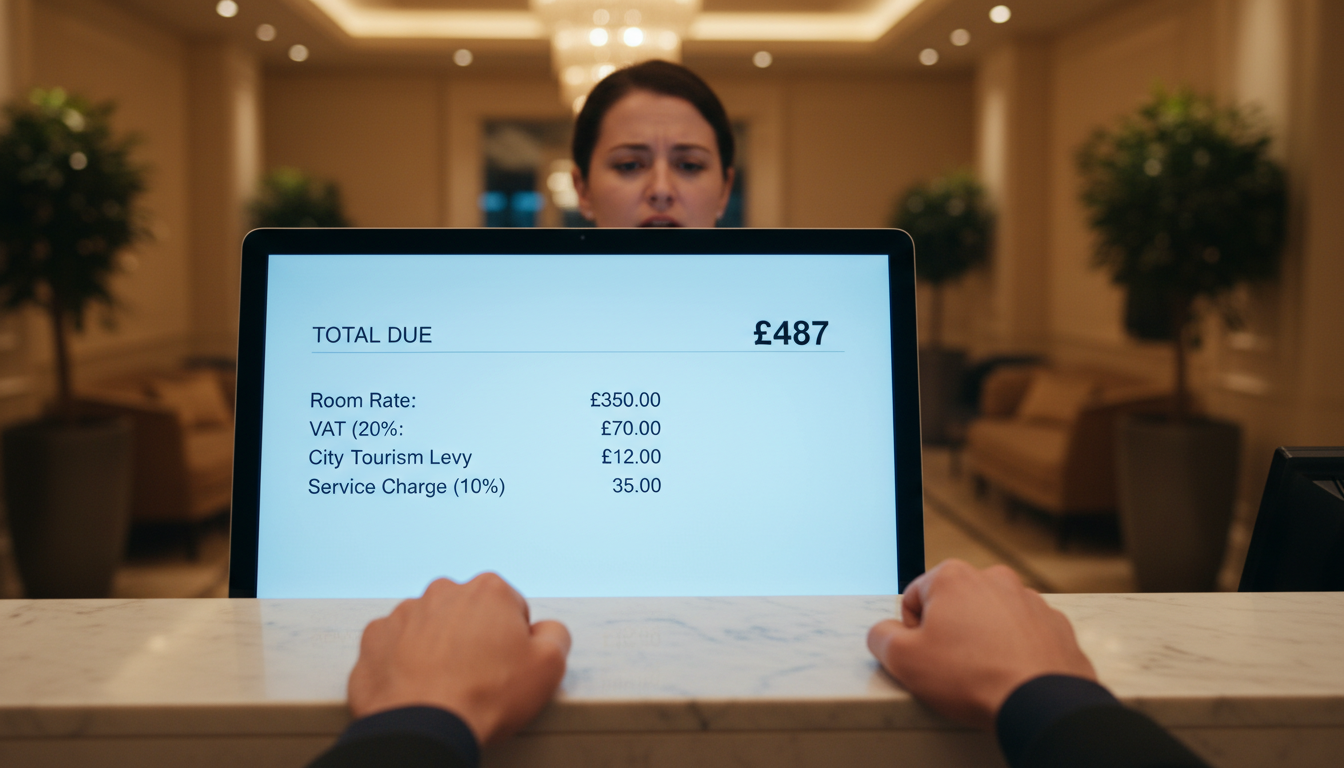
Three years ago, I watched a property manager in downtown Vegas explain to a guest why their $400 room now cost $487 after resort fees, taxes, and parking. The guest's face went through three stages: confusion, anger, then resignation. 'Next time I'm staying in Henderson,' he muttered.

That's exactly what's about to happen across the UK as hospitality chiefs frantically lobby Chancellor Rachel Reeves to abandon proposed visitor levies. They're warning about competitiveness, economic damage, administrative burden — all the usual talking points.

But here's what they're missing: The damage isn't in the levy itself. It's in the psychology.

When Edinburgh introduced its £2-per-night visitor levy, hotels didn't just lose margin — they lost the pricing conversation. Instead of selling the experience, front desk staff became tax collectors. Instead of upselling amenities, they were explaining government fees. Every check-in became a reminder that this city sees you as a cash cow, not a guest.

The real killer? Displacement, not deterrence. Those Vegas guests didn't stop traveling — they drove 20 minutes to Henderson. UK visitors won't stop taking city breaks — they'll book Manchester instead of Edinburgh, Bristol instead of Bath.

I've seen this movie before in Chicago's restaurant scene. When the city kept piling on fees — liquor licenses, sidewalk permits, late-night surcharges — we didn't raise menu prices proportionally. We couldn't. Instead, margins got crushed while we played accountant for the city.

The Chancellor will probably ignore the lobbying anyway. Politicians love tourist taxes because visitors don't vote. But here's the operational reality no one's discussing: Every property will handle this differently. Some will absorb it, some will add it transparently, others will bury it in booking fees. The market will fragment, comparison shopping will become impossible, and guest trust will evaporate.

What hospitality leaders should be demanding isn't the scrapping of visitor levies — it's standardization. Same rate, same collection method, same guest communication across all properties. Make it invisible, not optional.

Operator's Take

Independent operators: Start planning your levy strategy now, not after implementation. Your chain competitors will have corporate policies — you'll be winging it. Budget 2-3 hours of staff training per property, update your booking systems, and script your front desk responses. The properties that handle this smoothly will gain market share from the ones that fumble guest communications.

Read full analysis → ← Show less
Source: Google News: Hotel Industry
Marriott's 36,000-Room China Bet Just Changed the Game for Every Independent Hotel in America

Marriott's 36,000-Room China Bet Just Changed the Game for Every Independent Hotel in America

While you're fighting for ADR increases, Marriott just added more rooms in China than most cities have total. Here's why that math problem is about to become your problem.

The call came at 6 AM from my buddy who runs a boutique property in Portland. "Did you see the Marriott news?"

I hadn't. But I knew from his tone it wasn't good.

Marriott International just announced over 200 new deals in Greater China — 36,000 rooms in what they're calling a "jaw-dropping growth surge." That's more inventory than the entire city of Sacramento. Added in one announcement.

Here's what that phone call taught me, and what every independent operator needs to understand: This isn't just about China.

When the world's largest hotel company adds 36,000 rooms to their system, it doesn't just shift supply and demand in Shanghai. It shifts their entire global strategy. More rooms means more leverage with OTAs. More data points for revenue optimization. More buying power for everything from linens to light bulbs.

But here's the part that should keep you up tonight — it also means more desperation to fill those rooms.

I've seen this movie before. In 2019, when Marriott was still digesting Starwood, they flooded certain markets with promotional rates just to maintain occupancy targets. Properties that had been running 75% occupancy suddenly found themselves competing against Marriott hotels offering corporate rates to leisure travelers.

The math is simple: 36,000 new rooms need to hit occupancy targets. When those China properties inevitably face economic headwinds or travel restrictions, where do you think Marriott's revenue managers will look to make up the shortfall?

Every discounted rate they push through their global distribution system. Every corporate contract they underbid to hit system-wide numbers. Every loyalty program promotion they launch to drive direct bookings — it all lands on your doorstep.

The independent hotel that could compete on service and local knowledge? That advantage just got a lot more expensive to maintain.

Operator's Take

If you're running an independent property, this is your wake-up call to stop competing on rate and start competing on something Marriott's 36,000 new rooms can't replicate: authentic local experience. Because in six months, you won't be able to afford the rate game anyway.

Read full analysis → ← Show less
Source: Google News: Marriott
The Joint Venture IPO That Reveals How Hotel Ownership Is Really Changing

The Joint Venture IPO That Reveals How Hotel Ownership Is Really Changing

Accor and InterGlobe aren't just going public — they're showing us the blueprint for how hotel companies will survive when nobody wants to own real estate anymore.

Three years ago, I watched a Millennium owner spend six months trying to sell a perfectly good 200-room property in a solid market. The issue wasn't the hotel — it was finding anyone who actually wanted to own hotel real estate anymore.

That's the real story behind Accor and InterGlobe weighing an IPO for their joint hospitality venture in India. Sure, the headlines will talk about growth capital and market expansion. But here's what's actually happening: two smart companies are creating a vehicle that lets them scale without the burden of ownership.

This isn't just about India. This is about the future of hotel development everywhere.

Think about it — Accor brings global brand power and operational expertise. InterGlobe brings local market knowledge and development capability. The IPO gives them access to public capital markets. But most importantly, it creates a structure where they can grow their footprint without tying up their balance sheets in real estate.

I've seen this movie before, just on a smaller scale. The most successful operators I know stopped buying properties years ago. They figured out how to grow their management contracts, their revenue streams, and their market presence while letting someone else worry about the mortgage payments and the capital expenditures.

Now imagine that strategy at enterprise scale, with public market funding, in one of the world's fastest-growing hospitality markets.

What makes this particularly clever is the timing. Hotel valuations are still recovering from the pandemic disruption. Construction costs are through the roof. Labor markets are tight everywhere. Traditional hotel ownership models are getting squeezed from every direction.

But management fees? Franchise fees? Those keep flowing regardless of who holds the deed.

The IPO structure lets them tap institutional investors who want exposure to India's growing travel market without the complexity of direct real estate investment. It's hotel growth without hotel ownership — exactly what the market has been asking for.

Here's the part that should make every independent owner nervous: if this works, every major hotel company will copy it. We're looking at the potential industrialization of hotel development, where global brands can scale faster than ever while local operators get squeezed out by better-capitalized competitors.

The winners will be brand companies with strong operational systems and access to capital. The losers will be traditional owners who think real estate ownership is still the path to hospitality profits.

Operator's Take

Independent owners: watch this closely. If Accor's asset-light IPO model works in India, expect every major brand to replicate it in your market. Start thinking about how you compete when brands can scale without balance sheet constraints — because that future just moved a lot closer.

Read full analysis → ← Show less
Source: Google News: Accor Hotels
End of Stories