Wynn Is Spending $5.7 Billion on Three Bets. The Cap Rate Implies They All Work.
Sixteen buy ratings and a $138 average price target suggest Wall Street loves Wynn's luxury expansion into the UAE, Macau, and Las Vegas. The implied cap rate on that combined capital outlay tells a different story about what has to go right.
Wynn Resorts is trading at roughly $10.5 billion in market cap on $562 million in quarterly adjusted property EBITDAR, which annualizes to approximately $2.25 billion. The stock carries a "Moderate Buy" consensus from nineteen ratings firms. Sixteen say buy. Two say hold. None say sell. The average target is $138.75, roughly 35-40% above recent trading levels. That spread between current price and target price is the market's way of saying "the growth story hasn't been priced in yet." The question is whether it should be.
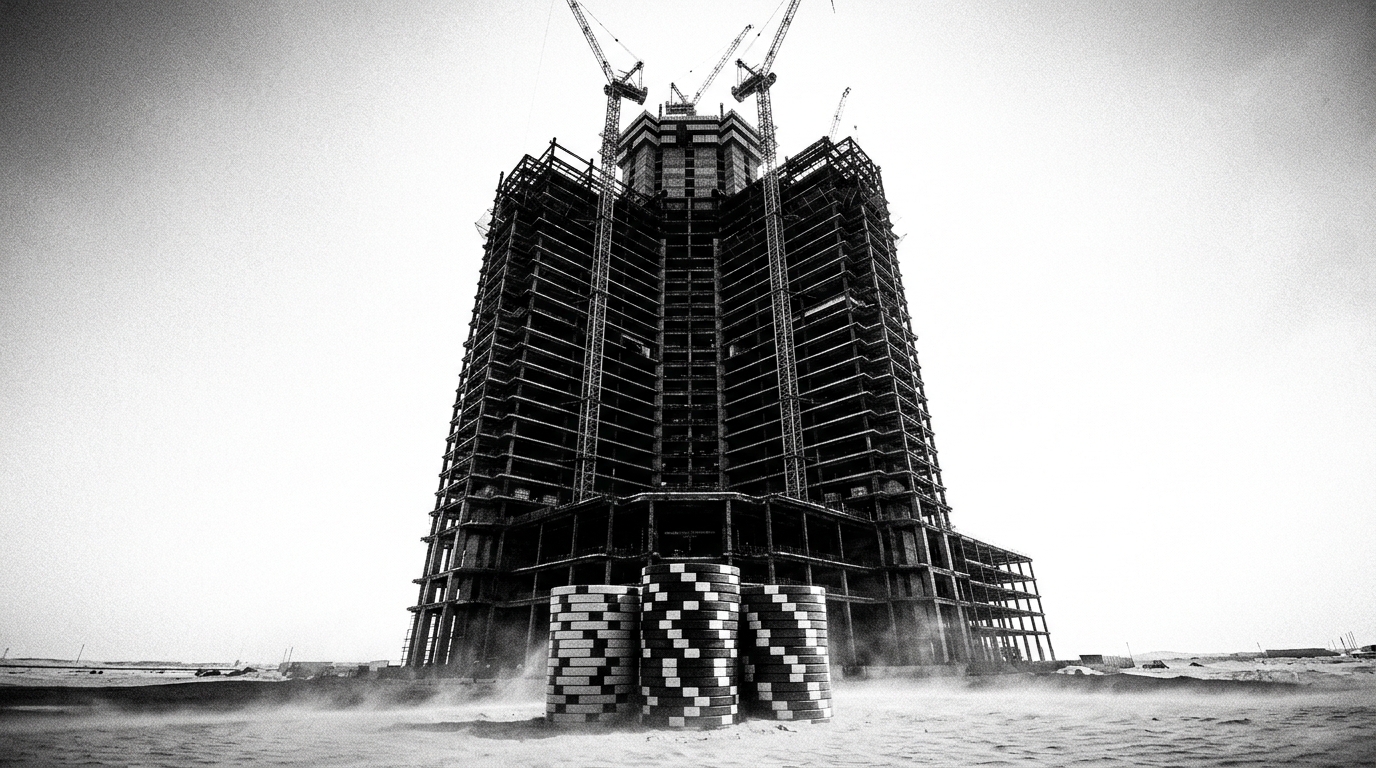
Let's decompose the capital commitments. Wynn Al Marjan Island in the UAE: $3.9 billion. The Enclave at Wynn Palace in Macau: $900-950 million. Encore Tower renovation in Las Vegas: $1.1 billion. That's $5.9 billion in project capital against a company generating roughly $2.25 billion in annual property EBITDAR across its existing portfolio. The UAE project alone represents 1.7x the company's current annual property-level cash flow. And management is guiding $750-850 million in domestic project capex (including UAE equity contributions) plus $400-450 million in Macau project capex for 2026 alone. That's over $1.2 billion going out the door this year before debt service.
The analyst consensus is built on a specific assumption: that all three projects generate returns that justify their capital. The UAE is the riskiest variable. First licensed gaming footprint in the region. No operating history to benchmark against. A "modest delay" already flagged due to regional conflict. The $3.9 billion price tag implies Wynn needs substantial EBITDAR contribution from a market with zero comparable data points. I've seen this structure before in my audit years... a company funding growth capex at a pace that requires the new assets to perform at or above existing asset margins from year one. When that works, the equity story is extraordinary. When one project underperforms, the leverage math gets uncomfortable fast.
Q1 2026 was genuinely strong. $1.86 billion in operating revenue, up 9.2% year-over-year. Las Vegas hit its best March on record. Macau volumes are recovering. Diluted EPS of $1.04 versus $0.69 a year ago. The existing portfolio is performing. But "the existing portfolio is performing" and "the growth capex will generate adequate returns" are two separate claims, and the analyst consensus is treating them as one. Barclays maintained Overweight but lowered its target from $139 to $134. That's a tell. When a bull cuts the target while keeping the rating, they're adjusting for risk they don't want to fully articulate.
The owner-equivalent question here is straightforward: at $10.5 billion enterprise value and $2.25 billion in property EBITDAR, Wynn trades at roughly 4.7x property cash flow on existing assets. Layer in $5.9 billion in development capital with uncertain returns and the implied forward multiple requires each new project to generate EBITDAR at margins comparable to Las Vegas (35.1% in Q1). That's the bet. Sixteen analysts think it pays off. The two holds are the ones worth reading carefully.
Look... this isn't a story about your property. But it is a story about capital allocation discipline, and that applies whether you're a $10 billion gaming company or a 150-key select-service. Wynn is committing $5.9 billion across three projects simultaneously because the existing portfolio is generating enough cash to fund it. If you're an owner or asset manager evaluating your own capital plan right now, run the same test. What's your existing asset generating? What's the total capital commitment you're contemplating? And what happens to your debt coverage if the new spend takes 18 months longer to generate returns than your pro forma assumes? Because "modest delay" is the most expensive phrase in development. Every project I've ever audited that went sideways started with a modest delay and ended with a capital call. Stress-test your own commitments against a 6-month delay scenario this quarter. Not because Wynn's projects will fail. Because yours can't afford to.