IHG's 'Biggest Pipeline Ever' Is a Bet That Signs Outrun Standards
IHG posted record signings and a 324K-room pipeline. Elena Voss reads the franchise math beneath the celebration — and finds a familiar gap between sold and delivered.
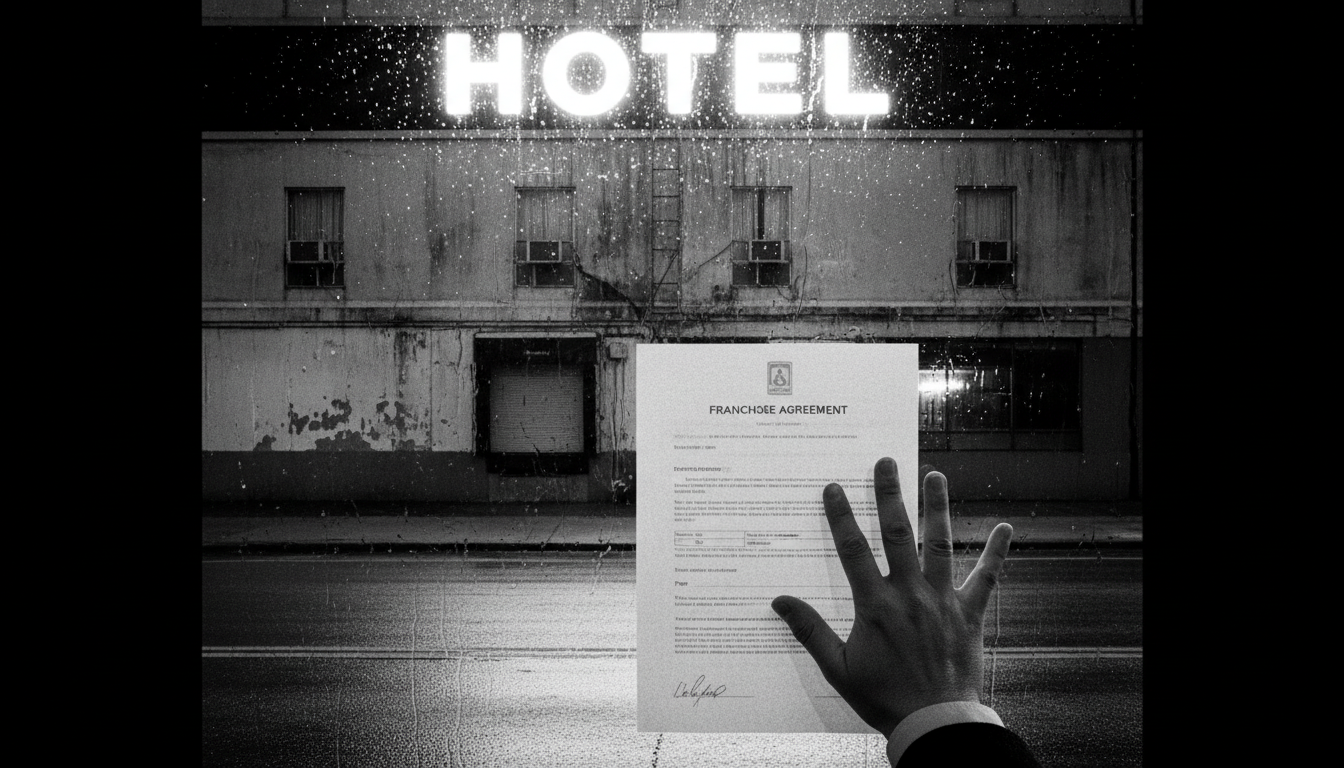
Every major hotel company holds an earnings call. Most of them sound the same. Record pipeline. Strong signings. Confident outlook. The analysts ask about RevPAR and fee revenue and capital allocation, and the executives answer with numbers designed to keep the stock price moving in the right direction.
IHG's Q4 2025 call followed the script. Record gross system size growth. A pipeline of roughly 324,000 rooms — the largest in the company's history. Net system size growth of 5.4% for the year after adjusting for the removal of what they called 'certain Cerberus portfolio hotels' from the system. CEO Elie Maalouf called it a year of 'significant strategic progress.'
Let me decode what's actually happening here, because the press release version and the property-level version are two different stories.
First, the removals. IHG acknowledged taking a system-size hit by exiting hotels from the Cerberus portfolio that didn't meet brand standards. This is actually the right call — and it's one most brand companies avoid making because it shrinks the number analysts care about. Credit where it's due. But it also tells you something about what was in the system to begin with. Those hotels were flagged. They were operating under IHG brands, collecting loyalty points for IHG members, and presumably not delivering the experience the brand promised. How long were they in the system before the decision was made to remove them? And how many guests stayed at those properties believing the flag on the building meant something specific?
That's the question brands never want to answer: what is the cost of a bad hotel carrying your name?
Second, the pipeline. 324,000 rooms is an enormous number. IHG reported signings of roughly 106,000 rooms in 2025 alone. The growth is concentrated in what they called their 'Essentials' segment — think Holiday Inn Express, Avid, Garner — and in conversion brands like Voco and their collections. Maalouf noted that about half of signings were conversions rather than new builds.
This is where my years brand-side taught me to read between the lines. Conversions are faster to sign, faster to open, and faster to report as system growth. They're also harder to integrate. When you convert an existing hotel to your brand, you're taking a building with an existing physical plant, an existing team, an existing culture, and an existing guest base — and you're promising the market that it now meets your standard. The PIP might address the lobby and the signage. Does it address the housekeeping culture? The front desk training? The maintenance backlog behind the walls?
When a brand company reports that half its signings are conversions, I don't hear 'efficiency.' I hear velocity. And velocity without integration discipline is how you end up removing hotels from the system three years later.
Third — and this is the number I keep coming back to — IHG reported fee revenue growth of 10% in constant currency for the full year. Fee revenue is the brand's actual product. It comes from franchise fees, loyalty assessments, technology fees, and the various charges that flow from every room night sold under the flag. When fee revenue grows faster than system size, it means the brand is extracting more per room. IHG's RevPAR growth was reported at around 3% globally. System size grew 5.4%. Fee revenue grew 10%.
Do the math on that gap. Where is the incremental fee revenue coming from if RevPAR growth is modest and system size growth accounts for part of it? The answer is usually in the fee structure itself — loyalty program assessments that have expanded, technology mandates that carry charges, procurement programs with brand-side economics. I'm not saying IHG is unusual here. Every major brand company has been expanding the effective fee load per room for the past decade. But when I'm advising an owner looking at an IHG franchise agreement today, I'm not just modeling the royalty rate. I'm modeling the total cost of brand affiliation — and that total has been growing faster than the revenue the brand delivers to offset it.
Fourth, the new brand activity. IHG continues to lean into its luxury and lifestyle tiers — Six Senses, Vignette Collection, Kimpton — while simultaneously pushing Essentials growth. The strategic logic is sound: capture both ends of the market, drive loyalty enrollment across price points, create a system where an IHG One Rewards member can move from a Holiday Inn Express on a Tuesday business trip to a Six Senses for an anniversary weekend.
But here's what the strategy deck doesn't address: can the same operational infrastructure that manages Holiday Inn Express quality standards also manage Six Senses quality standards? These are fundamentally different service models, different labor requirements, different guest expectations, different failure modes. When I was in franchise development, the hardest thing wasn't selling the flag. It was ensuring the field team could actually support the property after the sale. The wider the brand portfolio stretches, the thinner that support gets — unless headcount scales with it. And brand companies are not scaling field support headcount. They're scaling technology platforms and calling it support.
The IHG earnings call was a good quarter reported well. Maalouf is a sharp operator running a disciplined company. But the story underneath the story is the same one playing out across every major brand company: system growth is the metric Wall Street rewards, fee revenue is the product the brand actually sells, and the gap between what the brand promises and what the property delivers is the owner's problem to solve.
I have a filing cabinet full of FDDs that tell that story year after year. The projections from five years ago are the performance data of today. And the variance is where the truth lives.
Elena's right — and she's being diplomatic about it. I've been on the receiving end of this exact dynamic. You sign the franchise agreement because the brand shows you a projection deck with beautiful RevPAR premiums and loyalty contribution numbers. Then you open, and the loyalty contribution is 60% of what they projected, but the fees are 100% of what they quoted. Every single time. Here's what I want every owner considering an IHG flag — or any flag — to hear: the pipeline number is not your friend. A record pipeline means record competition inside the same brand family. If IHG is adding 106,000 rooms a year, some of those rooms are going into YOUR market, flying YOUR flag, splitting YOUR demand. That's not system growth for you. That's dilution. And the conversion pace Elena flagged? I've lived through brand conversions as a GM. The sign goes up in a week. The culture change takes a year — if you're good at it. If nobody's investing in that year of integration, what you've got is an old hotel with a new sign and a guest who booked expecting one thing and got another. That guest doesn't blame the hotel. They blame the brand. And then they blame every hotel in the brand. If you're an owner with an IHG agreement renewing in the next 18 months, pull your actual loyalty contribution data, pull your total fee load as a percentage of room revenue, and compare both to what was in your original pro forma. If there's a gap — and there will be — that's your leverage in the renewal conversation. Don't wait for the franchise sales team to come to you with a new deck full of projections. Come to them with actuals. That's a very different meeting.