F1 Fills Your Hotel. Then It Leaves. Then What?
Formula 1 is driving massive hotel demand worldwide. But the GMs living through race week know a truth the headlines won't touch.
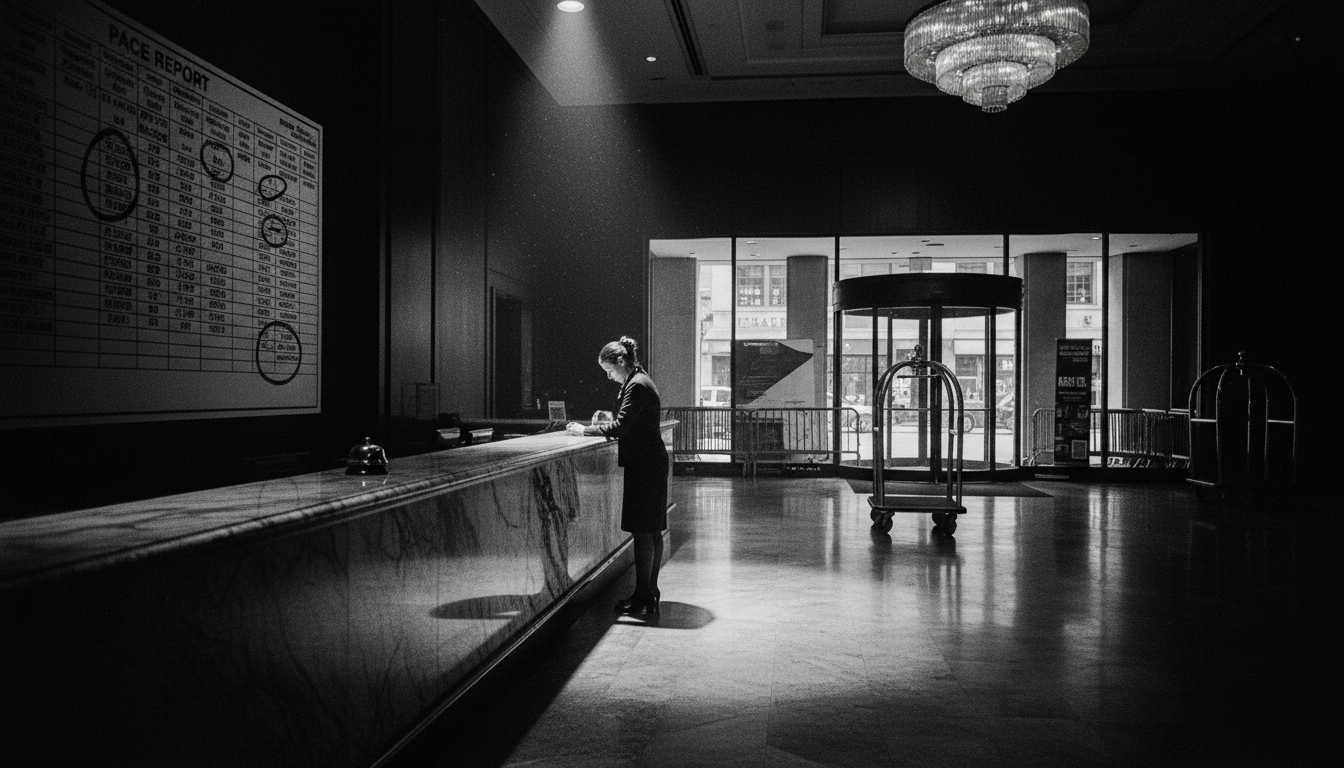
I was standing in a hotel lobby in Las Vegas in November 2023 — not my property, a friend's — watching the front desk process a line that snaked past the bell stand and into the parking circle. Formula 1 had come to town. Every room sold. Every rate maxed. Every revenue manager in the city walking around like they'd invented gravity.
Three weeks later, that same friend called me. December was a crater. His team was exhausted, two housekeepers quit during race week and never came back, and the guests who'd paid $800 a night left reviews that read like crime reports. Noise. Traffic. Construction barriers blocking the entrance. No one warned them. No one managed expectations. The hotel sold every room and still lost.
Here's what nobody's telling you about Formula 1's impact on hotel demand: the demand is real. CoStar's right — races are filling hotels across the globe, and the numbers during event windows are legitimately impressive. I'm not disputing that. But a three-day demand spike is not a strategy. It's a weather event.
I've been in this room before. At the Golden Gate, we had 122 rooms on Fremont Street. Every major event — UFC, NFR, New Year's Eve — we'd sell out, rates through the roof. And every time, I'd watch newer GMs at neighboring properties high-five each other over the RevPAR number while ignoring the operational carnage underneath it. Burned-out staff. Deferred maintenance that got worse because "we'll fix it after the event." Compression pricing that trained your best repeat guests to stay home.
The F1 demand story has three problems that the headlines skip right past.
First — your team. Race week is a stress test, not a celebration. Housekeeping turns increase. Check-in volume spikes with high-expectation guests who are spending more than they've ever spent on a hotel room. Your front desk is fielding complaints about road closures they didn't create and can't fix. If you haven't cross-trained, pre-staged, and over-communicated with your staff weeks before the cars show up, you're going to burn the people who keep your building running the other 362 days a year. I lost two housekeepers at a property during a major event once — not because of the workload, but because nobody told them what was coming. That's a leadership failure, not a staffing problem.
Second — the hangover. Every compression event creates a decompression trough. The week after F1 leaves, your city has empty restaurants, exhausted hospitality workers, and a rate card that looks absurd compared to what you were charging six days ago. Are you planning for that trough? Are you adjusting staffing for it? Or are you just going to stare at the STR report from race week and pretend that's your new baseline?
Third — and this is the one that keeps me up — who are these guests, and are they coming back? An F1 crowd is not your core customer. They're event tourists. They chose your city because of the race, not because of your hotel. They're not joining your loyalty program. They're not coming back in March. You got a transaction, not a relationship. And if you degraded the experience for your actual repeat guests — the corporate traveler who couldn't get her usual room, the couple who comes every anniversary and got hit with a rate they didn't recognize — you traded a long-term asset for a short-term spike.
Does that mean you shouldn't maximize the F1 window? Of course not. Take the money. Take every dollar of it. But take it with your eyes open.
When we ran massive events on Fremont Street — tens of thousands of people, Kid Rock on stage at the Downtown Las Vegas Events Center, absolute chaos — I never once let my team treat it as a windfall. It was a mission. We pre-briefed every department. We added staff before we needed them, not after. We communicated with guests before arrival about what to expect — the noise, the crowds, the street closures. And the Monday after? We were already focused on the next thirty days, not celebrating the last three.
The cities chasing F1 — and there are a lot of them — need to hear this from someone who's operated through the chaos, not just counted the room nights from a desk somewhere. The demand is real. The RevPAR spike is real. But demand without operational readiness isn't opportunity. It's exposure.
And exposure, in this business, has a cost that never shows up in the CoStar data.
If you're a GM in an F1 market — or any city hosting a major compression event — stop looking at the rate ceiling and start looking at your team. This week, before the next event cycle, do three things. One: build a pre-event communication template for guests. Tell them what's coming — road closures, noise, timing. Set the expectation before they set it for you on TripAdvisor. Two: sit down with your department heads and build a post-event recovery plan. Staffing adjustments, rate transitions, maintenance catch-up. The trough is coming whether you plan for it or not. Three: identify your top twenty repeat guests and make sure they're protected during compression. Hold their rates. Hold their rooms. Call them personally. Because the F1 crowd is gone in 72 hours. Your regulars are your revenue for the next decade. The headline says F1 drives hotel demand. It does. But nobody ever went broke from low demand. They went broke from bad execution during high demand. I've seen that movie. You don't want to be in it.