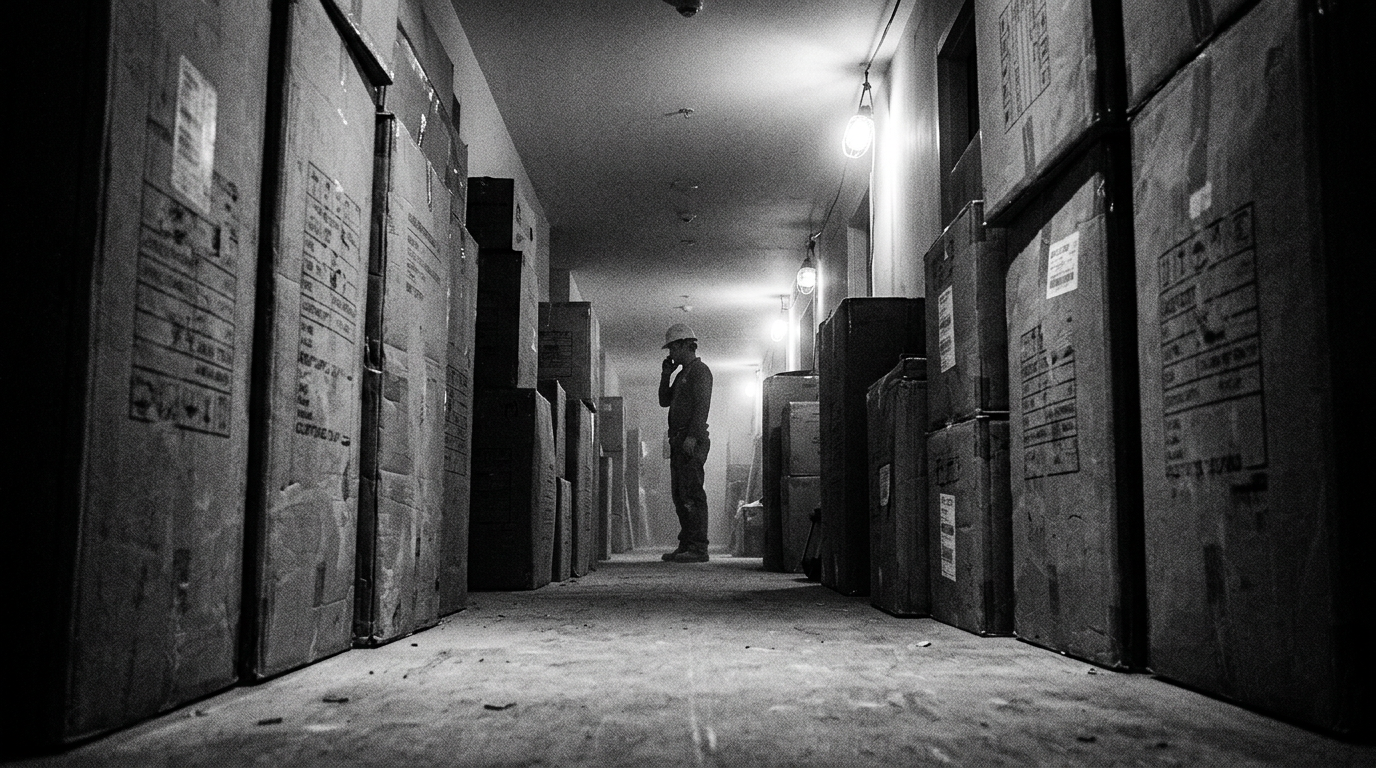
Last night's speech was 108 minutes of economic cheerleading that never once addressed the industry bleeding workers, losing international visitors, and staring down tariff-driven cost increases. Here's what every GM, owner, and asset manager needs to understand about what wasn't said.
I'm going to skip the political theater about last night's 108 minute long speech, and talk about what actually matters for our industry for the rest of 2026.
Start with tariffs, because this is the one hitting your P&L right now. The administration's trade war has been a moving target all year... baseline tariffs, reciprocal tariffs, legal challenges, court rulings, new rounds, temporary pauses that aren't temporary. If you've been trying to underwrite a renovation or a PIP in this environment, you already know the pain. I talked to a GM last month who was pricing out a 140-room soft goods refresh and got requoted 8% higher in the span of three weeks. Case goods. Lighting fixtures. Bathroom fixtures. Soft goods. Anything that crosses a border is a moving target, and the direction is only up.
Here's what nobody's talking about on the capital side: the PIP timing problem. If your property improvement plan is due in 2026 or 2027, you're facing a decision that could swing millions of dollars. Hard costs are up 10-15% on imported FF&E and they're not coming back down while this tariff regime is in place. So do you accelerate the project and eat the higher cost now before it gets worse? Do you negotiate a deferral with the brand? Or do you let the flag go entirely?
Here's the thing... brands can't afford to lose flags in a softening market. They know it. You should know it too. That's leverage owners have RIGHT NOW that they might not have in 12 months. If you've got a PIP conversation coming, have it this quarter. Not next quarter. This quarter. Come with updated cost estimates that show the tariff impact and make the brand tell you they'd rather lose the flag than grant a 12-month extension. They won't say that. Because they can't afford to.
Now the labor piece. This is the one that keeps me up at night, and it's the one the story should have been about from the beginning.
Nearly a third of our industry's workforce is immigrant labor. A third. That's not a political talking point... it's a staffing reality that every GM in America lives with every day. And the current administration is systematically dismantling the pipeline. Mass deportations. Visa processing delays and restrictions affecting dozens of countries. Federal workforce cuts that have thrown immigration services into chaos. The exact numbers are hard to pin down because the situation changes weekly, but the direction is unmistakable and the impact on hotel operations is already here.
But here's where I get frustrated with the industry conversation. Everyone's talking about the PROBLEM. Nobody's talking about the MATH.
Let's do the math.
You're running a 200-key select-service in a secondary market. You're already short on housekeeping three days a week. Your current average wage for room attendants is $16 an hour. The labor pool just got smaller... not theoretically, not eventually, RIGHT NOW. To attract from a shrinking pool, you need to move that number. Maybe $19. Maybe $21 in markets where distribution centers and fast food are already paying $18.
At $16 an hour, your housekeeping labor cost per occupied room (assuming 30-minute credits and a 72% occupancy) runs roughly $14-16 depending on your benefit load. Move that wage to $20 and you're looking at $17-20 per occupied room. That's $3-4 more per room, every room, every night. On a 200-key property at 72% occupancy, that's roughly $150K-$210K annually... straight off your GOP. And that's just housekeeping. Your kitchen, your laundry, your public area cleaning... same pressure, same math.
Your management company is going to tell ownership that service scores require maintaining current staffing models. Ownership is going to look at a GOP that's getting eaten alive by wage inflation and ask why they're paying a management fee for declining returns. And you, the GM, are going to be standing in the middle of that conversation holding the bag. I've been in that exact meeting more times than I can count. It never gets easier.
So what do you actually DO?
First, you get honest about minimum staffing. Not the staffing guide the brand sent you... the actual minimum number of bodies you need to keep the building running without a health code violation or a safety incident. That's your floor. Everything above that floor is a decision about service level versus cost, and you need to present it to ownership exactly that way. Not "we need 12 housekeepers." Instead: "at 8 housekeepers we can clean every stayover room every other day and every checkout daily. At 10 we can do daily stayovers on weekends. At 12 we're back to full service. Here's the cost difference and here's the projected review score impact." Give them the menu. Let them choose.
Second, look at where technology actually helps versus where it's a vendor fantasy. Automated check-in and checkout that reduces front desk staffing needs by one FTE per shift? Real savings, and the technology works now. Housekeeping optimization software that routes room attendants efficiently and eliminates deadhead walks between assignments? Proven to save 15-20 minutes per attendant per shift. That's meaningful. A robot that delivers towels to the third floor? That's a press release, not a labor solution.
Third, cross-training. If you're running select-service and you're not already cross-training front desk agents to flip rooms during low-arrival periods, you're behind. It's not glamorous. The front desk team won't love it. But a front desk agent who can strip and make a bed in a pinch is worth more than a front desk agent who can't. Build it into the job description now, before you're desperate.
Fourth... and this is the one nobody wants to hear... you might need to raise rates to cover the labor cost increase. I know. Revenue management just felt a chill. But if your comp set is facing the same labor pressure (and they are), the whole market is going to need to move. The properties that move first and communicate the value will outperform the ones that try to hold rate and cut service to make the margin work. Guests will pay $10 more per night for a clean room. They will not forgive a dirty one at any price.
If you're in a union market, everything I just said gets harder. UNITE HERE knows exactly how much leverage a labor shortage gives them at the negotiating table. If you've got a contract coming up in 2026 or 2027, start preparing now. Not when you're 90 days out. Now. Because the union's opening position is going to be aggressive, and they'll have the labor market data to back it up.
Now let's talk about the demand side, because the squeeze isn't just about costs.
Business travel is the wild card. When corporate America gets nervous, the first thing they cut is T&E. Every single time. I've managed through four recessions and the pattern never changes... group bookings soften first, then corporate transient follows about 90 days later, and by the time it shows up in your STR report it's already been eating your margins for a quarter. The tariff uncertainty alone is enough to make CFOs tighten travel budgets. Your convention hotels in gateway cities should be watching forward group pace like a hawk right now.
International leisure is the slow-motion disaster. The rest of the world is having a tourism boom. We're not. The visa restrictions, the enforcement rhetoric, the chaos at ports of entry... all of it is sending a message to international travelers, and the message is "go somewhere else." The U.S. Travel Association has been sounding this alarm for months. If you're running a property in a market that depends on international visitors... and that's not just New York and Miami, it's Orlando, Las Vegas, San Francisco, and increasingly Nashville and Austin... you need to be actively pivoting your marketing spend toward domestic leisure. Right now. Not next quarter.
The tax provisions announced last night... no tax on tips was already signed into law, and the overtime and Social Security proposals would put a few more dollars in domestic travelers' pockets if they pass. But "a few more dollars" doesn't replace international visitors who aren't showing up at all.
Here's what you do this week. Not this month. This week.
One. If you have any capital project or PIP in the pipeline, call your procurement team tomorrow and get updated pricing with a 10-15% tariff buffer built in. Do not submit a budget to ownership without it. And if your PIP is due in the next 18 months, pick up the phone and start the deferral conversation with your brand rep now, while you have leverage.
Two. Build your minimum staffing model. Not the one that makes the brand happy... the one that keeps the building running. Then build two more versions above it at different service levels with the cost delta for each. Present all three to ownership with projected review score impacts. Give them the decision, not the problem.
Three. Run the wage math. Figure out what it actually costs you per occupied room if you have to raise housekeeping wages 20-25% to fill positions from a shrinking labor pool. If you don't know that number, you can't have an honest conversation with your owner about what's coming.
Four. If international visitors represent more than 15% of your room nights, shift marketing dollars to domestic drive markets immediately. The international volume isn't coming back this year.
Five. Pull your forward group pace for the next six months and compare it to this time last year. If it's soft, start the conversation with your revenue manager about transient rate strategy before you're chasing occupancy in a falling market.
Six. If you're in a union property with a contract expiring in the next 18 months, get your labor attorney on the phone this week. Not next month. This week. The negotiating environment just shifted dramatically in the union's favor and you need a strategy before you're reacting to their opening proposal.
Your owners are going to ask what the State of the Union means for the hotel. The answer is: nothing good was announced, and several things got worse. The labor pipeline is shrinking, renovation costs are rising, international demand is falling, and nobody in Washington mentioned any of it. Be the one who tells your owner first. And be the one with a plan, not just a problem.