Today · Apr 5, 2026
Your Hotel Is Bleeding Money Between the Lines. Here's Where to Look.

Your Hotel Is Bleeding Money Between the Lines. Here's Where to Look.

Full-year 2025 GOP margins improved 1.1 points thanks to labor discipline, but Q4 told a different story: margins dropped 3.3 points when demand softened and costs didn't flex fast enough. The gap between those two numbers is where operational friction lives, and most GMs aren't tracking it.

Let me be direct. The Q4 2025 profitability data from HotelData.com should scare you more than it comforts you. Yes, full-year GOP margin came in at 38.3%, up 1.1 points over 2024. That's the number your management company will put in the investor deck. But Q4 margins fell to 36%, down 3.3 points, because when demand softened and ADR dropped 0.9% quarter over quarter, costs didn't come down with it. RevPAR fell 9.6% in Q4 to $111.87. That's not a blip. That's a quarter where the business got smaller and the cost structure stayed the same size.

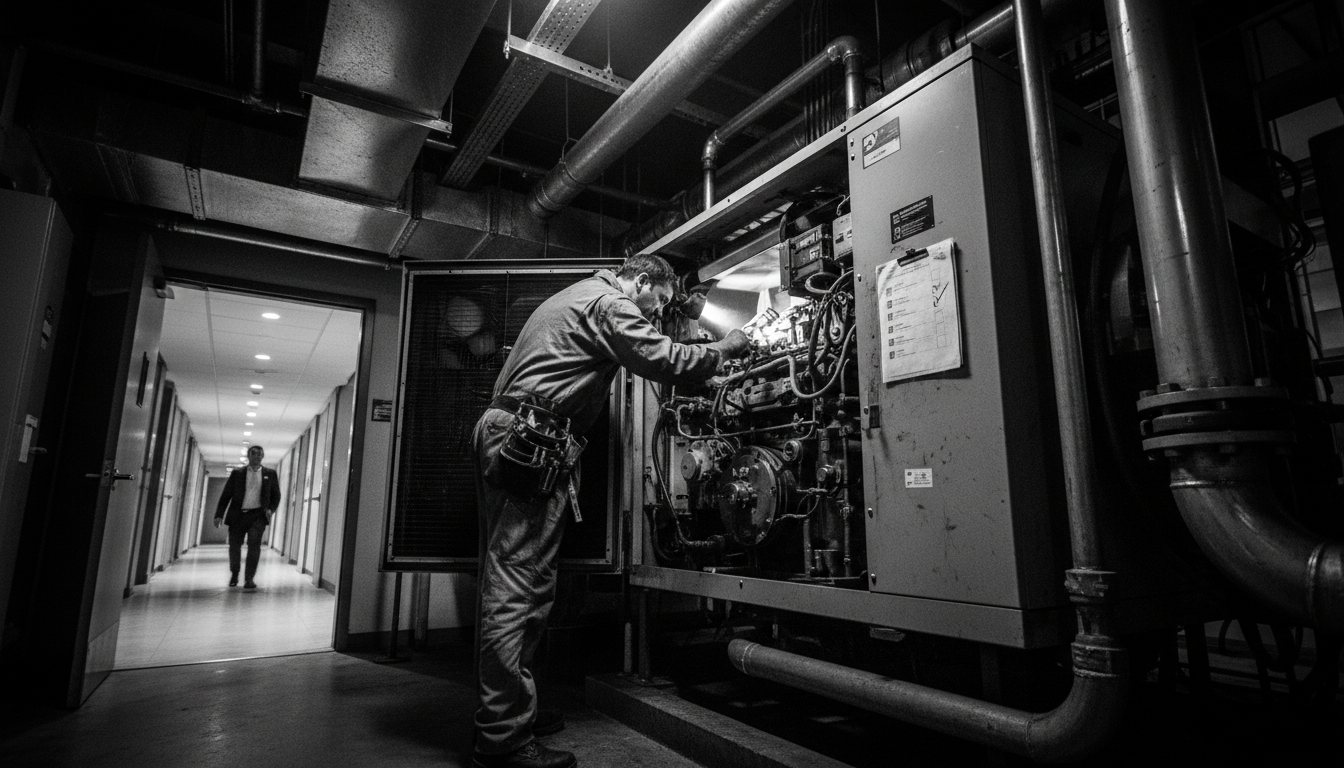
This is what operational friction actually looks like. It's not a concept from a consulting deck. It's the 14 rooms sitting out of order because your engineer is covering two buildings. It's the accounts receivable aging past 60 days because nobody's chasing the corporate billing. It's the night audit that should take 45 minutes taking two hours because the PMS workaround from 2023 never got fixed. It's a hundred small failures that don't show up on any single report but collectively eat 200 to 400 basis points of margin over a quarter. I've seen this movie before. Every time the cycle softens, we discover that the efficiency gains from the good years were partly an illusion created by revenue growth papering over sloppy operations.

Here's what nobody's telling you about the "labor discipline" that drove those full-year margins up. In a lot of properties, that discipline was just attrition nobody replaced. Positions that went unfilled. Cross-training that was really just dumping extra work on whoever stayed. That works when you're running 78% occupancy. It breaks when occupancy drops and the remaining staff burns out, turnover spikes, and suddenly you're paying overtime plus agency rates to cover the gaps. Payroll is running 53% of total expenses in the Americas right now. You can't cut your way to profitability on 53%. You have to manage it with surgical precision, and that means knowing exactly which positions generate revenue protection and which ones you can flex without breaking the guest experience.

The data from HotStats tells the story in one ugly number: Americas flow-through is sitting at 20%. That means for every incremental dollar of revenue, only 20 cents makes it to the bottom line. That is terrible. If you're a GM at a 150-key select-service property pulling $12 million in revenue, that flow-through means a $500,000 revenue swing only moves your GOP by $100,000. At that rate, you'd better be managing every line item like it's the last dollar in the building. Utility costs are up 4.8%. Insurance, if you're in a coastal or fire-prone market, probably up double digits. Your owners are going to ask why margins are compressing when you told them costs were under control. You need a better answer than "the market softened."

So what do you actually do? Start with your night audit. Not the financial close. The operational intelligence sitting in that report that nobody reads properly. How many rooms went out of order this week versus last month's average? What's your actual length of stay doing, not what you forecasted? How old is your AR? Then look at your maintenance backlog. Not the capital stuff you can't control. The $200 fixes that prevent $2,000 problems. A property I ran during the last recession had a director of engineering who kept a whiteboard of every deferred repair ranked by guest-impact probability. We spent $11,000 in one month clearing the list. Guest complaints dropped 30% in the following quarter and our TripAdvisor score moved from 4.1 to 4.3. That's not magic. That's just paying attention to where the friction is hiding. Stop waiting for the revenue recovery. Protect the margin you have right now, today, with the tools already sitting in your PMS and your maintenance log.

Operator's Take

If you're a GM at a branded select-service or full-service property, pull your Q4 flow-through number this week. If it's below 30%, you have a friction problem, not a revenue problem. Go line by line through your out-of-order rooms, your AR aging, and your maintenance backlog. Then sit down with your chief engineer and your front office manager and ask one question: "What's broken that we've stopped noticing?" Fix the $200 problems before they become $2,000 problems. Your owners don't need a PowerPoint about market conditions. They need to see you managing the controllables like every dollar matters. Because it does.

Read full analysis → ← Show less
Source: Google News: Hotel Industry
Caesars' Tech Rebuild Won't Save Your Guest Experience — But Here's What Will

Caesars' Tech Rebuild Won't Save Your Guest Experience — But Here's What Will

The casino giant is pouring money into technology infrastructure. Before you follow their playbook, understand why casino tech priorities are exactly backwards for hoteliers.

Caesars Entertainment is reportedly making a major push to modernize its tech stack — think property management systems, loyalty platforms, mobile integration, the whole nine yards. And I'm watching hotel operators look at this and think "we should be doing that too."

Here's the thing nobody's telling you: Casino operators and hotel operators have fundamentally different tech priorities, and copying their playbook will burn your capital budget for nothing.

Caesars makes 70-80% of its revenue from gaming. Their hotel rooms are loss leaders designed to keep you on property feeding slot machines. When they invest in tech, they're building systems to track player behavior, optimize comp algorithms, and keep high-rollers gambling longer. Their PMS integration priorities are about knowing which guest just dropped $50K at the tables so they can upgrade them instantly. That's not your business model.

If you're running a 200-key select-service property or even a 400-key full-service hotel, your tech priority isn't fancy integration — it's basic operational efficiency. I've seen too many GMs get sold on "enterprise-level platforms" that require three vendor integrations and a dedicated IT person you don't have on staff. Meanwhile, your front desk is still manually blocking rooms for maintenance and your housekeeping staff is using paper checklists.

The real lesson from Caesars isn't "spend more on tech." It's "spend on tech that directly supports your revenue model." For them, that's gaming analytics. For you, it's reservation conversion, labor scheduling, and revenue management. Different games entirely.

What actually moves the needle? A PMS that your team can operate without calling support. A booking engine that loads in under three seconds on mobile. A housekeeping app that tracks room status in real-time and integrates with your PMS on day one, not after six months of troubleshooting. Boring stuff. Stuff that works.

Operator's Take

Don't let brand case studies from casino operators — or anyone else with a different business model — dictate your tech roadmap. Ask one question about every system: "Will this directly increase revenue or cut labor hours within 90 days?" If the answer is no, you're buying someone else's solution to someone else's problem. Spend on operations, not on integration projects.

Read full analysis → ← Show less
Source: Google News: Caesars Entertainment
Airlines Squeeze Fleet Harder — Hotels Should Copy This Playbook

Airlines Squeeze Fleet Harder — Hotels Should Copy This Playbook

Flyadeal's CEO says they're maximizing aircraft utilization despite delivery delays and parts shortages. Smart hotel operators are already doing the same with their assets.

Here's the thing nobody's telling you: the airline industry just gave us the blueprint for surviving supply chain chaos and expansion delays. Flyadeal's approach — squeeze more productivity from existing assets instead of waiting for new capacity — is exactly what hotels need to do right now.

I've seen this movie before. When brands promise you renovated rooms by Q3 but contractors are six months behind, you don't just sit there bleeding revenue. You maximize what's working. If 180 of your 220 rooms are guest-ready, you push occupancy on those 180 to 95% instead of the usual 82%. You block-sell weekends at premium rates. You convert dead conference space into revenue-generating co-working areas.

The airline's focus on engine reliability and spare parts inventory translates directly to hotel operations. Your HVAC preventive maintenance schedule isn't optional anymore — it's revenue protection. That backup generator you've been putting off? Equipment downtime costs you more than the capex ever will. I'm telling GMs to audit their critical systems monthly, not quarterly.

But here's where most operators miss the point: maximizing existing assets isn't about working harder, it's about working smarter. Flyadeal isn't just flying their planes more hours — they're optimizing turnaround times, route efficiency, crew scheduling. Hotels need the same systematic approach to room turns, staffing patterns, and revenue optimization.

Operator's Take

If you're running any property over 100 keys, audit your asset utilization this month. Push your best room categories to 90%+ occupancy before you discount lower inventory. Fix your maintenance backlog now — equipment failures will cost you 10x more in lost revenue than preventive repairs cost today.

Read full analysis → ← Show less
Source: Skift
End of Stories