Today · Apr 7, 2026
529 Keys, Four Restaurants, and a Celebrity Chef... What Could Go Wrong at IHG's New Midtown Kimpton?

529 Keys, Four Restaurants, and a Celebrity Chef... What Could Go Wrong at IHG's New Midtown Kimpton?

IHG just opened its biggest Kimpton in New York with a $450 starting rate, four F&B concepts, and a developer running hotel ops for the first time. The tech and operational complexity underneath this shiny launch is where the real story lives.

Available Analysis

So IHG opened the Kimpton Era Midtown New York on March 11. 529 rooms. 33 stories. Four distinct food and beverage concepts. Digital self-service check-in. Starting rate of $450 a night. And here's the detail that made me sit up: Extell Development Company, the developer, is managing this property directly through their own hospitality arm. First time. Ever. A developer who has never managed a hotel is now running a 529-key lifestyle property in Midtown Manhattan with four restaurants, a rooftop bar opening next month, and presumably a tech stack that has to tie all of this together without falling over during a Saturday night dinner rush.

Let's talk about what this actually does to the technology layer. Four F&B concepts means four POS systems (or one system with four configurations, which is somehow worse), all of which need to talk to the PMS for room charging, loyalty integration, and reporting. You've got Rocco DiSpirito's brasserie, an all-day cafe, a Latin steakhouse opening later this month, and a rooftop izakaya coming in April. Each of those has different menus, different service models, different staffing patterns, different inventory systems. The digital self-service check-in sounds clean in a press release... but at 529 keys with a lifestyle positioning that promises "curated" experiences and complimentary social hours, you're asking a kiosk to do the job that the brand's entire identity is built on: making people feel something personal when they walk in. I consulted with a hotel group last year that rolled out self-service check-in across six properties. Within 90 days, three of them had quietly put a human back at the desk because guests at the price point expected a person, not a screen. The technology worked fine. The brand promise didn't survive contact with the technology.

The Dale Test question here is brutal. It's 2 AM. The rooftop POS loses connectivity (and rooftop systems always have connectivity issues... weather, distance from the MDF, interference from building mechanicals on the roof). A guest charges $340 to their room at the izakaya and it doesn't post. The night auditor, who works for a management company that has never managed a hotel before, needs to reconcile four restaurant revenue streams, a loyalty program integration with IHG's system, and a digital check-in platform that may or may not have correctly captured the guest's payment authorization. What's the recovery path? Who built the integration between Apicii's restaurant operations and IHG's property systems? Who's on call? Because Extell Hospitality Services doesn't have 20 years of institutional knowledge about how Kimpton's tech stack works. They're building that institutional knowledge in real time, at 529 keys, in Manhattan, at $450 a night. That's... bold.

Look, I get the strategy. IHG is pushing hard into lifestyle and luxury. Sixteen Kimpton openings projected for 2026, a 20% portfolio expansion. They just launched the Noted Collection soft brand in February to sit below Kimpton. The pipeline is aggressive. But pipeline ambition and property-level execution are two completely different things, and the technology complexity of a four-restaurant, 529-key lifestyle hotel with a first-time operator is genuinely unprecedented for this brand. IHG's Q4 2025 U.S. RevPAR declined 1.4%. They need these high-profile openings to deliver. The question is whether the systems underneath the beautiful renderings can actually handle the load when every seat in four restaurants is full and 400 guests are trying to charge things to their rooms simultaneously.

The part that actually interests me most... and this is where I want to go deeper than the opening-night coverage... is the data architecture question that nobody's asking yet. Four distinct F&B concepts, each designed to have its own "design, F&B and energy" to avoid cannibalization across IHG's four Midtown Kimpton properties. That's smart brand thinking. But distinct F&B means distinct tech configurations, which means distinct data streams. Where does all of it land? Who owns the guest spend data from the rooftop izakaya? Is it Extell's? IHG's? Apicii's? When a guest stays here three times and spends $800 at the brasserie across those visits, does that behavioral data actually make it into IHG One Rewards in a way that changes how the brand communicates with that guest? Or does it sit in a restaurant POS that never talks to the loyalty system in any meaningful way? I've seen this exact failure mode at properties a fraction of this size. At 529 keys with four concepts and a first-time operator, the data fragmentation risk is real. And it's the kind of thing that doesn't show up in the press release. It shows up 18 months later when the loyalty team is wondering why their Midtown flagship isn't driving repeat visits the way the numbers should support.

For a first-time hotel operator like Extell, that also means you can't borrow solutions from sister properties. You're building from scratch. At $450 a night, in a market where guests will absolutely tell you (loudly, on every review platform) when the tech doesn't work.

Operator's Take

Here's what nobody's telling you about these mega-lifestyle openings with four restaurants and celebrity chefs and rooftop bars... the technology integration is where they live or die, and it's the last thing that gets budgeted properly. But the question I'd be asking if I were an owner or operator watching this isn't just "can the POS talk to the PMS." It's "who owns the data, and what happens to it." Every new F&B concept you add is a new data stream. If those streams don't consolidate into your guest profile in a way that actually drives loyalty behavior, you've built a beautiful restaurant that's operationally invisible to your CRM. That's a real cost. If you're an independent or boutique operator thinking about adding F&B concepts to compete, do the math on the POS-to-PMS integration first, and then ask the harder question: where does the guest data actually live when the night audit closes? Get that right before you sign the lease with the celebrity chef. And if you're an owner whose management company is pitching you on "digital self-service check-in" at a lifestyle price point... ask them how many of their other properties quietly put a human back behind the desk within six months. I've seen this movie before. The answer will be informative.
— Mike Storm, Founder & Editor
Read full analysis → ← Show less
Source: Google News: IHG
Kimpton's 529-Key Bet on Rockefeller Center Is Gorgeous. Can They Actually Deliver It?

Kimpton's 529-Key Bet on Rockefeller Center Is Gorgeous. Can They Actually Deliver It?

IHG just opened a 33-story, 529-room Kimpton in the most iconic square footage in Manhattan, backed by a $220 million construction loan and four restaurant concepts. The views are stunning. The question is whether the brand promise can survive a Tuesday night in Midtown with union labor costs about to spike.

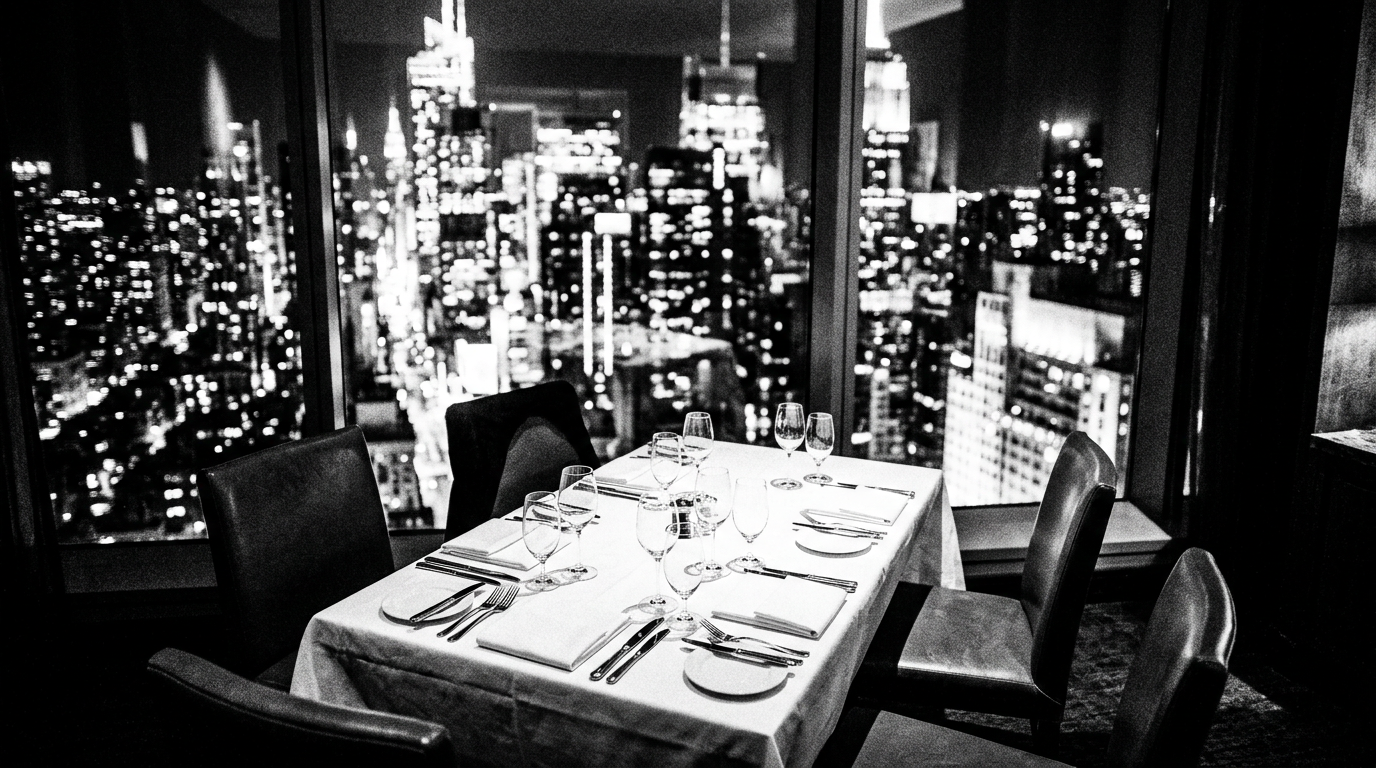
Let me tell you what I love about this hotel before I tell you what keeps me up at night about it. Kimpton Era Midtown New York is a brand-new, ground-up, 33-story tower at 32 West 48th Street... steps from Rockefeller Center, with sightlines to the Empire State Building and One World Trade Center. 529 keys. Four food and beverage concepts (two open now, two coming later in 2026), including a rooftop izakaya and a Latin steakhouse, both operated in partnership with a culinary group that actually has credibility. The developer, Extell, put $220 million behind this. The interiors are by a firm that knows what it's doing. And IHG's luxury and lifestyle pipeline now represents 20% of its global development... nearly double where it was five years ago. This is the flagship moment Kimpton has been building toward, and on paper, it's exactly right. Prime location, serious capital, strong culinary partnerships, and a brand that still has genuine affection among travelers who remember what boutique hospitality felt like before every chain launched a "lifestyle" sub-brand with a lowercase logo and a lobby DJ.

So here's where my brain goes, because I can't help it. 529 rooms is a LOT of lifestyle. Kimpton's whole identity was built on the 100-to-200-key boutique property where the GM knew your name and the evening wine hour felt like a house party. That intimacy is Kimpton's superpower... it's the thing that made people fall in love with the brand before IHG acquired it and started scaling it. Now you're asking that same brand DNA to fill a 33-story tower in a market where your comp set includes the Baccarat, the Aman, the Park Hyatt, and roughly 4,852 new hotel rooms arriving in New York City this year alone. Can the "find your own rhythm" positioning (their words, not mine) hold up at that scale, in that neighborhood, against those competitors? That's the deliverable test, and it's a hard one.

The economics are where this gets really interesting... and where owners in other markets should be paying very close attention. New York posted an 84.1% occupancy with a $333.71 ADR and $280.71 RevPAR last year. That's the strongest lodging market in America, and the luxury segment is outperforming every other tier thanks to what economists are politely calling a "K-shaped economy" (translation: rich people are still spending and everyone else is tightening). So the demand thesis is real. But that $220 million construction loan on 529 keys works out to roughly $416,000 per key, and that's BEFORE FF&E, pre-opening costs, and the operational ramp. The hotel needs to achieve... and sustain... rates that justify that basis in a market where union contract negotiations with the Hotel and Gaming Trades Council expire in July 2026. If you think labor costs aren't going up in New York City this year, I have a filing cabinet full of franchise disclosure documents I'd like to show you.

I sat in a brand review once where an owner asked the development team, "What happens when the rooftop concept doesn't pencil after year two?" The room went quiet. Nobody had modeled it. They'd modeled the upside... the Instagram-worthy sunset cocktails, the PR hits, the influencer stays. They hadn't modeled what happens when you're running four distinct F&B outlets in a market where kitchen wages are already among the highest in the country and climbing, with a chef partnership that probably has a management fee attached. Four restaurants is not an amenity. Four restaurants is four businesses, each with its own P&L, its own staffing nightmare, and its own failure mode. If Jade Rabbit (the rooftop izakaya) doesn't deliver, that's not just a closed restaurant... it's a broken brand promise, because the rooftop IS the marketing.

Here's what I'll be watching. If Kimpton can pull this off... if they can maintain the warmth, the personality, the "not-a-chain-even-though-it's-a-chain" energy at 529 keys in Midtown Manhattan... it changes what IHG can credibly claim about its luxury and lifestyle platform. That matters for every owner being pitched a Kimpton conversion right now. But if the guest experience reads as "big box hotel with nice furniture and a celebrity chef's name on the menu," then this becomes the most expensive proof point that Kimpton's identity doesn't scale past a certain size. The views are going to be spectacular. The question, as always, is what happens when you look away from the window.

Operator's Take

If you're an owner being pitched a Kimpton conversion... or any IHG lifestyle flag... right now, this opening is going to be the centerpiece of every sales deck for the next 12 months. Ask for the actuals in 6 months, not the opening week press coverage. Specifically, ask what the total brand cost as a percentage of revenue looks like once loyalty assessments, reservation fees, and PIP obligations are factored in. And if they're showing you projected loyalty contribution numbers, make them show you the variance between projected and actual at existing Kimpton properties over the last three years. The pretty pictures are free. The math costs money.

— Mike Storm, Founder & Editor
Read full analysis → ← Show less
Source: Google News: IHG
IHG's Doha Pet Play Shows How Lifestyle Brands Chase Revenue

IHG's Doha Pet Play Shows How Lifestyle Brands Chase Revenue

Kimpton's opening a pet-friendly property in Qatar — a market where most locals don't own dogs. Here's what this really tells us about lifestyle brand expansion.

IHG just announced their Kimpton Al Rowda Doha will open later this year with pet-friendly amenities and "unique dining concepts." Let me be direct — this is textbook lifestyle brand playbook being dropped into a market that doesn't quite fit the mold.

Here's the thing nobody's telling you: Kimpton's pet-friendly positioning works in San Francisco and Seattle because you've got tech workers who treat their Golden Retrievers like children. In Doha, you're targeting expats and business travelers, not locals walking their poodles down the Corniche. The cultural dynamics are completely different.

But I've seen this movie before with other lifestyle brands expanding into the Gulf. The pet amenities become a differentiator for the 15-20% of guests who are Western expats or tourists. Meanwhile, the "unique dining" — which usually means locally-inspired menus with craft cocktails — captures the growing market of younger Qatari professionals who want experiences over just luxury.

The real play here is IHG testing whether Kimpton's brand DNA translates to secondary Middle East markets. They've got AC Hotels and Hotel Indigo already proving lifestyle works in Dubai and Abu Dhabi. Now they're seeing if Qatar's post-World Cup hospitality boom can support a full Kimpton experience at presumably 400-500 USD ADR.

Operator's Take

If you're running an independent boutique in an emerging lifestyle market, pay attention to how Kimpton adapts their brand standards here. Start thinking about which signature amenities actually resonate with your local guest mix versus which ones are just imported brand theater.

Read full analysis → ← Show less
Source: Google News: IHG
End of Stories