Disney and Airbnb Are Giving Away Hotel Nights. And the Entire Industry Should Be Taking Notes.
Disney just turned a $21 million Malibu beach house into a free Airbnb listing to promote a 20-year-old kids' show. The marketing genius isn't the giveaway... it's what it reveals about where "hospitality" is heading when entertainment companies start thinking like hoteliers.
A retired night auditor I used to work with had a saying whenever corporate would roll out some flashy new loyalty promotion. He'd look at the rate sheet, look at me, and say "So we're giving away the room and calling it strategy. Got it." He wasn't wrong then. But I'm starting to wonder if Disney and Airbnb might actually be onto something he and I never considered.
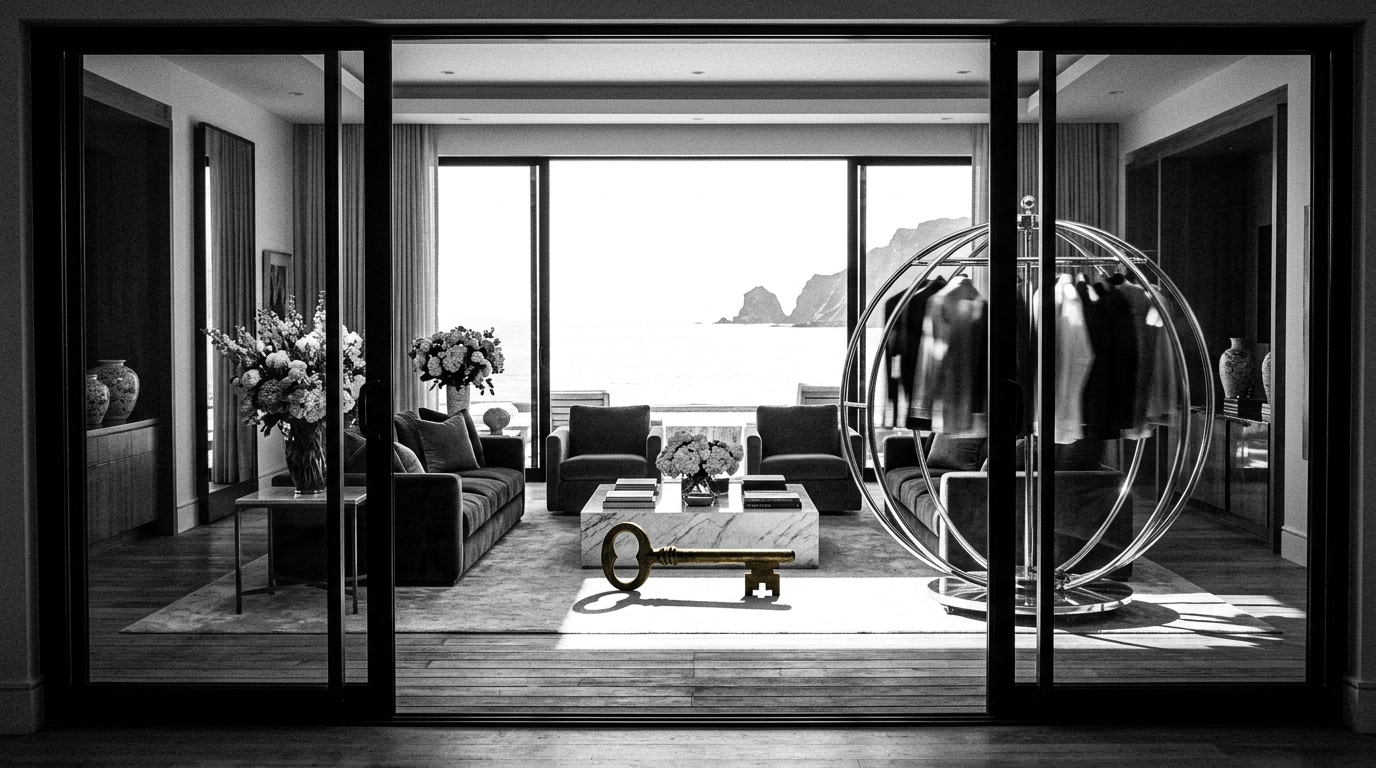
Here's what happened. Disney and Airbnb partnered to offer ten free one-night stays at the actual Malibu oceanfront home used in the exterior shots of "Hannah Montana." Four bedrooms, five bathrooms, $21 million property, normally renting for $60,000 to $80,000 a month. They recreated the fictional interior... including the rotating closet. The cost to the guest? Zero dollars. The cost to Disney? Whatever the lease and staging ran them. The return? A "Hannah Montana 20th Anniversary Special" that pulled 6.3 million views in three days on Disney+ and Hulu. Nearly a 1,000% spike in catalog streaming. Over half a billion hours of content consumed globally. Spotify streams of the show's songs up 600-700%. All from ten free nights in a house that isn't even a hotel.
Now here's where this gets uncomfortable for anyone running an actual hotel. Disney didn't need rooms revenue. They didn't need ADR. They didn't need flow-through. They needed attention, and they bought it at a fraction of what a traditional media campaign would cost. Ten nights at a property that rents for roughly $2,000 a night (prorated from the monthly)... call it $20,000 in opportunity cost, maybe $50,000-$75,000 all-in with staging and production. For that, they got global media coverage, billions of streaming minutes, and a cultural moment that reinforced Disney+ subscriptions more effectively than any ad buy could. The math on that is embarrassing for everyone who's ever spent six figures on a "brand awareness campaign" and gotten a PDF report full of impressions data that means nothing.
What worries me isn't the stunt itself. It's the trend it represents. Entertainment companies, lifestyle brands, and tech platforms are getting better at creating "hospitality experiences" that have nothing to do with operating hotels... and the press eats it up. Airbnb doesn't carry the linen cost. They don't manage the labor. They don't deal with the plumbing in a 1978 building. They curate the story, collect the booking, and let someone else handle the 2 AM problems. And increasingly, that model... the one where the experience is the product and the room is just the stage set... is what consumers are talking about, sharing on social media, and choosing over traditional hotel stays. Not always. Not yet for business travel. But for the leisure guest under 35 who grew up watching Hannah Montana? That's your future customer, and Disney just showed them that the most exciting "hotel stay" in America this month isn't at a hotel at all.
The silver lining, if you want one, is that Disney and Airbnb can't scale this. Ten rooms. Ten nights. It's a publicity stunt, not a business model. But the underlying principle... that the story around the stay matters as much as the stay itself... that's something every operator can learn from. The properties I've seen thrive over the last five years aren't the ones with the best rooms. They're the ones with the best narrative. The ones where guests feel like they're part of something, not just sleeping somewhere. You don't need a $21 million beach house and a Disney IP license to create that. You need a point of view. You need a reason to exist beyond "we have beds and we're near the highway." That part is free. And it's the part most hotels still haven't figured out.
Look... this one isn't about changing your rate strategy or your tech stack. It's about paying attention to how the guest's definition of "worth staying at" is shifting underneath us. If you're running a select-service or a lifestyle property, take 30 minutes this week and ask yourself one question: what would a guest say about your hotel that they couldn't say about the one across the street? If the answer is nothing... that's your real competitive problem. Not OTA commissions, not labor costs, not your PIP. This is what I call the Price-to-Promise Moment. Every stay has one moment where the guest decides the rate was worth it. Disney manufactured that moment with a rotating closet and a nostalgia play. You need to find yours. Walk your property tonight. Find the thing that could be your story. Then tell it better than anyone else in your comp set.