Today · Apr 5, 2026
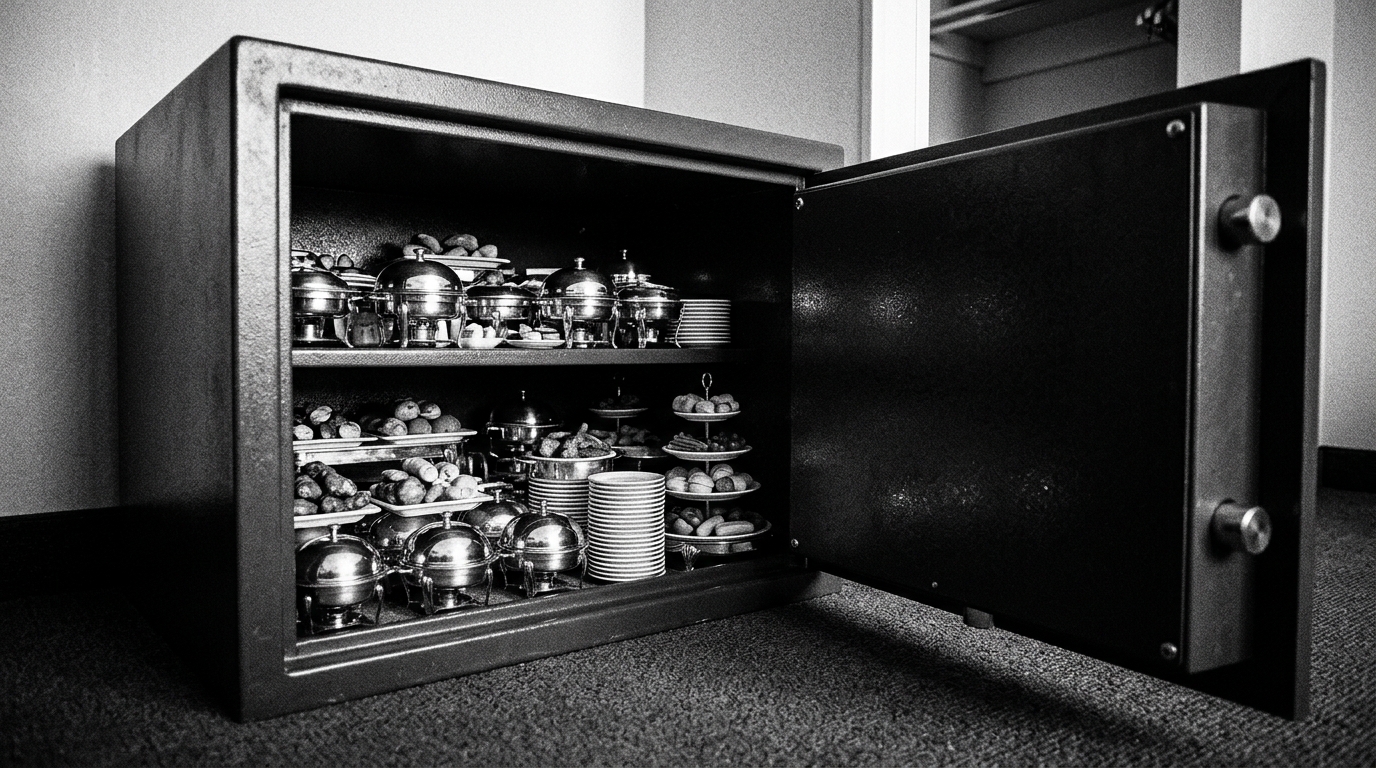
Las Vegas Is Selling Itself Like a Cruise Ship Now. That's a $183 ADR Admitting Defeat.

Las Vegas Is Selling Itself Like a Cruise Ship Now. That's a $183 ADR Admitting Defeat.

Resorts World and MGM are bundling rooms, meals, and entertainment into all-inclusive packages for the first time on the Strip. When two of the biggest operators in Las Vegas start pricing like Caribbean resorts, the question isn't whether it works... it's what the 7.5% visitor decline already cost them.

Available Analysis

MGM's new all-inclusive package at Luxor and Excalibur starts at $330 for a two-night stay for two guests, inclusive of rooms, resort fees, three meals per day, show tickets, and parking. Resorts World is charging $150 per person per night as an add-on at Conrad Las Vegas, bundling valet, dining at five restaurants, pool access, and nightclub entry. Two very different price points targeting two very different segments. Same underlying signal.

Las Vegas ADR fell 5% to $183.52 in 2025. Occupancy dropped 3.3 points to 80.3%. RevPAR declined 8.8% to $147.30. Visitation was down 7.5% to roughly 38.5 million. Those aren't soft numbers. That's a market repricing itself. And when you bundle a room, three meals, a show, a roller coaster ride, and parking into a $82.50-per-night-per-person package (which is what MGM's deal works out to), you're not creating value. You're obscuring rate erosion behind a more palatable wrapper.

Let's decompose the MGM deal. $330 for two nights, two guests. That's $82.50 per person per night. Subtract meals (even conservatively, $40/day per person at MGM's mid-tier restaurants), show tickets (face value $50-80 each, split across two nights), parking ($18-20/night), and resort fees ($39-51/night depending on property). The implied room rate after backing out the bundled components is somewhere between $0 and $40 per night. That's not a premium hospitality product. That's inventory liquidation with better packaging. MGM's profit margins were 1.2% in 2025, down from 4.3% in 2024. Bundling at this price point doesn't fix that margin compression. It accelerates it... unless the bet is that bundled guests spend significantly more on gaming, which is the only scenario where this math survives a spreadsheet.

Resorts World's Conrad play is structurally different and more defensible. At $150 per person per night on top of room rate, it's an ancillary revenue capture tool, not a rate substitution. The property keeps its ADR intact and monetizes F&B, nightlife, and pool access that might otherwise go underutilized. That's a yield management decision, not a distress signal. The two-guest minimum and the summer booking window (May 26 through September 8) suggest they're targeting couples during a historically softer period. If Conrad is running 70% occupancy in July, capturing an incremental $300 per room night in bundled spend from guests who were coming anyway is accretive. The question is attachment rate. If 15% of summer bookings add the package, the numbers work. If it's 5%, it was a press release.

The broader implication is what concerns me. Las Vegas has spent two decades moving upmarket... higher ADR, premium experiences, $500-a-night rooms that didn't exist in 2005. An all-inclusive model works in the opposite direction. It trains the consumer to think in total cost, not nightly rate. It makes comparison shopping easier (which benefits the buyer, not the seller). And it creates a floor that becomes very difficult to raise once established. An owner I spoke with last year put it simply: "Once you teach a guest your price includes everything, try charging them for something next year." MGM is forecasting 15.23% annual earnings growth. I'd want to see Q1 2026 results (due April 29) before I believed bundling at Luxor and Excalibur contributes to that rather than diluting it.

Operator's Take

Here's what I want every operator in a competitive leisure market to understand about this. Las Vegas just gave your guests a new reference point. When MGM bundles two nights, meals, shows, and parking for $330... that's the number your leisure traveler is comparing you to, whether you're in Vegas or not. If you're running a resort or a leisure-heavy property anywhere in the Sun Belt, pull your summer package pricing right now and stress-test it against this. Not to match it... you can't, and you shouldn't try. But know what the consumer is seeing. Second thing: if your brand or management company starts floating "all-inclusive" or "bundled experience" ideas for your property, run the math on implied room rate after you back out the component costs. If the implied rate is below your breakeven, that's not a package... that's a subsidy. I've seen this movie before. Somebody packages their way into volume and out of margin, and 18 months later you're trying to retrain the market to pay rack rate again. That's what I call the Rate Recovery Trap. You cut rate to fill rooms today, and you spend the next year retraining the market to pay what you were worth before the cut. Know your floor before someone else sets it for you.


— Mike Storm, Founder & Editor
Read full analysis → ← Show less
Source: Google News: Resort Hotels
Vegas Operators Are Selling $165-a-Night All-Inclusive Packages. Do the F&B Margins Survive That?

Vegas Operators Are Selling $165-a-Night All-Inclusive Packages. Do the F&B Margins Survive That?

MGM is bundling rooms, meals, shows, and parking at Luxor and Excalibur for $165 per night all-in, while the Plaza is at $104 per person. The per-night economics tell a very different story than the press release.

MGM's new all-inclusive package at Luxor and Excalibur works out to $165 per night for two guests, covering accommodations, resort fees, three meals per day per person, one beer or wine per meal, two show tickets, two coaster rides, and self-parking. The Plaza downtown is running $104 per person per night with breakfast, dinner, and bottomless drinks at two bars. Caesars has a "$300 Escape" at Harrah's, The LINQ, and Flamingo that nets to roughly $50 per night after a $200 F&B credit.

Let's decompose the MGM number. At $165 per night for two, back out even a conservative $80 room rate (Excalibur's ADR has historically run below $100). That leaves $85 to cover six meal occasions, two alcoholic beverages, two show tickets, two attraction rides, and parking. Six meals alone at any sit-down restaurant on the Strip would run $180-$240 at menu price. The package math only works if the F&B is heavily channeled toward buffet and grab-and-go formats with food costs MGM can control below 30%, and if the show inventory is off-peak seats that would otherwise go empty. This isn't an all-inclusive resort model. It's a loss-leader structure designed to get bodies through the door who then spend on gaming, nightlife, and retail.

The reason is in the 2025 numbers. Las Vegas visitor volume dropped 7.5% year-over-year to 38.5 million. RevPAR fell 8.8%. ADR slid 5%. Occupancy averaged 80.3%, down 3.3 percentage points. Airline capacity into Las Vegas was cut roughly 7% for Q1 2026. Canadian visitation declined approximately 30%. The market priced itself past what leisure travelers would tolerate, and the leisure travelers stopped coming. Convention attendance was up 9.6%, which kept the lights on but doesn't fill 150,000 rooms on a Tuesday in July.

The structural question for asset managers watching this: does bundled pricing rebuild volume, or does it retrain the consumer to expect a lower rate? MGM is deploying this at its lowest-tier Strip properties (not Bellagio, not Aria). That's deliberate segmentation. But rate compression has a way of migrating upward. If Excalibur fills at $165 all-in, what does that do to pricing power at New York-New York or Park MGM, which sit one tier above? The 2025 ADR decline was already 5% market-wide. Introducing structured discounting at scale, even at the low end, risks anchoring consumer expectations across the portfolio... and that anchoring effect doesn't stay at the bottom tier. An owner I spoke with last year put it simply: "You can always find a way to sell cheaper. The question is whether you can ever sell expensive again."

Convention strength (up 200,000 attendees year-over-year, with January 2026 at 672,100) is the real floor under this market. But conventions fill midweek. The all-inclusive packages are targeting leisure weekends and summer. That's two different demand curves with two different pricing strategies, and the risk is that the leisure strategy undermines rate integrity in the shoulder periods where both segments overlap.

Operator's Take

Here's what I'd be doing if I managed a property in that comp set. First, track the package pricing weekly... MGM and Caesars will adjust these structures in real time based on uptake, and your rate-shopping tools need to capture bundled pricing, not just room rate. If you're running a channel analysis that only sees the $80 room component, you're missing the $165 effective rate the consumer is comparing you to. Second, if you're an independent or a non-gaming branded property on or near the Strip, your summer strategy just changed. You cannot compete with a bundled product that includes meals and entertainment. Don't try. Compete on what they can't bundle... flexibility, location specificity, or a guest experience that doesn't involve eating at a buffet three times a day. Third, for owners with Strip-adjacent assets: model what a 5-8% ADR compression does to your debt service coverage. The 2025 decline already pressured margins. If bundled pricing pulls leisure ADR down another $10-15 across the market this summer, know your floor before you hit it.

— Mike Storm, Founder & Editor
Read full analysis → ← Show less
Source: Google News: Resort Hotels
IHG Is Collecting $40M a Year From Hotels It Doesn't Own or Operate. That's the Whole Story.

IHG Is Collecting $40M a Year From Hotels It Doesn't Own or Operate. That's the Whole Story.

IHG's Iberostar licensing deal is now the clearest blueprint in the industry for how a brand company prints money without touching a single piece of real estate. If you're an owner paying franchise fees, the math on what you're buying versus what they're selling deserves a second look.

Let me tell you what this deal actually is, because "IHG One Rewards members can now book five Iberostar all-inclusives" is the headline, and the headline is the least interesting part.

IHG signed a 30-year licensing agreement... with a 20-year renewal option... to slap its loyalty program onto up to 70 Iberostar properties and 24,300 rooms. Iberostar keeps 100% ownership. Iberostar keeps operating the hotels. Iberostar keeps its name on the building, its family running the company, its staff making the beds. IHG gets fee revenue it projects will exceed $40 million annually by 2027. For what, exactly? For plugging Iberostar into its reservation system and letting IHG One Rewards members earn and burn points at the beach. That's it. That's the product. And honestly? From IHG's side of the table, it's brilliant. They added roughly 3% to their global system size without buying a single towel. The total gross revenue of this initial portfolio was approximately $1.3 billion in 2019, which means IHG just bolted on 4% revenue growth (on paper) by writing a licensing agreement. No capital deployed. No operating risk absorbed. No 2 AM phone calls about a broken chiller in Cancún. Just fees. The asset-light model taken to its logical extreme isn't asset-light anymore... it's asset-nonexistent.

Now here's where I stop admiring the chess move and start asking who's paying for it. Because someone always is. You're an owner flagged with IHG at a 250-key resort property in the Caribbean or Mexico. You're paying your franchise fees, your loyalty assessments, your reservation system charges, your marketing contributions, your PIP costs. You're delivering the IHG One Rewards promise every single day with your staff, your capital, your operational headaches. And now IHG has figured out how to sell that same loyalty program to a competitor property down the beach... one that didn't have to go through brand standards review, didn't have to renovate to spec, didn't have to sign a franchise agreement with teeth... and IHG collects from both of you. I sat in a brand review once where an owner asked the franchise rep, point blank, "If you're licensing our loyalty program to properties that compete with me, what exactly am I getting for my fees that they're not getting for theirs?" The rep pivoted to talking about "the power of the network." The owner didn't ask again. He just stopped renovating beyond the minimum.

This is part of a much bigger pattern and it's not just IHG. Marriott, Hilton, Hyatt, Accor... they're all racing into the all-inclusive space because the economics are irresistible from the brand side. The luxury all-inclusive segment in Mexico alone has nearly doubled its share of supply, from 17% in 1990 to 33% by 2022. That's real demand. But the brands aren't building resorts to capture it. They're licensing their loyalty programs, their distribution pipes, their reservation infrastructure to operators who already built the resorts. The brand gets the fees and the system-size press release. The existing franchisees get a diluted loyalty program and a new comp set member they didn't ask for. And the "Exclusive Partners" (IHG's actual term for this category, which deserves some kind of award for corporate euphemism) get access to 100 million loyalty members without the full weight of brand compliance. If you're the owner who just spent $4 million on a PIP to stay in compliance, tell me that doesn't sting.

The question nobody in the brand presentations is answering is the Deliverable Test question... what does the IHG One Rewards member actually experience when they show up at an Iberostar property expecting IHG-level loyalty recognition? Does the front desk know the tiers? Does the system talk to the PMS in real time? Is there a genuine integration or is this a glorified hotel listing with a points sticker on it? Because I've read enough FDDs and I've watched enough of these "strategic alliances" play out to know that the press release is always the high-water mark. The integration is where the promise either becomes real or becomes another brand disappointment that the property-level team has to explain to a confused Diamond member standing at check-in. IHG says earning launched in June 2023 and redemptions went live in December 2023, with over 40 properties bookable with points by then. That's the timeline for the infrastructure. The timeline for the EXPERIENCE... for it to actually feel like staying at an IHG property... that's a completely different question, and one that only the guest can answer.

Operator's Take

Here's what I'd tell any owner currently flagged with IHG in a resort or all-inclusive market. Pull up your loyalty contribution numbers right now. Not the brand's projected numbers from your franchise sales deck... your actual delivered loyalty contribution over the last 12 months. Then ask your brand rep one question: how does this Iberostar licensing deal affect my loyalty contribution going forward? Because if IHG is distributing 24,300 new rooms through the same loyalty pool you're drawing from, the math on your end just changed. This is what I call the Brand Reality Gap... brands sell promises at scale, but properties deliver them shift by shift, and when the brand adds 70 properties to the system without adding proportional demand, the existing owners are the ones who feel the dilution first. Don't wait for your next brand review. Run your total brand cost as a percentage of revenue (franchise fees, loyalty assessments, PIP amortization, all of it) and compare it against what the "Exclusive Partners" are paying for access to the same distribution. If the gap is what I think it is, that's a conversation worth having before your next agreement renewal... not after.

— Mike Storm, Founder & Editor
Read full analysis → ← Show less
Source: Google News: IHG
Sandals Isn't Just Fixing Hurricane Damage. They're Betting $200M They Can Reinvent Themselves.

Sandals Isn't Just Fixing Hurricane Damage. They're Betting $200M They Can Reinvent Themselves.

Three Jamaican resorts closed since Hurricane Melissa could have reopened in May. Instead, Sandals pushed the timeline to December and tripled the spend. That tells you everything about where their head is... and it's a play more operators should understand.

Available Analysis

Here's the thing about hurricanes. They're terrible. They're destructive. They're also... if you're honest about it... sometimes the best renovation excuse you'll ever get.

Sandals had three properties in Jamaica shut down since Hurricane Melissa hit last October. Sandals Montego Bay, Sandals Royal Caribbean, Sandals South Coast. The original plan was a May 30th reopening. Patch the damage, get the rooms back online, start selling again. That's what most operators would do. That's what the insurance timeline pushes you toward. Every day those rooms are dark is revenue you're never getting back.

But Adam Stewart looked at three empty buildings and saw something different. A blank canvas, he called it. And instead of the fastest path back to occupancy, he went the other direction... $200 million across three properties, new room categories, redesigned pools, new F&B concepts, new public spaces. Phased reopenings starting November 18th for South Coast, December 18th for the other two. That's six to seven additional months of zero revenue from those properties beyond the original target. On purpose.

I've seen this decision made exactly twice in my career. Once by an owner who had a catastrophic pipe burst flood an entire wing of a 280-key full-service. Insurance was going to cover the repair. He used it as the catalyst to do the full renovation he'd been deferring for four years. Came back with a repositioned product and pushed rate 22% within the first year. The other time, the owner did the same math, got scared by the carrying costs during the extended closure, patched it fast, and reopened into a market that had moved on without them. Took three years to claw back share.

The math on Sandals' play is aggressive but not crazy. $200 million across three luxury all-inclusive resorts... call it roughly $65-70 million per property depending on how you allocate. For resorts at this tier, that's a meaningful reinvention, not just soft goods and a coat of paint. And Sandals is privately held (no quarterly earnings call breathing down their neck), they've got five other Jamaica properties still running, and the all-inclusive model means when those rooms DO come back online, they come back at a full rate with bundled revenue from day one. No ramp-up discount period. No "grand reopening rate" that takes 18 months to walk back. That matters. The all-inclusive structure actually makes extended closures less painful on the recovery side than a traditional hotel model because you're not retraining a market on rate... you're reopening a destination.

What I respect about this is the discipline to say no to seven months of revenue because the long play is worth more. That's ownership thinking. Real ownership thinking, not the kind you read about in a management company's mission statement. Most operators (and most management companies, and most asset managers) would have pushed for the fastest reopening possible because that's what the trailing twelve months demands. Stewart's betting that the trailing twelve months after a $200 million reinvention will look a lot better than the trailing twelve months after a quick patch. He's probably right. But it takes a certain kind of nerve to stare at dark rooms for an extra half-year when you don't have to.

Operator's Take

This is what I call the Renovation Reality Multiplier. The promised timeline was May. The real timeline is December. But here's the part that matters for you... Sandals didn't just accept the delay, they CHOSE it, because they understood that the disruption was going to happen anyway and a half-measure wastes the opportunity. If you're sitting on deferred CapEx right now and something forces a closure (pipe burst, fire, code violation, whatever), don't just fix what broke. Run the numbers on what a full renovation looks like while the building is already empty. Every day of closure hurts, but the gap between "fix it fast" and "fix it right" is usually smaller than you think when the rooms are already offline. Call your contractor this week and get a real number for both scenarios. You might surprise yourself.

Read full analysis → ← Show less
Source: Google News: Resort Hotels
Hilton's Resort Push Is Brand Theater Until the Owner Math Works

Hilton's Resort Push Is Brand Theater Until the Owner Math Works

Hilton is expanding its luxury, lifestyle, and all-inclusive resort portfolio at a dizzying pace, and the marketing language sounds gorgeous. But when a brand promises "purposeful, immersive journeys," the question isn't whether guests want that... it's whether the owner in Cancún can afford to deliver it.

Available Analysis

Let me tell you what "simple holiday planning" actually means when you translate it from brand-speak into property-level reality. It means Hilton has decided that resorts, luxury, lifestyle, and all-inclusive are where the growth story lives... and they're not wrong about that. The luxury and lifestyle portfolio crossed 1,000 hotels last year with nearly 500 more in the pipeline. All-inclusive is at 15 properties and climbing. The development machine is running full speed. But "simple for the guest" and "simple for the owner" are two completely different sentences, and only one of them shows up in the press release.

Here's what caught my eye. Hilton's 2026 guidance projects systemwide comparable RevPAR growth of 1% to 2%. That's fine. That's respectable. But when you're asking owners to deliver "restorative me time" and "meaningful connections" and "immersive journeys"... those aren't 1-2% RevPAR promises. Those are premium experience promises, and premium experiences require premium staffing, premium training, premium physical product, and premium operating costs. So the brand is writing checks with its marketing department that the owner's P&L has to cash. I've read hundreds of FDDs. The variance between projected and actual loyalty contribution should be criminal, and it's the same pattern every cycle... the sales team projects optimistically (they always do), development approves it without stress-testing the downside (they always do), and nobody in the chain has to sit across the table from the owner when the numbers don't work.

I sat in a brand review once where the presenter used the phrase "elegant, purposeful, and truly unforgettable" three times in ten minutes. An owner in the back row leaned over to me and whispered, "My guests would settle for consistent hot water and a front desk agent who speaks the language." He wasn't being cynical. He was being operational. And that's the gap that kills brand concepts... the distance between the rendering and the Tuesday night reality. Hilton's projecting $4 billion in adjusted EBITDA for 2026 and 6-7% net unit growth. That's the machine working beautifully at the corporate level. But the Deliverable Test isn't about corporate. It's about whether a 200-key all-inclusive conversion in a secondary resort market can execute "curated dining experiences" when they can't fully staff the breakfast buffet by 7 AM. (Spoiler: I've watched three flags try this exact repositioning in similar markets. Same champagne at the launch event. Same staffing crisis six months later.)

The asset-light model is doing exactly what it's designed to do for Hilton... generating fee income while transferring real estate risk to owners. That $3.5 billion stock buyback authorization tells you everything about where the cash is flowing. And look, I'm not anti-Hilton here. Their loyalty engine is genuinely powerful. Their distribution is among the best in the industry. When the brand delivers on its promise, it delivers real value. But "when" is doing a lot of heavy lifting in that sentence. The all-inclusive segment in particular requires a level of operational integration that most management companies haven't built the muscle for yet. You're not just managing rooms... you're managing food cost, beverage cost, entertainment programming, activity scheduling, and guest expectations that are fundamentally different from a select-service traveler who just wants a clean room and fast WiFi. That's a different operating model, not just a different brand standard.

If you're an owner being pitched a Hilton resort or all-inclusive conversion right now, here's what I need you to do before you sign anything. Pull the actual performance data from comparable properties in the portfolio... not the projections, the actuals. Calculate your total brand cost as a percentage of revenue (franchise fees plus PIP capital plus loyalty assessments plus reservation fees plus mandated vendor costs plus marketing contributions). If that number exceeds 18% and the projected revenue premium doesn't clear it with room to spare, you're subsidizing the brand's growth story with your capital. The filing cabinet doesn't lie. And neither does this... potential is not a strategy. It never has been.

Operator's Take

If you're an owner or asset manager looking at a Hilton resort or all-inclusive flag right now, get the actuals on loyalty contribution from at least five comparable properties... not projections, not pro formas, ACTUALS. Then back into what your total brand cost really is as a percentage of gross revenue. I've seen this movie before. The brand presentation is beautiful. The lobby rendering is stunning. And three years in, you're looking at a 15-year payback on PIP debt that was supposed to take seven. Do the math before you sign. Your lender will thank you.

— Mike Storm, Founder & Editor
Read full analysis → ← Show less
Source: Google News: Hilton
Four Seasons Bets Big on "Authentic Mexico" — Here's What That Actually Means

Four Seasons Bets Big on "Authentic Mexico" — Here's What That Actually Means

United and Four Seasons are pushing luxury travelers away from all-inclusive buffet lines toward regional experiences. If you're running resort product in Mexico, this shift is already eating your occupancy.

Here's the thing nobody's telling you: the all-inclusive model that printed money for two decades is facing its first real threat from luxury operators who figured out guests will pay 40% more for what they're calling "authentic local experiences." Four Seasons and a handful of other ultra-luxury brands are building — or repositioning — Mexican resort properties around chef-driven regional cuisine, local art partnerships, and experiences you can't get at the Cancún Hard Rock.

United Airlines is connecting the dots too. They're adding direct service to secondary Mexican markets specifically to feed these properties. That's not an accident. When an airline starts routing metal based on where luxury independents and high-end brands are planting flags, you're watching market segmentation happen in real time.

Let me be direct: if you're a GM running a 300-key all-inclusive in a primary market, you need to look at your guest mix right now. The couples who used to book your ocean-view suites three years ago? They're spending that same money at 120-room properties in Oaxaca or San Miguel de Allende where the chef sources from farms you can visit and the art on the walls isn't generic resort filler.

But here's what makes this interesting operationally. "Authentic" costs money to execute well. You can't fake it with a themed buffet night and mariachi bands. Four Seasons is staffing these properties with culinary teams that have real regional expertise. They're paying for legitimate local partnerships. They're training FOH staff who can actually talk about what guests are experiencing. That's a labor model that adds 8-12 points to your cost structure.

The contrarian take? This creates an opportunity for independent operators in secondary markets who've been doing authentic regional hospitality all along. You don't need Four Seasons money to compete here. You need a GM who understands the local culture, relationships with actual local artisans and producers, and the discipline to say no to becoming a watered-down version of what your guests can get anywhere. The operators who win in this shift are the ones who were never playing the all-inclusive commodity game to begin with.

Operator's Take

If you're running an independent in a secondary Mexican market, stop trying to copy all-inclusive features and start documenting every genuine local connection you have. Your chef's relationship with that third-generation mezcal producer? That's your competitive advantage against Four Seasons, not your pool size. But if you're operating a mid-market all-inclusive, you need to pick a lane fast — either move downmarket on price or invest real money in differentiation, because the middle is disappearing.

Read full analysis → ← Show less
Source: Google News: Four Seasons
End of Stories