When a Conference Doubles Your ADR Overnight — and Why That's Actually Terrible News
Delhi's luxury hotels are printing money this week as AI Summit 2026 sends rates through the roof. But if you're celebrating surge pricing as a win, you're missing what just changed forever about corporate travel budgets.
The GM at the Leela Palace Delhi just had the best Monday morning of his career.
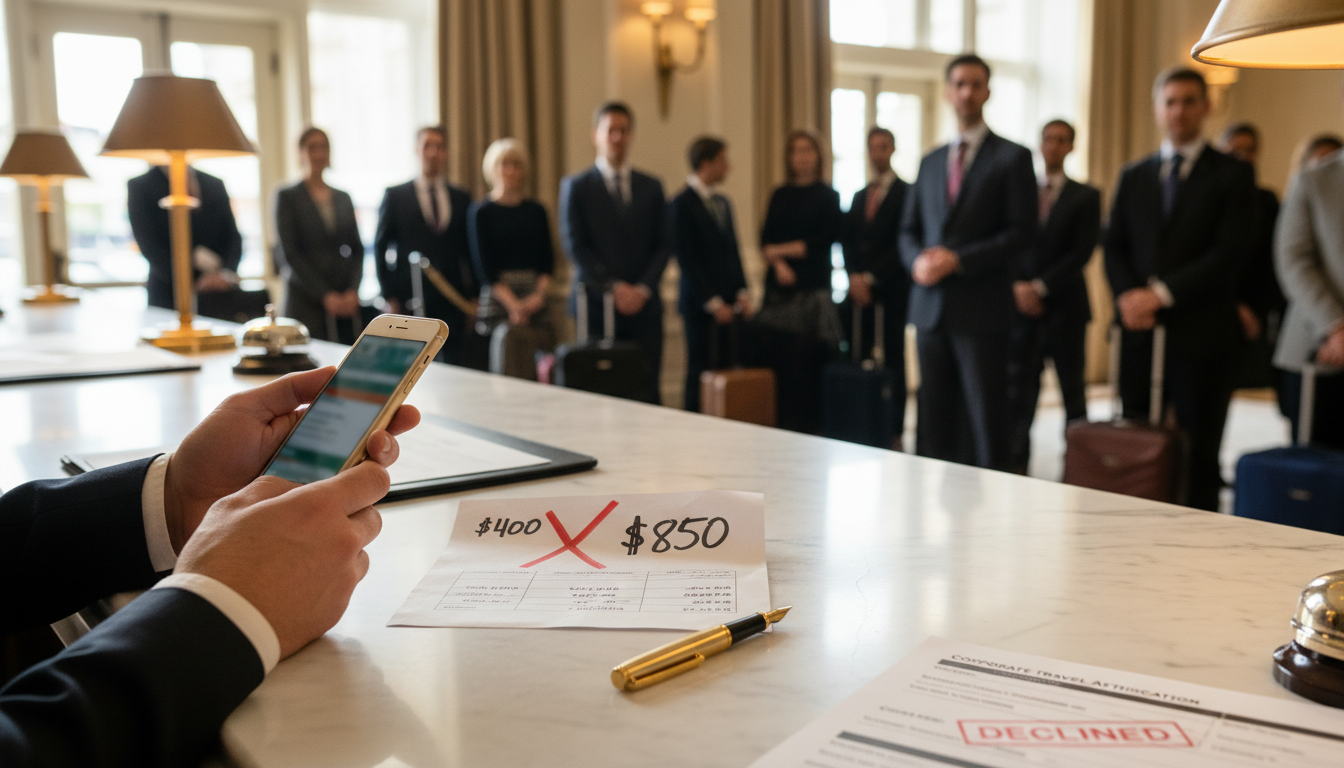
Rooms that were going for $400 last Tuesday are now fetching $850. The Presidential Suite? Try $6,500 a night. His revenue manager is fielding calls from Fortune 500 companies who waited too long to book, and for once in his career, he's the one saying "I'm sorry, we're completely sold out."
The AI Impact Summit 2026 has turned Delhi's luxury hotel market into a seller's paradise. Every five-star property within ten kilometers of the venue is maxed out. Corporate travel managers are panic-booking properties they'd normally consider "too far" and eating the taxi costs.
I've been on both sides of this equation. I've run properties during Super Bowl weeks and political conventions where we could have charged damn near anything. And I've been the guy trying to book rooms for a team when some event I didn't know existed ate up every bed in the market.
Here's what nobody's saying: This is probably the last hurrah.
Not for events — events will always spike rates. But for the corporate capitulation we're seeing right now. The companies paying $850 for a room their travel policy caps at $300? They're in procurement meetings right now having very different conversations.
"Why are we sending twelve people when we could send three and Zoom everyone else in?"
"Why are we booking hotels at all when we could negotiate annual rates at extended-stay properties?"
"Why are we going to conferences in expensive markets when virtual attendance is 90% as effective?"
The AI Summit is the perfect irony here. The technology being discussed at this conference is exactly what's going to let companies justify cutting back on this kind of travel. CFOs aren't blind — they can see that collaboration tools actually work now. They watched their teams perform through a pandemic on video calls.
Every time a hotel gouges a corporate customer during a supply crunch, it accelerates the internal business case for reducing travel dependency. Your $850 rate isn't just revenue — it's ammunition for the VP of Finance who's been arguing to slash the travel budget by 40%.
I'm not saying hotels shouldn't optimize revenue during peak demand. That's literally the job. But if you think these corporate clients are going to keep playing this game forever, you're not watching what's happening in their budget meetings.
The holy grail of luxury hospitality has always been the corporate account: guaranteed volume, predictable booking windows, less price sensitivity than leisure. But corporate travel budgets peaked in 2019 and they're never coming back to that level. Every price shock accelerates the decline.
Delhi properties will have a phenomenal week. The revenue reports will be stunning. Ownership will be thrilled.
And six months from now, half those companies will announce new travel policies that require VP approval for any international conference attendance.
For luxury GMs: Enjoy the surge week, but use these corporate relationships to lock in negotiated annual rates before their travel policies change. The company paying $850 today is rethinking their entire conference strategy tomorrow. Lock them in at $425 on a volume commitment while they're still in the game — because the alternative isn't them paying rack rate next year, it's them not coming at all.