JW Marriott Is Selling a Puppuccino for Your Dog. And the Brand Strategy Is Smarter Than You Think.
A travel writer's stay at the JW Marriott Parq Vancouver with her dog reads like lifestyle fluff, but underneath is a $31 billion pet-friendly hotel market and a World Cup city about to run out of rooms... which means the brands charging $50 for a pet cleaning fee today are leaving real money on the table.
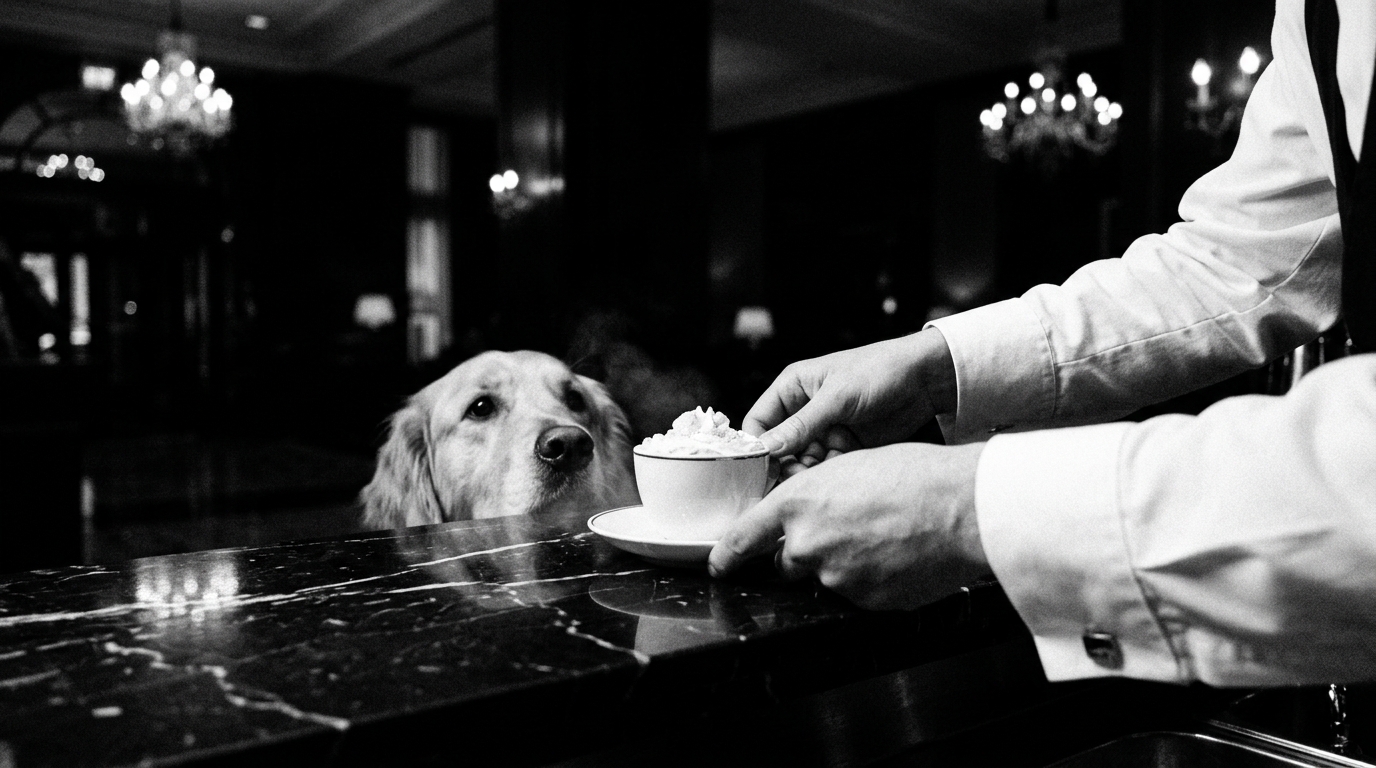
Let me tell you something about the word "curated" that I have learned from fifteen years of brand work and a filing cabinet full of franchise disclosure documents: it means absolutely nothing until somebody has to deliver it at property level. So when I read that the JW Marriott Parq Vancouver is offering a "Very Important Pet package" complete with a custom pet meal and a puppuccino... my first reaction was not "how adorable." My first reaction was "who's making the puppuccino at 6 AM when the lobby bar isn't staffed yet, and did anyone write that into the labor model?"
But here's where I have to give credit. Because this isn't just a cute amenity... this is actually smart brand positioning at exactly the right moment, and the numbers back it up. The global pet-friendly hotel market is projected at roughly $31 billion this year, growing at over 8% annually. The luxury segment alone is headed toward $2.4 billion by 2033. Dogs account for more than 50% of that market. JW Marriott is a luxury brand charging CAD $50 per stay for pet cleaning (or waiving it if you upgrade to the VIP package, which... of course you do, because the upsell psychology is textbook). With Vancouver hosting seven FIFA World Cup matches between June and July, and a Deloitte report projecting a shortfall of 70,000 accommodation nights during a critical nine-day window, every revenue stream matters. Hotels in that market are looking at rates potentially surging over 200%. You know what a pet-traveling guest represents during a supply crunch? A guest who is less price-sensitive, more loyal, and more likely to book direct because they need to confirm the pet policy before they commit. That's not a niche. That's a revenue segment with built-in friction that rewards brands who remove it.
Now here's where the brand strategy gets interesting and where most flags are going to fumble it. Marriott has over 1,500 pet-friendly hotels in the U.S. alone, but the policies are wildly inconsistent... weight limits range from 25 to 75 pounds, fees range from $20 to $150, and the actual guest experience varies from "we tolerate your animal" to "here's a monogrammed dog bowl." That inconsistency is a brand problem. If I'm a pet-traveling luxury guest and I have a great experience at the JW Marriott in Vancouver, I'm going to expect the same thing at the JW Marriott in Austin. And when the Austin property has a different weight limit, no VIP package, and a front desk agent who looks at my dog like I brought a raccoon into the lobby... that's a journey leak. The brand promise broke. The guest doesn't blame the property. The guest blames JW Marriott. (This is the part where I'd pull out my filing cabinet and show you six examples of brands that launched amenity programs at flagship properties and never standardized them across the portfolio. Same movie. Every time.)
What I want to know... and what the Yahoo travel piece doesn't ask because it's not written for operators... is whether Marriott is building this into the brand standard or leaving it as a property-level decision. Because those are two completely different strategies with two completely different outcomes. If it's a standard, then every JW Marriott owner needs to budget for pet amenity infrastructure, staff training, deep-cleaning protocols, and the liability insurance that comes with having animals in a luxury property. If it's optional, then you get the inconsistency problem I just described, and the brand dilutes itself one disappointed dog owner at a time. I've watched brands try to have it both ways... mandate the marketing, delegate the cost. It doesn't work. It never works. The owner absorbs the expense and the brand takes the credit, and if you don't think that creates resentment, you haven't sat across the table from enough franchise owners.
The real opportunity here isn't the puppuccino (though I will admit, reluctantly, that it's a memorable touchpoint and whoever thought of it understands that Instagram is a distribution channel). The real opportunity is that pet-friendly travel is no longer a lifestyle quirk... it's a $31 billion market segment that most hotel brands are serving accidentally instead of strategically. The brands that build real programs around it... consistent policies, trained staff, purpose-designed amenity kits, dedicated room inventory that's actually set up for animals instead of just "allowed"... those brands are going to capture disproportionate loyalty from a guest segment that books more carefully, stays longer, and forgives less when the experience falls short. And in a World Cup market where rooms are about to become the most expensive commodity in Vancouver, the property that can confidently say "yes, bring your dog, here's exactly what to expect" is the property that books first. Can the team at your average JW Marriott execute this on a Tuesday with two call-outs? That's the question. That's always the question.
Here's what I'd tell any GM at a luxury or upper-upscale branded property right now. Pet-friendly isn't a checkbox on your website anymore... it's a revenue strategy, and if you're treating it like an inconvenience you tolerate, you're losing bookings to the property down the street that figured this out. Pull your pet-stay data for the last 12 months. How many rooms, what was the average rate, what was the incremental revenue from fees and upsells. If you don't have that data separated out, that's your first problem. Second... if you're in a World Cup host city or any major event market this summer, get your pet policy locked down NOW. Clear weight limits, clear fees, clear amenity offering, and make sure your front desk team can explain it in 30 seconds without checking with a manager. This is what I call the Brand Reality Gap... the brand is marketing the puppuccino in Vancouver, but the guest experience lives or dies with the person at your front desk who either knows the program or doesn't. Third, bring this to your owner as a revenue conversation, not an amenity conversation. "We can capture X additional room nights per month from pet travelers at Y premium" is a sentence that gets attention. "We should be nicer to dogs" is not.