Today · Apr 23, 2026
St. Regis in Queenstown Is a Brand Bet That Actually Makes Sense (For Once)

St. Regis in Queenstown Is a Brand Bet That Actually Makes Sense (For Once)

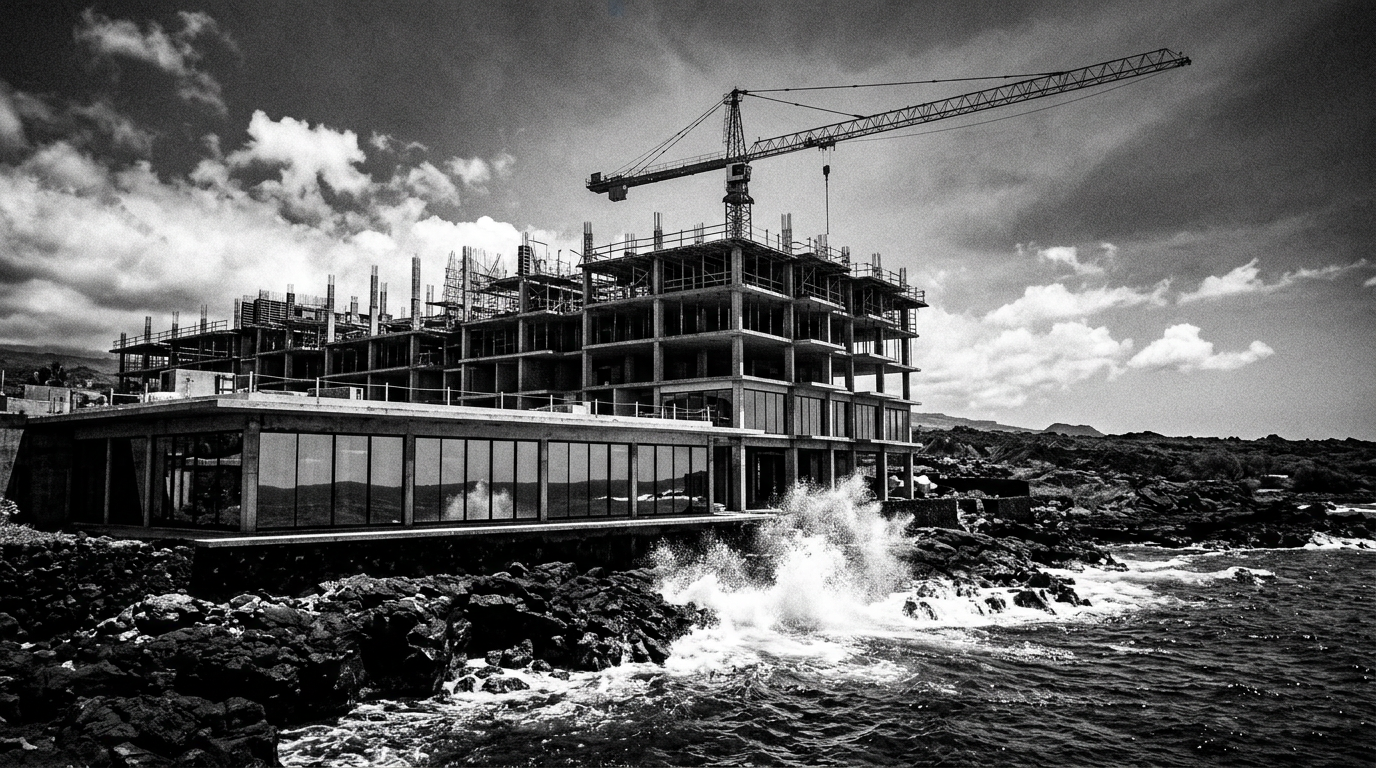
Marriott just signed a 145-key St. Regis in one of the world's most proven luxury leisure markets, and for once, the math behind a splashy brand debut might actually hold up... if you ignore the part where the owner has to deliver butler service in a labor market that barely has bartenders.

Let me tell you what I noticed first about this announcement. It wasn't the rendering (though I'm sure it's gorgeous... they always are). It wasn't the press release language about "bringing a new level of luxury to New Zealand." It was this: Marriott's development VP called Queenstown a "strategic priority." Not an opportunity. Not an exciting market. A priority. That word choice matters because it tells you exactly how long they've been trying to plant a flag here, and how many conversations happened before this one stuck. I've sat in enough development meetings to know that when a brand finally gets the deal done in a market they've been circling for years, the champagne is real. The question is whether the hangover will be too.

Here's what makes Queenstown different from a lot of these luxury brand debuts: the demand data is genuinely strong. CBRE research from mid-2025 showed luxury lodges in New Zealand and Australia posted total revenue per occupied room up 59% since 2018, with profit margins climbing 54%. Queenstown's upper-tier properties ran RevPAR growth of over 15% year-to-date in the Horwath data. Two million visitors annually in a market with limited luxury branded supply. This isn't Marriott dropping a St. Regis into an oversaturated gateway city and hoping the flag does the work... this is a destination with genuine scarcity at the top end. That matters. Scarcity is the one thing you can't manufacture with a renovation and a press release.

The developer, PHC Queenstown Limited (this is their third property with Marriott, which tells you the relationship has survived at least two deals without someone walking away), is building new. 145 keys. Late 2027 opening. New-build is important because it means the physical product can actually be designed around the brand promise from day one instead of trying to retrofit St. Regis service standards into a building that was never meant for them. I've watched conversions where the brand required a dedicated butler pantry on every floor and the existing floor plates literally couldn't accommodate it without losing two rooms per floor. New-build eliminates that particular headache. It doesn't eliminate every headache (stay with me).

So here's my question, and it's the same question I ask every time a top-tier luxury brand announces in a market with extraordinary natural beauty and limited urban infrastructure: Can you staff it? St. Regis is not a flag you hang and forget. It requires butler service. It requires a level of F&B execution that goes way beyond a lobby bar and a breakfast buffet. It requires trained, experienced, hospitality-fluent humans who can deliver the kind of personalized, anticipatory service that justifies $800+ per night. Queenstown is a town of roughly 50,000 people that swells with tourists. Finding that caliber of talent... and retaining it in a seasonal market with housing costs that would make your eyes water... that's the Deliverable Test, right there. The brand promise is world-class luxury. The brand delivery depends entirely on whether an owner can build a team in one of the most remote luxury markets on earth. (A brand executive once told me staffing concerns were "an operational detail." I told him operational details are what kill brand promises. He didn't invite me to the next meeting.)

I'll give Marriott credit where it's earned: this deal fits the macro strategy cleanly. Their luxury and premium brands accounted for nearly a fifth of new room commitments in Asia Pacific last year. International RevPAR grew over 6% for the full year. The pipeline hit a record 610,000 rooms. They're pushing into leisure destinations beyond the obvious gateway cities, which is smart because that's where the rate ceiling is highest and the competition is thinnest. But if you're an owner being pitched a similar luxury brand debut in a comparable market... a resort destination with strong demand metrics but real labor and infrastructure constraints... do yourself a favor. Don't fall in love with the rendering. Don't fall in love with the RevPAR comps from 2025. Ask the brand: what is your plan for helping me staff this property 18 months from now? And if the answer is "that's an operational detail"... well. You already know how this ends.

Operator's Take

If you're an owner being courted for a luxury flag in a resort market right now, this deal is worth studying... but study the parts the press release skipped. Call the developer's other two Marriott properties and ask how long it took to fully staff to brand standard, what the turnover looks like, and what housing costs are doing to their labor line. The Queenstown market data is real. The demand is real. But a $800/night rate expectation with a staffing model that can't deliver consistent butler service is a recipe for a beautiful hotel with a 3.8 on guest satisfaction. The numbers don't lie... but neither does a one-star review from a guest who paid St. Regis prices and got Holiday Inn Express service at 11 PM because half the team called out.

— Mike Storm, Founder & Editor
Read full analysis → ← Show less
Source: Google News: Marriott
Hyatt's $139 Stock Price Implies Analysts Are Wrong About Asset-Light Math

Hyatt's $139 Stock Price Implies Analysts Are Wrong About Asset-Light Math

Eighteen brokerages peg Hyatt's average target at $175.80 while the stock sits at $139.38. The 26% gap tells you someone's making a bet on fee-based earnings that hasn't been proven at this scale.

Available Analysis

Hyatt trades at $139.38 against an average analyst target of $175.80. That's a 26.1% implied upside across 18 brokerages, with a range so wide ($120 to $223) it tells you the Street can't agree on what this company actually is. Ten "Buy" ratings. Six "Hold." Two "Strong Buy." The consensus label is "Moderate Buy," which is Wall Street's way of saying "we think it's good but we're not putting our reputation on it."

Let's decompose what the bulls are pricing in. Hyatt's earnings are projected to grow from $3.05 to $4.25 per share, a 39.3% jump. The thesis rests on the asset-light conversion: 90% of earnings from management and franchise fees by year-end, 80-85% of revenue from fee-based operations. Q4 2025 adjusted EPS came in at $1.33 against a $0.29 consensus estimate. That's not a beat. That's a different sport. But here's the number that should make you pause: negative net margin of -0.73% and a P/E ratio of negative 278. The GAAP earnings don't support the story the adjusted numbers are telling. When I was on the audit side, that kind of gap between adjusted and reported figures was the first thing we flagged.

The luxury-and-all-inclusive strategy looks strong in isolation. Luxury RevPAR up 9%, all-inclusive Net Package RevPAR up 8.3% in Q4. In an industry that saw overall U.S. RevPAR decline 0.3% for the full year, those are real numbers. But the K-shaped economy thesis cuts both ways. Hyatt is concentrating in a segment that outperforms in expansion and underperforms violently in contraction. I've stress-tested portfolios with this exact concentration profile. The base case is beautiful. The downside scenario is a conversation nobody at the investor conference wants to have.

The Pritzker retirement matters more than the stock coverage suggests. Thomas J. Pritzker stepping down as Executive Chairman in February, with Hoplamazian consolidating Chairman and CEO, concentrates decision-making authority. For owners and operators in the Hyatt system, this means faster strategic pivots but less governance counterweight. The question any flagged owner should be asking right now: does the loyalty contribution cover what I'm paying in fees? At total brand costs running north of 15-17% of revenue in luxury segments, the RevPAR premium has to carry real weight. In a strong cycle, it does. The math gets harder when RevPAR softens.

The real question the $175.80 target answers: can Hyatt sustain fee growth without the owned-asset income it's shedding? Asset dispositions generate one-time gains that inflate current earnings and disappear from future periods. The 39.3% earnings growth projection assumes fee revenue scales fast enough to replace disposed asset income. That's the bet. The math works if system-wide net rooms growth holds and RevPAR in luxury stays positive. If either variable breaks (and in the next downturn, both will soften simultaneously), the fee-only model produces thinner cash flow than the blended model it replaced. The stock at $139 suggests the market sees this risk. The analysts at $175.80 are pricing it away.

Operator's Take

If you're a Hyatt-flagged owner running luxury or upper-upscale, pull your total brand cost as a percentage of revenue this week. Franchise fees, loyalty assessments, reservation fees, marketing fund, mandated vendors... all of it. If that number exceeds 16% and your loyalty contribution is under 35%, you need to have a conversation with your asset manager before the next PIP cycle hits. The asset-light model means Hyatt needs your fees more than ever. That's leverage. Use it.

— Mike Storm, Founder & Editor
Read full analysis → ← Show less
Source: Google News: Hyatt
A $1M Bet on Host Hotels Tells You Nothing. The Cap Rate Math Tells You Everything.

A $1M Bet on Host Hotels Tells You Nothing. The Cap Rate Math Tells You Everything.

A Japanese asset manager bought 59,220 shares of Host Hotels in Q3 2025 for roughly $1 million. The position is a rounding error. The implied valuation assumptions behind it are not.

Meiji Yasuda Asset Management picked up 59,220 shares of Host Hotels & Resorts at an average cost of roughly $17.02 per share during Q3 2025. That's $1,008,000 against a firm managing $2.08 billion. We're talking about 0.048% of their portfolio. This is not a thesis. This is a line item.

Let's decompose what actually matters here. Host's market cap sits at $13.18 billion across 80 properties. That's approximately $164.8 million per property... except Host owns premium assets, so per-key valuations range wildly. The real number: Host sold two Four Seasons resorts for $1.1 billion in late 2025 while reporting RevPAR growth guidance of 2.8% for 2026. A portfolio recycling program at that scale tells you management believes they can redeploy capital at better risk-adjusted returns than holding luxury assets at current cap rates. When the largest lodging REIT in the world is selling Four Seasons properties, the question isn't "why did a Japanese firm buy $1M in stock." The question is what Host's disposition strategy implies about where luxury hotel cap rates are heading.

913 institutional owners hold 786 million shares. Meiji Yasuda's 59,220 shares represent 0.0075% of institutional holdings. I've audited REIT shareholder registers where a single pension fund's quarterly rebalance moved more shares than this entire position. The filing exists because SEC disclosure rules require it, not because it signals conviction. Citigroup's price target sits at $22. Cantor Fitzgerald says $21. The consensus average is $20 against a current price of $18.51. That 8% implied upside is fine. It's not a screaming buy. It's a "we need REIT exposure and Host is the largest pure-play lodging name" allocation decision.

The story worth watching isn't this trade. It's Host's portfolio math. They're selling $1.1 billion in luxury assets while the stock trades at roughly 11x trailing FFO (my estimate based on recent earnings and share count). That spread between public market valuation and private market transaction prices is where the real analysis lives. If Host can sell assets above implied public market values and buy or reinvest below them, every shareholder benefits from the arbitrage. If they can't... if the disposition proceeds sit in lower-yielding alternatives... then the portfolio shrinks without the returns improving. I've seen this exact capital recycling pitch at three different REITs. Twice it worked. Once the proceeds sat in treasuries for 18 months while management "evaluated opportunities."

Host reported Q4 2025 earnings that beat both FFO and revenue estimates. The 2.8% RevPAR growth projection for 2026 is modest but honest (I prefer honest to aggressive... aggressive projections are how owners get hurt). For anyone tracking lodging REIT exposure, Host remains the institutional default. Meiji Yasuda buying $1M in shares confirms that exactly as much as a weather report confirms it's currently raining.

Operator's Take

Look... if you're an owner or asset manager and someone forwards you a headline about a Japanese firm buying Host shares, don't let it change your morning. The real signal here is Host's disposition strategy. They're selling Four Seasons assets at premium pricing, which tells you something about where luxury cap rates are right now and where smart money thinks they're going. If you own upper-upscale or luxury assets and you've been thinking about timing a sale, Host just showed you the window might be open. Pay attention to what the biggest REIT in the space is SELLING, not who's buying $1M in stock.

— Mike Storm, Founder & Editor
Read full analysis → ← Show less
Source: Google News: Host Hotels & Resorts
Hyatt's Incheon Dual-Brand Play Is Smart... If You Ignore the Casino Math

Hyatt's Incheon Dual-Brand Play Is Smart... If You Ignore the Casino Math

Paradise City just added 501 Hyatt Regency rooms next to its Grand Hyatt, bringing total inventory to 1,270 keys at an integrated resort near Incheon Airport. The question nobody's asking: who's actually filling those rooms, and what happens when the casino VIP pipeline hiccups?

Available Analysis

So let me get this straight. Paradise Sega Sammy paid roughly $151 million for a 501-room tower, rebranded it Hyatt Regency, and now they've got 1,270 rooms sitting next to a foreigner-only casino on an island near one of Asia's busiest airports. That's approximately $301K per key for a luxury-adjacent product in a market where South Korea is openly chasing 30 million inbound tourists by 2030. On paper? This looks like a textbook integrated resort play. The kind of deal that gets a standing ovation in a brand development presentation. And honestly, parts of it ARE smart. But I've been in enough of those presentations to know that the standing ovation happens before the P&L does.

Here's what I like. The dual-brand strategy... putting a Hyatt Regency alongside the Grand Hyatt within the same resort campus... is genuinely interesting positioning. The Regency captures the group and convention traveler, the airport overnighter, the family visiting for the resort amenities. The Grand Hyatt keeps the luxury positioning for high-value casino guests and premium leisure. Two rate tiers, two guest profiles, one ownership entity controlling the entire pipeline. That's not brand confusion... that's portfolio segmentation done with actual intention. When I was brand-side, I sat in a development meeting once where someone proposed putting two flags from the same family within walking distance and the room went silent like someone had suggested arson. But when the OWNER controls both flags? When the integrated resort is the demand generator, not the brand? The calculus changes completely. You're not cannibalizing. You're capturing segments you were previously leaking to competitors.

Now here's the part the ribbon-cutting photos don't show you. This entire model lives and dies on casino foot traffic. Paradise City is a joint venture between a Korean casino operator and a Japanese entertainment conglomerate, and that foreigner-only casino is the economic engine driving this whole resort. The hotel rooms aren't the product... they're the delivery mechanism for getting players to the tables. Which means 1,270 rooms need to be filled by a reliable pipeline of international visitors, particularly Japanese VIP players, who are willing to gamble. And if you've watched the Asian gaming market over the past five years, you know that pipeline is volatile. Macau's recovery has been uneven. Japanese outbound travel patterns shifted post-pandemic and haven't fully normalized. Regulatory environments shift. A dual-brand hotel strategy built on top of a casino demand model is only as stable as the casino's ability to attract players. The hotel can be perfect... the rooms can be gorgeous, the Regency Club on the top floor can pour the best coffee in Incheon... and if VIP gaming volume dips 15%, you're staring at 1,270 rooms that need to find occupancy from somewhere else. Fast.

What I want to know... and what nobody in the press coverage is discussing... is the fallback demand strategy. What happens when casino-driven demand softens? The property is minutes from Incheon International Airport, which gives it a natural transient capture opportunity. It's got 12 meeting venues, which positions it for MICE. South Korea's luxury hotel market is projected to grow at roughly 5.6% annually through 2034. All of that is real. But airport hotels and casino resorts are fundamentally different operating models with different guest expectations, different ADR strategies, different staffing profiles. Running both simultaneously under two brand flags requires an operational sophistication that most management teams... even good ones... struggle to maintain. I've watched owners try to be everything to every segment. It usually ends with a brand promise that's three paragraphs long and a guest experience that satisfies nobody completely.

The Hyatt angle is simpler and, frankly, lower-risk for them. They get 501 rooms added to their system, loyalty members earning points in a growing Asian market, and brand presence at a major international airport without holding real estate risk. For Hyatt, this is asset-light expansion in a market they've publicly targeted for growth... 7.3% net rooms growth last year, record pipeline of 148,000 rooms. Beautiful. For Paradise Sega Sammy, the math is more complicated. They spent $151 million on a bet that integrated resort tourism in South Korea is going to keep climbing, that the casino will keep drawing, and that 1,270 rooms won't cannibalize each other's rate integrity. That's a lot of bets to win simultaneously. I hope they do. I genuinely do. But I've seen what happens to families... to ownership groups... when the projections don't land. And the projections always look spectacular at the ribbon cutting.

Operator's Take

Here's the lesson if you're an owner looking at dual-brand or integrated resort plays anywhere in Asia-Pacific. The brand won't tell you this, but your fallback demand strategy matters more than your primary one. Build the model for the downside first... what fills those rooms when your primary demand driver softens 20%? If the answer requires a paragraph of qualifiers, you don't have a plan. You have a hope. And hope is not a revenue management strategy. Call your asset manager this week and make them show you the stress-tested model, not the base case.

— Mike Storm, Founder & Editor
Read full analysis → ← Show less
Source: Google News: Hyatt
Your F&B Outlet Isn't a Cost Center. It's Your Entire Strategy Now.

Your F&B Outlet Isn't a Cost Center. It's Your Entire Strategy Now.

A Courtyard in Bengaluru just refreshed its rooftop cocktail menu, and nobody in the U.S. is paying attention. They should be... because the math on F&B as a revenue driver has quietly flipped, and most operators are still running the old playbook.

Here's a headline that 90% of American hotel operators are going to scroll past: a Courtyard by Marriott in Bengaluru updated its rooftop bar menu. New cocktails. Small plates. A resident DJ. Sounds like a press release you'd delete before your second cup of coffee.

Don't delete it. Because what's actually happening in India right now is the canary in the coal mine for every branded hotel operator running F&B as an afterthought. In Indian hotels, food and beverage revenue has climbed to 42.6% of total income... up from 36.6% a decade ago. Room revenue? Dropped from 57.2% to 50.9% in the same period. Read those numbers again. F&B isn't supplementing the rooms business anymore. It's propping it up. And in Bangalore specifically, bar revenue jumped 12% in average per cover in the first half of 2024. That's not a trend. That's a structural shift in where the money comes from.

I managed a full-service property years ago where the owner wanted to shut down the restaurant entirely. "It's bleeding money," he told me. And he wasn't wrong... on the P&L it looked like a disaster. But I pulled the guest satisfaction scores and the rate premium data, and that restaurant was the reason we were running $18 above comp set on ADR. Kill the restaurant, kill the rate premium. The F&B line item was red. The total property NOI was black BECAUSE of that red line item. Most owners never connect those dots because the reporting doesn't make them.

What Marriott is doing in India... treating a Courtyard rooftop bar as a destination, hiring a 20-year veteran chef, building cocktail programs around storytelling and local culture... that's not a marketing stunt. That's a revenue strategy. They're pulling locals into the building. They're creating reasons for guests to spend on-property instead of walking to the restaurant next door. And they're doing it at the Courtyard tier, not the Ritz-Carlton. That matters. Because if the math works at a Courtyard in Bengaluru, it works (or should work) at a Courtyard in Nashville or Austin or Denver. The question is whether U.S. operators have the imagination to execute it or whether they'll keep running a grab-and-go market and wondering why their ancillary revenue is flat.

Here's what nobody's telling you: the brands are watching India's F&B numbers very closely. When F&B crosses 40% of total revenue at scale, the playbook changes. Brand mandates around food and beverage concepts, vendor requirements, design standards... all of that is coming. If you're a GM at a select-service or compact full-service property in the U.S., you've got maybe 18-24 months before your brand starts asking why your bar program looks like it was designed in 2014. Get ahead of it now. Look at your F&B capture rate. Look at your local traffic. Look at what the independent boutique down the street is doing with their lobby bar that's pulling your guests out the door every Friday night. The answer isn't a $500,000 renovation. The answer is a point of view... about what your food and beverage operation is actually FOR.

Operator's Take

If you're running a branded property with any kind of F&B component... even a bar, even a breakfast operation... pull your F&B revenue as a percentage of total revenue for the last three years. If that number isn't moving up, you're leaving money on the table. Call your chef or F&B manager this week and ask one question: "What would we do differently if we treated this outlet like a standalone restaurant competing for local business?" The answers will cost you almost nothing to implement. The cost of doing nothing is watching your ancillary revenue flatline while the boutique hotel two miles away steals your guests every evening.

Read full analysis → ← Show less
Source: Google News: Marriott
Marriott's Swiggy Play in India Is Loyalty Strategy Disguised as a Food Delivery Deal

Marriott's Swiggy Play in India Is Loyalty Strategy Disguised as a Food Delivery Deal

Marriott Bonvoy just partnered with India's biggest food delivery platform to let members earn points ordering dinner. The real story isn't the points... it's what Marriott is building underneath, and whether the math actually works for the owners funding the loyalty machine.

Available Analysis

So Marriott is now rewarding you for ordering biryani on your couch. Five Bonvoy points for every INR 500 spent on Swiggy... food delivery, grocery runs through Instamart, restaurant reservations through Dineout. They're calling it a "first-of-its-kind loyalty partnership in India's hospitality sector," and honestly? The positioning isn't wrong. But let's talk about what this actually means at property level, because the press release energy and the owner P&L energy are very different things.

Here's what Marriott is doing, and I'll give them credit... it's smart brand architecture. India is their fastest-growing market in South Asia. They signed 99 deals there in 2025 alone. They launched Series by Marriott with 26 hotels specifically targeting domestic Indian travelers. They already have a co-branded HDFC Bank credit card, a Flipkart partnership from last August, and an ICC cricket tie-in from January. The Swiggy deal isn't a standalone play. It's the latest brick in a wall Marriott is building to make Bonvoy the default loyalty currency for India's rising middle class... not just when they travel, but when they eat, shop, and scroll. That's not a food delivery deal. That's an ecosystem play. (And yes, I just used the word "ecosystem." I hate it too. But it's accurate here.)

Now let's run the numbers through the Deliverable Test. A member spending INR 10,000 monthly on Swiggy earns roughly 1,200 Bonvoy points per year. Bonvoy points are valued at approximately INR 0.50-0.80 each. So that's 600-960 rupees of annual travel value for 120,000 rupees of food spending. A reward rate of about 0.5-0.8%, which is genuinely better than Swiggy's previous IndiGo partnership at roughly 0.4%. But let's be honest... nobody is booking a Marriott stay because they ordered enough palak paneer. The point accumulation is incremental at best. The REAL value is the Elite member perk: complimentary Swiggy One memberships, three months for Silver and Gold, twelve months for Platinum and above. That's a tangible daily-use benefit that keeps Bonvoy relevant between trips. That's the hook. The points earning is the wrapper. The Swiggy One membership is the product.

The question I keep coming back to... and it's the same question I ask every time a brand expands its loyalty footprint... is who pays for the incremental engagement? The brand funds these partnerships through loyalty program economics, which are ultimately built on franchise fees, loyalty assessments, and reservation system charges collected from owners. Every new earn channel dilutes point value slightly and increases the program's liability. When I was brand-side, I watched this tension play out constantly... marketing wanted broader earn opportunities because it grew the membership base, and finance wanted tighter controls because every outstanding point is a future redemption someone has to honor. The owner in Jaipur or Bengaluru running a 150-key Courtyard doesn't see the Swiggy partnership as brand strategy. They see it as "am I paying more in loyalty assessments so someone can earn points ordering groceries?" And that's a fair question. I sat in a franchise review once where an owner in a secondary market pulled up his loyalty contribution report and said, "I'm subsidizing points for people who will never stay at my hotel." The room got very quiet. Because he wasn't wrong.

This is where India gets interesting and where Marriott's bet might actually be brilliant (or might be premature... I genuinely don't know, and I'll tell you when I don't know). India's domestic travel market is exploding. The travelers earning Bonvoy points through Swiggy today ARE the guests checking into those 99 new Marriott properties tomorrow. If the flywheel works... earn points ordering dinner, redeem points traveling domestically, develop brand affinity, eventually travel internationally on Marriott... then this is the most sophisticated loyalty funnel any hotel company has built in a developing market. But "if the flywheel works" is doing a LOT of heavy lifting in that sentence. IHG is trying similar plays with Grubhub in the US. Hilton is chasing lifestyle tie-ups globally. Everyone wants loyalty to mean more than hotel stays. The brands that figure out how to convert everyday earners into actual hotel guests will win. The ones that just inflate their membership numbers with people who never book a room will have built a very expensive database of food delivery customers. I've seen this brand movie before. The first act is always exciting. The third act depends entirely on conversion rates that nobody wants to publish.

Operator's Take

Here's what this means for you if you're running Marriott-flagged properties in India or anywhere the loyalty program touches your P&L. Watch your loyalty contribution numbers over the next 12 months like a hawk. When the membership base expands through non-travel earn channels, your assessments stay the same but the percentage of members who actually book hotel rooms can drop. That's dilution, and it hits your cost-per-point economics. If you're an owner being pitched a new Marriott flag in India right now... and a lot of you are, given 99 deals signed last year... ask the development team one question: "What's the projected loyalty contribution rate for MY property, and how does it change when half your new members joined because of a food delivery app?" Make them show you the math. Not the PowerPoint. The math.

— Mike Storm, Founder & Editor
Read full analysis → ← Show less
Source: Google News: Marriott
Marriott's March Madness Bet Is Brand Theater at Its Finest... But Who's It Actually For?

Marriott's March Madness Bet Is Brand Theater at Its Finest... But Who's It Actually For?

Marriott Bonvoy is spending big on college athletes, podcasts, and sweepstakes to own the sports travel moment. The question nobody at headquarters is asking: does any of this translate to loyalty contribution at property level?

Available Analysis

So Marriott Bonvoy has rolled out a full-court press (pun intended, and I'm not sorry) for March Madness this year, anchored by UConn guard Azzi Fudd, a "Where Gameday Checks In" campaign, a four-episode podcast series, sweepstakes for Final Four tickets, and a one-point redemption drop for Women's Final Four experiences including a four-night Sheraton stay and suite tickets. They've got Coach Geno Auriemma doing a Fairfield by Marriott spot. They've got cricket campaigns launching the same week. The production value is high. The energy is real. And if you're a franchise owner in, say, a secondary market 200 miles from the nearest tournament venue, you're watching all of this and wondering... what exactly does this do for me?

Let me be clear: I love what Marriott is trying to do in theory. Sports tourism is one of the fastest-growing travel segments, the 2024 Men's Final Four generated an estimated $429 million in economic impact for Phoenix, and tying your loyalty program to big cultural moments is genuinely smart brand work. Fudd is a brilliant choice... first active women's college basketball player signed to Jordan Brand, projected top-three WNBA pick, NIL valuation approaching $1 million. She's aspirational, she's current, she crosses demographics. The campaign itself is slick. But here's where I start reaching for my filing cabinet, because I've sat through a LOT of brand marketing presentations where the sizzle reel was gorgeous and the property-level impact was... well, let's call it "aspirational" too. The question I always ask is the one that makes brand VPs uncomfortable: what is the measurable loyalty contribution lift to the franchisee paying 5-6% of gross room revenue into this system? Because that's the math that matters. Not impressions. Not social media reach. Not podcast downloads. Revenue. At property level. For the owner writing the check.

Here's what I know from 15 years on the brand side and several more advising owners: campaigns like this are designed to build top-of-funnel awareness for the loyalty program. And they do. They create moments. They generate press (hello, Sports Illustrated profile). They make Bonvoy feel like a lifestyle brand rather than a points program. All good. But the translation from "Azzi Fudd made me feel something about Marriott" to "I'm booking a Courtyard in Knoxville for my daughter's volleyball tournament" is a long, leaky journey. And the brands almost never share the conversion data with the people funding the campaign. I once sat in a franchise advisory meeting where an owner asked for the ROI data on a major sports sponsorship and got back a deck full of "brand sentiment metrics." The owner looked at me, looked at the brand rep, and said, "I can't pay my mortgage with sentiment." The room went very quiet. (That's always where these conversations end up, by the way. Very quiet.)

The NCAA partnership is seven years deep now. That's enough time to have real performance data... actual booking attribution from March Madness periods, loyalty contribution variance at properties near tournament venues versus the rest of the portfolio, incremental RevPAR during campaign windows. If that data is spectacular, Marriott should be shouting it from every rooftop. The fact that the marketing leads with experiential moments and podcast series rather than "here's what this delivered to our franchisees last year" tells me everything I need to know about what the numbers probably look like. I could be wrong. I'd love to be wrong. Show me the data and I'll write the most enthusiastic follow-up you've ever read. But until then, this is brand theater... beautifully produced, strategically sound at the corporate level, and largely disconnected from the P&L of the owner in a 150-key select-service who's funding it through loyalty assessments and marketing contributions that now represent north of 15% of their gross revenue when you add it all up.

And look, I don't blame Marriott for doing this. This is what mega-brands do. They build the umbrella, they tell owners the umbrella keeps everyone dry, and if your specific property isn't getting enough rain to justify the umbrella fee... well, that's a local execution issue, isn't it? (It's never a local execution issue. It's a distribution issue. But that's a conversation the brands don't want to have.) What I will say is this: if you're an owner in the Bonvoy system, you deserve to know exactly what percentage of your rooms are booked by loyalty members who discovered you through a campaign versus members who were going to book with you anyway because you're the closest Marriott to the airport. Those are two very different things, and the brand has every incentive to blur the line between them. Your job is to not let them.

Operator's Take

If you're a Marriott franchisee, ask your brand rep one question this week: "What was the incremental loyalty contribution lift at my property during last year's March Madness campaign window?" Not the system average. YOUR property. If they can't answer that... or won't... you now know exactly how much your marketing assessment is buying you in terms of transparency. And if you're near a tournament host city, make sure your revenue manager is pricing for the demand spike independently of whatever the brand is doing. The $429M economic impact in Phoenix didn't happen because of a podcast. It happened because people needed hotel rooms. Price accordingly.

— Mike Storm, Founder & Editor
Read full analysis → ← Show less
Source: Google News: Marriott
Hilton's Vietnam Onsen Play Is Gorgeous. But Can It Pass the Tuesday Test?

Hilton's Vietnam Onsen Play Is Gorgeous. But Can It Pass the Tuesday Test?

Hilton just opened its first onsen resort in Southeast Asia... 216 keys of private hot springs and presidential villas in a valley most global travelers have never heard of. The brand promise is stunning. The deliverability question is the one nobody's asking.

Available Analysis

Let me paint you a picture. 178 villas, each with a private onsen. Two presidential villas at 13,000-plus square feet with five bedrooms. Hot and cold saunas. A mineral spring valley in northern Vietnam surrounded by mountains, about 30 minutes from Ha Long Bay. Hilton's first onsen resort anywhere in Southeast Asia, and only their third full-service property in the country. If you're reading the press materials, you're already mentally packing a bag. I get it. I almost did too... and then I started thinking about what it takes to actually deliver this experience at property level, every single day, and my brand strategist brain kicked in hard.

Here's what's actually happening. Sun Group, the Vietnamese developer that's been running this as Yoko Onsen Quang Hanh since 2020, handed management over to Hilton in February. So this isn't a ground-up Hilton creation... it's a rebrand and management takeover of an existing wellness property. That changes the conversation entirely. The physical product already exists (beautiful, by all accounts). The question is whether Hilton's brand standards, loyalty integration, and service model can layer onto what Sun Group built without creating the exact kind of journey leaks I see constantly in conversion properties. You know the ones... the lobby screams "premium wellness retreat" and then the guest opens the minibar to find the same snack selection as a garden-variety Hilton in Parsippany. (I'm exaggerating. Slightly.)

The numbers underneath this are fascinating and a little contradictory. Vietnam's luxury hotel market is reportedly $3.5 billion and growing. Hilton has 21 trading hotels in the country and wants to double that. The wellness tourism angle is real... Quang Ninh province is explicitly building a four-season wellness strategy to smooth out seasonality, which is one of the smartest things a destination can do. But here's where my filing cabinet instincts kick in: only 50 of the 178 villas are currently bookable, with the rest opening later in 2026. That means you're running a resort at roughly a third of its villa capacity during its most critical period... the launch window, when press attention is highest and first impressions become TripAdvisor gospel. If those first 50 villas deliver a flawless onsen experience, you're golden. If the service model isn't fully baked because you're simultaneously onboarding Hilton standards while finishing construction on the other 128 villas? That's where brand promises go to die. I've watched three different flags try phased openings on premium resort products. The ones that survived had ironclad operational plans for the transition period. The ones that didn't assumed the brand halo would cover the gaps. It doesn't. Guests paying presidential villa rates do not grade on a curve.

And let's talk about the Deliverable Test. An onsen experience isn't a lobby renovation or a pillow menu upgrade. It's a culturally specific wellness ritual that originated in Japan and carries very particular guest expectations around authenticity, service choreography, and atmosphere. Hilton is betting that they can deliver a Japanese-rooted experience in a Vietnamese market with a Vietnamese workforce trained to Hilton's global service standards. Can it work? Absolutely... if the investment in cultural training, specialist staffing, and experience design is as serious as the architecture. The danger zone is treating the onsen as an amenity rather than the entire brand proposition. If you're an owner evaluating a similar wellness conversion, pay attention to how this plays out. The gap between "resort with hot springs" and "authentic onsen experience" is the gap between a nice trip and a destination... and one of those commands a rate premium and the other doesn't. The early Hilton Honors promotion (1,000 bonus points per night for a minimum two-night stay) tells me they know they need to seed the property with loyalty members fast. Smart move. But loyalty points don't create word-of-mouth. Experience does.

What I'm watching is whether Hilton treats this as a true brand experiment... a proof of concept for wellness-forward resort development across Southeast Asia... or whether it becomes another beautiful conversion that gets the press release and then quietly underperforms because the operational model wasn't designed from the guest experience backward. The raw ingredients here are extraordinary. Natural hot springs. Mountain setting. A developer in Sun Group that clearly has capital and vision. But I've sat in too many brand reviews where everyone fell in love with the renderings and nobody stress-tested the Tuesday afternoon in monsoon season when three staff members called out and the hot spring filtration system needs maintenance and there's a VIP checking into the presidential villa. That's when you find out if your brand is real or if it's a mood board with a Hilton flag on it.

Operator's Take

If you're an owner being pitched a wellness or experiential conversion by any major flag right now, pull the Hilton Quang Hanh case apart before you sign anything. Ask your brand rep for the phased-opening operational plan... not the pretty one, the real one with staffing ratios and contingency protocols. And if you're already running a resort property with a specialty amenity (spa, golf, F&B destination), document your actual service delivery costs per guest versus what the brand projected. That's the number that tells you whether the premium positioning is making you money or just making the brand's Instagram look good. The experience economy is real, but so is your P&L.

— Mike Storm, Founder & Editor
Read full analysis → ← Show less
Source: Google News: Hilton
Marriott's March Madness Play Is Really About Something Else Entirely

Marriott's March Madness Play Is Really About Something Else Entirely

Marriott's splashy NCAA campaign looks like sports marketing. It's actually a loyalty enrollment machine disguised as basketball content... and if you're a GM at a Marriott property, you need to understand what that means for your front desk next week.

Available Analysis

I watched a brand VP give a presentation once about "experiential marketing activations" and after 45 minutes of slides, a franchise owner in the third row raised his hand and asked, "But does it put heads in beds?" The room went quiet. The VP stammered something about "brand halo effect." The owner said, "So... no?" That's the question I keep coming back to with Marriott Bonvoy's "Where Gameday Checks In" campaign.

Let me be clear about what this actually is. Marriott is running 30-second and 15-second spots during March Madness broadcasts, launching a four-episode podcast with a WNBA star and a sports journalist, offering a one-point redemption for a four-night stay at a Sheraton in Phoenix during the Women's Final Four, and running sweepstakes through Instagram. They've got celebrity athletes, college coaches, and a filmmaking duo directing the commercials. It's big. It's expensive. And the real play isn't basketball... it's Bonvoy enrollment. Every sweepstakes entry requires Bonvoy membership. Every activation funnels back to the loyalty program. Marriott has 196 million members and they want more. That's the math underneath the madness.

Here's what nobody's telling you. The 2024 version of this campaign (they called it "Game Day Rituals") reportedly delivered ads that were 333% more effective than the average NCAA tournament travel advertiser. That's a real number and it's impressive. But "effective" in marketing-speak means people watched it and remembered the brand. It doesn't mean they booked a room. Those are very different metrics, and the gap between them is where a lot of marketing dollars go to die. I've seen this movie before... brand spends seven figures on awareness, loyalty enrollment ticks up, and the GM at a 250-key Courtyard in Indianapolis gets a surge of one-night Bonvoy redemption stays during tournament weekend at rates that are 30-40% below what they could have sold those rooms for on the open market. The brand counts a win. The property P&L tells a different story.

Now look... I'm not saying sports marketing doesn't work. It does. Marriott's positioning as the official hotel partner of the NCAA and U.S. Soccer gives them visibility that competitors can't buy. And the FIFA World Cup tie-in this year is genuinely smart long-term thinking. Sports tourists stay nearly three days longer and spend roughly 20% more per day than typical travelers. That's real money. The question is whether that money flows to the properties or stays at the brand level as "loyalty ecosystem value" that shows up beautifully in Marriott's investor deck but doesn't move your GOP. If you're a franchisee, you're paying for this through your marketing contribution and loyalty assessments. You deserve to know what the actual return looks like at property level, not portfolio level.

The part that should concern operators is the one-point redemption stunt. One Bonvoy point for a four-night suite stay at the Sheraton Phoenix Downtown. I understand it's a promotional gimmick... one winner, huge PR value. But it sets an expectation in consumers' minds about what points are "worth," and it trains the market to see hotel rooms as prizes rather than products. Every time a brand gives away inventory for essentially nothing, it chips away at the perceived value of what we sell. I've been doing this 40 years. The hardest thing in this business isn't filling rooms. It's convincing people that a hotel room is worth what it costs. Campaigns like this make that job harder, one Instagram post at a time.

Operator's Take

If you're a GM at a Marriott-branded property in a tournament host city (or anywhere near one), pull your redemption pace report right now. Compare your Bonvoy redemption room nights against what those rooms would yield at current market rates. Know your displacement cost before your revenue manager gets surprised by it. And when your DOS tells you "the March Madness campaign is driving awareness," ask them to show you the conversion to actual paid bookings at your property. Awareness without revenue is a billboard... and you're the one paying for it through your franchise fees.

Read full analysis → ← Show less
Source: Google News: Marriott
529 Keys, Four Restaurants, and a Celebrity Chef... What Could Go Wrong at IHG's New Midtown Kimpton?

529 Keys, Four Restaurants, and a Celebrity Chef... What Could Go Wrong at IHG's New Midtown Kimpton?

IHG just opened its biggest Kimpton in New York with a $450 starting rate, four F&B concepts, and a developer running hotel ops for the first time. The tech and operational complexity underneath this shiny launch is where the real story lives.

Available Analysis

So IHG opened the Kimpton Era Midtown New York on March 11. 529 rooms. 33 stories. Four distinct food and beverage concepts. Digital self-service check-in. Starting rate of $450 a night. And here's the detail that made me sit up: Extell Development Company, the developer, is managing this property directly through their own hospitality arm. First time. Ever. A developer who has never managed a hotel is now running a 529-key lifestyle property in Midtown Manhattan with four restaurants, a rooftop bar opening next month, and presumably a tech stack that has to tie all of this together without falling over during a Saturday night dinner rush.

Let's talk about what this actually does to the technology layer. Four F&B concepts means four POS systems (or one system with four configurations, which is somehow worse), all of which need to talk to the PMS for room charging, loyalty integration, and reporting. You've got Rocco DiSpirito's brasserie, an all-day cafe, a Latin steakhouse opening later this month, and a rooftop izakaya coming in April. Each of those has different menus, different service models, different staffing patterns, different inventory systems. The digital self-service check-in sounds clean in a press release... but at 529 keys with a lifestyle positioning that promises "curated" experiences and complimentary social hours, you're asking a kiosk to do the job that the brand's entire identity is built on: making people feel something personal when they walk in. I consulted with a hotel group last year that rolled out self-service check-in across six properties. Within 90 days, three of them had quietly put a human back at the desk because guests at the price point expected a person, not a screen. The technology worked fine. The brand promise didn't survive contact with the technology.

The Dale Test question here is brutal. It's 2 AM. The rooftop POS loses connectivity (and rooftop systems always have connectivity issues... weather, distance from the MDF, interference from building mechanicals on the roof). A guest charges $340 to their room at the izakaya and it doesn't post. The night auditor, who works for a management company that has never managed a hotel before, needs to reconcile four restaurant revenue streams, a loyalty program integration with IHG's system, and a digital check-in platform that may or may not have correctly captured the guest's payment authorization. What's the recovery path? Who built the integration between Apicii's restaurant operations and IHG's property systems? Who's on call? Because Extell Hospitality Services doesn't have 20 years of institutional knowledge about how Kimpton's tech stack works. They're building that institutional knowledge in real time, at 529 keys, in Manhattan, at $450 a night. That's... bold.

Look, I get the strategy. IHG is pushing hard into lifestyle and luxury. Sixteen Kimpton openings projected for 2026, a 20% portfolio expansion. They just launched the Noted Collection soft brand in February to sit below Kimpton. The pipeline is aggressive. But pipeline ambition and property-level execution are two completely different things, and the technology complexity of a four-restaurant, 529-key lifestyle hotel with a first-time operator is genuinely unprecedented for this brand. IHG's Q4 2025 U.S. RevPAR declined 1.4%. They need these high-profile openings to deliver. The question is whether the systems underneath the beautiful renderings can actually handle the load when every seat in four restaurants is full and 400 guests are trying to charge things to their rooms simultaneously.

The part that actually interests me most... and this is where I want to go deeper than the opening-night coverage... is the data architecture question that nobody's asking yet. Four distinct F&B concepts, each designed to have its own "design, F&B and energy" to avoid cannibalization across IHG's four Midtown Kimpton properties. That's smart brand thinking. But distinct F&B means distinct tech configurations, which means distinct data streams. Where does all of it land? Who owns the guest spend data from the rooftop izakaya? Is it Extell's? IHG's? Apicii's? When a guest stays here three times and spends $800 at the brasserie across those visits, does that behavioral data actually make it into IHG One Rewards in a way that changes how the brand communicates with that guest? Or does it sit in a restaurant POS that never talks to the loyalty system in any meaningful way? I've seen this exact failure mode at properties a fraction of this size. At 529 keys with four concepts and a first-time operator, the data fragmentation risk is real. And it's the kind of thing that doesn't show up in the press release. It shows up 18 months later when the loyalty team is wondering why their Midtown flagship isn't driving repeat visits the way the numbers should support.

For a first-time hotel operator like Extell, that also means you can't borrow solutions from sister properties. You're building from scratch. At $450 a night, in a market where guests will absolutely tell you (loudly, on every review platform) when the tech doesn't work.

Operator's Take

Here's what nobody's telling you about these mega-lifestyle openings with four restaurants and celebrity chefs and rooftop bars... the technology integration is where they live or die, and it's the last thing that gets budgeted properly. But the question I'd be asking if I were an owner or operator watching this isn't just "can the POS talk to the PMS." It's "who owns the data, and what happens to it." Every new F&B concept you add is a new data stream. If those streams don't consolidate into your guest profile in a way that actually drives loyalty behavior, you've built a beautiful restaurant that's operationally invisible to your CRM. That's a real cost. If you're an independent or boutique operator thinking about adding F&B concepts to compete, do the math on the POS-to-PMS integration first, and then ask the harder question: where does the guest data actually live when the night audit closes? Get that right before you sign the lease with the celebrity chef. And if you're an owner whose management company is pitching you on "digital self-service check-in" at a lifestyle price point... ask them how many of their other properties quietly put a human back behind the desk within six months. I've seen this movie before. The answer will be informative.

— Mike Storm, Founder & Editor
Read full analysis → ← Show less
Source: Google News: IHG
Another Hyatt Place Gets a Lifestyle Makeover. Here's What Nobody's Asking.

Another Hyatt Place Gets a Lifestyle Makeover. Here's What Nobody's Asking.

Highline Hospitality is converting a 197-key Hyatt Place in Charleston's historic district into a JdV by Hyatt lifestyle property called The Lowline Hotel. The renderings are gorgeous. The press release is immaculate. And the operating model underneath it is where things get interesting.

Available Analysis

I watched a GM lose his mind once over a conversion like this. Not angry... just overwhelmed. One day he's running a select-service with a lean staff, predictable SOP, and a breakfast program he could run in his sleep. Next day, ownership tells him they're going lifestyle. Signature restaurant. Curated cocktail program. "Experiential" lobby activations. Same building. Same labor market. Twice the complexity. He looked at me and said, "They want me to turn a Honda into a Tesla but they haven't changed the engine."

That's the first thing I thought about when I saw the Lowline Hotel announcement. Highline Hospitality bought the Hyatt Place (and the Hyatt House next door) in Charleston back in 2024, and now they're converting the 197-key property into a JdV by Hyatt... the first JdV in the Southeast, for what it's worth. The concept includes a signature indoor-outdoor restaurant and bar, a coffee shop, private dining with a golf simulator, indoor pool, and nearly 8,000 square feet of event space. On King Street, in one of the hottest leisure markets in the country. On paper, it's a smart play. Charleston's running 72% occupancy with ADR still climbing. The high-end segment is where the growth is. JdV gives you Hyatt distribution without the heavy brand standards of a traditional flag. I get it.

But here's what the press release doesn't mention. You're taking a building that was designed, staffed, and operated as a select-service hotel and asking it to perform as a lifestyle destination. That's not a renovation. That's a reinvention. The physical plant changes are the easy part... paint, furniture, signage, maybe some lobby reconfiguration. The hard part is the operating model. A Hyatt Place runs on efficiency. Limited F&B. Streamlined housekeeping. Front desk handles most guest-facing functions. A lifestyle hotel with a signature restaurant, a cocktail program, private dining, and 8,000 square feet of event space requires a completely different labor model. Different skill sets. Different wage scales. Different management structure. In a market like Charleston, where hospitality labor is already tight and every boutique hotel on King Street is competing for the same talent pool, that's not a detail... that's the whole ballgame. And let's be honest about what 5,167 existing rooms plus 3,650 more in the pipeline means for any operator trying to staff up. You're not just competing for guests anymore. You're competing for bartenders, line cooks, and housekeepers against every other hotel doing the exact same lifestyle play.

The JdV brand itself is an interesting choice. It's Hyatt's answer to Marriott's Autograph and Hilton's Curio... a soft brand that lets the property maintain its own identity while plugging into the loyalty ecosystem. The loyalty contribution question is real, though. JdV properties tend to index lower on loyalty walk-ins than a traditional Hyatt because the whole point is that they don't look or feel like a Hyatt. That's the trade-off. You get the reservation system and the World of Hyatt connection, but the guest who books through the loyalty program is expecting a certain experience that a "curated lifestyle destination" may or may not deliver. And the guest who wants a curated lifestyle destination may not be searching within Hyatt's ecosystem at all. It's a brand positioning that works beautifully in theory and requires flawless execution at property level to avoid confusing both audiences.

Here's what I'd be asking if I were the GM getting handed this conversion. What's the realistic ramp-up timeline for the F&B operation? Because a signature restaurant in a hotel isn't a restaurant... it's a cost center that needs 18 to 24 months to find its identity, build a local following, and start contributing. What's the staffing model look like compared to the Hyatt Place operation you're replacing? I'd want that number down to cost-per-occupied-room, and I'd want it stress-tested against 60% occupancy, not 72%. And the event space... 8,000 square feet sounds great until you realize you need a dedicated sales and catering team, a banquet operation, and the kitchen capacity to support it alongside your restaurant. That's a completely different business inside your hotel. If Highline has the capital, the patience, and the operational bench to execute this over 18 months instead of expecting it to perform in 6, this could be exactly the right play in exactly the right market. If they're expecting a lifestyle hotel to click on day one like flipping a flag from one select-service to another... I've seen that movie. The third act is rough.

Operator's Take

If you're running a select-service property and ownership starts talking about a lifestyle conversion, the first conversation isn't about the design package or the brand. It's about the labor model. Get the fully loaded cost-per-occupied-room comparison on paper before anyone signs anything. A lifestyle hotel in a market like Charleston could easily run $25-40 more per occupied room in labor than the select-service it's replacing. Make sure the revenue premium covers that gap at 60% occupancy, not just at 72%. And if your ownership group doesn't have a dedicated F&B operator lined up before construction starts, push back hard. A signature restaurant without a plan is just a beautiful room that loses money.

Read full analysis → ← Show less
Source: Google News: Hyatt
Marriott's Hockey Sponsorship Isn't About Hockey. It's About Owning the Travel Corridor.

Marriott's Hockey Sponsorship Isn't About Hockey. It's About Owning the Travel Corridor.

Delta Hotels by Marriott is slapping its name on Canadian junior hockey rankings, and everyone's treating it like a feel-good sports story. It's not. It's a loyalty acquisition play disguised as a puck drop.

Let me tell you what $415 million a year in hotel sports sponsorship spending actually buys you. It buys you the family in the minivan. Mom, dad, two kids, hockey bags in the back, driving four hours to a tournament in a city they've never been to and will visit six times this season. They need a hotel. They need it near the rink. And if someone has already planted a flag in their brain that says "Delta Hotels... hockey... book here"... that family never even opens a competitor's website. That's not a sponsorship. That's a tollbooth on a travel corridor.

Delta Hotels sits in over 70% of CHL markets across Canada. Think about that number for a second. Seventy percent. The Western Hockey League alone covers cities from Victoria to Winnipeg. The Ontario Hockey League runs from Sudbury to Erie, Pennsylvania. These aren't gateway cities with 14 branded options on every block. These are secondary and tertiary markets where being the recognized name means everything. Marriott didn't buy a logo on a scoreboard. They bought geographic monopoly positioning inside a loyalty ecosystem that already has the credit card data for millions of Canadian families. The CHL draws fans and families who travel constantly, predictably, and in groups. Youth hockey parents are the most reliable repeat-travel demographic in North America outside of business travelers. And nobody at Marriott corporate is confused about that.

Here's what nobody's talking about. Marriott acquired Delta Hotels back in 2015 for roughly $135 million USD. The brand was already the largest premium hotel portfolio in Canada, but it was an orphan... strong regional identity, weak global distribution. Under Bonvoy, Delta gets the reservation engine, the loyalty points, the app integration. But what it's always lacked is a clear reason for an American traveler (or a younger Canadian traveler) to choose it over a Courtyard or a Hilton Garden Inn. Hockey fixes that. Not because hockey is magic, but because it gives Delta a personality that "full-service Canadian hotel brand" never quite delivered. I watched a brand years ago try to differentiate itself through a golf sponsorship. Spent millions. The problem was their properties weren't near golf courses. Delta doesn't have that problem. Their hotels ARE in the hockey markets. The sponsorship and the footprint actually align, which is rarer than you'd think in this industry.

The sports hospitality market is projected to hit $66 billion by 2032, growing at north of 20% annually. Marriott's also locked up the FIFA World Cup for 2026. This isn't a one-off marketing play... this is a systematic strategy to own sports-adjacent travel at scale. And it tells you something about where Marriott thinks loyalty growth is coming from. Not from the road warrior booking 150 nights a year (that market is mature and fought over). From the family booking 15-20 nights a year for tournaments, games, and events. Volume through breadth. If you're a GM at a Delta property in a hockey market, you should be asking your regional team right now what activations are planned, what Bonvoy offers are coming, and how you capture those hockey families into repeat guests. Because if Marriott is spending the money to get them through your lobby door, and you're not converting them into direct-book repeat customers, someone else will.

The flip side, and I'll say this plainly... if you're an independent or a competing flag in one of these CHL markets, you just lost a competitive advantage you might not have known you had. The hockey family that used to pick you because you were close to the rink and had a decent rate? Marriott just gave them a reason to drive an extra five minutes for points. That's the game now. Not better rooms. Not better service. Emotional affiliation plus loyalty currency. And if you don't have an answer to that... you'd better find one fast.

Operator's Take

If you're a GM at a Delta property in any CHL market, get ahead of this. Pull your group booking data for hockey tournaments from the last two years, build a package around it (early check-in, gear storage, team rate), and pitch it to every youth hockey organization within driving distance before the next season starts. If you're an independent competing against a Delta in these markets, your counter-move is hyper-local... partner with the rink directly, sponsor the local team's parent newsletter, offer what Bonvoy can't: flexibility, relationships, and the owner who actually shows up at the front desk. Don't try to out-spend Marriott. Out-local them.

Read full analysis → ← Show less
Source: Google News: Marriott
Pebblebrook's Q1 Numbers Will Tell Us If the Urban Recovery Bet Is Real

Pebblebrook's Q1 Numbers Will Tell Us If the Urban Recovery Bet Is Real

Pebblebrook guided 7.5%-9.0% same-property RevPAR growth for Q1 2026 while still carrying a net loss for 2025 of $65.8 million. The April 29 earnings call will reveal whether that optimism is backed by margin improvement or just busier hotels losing money faster.

Pebblebrook's Q1 2026 same-property hotel EBITDA guidance sits at $70M-$74M. That's the number. Not the RevPAR growth range (7.5%-9.0%), which is what management wants you to focus on. The EBITDA range is what tells you whether revenue is actually flowing to the bottom line or getting absorbed by labor and operating costs on the way down.

Full-year 2025: $1.48 billion in revenue, negative $65.8 million net income. The 2026 outlook brackets somewhere between losing another $10.4 million and earning $3.6 million. That's a $14 million swing and the midpoint is roughly breakeven. For a 44-property, 11,000-room portfolio concentrated in urban and resort markets, breakeven after a year and a half of "recovery" tells you something about the cost structure. Adjusted FFO per diluted share was $1.58 for 2025. Stock trades around $12. You're paying roughly 7.6x trailing FFO for a portfolio that hasn't produced positive net income yet. That's either a deep value play or a trap, and the Q1 call is where we start to find out which.

The balance sheet moves are worth decomposing. $450 million unsecured term loan closed in February, maturing 2031. $650 million revolver extended to October 2029. Two hotel sales in Q4 for $116.3 million, $100 million of which went straight to debt reduction. Management is clearly de-risking the capital structure, which is smart... but selling assets to pay down debt while your stock trades at roughly 50% of NAV (Palogic's estimate, and they're not wrong) means you're liquidating at a discount to fund solvency. An owner I worked with once described this exact dynamic: "I'm selling dollars for fifty cents to keep the lights on." He wasn't wrong either.

The San Francisco story is the one analysts keep pointing to. Truist called it "potentially one of the best storylines" in lodging REIT coverage for 2026. Fine. But "best storyline" and "best returns" aren't the same thing. Pebblebrook has heavy exposure to SF, and the easy comps from 2024-2025 will flatter year-over-year numbers. The question is whether the absolute RevPAR levels in those urban markets generate enough contribution after brand costs, labor, and deferred maintenance to justify the capital tied up in these assets. RevPAR growth on a depressed base is math, not recovery.

Thirteen analysts cover this stock. Six say sell. Five say hold. One buy. One strong buy. That distribution tells you the consensus view: the portfolio is real, the assets are good, but the path to consistent positive net income is still unclear. If Q1 EBITDA comes in at the low end of the $70M-$74M range, expect the NAV discount conversation to intensify. If it comes in above $74M, management buys another quarter of credibility. Either way, the number to watch isn't RevPAR. It's flow-through.

Operator's Take

Here's what nobody's telling you... if you're a GM at an urban full-service hotel owned by a public REIT, your Q1 flow-through is the number your asset manager is building a story around right now. Every dollar of RevPAR growth that doesn't hit GOP is a problem for the earnings call narrative. Look at your department-level P&Ls this week. If labor cost per occupied room crept up in January and February, get ahead of it before the questions start. Your asset manager already knows the revenue number. What they need from you is the cost story, and they need it to make sense.

— Mike Storm, Founder & Editor
Read full analysis → ← Show less
Source: Google News: Pebblebrook Hotel Trust
IHG's Emissions Went Up, Not Down. Their Climate Target Is Now a Suggestion.

IHG's Emissions Went Up, Not Down. Their Climate Target Is Now a Suggestion.

IHG promised a 46% emissions cut by 2030. Instead, emissions climbed nearly 8% above baseline. Now they're "reviewing" the target, which is corporate for "we're not going to hit it and we need a graceful exit."

I've seen this movie before. Not with carbon targets specifically, but the pattern is identical to every ambitious corporate initiative that runs headfirst into the franchise model. A brand sets a big, bold goal at headquarters. They announce it with a gorgeous presentation deck. The press writes it up. ESG investors nod approvingly. And then someone has to go tell 6,000 individual hotel owners that they need to spend real money on something that doesn't show up on next quarter's P&L. That's where the whole thing falls apart. Every single time.

Here's what happened. IHG set a science-backed target in 2021 to cut emissions 46% by 2030, using 2019 as the baseline. Instead of going down, total emissions went from about 6.25 million tonnes of CO2 in 2019 to 6.72 million tonnes in 2025. That's not a miss... that's moving in the wrong direction by roughly 480,000 tonnes. Now, IHG will point out (correctly) that emissions per available room dropped about 11.5% and energy use per room fell 9.4%. Those are real efficiency gains. But they opened so many hotels that the total number went up anyway. It's like bragging about your fuel-efficient engine while doubling the size of your fleet. The math doesn't lie.

And here's the part nobody wants to talk about. IHG is an asset-light company. They don't own these hotels. They franchise them. Which means the actual capital investment decisions... the solar panels, the heat pumps, the building envelope upgrades, the renewable energy contracts... those decisions belong to individual owners. And I can tell you from 40 years of sitting across the table from owners, when you ask someone to spend $200K-$400K on energy infrastructure that has a 12-year payback, their first question is "what's my ROI inside my hold period?" Their second question is "is the brand going to help pay for it?" The answer to the second question is almost always no. So the owner does the math, decides it doesn't pencil, and the brand's climate target becomes aspirational fiction.

What's interesting is that Hilton, running essentially the same franchise-heavy model, has apparently found ways to make progress on emissions in the U.S. through large-scale renewable procurement contracts. So it's not impossible. It just requires the brand to do more than publish a target and hope 6,000 owners independently decide to invest in clean energy. IHG's Chief Sustainability Officer has publicly acknowledged they're "not on track," blaming slow grid decarbonization and lack of commercial clean energy options in key markets. Those are real constraints. But they were real constraints in 2021 when the target was set, too. If your plan depends on external infrastructure that doesn't exist yet, you don't have a plan. You have a wish.

Look... I'm not anti-sustainability. I've managed properties where basic efficiency upgrades (LED retrofits, smart thermostats, water conservation) paid for themselves in 18 months and made the building better to operate. That's good business. But there's a difference between practical efficiency work that saves money and sweeping corporate climate pledges that require someone else to write the check. IHG is now going to "review" this target in 2026, which means they'll either water it down, push the deadline out, or redefine the metric. I've watched brands do this with everything from quality scores to loyalty targets. The goal gets softer. The press release calls it "recalibrated." And we all move on. The question for owners is whether ESG-sensitive capital sources... lenders, institutional investors, sovereign wealth funds... are going to keep moving on too, or whether this starts affecting your cost of capital. That's the conversation you should be having with your asset manager right now.

Operator's Take

If you're a franchised IHG owner, don't wait for the brand to tell you what to do on energy. The efficiency stuff that actually saves you money... LED lighting, occupancy-based HVAC controls, water fixtures... do that now because it hits your bottom line regardless of what happens with IHG's climate goals. But start paying attention to what your lenders and investors are asking about ESG. I talked to an owner last month whose refinancing term sheet included sustainability disclosure requirements for the first time. That's the signal. The brand target is corporate theater. Your capital stack is where this gets real.

Read full analysis → ← Show less
Source: Google News: IHG
Hilton's Tempo Brand Is the Real Test of Whether "Lifestyle" Means Anything

Hilton's Tempo Brand Is the Real Test of Whether "Lifestyle" Means Anything

A glowing review of Tempo by Hilton Times Square is making the rounds, and everyone's nodding along. But the question nobody's asking is whether this 661-key flagship proves the concept works... or just proves you can make anything look good in Times Square with $2.5 billion behind it.

I've seen this movie before. Brand launches flagship in a marquee market, pours obscene money into the build-out, gets a wave of favorable press, and then corporate points to the reviews as proof the brand "works." Meanwhile, the 127-key Tempo opening in a secondary market with a third of the budget and none of the buzz is the one that actually tells you whether the concept has legs. Nobody writes glowing magazine reviews about that property. But that's the one your owners are going to be asked to invest in.

Let me be direct about what's happening here. Hilton is betting big on lifestyle. Eight lifestyle brands now (they just launched their 25th brand overall with the Outset Collection last October). They want to double the lifestyle portfolio to 700 hotels by 2028. That's 350 new openings in roughly three years. Think about that number for a second. That's not careful brand curation... that's a franchise fee machine running at full speed. And every one of those 350 properties needs an ownership group willing to write checks for "Get Ready Zones" and wellness rooms with Peloton bikes and Therabody products. The question nobody at brand HQ wants to answer: what does this stuff cost per key, and does the RevPAR premium justify it?

I sat across from an owner a few years back who'd just been pitched a lifestyle conversion. Beautiful deck. Gorgeous renderings. The whole "modern achiever" target demographic profile with the mood boards and the curated F&B concept. He listened politely, then asked one question: "What's my incremental RevPAR over the select-service flag I'm running now, net of the additional operating cost to deliver this experience?" The room got very quiet. Because the honest answer was... nobody really knew. They had projections. They always have projections. What they didn't have was three years of actual performance data from a Tempo operating in a market that looks anything like his.

Here's what bugs me. The Times Square property is a 661-room hotel inside a $2.5 billion mixed-use development owned by L&L Holding and Fortress Investment Group, with Hilton managing. That's not a proof of concept for your average franchisee. That's a trophy asset with trophy money behind it in the most forgiving hotel market in America. Of course it reviews well. You could put a Holiday Inn Express in that location and it'd run 85% occupancy. The real proof comes when Tempo opens in Nashville, Savannah, San Diego... markets where the guest has options, the labor pool is thinner, and nobody's paying a premium to look at a ball drop from their window. Those are the properties where you find out if "curated wellness" survives contact with a Tuesday night in March with two people on staff.

If you're an owner being pitched Tempo right now (and given Hilton's growth targets, a LOT of you are about to be), don't let the Times Square reviews do the selling. Ask for actual performance data from operating Tempo properties outside of gateway markets. Ask what the total brand cost looks like as a percentage of revenue when you add up franchise fees, loyalty assessments, brand-mandated vendors, the PIP requirements for those wellness amenities, and the incremental labor to deliver the experience. Then compare that number to what you're generating now. The math either works or it doesn't. A magazine review from Times Square isn't math.

Operator's Take

If you're an owner or asset manager getting a Tempo pitch in the next 12 months... and with 350 lifestyle openings targeted by 2028, the call is coming... do three things before you take the meeting. First, demand actual trailing performance data from operating Tempo properties, not projections, not Times Square numbers. Second, build your own model for the incremental labor cost of delivering wellness amenities and elevated F&B in YOUR market with YOUR staffing reality. Third, calculate total brand cost as a percentage of revenue and compare it against your current flag. If the brand can't show you the math, the math probably doesn't work.

Read full analysis → ← Show less
Source: Google News: Hilton
Thompson Palm Springs Hires a Fixer. They're Going to Need One.

Thompson Palm Springs Hires a Fixer. They're Going to Need One.

A luxury hotel with a decade of development chaos, a bankruptcy, a rebrand, and barely 18 months of operations just brought in the guy who opened Thompson Houston. The question isn't whether he's qualified. It's whether the math underneath him works.

Let me tell you what this story actually is. It's not a press release about a managing director appointment. It's a 168-room luxury hotel in Palm Springs that took over a decade to open, went through bankruptcy, changed brands mid-construction from Andaz to Thompson, and is now on its... what, third act? Fourth? And they just brought in the guy whose last Thompson opening was the fastest ramp in brand history. That's not a routine hire. That's a signal.

Ted Knighton's resume reads like someone Hyatt specifically grooms for properties that need a steady hand after turbulent development. He opened Thompson Houston, which ramped faster than any Thompson in the portfolio and won Hotel of the Year for Hyatt Americas. Before that, he was involved in the Thompson San Antonio opening. Before that, Thompson Seattle. The pattern is clear. Hyatt sends this guy to light the fuse on new Thompson properties. The fact that they're sending him to Palm Springs now, a year and a half after opening, tells you something about where this property is relative to where it should be.

Here's what nobody's talking about. Ten days ago... literally March 3rd... Thompson San Antonio went to foreclosure auction. Lender took it for $40.5 million on a $44 million loan. That's a property Knighton helped open. A property that couldn't make its debt service because of downtown competition, interest rates, and bookings that never hit projections. Now think about Thompson Palm Springs. $350-plus nightly rate. A $49 destination fee on top of that (which, by the way, your guests notice and your reviews reflect). A development that burned through years of delays, contractor disputes, and a bankruptcy filing before it ever welcomed a single guest. The capital stack underneath this thing has to be enormous. And the question every owner, every asset manager, every operator should be asking is: does the revenue justify what it cost to get here?

I sat across from an owner once, years ago, who'd just finished a renovation that went 40% over budget and 14 months past deadline. Beautiful property. Genuinely stunning. He looked at me and said, "The building is perfect. The debt service is going to kill us." He wasn't being dramatic. He was doing math. That's the tension with luxury openings that have troubled development histories. The physical product can be extraordinary (two pools, a HALL Napa Valley tasting room, an adults-only tower with 42 keys and dedicated programming) and the financial structure underneath it can still be fragile. The building doesn't know what it cost. The P&L does.

Palm Springs is a strong leisure market. Hyatt's luxury segment posted 9% leisure transient RevPAR growth in Q4 2025. Knighton is as qualified as anyone in the Thompson system to run this property. But qualification and viability aren't the same thing. If you're an owner watching the Thompson brand right now, you're seeing one property go to foreclosure in San Antonio and another bringing in the A-team 18 months post-opening in Palm Springs. That's not a brand in crisis. But it's a brand where individual property economics matter more than the flag on the building. And that's always been true in luxury. The brand gets you consideration. Execution and capital structure determine whether you survive.

Operator's Take

If you're a luxury or lifestyle owner evaluating a Thompson (or any Hyatt lifestyle) flag right now, pull the actual performance data from comparable Thompson openings and compare it against whatever projections you were sold. Don't use portfolio averages... use property-level actuals from markets similar to yours. The San Antonio foreclosure is a data point you cannot ignore. And if you're mid-PIP or mid-development, stress-test your model against a 15-20% revenue shortfall from projections. If the deal breaks at that level, your capital structure is the problem, not the operator they send you.

Read full analysis → ← Show less
Source: Google News: Hyatt
Two More Hotels, Same Owner, Same Manager... Here's What's Actually Happening

Two More Hotels, Same Owner, Same Manager... Here's What's Actually Happening

Dreamscape Hospitality just picked up its fifth Marriott-branded property from the same ownership group in three months. That's not a press release. That's a pattern worth understanding.

Available Analysis

Let me tell you what this story actually is, because the headline doesn't do it justice.

Dreamscape Hospitality, a Dallas-based third-party operator, just signed on to manage a 144-key Courtyard in Houma, Louisiana and a 74-key Fairfield in Springdale, Arkansas. Both owned by Verge Hospitality Management out of Houston. And if that sounds familiar, it should... because back in January, Dreamscape took over three other Marriott-branded properties (two in Oklahoma, one in Louisiana) from Verge Mobile, which is Verge Hospitality's sister company. Five hotels. Same ownership ecosystem. Three months. That's not coincidence. That's consolidation.

Here's what's really going on. An ownership group is cleaning house. Maybe the previous management company wasn't delivering. Maybe the numbers weren't where they needed to be. Maybe somebody got a phone call that started with "we need to talk about performance." I've watched this exact movie at least a dozen times over four decades. An owner brings in a new operator for one or two properties as a trial run. If the first 90 days go well (and "well" means the P&L starts moving in the right direction, not that the lobby looks nicer), they hand over the rest. That January deal was the audition. This is the callback. And I'd bet my last dollar there are more properties coming.

What nobody's talking about is what this means for the 218 rooms worth of staff across these two hotels. A management company transition at a select-service property is controlled chaos on a good day. New operating procedures. New reporting structure. New expectations on everything from rate strategy to how fast you turn a room. I worked with a GM once who went through three management company changes in five years. He told me, "Every time, they show up with a new playbook and tell you everything you've been doing is wrong. By year two, they're doing it your way anyway." He wasn't bitter about it. He was just tired. The good operators get tired of proving themselves to a new boss every 18 months. The great ones figure out how to manage up while keeping the property running.

The broader play here matters if you're paying attention to the third-party management space. Nearly half of all branded hotels globally are run by operators who don't own the building, and that number keeps climbing. Owners want optionality. They want the ability to swap management companies the way you'd change vendors... performance-based, no sentimentality. Marriott's entire asset-light model depends on this ecosystem working. They don't care who runs the building as long as brand standards hold and the loyalty contribution numbers look right. For Marriott, this is a Tuesday. For the 218 rooms worth of employees in Houma and Springdale, it's a lot more personal than that.

If you're a GM at a select-service property and you see your owner making deals with a new management company for other hotels in their portfolio... start paying attention. That's not abstract industry news. That's your future employer doing a test drive. Get your numbers clean. Make sure your owner sees the value you're delivering (not just the revenue, but the flow-through, the guest scores, the staff retention). Because when the consolidation wave hits your property, the GM who can show results in black and white is the one who keeps the keys. The one who says "we've always done it this way" is the one who gets the phone call nobody wants.

Operator's Take

If you're a GM working for a third-party management company and your owner has multiple properties, pay attention to who's getting the new contracts. When an owner starts consolidating operators, every property in their portfolio is on the table... including yours. Pull your trailing 12-month numbers this week. Know your RevPAR index, your GOP margin, and your flow-through cold. If your owner asks, you want answers, not excuses. And if you're the one getting replaced? Don't take it personally. Take it professionally. Update the resume, call your network, and remember that good operators always land. Always.

Read full analysis → ← Show less
Source: Google News: Marriott
A Shuttered Sheraton Becomes 600 Apartments: The Per-Unit Math Tells the Real Story

A Shuttered Sheraton Becomes 600 Apartments: The Per-Unit Math Tells the Real Story

Foundation 8 is putting $120M into converting a dead Phoenix hotel into residential units at $200K per door. The number looks reasonable until you decompose what "attainable luxury" actually means for returns.

$120M for roughly 600 units. That's $200,000 per door on a blended basis covering both the conversion of 342 former hotel rooms and new construction of 350-plus apartments. At target rents of $1,500 per month, gross residential income tops out around $10.8M annually at stabilization. Back out operating expenses (call it 35-40% for a project marketing "resort-style amenities") and you're looking at NOI somewhere in the $6.5-7M range. On $120M of total development cost, that's a 5.4-5.8% yield on cost. Not terrible for Phoenix. Not exciting either.

The conversion math is where it gets interesting. The former Sheraton Crescent shut down in January 2023 after a water intrusion event took out the electrical busway. Three years sitting dark. Court-appointed receiver. A prior buyer fell out of contract. Foundation 8 (a partnership between Trillium Management and GIA Hospitality) acquired what is essentially a distressed shell. The land basis is almost certainly well below replacement cost, which is the only reason this pencils. A 1986-vintage building with known water and electrical damage doesn't convert cheaply, but it converts cheaper than building 258 units from scratch in a market where construction costs have climbed 30%+ since 2020.

The "attainable luxury" positioning deserves scrutiny. Average rents of $1,500 targeting households at or below 80% of area median income is a specific financing play. That threshold typically unlocks workforce housing tax credits or bond financing that materially changes the capital stack. If Foundation 8 is layering in LIHTC or similar incentives, the effective equity requirement drops substantially, and that 5.5% yield on cost starts looking more like 8-10% on actual equity deployed. The press materials don't specify the capital structure. They never do. That's where the real story lives.

Two proximity factors prop up the demand thesis: the $1B Metrocenter redevelopment roughly a mile away and the TSMC semiconductor campus about 12 minutes north. TSMC alone is projected to bring thousands of jobs at salary levels that make $1,500 rents very achievable. The Valley Metro light rail extension adds transit connectivity the original hotel never had. These are real demand drivers, not speculative ones. The question is timing. First units deliver in 12-18 months per the developer. TSMC's hiring ramp and Metrocenter's buildout are on longer timelines. Early lease-up could be softer than the stabilized pro forma suggests.

The hotel-to-residential conversion trend hit a 13% year-over-year increase in Q1 2025. Phoenix hotel performance is forecast to rebound modestly (2.8% RevPAR growth in 2025), but that recovery favors the middle-priced segment, not full-service properties carrying 1986-era infrastructure and deferred maintenance. Foundation 8 noted the building "could potentially revert to a full-service hotel" if conditions shift. I've seen that optionality language in a dozen deal memos. It's there for the lender, not for reality. Nobody is spending $120M on a residential conversion with genuine plans to reverse course. The Sheraton Crescent died as a hotel. The math says it stays dead.

Operator's Take

Here's what I'd tell you if you're sitting on a distressed or shuttered full-service asset in a growth market. The conversion math is getting more favorable every quarter... construction costs keep climbing, residential demand in Sun Belt markets isn't softening, and workforce housing incentives can transform your capital stack. But don't fall in love with the gross numbers. Get your tax credit consultant in the room before your architect. The financing structure is the deal. The building is just the box. And if a developer tells you the project "could always go back to hotel use"... they're managing your expectations, not describing a real option.

— Mike Storm, Founder & Editor
Read full analysis → ← Show less
Source: Google News: Resort Hotels
Morgan Stanley Cuts Hyatt's Target to $185 But Keeps Overweight. Here's the Real Number.

Morgan Stanley Cuts Hyatt's Target to $185 But Keeps Overweight. Here's the Real Number.

A 4.6% price target reduction on a stock trading at $156 still implies 18.5% upside. The interesting question isn't the target... it's what Morgan Stanley's math assumes about Hyatt's asset-light conversion and whether that assumption survives a downturn.

Available Analysis

Morgan Stanley's new $185 price target on Hyatt implies a meaningful premium to current trading levels, and the multiple embedded in that target tells you more than the headline does. The headline is a $9 reduction. What Morgan Stanley actually believes about the durability of Hyatt's fee stream is the number worth examining.

Let's decompose this. Hyatt reported Q4 2025 EPS of $1.33 against a consensus estimate of $0.29. That's not a beat. That's a different sport. Revenue came in at $1.79 billion. Full-year comparable system-wide RevPAR grew 2.9%, net rooms grew 7.3%. The company declared a $0.15 quarterly dividend paid March 12. CEO Mark Hoplamazian says Hyatt is "fully transformed into an asset-light business" and expects 90% fee-based earnings in 2026. So why is Morgan Stanley trimming? The stated reason is geopolitical risk (specifically Iran). The real reason is probably simpler... at $156, the stock already prices in a lot of the good news, and analyst Stephen Grambling is recalibrating risk premium, not downgrading the thesis.

Here's what the headline doesn't tell you. Hyatt has executed $5.7 billion in asset dispositions since 2017 and $4.4 billion in acquisitions tilted toward management and franchise agreements. The development pipeline hit 148,000 rooms across 720 properties. That pipeline number is impressive... until you remember that letters of intent aren't contracts. I will never stop saying this. The gap between signed pipeline and opened rooms is where the actual growth story lives, and that gap is measured in years and capital cycles. Hyatt's $2.6 billion acquisition of Playa Hotels & Resorts in February 2025 added all-inclusive inventory, but it also added integration complexity. The per-key economics on all-inclusive are structurally different from select-service franchise fees (higher revenue per key, but dramatically different cost-to-achieve and margin profile). Lumping them into the same "fee-based earnings" narrative is convenient. It's not precise.

The analyst consensus tells a scattered story. Barclays has Hyatt at $200. Citi at $195. Wells Fargo at $171. Morgan Stanley at $185. The range across 24 firms is $150 to $224. When the spread between low and high target is 49%, that's not consensus... that's disagreement about what "asset-light" is worth when RevPAR guidance for 2026 is 1-3% growth and net income guidance ranges from $235 million to $320 million (a spread of $85 million, which is not a tight band). If you're an owner with Hyatt-flagged properties, the question isn't whether Morgan Stanley is right or Barclays is right. The question is what happens to your fee burden and brand support if Hyatt's stock underperforms and headquarters starts optimizing for margin instead of growth.

I audited a management company once that looked spectacular on a fee-income basis right up until the cycle turned and owners started asking why they were paying 5% of gross revenue for a brand that delivered 22% loyalty contribution. The math works in expansion. Check again in contraction. Hyatt's 2026 RevPAR guidance of 1-3% isn't contraction, but it's deceleration. And deceleration is where the gap between "asset-light earnings" and "owner's actual return" starts to widen.

Operator's Take

If you're running a Hyatt-flagged property, don't get distracted by Wall Street's target price shuffle. What matters to you is the fee line on your P&L and whether the loyalty program is actually filling rooms. Pull your trailing 12-month loyalty contribution percentage and compare it to what was projected when you signed. If the gap is more than 5 points, that's a conversation you need to have with your franchise rep... this week, not next quarter. The stock price is their problem. Your NOI is yours.

— Mike Storm, Founder & Editor
Read full analysis → ← Show less
Source: Google News: Hyatt
Hilton's First Curio on Kaua'i Is a $714K-Per-Key Bet That "Sense of Place" Still Sells

Hilton's First Curio on Kaua'i Is a $714K-Per-Key Bet That "Sense of Place" Still Sells

Hilton is planting the Curio flag in Hawai'i with a 210-room new-build on Kaua'i backed by a $150 million construction loan... and the real question isn't whether the resort will be beautiful, but whether the brand promise can survive the operational reality of a remote island market.

So Hilton is finally bringing Curio Collection to Hawai'i, and honestly, I'm surprised it took this long. The brand is approaching 200 properties worldwide and they didn't have a single one in one of the most desirable leisure destinations on the planet? That's not strategy. That's an oversight someone finally corrected. The property, Hale Hōkūala Kaua'i, is a 210-room new-build overlooking the ocean near Līhu'e Airport, owned by Silverwest Hotels and managed by Hilton, with a $150 million senior construction loan closed back in mid-2024. That works out to roughly $714,000 per key, which... look, for a luxury resort on Kaua'i with a Jack Nicklaus golf course and ocean views, that number isn't outrageous. But it's not casual either. Someone is making a very specific bet about what this market will bear in late 2026 and beyond.

Here's what I want to talk about, because nobody else will. The Curio Collection brand promise is "individuality, sense of place, and authentic moments." I've read that language on approximately forty different Curio announcements over the past five years and I still don't know what it means operationally. It means whatever the individual property wants it to mean, which is both Curio's greatest strength and its most persistent vulnerability. When it works (and it does work sometimes), you get a property that genuinely reflects its location and culture while giving Hilton Honors members the loyalty infrastructure they expect. When it doesn't work, you get a standard upscale hotel with local art in the lobby and a line in the brand guide about "celebrating the destination" that nobody on staff can actually execute. The question for Kaua'i is which version shows up. They've hired a GM who previously ran a major Waikīkī resort, they've engaged local architects, they're talking about design inspired by Kaua'i's environment and traditions. All good signs. But I've sat in enough brand presentations to know that the rendering phase is the easy part. The hard part is what happens eighteen months after opening when you're trying to deliver a "curated" food and beverage experience on an island where your supply chain is a barge and your labor pool is competing with every other resort on the Garden Isle.

The Kaua'i tourism data is genuinely interesting here and it tells a more complicated story than the headline suggests. November 2025 saw visitor spending up 13.1% to $236.9 million... but arrivals actually dropped 1%. Fewer visitors spending more money. That's exactly the market dynamic a luxury Curio property should thrive in, IF (and this is the if that keeps me up at night) the brand can deliver an experience that justifies premium pricing against established competitors who've been on-island for decades. You don't walk into Kaua'i and immediately command loyalty. You earn it. And Hilton's broader Hawai'i strategy of adding roughly 2,000 rooms across nearly 10 pipeline properties means this isn't a one-off... it's a market play. Which means the performance of this Curio is going to be watched very carefully by every owner in Hilton's Hawai'i pipeline.

What the press release doesn't address (they never do) is the tension between Hilton's brand ambitions and the very real community concerns about hotel development across the islands. A proposed 36-story Hilton tower in Waikīkī has drawn significant resident pushback over traffic and view corridors. Kaua'i is not Waikīkī... it's smaller, quieter, more protective of its character... and any brand that walks in talking about "authentic moments" while ignoring the community conversation about overtourism is going to have a credibility problem before they check in their first guest. I've watched three different flags try to enter sensitive markets with the "we're different, we respect the culture" pitch. The ones that succeeded actually meant it. The ones that didn't had it on a PowerPoint but not in their operating manual. The Deliverable Test for this property isn't the lobby design or the restaurant concept. It's whether Hilton can build genuine community relationships on Kaua'i while delivering the kind of returns that justify $714K per key. That's the real brand integration challenge, and it won't be on the spec sheet.

For owners being pitched Curio conversions or new-builds in other premium leisure markets... watch this one. Closely. Because the performance data from Kaua'i over its first 18-24 months is going to tell you everything you need to know about whether the Curio brand can actually command a revenue premium in a competitive luxury market, or whether you're paying franchise fees for a flag and a reservation system while doing all the brand-building yourself. I've read enough FDDs to know the difference between projected loyalty contribution and actual loyalty contribution, and the variance should concern anyone writing a check this large. If Hilton delivers? Fantastic. It means the Curio model works in the markets where it matters most. If they don't? That $150 million construction loan doesn't care about your sense of place.

Operator's Take

If you're an independent resort owner in Hawai'i or any premium leisure market... pay attention to the loyalty contribution numbers that come out of this property in its first two years. That's your real comp data for whether a Curio flag (or any soft brand) is worth the fee structure versus staying independent with a strong direct booking strategy. And if you're already in Hilton's Hawai'i pipeline, call your development contact this week and ask specifically what marketing support looks like for Kaua'i. Because "sense of place" doesn't market itself, and you need to know whether the brand is investing in demand generation or just collecting fees while you figure it out.

— Mike Storm, Founder & Editor
Read full analysis → ← Show less
Source: Google News: Hilton
End of Stories