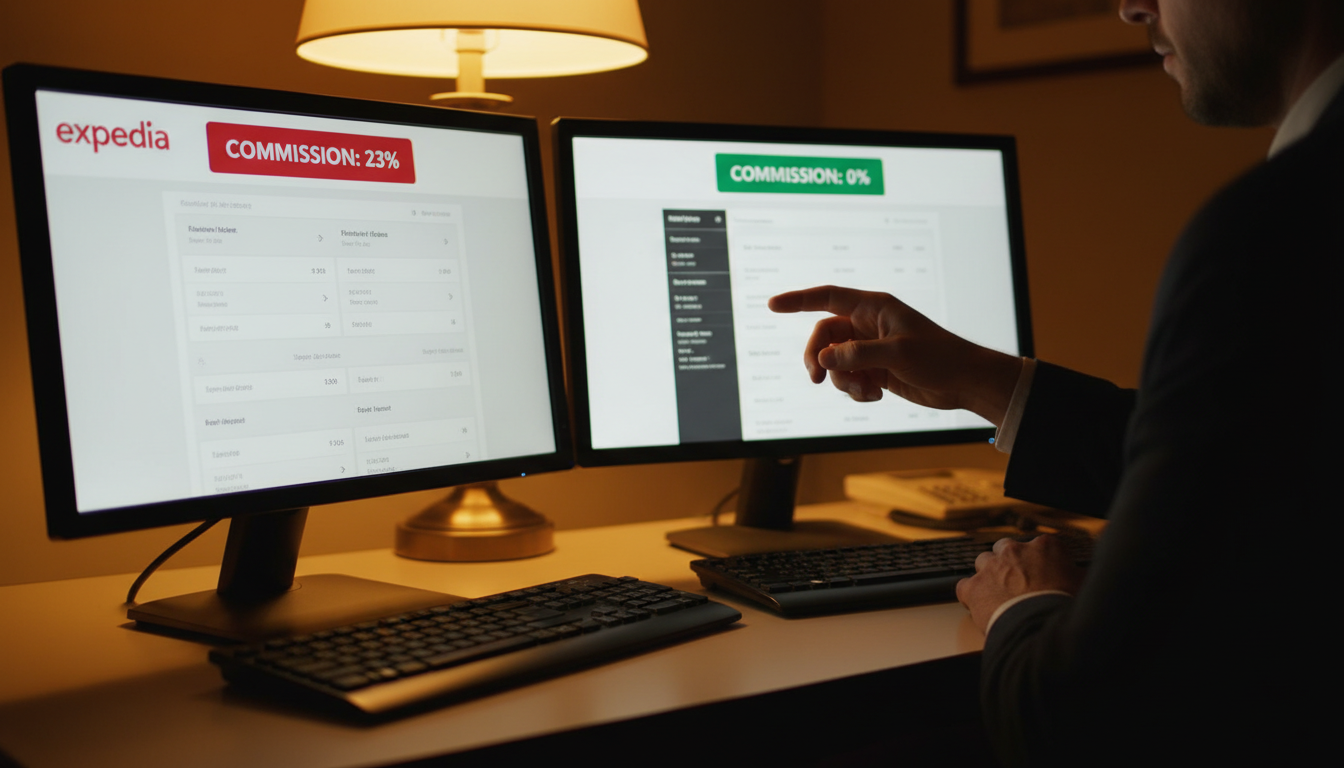
Commission Structure refers to the fee arrangements and payment models that online travel agencies (OTAs) and distribution platforms use to compensate hotels for bookings. These structures typically involve percentage-based commissions on room revenue, though they may also include fixed fees, tiered pricing models, or performance-based incentives. Commission rates vary significantly across platforms and market segments, generally ranging from 15% to 30% of the booking value.
For hotel operators, commission structures directly impact profitability and distribution strategy decisions. High commission rates reduce net revenue per booking but provide access to large customer bases, while lower commissions may come with reduced visibility or booking volume. Hotels must balance the cost of OTA distribution against direct booking channels and evaluate whether commission rates justify the marketing reach and booking volume each platform provides.
Recent industry dynamics have shifted commission negotiations in hotels' favor during periods when major OTAs face operational challenges or market pressures. Understanding and optimizing commission structures remains critical for hotel financial planning and channel management strategy.
Airbnb's latest earnings report buries the real story under travel demand headlines: they're building hotel partnerships and moving upmarket. If you're an independent operator, this isn't just a competitor flexing. It's a distribution channel decision you need to make with your eyes open.
While investors question Expedia's future, smart hoteliers are seeing the cracks in OTA dominance as their best chance to reclaim guest relationships in years.
📡
Get the Briefing Every Morning at 6AM
Join hotel operators, owners, and investors who start their day with InnBrief.
Free forever. Unsubscribe anytime. No spam — just signal.
The InnBrief Daily
92% open rate — operators read this.
Hotel industry intelligence in your inbox every morning at 6AM. No fluff.