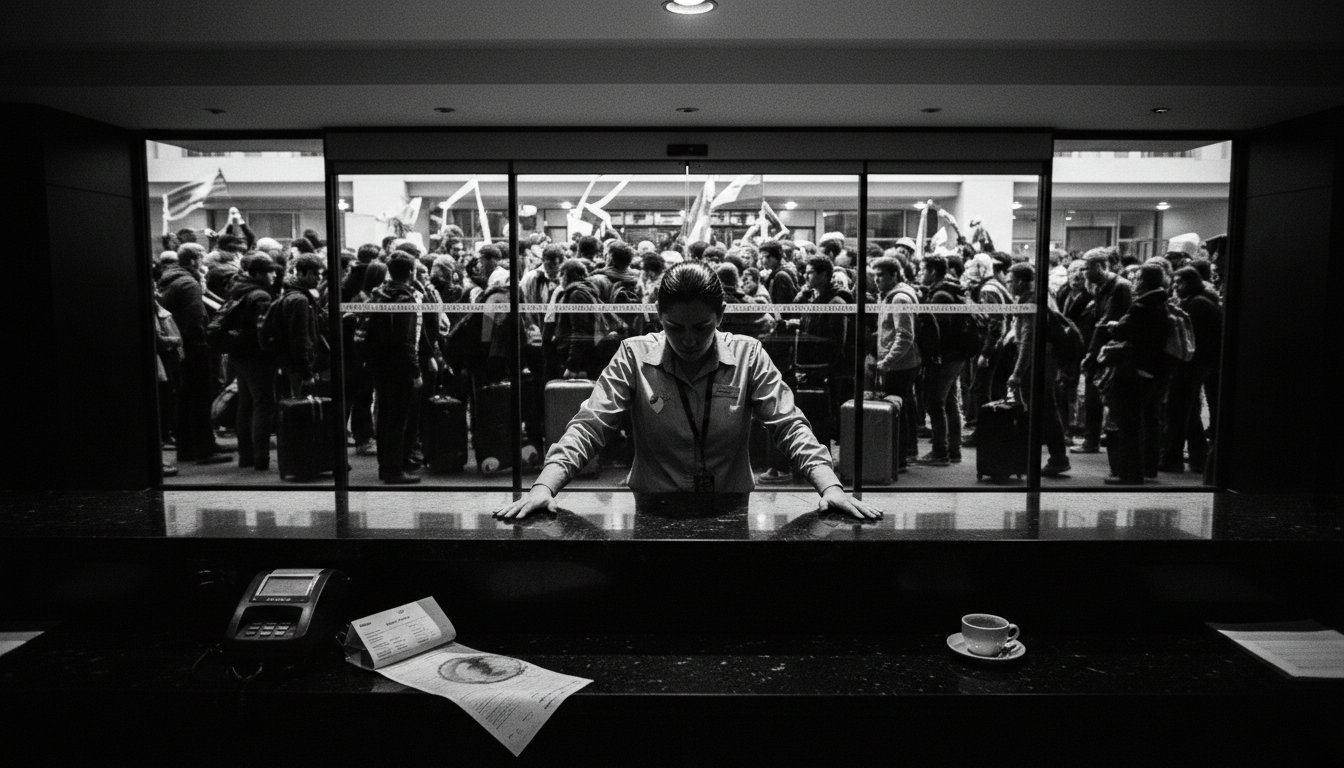
World Cup Hotel Guides Are Travel Porn. Here's What's Actually Coming.
Everyone's publishing where to stay for 2026. Nobody's talking about what happens inside those hotels when 400,000 fans show up at once.
The 2026 FIFA World Cup will be jointly hosted across the United States, Mexico, and Canada, creating a significant revenue opportunity for the hotel industry across three major markets. The tournament represents one of the largest sporting events on the global calendar, historically driving substantial increases in occupancy rates and room rates in host cities and surrounding regions during the competition period.
Hotel operators face both opportunities and operational challenges during World Cup hosting periods. While the event generates elevated RevPAR potential, properties must prepare for intense staffing demands, operational complexity, and the need to manage guest experience during peak occupancy windows. Industry analysis from firms like Tourism Economics and CoStar has examined the financial impact and market dynamics of the tournament across the three host nations.
The competitive landscape among major hotel chains, including IHG and Marriott International, will intensify as operators position inventory and pricing strategies to capitalize on World Cup demand. Success will depend on realistic planning that accounts for both the revenue uplift and the substantial operational strain the event places on hotel staff and systems.
Everyone's publishing where to stay for 2026. Nobody's talking about what happens inside those hotels when 400,000 fans show up at once.
Everyone's celebrating a modest RevPAR bump from the 2026 World Cup. Nobody's talking about the operational chaos that's about to land on your front desk.