Daily Housekeeping Isn't a Perk. It's the Brand Promise Breaking.
Hotels cutting daily housekeeping call it guest preference. The franchise agreement calls it something else entirely.
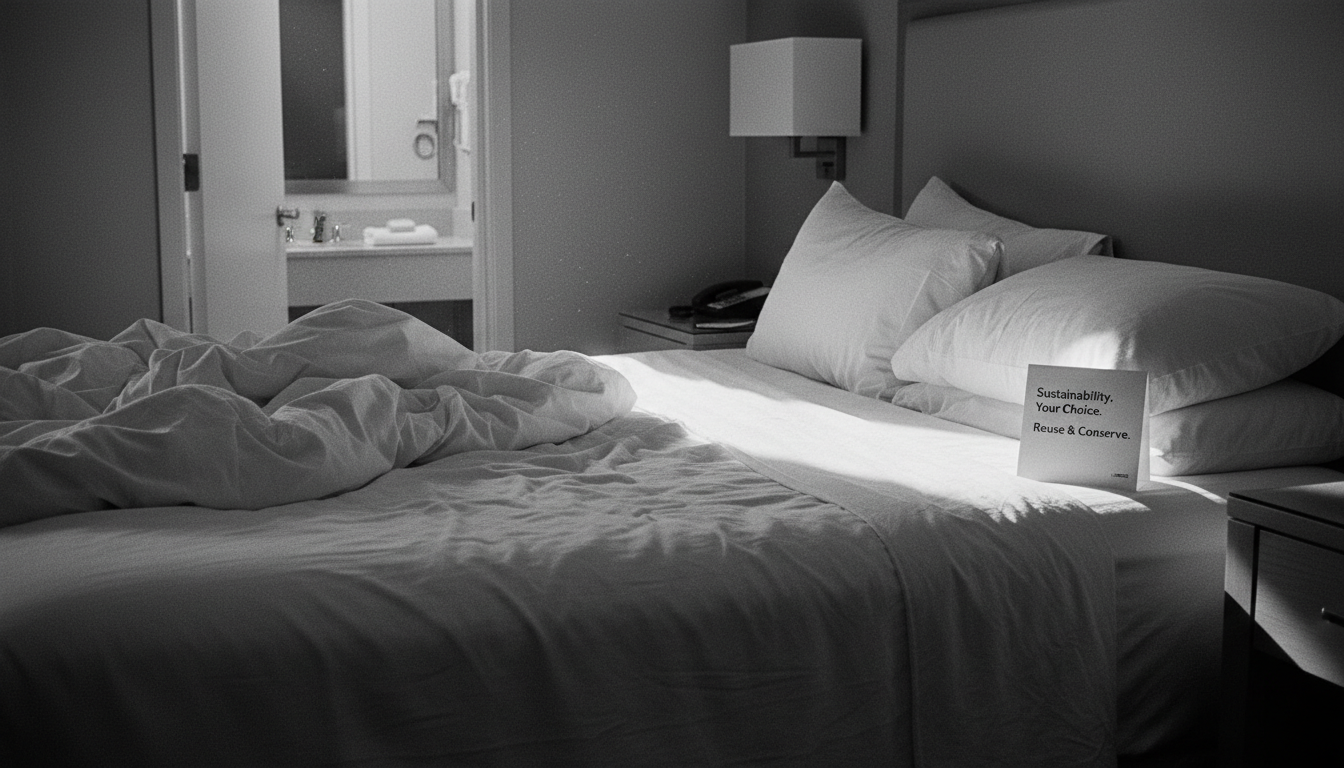
My father cleaned rooms.
Not as his job — as his management philosophy. Every GM posting he held, he'd walk the floors with housekeeping at least once a week. Not inspecting. Working. He said you couldn't understand what your brand promised until you understood what it took to deliver it, room by room, floor by floor.
So when I read that Hyatt, IHG, Marriott, and Hilton have been quietly rolling back daily housekeeping — framing it as a guest-driven evolution, a sustainability initiative, a post-pandemic "new normal" — I don't hear innovation. I hear the sound of a brand promise being renegotiated without telling the person who paid for it.
The source reporting frames this as hotels "ditching a much-loved perk." Perk. That word does a lot of heavy lifting. A perk is a chocolate on the pillow. A perk is a welcome drink. Daily housekeeping isn't a perk — it's the foundational service expectation that justifies the rate. It's baked into every brand standard document I've ever read. It's implicit in every franchise disclosure. It's what the guest is buying when they choose a Hyatt over an Airbnb.
And now the brands are walking it back. Quietly. Property by property. Without adjusting the rate, the franchise fee, or the brand standard in any transparent way.
Here's what the press coverage misses entirely: the franchise economics.
When an owner signs a franchise agreement with a major brand, they're buying a defined product. That product includes service standards — and those standards are what justify the loyalty contribution, the reservation system fees, the marketing assessments, and the rate positioning in the market. The total cost of brand affiliation for a full-service hotel routinely exceeds 15% of room revenue. Owners pay that because the brand promises a specific guest experience that commands a specific rate.
So what happens when the brand quietly degrades the core service component while keeping the fee structure intact?
The owner saves on labor — that's real, and I won't pretend it isn't. Housekeeping is one of the largest line items in rooms division expense. But the owner also absorbs the reputational cost when the guest who's paying full rate discovers their room won't be cleaned unless they ask. The brand keeps its fees. The owner keeps the risk.
I've spent the last three years tracking how major brands handle service standard changes versus fee structure changes. The pattern is consistent: service reductions move fast and quiet. Fee increases come with formal amendments and lengthy justification documents. The asymmetry tells you everything about where the leverage sits.
The "guest preference" framing deserves scrutiny. Yes, some guests — particularly younger travelers on shorter stays — genuinely prefer less intrusion. But "some guests prefer it" is not the same as "most guests chose it." The opt-in model that emerged during COVID was a public health measure. Brands discovered it saved their owners money. Then they kept it — and rebranded the cost savings as a philosophy.
Ask any revenue manager what happens to guest satisfaction scores when daily housekeeping disappears at a property charging premium rates. Ask what happens to repeat booking intent. Ask what happens to the loyalty member who's earned status precisely because they expect a certain level of service. Those answers don't show up in the quarter the labor savings hit. They show up eighteen months later in RevPAR index erosion that nobody connects back to the housekeeping decision.
The sustainability argument is even thinner. If brands genuinely believed reduced housekeeping was an environmental imperative, they'd build it into the brand standard explicitly, adjust the rate positioning accordingly, and market it as a feature — the way some boutique brands have done honestly and effectively. Instead, major brands leave it ambiguous. The property can offer it or not. The guest may or may not know before arrival. The standard is whatever the owner decides to execute, which means the standard isn't a standard at all.
This is what I call brand theater. The appearance of a consistent product without the operational commitment to deliver one. And it corrodes the one thing a franchise system actually sells: reliability.
My filing cabinet has FDDs going back over a decade. I can show you the service standards sections from 2018. I can show you what those same brands are communicating to owners today. The gap between the two is the real story — not the headline about guests losing a "perk."
The family in Albuquerque I think about — the one that invested everything based on a brand's projected performance — they didn't just buy a flag. They bought a promise that the flag meant something specific to every guest who saw it. Every time a brand quietly dilutes what that flag means while maintaining what it costs, another owner is doing math that doesn't work anymore.
What should owners be doing right now? Three things.
First, read your franchise agreement's service standard provisions. Understand exactly what's required versus recommended versus discretionary. If daily housekeeping has moved from required to discretionary without a formal amendment, that's a negotiating lever at your next renewal.
Second, track your guest satisfaction data segmented by housekeeping delivery. If you've moved to opt-in, compare scores and repeat intent for guests who received daily service versus those who didn't. The data exists. Most properties aren't pulling it.
Third, calculate your total brand cost as a percentage of revenue and compare it against the actual revenue premium the brand delivers over an unbranded comp. If the brand is delivering less service differentiation while maintaining the same fee structure, that math has changed — and you should know by how much before your next PIP conversation.
The brands will frame this as progress. The guests will frame it as decline. The owners are caught between the two, paying full price for a product that's being quietly hollowed out.
That's not a perk disappearing. That's a contract being rewritten without anyone signing it.
Elena's right — and she's being diplomatic about it. I've managed properties on both sides of this. At the Westin Cincinnati — unionized, 456 rooms, convention center closing around us — housekeeping was non-negotiable. Not because I'm sentimental about it. Because I'd already learned the lesson the hard way at another property where a previous GM had cut cleaning time to 19 minutes per room. Supplies locked up. Staff bringing their own rags from home. Reviews cratering. I came in, bumped it to 26 minutes, unlocked the supply closet, told housekeeping to make rooms they'd be proud to sleep in. Labor cost went up $73,000. Revenue went up $2.1 million. That's not a heartwarming story. That's math. Here's what nobody in the brand boardroom is saying: when you cut daily housekeeping, you don't just save on labor. You lose the only systematic quality check on your product. Housekeeping isn't just cleaning — it's your daily inspection. It's how you find the leaking toilet before it becomes a $4,000 repair. It's how you catch the HVAC unit that's failing before the guest posts about it at midnight. Take that away and you're flying blind between stays. And Elena nailed the franchise fee piece. I'm paying the same percentage to the brand whether my housekeeper cleans every room or every other room. The brand didn't lower my fees when they lowered the standard. Funny how that works. If you're a GM at a full-service property right now — especially one charging north of $200 a night — don't follow the herd on this. Pull your satisfaction data. Segment it the way Elena described. Then walk your floors this week. Not inspecting. Working. Push a cart for two hours. You'll understand your product better than any brand memo will ever explain it. The brands want to call housekeeping a perk because perks are optional. Your guest doesn't think it's optional. And when they stop coming back, your brand rep won't be the one explaining it to your owner.