Brands Stories
A Hyatt Flag Doesn't Replace What a 60-Year Diner Actually Built

A Hyatt Flag Doesn't Replace What a 60-Year Diner Actually Built

A beloved New Jersey diner is getting demolished for a five-story Hyatt. Elena Voss asks the question nobody in franchise development wants to answer.

My father moved us to a new property every two or three years. Every town we landed in, there was a place like this — a diner, a barbecue joint, a breakfast counter that had been open longer than the hotel had been flagged. The locals went there before they went anywhere else. And the smart GMs figured out fast that those places were the real anchor of the neighborhood, not the hotel.

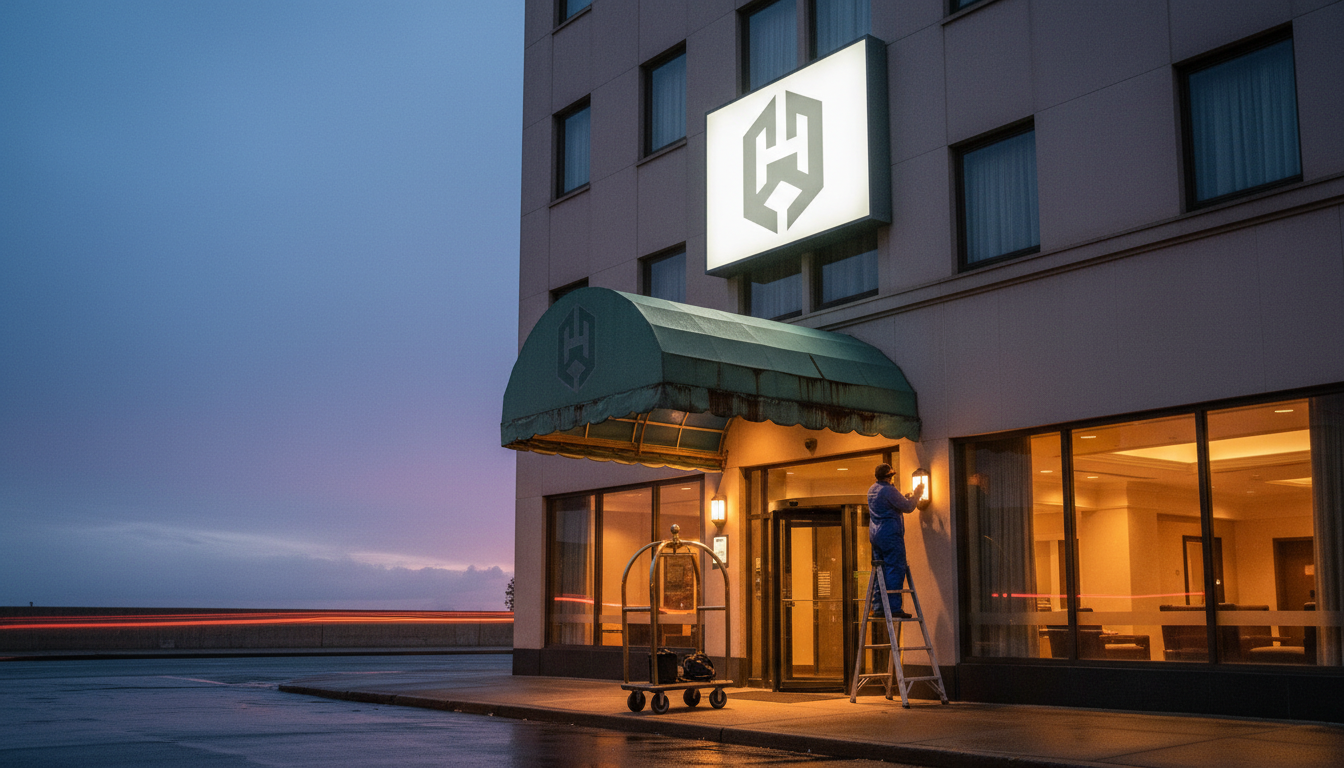
The Prestige Diner in Verona, New Jersey, has been open since 1964. Sixty years of regulars. Sixty years of being the place people go. Now it's slated for demolition to make way for a five-story, 110-room Hyatt hotel.

Let me decode what's actually happening here, because the headline — "iconic diner torn down for hotel" — tells you the emotional story. The strategic story is different.

Someone looked at this site and saw what developers always see: an underbuilt parcel in a market with demand. Northern New Jersey, close to Manhattan access, solid corporate travel base. The math on a 110-key select-service or extended-stay Hyatt in that corridor probably pencils. I'm not here to argue the site selection was wrong.

But here's what the press release and the planning board presentation won't mention: a brand flag on a new-build doesn't come with a neighborhood. It comes with a loyalty program, a reservation system, and a set of standards. What it doesn't come with is sixty years of community equity.

That diner wasn't just a restaurant. It was a reason people knew that intersection existed. It was the thing locals mentioned when giving directions. Every brand strategist I worked with during my years in franchise development understood, at least theoretically, that "sense of place" matters. We put it in pitch decks. We designed lobby concepts around it. We told owners that the modern traveler wants to feel like they're somewhere specific, not anywhere generic.

And then we tear down the actual sense of place to build the hotel that will try to manufacture it.

This is the tension at the center of every conversion-versus-new-build decision in established neighborhoods. When you build new on a site that had community significance, you inherit the absence of what was there before. That's not in any FDD. It's not in the franchise sales projection. But it shapes how the community receives you — and community reception determines your local corporate accounts, your event bookings, your restaurant covers from non-guests, and your reputation on every platform where locals leave reviews.

I've watched this pattern enough times to know the playbook. The developer will promise the new hotel will "serve the community." There will be a rendering with street-level retail or a restaurant concept. Maybe they'll even name something after the diner — a nod, a wink, a menu item. But naming your lobby café after the place you demolished is not homage. It's brand theater.

The question I'd want answered if I were advising the owner taking on this flag: What is Hyatt's actual contribution to demand generation in this specific micro-market? Not the system-wide numbers. Not the loyalty program's national statistics. What is the projected loyalty contribution for a 110-key property in Verona, New Jersey? Because if this property is going to rely primarily on local corporate demand and proximity to transit — demand that exists independent of the flag — then the brand cost needs to be justified against what a well-run independent or soft brand could achieve at lower total fees.

And if you're the developer: you just took on every resident who ate eggs at that counter for thirty years as a potential critic. That's not a financial risk. It's a reputational one. And reputational risk in a local market doesn't show up in the pro forma — it shows up in the planning board fights, the local press coverage, the Google reviews from people who've never stayed a night but have a strong opinion about what you replaced.

The smartest thing the eventual operator of this hotel could do — and almost certainly won't — is build a genuine relationship with the community before the first shovel hits the ground. Not a PR campaign. An actual relationship. Hire local. Source local. Acknowledge what was lost, openly, without trying to co-opt it.

Because a Hyatt flag will get you into the reservation system. But it won't make the neighbors forgive you for the diner.

Operator's Take

Elena's right about the community equity piece — and I'll tell you exactly how it plays out at the property level, because I've lived it. When I took over Hooters Casino Hotel on the Strip, most people in the neighborhood didn't even know we existed. We were invisible despite sitting across from MGM Grand. But at least we hadn't torn down something people loved to get there. This developer in Verona is starting with a deficit I never had — active resentment from the community. Here's the thing nobody in that planning meeting is thinking about: your first 90 days of Google reviews will be shaped by people who never check in. Locals who lost their diner. They'll review your construction noise, your parking impact, your signage. And by the time you open, you'll already have a reputation — and it won't be the one in your brand deck. If you're the GM who eventually gets handed the keys to this 110-room Hyatt, here's what I'd do before I unpacked my office. Walk the neighborhood. Every business within four blocks. Introduce yourself. Don't sell — listen. Find out what the diner meant to people and figure out how your property serves a purpose that isn't just heads in beds. Offer your meeting space to the local chamber for free the first year. Hire the diner's former staff if any of them want hospitality work. Not as a stunt — because they know every regular in town by name, and that's worth more than any loyalty program will ever deliver to a 110-key property in suburban New Jersey. Sixty years of community goodwill just got scraped off that lot. You can't buy it back with a flag. You earn it back one neighbor at a time. And if corporate doesn't give you the runway to do that, you're going to spend your first two years fighting a reputation problem that no revenue management system can solve.


— Mike Storm, Founder & Editor
Read full analysis → ← Show less
Source: Google News: Hyatt
IHG's 2% Business Transient Growth Is the Number That Should Worry You

IHG's 2% Business Transient Growth Is the Number That Should Worry You

IHG is celebrating a 2% uptick in business transient revenue. Elena Voss asks what that number actually buys an owner after fees, inflation, and the cost of chasing it.

IHG wants you to feel good about 2%.

Business transient revenue across the portfolio is up 2% in 2025 over 2024. That's the headline. That's what gets dropped into the franchise sales deck, what gets referenced in the next Item 19 conversation, what the development team points to when they're sitting across from an owner weighing a license agreement.

Two percent. Let's decode that.

First — revenue, not profit. This is a top-line number. It tells you nothing about what it cost to capture that 2%. Was it rate-driven or volume-driven? Because those are two completely different stories for the owner writing the checks. A 2% revenue gain built on occupancy means more rooms cleaned, more labor, more wear on FF&E. A 2% gain built on rate is cleaner margin — but in the current corporate negotiated rate environment, most brands are fighting to hold rate flat, not grow it. So which is it? The headline doesn't say. And that silence is a choice.

Second — 2% against what cost basis? If your total brand cost as an owner — franchise fees, loyalty program assessments, reservation system charges, brand-mandated technology, marketing fund contributions, PIP obligations — runs north of 15% of room revenue, then that 2% top-line lift needs to clear a very high bar just to improve your actual return. I've sat across from owners running the math on loyalty contribution versus loyalty cost, and the variance between what the brand projects and what the property receives is where trust lives or dies.

Third — and this is the part nobody in brand development will say out loud — 2% growth in business transient in 2025 is essentially flat when you account for inflation. Depending on which CPI measure you use, that 2% may not even represent real growth. It may represent the same volume of business travelers paying slightly more for the same trips they were already taking. That's not recovery momentum. That's a treadmill.

Here's what concerns me most: IHG is one of the strongest enterprise players in the business transient segment. Their corporate sales infrastructure, their loyalty penetration, their global footprint — this is their game. If the best-in-class result is 2%, what does the competitive set look like? And what does that tell us about the structural ceiling on business travel recovery?

I spent years building the projections that franchise sales teams present to prospective owners. I know how a number like this gets used. It becomes evidence of "momentum." It becomes the basis for development pitches in markets where business transient demand may not support another flag. It becomes the justification for PIPs that assume continued acceleration.

But 2% isn't acceleration. It's a pulse. And the difference between a pulse and momentum matters enormously when you're an owner deciding whether to reinvest, convert, or sell.

The question owners should be asking their brand reps right now isn't "what's the system-wide number?" It's "what's MY property's business transient contribution, net of all fees, compared to what you projected when I signed?" Because system-wide averages are brand metrics. Your P&L is an owner metric. And those two numbers live in very different realities.

I keep a filing cabinet of annotated FDDs organized by year. The projections from five years ago are the performance data of today. The variance between promise and delivery is where this industry's trust deficit lives. A 2% headline doesn't close that gap. It papers over it.

Operator's Take

Elena's right to question what 2% actually means for the owner. Let me tell you what it means for the GM. It means your corporate sales manager is about to get a memo celebrating the win. It means your revenue management team is going to be told to hold rate on negotiated accounts even when you need heads in beds midweek. And it means that when your business transient doesn't hit the system-wide number — because your market isn't Manhattan or downtown Chicago — you're going to get questions from your brand rep about "loyalty program engagement" and "rate integrity" as though you're the problem. I've run properties where the brand's system-wide story and my property's actual story had almost nothing in common. A 2% system average can mean 8% growth in gateway cities and negative growth in your secondary market. Nobody sends a press release about the properties pulling the average down. If you're a GM at an IHG property right now, here's what I'd do: pull your business transient segmentation for the last 90 days. Compare your loyalty contribution to your total brand cost — not the franchise fee alone, ALL of it. If the math doesn't work at the property level, that's a conversation your ownership group needs to have before the next PIP cycle, not after. Two percent sounds like progress. Make sure it's YOUR progress, not just the portfolio's.

— Mike Storm, Founder & Editor
Read full analysis → ← Show less
Source: Google News: IHG
Choice Hotels' International Bet Is a Franchise Math Problem

Choice Hotels' International Bet Is a Franchise Math Problem

US RevPAR is slipping, and Choice is pointing overseas. But global expansion doesn't fix what's breaking at home — it just moves the denominator.

Here's what the headline tells you: Choice Hotels' US RevPAR declined in Q4, and the company is leaning into global markets as a key growth engine.

Here's what it doesn't tell you: why international expansion is the answer to a domestic softening — and whether the owners already in the system should find that reassuring or alarming.

I've watched this playbook run before. A brand hits a ceiling domestically — saturation in key markets, comp-set compression, loyalty contribution plateauing — and the growth story pivots to international. The investor deck gets a new map with colored pins. The earnings call gets a new vocabulary. "Key markets." "Global footprint." "Untapped demand."

But franchise economics don't translate cleanly across borders. They never have.

The domestic owner — the one running a Comfort Inn in a secondary US market watching RevPAR soften — doesn't benefit from a new flag in Southeast Asia. That owner's question is simpler and more urgent: is the brand still delivering enough demand to justify what I'm paying? When US RevPAR declines, that question gets louder. And "we're growing internationally" is not an answer to it.

What concerns me is the sequence. International expansion requires enormous corporate investment — development teams, regional offices, compliance infrastructure, adapted standards. Those costs sit at the corporate level, but they compete for the same leadership attention and capital allocation that domestic owners need. Every hour the C-suite spends on a new market entry framework is an hour not spent on the loyalty program performance that a franchisee in Knoxville is watching deteriorate.

And here's the deliverability question nobody on the earnings call is asking: can Choice's brand standards — built for the US select-service model — survive translation into markets with fundamentally different labor structures, guest expectations, and physical plant realities? A brand is a promise. When you export it, you're promising the same thing in a context where your ability to enforce it is dramatically weaker. I've seen brands expand internationally and maintain rigor. I've seen more expand and dilute.

The real tension in this story isn't US versus international. It's the gap between what a franchisor optimizes for and what a franchisee needs. Choice optimizes for unit count and system-wide revenue — metrics that reward global expansion regardless of where the RevPAR pressure lives. The franchisee optimizes for their P&L — and right now, in the US, that P&L is under pressure from softening demand while brand costs hold steady or increase.

When a brand says global markets are "key" to growth while domestic RevPAR is declining, the domestic owner should hear that clearly: growth is going somewhere else. The question is whether the brand's investment in your market is going with it.

I'd want to see two things before I'd advise any owner to take comfort in this strategy. First, what is Choice's actual loyalty contribution rate in existing international markets versus domestic — not projections, actuals. Second, what is the company's domestic reinvestment plan for the owners already in the system who are absorbing the RevPAR decline right now? If those answers are vague, the international growth story is a corporate narrative, not an owner benefit.

One more thing. My filing cabinet has franchise disclosure documents going back over a decade. The projections from five years ago are the performance data of today. When I hear a brand pivoting its growth thesis, I don't listen to where they say they're going. I look at where they said they'd be by now — and check whether they got there.

Operator's Take

Elena's right to follow the money here. When the brand's growth story shifts overseas while your RevPAR is softening at home, you need to understand what that means for you specifically — not the system, not the investor, you. Here's what I'd tell any GM or owner in Choice's domestic portfolio right now: pull your loyalty contribution numbers for the last four quarters. Not the system average — YOUR property. Compare it to what you were promised in the FDD or what your franchise sales rep projected. If there's a gap, that's the conversation you need to be having with your brand rep, not next quarter, this month. Because here's what actually happens at the property level when corporate attention shifts: your area director's visit schedule gets thinner. Your PIP timeline doesn't flex even though your revenue just did. The brand standards manual stays the same, the fees stay the same, but the thing you're paying for — demand generation into YOUR lobby — starts to feel like it's pointed somewhere else. I've run branded properties where the brand was all-in on my market and I've run them where we were an afterthought. The difference isn't subtle. It shows up in your booking pace within 90 days. If you're a Choice franchisee in a softening US market, don't wait for the brand to tell you the plan. Ask. In writing. What specific investments are being made in domestic demand generation this year? What's the loyalty delivery target for your tier and market? And if the answers are just a repackaged version of the earnings call — "global growth is key" — then you know exactly where you stand. Act accordingly.

— Mike Storm, Founder & Editor
Read full analysis → ← Show less
Source: Google News: Hotel RevPAR
IHG's Free Card Strategy Is Brilliant. For IHG.

IHG's Free Card Strategy Is Brilliant. For IHG.

A no-annual-fee credit card books a family vacation. The real story is what IHG extracted in return — and who's actually paying for that 'free' room.

A consumer blogger just walked the internet through booking a spring break family trip using points from IHG's no-annual-fee credit card. It's a charming story. Smart redemption strategy, solid value for the traveler, the kind of content that makes you feel like you've unlocked a secret.

But I read it from the other side of the franchise agreement. And from over here, the story looks very different.

Let me decode what's actually happening.

IHG's co-branded credit card program — the no-annual-fee tier specifically — is one of the most effective demand-capture tools in the loyalty ecosystem right now. The consumer thinks they're gaming the system. They are not gaming the system. They ARE the system. Every swipe at a grocery store, every gas station fill-up, every monthly subscription — it all feeds IHG's loyalty engine with points that will eventually be redeemed at a franchised property.

And who funds that redemption? The owner.

This is the part the travel blogger doesn't write about, because they don't know it exists. When a loyalty member redeems points for a "free" night, the property receives a reimbursement from the brand — but that reimbursement is almost never at the rate the room would have sold for on the open market. The owner gets a fixed or formulaic payout. The gap between what the room was worth that night and what the owner actually received? That's the real cost of the loyalty program.

Now multiply that across spring break. Peak demand. Compressed markets. The exact nights when rate integrity matters most — and loyalty redemptions are flooding the inventory.

I've sat in franchise development presentations where loyalty contribution is pitched as a major value driver. "Our members book more frequently, spend more on-property, and demonstrate higher lifetime value." Some of that is true. But the pitch never includes a slide showing redemption reimbursement rates during peak periods versus what revenue management would have yielded on the open market. I've asked for that slide. It doesn't exist in the sales deck.

Here's what the brand is actually optimizing for: credit card co-brand revenue is one of the highest-margin income streams for any major hotel company. The bank pays IHG for every card issued, for every dollar spent, for the ongoing relationship. That revenue flows to the brand — not to the property. The points liability eventually lands on the owner's rate sheet as a below-market reimbursement.

Is anyone at IHG headquarters losing sleep over this? No. Because the strategy is working exactly as designed. More cardholders means more points in circulation. More points in circulation means more redemptions. More redemptions means more "loyalty contribution" that the franchise sales team can cite when pitching the next owner. It's a self-reinforcing loop — and the economics are elegant, if you're the brand.

Does this mean loyalty programs are worthless for owners? No. Loyalty members do tend to book direct, which saves on OTA commissions. They do demonstrate repeat behavior. In soft markets, a redeemed room is better than an empty one. The calculation isn't simple.

But it's a calculation most owners aren't making with full information. When your franchise sales rep told you loyalty members would represent a certain percentage of your revenue, did they break out how much of that would be redeemed nights versus paid nights? Did they model the revenue displacement during peak periods? Did they show you the reimbursement formula relative to your ADR?

If you're an IHG franchisee reading a blog post about how easy it was for a family to book your hotel for "free" during spring break — the highest-demand week of Q1 — you should be running the math on what that stay actually cost you in displaced revenue. Not because the loyalty program is a scam. Because understanding the true economics is the only way to manage around them.

The travel blogger got a great deal. Someone paid for it. The question every owner should be asking: how much of that "great deal" came out of my margin?

Operator's Take

Elena knows this game cold — she helped build it. And she's right: the brand's co-brand credit card revenue is gravy for headquarters and a cost center for the property. But here's what I'd add from the operations side. I've managed loyalty-heavy properties. The redemption math stings during peak — no argument. But the operational problem nobody talks about is what happens to your revenue management strategy when a chunk of your peak inventory is locked up in points bookings that your RMS didn't price. Your revenue manager is optimizing for yield. The loyalty system is optimizing for member satisfaction. Those two goals collide hardest on exactly the nights that matter most — spring break, holidays, citywide events. If you're a GM at an IHG property, here's what you do: sit down with your revenue manager this week and pull your redemption data for the last three peak periods. Calculate the gap between your reimbursement rate and your actual ADR on those nights. That's your loyalty tax. It's not zero. Now decide if you're managing around it or just absorbing it. And if you're an owner about to sign a franchise agreement — ask for the reimbursement formula in writing, model it against your peak-period rate strategy, and don't let anyone tell you "loyalty contribution" is a number that only goes up. The family that booked their spring break "for free" had a wonderful time. Your job is to know exactly what that wonderful time cost you.

— Mike Storm, Founder & Editor
Read full analysis → ← Show less
Source: Google News: IHG
Hilton's Iran Ownership Problem Isn't About Politics. It's About Due Diligence.

Hilton's Iran Ownership Problem Isn't About Politics. It's About Due Diligence.

Two Hilton-flagged hotels in Germany are linked to Iranian regime ownership. The brand exposure here goes deeper than headlines suggest.

Let me tell you what the press release doesn't mention — because there isn't one.

Two Hilton-branded hotels in Germany — the Hilton Frankfurt City Centre and the Waldorf Astoria Berlin — are reportedly tied to ownership entities connected to the Iranian regime. The scrutiny isn't coming from Hilton. It's coming from journalists and sanctions researchers who traced the ownership structures. And if you've spent any time in franchise development, you know exactly how uncomfortable that silence is.

Here's what I want to unpack, because the geopolitics will get all the oxygen and the brand mechanics will get none.

Every major hotel company has a franchise sales pipeline. That pipeline is built on velocity — deals signed, rooms added, quarterly growth reported to analysts. The incentive structure is clear: more flags, more fees, more rooms in the pipeline presentation. And the due diligence process, at most brand companies, is designed primarily to assess financial viability and brand-standard compliance. Can the owner fund the PIP? Will the property meet spec? Those are the questions that get asked.

The question that doesn't always get asked with the same rigor: Who, ultimately, owns this asset?

I'm not suggesting Hilton knowingly flagged properties controlled by a sanctioned regime. What I am suggesting — based on years spent inside the franchise development machinery — is that beneficial ownership verification has never been the strongest muscle in the brand approval process. It's a compliance checkbox, not a strategic filter. Ownership structures involving holding companies, investment funds, and cross-border entities can obscure the actual beneficial owner behind multiple layers. And when the deal is attractive — a trophy Waldorf Astoria location in Berlin, a full-service Hilton in Frankfurt — the commercial incentive to close can outpace the compliance incentive to dig.

This is the gap my filing cabinet was built for.

I keep annotated FDDs going back years. I keep them because the promises brands make at signing are testable against what actually happens. But I also keep them because franchise agreements contain representations and warranties about ownership, and those reps are only as good as the verification behind them. When beneficial ownership is obscured through layered corporate structures — particularly structures spanning multiple jurisdictions — the standard franchise approval process may not catch it. Not because people are corrupt. Because the process wasn't designed for that level of forensic scrutiny.

The harder question for Hilton isn't "how did this happen?" It's "how many other flags are we flying where we don't fully know the answer to that question?"

And that question isn't unique to Hilton. Every major brand company with international franchise operations faces the same structural vulnerability. You're approving deals in dozens of countries, through ownership entities structured under local corporate law, with beneficial ownership disclosure requirements that vary wildly by jurisdiction. Germany has tightened its transparency register rules, but enforcement and verification remain uneven across markets where brands are aggressively expanding.

What does this mean for owners already in the system? Two things.

First, if you're a franchisee operating under the same brand flag as a property now linked to sanctions violations or regime-connected ownership, your brand equity just took collateral damage. You didn't do anything wrong. You're paying the same fees. But the guest reading this headline doesn't distinguish between your Hilton and that Hilton. Brand is a shared asset — and shared assets carry shared risk.

Second, expect the compliance burden to increase. When a story like this breaks, brands respond with process. More ownership disclosure requirements. More frequent re-verification. More legal review in the approval pipeline. All of which costs time and money — and all of which gets passed to the franchise system, not absorbed by headquarters.

The deeper strategic read: this is what happens when asset-light growth meets geopolitical complexity. When your business model is putting your name on other people's buildings in 120+ countries, the reputational surface area is enormous and the control is limited. Hilton doesn't operate these hotels. They license their name. They collect fees. And when the ownership behind the building becomes a sanctions story, the name on the building is what makes the news.

I watched my father navigate brand mandates for decades — standards he had to meet, fees he had to pay, decisions made in offices he'd never visit. But the brand always told him the relationship was a partnership. That the flag protected him. Stories like this remind you that the flag can also expose you to risks you never consented to and can't control.

Hilton will likely address this with legal precision and careful distancing. They'll point to contractual compliance, local operating entities, and applicable sanctions law. And they may be entirely correct on every legal point.

But the brand question isn't legal. It's trust. And trust, once it becomes a headline, doesn't get resolved in a compliance filing.

Operator's Take

Elena's right — and she's being diplomatic about it. Here's the thing nobody in a corner office wants to say out loud: the franchise sales machine at every major brand is built to say yes. The development team's job is to grow the pipeline. Compliance is the speed bump, not the steering wheel. I've sat across from brand reps who couldn't tell me basic details about who actually owned the building they were trying to flag. They knew the management company. They knew the investment entity on the contract. They did not know — and did not appear motivated to learn — who was behind it. If you're a GM at either of those German properties right now, your life just got very complicated and nobody from headquarters is calling you first. You're going to read about it the same way your guests do. And then you're going to have to stand in your lobby and answer questions you weren't briefed on. I've been that person. The brand is three time zones away drafting a legal statement. You're the one looking a guest in the eye. And if you're a franchisee anywhere in the Hilton system — or Marriott, or Hyatt, or IHG, because every one of them has the same exposure — take this as your wake-up call. Read your franchise agreement. Understand the representations about co-system risk. Ask your brand rep what their beneficial ownership verification process actually looks like, not what the PowerPoint says. Because your name is tied to their flag, and their flag is tied to every other property in the system. The brand will survive this. Brands always survive. It's the operator standing in the lobby at 7 AM who absorbs the hit.

— Mike Storm, Founder & Editor
Read full analysis → ← Show less
Source: Google News: Hilton
Marriott's Asia-Pacific Boom Is a Brand Portfolio Problem Disguised as Growth

Marriott's Asia-Pacific Boom Is a Brand Portfolio Problem Disguised as Growth

Marriott is celebrating unprecedented APAC expansion. The question nobody's asking: can 30+ brands differentiate when they all chase the same emerging-market traveler?

My father got moved to a new property every two or three years. Each time, the brand had a different name on the sign and the same playbook in the binder. He used to say the only thing that changed was the shade of beige in the lobby.

I think about that every time a major company announces "unprecedented growth" in a region where half the brands in the portfolio have never been tested against local market realities.

Marriott is trumpeting its Asia-Pacific expansion — emerging markets, luxury properties, aggressive signings across the region. The press release reads like a victory lap. And by the metrics brands measure themselves on — pipeline count, flags planted, markets entered — it is one.

But here's what the press release doesn't mention: Marriott now operates north of 30 brands globally. When you push that portfolio into Asia-Pacific emerging markets simultaneously, you aren't just opening hotels. You're asking owners in Bangkok and Bangalore and Ho Chi Minh City to bet millions on the proposition that travelers in those markets can distinguish between a Tribute Portfolio and an Autograph Collection, between a Fairfield and a Four Points, between a W and an Edition.

Can they? In mature markets like Manhattan or London, maybe — decades of brand conditioning have carved out some mental real estate. But in emerging markets where international branded hospitality is still relatively new, brand differentiation isn't inherited. It has to be built from scratch. Property by property. Market by market. And that takes something no signing ceremony provides: years of consistent operational delivery by teams who understand what the brand is supposed to feel like.

This is the part of expansion math that never makes it into the investor presentation. Every flag Marriott plants carries a brand promise. That promise has to be translated into a service culture, a design language, an F&B program, and a guest experience that a local team executes on a Tuesday afternoon with whatever labor market they've got. I've sat in enough franchise development meetings to know that the gap between "signing" and "delivering the brand" is where owner relationships go to die.

The luxury push deserves its own scrutiny. Luxury in Asia-Pacific is not a single market — it's a dozen wildly different markets with different service traditions, different guest expectations, and different definitions of what "luxury" even means. A Ritz-Carlton in Kyoto operates in a fundamentally different hospitality culture than a Ritz-Carlton in Bali. Scaling luxury means either imposing a uniform standard that feels foreign in some markets, or allowing local adaptation that risks diluting the brand. Both paths have costs. Neither is simple.

What concerns me most is the incentive structure underneath all of this. Franchise and management fees flow from signings and openings. The company gets paid when flags go up. The owner discovers whether the brand delivers value three years later, when the loyalty contribution numbers come in and the PIP cycle begins. I've watched this movie before — in a different region, with a different family's savings on the line. The projections were optimistic then, too.

Does this mean Marriott shouldn't grow in Asia-Pacific? Of course not. The demand is real. The opportunity is real. But "unprecedented growth" without unprecedented investment in brand clarity is how you end up with 30 brands that all feel like the same hotel with a different sign out front.

The owners signing these agreements need to ask one question that no franchise sales team will volunteer the answer to: In this specific market, with this specific brand, what is the documented evidence — not projections, evidence — that this flag delivers enough revenue premium over a comparable unbranded or competitor-branded property to justify the total cost of the franchise relationship?

If the answer starts with "we believe" instead of "the data shows," you're not buying a brand. You're buying a bet.

Operator's Take

Elena's asking exactly the right question — and I'll tell you why it matters at the property level, not just the boardroom level. I've opened branded properties. I've renovated them. I've run them in markets where the guest couldn't tell you the difference between our brand and the one across the street if you offered them a free upgrade. You know what they CAN tell you? Whether the front desk agent smiled. Whether the room smelled clean. Whether anyone remembered their name. Here's the thing about rapid expansion into emerging markets: you need people. Not flags, not design packages, not loyalty program integrations — people. Trained, motivated, culturally competent people who understand what the brand is supposed to feel like and can deliver it 300 times a day. And right now, the global hospitality labor market is the tightest it's been in my career. So if you're a GM getting handed the keys to a new Marriott-branded property in an APAC emerging market — congratulations. Now ask yourself: do I have a training infrastructure that can teach a team of 150 what this brand means in a way that translates to every single guest interaction? Because if the answer is a two-day corporate onboarding and a standards manual, you're going to deliver a generic hotel experience with an expensive sign. Elena nailed the franchise math question. My addition is simpler: a brand is only as good as the worst Tuesday night shift at the worst-performing property in the system. Every flag you add is another Tuesday night you have to win. Thirty-plus brands across dozens of new markets means a LOT of Tuesday nights. If you're an owner being pitched one of these APAC deals right now, do what Elena said — demand actuals, not projections. And then call a GM who's already running that brand in a comparable market. Not the reference the sales team gives you. Find one yourself. Buy them dinner. Ask them what the brand actually delivers versus what the FDD says. That conversation is worth more than every projection deck in the pipeline.

— Mike Storm, Founder & Editor
Read full analysis → ← Show less
Source: Google News: Marriott
IHG's 21st Brand Solves a Problem IHG Created

IHG's 21st Brand Solves a Problem IHG Created

Noted Collection is IHG's admission that its soft brand portfolio has gaps. The real question: who's paying to fill them?

Twenty-one brands.

Let that number sit for a moment. IHG Hotels & Resorts has just launched Noted Collection by IHG, a soft brand collection positioned — according to the announcement — for upscale and upper-midscale independent hotels that want IHG's distribution muscle without a full-conversion mandate.

If you're an owner being pitched this right now, you're hearing the version that sounds like freedom. Keep your name. Keep your identity. Get access to IHG Rewards loyalty members and the booking engine. Light touch. Best of both worlds.

I've been in the room where those pitches happen. I've helped build them. And the question I'd ask before signing anything is the one the press release will never answer: what, specifically, does brand number twenty-one do that brands one through twenty don't?

Because IHG already has a soft brand collection. It's called Vignette Collection, launched in 2021, targeting upscale independents. Before that, there was the luxury-tier Regent revival and the ongoing positioning of Kimpton as the "independent-spirited" brand. The company also runs Hotel Indigo, which was purpose-built to feel like a boutique independent within a branded system.

So Noted Collection isn't filling a white space in the market. It's filling a white space in IHG's conversion pipeline — the upper-midscale and upscale independents that said no to Vignette (too upscale, too much PIP) and wouldn't touch a Holiday Inn flag. That's a real segment. But let's be honest about what's happening: this is a franchise sales tool, not a guest-facing brand strategy.

The soft brand collection model — Marriott's Tribute Portfolio, Hilton's Tapestry, Choice's Ascend, Best Western's WorldHotels — has become the default answer to a specific corporate problem: how do you grow unit count without building anything? You sign independents. You charge them fees. You give them access to your loyalty engine. The hotel keeps its name, the brand counts it in the pipeline number, and everyone announces a win.

What the press release doesn't mention is the tension at the core of every soft brand relationship.

The owner joins because they want distribution without losing identity. The brand signs them because they want fee revenue and network scale. Those two objectives align beautifully on day one. They start diverging around month eighteen, when the brand's quality assurance team shows up with a standards checklist that looks suspiciously like a PIP, and the owner realizes that "light touch" has fine print.

I keep annotated franchise disclosure documents going back years. The pattern is consistent across every major company: soft brand collections launch with flexible standards to drive signings, then tighten those standards once the portfolio reaches critical mass. The early adopters get the deal they were promised. The late adopters get the deal the brand needs to protect quality scores. If you're signing onto Noted Collection in year one, understand that the agreement you're entering may not reflect the operating reality three years from now.

Here's what I'd want to see before advising any owner to flag with Noted Collection: the actual loyalty contribution data from Vignette Collection properties after their first full year. Not projections — actuals. Because the entire value proposition of joining a soft brand is access to the loyalty engine. If Vignette properties are seeing 30-40% of room nights from IHG Rewards members, that's a meaningful revenue argument. If they're seeing 15-20%, the owner is paying franchise fees for a distribution channel that isn't delivering enough volume to justify the cost.

The broader issue is portfolio coherence. Twenty-one brands is not a portfolio. It's a catalog. At some point, the internal brand boundaries become so thin that the company's own franchise sales teams are competing with each other for the same prospects. I've watched it happen — a development officer pitching Hotel Indigo to a property that another officer already approached about Vignette, while a third is now circling with Noted Collection. The owner isn't choosing between meaningfully different brand promises. They're choosing between meaningfully different fee structures.

And that's the tell. When the differentiator between your brands is the deal terms rather than the guest experience, you don't have twenty-one brands. You have twenty-one pricing tiers.

None of this means Noted Collection will fail. IHG is a sophisticated company, and the independent hotel segment is genuinely underserved by major loyalty platforms. There are owners out there — solid operators running distinctive properties in strong markets — who would benefit from IHG's booking engine and would never accept a full-brand conversion. Noted Collection gives them an on-ramp. That's real.

But the owners who benefit most will be the ones who negotiate hardest. The ones who read every clause about standards evolution, who get specific performance guarantees around loyalty contribution, who understand that a soft brand collection is a distribution partnership — not a brand identity — and who have an exit strategy if the math stops working.

Twenty-one brands. My father spent his career running properties for a company that had six. He could explain what each one stood for in a single sentence. I'd challenge anyone at IHG to do the same for all twenty-one without checking their notes.

Operator's Take

Elena's right — and she's being diplomatic about it. Here's the property-level version: if you're an independent owner getting the Noted Collection pitch right now, the sales deck is gorgeous and the promises are real. Today. What Elena is telling you is that the promises evolve. I've been on the receiving end of brand standards that started as 'guidelines' and became mandates within two years. So here's what you do. Before you sign anything, ask for actual loyalty contribution numbers from Vignette Collection properties — not projections, not pro formas, actual trailing-twelve data. If they can't give it to you, that tells you something. If they can and it's north of 30%, have a real conversation. If it's south of 20%, you're paying franchise fees for a flag that isn't filling your rooms. And get your exit terms in writing. Not the standard termination clause — negotiate a performance-based exit trigger. If loyalty contribution falls below X percent for two consecutive quarters, you walk without penalty. Any brand confident in their distribution engine should be willing to put that on paper. If they won't, that tells you everything about how much they believe their own pitch. This applies to every GM and owner running an independent property between 80 and 250 keys in an upper-midscale market. You're about to get a phone call. Be ready for it.

— Mike Storm, Founder & Editor
Read full analysis → ← Show less
Source: Google News: IHG
Marriott's One-Point Festival Tickets Aren't Generosity. They're Strategy.

Marriott's One-Point Festival Tickets Aren't Generosity. They're Strategy.

Marriott is letting members score VIP music festival access for a single Bonvoy point. The real price is paid somewhere else entirely.

Let me explain what's actually happening here.

Marriott just announced that Bonvoy members can score VIP music festival tickets for a single loyalty point. One point. The headline writes itself, and that's exactly the idea. Every travel blogger will run this as a feel-good perk story. "Look what your points can get you now!"

But I've spent enough years in the brand machine to know that when a company gives something away for almost nothing, the product being sold isn't the thing being given away. The product being sold is you.

This is a loyalty engagement play — pure, surgical, and honestly quite smart. Here's what the press release doesn't mention: the strategic problem Marriott is trying to solve.

Bonvoy has somewhere north of 200 million members. The vast majority of them are what we used to call "dead accounts" on the brand side — enrolled but inactive, points sitting untouched, no emotional connection to the program. They booked a Courtyard once for a cousin's wedding, created an account because the front desk asked, and haven't thought about it since. These members cost money to maintain in the system and generate zero incremental revenue.

One-point redemptions aren't about the music festival. They're about reactivation. Get a dormant member to log in, engage with the platform, see the other offerings, and — this is the real goal — remember they're a Bonvoy member the next time they need a hotel room. Every reactivated member who books even one additional night represents far more value than the cost of a festival ticket.

The economics aren't complicated. Marriott likely negotiated these festival partnerships as marketing trades — brand visibility at the event in exchange for ticket inventory. The "cost" to Marriott of each ticket is almost certainly a fraction of face value. Meanwhile, the earned media from "one point gets you VIP access" generates millions in impressions. The actual expense line is minimal. The engagement return is potentially enormous.

But here's where my filing cabinet of old FDDs makes me pause.

Who funds the loyalty program? Owners do. Every Bonvoy assessment, every loyalty contribution baked into the franchise agreement, every point redeemed for a free night at a franchised property — that cost flows to the owner. When Marriott builds buzz and brand heat through experiential perks like festival tickets, the halo effect theoretically benefits every property in the system. Theoretically.

The question owners should be asking: does this activation strategy actually convert to room nights at MY property, or does it primarily build Marriott's consumer brand while I fund the program that makes it possible?

I've watched this pattern across my entire career brand-side. Headquarters launches a splashy loyalty initiative. The press covers it. The CMO presents the engagement metrics at the next investor call. And the owner of a 140-key Fairfield in Wichita wonders why their loyalty contribution went up again while their loyalty room nights stayed flat.

That's not to say this is a bad program. It might be genuinely effective at reactivation. But effective for whom? Marriott's brand equity and Marriott's app engagement metrics aren't the same thing as an owner's RevPAR.

The brands that earn owner trust are the ones that can draw a clear, measurable line between "we spent your loyalty dollars on this" and "here's what came back to your property." One-point festival tickets are a brilliant marketing move. Whether they're a brilliant franchise value proposition depends entirely on data that Marriott has and owners don't.

And that asymmetry — that gap between what the brand knows about program performance and what the owner is allowed to see — is the franchise relationship in miniature.

Operator's Take

Elena's got the franchise economics exactly right. But let me add what this looks like from the lobby. I've managed Marriott properties. I've watched loyalty programs evolve from "thank you for staying with us" into massive marketing machines that owners fund and brands control. And I've sat in owner meetings where someone asks "what exactly am I getting for this assessment?" and the brand rep pulls up a PowerPoint full of national impressions data that has nothing to do with heads in beds at that specific property. Here's the thing — experiential perks like this are smart brand marketing. I'll give them that. But every dollar Marriott spends on festival tickets is a dollar that didn't go toward driving direct bookings to franchised hotels. And the owner paying into the loyalty fund doesn't get to vote on which one matters more. If you're a Marriott-flagged owner or GM, don't just read this headline and feel good about the brand you're attached to. Ask your brand rep one question: "Show me the reactivation-to-booking conversion data from the last experiential loyalty campaign you ran." If they can show you real numbers — members who engaged with a similar promotion and then booked a stay within 90 days — great. Support the program. If all they have is impressions and app engagement metrics, you're funding a Super Bowl ad that sends people to someone else's property. Your loyalty assessment isn't a tax. It's an investment. Start asking for the return.

— Mike Storm, Founder & Editor
Read full analysis → ← Show less
Source: Google News: Marriott
Hilton Times Square's New GM Hire Is a Brand Play, Not a Personnel Move

Hilton Times Square's New GM Hire Is a Brand Play, Not a Personnel Move

A press release about a new GM tells you almost nothing. The strategy it signals about Hilton's Manhattan positioning tells you everything.

Let me tell you what a GM appointment press release actually is: it's a brand signal dressed up as a personnel announcement.

Hilton New York Times Square has named Dan Briks as General Manager, and the release hits every expected note — "industry veteran," "over two decades of experience," "New York's top hospitality venues." Fine. Congratulations are in order, and I mean that sincerely. Times Square is not an assignment you hand to someone you're unsure about.

But here's what the press release doesn't mention: why now, and what this hire is actually designed to fix.

A Times Square full-service Hilton sits in one of the most brutally competitive corridors in American hospitality. Within a ten-block radius, you've got Marriott Marquis, the Crowne Plaza, the W, the Renaissance, multiple Hyatts — and a growing roster of lifestyle independents picking off the guests who used to default to big-box brands. The loyalty contribution math in Midtown Manhattan is unlike anywhere else in the system. You're not competing for the road warrior who books wherever their points work. You're competing for group business, international leisure, and corporate accounts that have options on every block.

When a brand installs a GM with deep local market history in a flagship urban property, they're not just filling a vacancy. They're repositioning the asset's competitive posture without the cost of a renovation announcement. It's the cheapest rebrand move in the playbook — new leadership signals new direction to meeting planners, travel managers, and corporate accounts without touching a single guest room.

I've watched this move dozens of times from the brand side. The calculus goes like this: the property needs a revenue inflection, but the owner isn't ready for (or can't fund) a significant PIP. So you change the face of the operation. You bring in someone whose Rolodex opens doors the previous team couldn't. You issue a press release that's really a sales letter to every meeting planner and corporate travel desk in the tristate area.

Is that cynical? No. It's strategic. And if Briks is as connected as the release suggests, it might work.

But here's the question nobody in that press release is answering: what's the actual competitive position of this property against its comp set right now? Pandemic recovery, remote work reshaping corporate travel, and the explosion of lifestyle brands in Manhattan have fundamentally altered what a Times Square Hilton means to a guest. "Location" used to be the entire value proposition. Now every guest has seventeen hotels within the same three-block walk, and the ones without a loyalty program are offering experiences the big brands can't match.

The real test for Briks won't be his relationships or his experience. It'll be whether Hilton gives him the operational latitude to differentiate this property within a brand system that, by design, resists differentiation. A Times Square flagship needs to feel like it belongs in Times Square — not like it could be transplanted to any other Hilton in the portfolio. That tension between brand consistency and local relevance is where most urban flagships quietly underperform.

I've seen brilliant GMs walk into properties like this with the right instincts and get buried under brand standards that don't flex for the market. And I've seen others negotiate the space they need and turn a tired flagship into the property the brand points to when they want to prove the system works.

Which version plays out here depends less on Dan Briks and more on what Hilton is willing to let him do.

Operator's Take

Elena's right — this is a positioning play, not just a hire. But let me add what she can't see from the brand strategy side. The person who just walked into that building is about to inherit every deferred decision the last regime left behind. The staffing gaps nobody filled. The vendor contracts nobody renegotiated. The training program that exists on paper and nowhere else. Every GM transition at a property this size is a six-month audit you didn't ask for — you walk the building, you work the shifts, you find out what's real and what's been papered over. Here's what I'd tell Briks if he called me Monday: spend your first 30 days in every department. Not touring — working. Stand behind the front desk at 11 PM when the late arrivals hit. Walk housekeeping floors at 7 AM. Sit in the kitchen during a banquet push. Your team will tell you everything if they believe you actually want to hear it. They'll tell you nothing if they think you're just the new name on the door. And to the GMs reading this who are NOT getting a press release written about them — you don't need one. The property doesn't know what the press release says. The property knows whether the ice machine on 14 got fixed and whether anybody thanked the night auditor this week. That's the job. Everything else is noise.

— Mike Storm, Founder & Editor
Read full analysis → ← Show less
Source: Google News: Hilton
IHG Signed 97 Luxury Hotels in 2025. Now Count the Brands.

IHG Signed 97 Luxury Hotels in 2025. Now Count the Brands.

IHG's luxury signing spree sounds impressive until you map 97 deals across a portfolio that's added four lifestyle brands in five years.

Ninety-seven luxury and lifestyle hotel signings in 2025. That's the headline IHG wants you to read, and it's a genuinely big number. For a company that a decade ago was synonymous with Holiday Inn and Crowne Plaza, it signals an aggressive push upmarket that would have been unthinkable under previous leadership.

But here's what the press release doesn't mention: how many brands are those 97 signings spread across?

IHG's luxury and lifestyle portfolio now includes Six Senses, Regent, Vignette Collection, Kimpton, Hotel Indigo, and the recently launched Iberostar Beachfront Resorts partnership. That's six distinct brand propositions competing for owner attention, guest recognition, and development pipeline — all under one corporate umbrella. When I was in franchise development, we had a term for this internally, though nobody said it in investor presentations: portfolio blur.

Portfolio blur is what happens when a company launches or acquires brands faster than it can define meaningful differentiation between them. The signing numbers look spectacular. The conversion economics look favorable — especially for soft brands like Vignette Collection, where the PIP requirements are lighter and the path from letter of intent to open door is shorter. But the question an owner should be asking before signing any of these agreements isn't "is this a good brand?" It's "can this brand hold a distinct position in the guest's mind when the company itself is running six luxury concepts simultaneously?"

Let me put the Deliverable Test on this.

Take a 140-key independent boutique hotel in, say, Lisbon. The owner gets calls from IHG about Vignette Collection and Hotel Indigo. Both are pitched as lifestyle-adjacent, design-forward, locally rooted. The fee structures differ. The PIP requirements differ. The loyalty delivery projections differ. But when you strip away the sales decks, the fundamental guest promise overlaps significantly. The owner isn't choosing between distinct market positions — they're choosing between two versions of the same positioning wearing different fonts.

This is the real story inside the 97 number. IHG isn't just growing luxury. It's flooding its own development pipeline with options that compete against each other before they ever compete against Marriott or Hilton or Hyatt.

To be fair, IHG isn't alone in this. Marriott runs 30-plus brands. Hilton keeps launching. The entire industry has decided that more flags equals more signings equals more fee revenue. And for the brand companies, that math is correct — every signed deal generates fees regardless of whether the brand positioning is airtight. The risk sits entirely with the owner, who's betting that the flag they chose will deliver enough loyalty contribution and rate premium to justify the total cost of affiliation.

I keep a filing cabinet of annotated FDDs organized by year. The projections from five years ago are the performance data of today. And what those files show, across every major brand company, is a consistent pattern: the more brands a company adds to a tier, the thinner the loyalty delivery per property becomes. Not because the loyalty program shrinks — because the same pool of loyal guests gets distributed across more flags. When IHG had two luxury brands, the math per property was different than it is with six.

So what should an owner evaluating one of these 97 opportunities actually do?

First, demand market-specific loyalty contribution data — not system-wide averages, not "luxury portfolio" aggregates. You need to know what IHG's loyalty program delivers to properties in your specific market, at your specific tier, with your specific comp set. If the franchise sales team can't provide that granularity, that tells you something.

Second, map the brand's positioning against every other IHG brand in your market. If there's another IHG lifestyle or luxury flag within your competitive radius, understand exactly how the company plans to prevent internal cannibalization. Get it in writing. Not a verbal assurance — a contractual protection.

Third, stress-test the economics at 22% loyalty contribution, not 35-40%. Because the gap between what gets projected in the sales meeting and what gets delivered in year three is where hotels get lost. I've watched it happen. Once was enough to change how I evaluate every deal.

Ninety-seven signings is momentum. It's also a bet that owners are buying — that a brand name, any brand name from a major company, is worth the total cost of affiliation. For some of these properties, it will be. The Six Senses pipeline is genuinely differentiated. Regent occupies a clear ultra-luxury position.

But for the soft-brand conversions, the lifestyle flags in secondary markets, the Hotel Indigo signings in cities that already have one? The owner needs to know whether they're buying a brand or renting a reservation system. Because the fee is the same either way.

Operator's Take

Elena's asking the right question — and I'll add the one that hits the GM's desk the morning after the flag goes up. When a brand can't clearly explain to ME, the person running the building, what makes us different from the other flag in the same family three miles away — how exactly am I supposed to train my front desk team to explain it to a guest? You think a new hire making $18 an hour is going to articulate the difference between Vignette Collection and Hotel Indigo? I've run brand conversions. Day one after the sign changes, the first question from every guest is "so what's different now?" And if my team doesn't have a clear, one-sentence answer, we've already failed the brand promise. Here's what I'd tell any GM who just learned their property is one of these 97 signings: get on a call with your brand team THIS WEEK and ask for the positioning statement — not the investor deck version, the version your bellman can say out loud. If they can't give you one in fifteen words or less, you're going to end up building that differentiation yourself from the property level, which is what good operators do anyway, but you shouldn't be paying a franchise fee for the privilege. The number 97 is impressive. Whether 97 properties can each tell a distinct story under one roof — that's where this gets real.

— Mike Storm, Founder & Editor
Read full analysis → ← Show less
Source: Google News: IHG
Hyatt's Pritzker Problem Isn't About Epstein. It's About Governance.

Hyatt's Pritzker Problem Isn't About Epstein. It's About Governance.

A CEO resigns over ties to a convicted predator. The brand machine mourns leadership. But the real question is why it took this long — and what the franchise agreement says about reputational risk flowing downhill.

Let me tell you what happens inside a brand company when the person at the top becomes the story.

Nothing. That's the problem.

Mark Hoplamazian stepped down as Hyatt's CEO after mounting pressure over his personal connections to Jeffrey Epstein. His own statement included a line that should make every franchise owner sit up straight: "There is no excuse for not distancing myself sooner."

He's right. There isn't. But the brand implications run deeper than a leadership transition, and they're the part nobody in the trade press is talking about.

Here's what the press release frames this as: a personal failing, handled with accountability, CEO departs, board manages succession, business continues. Clean. Contained. Corporate.

Here's what it actually is: a test of whether a brand company's governance structure protects the thousands of owners who pay franchise fees in exchange for — among other things — the reputational value of the flag on their building.

I spent fifteen years brand-side. I've sat in the rooms where brand perception is measured, monitored, and obsessed over. Every franchise sales pitch I ever helped build included some version of the same promise: when you flag with us, you get the power of our brand, our loyalty program, our reputation. That's what justifies the fees. That's what justifies the PIP. That's the deal.

So what happens when reputational risk originates not from a poorly maintained property in Tulsa, but from the CEO's personal associations?

The franchise agreement is remarkably clear about the owner's obligations to protect the brand. There are termination clauses for reputational damage caused by franchisees. There are standards for conduct, for public image, for anything that could harm the system. I've read hundreds of these agreements. They are detailed, enforceable, and unforgiving when the risk flows upward from the property.

But when the risk flows downward from corporate? The language gets vague fast. Owners bear the full cost of brand association — fees, capital, operational compliance — but have almost no contractual remedy when the brand itself becomes a liability. There's no clause that says: "If our CEO's personal conduct generates sustained negative press coverage, your loyalty assessment is reduced by X basis points." There's no mechanism for owners to recover the reputational cost of headlines they didn't create.

This isn't about Hoplamazian specifically. By most accounts, he was an effective operator of the brand machine. Hyatt's growth trajectory, its positioning in the lifestyle and luxury segments, its acquisition strategy — these were competent moves. The question isn't whether he was good at his job. The question is whether the governance structure that allowed this association to persist for years — known internally, managed quietly — reflects a system that treats franchise owners as true stakeholders in brand stewardship, or as revenue sources who absorb downside without recourse.

Consider the timeline. These associations weren't discovered yesterday. Hoplamazian acknowledged awareness. The board was aware. The distancing happened under public pressure, not proactive governance. For every month that elapsed between internal knowledge and public action, owners were paying full franchise fees for a brand whose leadership carried unresolved reputational exposure.

Did any owner get a call? Did any franchise advisory council get a briefing? I'd bet my filing cabinet of annotated FDDs that the answer is no.

My father spent his career as a GM executing brand promises he had no hand in crafting. He understood the deal: the brand sets the standard, the property delivers it, and the fees are the cost of belonging to something bigger than your individual hotel. He accepted that deal because he believed the brand would hold up its end. What he never accepted — and what I've never accepted — is the asymmetry. The owner's obligations are spelled out in hundreds of pages. The brand's obligations to protect the owner from brand-level risk are, in most agreements, effectively nonexistent.

Hyatt will manage this transition. They have depth. They have momentum. The stock will recover or it won't based on forward earnings guidance, not yesterday's headlines. That's Jordan's territory.

But if you're a Hyatt franchisee reading this — or a franchisee of any major brand — ask yourself one question: what contractual protection do you actually have if the next reputational crisis comes from above?

Because the franchise agreement you signed has seventeen pages on what happens if YOUR conduct damages the brand. How many pages address what happens when theirs damages you?

Operator's Take

Elena's asking the right question, and I'll tell you why it matters at the property level. When a headline like this hits, the CEO doesn't take the first phone call. The front desk agent does. The sales director trying to close a group block does. The GM who has to look a corporate travel planner in the eye at a site visit does. I've been on the receiving end of brand decisions I had no say in, no warning about, and no protection from. Not this specific situation — but the dynamic is identical. Corporate makes the mess. Property cleans it up. Nobody adjusts your fees while you're doing it. Here's what I'd tell any Hyatt GM right now: get ahead of it with your team. Monday morning stand-up. Brief your front desk, brief your sales team, brief your concierge. The script is simple — "We're proud of this hotel and the experience we deliver. Leadership changes at corporate don't change what happens when you walk through our doors." Your people need to hear YOU say it before a guest puts them on the spot. And to the owners — Elena's right. Read your franchise agreement this week. Not the parts about your obligations. The parts about theirs. You might want to sit down first.

— Mike Storm, Founder & Editor
Read full analysis → ← Show less
Source: Google News: Hyatt
Marriott's Indonesia Co-Brand Card Isn't About Cards. It's About Locking In Distribution.

Marriott's Indonesia Co-Brand Card Isn't About Cards. It's About Locking In Distribution.

A credit card launch in Indonesia reveals Marriott's real play: embedding the loyalty ecosystem so deep into emerging markets that owners can never leave.

Marriott just launched a co-branded credit card with Bank Mandiri in Indonesia. The press release reads like every co-brand announcement you've ever seen — earn points, unlock elite status, enjoy complimentary nights. Standard loyalty playbook.

But if you've spent time on the franchise development side, you read this differently.

Indonesia is one of the fastest-growing hospitality markets in the Asia-Pacific region, and Marriott has been expanding its footprint there aggressively. Every co-branded credit card launched in a new market isn't a financial product — it's infrastructure. It's the brand wiring loyalty directly into the local banking system, creating a closed loop between consumer spending, point accumulation, and hotel demand that didn't exist before.

Here's what the press release doesn't mention: the strategic sequence.

First, you grow the pipeline. Sign owners. Get flags on buildings. Then you launch the loyalty card with a major local bank. Now every cardholder — whether they've ever stayed at a Marriott or not — is generating points that can only be redeemed within your system. You've just created future demand that flows exclusively to your properties. And when your franchise development team walks into the next owner pitch in Jakarta or Bali, they don't just show RevPAR projections. They show a growing base of local cardholders who are already accumulating points and need somewhere to use them.

This is the flywheel, and it's extraordinarily effective at one thing above all else: making it nearly impossible for an owner to deflag.

I've watched this play out in mature markets for years. The co-brand card creates a loyalty contribution number that looks fantastic in the first few years — because you're capturing demand that previously didn't exist in the system. Owners see loyalty contribution climbing. The brand points to it as proof of value. "Look at what we're delivering." And the contribution is real. I'm not disputing the revenue.

What I'm questioning is the dependency it creates.

Once a meaningful percentage of your rooms are filled by loyalty members earning points through local credit card spend, your property's revenue is structurally tied to the brand's banking partnership. Your guests aren't loyal to your hotel. They're loyal to their credit card rewards program. If you deflag, those guests don't follow you — they follow their points to the next Marriott property in your market. The switching cost for the owner becomes enormous, and the brand knows it. That's not an accident. That's the design.

Bank Mandiri is Indonesia's largest bank by assets. This isn't a test. This is Marriott planting a flag in the country's financial infrastructure. Every swipe at a grocery store, every fuel purchase, every online transaction by a Mandiri cardholder who chose this card is generating future hotel demand that belongs to Marriott.

For Indonesian owners currently flagged with Marriott, or considering it, the question isn't whether the co-brand card will drive incremental demand. It probably will. The question is whether you understand what you're trading for that demand — and whether the total cost of brand participation, including the dependency you're building into your asset, justifies the revenue premium five and ten years from now.

I keep annotated FDDs going back over a decade. The projections franchise sales teams make when entering new markets are always the most optimistic versions of the math. The actual performance data comes later, quietly, and it rarely matches. I'm not saying this will fail in Indonesia. I'm saying that the owners signing up deserve to understand that the loyalty contribution number they'll see in year two isn't free revenue. It's the price of a relationship that gets harder to leave every year.

That's not a credit card launch. That's a distribution lock.

Operator's Take

Elena's seeing the long game here, and she's right. But let me bring this down to property level for a second. I've run Marriott properties. I'm running two right now. The loyalty program does drive business — that's not theoretical, I see it in my numbers every week. But here's the thing nobody at brand HQ talks about: the cost to service loyalty guests is higher than the cost to service a direct booking, and it's significantly higher than what most owners model. Elite members expect upgrades. They expect late checkout. They expect the front desk agent to know their name and their preferences. That takes training, staffing, and systems — none of which come free. When the brand launches a co-brand card in a new market and suddenly you've got a wave of Silver and Gold elites who earned status through credit card spend instead of actual hotel stays, you've got guests with elite expectations and no relationship with your property. They don't know your team. Your team doesn't know them. But they're waving a card that says they deserve the upgrade. If you're an owner in Indonesia watching this launch, do two things. First, model your total brand cost honestly — not just the franchise fee, but loyalty assessments, reservation fees, the PIP you agreed to, and the labor cost of servicing the loyalty guest at the standard the brand requires. Second, start tracking loyalty contribution as a percentage of total revenue right now, before the card launches, so you have a clean baseline. Because in two years, when the brand shows you a chart with loyalty contribution climbing, you need to know whether that's net new demand or cannibalization of bookings you would have gotten anyway through your own channels. The card will bring guests. The question is whether those guests are profitable after you account for everything it costs to belong to the club that sent them.

— Mike Storm, Founder & Editor
Read full analysis → ← Show less
Source: Google News: Marriott
Seaview Joins Hyatt. The Brand Fit Is Easy. The Execution Isn't.

Seaview Joins Hyatt. The Brand Fit Is Easy. The Execution Isn't.

A century-old Jersey Shore golf resort gets a Destination by Hyatt flag. The collection brand looks like a perfect match — until you map the conversion against what the property actually needs.

My father managed a property once that got acquired by a brand promising to 'honor the heritage.' They changed the signage within a week. The heritage took about six months to disappear after that.

Seaview — the 110-year-old golf resort in Galloway, New Jersey — is joining Hyatt's collection as a Destination by Hyatt property. On paper, this is one of the cleaner brand fits you'll see. Destination by Hyatt was built precisely for properties like this: storied, place-specific, resistant to cookie-cutter standardization. The collection model says we won't make you look like everyone else. We'll wrap distribution and loyalty around what you already are.

That's the pitch. And honestly? It's a good one.

But here's what the press release doesn't mention: a century-old property joining any system — even a soft brand — triggers a cascade of decisions that determine whether the flag adds value or just adds cost.

First, the standards alignment. Destination by Hyatt is more flexible than a hard brand, but it's not a free pass. There are technology requirements. Loyalty integration. Revenue management expectations. Guest communication standards. Each one of those represents capital, training, or both. For a property that's operated independently — likely with systems and workflows built over decades — the integration timeline isn't the signing. It's the 6-to-18 months after.

Second, the loyalty math. This is where collection brands sell hardest: access to World of Hyatt members. That's real. Hyatt's loyalty base skews affluent, which aligns with a resort golf property. But loyalty contribution projections at the point of sale and loyalty contribution actuals two years later are often very different numbers. I keep annotated FDDs in a filing cabinet organized by year for exactly this reason. The projections from 2023 are the performance data of 2025, and the variance tells you everything.

The question every owner in this situation should be asking isn't whether the brand fits the property's story. It's whether the brand's distribution delivers enough incremental revenue to justify total brand cost — fees, technology mandates, PIP requirements, rate parity restrictions, all of it — calculated as a percentage of total revenue. For resort properties in secondary leisure markets, that number needs scrutiny. A Jersey Shore golf resort isn't competing for the same traveler as a Destination by Hyatt in Sedona or Savannah. The loyalty pipeline may flow differently here.

Third — and this is the one nobody in franchise development wants to discuss — what does the collection brand do during the shoulder season? Seaview's challenge has never been July. It's January. A brand flag doesn't change the weather. It changes the distribution reach. Whether that reach produces meaningful off-peak demand depends entirely on how the revenue management strategy adapts post-conversion. If the property simply layers Hyatt's system on top of existing seasonal patterns, the flag is an expensive logo.

The best collection brand conversions I've seen share a common trait: the property team treats the flag as a distribution tool, not an identity replacement. They keep the soul of the place intact while using the brand's loyalty engine and booking channels to reach travelers who would never have found them otherwise. The worst conversions treat the signing as the finish line.

Seaview has something most properties entering a brand system would kill for — over a hundred years of identity. That's not a liability. That's the asset. The question is whether the conversion is structured to protect it.

Does the management agreement preserve the property's ability to program its own F&B, curate its own guest experience, and market its own story? Or does it slowly pull those decisions toward brand standard? Collection brands promise the former. The operating agreements sometimes enable the latter.

I want this to work. A well-executed Destination by Hyatt conversion at a property with this much character could be a proof point for how collection brands should operate. But wanting it to work isn't the same as assuming it will.

Operator's Take

Elena knows this game cold — the difference between brand promise and property reality. Here's what I'd add. If you're the GM at Seaview right now, your world just changed in ways the press release didn't prepare you for. You've got a Hyatt integration team coming. They're going to walk your property, audit your systems, and hand you a list of things that need to change. Some of those changes will make sense. Some of them will feel like they were written for a different hotel. Your job — and nobody's going to tell you this directly — is to fight for the things that make this place what it is. The quirks. The traditions. The staff rituals that guests come back for. Collection brands promise flexibility, but flexibility lives and dies in the details of execution. If the brand says your check-in greeting needs to match a template, and your front desk team has been welcoming guests by name with a story about the property since before the Hyatt flag went up — keep the story. Push back. Politely. With data if you have it. And Elena's right about the shoulder season. That's where this flag earns its keep or doesn't. Don't wait for Hyatt's revenue management to solve January for you. Build your own programming — golf packages, culinary weekends, off-season events — and use the Hyatt engine to distribute it. The brand gives you reach. You give it a reason to book. One more thing: talk to your longtime guests before they see the Hyatt logo on the website and assume the place they love is gone. A personal letter. A phone call from the GM. Tell them what's changing and — more importantly — what isn't. I've watched properties lose their best repeat customers in the first 90 days of a conversion because nobody thought to say, 'We're still us.' That's a Monday morning task. Don't wait.

— Mike Storm, Founder & Editor
Read full analysis → ← Show less
Source: Google News: Resort Hotels
Seaview Joins Destination by Hyatt. The Brand Fit Question Nobody's Asking.

Seaview Joins Destination by Hyatt. The Brand Fit Question Nobody's Asking.

A historic New Jersey golf resort gets a Hyatt flag. But does Destination by Hyatt actually have a deliverable identity — or is it just a collection of properties too unique to fit anywhere else?

My father managed a resort property once that got absorbed into a soft brand. The corporate team flew in, took photos of the grounds, praised the "authentic character," and left behind a standards manual that contradicted half of what made the place special. Within eighteen months, the property was spending money to look like something it already was — just with a logo on the towels and a fee attached to every reservation.

I think about that whenever I see a Destination by Hyatt announcement.

Seaview Hotel & Golf Club — a 299-room resort in Galloway, New Jersey, with two championship golf courses, a storied history, and a location that puts it within reach of the Atlantic City, Philadelphia, and New York corridors — has joined the Destination by Hyatt portfolio. The property has been around since 1914. It's hosted PGA and LPGA events. It has the kind of provenance that most brands spend millions trying to manufacture.

So what does Hyatt's flag actually add here?

That's not a rhetorical question. It's the question every owner should ask before signing, and the one every brand hopes you won't.

Destination by Hyatt is Hyatt's collection brand for resorts and experiential properties that don't fit neatly into the Grand Hyatt or Hyatt Regency framework. The pitch is compelling on paper: keep your identity, gain our distribution, access World of Hyatt's loyalty engine. The promise is that the brand wraps around you rather than the other way around.

But here's what the press release doesn't mention: collection brands live and die on the strength of their curation. The word "destination" has to mean something specific, or it means nothing at all. When I was in franchise development, we talked constantly about "brand clarity" — the idea that a guest should know what they're getting before they arrive. The challenge with collection brands is that clarity gets diluted with every addition. If the only thing connecting your properties is that they're all "unique," you haven't built a brand. You've built a filing cabinet.

Look at the current Destination by Hyatt portfolio. You'll find ski lodges, beach resorts, desert retreats, historic urban properties. The experiential range is enormous. That's either a feature — flexibility that lets each property breathe — or a fundamental positioning problem. It depends entirely on whether World of Hyatt members book Destination by Hyatt *because* it's Destination by Hyatt, or whether they book a specific property and the flag is incidental.

If it's the latter, the owner is paying for a reservation system and a loyalty pipe, not a brand.

For Seaview specifically, the loyalty math is what matters. How many World of Hyatt members are actively searching for a golf resort in southern New Jersey? What's the realistic loyalty contribution — not the projection in the franchise sales deck, but the actual percentage of occupied room nights that Hyatt's system will deliver that wouldn't have come through other channels? I've seen these projections. I've also kept the FDDs from five years ago and compared them to actual performance. The variance is where the real story lives.

The mid-Atlantic positioning is smart in theory. Hyatt's resort footprint between New York and Washington has gaps, and Seaview fills one. But filling a geographic gap isn't the same as filling a demand gap. The question is whether there's unmet demand from Hyatt loyalists for this specific type of experience in this specific corridor — or whether Hyatt is simply planting a flag because the opportunity presented itself.

What I'd want to see if I were advising this owner: What's the total brand cost as a percentage of revenue — franchise fees, loyalty assessments, reservation fees, technology mandates, and any PIP requirements to meet Destination by Hyatt standards? A property with this much existing identity and history shouldn't need significant capital to "become" a Destination by Hyatt. If the PIP is substantial, that's a signal that the brand is reshaping the property rather than wrapping around it. And that contradicts the entire collection-brand promise.

The second thing I'd want to see: the termination economics. Collection brands attract owners by promising independence. The franchise agreement is where you find out how much independence you actually have. What are the liquidated damages? What's the performance threshold? What happens if Hyatt launches a competing product in Atlantic City proper?

Seaview has survived for over a century without a major chain flag. It has brand equity of its own. The bet here is that Hyatt's distribution adds more than it costs — in dollars, in operational complexity, and in the slow erosion of distinctiveness that happens when your identity becomes one slide in someone else's portfolio deck.

That bet might pay off. Hyatt's loyalty program punches above its weight relative to its size. World of Hyatt members tend to be high-value travelers. If the loyalty contribution is real — not projected, real — the economics could work.

But if the loyalty pipe delivers less than promised, what Seaview will have bought is a fee structure and a set of brand standards applied to a property that didn't need them. And unwinding that — financially and operationally — is never as clean as the franchise sales team suggests.

Operator's Take

Elena's asking the right question — what does the flag actually deliver that this property can't get on its own? Here's the operational side of that question. I've run branded properties and I've watched independents weigh this exact decision. The pitch is always distribution and loyalty. And sometimes it's real. But what nobody tells you is the operational drag. The brand standards reviews. The mystery shops scored against criteria designed for a different property type. The technology mandates — you will use this PMS, this revenue management system, this CRM, whether it's the best tool for your operation or not. The training programs built for a 400-room Hyatt Regency that you're now adapting for a 299-room golf resort with a completely different service model. Seaview has two golf courses, a century of history, and a location that markets itself. If I'm the GM there, my question isn't whether Hyatt's loyalty members will find me. It's whether the operational overhead of being in the system — the reporting, the compliance, the brand-mandated spend — leaves me enough room to actually run the property the way it needs to be run. If you're a GM at a resort property weighing a collection-brand flag, do this before you sign anything: get the actual loyalty contribution numbers from three comparable Destination by Hyatt properties that have been in the system for at least three years. Not the projections. The actuals. Then calculate your total brand cost — every fee, every assessment, every mandated vendor premium — as a percentage of total revenue. If the loyalty contribution doesn't exceed the total brand cost by a meaningful margin, you're paying for a logo. And a property with Seaview's history doesn't need one.

— Mike Storm, Founder & Editor
Read full analysis → ← Show less
Source: Google News: Resort Hotels
Hyatt's Asset-Light Path Is a Franchise Fee Machine. Read Your FDD.

Hyatt's Asset-Light Path Is a Franchise Fee Machine. Read Your FDD.

Hyatt keeps selling hotels and signing management deals. The press calls it strategy. The franchise agreement calls it something else entirely.

Hyatt continued its asset-light trajectory in Q4, and the earnings narrative was exactly what you'd expect: fewer owned properties, more managed and franchised ones, growing fee revenue, disciplined capital allocation. Wall Street loves this story. They've loved it for a decade.

Let me translate from the press release.

"Asset-light" means Hyatt collects fees on hotels it doesn't own. Management fees. Franchise fees. Licensing fees. The risk of owning the physical building — the roof that leaks, the HVAC that dies in August, the PIP that arrives like a second mortgage — all of that sits with someone else. Hyatt keeps the recurring revenue stream. The owner keeps the capital expenditure obligations.

This is not a secret. It's literally the business model. But every quarter when the earnings come out, the coverage treats it like a strategic breakthrough rather than what it is: the logical endpoint of a franchise system designed to capture upside from gross revenue while externalizing downside to the property owner.

I've sat in the room where these decisions get made. Not at Hyatt specifically, but at companies running the same playbook. The math is elegant from the brand's perspective. You sell a building for a significant premium because the market is hot. You keep a long-term management contract attached to the sale. Your fee revenue is now contractually guaranteed for 15-20 years, but the capital risk has moved entirely to the buyer's balance sheet. Earnings become more predictable. The stock multiple expands. Everybody at headquarters celebrates.

The real question is what this means for the person who just bought that hotel.

Here's what the asset-light narrative never addresses: when a brand sells a property, the new owner inherits the franchise or management agreement — including every standard, every PIP cycle, every technology mandate, and every fee escalation clause that's baked into the contract. The brand has no less control over the property. It has MORE, because now it's not spending its own capital to meet its own standards. The owner is.

I've watched this play out across every major brand that's made the asset-light transition. The pattern is remarkably consistent. Year one after the sale: the new owner is enthusiastic, the brand is supportive, the relationship is collaborative. Year three: the first major PIP lands. The owner looks at the capital requirement, looks at the NOI, and starts asking hard questions about the franchise fee as a percentage of gross revenue. Year five: the owner is either refinancing to fund the PIP or quietly exploring a flag change. The brand, meanwhile, has been collecting fees the entire time regardless of whether the property's NOI supports the investment the owner is being asked to make.

Read clause by clause. In most franchise agreements I've reviewed, the fee is calculated on gross room revenue — not net operating income, not RevPAR after distribution costs, not any measure that reflects what the owner actually takes home. The brand's incentive is to drive top-line revenue. The owner's incentive is to drive profit. These are not the same thing, and the gap between them widens every time the brand adds a new required program, a new technology platform, or a new loyalty tier that requires incremental labor at the property level.

My father ran branded hotels for 30 years. He never once saw a brand standard that came with a check attached. Every "enhancement" was an expense line on his P&L. The brand designed the standard for a portfolio average — a theoretical 250-key property in a top-25 market with a healthy NOI margin. My dad's properties were never the average. Most properties aren't.

What should owners and prospective buyers be watching as Hyatt continues down this road?

First, look at the management contract terms attached to any asset Hyatt sells. Specifically the performance termination clause — or the absence of one. I've seen contracts where the owner's ability to terminate for underperformance is so heavily restricted that it's functionally decorative. If you're buying a hotel with a Hyatt management agreement attached, you need to understand exactly what it takes to exit that relationship if performance doesn't meet projections.

Second, watch the PIP pipeline. As Hyatt sheds owned assets, the properties it retains management or franchise agreements on still need renovation capital. That capital is now entirely the owner's responsibility. I've tracked how PIP requirements evolve after asset-light transitions at multiple brands. The requirements don't get lighter when the brand stops owning. If anything, they get more ambitious — because the brand is no longer the one writing the check.

Third — and this is the piece almost nobody discusses — watch how the loyalty program economics shift. Every asset-light brand depends on its loyalty program to justify franchise fees. "You're paying 10% of gross, but 40% of your bookings come through our loyalty channel." That's the pitch. But loyalty program economics are under pressure everywhere. As brands add tiers, add partners, add co-branded credit cards, the dilution of the loyalty currency accelerates. The owner's contribution to the program stays the same or increases. The loyalty guest's perceived value of the program may not keep pace. If loyalty contribution at the property level drops below the threshold that justifies the franchise fee, the math inverts — and the owner is paying for distribution they're not receiving.

I'm not anti-Hyatt. I'm not anti-asset-light. The model has legitimate advantages for both sides when the terms are fair and the owner goes in with clear eyes. What I'm against is the industry coverage that treats every asset sale as pure strategic genius without asking the follow-up question: genius for whom?

The brand is optimizing its balance sheet. Good for the brand. The question every owner should be asking is whether the operating agreement they're inheriting — or signing — is optimized for them. In my experience, it usually isn't. Not because the brand is malicious. Because the brand wrote the contract.

Operator's Take

Elena knows this game cold — she helped build the playbook. Here's the part that hits at the property level. When the brand sells your building, nothing changes for you on Monday morning. Same flag on the building. Same standards manual. Same PIP timeline. But everything changes for you on the P&L — because now there's a new owner with a new debt structure, new return expectations, and a purchase price they need to justify. That pressure rolls downhill. It lands on the GM's desk as tighter labor budgets, deferred maintenance that suddenly can't be deferred anymore, and capital requests that get bounced because the new ownership group is still digesting the acquisition cost. I've been the GM on the receiving end of an ownership transition twice. Both times the brand assured everyone it was "business as usual." Both times the new owner's asset manager showed up within 90 days with a spreadsheet that said otherwise. If you're a GM at a Hyatt property that's been sold or is rumored to be on the block — get ahead of it. Pull your management agreement. Read the performance clauses. Understand what triggers an ownership review of the management company, because that review is a review of YOU. Build your case now — guest scores, GOP trend, RevPAR index — so when the new asset manager walks in, you're not reacting. You're presenting. And if you're an owner looking at buying one of these assets Hyatt is selling? Read Elena's stuff. Read the FDD. Read clause 14.3 or whatever the liquidated damages section is in your specific agreement. Know exactly what you're buying — not just the building. The contractual obligations attached to it. That's where the real cost lives.

— Mike Storm, Founder & Editor
Read full analysis → ← Show less
Source: Google News: Hyatt
Hyatt's Group Bet Is Working. That's the Part That Should Worry Franchisees.

Hyatt's Group Bet Is Working. That's the Part That Should Worry Franchisees.

Hyatt's Q4 group growth masked business transient softness. The real story is what that mix shift means for the owners funding the strategy.

Hyatt's fourth quarter told two stories at once. Group revenue grew. Business transient weakened. The headline writes itself: group growth offsets the shortfall. Balance restored. Move along.

Except that's not what's actually happening.

What's happening is a deliberate portfolio-level mix shift — and if you're a Hyatt franchisee running a property under 300 keys in a secondary market, you need to understand what that shift means for your P&L, not Hyatt's earnings call.

Let me decode this the way I'd decode it for a client sitting across from me with a franchise agreement and a question about whether the flag is still earning its fee.

Group business is high-volume, negotiated-rate business. It fills rooms. It looks spectacular on an occupancy report. It also compresses rate. Group ADR runs below transient ADR at virtually every full-service property I've worked with. When a brand leans into group to offset transient weakness, the top-line RevPAR number can hold steady — or even improve — while the property-level margin erodes. You're filling more rooms at lower rates with higher operational costs, because group business requires meeting space setup, banquet labor, A/V coordination, and sales team compensation that transient business doesn't.

The brand doesn't feel that margin compression. The franchise fee is calculated on gross room revenue. More rooms sold at any rate means more fee revenue for the franchisor. The owner feels it. Every point of ADR compression lands directly on the GOP line.

The real question is: what's driving the business transient weakness?

If it's cyclical — a soft quarter, corporate travel budgets tightening temporarily — then the group lean is smart short-term strategy. Fill the gap, maintain occupancy, wait for transient to recover. I've seen brands execute this well.

But if it's structural — if business transient is softening because of remote work patterns, because corporate travel policies have permanently shifted, because the mid-week road warrior isn't coming back at 2019 frequency — then the group strategy isn't offsetting weakness. It's masking a permanent change in the demand profile. And the franchise owners who are paying for a brand that promised them access to a loyalty-driven business transient engine are now subsidizing a group-sales machine that primarily benefits the largest properties in the biggest markets.

I've sat in the room where these portfolio decisions get made. The math is elegant at the corporate level. You model the demand shift, you reallocate sales resources toward group, you show the board that total system RevPAR held. What doesn't appear in that presentation is the 180-key Hyatt Place in a market where the convention center is too small to attract the groups the brand is now chasing. That property doesn't benefit from the group strategy. It just lost priority on the business transient engine.

Here's what the press coverage of this quarter won't tell you: the distribution of that group growth across the portfolio is almost certainly uneven. Convention hotels in primary markets are likely capturing the lion's share. Select-service and smaller full-service properties in secondary and tertiary markets are likely seeing the transient weakness without the group offset.

If you're an owner in that second category, you need to be asking your brand representative a very specific question: what is the brand doing to drive business transient demand to MY property, specifically, while the system-level strategy shifts toward group?

Read your franchise agreement. Look at the performance benchmarks. Look at the loyalty contribution percentage you're actually receiving — not the system average the brand reports, but YOUR number, at YOUR property, this quarter versus last year. If that number is declining while your franchise fee stays flat or increases, the math is telling you something the earnings call won't.

I'm not saying Hyatt is doing anything unusual here. Every major brand manages portfolio-level demand mix. That's their job. But there's a difference between managing the portfolio and optimizing for the properties that are easiest to fill. The owners who need the brand most — the ones in softer markets, with smaller properties, with less group infrastructure — are often the last to benefit from a strategy shift like this.

My father ran branded hotels for 30 years. He never once heard anyone from the brand say, "We designed this strategy with your specific property in mind." They didn't. They designed it for a portfolio average. His property was never the average. Neither is yours.

Operator's Take

Elena's right — and here's the part that hits you at the property level. When the brand pivots to group, your sales team starts chasing leads that don't fit your building. I've watched this happen. Corporate sends down group targets, your DOS starts responding to RFPs for 200-room blocks when you've got 180 keys and one meeting room that holds 60 people. You burn sales resources pursuing business you can't win, and meanwhile, the business transient guest who DOES fit your property is getting less attention from the loyalty engine because the system is optimizing for convention hotels in Chicago and Orlando. If you're a GM at a Hyatt select-service or a smaller full-service right now, do this Monday: pull your loyalty contribution percentage for Q4 and compare it to Q4 last year. Then pull your business transient room nights — not revenue, room nights. If both numbers are down, you're not benefiting from this strategy. You're funding it. That's not a reason to deflag. It's a reason to have a very direct conversation with your franchise representative about what the brand is doing for YOUR property. Not the system. Yours. Bring the numbers. They're harder to argue with than feelings.

— Mike Storm, Founder & Editor
Read full analysis → ← Show less
Source: Google News: Hotel RevPAR
Marriott's 32% Asia Pacific Growth Isn't About Hotels. It's About Flags.

Marriott's 32% Asia Pacific Growth Isn't About Hotels. It's About Flags.

Marriott's massive APAC pipeline sounds like expansion. The franchise agreements tell a different story about who's actually bearing the risk.

When a brand announces 32% growth in a region, the press release writes itself. New markets. New properties. Exciting momentum.

But I've spent 15 years on the brand side, and I've sat in the rooms where growth targets get set. Let me translate what 32% pipeline growth in Asia Pacific actually means from the inside of the machine.

It means franchise agreements. Lots of them. Signed, sealed, and generating fees — many of them before a single guest checks in. The brand's growth metric isn't tied to operating hotels. It's tied to committed rooms. There's a chasm between those two numbers, and the owners standing in that chasm are the ones funding the construction, the PIPs, the brand-mandated technology platforms, and the FF&E packages specified down to the thread count.

What the press release doesn't mention is what 32% growth does to existing franchisees in those markets. Every new flag Marriott plants in Bangkok or Mumbai or Ho Chi Minh City dilutes the distribution advantage that the current owners in those markets are paying franchise fees to access. The loyalty contribution that justified the original franchise agreement gets spread thinner with every signing. I've watched this pattern play out in North America for a decade. The math is identical in APAC — it just moves faster because the markets are less saturated, which means the saturation curve is steeper once it starts.

The real question is this: are the owners signing these agreements doing so with a clear understanding of what their market will look like in five years when Marriott hits its next growth target?

I've reviewed franchise agreements across six major brands. The liquidated damages clauses don't care whether the brand over-saturated your market after you signed. You committed to 20 years. The brand committed to providing its system. The system includes every other hotel flying the same flag within your competitive set — including the three that didn't exist when you underwrote the deal.

My father spent 30 years as a Holiday Inn GM. He watched his comp set grow from two branded competitors to seven over a decade — all within the same parent company's portfolio. His property's performance didn't decline because he got worse at his job. It declined because the brand's growth strategy treated his market as a denominator, not a partner.

Marriott has been transparent about its asset-light model. That's not a criticism — it's a business strategy, and it's been extraordinarily successful for shareholders. But asset-light for the brand means asset-heavy for someone. In Asia Pacific, that someone is often a regional developer or family office making a generational bet on a flag. They deserve to understand that 32% growth is a corporate KPI, not a promise about their individual property's performance.

I've sat in the room where these growth targets get built. They start with a map, a market analysis, and a fee projection. They don't start with: how will this affect the owner who signed with us last year in the same city? That question gets asked later, if it gets asked at all. Usually by the owner.

None of this means the agreements are bad. Marriott's distribution system, loyalty program, and brand recognition are real assets with real value — particularly in APAC markets where brand trust drives booking behavior more than in mature Western markets. The question, as always, is whether the value exceeds the cost. And the cost isn't just the franchise fee. It's the fee plus the PIP plus the technology mandate plus the dilution risk that arrives with every press release celebrating the next round of signings.

If you're an owner evaluating a Marriott flag in Asia Pacific right now, read clause 14 of your franchise agreement — the territory and competition provisions. Understand exactly what protection you do and don't have. Then look at Marriott's stated growth targets for your market and model what your competitive set looks like at full buildout, not at signing.

The 32% number is real. What it means for any individual property is a different calculation entirely — and it's one the press release was never designed to help you make.

Operator's Take

Elena nailed this. The flag goes up, the press release goes out, and everyone celebrates the growth number. Nobody in that room is thinking about the GM at the existing property down the street who just watched their comp set get bigger. I've been that GM. At Golden Gate, we had 122 rooms competing against properties with 2,400. When a brand adds flags in your market, your loyalty walk-ins don't double — they split. Your rate power doesn't grow — it compresses. And your franchise fee stays exactly the same percentage of gross, regardless of what happened to your net. Here's what nobody's telling you: growth targets at brand headquarters and performance targets at your property are two different strategies that occasionally conflict. The brand wins when it adds rooms to the system. You win when guests choose YOUR rooms over the others in the system. Those aren't always the same thing. If you're a Marriott franchisee in APAC — or anywhere — and you see a 32% pipeline growth headline, don't celebrate. Open your franchise agreement. Find the territorial provisions. Understand what exclusivity you actually have, because in my experience, the answer is usually less than you think. Then call your revenue manager and start modeling rate compression scenarios for 18 months out. The new supply is coming whether you're ready or not. Be ready.

— Mike Storm, Founder & Editor
Read full analysis → ← Show less
Source: Google News: Marriott
Hyatt's Asset-Light Finish Line Is a Franchise Fee Machine

Hyatt's Asset-Light Finish Line Is a Franchise Fee Machine

Hyatt's Q4 earnings tell a growth story. The franchise agreement tells a different one. Elena Voss reads between the lines.

Hyatt's Q4 2025 earnings call was a masterclass in saying everything and revealing nothing.

The headline numbers are clean. Net rooms grew. Managed and franchised fees climbed. The asset-light transformation that Mark Hoplamazian has been engineering for years is functionally complete — Hyatt now earns the overwhelming majority of its earnings from fees, not from owning and operating hotels. The investor narrative is tidy: less capital risk, more recurring revenue, higher multiples.

If you're a shareholder, this is the story you want to hear. If you're a franchisee, you should be reading a different document.

I've sat in the room where this strategy gets built. Not at Hyatt specifically — but I spent 15 years inside a brand machine that ran the same playbook. Sell the hotels. Keep the flags. Grow the fee base. Every major hotel company has been on this trajectory. Hyatt was late to it. Now they're accelerating.

Here's what the earnings call doesn't explain: when a brand completes its asset-light transition, the relationship with the franchisee fundamentally changes. When a brand owns hotels, it has skin in the game at the property level — it feels rate compression, it absorbs renovation costs, it knows what a short-staffed housekeeping team does to a Tuesday in January. When a brand owns nothing and collects fees on gross revenue, that feedback loop disappears.

The real question isn't whether Hyatt's fee revenue grew. It's what that fee revenue is buying the franchisee.

Let me translate from the earnings call language. When Hyatt talks about "system-wide RevPAR growth," that's an average. Your property isn't the average. When they talk about loyalty contribution, ask yourself: what percentage of your room nights are actually coming through World of Hyatt versus OTAs? Because the franchise fee is the same either way — but the cost of that OTA booking just stacked a commission on top of the brand fee you're already paying.

I track franchise disclosure documents the way some people track stocks. I have annotated copies going back years. And what I've watched, across every major brand, is a steady expansion of what the franchise fee covers and a steady narrowing of what the franchisee can negotiate. Technology mandates. Loyalty program assessments. Brand-standard renovation requirements timed to the brand's cycle, not the property's financial capacity.

Hyatt's been more selective than some of its competitors — fewer rooms, higher positioning. That selectivity has been a genuine advantage. A Hyatt flag in the right market carries real weight with a specific traveler. But selectivity also means fewer franchisees absorbing the corporate overhead, which means each franchisee matters more to the fee base, which means the pressure to convert, to renovate, to comply intensifies.

What struck me about the earnings call wasn't what was said. It was the absence. There was no discussion of franchisee profitability. There was no mention of owner satisfaction metrics. There was pipeline growth, fee growth, EBITDA growth — all measured from the brand's side of the ledger.

This isn't unique to Hyatt. Every brand earnings call reads the same way. But that's precisely the problem. The entire public narrative about hotel companies is told from the fee collector's perspective. The fee payer's perspective doesn't have an earnings call.

I've seen what happens when the distance between brand and property gets too wide. I watched a family in Albuquerque lose a three-generation hotel after a conversion that was supposed to save them. The brand's franchise fees kept generating revenue the entire time the family was sliding toward a sale. The incentives didn't align then. They don't align now. The structure is the same — the brand earns on revenue, the owner earns on profit, and those two things can move in opposite directions.

If you're a Hyatt franchisee listening to this earnings call, don't just hear the growth story. Read clause 14 of your franchise agreement. Look at your actual loyalty contribution percentage — not the system average, YOUR number. Calculate your total cost of brand affiliation as a percentage of your NOI, not your gross revenue. That's the number that tells you whether this relationship is working for you or just for them.

And if you're an owner evaluating a Hyatt flag for a new development — the brand is strong, the positioning is real, the loyalty program has genuine value in the right markets. I'm not telling you to walk away. I'm telling you to negotiate like you understand what asset-light means: it means you're the asset. They're the light.

Operator's Take

Elena nailed the structural read here. The brand earns on your top line. You earn — or don't — on your bottom line. Those are two different conversations, and only one of them happens on an earnings call. Here's what I'd add from the property level: when a brand goes fully asset-light, the people who visit your hotel from corporate change. You stop seeing operators. You start seeing auditors. The QA visit stops being "how can we help you improve" and becomes "here's what you're not compliant on." I've lived through that transition. It's subtle at first. Then one day you realize nobody from the brand has asked about your team, your market, your challenges — they've only asked about the PIP timeline and the loyalty program signage in your lobby. If you're a GM at a Hyatt property right now, here's your Monday morning move: pull your World of Hyatt contribution report and your total brand-cost-per-occupied-room number. Put them side by side. If your loyalty contribution is below 30% and your total brand cost is above $35 per occupied room, you need to have a very honest conversation with your owner about what you're actually getting for the money. Not what the brand promises at the conference. What's showing up in your P&L. The flag has value. But value isn't infinite, and it isn't free. Know your number.

— Mike Storm, Founder & Editor
Read full analysis → ← Show less
Source: Google News: Hyatt
The Scrambled Eggs Are the Canary in the Coal Mine

The Scrambled Eggs Are the Canary in the Coal Mine

Hotel free breakfast isn't just facing budget cuts — it's splitting into two completely different realities based on who your guest is. And the operators caught in the middle are about to learn a brutal lesson about what 'value' actually means.

There's a woman I think about sometimes. She worked the breakfast bar at a property I managed years ago — one of those 120-room boxes off the highway where the complimentary breakfast was, honestly, the entire reason half our guests booked with us over the place across the street.

Her name was Rosa. She could keep that chafer line humming like a short-order kitchen. Scrambled eggs never sat long enough to turn gray. The waffle station always had batter. She knew which guests wanted their coffee before they got to the urn. She was breakfast.

One quarter, ownership decided the continental spread was "underperforming on cost metrics." They wanted to cut the hot items and go cold — muffins, yogurt, cereal. I fought it. Lost. Rosa's hours got cut in half. Within six weeks, our TripAdvisor scores dropped a full point and our repeat-guest rate fell off a cliff. We brought the hot breakfast back by month four, but Rosa had already taken another job. We never recovered what she'd built.

I think about Rosa every time someone in a boardroom treats breakfast as a line item instead of what it actually is — the last impression before checkout.

Now CNBC is reporting that America's free hotel breakfast is facing what they're calling a "K-shaped economic threat." And the framing is exactly right. This isn't a story about breakfast getting worse everywhere. It's about breakfast splitting into two realities — one moving up, one moving down — and the gap between them accelerating.

Here's what's actually happening. At the top of the K, brands like Hyatt are leaning into breakfast as a loyalty weapon. Better ingredients. More local sourcing. Made-to-order options at select-service properties that would have been unthinkable five years ago. They're spending more because their guest — the corporate traveler, the elite-status loyalist — expects it and will pay the rate premium that funds it.

At the bottom of the K, the Holiday Inns and the midscale brands that built their identity around complimentary breakfast are getting squeezed from every direction. Food costs are up 25-30% from pre-pandemic levels. Labor to staff a breakfast operation is harder to find and more expensive to keep. And their core guest — the family road-tripper, the youth sports parent, the budget-conscious leisure traveler — is more price-sensitive than ever. They need breakfast to compete, but they can't afford to do it well.

So what do they do? They cut corners. The eggs go from scrambled-on-site to poured-from-a-bag. The fruit goes from fresh to canned. The attendant who kept things stocked becomes a front desk agent who checks on the buffet when they can. The breakfast "experience" becomes a room with picked-over food under fluorescent lights.

And here's the part that should terrify every midscale operator in America — your guest notices. They always notice.

The data backs this up in ways that should make owners lose sleep. Breakfast-related mentions in hotel reviews have increased 40% since 2022, according to multiple reputation management platforms. Guests aren't just eating breakfast — they're evaluating it, photographing it, posting about it. A sad breakfast spread doesn't just cost you a return visit. It costs you bookings from people who never stayed with you in the first place.

The K-shape isn't just about economics. It's about a fundamental divergence in how different segments of the industry understand the relationship between cost and value. The upper branch gets it — breakfast is a revenue driver disguised as an expense. The lower branch still sees it as a cost center to be minimized.

I've operated on both sides of this divide. When I was running properties downtown in Vegas, breakfast wasn't even in the conversation — those guests were eating at restaurants or not eating at all. But at the select-service and midscale level? Breakfast IS the amenity. It's the pool, the gym, and the lobby bar rolled into one. It's the thing that makes a parent with three kids in the back seat choose your flag over the one next door.

What kills me is that the math isn't even that complicated. A well-run breakfast program at a 120-room select-service hotel costs somewhere between $4 and $7 per occupied room. A one-point drop in your review scores from a lousy breakfast can cost you $3-5 in ADR across your entire inventory. You're not saving money by cutting breakfast. You're borrowing against future revenue and hoping nobody notices.

But they notice. They always notice.

Operator's Take

If you're a midscale or select-service operator reading this, here's your move — stop budgeting breakfast as a fixed cost and start treating it as your highest-ROI marketing spend. A $5-per-key breakfast done well generates more loyalty, more positive reviews, and more direct bookings than any digital ad campaign at the same price point. The operators who survive the bottom of the K will be the ones who find ways to deliver a $7 experience for $5 — through smarter purchasing, cross-trained staff, and a breakfast attendant they actually invest in. Fire your breakfast and your guests will fire you. It's that simple.

— Mike Storm, Founder & Editor
Read full analysis → ← Show less
Source: Google News: IHG
End of Stories